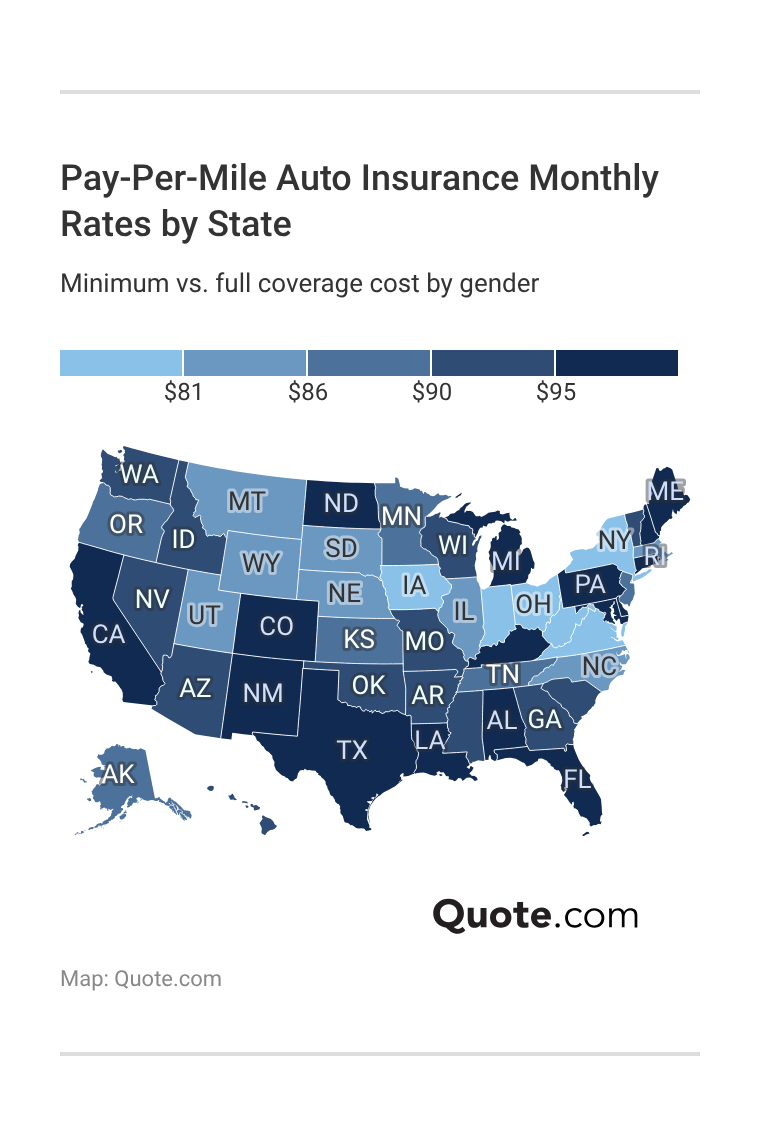
Pay-Per-Mile Auto Insurance in 2026
Low-mileage drivers can find significant savings with pay-per-mile auto insurance, which only charges for the miles you drive. If you drive fewer than 10,000 miles annually, you can get rates as low as $30 per month because pay-per-mile car insurance charges a low flat rate plus a few cents per mile.
Read more





Table of Contents
Table of Contents

Insurance Copywriter
Malory Will has an M.A. in English from Arizona State University. She has over four years of experience in writing for the insurance industry. With a background in health, auto, life, and homeowners insurance, Malory is passionate about making complex insurance topics clear and approachable. Her goal is to help readers make informed decisions with confidence.
Malory Will

Senior Director of Content
Sara Routhier, Senior Director of Content, has professional experience as an educator, SEO specialist, and content marketer. She has over 10 years of experience in the insurance industry. As a researcher, data nerd, writer, and editor, she strives to curate educational, enlightening articles that provide you with the must-know facts and best-kept secrets within the overwhelming world of insurance....
Sara Routhier

Licensed Insurance Broker
Zach Fagiano has been in the insurance industry for over 10 years, specializing in property and casualty and risk management consulting. He started out specializing in small businesses and moved up to large commercial real estate risks. During that time, he acquired property & casualty, life & health, and surplus lines brokers licenses. He’s now the Senior Vice President overseeing globa...
Zach Fagiano
Updated April 2026
Pay-per-mile auto insurance is a policy that offers significant savings for low-mileage drivers by charging for miles driven rather than a flat monthly fee.
- Pay-per-mile auto insurance is also called pay-as-you-go insurance
- Nationwide and Allstate have some of the best pay-per-mile insurance.
- The average low-mileage car insurance policy costs $30 per month
A pay-per-mile insurance policy is a good alternative to traditional plans, but only if you don’t put too many miles on your car. The best pay-as-you-go auto insurance can help you save hundreds or even thousands on your coverage.
Read on to learn more about pay-per-mile car insurance, including which companies have the best options and how much it might cost you. Then, when you’re ready to compare pay-per-mile auto insurance quotes, enter your ZIP code into our free comparison tool.
What is Pay-Per-Mile Auto Insurance?
Pay-per-mile auto insurance, also known as pay-as-you-go auto insurance, is a type of policy that charges people only for the miles they drive each month. This payment model is different than standard coverage, which charges a flat fee that typically doesn’t change during your policy term.
Every plan is different, so it’s important to read pay-per-mile auto insurance reviews to find the right fit for your needs. Important Details: Best Auto Insurance Companies for Claims Handling
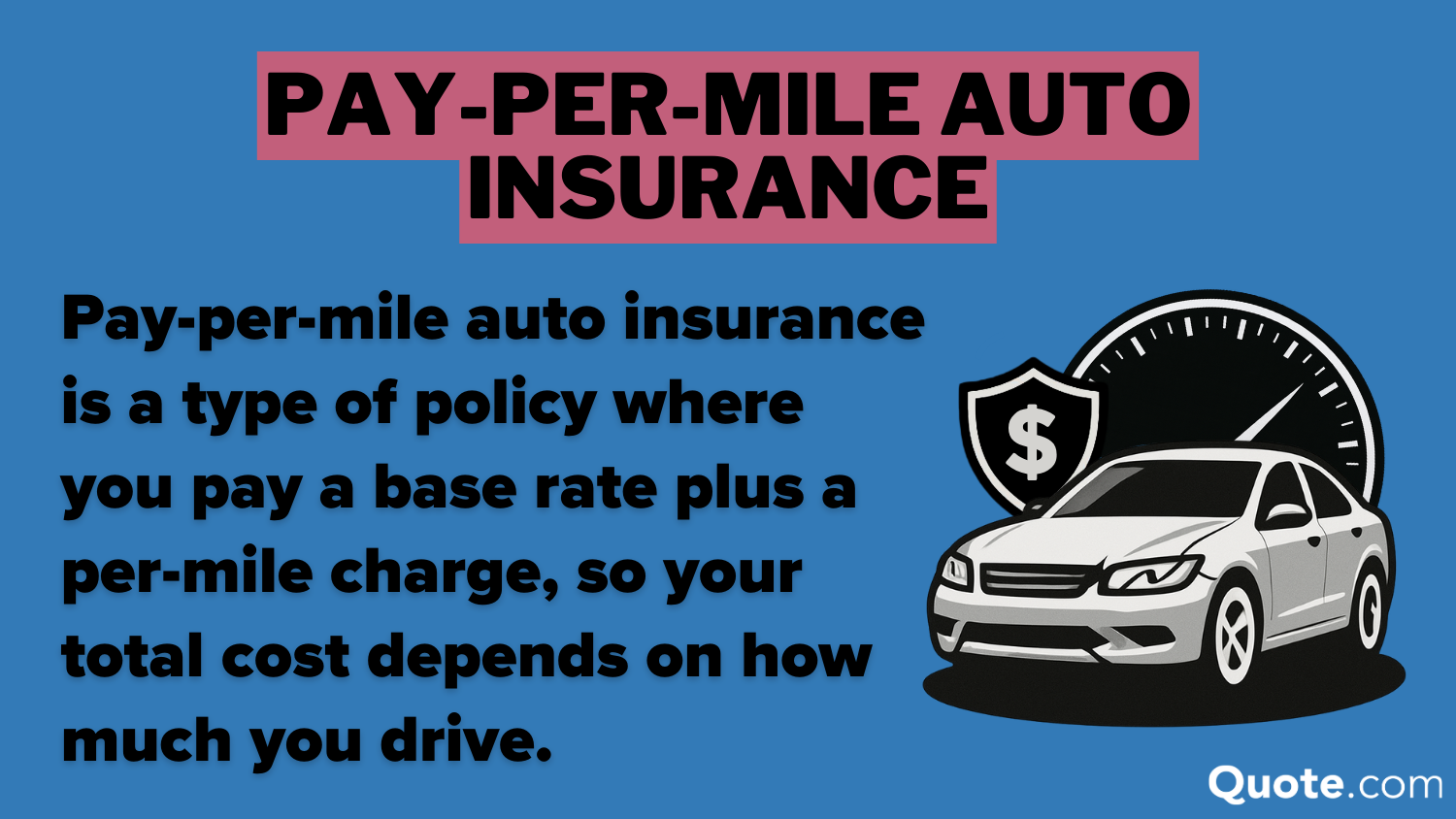
While pay-per-mile insurance can be a great way to save money on your coverage, it’s not for everyone. You should carefully consider pay-per-mile insurance before signing up.
However, an easy way to know if pay-per-mile auto insurance is right for you is to look at your annual mileage. If you drive more than 10,000 miles per year, it may not be the right choice for you.
Pay-Per-Mile Auto Insurance: Key Tradeoffs| Pros | Cons |
|---|---|
| Can reward safer driving habits | Requires mileage tracking tools |
| Clear cost-to-driving link | Monthly costs can fluctuate |
| Flexible for infrequent driving | Less predictable for daily driving |
| Helpful for remote workers | Limited availability by state |
| Lower costs for low mileage | Higher costs for high mileage |
| Pay based on miles driven | Costs rise as miles increase |
One of the key complaints about a pay-per-mile auto insurance program is that many drivers dislike having their vehicles tracked by their insurers.
Additionally, many drivers fear that taking a lengthy road trip will make their rates skyrocket. Most pay-per-mile plans have a daily mileage cap, however, so you can take the occasional long drive without having to worry.
Free Auto Insurance Comparison
Compare Quotes From Top Companies and Save
How Pay-Per-Mile Auto Insurance Works
Pay-per-mile auto insurance typically splits your premium into two parts: a base rate and a per-mile rate.
The base rate is a fixed monthly charge that takes into account factors such as your driving record, location, and the type of vehicle you drive. The per-mile rate is then multiplied by the number of miles you drive during the billing period, which is usually a month.
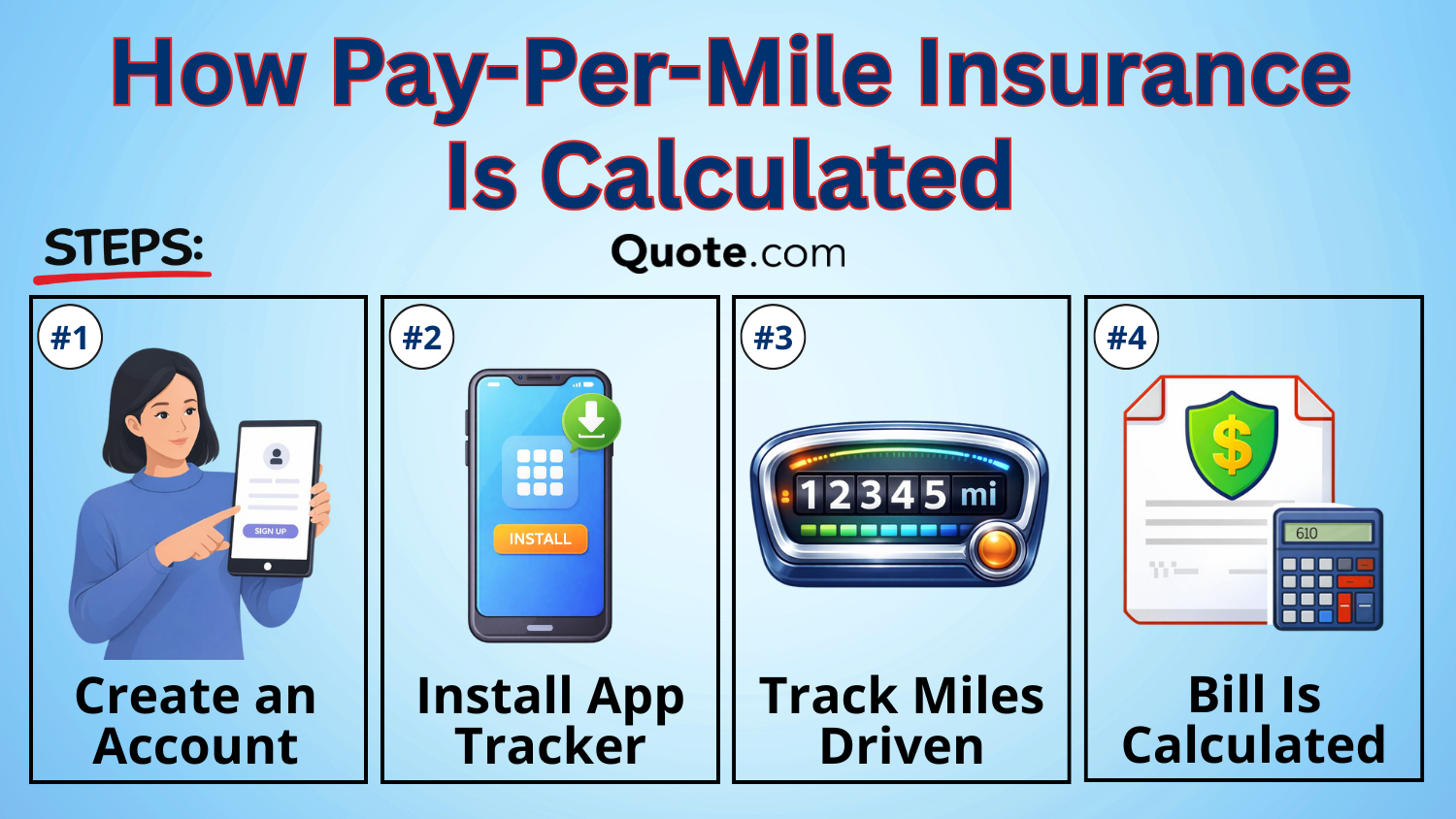
Most pay-per-mile programs track mileage using a small device plugged into your car or a mobile app on your phone. Some cars also come with built-in technology that allows you to transmit your driving data directly to an insurance company.
These tools usually record mileage automatically, so drivers don’t have to submit manual readings. Problems with mileage tracking are rare, but you should keep an eye on it. If you do have a problem, contact your insurance company for help.
Some programs may also collect limited driving data, such as trip times or hard braking, depending on the insurer.
Scott W. Johnson Licensed Insurance Agent
At the end of each month, your insurer adds the base rate to your mileage charge to calculate your total premium. For example, say your base rate is $30 per month, and your per-mile charge is $.05. If you drive 400 miles in a month, your bill would be $50.
Many companies cap the number of miles you’ll be charged for each month, which helps prevent unexpectedly high bills during road trips or busy periods.
Read our article for more details: Auto Insurance Coverage Guide
Pay-Per-Mile vs. Standard Car Insurance: What’s the Difference?
Unlike a standard policy, your monthly pay-per-mile rates will change every month. With a standard policy, your six-month policy is split into six monthly payments. With a pay-per-mile policy, the amount you pay is directly affected by how many miles you drive.
Because you pay for what you drive, finding cheap pay-per-mile auto insurance can be much easier to find than standard coverage.
Pay-Per-Mile vs. Traditional Auto Insurance| Feature | Pay-Per-Mile | Traditional Plan |
|---|---|---|
| Availability | Available in some states | Available nationwide |
| Best Fit | Low-mileage drivers | Frequent drivers |
| Cost Risk Factors | Costs rise with miles | Mileage not considered |
| Coverage Scope | Standard coverage | Broad coverage options |
| Discount Options | Low-mileage discounts | Bundling and loyalty |
| Mileage Tracking | App or device tracking | No tracking required |
| Monthly Cost | Costs vary by miles | Fixed monthly cost |
| Pricing Flexibility | Adjusts with driving | Fixed over time |
| Pricing Structure | Base + per-mile charge | Flat monthly premium |
| Savings Potential | Best for low mileage | Better for high mileage |
Along with other types of usage-based insurance, pay-per-mile insurance is great for people who don’t drive often. Standard coverage is better suited for people who frequently drive for work or school.
While availability varies by state and insurer, pay-per-mile coverage is usually offered by both major and smaller insurance companies. If you own a car that you don’t drive very often, pay-per-mile insurance might be your best option for coverage.
Who Should Use Pay-Per-Mile Coverage
The people who get the best pay-by-the-mile car insurance are those who put fewer miles on their cars each year than the average driver.
This often includes remote workers, retirees, students, stay-at-home parents, and people who rely on public transportation or ridesharing for most trips.
If you drive fewer than 7,000 to 10,000 miles per year, this type of policy could offer you the best savings on your insurance.
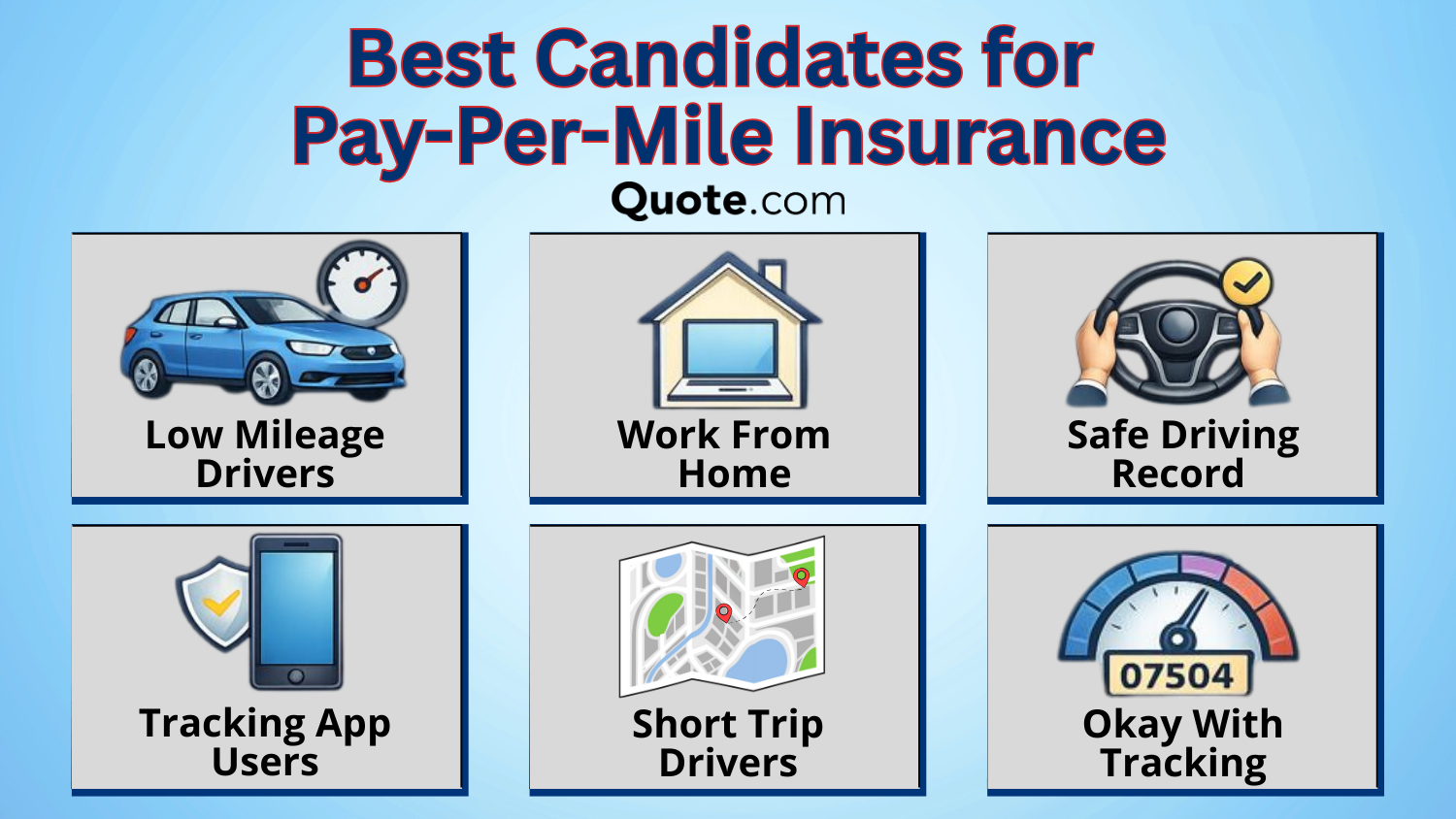
It can also be a smart option for households with a second vehicle that’s only used occasionally. Pay-per-mile policies are also among the best auto insurance options for good drivers because of their lower rates, but only if they don’t put too many miles on their car.
Instead of paying full traditional premiums for a car that sits in the driveway most days, pay-per-mile makes it easy to get car insurance for low-mileage drivers.
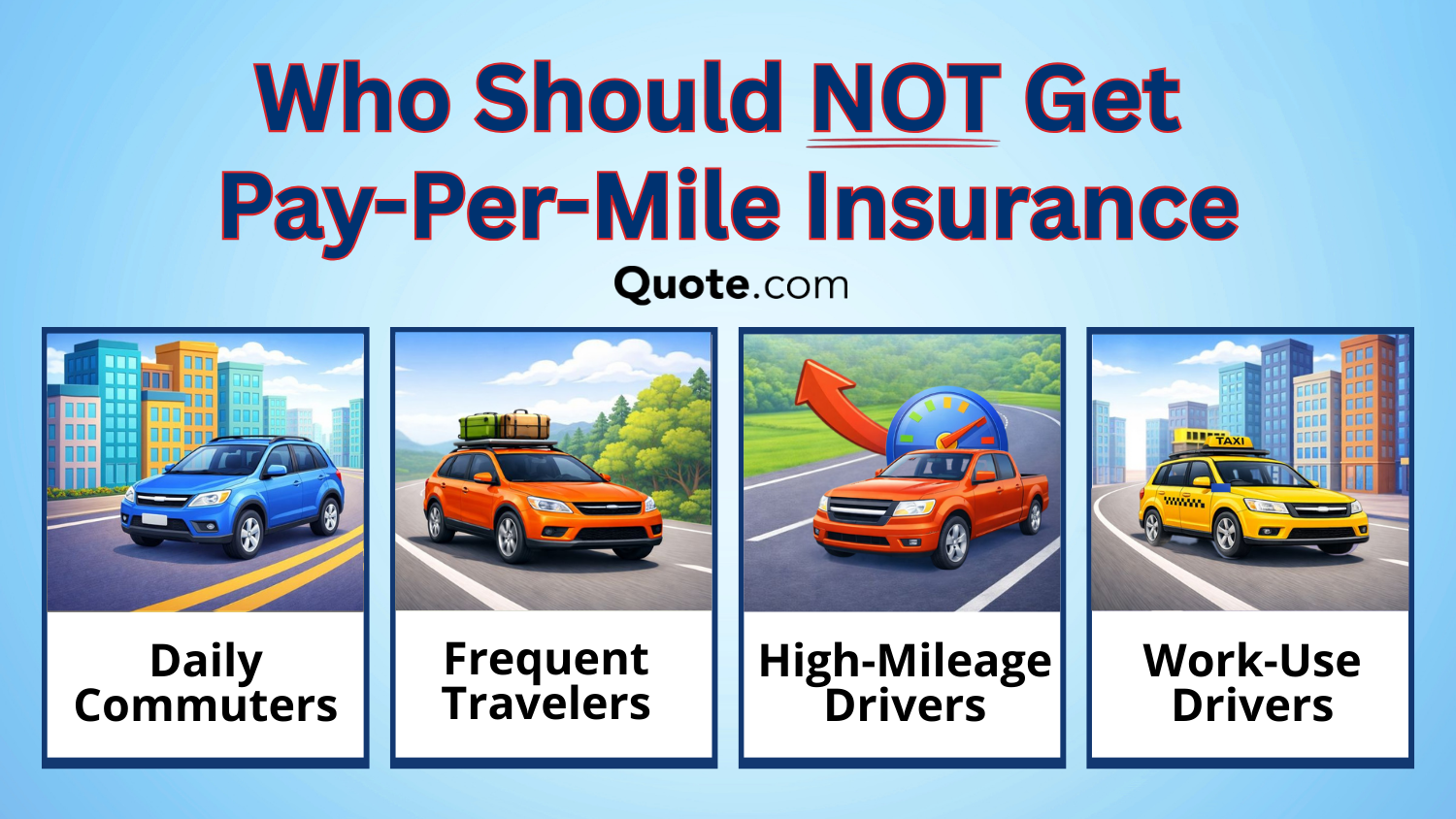
However, this coverage may not be ideal for frequent commuters, rideshare drivers, or people who regularly take long road trips. Essentially, if you drive over 10,000 miles per year, a standard policy might serve you better.
Another thing to consider is which insurance company to shop with. Companies like Metromile only sell pay-per-mile plans, making it a good choice for consistently low-mileage drivers.
However, if your mileage fluctuates, shopping at a company like Allstate, which sells standard and pay-per-mile insurance, could be a better fit.
See More: Metromile Auto Insurance Review
How Much Pay-Per-Mile Insurance Costs
Pay-per-mile auto insurance rates vary widely by insurer, state, and driver profile. Base rates often range from $20 to $60 per month, while per-mile charges typically range from 2 to 10 cents per mile.
Like standard insurance, the amount you pay for your pay-per-mile plan depends on a variety of factors, like your age, ZIP code, and what type of car you drive. Companies like Hugo offer the cheapest pay-per-mile insurance with an average price of just $25 per month, but you can explore your options below.
Pay-Per-Mile Auto Insurance Monthly Rates (100 Miles)| Company | Base | Per Mile | Total |
|---|---|---|---|
 | $38 | $0.06 | $44 |
 | $32 | $0.05 | $37 |
 | $34 | $0.06 | $40 |
 | $31 | $0.05 | $36 |
 | $25 | $0.05 | $30 |
 | $34 | $0.06 | $40 |
 | $35 | $0.07 | $42 |
 | $30 | $0.05 | $35 |
 | $33 | $0.05 | $38 |
 | $36 | $0.06 | $42 |
It can be hard to estimate how much you’ll pay for mileage-based car insurance if you don’t have an idea of how many miles you put on your car every month. For example, a driver who logs 100 miles in a month might pay significantly less than someone driving 500 miles.
Because mileage is only one factor, drivers with clean records, safe vehicles, and lower coverage needs tend to benefit the most.
Compared to the traditional average cost of auto insurance, pay-per-mile coverage can result in substantial savings for low-mileage drivers, but it’s still important to compare quotes. As a bonus, finding pay-as-you-go car insurance with no deposit is also easy — companies like Hugo let you sign up without paying anything immediately.
If you’re interested in low-mileage quotes, it will be extremely helpful to have an idea of the average number of miles you drive per month.
Free Auto Insurance Comparison
Compare Quotes From Top Companies and Save
More Ways for Low-Mileage Drivers to Save
Drivers who don’t qualify for mileage-based insurance or prefer not to use mileage tracking can still save through low-mileage auto insurance discounts.
Many traditional insurers offer discounts for drivers who stay under a certain annual mileage threshold, even if they don’t sell strictly pay-per-mile auto insurance policies.
Best Pay-Per-Mile Auto Insurance Discounts| Discount | Eligibility | Savings |
|---|---|---|
| Anti-Theft | Theft protection installed | 10% |
| Auto Payments | Enrolled in autopay | 5% |
| Bundled Plans | Multiple policies held | 20% |
| Good Student | Qualifying student grades | 15% |
| Low Mileage | Low annual mileage | 15% |
| Pay-in-Full | Paid in full annually | 10% |
| Safe Driver | Clean driving record | 25% |
| Vehicle Safety | Safety features installed | 10% |
Other savings opportunities include usage-based car insurance programs that monitor driving behavior rather than mileage alone, making them a good option for safe drivers.
Usage-based insurance programs also use tracking devices to monitor your driving behaviors, but they look at more information than just how many miles you drive.
UBI programs reward safe habits like driving the speed limit, smooth braking, avoiding phone use while operating your car, and limited nighttime driving.
Michelle Robbins Licensed Insurance Agent
Additional auto insurance discounts that commonly pair well with low-mileage driving include multi-policy discounts, vehicle safety discounts, defensive driving course discounts, and good driver discounts.
Some companies even offer discounts on pay-per-mile insurance on electric cars, including Allstate and Nationwide.
Combining several of these options can help reduce premiums even without switching to a pay-per-mile policy. There are also plenty of alternative ways to save on your insurance beyond discounts, including:
- Bundle Policies: Most major insurance companies offer a variety of products, and you can usually save if you buy more than one policy from the same provider.
- Increase Your Deductible: Your deductible is what you pay when you file a claim before your coverage kicks in. Picking a higher deductible will lower your monthly premiums.
- Lower Your Coverage: While it’s never a bad thing to add protection to your policy, having coverage you won’t ever use unnecessarily increases your rates.
- Shop Around: The easiest way to save on your coverage is to compare auto insurance quotes from multiple companies.
One of the most important steps to take when you’re looking for affordable coverage is to compare quotes. If you skip this step, you’ll likely end up overpaying for your coverage.
The good news is that comparing quotes is simple. You can visit individual provider websites to get an individualized quote, or look at multiple companies at once by entering your ZIP code into our free comparison tool.
Find the Best Pay-Per-Mile Insurance Company
Pay-per-mile auto insurance offers a flexible, affordable alternative for drivers who spend less time behind the wheel.
By aligning premiums with your actual driving habits, pay-per-mile insurance can provide real savings for low-mileage drivers while still delivering the protection they need on the road.
Whether you choose a true pay-per-mile policy or take advantage of low-mileage insurance discounts from traditional insurers, learning how to get multiple auto insurance quotes is the key to finding coverage that fits your budget and driving style.
To see how much you might pay for car insurance by the mile, enter your ZIP code into our free tool now.
Frequently Asked Questions
What is pay-per-mile auto insurance?
Pay-per-mile car insurance is a type of policy that offers lower rates to low-mileage drivers. When you pay for your car insurance by mileage, you’ll have a base monthly rate plus a per-mile fee based on how much you actually drive. It’s designed to lower costs for drivers who spend less time on the road.
Is pay-per-mile insurance worth it?
It can be worth it if you drive fewer than average miles each year, typically under 10,000 miles. If that applies to you, a pay-as-you-go policy may be your best shot at getting the cheapest auto insurance possible. However, high-mileage or unpredictable drivers may save more with traditional coverage.
How much is pay-per-mile car insurance?
Rates usually include a base fee of about $20–$60 per month plus 2–10 cents per mile driven. Your total cost depends on mileage, location, driving record, and coverage levels, but you can see rates as low as $30 per month. To see how much you might pay for pay-as-you-go car insurance, enter your ZIP code into our free comparison tool.
How do insurance companies track mileage?
Most insurers use a plug-in device, mobile app, or built-in vehicle technology to automatically record miles driven. Some programs also allow periodic odometer readings.
Who should sign up for pay-per-mile auto insurance?
It’s ideal for low-mileage drivers such as remote workers, retirees, students, and households with a rarely used second car. Anyone who drives infrequently may benefit.
What is the best pay-per-mile auto insurance company?
The “best” option depends on your state and driving habits, but companies like Allstate, Nationwide, and specialty insurers are popular choices.
You may also find a standard policy with low-mileage discounts can be an affordable option for you. For example, there is no State Farm pay-per-mile insurance, but you can still get a low-mileage discount with Drive Safe & Save.
Learn More: Mile Auto Insurance Review
What are the cons of pay-per-mile insurance?
Costs can rise quickly if your driving increases unexpectedly, such as during long trips. Some drivers also dislike mileage tracking or limited availability by state.
Does Allstate have pay-per-mile auto insurance?
Yes, you can get pay-per-mile from Allstate through a program called Milewise in select states. Milewise insurance combines a daily base rate with a per-mile charge.
Does Nationwide have pay-per-mile car insurance?
Yes, Nationwide offers a pay-per-mile option known as SmartMiles. SmartMiles insurance has drivers pay a base rate plus a per-mile cost, with a cap on daily mileage charges. To be eligible for Nationwide SmartMiles, you’ll need to use a plug-in device in your car.
Does Progressive offer pay-per-mile insurance?
Progressive doesn’t offer a traditional pay-per-mile auto insurance policy, but you can sign up for its Snapshot program. Snapshot isn’t car insurance based on mileage, but rather your driving habits. Being a low-mileage driver can help you save up to $322 per year on your insurance with Snapshot.
What is usage-based insurance?
Can you get a low-mileage discount on car insurance?
Is pay-per-mile insurance good for seniors?
Related Articles



Get a FREE Quote in Minutes
Insurance rates change constantly — we help you stay ahead by making it easy to compare top options and save.