Whole Life Insurance (2026 Coverage Guide)
Whole life insurance is permanent coverage that lasts a lifetime as long as premiums are paid. The best whole life insurance rates are with Banner Life, starting at $75 a month for a $250K policy. Permanent policies also build cash value that can complement your investments, including retirement savings.
Read more




Table of Contents
Table of Contents

Licensed Insurance Agent
Jeff is a well-known speaker and expert in life insurance and financial planning. He has spoken at top insurance conferences around the U.S., including the InsuranceNewsNet Super Conference, the 8% Nation Insurance Wealth Conference, and the Digital Life Insurance Agent Mastermind. He has been featured and quoted in Nerdwallet, Bloomberg, Forbes, U.S. News & Money, USA Today, and other leading...
Jeff Root

Senior Director of Content
Sara Routhier, Senior Director of Content, has professional experience as an educator, SEO specialist, and content marketer. She has over 10 years of experience in the insurance industry. As a researcher, data nerd, writer, and editor, she strives to curate educational, enlightening articles that provide you with the must-know facts and best-kept secrets within the overwhelming world of insurance....
Sara Routhier

Licensed Insurance Agent
Heidi works with top-rated life insurance carriers to bring her clients the highest quality protection at the most competitive prices. She founded NoPhysicalTermLife.com, specializing in life insurance that doesn’t require a medical exam. Heidi is a regular contributor to several insurance websites, including FinanceBuzz.com, Insurist.com, and Forbes. As a parent herself, she understands the...
Heidi Mertlich
Updated March 2026
Whole life insurance is permanent coverage that lasts a lifetime as long as premiums are paid, ensuring a guaranteed payout to beneficiaries.
- Whole life insurance offers lifetime coverage with a guaranteed payout
- Banner Life has the lowest rates, from $900/year for $250K coverage
- Whole life builds tax-deferred cash value that can be borrowed against
It differs from term life insurance by offering tax-deferred cash value that can be borrowed against and fixed premiums that never increase.
Rates start at $75 a month for a $250K policy, so it’s more expensive than term life insurance, but it provides better protection and an investment element that could benefit you depending on how much life insurance you need.
Whole Life Insurance Coverage Overview| Feature | Description |
|---|---|
| Death Benefit | Guaranteed payout to beneficiaries |
| Cash Value | Builds tax-deferred value over time |
| Cost vs. Term | Higher than term life insurance |
| Coverage Length | Lifelong coverage if premiums are paid |
| Dividends | May pay dividends based on performance |
| Policy Loans | Allows borrowing against cash value |
| Premiums | Fixed premiums that remain level for life |
This whole life insurance guide explains how coverage works, what to expect from premiums, and the benefits and drawbacks of choosing this policy. Free instant life insurance quotes are just a click away. Enter your ZIP code to start comparing free whole life insurance quotes online.
What is Whole Life Insurance and How Does it Work?
Whole life insurance lasts your entire life as long as you keep paying your premiums. It guarantees a payout to your life insurance beneficiaries when you pass away and also builds cash value that grows over time.
Premiums stay the same for life, so you don’t have to worry about higher costs as you get older or if your health changes. Premiums for whole life are typically higher than term policies because a portion of each payment funds the policy’s cash value component.
Policyholders may also have the option to use accumulated cash value to pay premiums later in life, helping reduce out-of-pocket expenses.
Along with lifelong coverage, whole life insurance can also support long-term financial planning, such as estate planning, passing on wealth, or leaving money to loved ones.
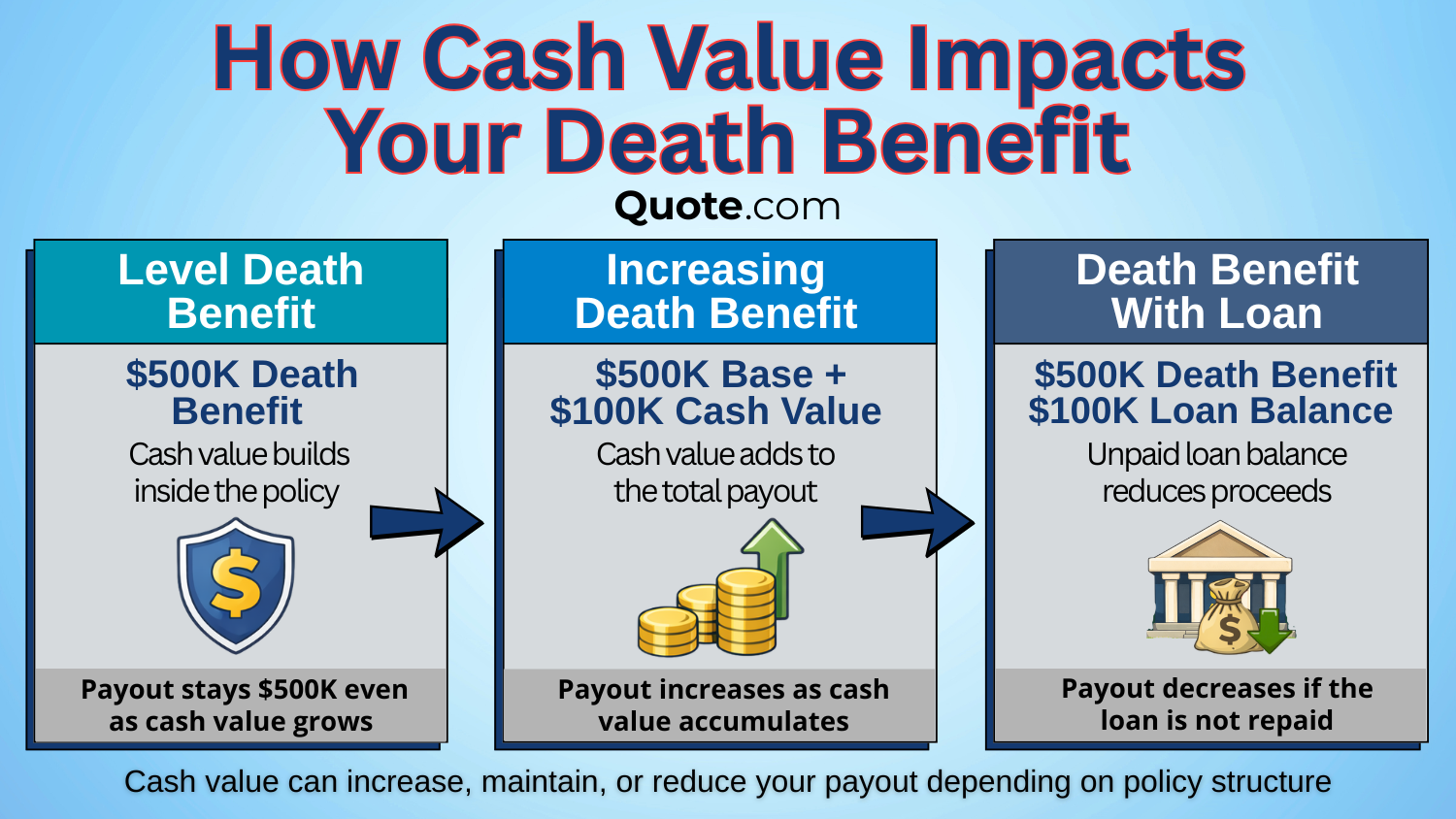
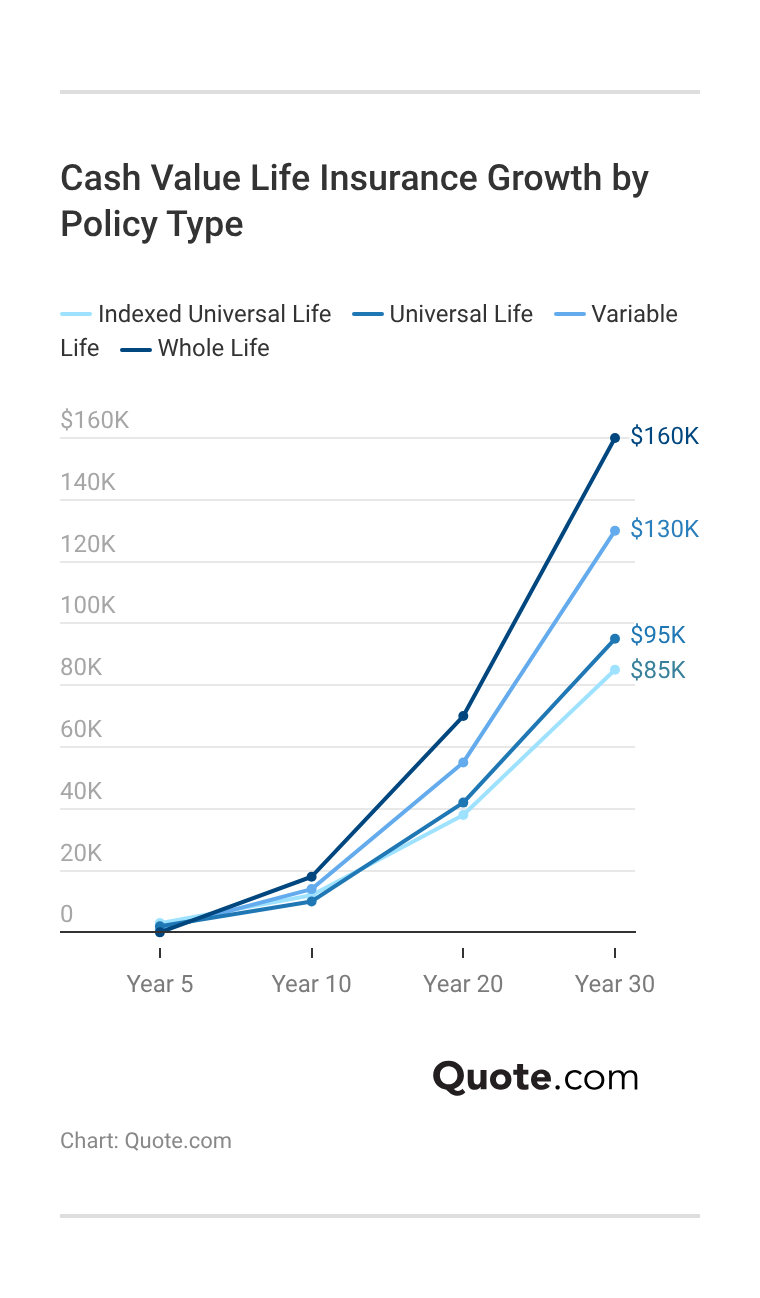
Whole life insurance includes a cash value feature that works like a savings account inside your policy. It grows over time with interest you can borrow against or withdraw.
They also often include a guaranteed minimum interest rate, so your cash value keeps growing even when market conditions are poor.
Some policies may also pay dividends, which can be used to lower your premiums, grow your cash value, or increase your payout.
Travis Thompson Licensed Insurance Agent
It grows tax-deferred, and you can borrow against it if you need extra money, but any unpaid loans will lower the payout your family receives.
Some policies allow policyholders to make partial withdrawals from the cash value without taking out a loan, though this may reduce the overall death benefit.
If you’re ready to secure coverage, enter your ZIP code into our free tool to compare online whole life insurance quotes.
Free Life Insurance Comparison
Compare Quotes From Top Companies and Save
Types of Whole Life Insurance Policies
Whole life insurance comes in different forms. Some policies focus on lower upfront payments, while others emphasize quicker cash value growth or a shorter pay period. Related: Types of Life Insurance
What works best will depend on your financial goals: whether you’re focused on keeping early costs down, building value quickly, or paying off your loan sooner.
Traditional Whole Life
Traditional whole life insurance offers lifetime coverage with cash value that grows at a fixed rate.
You’ll have fixed premiums and a guaranteed death benefit, so you know exactly what to expect over time.
Cash value grows over time and can be accessed through policy loans if needed. These loans typically include interest, and any unpaid balance may reduce the final death benefit.
This policy is often chosen for long-term planning, such as passing money to loved ones or covering final expenses. It’s also a simpler form of whole life insurance, with fewer parts to manage.
Limited Payment Whole Life
Limited pay whole life insurance requires premiums for a set period, such as 10 or 20 years or until age 65, while coverage lasts for life. Once that payment period ends, you no longer owe premiums.
This option can make sense if you want your policy paid off before retirement. Premiums are higher at the start than traditional whole life, but they don’t last as long.
It may also build cash value faster since higher premiums are paid over a shorter period.
Single Premium Whole Life
Single premium whole life insurance is paid for with a single upfront payment rather than ongoing premiums. After that, coverage lasts for life, and the cash value grows over time.
Since the policy is fully funded upfront, the cash value usually grows faster than traditional whole life policies, which can make it a solid option for conservative, tax-advantaged asset accumulation.
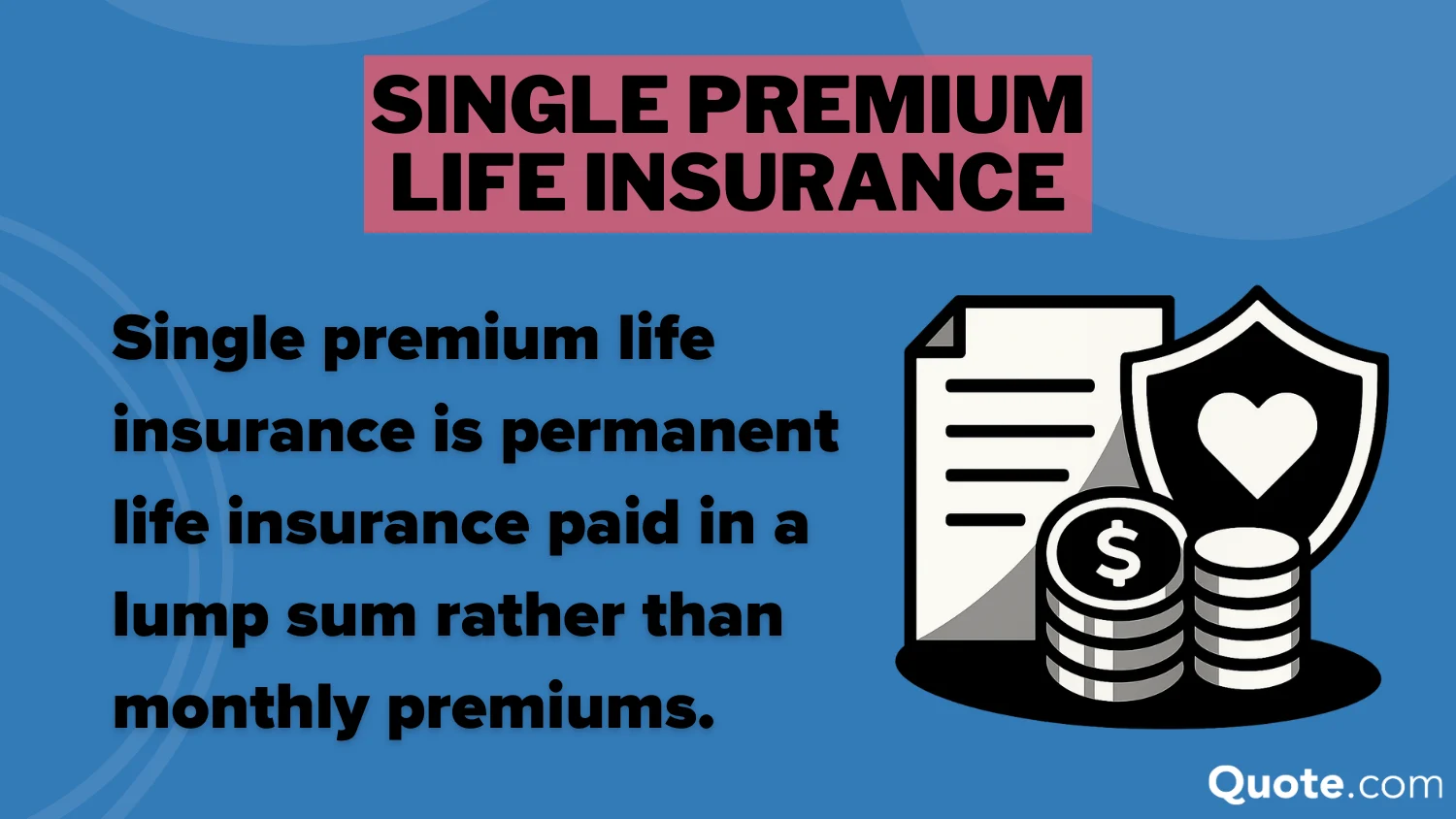
This option works well for people with a lump sum who want permanent coverage without monthly payments. The upfront cost is higher, but there are no future premiums.
Keep in mind that this type of policy may have tax implications if the policy is classified as a modified endowment contract (MEC).
Modified Whole Life
Modified whole life insurance is a type of life insurance that starts with lower premiums for the first few years, then increases to a higher fixed amount for the rest of your life. Coverage remains in force throughout.
Modified whole life insurance also builds cash value over time. It grows tax-deferred and can be borrowed against or used to help cover future premiums.
This policy can be a good fit if your budget is tight now, but you expect your income to rise later. It’s easier to start than traditional whole life, but it can cost more over time.
Be sure you can afford the higher premium later, since the increase is permanent.
You’ll want to review the premium schedule upfront so there are no surprises later. Timing matters, especially if your income doesn’t increase as expected.
Participating Whole Life
Participating whole life insurance may pay dividends based on the insurer’s performance. Dividends are not guaranteed, as they depend on the insurance company’s financial performance, including investment returns and claims experience.
You can use dividends to lower premiums, increase coverage, take them as cash, or in some cases, apply them to optional life insurance riders.
Participating policies are typically offered by mutual insurance companies, which are owned by policyholders rather than shareholders.
Heidi Mertlich icensed Insurance Agent
This policy may be beneficial if you want a chance to build extra value. Over time, consistent dividend payments can help offset the higher cost of whole life insurance compared to non-participating policies.
Dividend options and performance can vary by insurer, so it’s important to review each company’s history and policy details.
Graded Premium Whole Life
Graded premium whole life insurance is a type of permanent life insurance that begins with lower payments that increase gradually, usually each year, for a set period. After that, premiums level off and stay the same.
Graded premium whole life policies also accumulate cash value over time, which grows tax-deferred and can be accessed through loans or withdrawals.
This option can help if you need coverage now but can’t afford higher premiums yet. Compared to modified whole life, the increases are more gradual instead of a single jump.
You’ll need to plan ahead for the higher long-term premiums once the introductory period ends, since the increase is permanent rather than gradual.
Once you’ve decided on the type of coverage you want, use our whole life insurance calculator to see real-time rates from top providers near you.
Average Cost of Whole Life Insurance
Whole life insurance premiums vary by the amount of coverage, and larger policies can become very costly. A $250K policy is the most common choice, with Banner Life offering the lowest rate at $75 per month.
Higher coverage options such as $500K and $1M are available, but they come with much higher monthly premiums. Read More: Cheapest Million-Dollar Life Insurance Policies
Whole Life Insurance Monthly Rates by Policy Amount| Company | $250K | $500K | $1M |
|---|---|---|---|
 | $175 | $375 | $740 |
 | $75 | $365 | $720 |
 | $190 | $495 | $970 |
 | $187 | $460 | $920 |
 | $186 | $510 | $990 |
 | $178 | $390 | $760 |
 | $181 | $545 | $1,060 |
 | $183 | $530 | $1,030 |
 | $184 | $430 | $860 |
 | $180 | $420 | $840 |
While Banner Life sets itself apart with the lowest entry-level rates, providers like Guardian and MassMutual appeal to policyholders seeking long-term value through strong cash growth and dividend potential.
New York Life and Northwestern Mutual remain more expensive at higher policy amounts, but they are often chosen by families and individuals focused on estate planning and wealth transfer strategies.
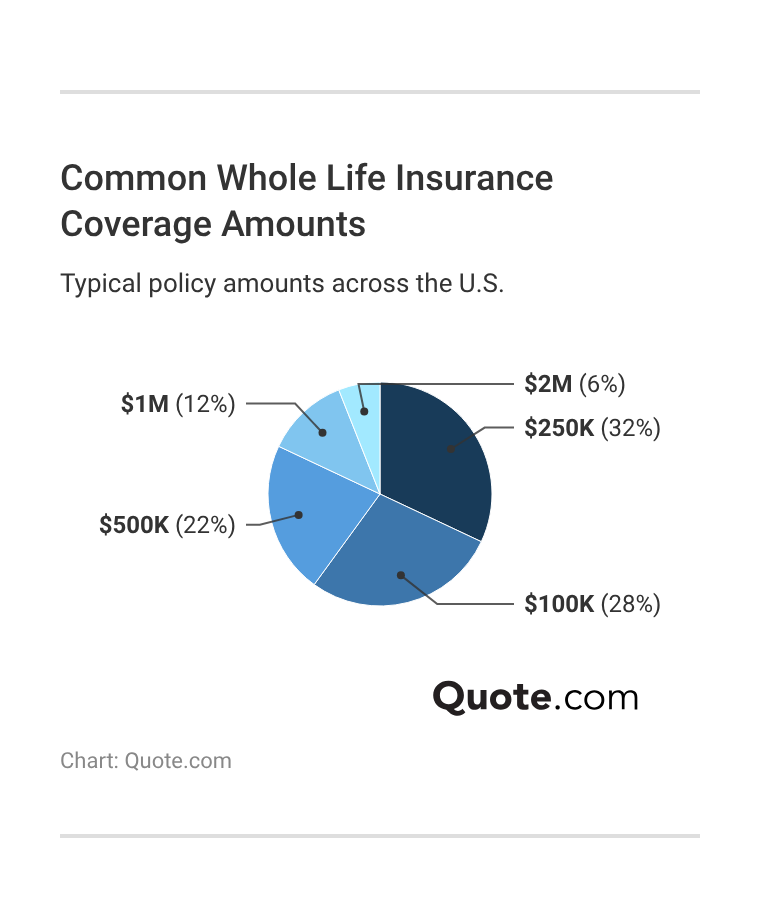
The most popular whole life coverage levels are $100K and $250K, chosen by 60% of policyholders according to recent data.
Banner Life offers the most competitive entry-level rate, while Guardian and MassMutual trend higher but include strong cash value growth and dividend options. Learn more in our guide: MassMutual Insurance Review
For large policies above $1 million, premiums nearly double compared to mid-range coverage, making them best suited for estate planning or wealth transfer needs.
As you can see, average cost of life insurance varies by policy type and other personal factors, so it’s important to get whole life insurance quotes online.
How Age & Gender Impact Whole Life Insurance Rates
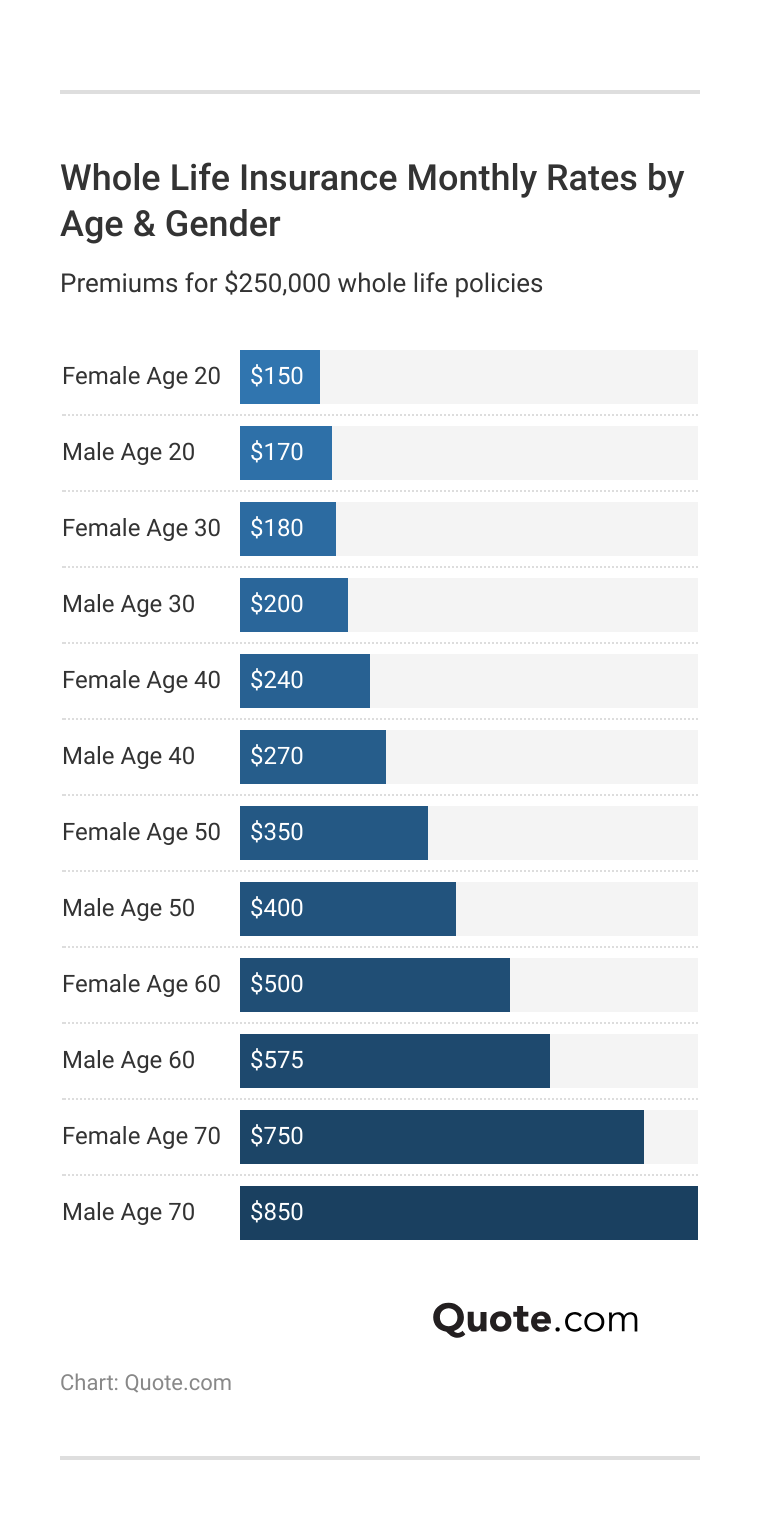
Age and gender strongly affect rates for whole life insurance. Women usually pay less than men because they live longer on average.
At age 40, women pay $240 and men pay $270 for a $500K policy.
The older you are when you buy, the more expensive it gets. At age 50, women pay $350 and men $400 each month.
By age 70, rates rise sharply to $750 for women and $850 for men. This shows that the best way to save money is to buy whole life insurance at a younger age when premiums are lower. Compare Rates Now: How to Get Life Insurance Quotes
Get online quotes for whole life insurance in just 2 minutes or less by entering your ZIP code into our comparison tool.
How Health Impacts the Cost of Whole Life Insurance
Your health directly impacts your quote for whole life insurance. Applicants in excellent health qualify for the lowest monthly premiums, while those with ongoing health issues face higher costs.
Lifestyle factors such as smoking, obesity, and alcohol use can significantly increase premiums, even if no major medical conditions are present. Since whole life coverage lasts a lifetime, insurers weigh health risks heavily when setting rates.
Whole Life Insurance Monthly Rates by Health Condition| Company | High BP | Obesity | Diabetes | Heart Disease |
|---|---|---|---|---|
| $155 | $165 | $185 | $260 |
| $150 | $160 | $175 | $245 |
| $165 | $175 | $195 | $275 |
| $160 | $170 | $190 | $270 |
| $158 | $172 | $192 | $280 |
| $152 | $168 | $188 | $265 |
| $170 | $180 | $200 | $290 |
| $168 | $178 | $198 | $285 |
| $162 | $172 | $193 | $275 |
| $157 | $169 | $189 | $270 |
Banner Life offers the lowest premium at $150 a month for people with high blood pressure, but the rate nearly doubles for applicants with heart disease to $205 per month. Meanwhile, New York Life whole life insurance costs $170 monthly if you have high blood pressure.
Some insurers offer “preferred” or “standard” health classifications, which can lead to large differences in monthly costs depending on your overall risk profile.
Many insurers require a medical exam, blood work, and a review of your medical history to determine your final whole life insurance rate.
Scott Young Managing Editor
Improving your health before applying, such as lowering blood pressure or quitting smoking, can help you qualify for better rates and long-term savings.
To find the best life insurance for you, start your whole life insurance rates comparison using our free quote tool.
Optional Whole Life Insurance Riders
Riders are add-ons you can include with your whole life insurance policy to make it more useful for your situation. They can give you extra help in certain situations, like if you become ill, can’t work, or want more coverage later on.
Here are some common riders you might come across:
- Accelerated Death Benefit Rider: Access part of your policy early if diagnosed with a serious illness, often treated like a tax-free death benefit.
- Accidental Death Benefit Rider: Pays an extra benefit if your death results from a covered accident under the policy terms.
- Child Term Rider: Adds coverage for your children under your policy, typically at a low additional cost.
- Guaranteed Insurability Rider: Lets you increase your coverage later without taking another medical exam or providing proof of health.
- Long Term Care Rider: Allows you to use part of your policy benefit to help pay for qualifying long-term care expenses.
- Waiver of Premium Rider: Keeps your policy active without payments if you become disabled and are unable to work.
The right riders depend on your health, budget, and future plans. Focus on the ones that protect against real risks in your life, like illness or loss of income.
Adding riders impacts your whole life insurance policy quote, so be sure to skip anything that doesn’t clearly add value or that you’re unlikely to use. More Info: How Much Life Insurance You Need
Once you’ve decided on the riders you need, enter your ZIP code to start your whole life insurance quote online comparison now.
Free Life Insurance Comparison
Compare Quotes From Top Companies and Save
Pros and Cons of Whole Life Insurance
Whole life insurance has several advantages that make it useful for many people. It gives lifetime coverage as long as you keep paying, so your family is always protected with a guaranteed payout.
You’ll also build whole life insurance cash value returns that grow over time and can be borrowed from if needed.
Whole Life Insurance Pros and Cons| Pros | Cons |
|---|---|
| Lifetime coverage | Higher premiums |
| Builds cash value | Slow early growth |
| Fixed premiums | Less flexibility |
| Potential dividends | May not be cost-effective |
| Estate planning tool | Reduced death benefit |
Premiums also stay the same each month, and some policies may pay dividends that add extra value. These features make it a good choice for long-term planning and leaving money behind for loved ones.
There are also some disadvantages of whole life insurance to think about, such as premiums. It costs more than term life insurance, so it may not fit every budget.
Choose a whole life insurance coverage worth 7 to 10 times your yearly income to protect your family.
Brad Larson Licensed Insurance Agent
The cash value builds slowly at first, so it takes years before it grows into a large amount. It’s also less flexible than term life, which works better for short-term needs. For some people, the higher cost may not match what they really need from life insurance.
If you’re ready to get coverage, try our comparison tool to see your whole life insurance online quotes in just minutes!
Should You Get Whole Life Insurance Coverage?
Whole life insurance can be a good option if you want coverage that lasts your entire life and builds value over time. It’s designed for long-term planning, not short-term needs.
You might consider whole life insurance if you:
- Want lifelong coverage that doesn’t expire.
- Need to build savings you can access later.
- Want to leave a financial gift for your loved ones.
- Prefer payments that stay steady over time.
- Have long-term financial plans in mind.
Whole life insurance can be expensive, so it may not fit if you’re on a tight budget or only need coverage for a certain number of years.
Deciding if Whole Life Insurance Is Right for You| Best for | Not Ideal |
|---|---|
| Lifelong coverage needs | Tight monthly budget |
| Fixed premium payments | Short-term coverage needs |
| Building cash value over time | Prefer simple, no-frills policies |
| Estate and legacy planning | Temporary income replacement |
| Long-term financial stability | Want flexible policy options |
It often costs more than term life, which can be tough if you’re just starting out or only want basic coverage.
💡Check your budget and decide if you need lifelong protection or something temporary, and whether cash value matters to you. It also helps to get life insurance quotes so you can see what different options cost.
Whole Life Insurance vs. Term Life vs. Universal Life
Life insurance generally falls into three categories: whole life, term life, and universal life. The right fit comes down to how much you can spend and how long you need coverage to last.
Choosing between term or whole life insurance often depends on whether you want affordable temporary coverage or lifelong protection with added benefits.
Whole Life Insurance Compared to Other Types of Life Insurance| Policy Type | Coverage Length | Monthly Cost | Best for |
|---|---|---|---|
| Term Life | 10–30 years | Lower fixed | Temporary coverage |
| Universal Life | Flexible lifetime | Flexible payments | Adjustable coverage |
| Whole Life | Lifetime | Higher fixed | Long-term security |
Whole life insurance provides coverage that lasts for life if premiums are paid. It also builds cash value you can tap into later. While the premiums are higher, they remain fixed. This can be a good choice if you’re looking for long-term coverage and a predictable way to grow savings.
Term life insurance covers you for a set number of years, such as 10, 20, or 30. If you die during that time, your beneficiaries receive the payout.
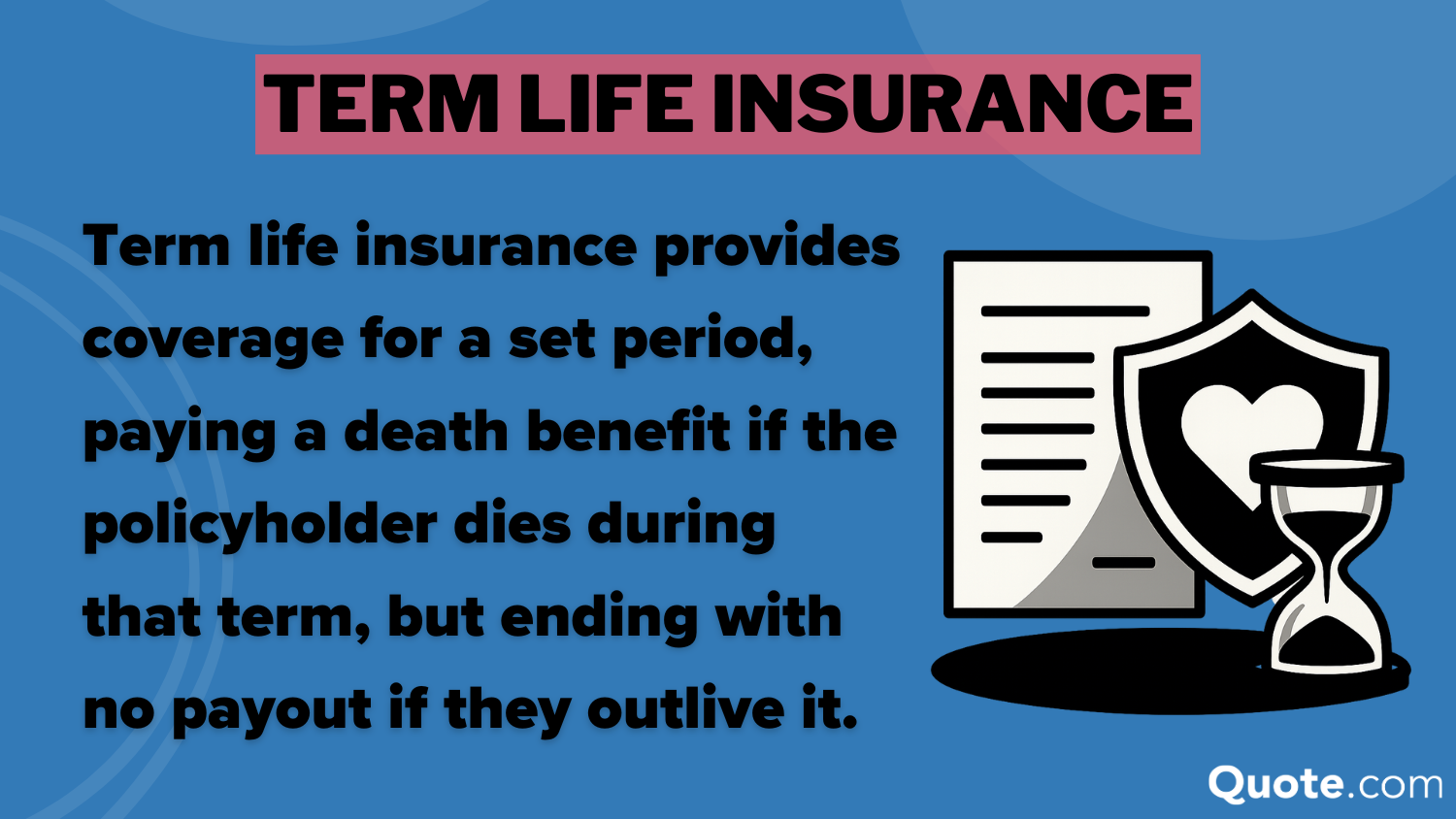
When the term ends, coverage stops unless you renew or replace the policy. It doesn’t build cash value, which helps keep it one of the most affordable options. It’s a good fit if you need coverage for a set period and want lower premiums.
Universal life insurance is more flexible than whole life. It offers lifelong coverage and cash value, plus limited control over premiums and benefits. Since costs can change, you’ll need to stay on top of it. It works if you want more say in how your policy runs.
Your choice comes down to how long you need coverage and how involved you want to be.
Term life is straightforward and affordable. Whole life is predictable, while universal life gives you options but requires more attention.
Free Life Insurance Comparison
Compare Quotes From Top Companies and Save
How to File a Whole Life Insurance Claim
Filing a whole life insurance claim is not too hard if you know the steps. First, contact the insurance company soon after the policyholder passes away.
They will tell you what forms you need to fill out and what documents are required. Having the death certificate and ID ready makes this part much faster.
Steps to File a Claim on Your Whole Life Insurance Policy| Step | Action | Description |
|---|---|---|
| #1 | Find Policy | Locate policy or call insurer |
| #2 | Notify Insurer | Call to report death |
| #3 | Request Info | Ask for claims paperwork |
| #4 | Gather Documents | Death certificate, ID, forms |
| #5 | Submit Claim | File online or by mail |
| #6 | Review Loans | Loans may reduce payout |
| #7 | Receive Payout | Lump sum or installments |
After you send the forms and papers by mail or online, the company will review the claim. They’ll also check that the policy is still active and see if any loans were taken from the cash value, since this can lower the final payment.
Once everything is approved, the money is given to the beneficiary, either all at once or in another payout option the insurer allows.
Start comparing quotes on whole life insurance now to find coverage backed by a smooth, dependable claims process.
Choosing the Right Whole Life Insurance Policy
Whole life insurance offers a guaranteed payout to your beneficiaries as long as you pay the premiums, and it also builds cash value you can use if you ever need extra money.
The most common reasons to buy life insurance often come down to protecting your family and covering expenses.
Top 5 Reasons to Buy Whole Life Insurance| Purpose | Benefits |
|---|---|
| Business Succession | Funds buy-sell agreements |
| Emergency Access | Use cash value when needed |
| Estate Planning | Guaranteed payout for heirs |
| Financial Security | Stable coverage + savings |
| Wealth Transfer | Tax-advantaged inheritance |
A whole life program offers steady coverage and lasting security, making it a strong choice for families who want lifelong protection. It can also help with bigger goals like planning your estate, passing on wealth, or even supporting a family business. While it costs more than term life insurance, many people choose it for the peace of mind it brings.
Simplify your search for lifelong coverage by entering your ZIP code to get an instant whole life insurance quote and compare the best options for your needs.
Frequently Asked Questions
What is a whole life insurance policy?
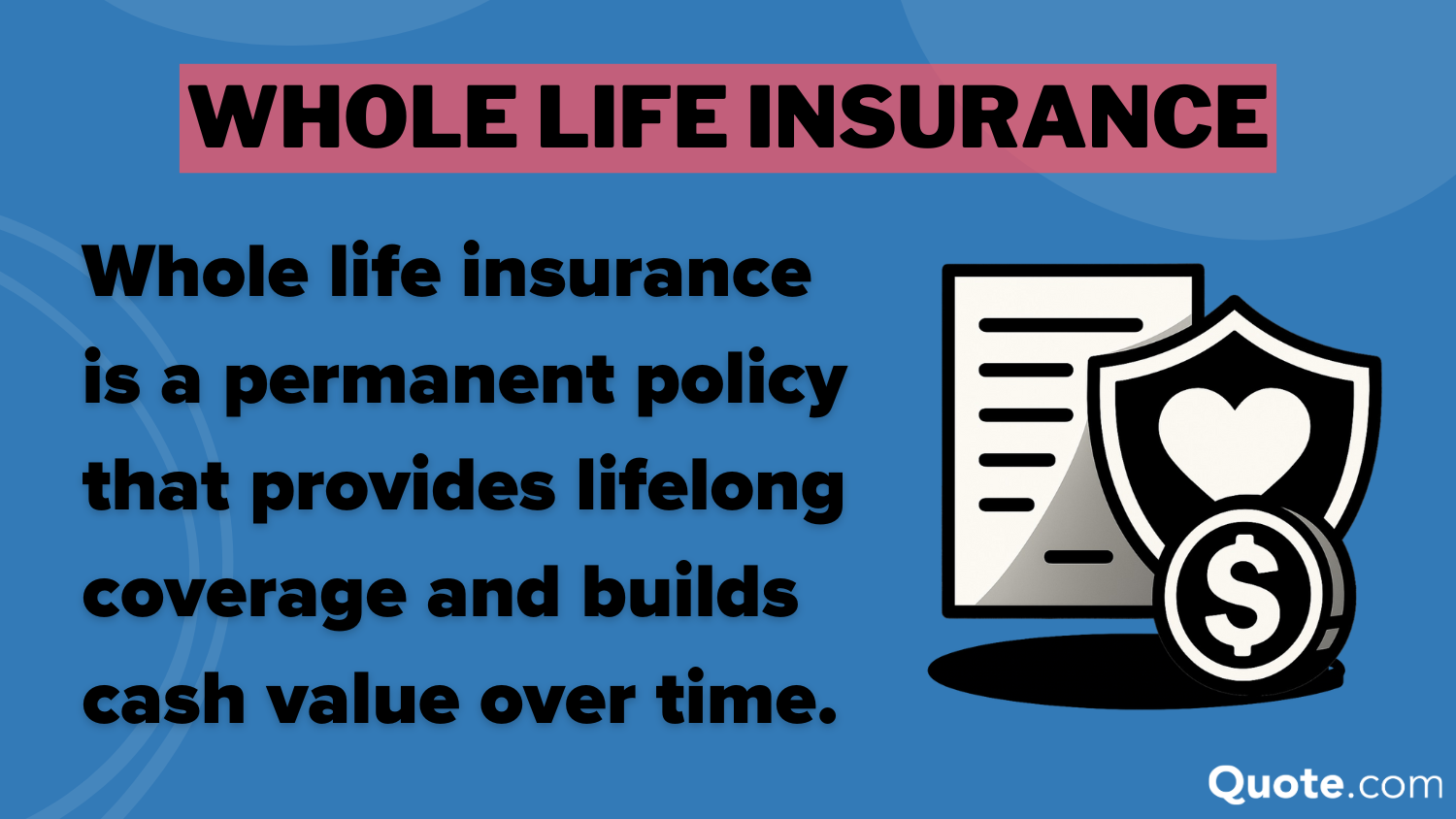
The whole life insurance meaning refers to a type of permanent life insurance that provides lifetime coverage as long as premiums are paid. It guarantees a death benefit for your beneficiaries and builds cash value over time.
Do whole life policies have cash value?
Yes, whole life insurance policies include a cash value component that builds over time on a tax-deferred basis. You can borrow against this whole life insurance policy cash value or use it later in life.
If a cash value option is right for you, compare whole life insurance plans in 2 minutes or less using our free quote tool.
Does whole life insurance expire?
No, whole life insurance does not expire as long as premiums are paid. Unlike term life insurance, which ends after a set number of years, whole life offers lifetime coverage. Find Out More: Whole vs. Term Life Insurance
Do I need a medical exam for whole life insurance?
You don’t always need a medical exam for whole life insurance. Many insurers offer no-medical-exam policies, where you qualify by answering a few health questions instead of completing a physical.
🩺That said, traditional whole life policies that require a medical exam often come with higher coverage limits and lower premiums, especially if you’re in good health.
Who needs whole life insurance?
Whole life insurance is a good fit for people who want lifelong coverage, need support with estate planning, or want to leave a guaranteed inheritance. It can also benefit business owners and families who value steady cash value growth.
If you need to secure whole life insurance, whole life quotes are just a click away.
What is the best age to buy whole life insurance?
The best age to buy whole life insurance is usually when you’re young and healthy, since premiums are lower and easier to lock in for life.
Many people choose to buy in their 20s or 30s to build cash value over time and get the most from the policy’s long-term savings and whole life insurance benefits.
How much whole life insurance do I need?
The right amount of whole life insurance depends on your income, financial goals, debts, and who depends on you. A common approach is to carry coverage equal to 7–10 times your income, or enough to pay off debts, support a spouse, and cover final expenses.
Get personalized life insurance quotes to estimate the right amount of whole life coverage for your needs.
What are the three types of whole life insurance?
The three common types of life insurance with whole coverage are:
- Traditional Whole Life: Fixed premiums with guaranteed lifetime coverage and cash value.
- Participating Whole Life: May pay dividends that can be used in several ways.
- Limited-Pay Whole Life: Pay premiums for a set time while coverage lasts for life.
These policies mainly differ in how premiums are paid and whether they can earn dividends.
Can I switch from term to whole life insurance?
Yes, many term life insurance policies include a conversion option that lets you switch to whole life insurance without a medical exam.
This can be a good option if you want permanent coverage and the ability to build cash value. Keep in mind that whole life insurance costs more than term coverage.
How much does whole life insurance cost?
The average cost of whole life insurance per month ranges from about $100 to $200 for a $250K policy. Higher coverage amounts cost more. For example, a $1M policy may run about $700 to $1K or more per month, depending on the insurer and the details of the policy.
If you’re looking for affordable life insurance premiums, try our comparison tool and find cheap whole life insurance coverage that fits your needs.
How much a month is a $500K whole life insurance policy?
Can I withdraw money from whole life insurance?
What is the cash value of a $10K whole life insurance policy?
What are the disadvantages of whole life insurance?
Is whole life insurance a good investment?
Why are some people against whole life insurance?
What happens if I stop paying for whole life insurance?
What happens to whole life insurance when I retire?
Related Articles
-
Jan 2026

10 Cheapest Life Insurance Companies in 2026
-
Jan 2026
Life Insurance Beneficiaries in 2026
-
Apr 2026
Life Insurance Riders (2026)
-
Apr 2026
MetLife Insurance Review for 2026
-
Jan 2026
How Much Life Insurance You Need in 2026



Get a FREE Quote in Minutes
Insurance rates change constantly — we help you stay ahead by making it easy to compare top options and save.