Flood Insurance: Coverage, Costs & Requirements (2026 Guide)
Flood insurance covers water damage from flooding and helps protect homes in high-risk areas. Auto-Owners offers the cheapest flood insurance rates at $98 per month, but homeowners in Louisiana and Florida pay much higher premiums. Flood insurance companies offer coverage through the NFIP or private policies.
Read more





Table of Contents
Table of Contents

Insurance and Finance Writer
Alexandra Arcand is an outreach administrator and insurance expert located in North Central Ohio. She has a passion for writing, investing, and education. As an insurance content writer for over three years, Alexandra has first-hand experience in business finance, economics, and real estate. She leads an outreach writing team that specializes in travel, real estate, healthcare, law, finance, an...
Alexandra Arcand

Senior Director of Content
Sara Routhier, Senior Director of Content, has professional experience as an educator, SEO specialist, and content marketer. She has over 10 years of experience in the insurance industry. As a researcher, data nerd, writer, and editor, she strives to curate educational, enlightening articles that provide you with the must-know facts and best-kept secrets within the overwhelming world of insurance....
Sara Routhier

Mortgage Loan Originator
Steve Crowell is a New Hampshire based mortgage loan originator with Luminate Home Loans, Inc. After graduating from the University of New Hampshire in 2003 with a BS in Business and Economics and a BA in History, he went on to get his broker license in 2005. In 2021, he was recognized as a Luminate Home Loans “Circle of Excellence” top agent. Steve works as a trusted resource for clients w...
Steve Crowell
Updated June 2026
Flood insurance protects homeowners from financial loss caused by rising water and flood-related damage not covered by standard home policies.
- Flood insurance covers water damage not included in home policies
- The National Flood Insurance Program (NFIP) sells most flood plans
- Homeowners in coastal states like Florida pay the most for coverage
Most flood insurance policy offered through the NFIP, a federal program managed by flood insurance FEMA that sets coverage limits up to $250,000 for homes and $100,000 for belongings. Learn More: Best Home Insurance for High-Value Properties
Rates start around $98 per month and increase based on flood risk, location, and coverage level. Get a free flood insurance quote from the cheapest insurance companies by entering your ZIP code into our free tool.
What is Flood Insurance?
Flood insurance is a separate policy that covers damage caused by rising water, such as heavy rain, storm surge, or overflowing rivers.
It helps pay to repair your home’s structure and replace certain belongings after a flood event.
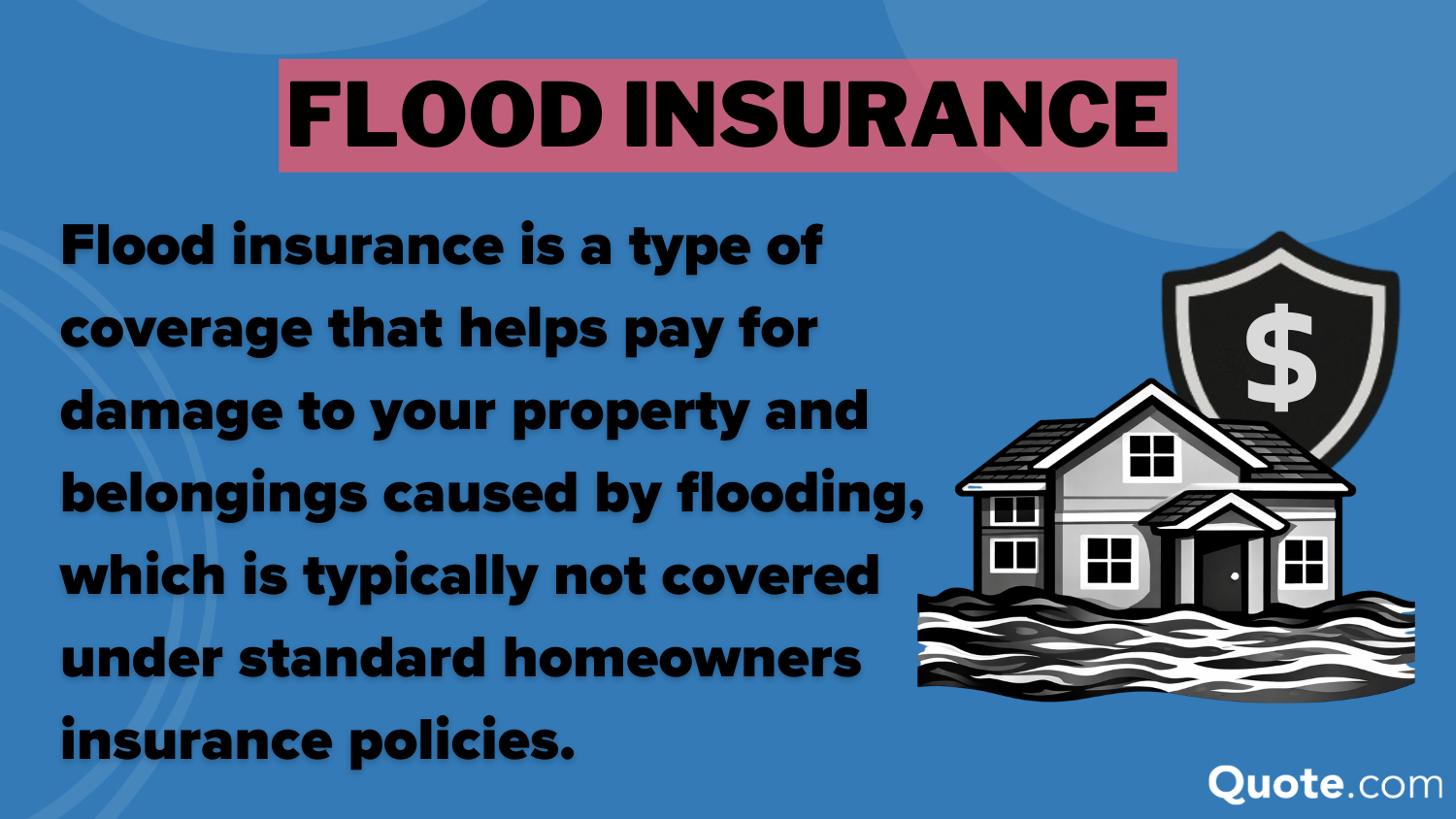
Homeowners in high-risk flood zones usually need flood insurance if they have a mortgage loan.
Lenders may mandate coverage for the duration of the loan if the property falls within FEMA-designated flood areas.
Flood Insurance Overview| Topic | Coverage | Policy Info |
|---|---|---|
| Definition | Flood damage | Separate flood policy |
| Main Provider | Federal program | Run by FEMA |
| Private Option | Non-NFIP policies | Offered by insurers |
| Required for | High-risk zones | Needed for some loans |
| Waiting Period | 30-day delay | Waived for loan closings |
Most policies are issued through the National Flood Insurance Program (NFIP), which is managed by FEMA.
Along with designating flood zones, FEMA establishes policy coverage limits and eligibility rules. Approved insurance companies handle policy sales and servicing.
Private flood insurance offers more flexibility, helping homeowners match coverage to their risk and property needs.
Michelle Robbins Licensed Insurance Agent
Most NFIP policies take about 30 days to take effect, but this wait can be skipped if you buy the policy at your mortgage closing.
Private flood plans have shorter wait times, and homeowners can choose to buy flood coverage from a private insurer, though pricing and coverage may differ.
See More: Is home insurance required?
What Flood Insurance Policies Cover
Flood insurance mainly protects the important parts of your home that keep it standing and working.
This includes things like the walls, foundation, electrical wiring, plumbing, and systems such as heating, cooling, and water heaters.
Flood Insurance Policies: Included vs. Excluded| Item | Covered? | Details |
|---|---|---|
| Building Structure | ✅ | Walls, framing, foundation |
| Cash and Valuables | ❌ | Cash, jewelry, collectibles |
| Electrical Systems | ✅ | Panels, outlets, wiring |
| Finished Basement | ❌ | Drywall and wall finishes |
| Floor Coverings | ❌ | Carpet and floor materials |
| Home Appliances | ❌ | Portable household items |
| Household Furniture | ❌ | Tables, sofas, and chairs |
| HVAC Equipment | ✅ | Heating and cooling units |
| Landscaping Features | ❌ | Trees, plants, outdoor areas |
| Mold Damage Claims | ❌ | Preventable mold damage |
| Personal Property | ⚠️ Add-on | Separate contents coverage |
| Plumbing Systems | ✅ | Pipes and plumbing fixtures |
| Temporary Housing | ❌ | Temporary living expenses |
| Motor Vehicles | ❌ | Covered under auto policies |
| Water Heaters | ✅ | Installed hot water tanks |
Many everyday items inside your home are not automatically covered. Things like furniture, clothes, and appliances usually require an added contents policy if you want them protected.
Areas like finished basements, carpets, and outdoor features like plants and yards are also often not covered or have limits.
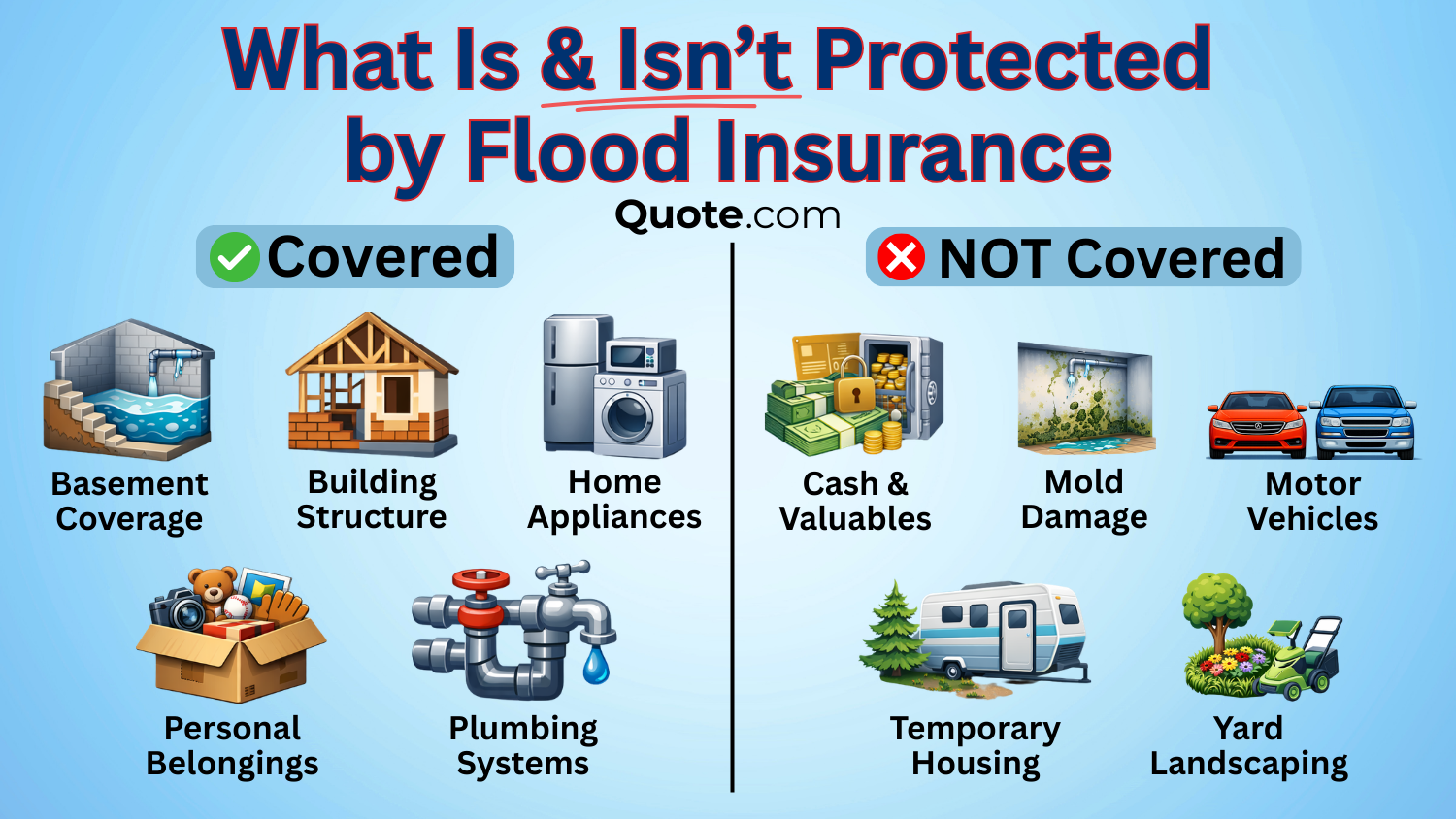
Some items are not covered at all. Cash, jewelry, cars, and hotel stays after a flood are usually excluded and must be covered by other insurance or paid out of pocket.
Mold damage may also not be covered if it could have been avoided, so quick cleanup after a flood is important.
Important Details: 8 Types of Homeowners Insurance Policies
Flood Insurance Requirements & Exclusions
Flood insurance only covers certain types of water damage. Usually, the water must come from outside and affect more than one property or a large area, like heavy rain, rivers overflowing, or fast snowmelt.
These are the kinds of events that are considered real floods. Water problems that start inside the home are not covered.
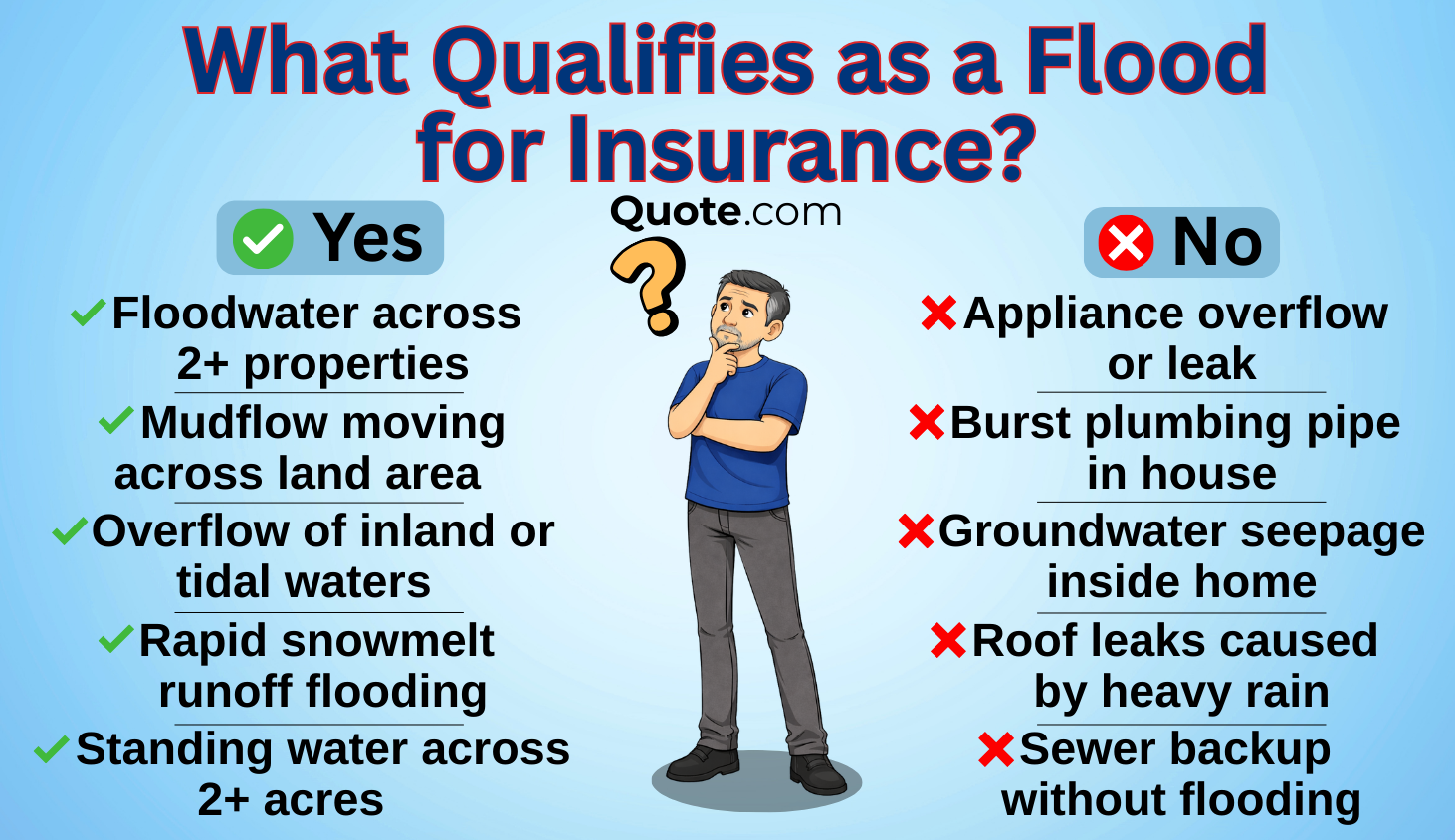
This includes things like leaking appliances, broken pipes, or water slowly coming in through the ground.
Damage from roof leaks or sewer backups without outside flooding is also not included. Learn more in our guide to homeowners insurance coverage.
Free Home Insurance Comparison
Compare Quotes From Top Companies and Save
Comparing Private Flood Insurance and NFIPs
Flood insurance can come from the federal NFIP program or from private insurance companies, and they work a bit differently.
NFIP policies are backed by the government and follow set rules for coverage and limits. Private flood insurance is offered by companies and can vary depending on where you live, but it often gives you more options.
NFIP vs. Private Flood Insurance: Key Differences| Feature | NFIP | Private Flood Insurance |
|---|---|---|
| Availability Areas | Participating communities | Availability varies by state |
| Basement Coverage | Limited basement coverage | Broader basement coverage |
| Coverage Customization | Standard federal policy | Flexible coverage options |
| Loss of Use Coverage | Loss of use not included | Loss of use often included |
| Building Coverage Limit | $250K building limit | Often $500K+ building limit |
| Contents Coverage Limit | $100K contents limit | Higher contents limits |
| Insurance Provider | Federal program (FEMA) | Private insurance carriers |
| Premium Structure | FEMA Risk Rating 2.0 | Carrier pricing models |
| Replacement Cost | Primary homes if eligible | Often full replacement cost |
| Waiting Period | 30-day waiting period | 10–14 day waiting period |
One big difference is how much coverage you can get. NFIP plans usually have lower limits for both your home and your belongings.
Private policies often allow higher limits, which can be helpful if your home or items are worth more. Some private plans may also help pay for living costs if you need to leave your home after a flood.
Basements are also treated differently. NFIP coverage is limited and usually only covers basic systems and parts of the structure.
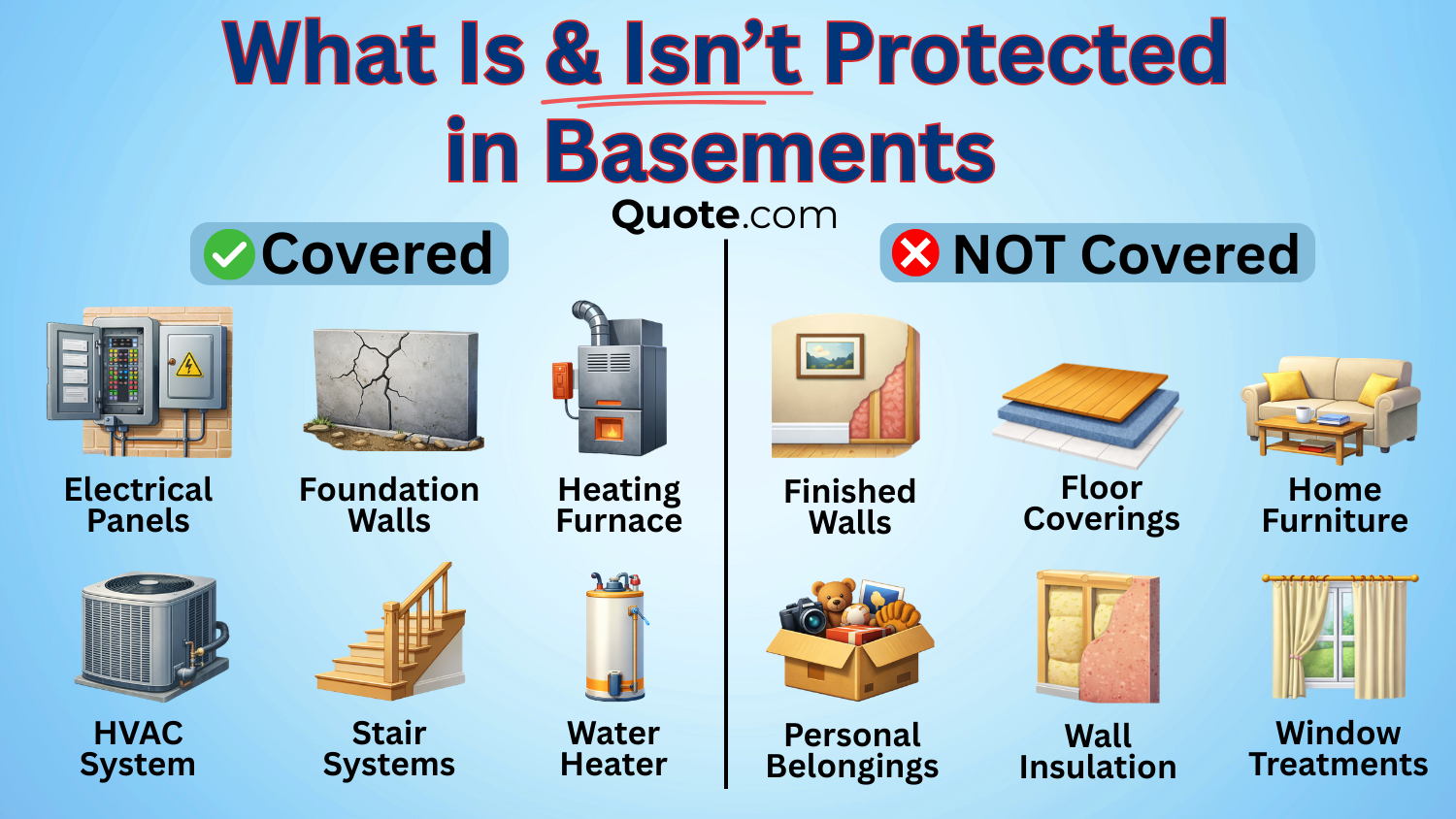
Private insurance may cover more items in the basement, giving you better protection. Private plans also tend to be more flexible, while NFIP policies are the same for everyone.
There are also differences in waiting times and pricing. NFIP policies usually take about 30 days to start, while private insurance can begin sooner.
Costs are set by FEMA for NFIP, but private companies set their own prices based on your risk and location. Check Out This Page: How to Compare Home Insurance Quotes
Comparing the Cost of Flood Insurance
Flood insurance is often provided through a mix of government programs and private companies, which explains the different “Program” types listed. Most insurers do not create their own flood policies.
Instead, they offer coverage through the NFIP, a federal program run by FEMA with standard limits of up to $250,000 for the home and $100,000 for personal belongings.
Companies like Allstate, Nationwide, and State Farm participate in the Write-Your-Own (WYO) program, where they handle customer service and sales, but the federal government underwrites the policy and pays claims.
AAA vs. Competitors: Flood Insurance Monthly Rates & Access Options| Company | Premium | Program | Sales Channel |
|---|---|---|---|
 | $107 | NFIP WYO | AAA Network |
 | $105 | NFIP WYO | Captive Agents |
 | $110 | NFIP WYO | Captive Agents |
 | $120 | NFIP WYO | Captive Agents |
 | $102 | NFIP partner | Partner Network |
 | $108 | NFIP WYO | Captive Agents |
 | $112 | NFIP WYO | Captive Agents |
 | $101 | Private & NFIP | Partner Network |
 | $125 | NFIP WYO | Captive Agents |
 | $109 | Private & NFIP | Independent Reps |
Some companies take a different approach by working with partner carriers or offering private flood insurance. See Our Article: 9 Best Home Insurance Companies
For example, Geico at $102 monthly may connect customers with another insurer that issues the policy, while Auto-Owners at $98 a month relies on partners and independent agents to provide coverage.
USAA also stands out by offering both NFIP and private options, but policies are only available to military members and their families.
Compare Now: Allstate, vs. Farmers, Geico, Progressive, and State Farm Insurance Review
Flood Insurance Costs Over Time
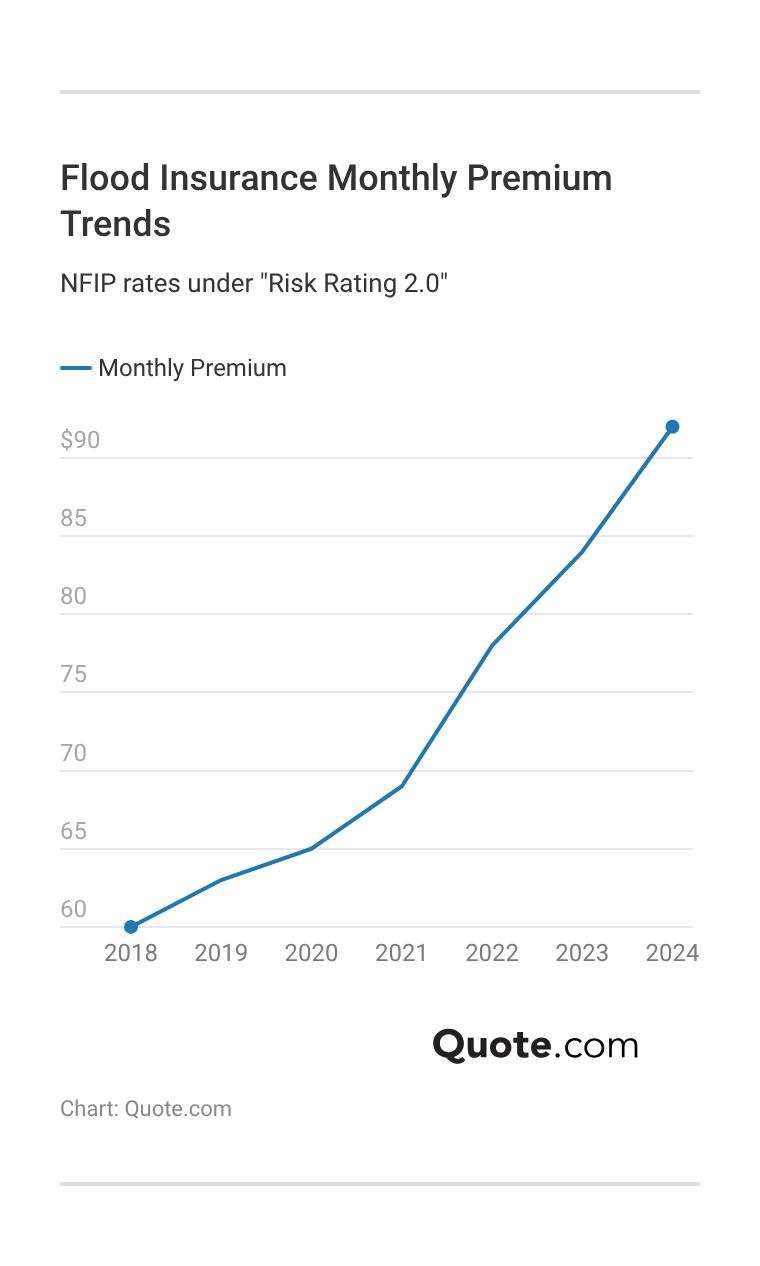
Flood insurance cost have steadily increased over time, with average monthly premiums rising from about $60 to over $90 in recent years.
This increase reflects higher flood risks, updated FEMA pricing models, and rising repair costs.
While some companies still offer lower rates starting around $98 per month, prices vary based on your location, flood zone, and coverage level.
Homeowners can save money by comparing quote for flood insurance instead of picking the first option. Choosing a higher insurance deductible can lower your monthly cost.
Look for insurers that offer both NFIP and private flood insurance so you can compare options and get the coverage that fits your needs best.
Dani Best Licensed Insurance Producer
And only getting the coverage you need helps avoid extra expenses. Making small home updates, like adding vents, can also help lower risk.
Buying a policy early can help you avoid higher prices later. Living in a lower-risk area or updating your flood zone can also reduce your cost.
FEMA Flood Insurance Monthly Premiums
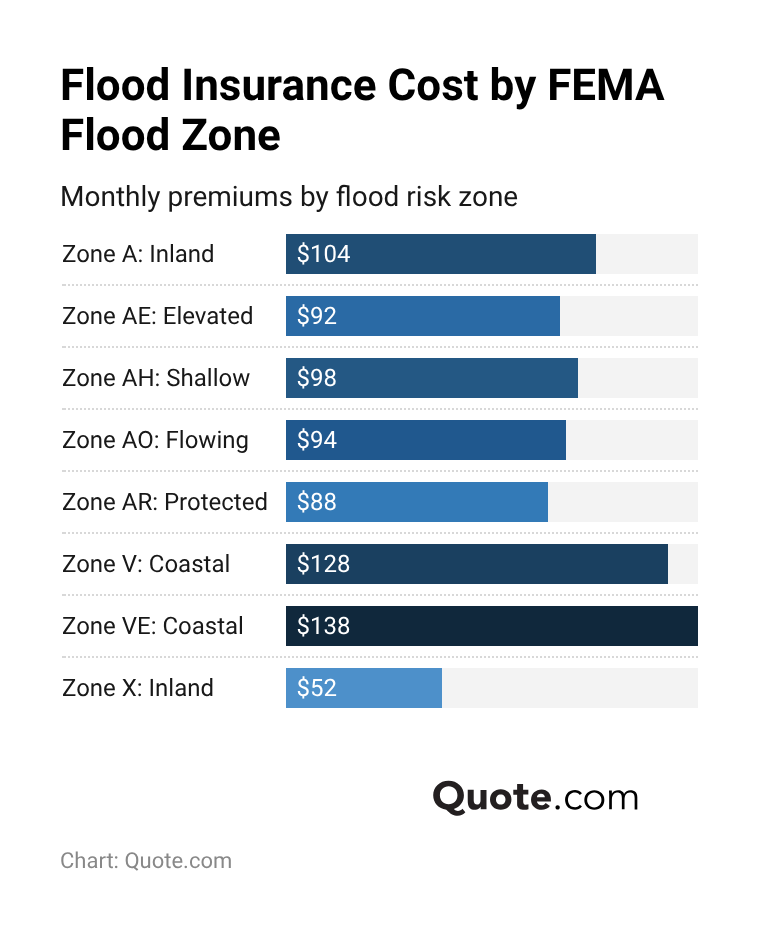
FEMA flood insurance rates are based on your flood zone, which shows how likely your area is to flood. Lower-risk areas like Zone X have the lowest costs at about $52 per month.
While coastal zones have the highest risk and the highest costs, with Zone V at $128 and Zone VE at $138 per month.
FEMA uses several simple factors to set your rate. Your flood zone matters most, but your home’s height above ground, how close it is to water, and past flooding in your area also affect the price.
The value of your home and how much coverage you choose will also change your monthly cost.
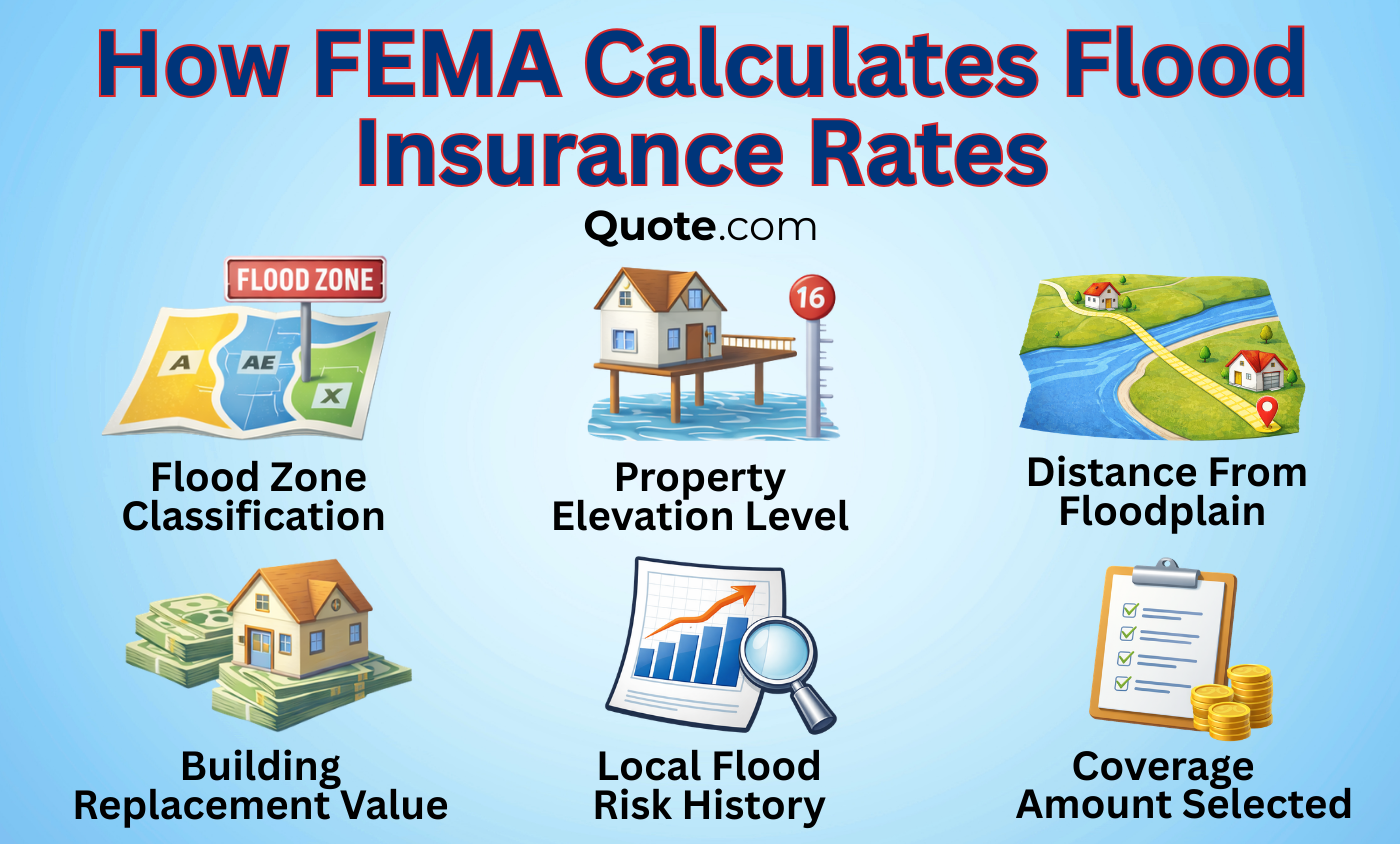
These details explain why flood insurance prices can vary a lot. Even homes in the same area may pay different rates based on their risk level.
Knowing how FEMA sets prices can help you pick the right coverage and avoid paying more than you need. Don’t Miss It: How much homeowners insurance do you need?
How Location Impacts Flood Insurance Premiums
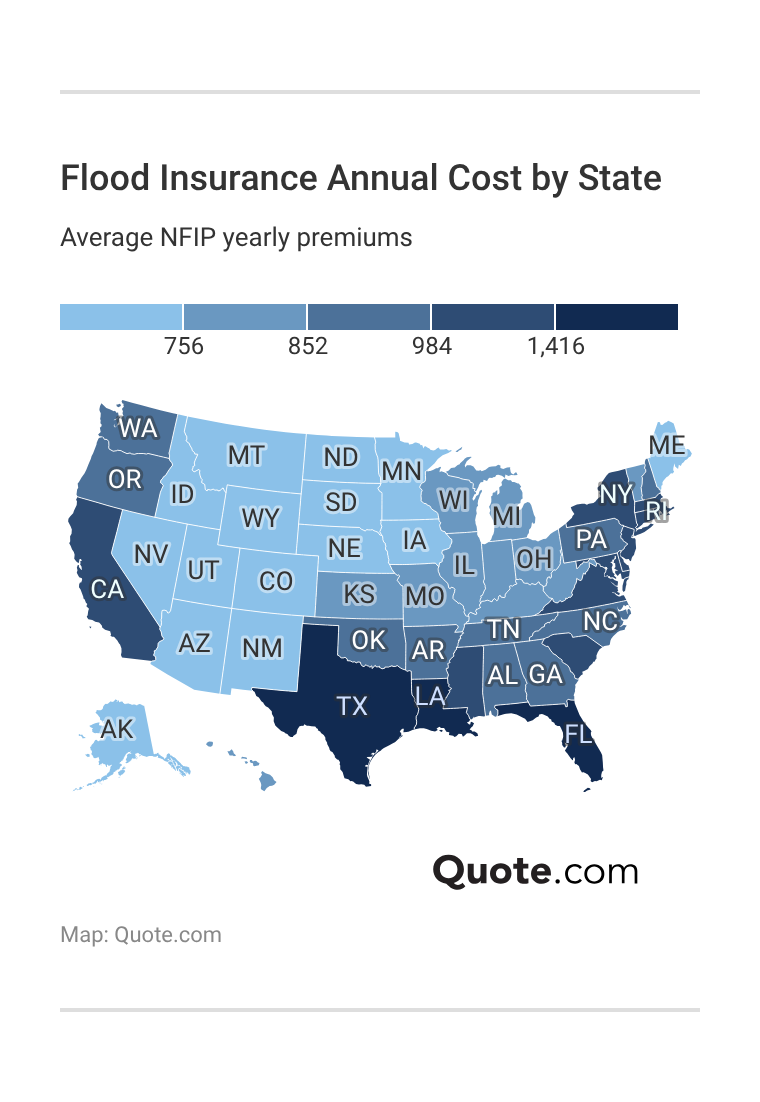
Location plays a big role in how much you pay for flood insurance. States near the coast usually have higher prices because they face more storms and flooding.
Flood insurance costs are generally higher along the Gulf and Atlantic coasts, while many inland states have lower rates. Read More: Home Insurance Rates by State
10 States With the Highest Yearly Flood Insurance Costs| State | Rank | Premium | Reason |
|---|---|---|---|
| Louisiana | #1 | $1,704 | High coastal surge risk |
| Florida | #2 | $1,536 | Frequent hurricane damage |
| Texas | #3 | $1,416 | Coastal storm surge risk |
| Mississippi | #4 | $1,176 | Gulf coastal flood zones |
| New Jersey | #5 | $1,152 | Atlantic surge exposure |
| Massachusetts | #6 | $1,128 | High coastal repair costs |
| Connecticut | #7 | $1,127 | River floodplain exposure |
| New York | #8 | $1,104 | Frequent tidal flooding |
| California | #9 | $1,068 | Dense coastal development |
| Rhode Island | #10 | $1,044 | Frequent coastal flooding |
Louisiana has the highest cost at around $140 per month, followed by flood insurance in Florida at $128 a month and Texas at $118 monthly. These areas often face hurricanes and rising water levels, which make insurance more expensive.
States like Connecticut and New York have similar prices because of river and coastal flooding. California is also on the list due to flood risk in some areas.
Mississippi, New Jersey, and Massachusetts are all over $1,100 per year. However, prices can still change within each state based on local risk.
This means your cost depends not just on your state, but also on how close you are to water and how likely flooding is in your area. Use insurance comparison websites to compare multiple prices in your area and get the best deal.
How to Buy Flood Insurance
The way you purchase a policy also varies by company and follows a few simple steps. Start by checking your FEMA flood zone to understand your risk level, then estimate how much coverage you need for your home and belongings.
Next, compare flood insurance options and choose a provider that fits your budget and coverage needs. You can buy through captive agents who sell from one company, which is popular with providers like Erie and Allstate.
Independent agents compare multiple insurers for you, or buy flood insurance online or by phone. Enter your ZIP code to start shopping for plans now.
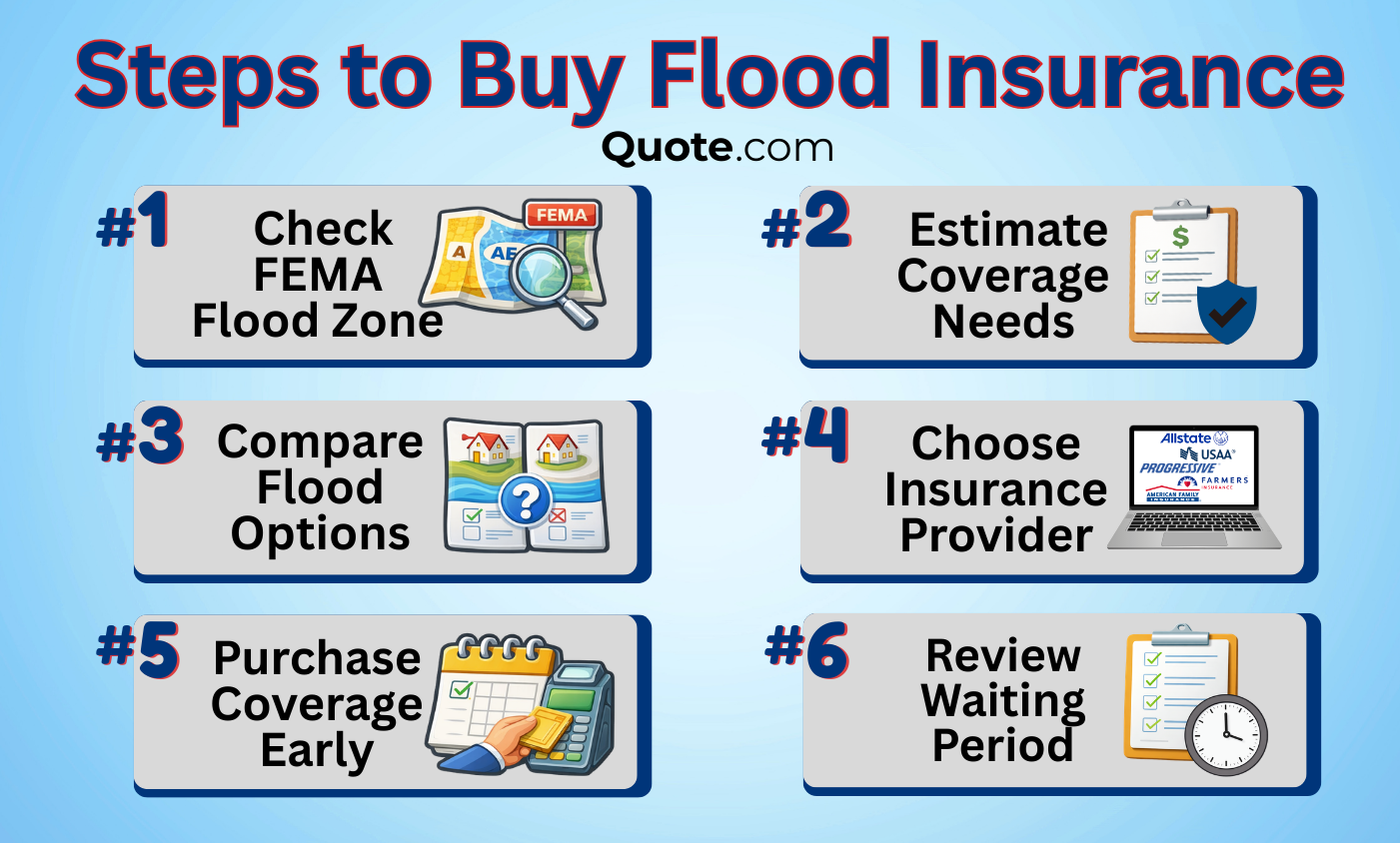
It’s also important to purchase coverage early and review the waiting period, so your policy is active when you need it.
These differences can affect how easy it is to shop, what options are available, and the level of support you receive during the buying process and when filing a claim. Get The Details: How to File a Wildfire Home Insurance Claim
Free Home Insurance Comparison
Compare Quotes From Top Companies and Save
When You Might Need Flood Insurance
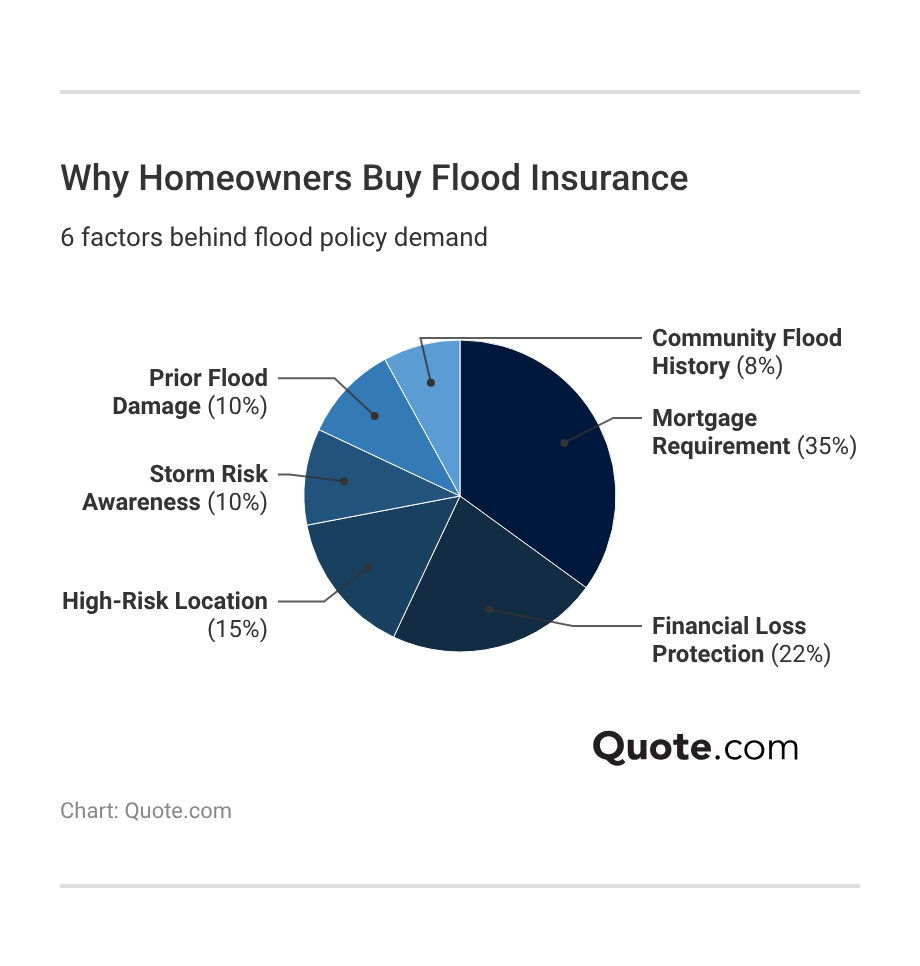
Homeowners often buy flood insurance because they are required to. About 35% of buyers get coverage, especially if they live in high-risk areas with a mortgage.
Another major reason is to protect against costly damage, since floods can lead to expensive repairs that regular home insurance does not cover.
Many people also choose coverage because they live in areas prone to flooding or have seen flood damage happen before.
Choosing the right provider also matters, with companies like Auto-Owners offering the lowest rates. Allstate and State Farm also stand out for strong service and reliable coverage. Don’t Miss It: Allstate Insurance Review
Comparing options can help homeowners in flood zones or high-risk weather areas find the best balance between price and protection.
Finding affordable premiums for home insurance is easy with our free quote comparison tool. Just enter your ZIP code to find cheap flood insurance coverage for your home.
Frequently Asked Questions
Who has the best flood insurance?
Auto-Owners has the lowest rates at about $98 per month, while Allstate and State Farm flood insurance stand out for strong service and reliable NFIP-backed coverage. Learn more in our guide: Auto-Owners Insurance Review
What exactly does flood insurance cover?
Flood insurance covers damage from rising water, including your home’s structure, electrical systems, plumbing, and major equipment. Personal items are only covered if you add contents coverage.
How much does flood insurance typically cost?
Flood insurance usually costs between $98 and $138 per month on average. Your exact price depends on your location and property value. Enter your ZIP code to get flood insurance quotes from local companies for free.
How much is flood insurance on a $400,000 house?
Flood insurance costs vary, but often fall within the $98 to $125 per month range, depending on location, flood risk, and coverage limits. Learn More: Cheapest Home Insurance Companies
Can you add flood insurance at any time?
Yes, you can buy flood insurance at any time. However, most policies have a 30-day waiting period before coverage starts, unless required for a mortgage closing.
How can I avoid paying for flood insurance?
You may avoid flood insurance if your home is not in a high-risk FEMA flood zone and your lender does not require it. You can also request a flood zone review if you believe your risk is lower.
What are the two types of flood insurance?
The two main types are NFIP (government-backed) flood insurance and private flood insurance. NFIP offers standard coverage, while private policies may offer higher limits and more options. See which is the best insurance for high-risk homes.
What is the FEMA 80% rule?
The FEMA 80% rule generally means your home should be insured for at least 80% of its replacement cost to qualify for full reimbursement on certain claims.
Don’t wait until it’s too late. Protect your home by using our free quote comparison tool to find affordable home flood insurance today.
Who decides if you need flood insurance?
Your mortgage lender decides if flood insurance is required, based on FEMA flood maps. If your home is in a high-risk zone, coverage is usually mandatory.
Can you get flood insurance if you’re not in a flood zone?
Yes, you can still buy flood insurance even if you are not in a high-risk zone. In fact, lower-risk areas often have cheaper premiums. See More: Home Insurance Rates
What should I not say to a home insurance adjuster?
What type of people buy flood insurance?
Does renters insurance cover flood damage?
Related Articles
-
Sep 2026

Best Home Insurance in Missouri for 2026
-
Aug 2026
Best Home Insurance in North Dakota for 2026
-
Aug 2026
Best Home Insurance in New Mexico for 2026
-
May 2026
Dwelling Coverage for Homeowners: What it Covers & Costs in 2026
-
Aug 2026
Best Home Insurance in Delaware for 2026
-
Apr 2026
Home Insurance Rates by State in 2026





Get a FREE Quote in Minutes
Insurance rates change constantly — we help you stay ahead by making it easy to compare top options and save.