Home Insurance Premiums: How They Work & Cost Factors (2026)
Home insurance premiums are the monthly or yearly payments you make to keep coverage that helps protect your home, belongings, and liability costs. Mercury rates start at $78 a month, but your premium can go up based on your coverage, deductible, credit, claims, home age, and weather risks.
Read more





Table of Contents
Table of Contents

Insurance and Finance Writer
Karen Condor is an insurance and finance writer who has degrees in both journalism and communications. She began her career as a reporter covering local and state affairs. Her extensive experience includes management positions in newspapers, magazines, newsletters, and online marketing content. She has utilized her research, writing, and communications talents in the areas of human resources, f...
Karen Condor

Senior Director of Content
Sara Routhier, Senior Director of Content, has professional experience as an educator, SEO specialist, and content marketer. She has over 10 years of experience in the insurance industry. As a researcher, data nerd, writer, and editor, she strives to curate educational, enlightening articles that provide you with the must-know facts and best-kept secrets within the overwhelming world of insurance....
Sara Routhier

Licensed Insurance Broker
Zach Fagiano has been in the insurance industry for over 10 years, specializing in property and casualty and risk management consulting. He started out specializing in small businesses and moved up to large commercial real estate risks. During that time, he acquired property & casualty, life & health, and surplus lines brokers licenses. He’s now the Senior Vice President overseeing globa...
Zach Fagiano
Updated May 2026
Home insurance premiums are the amount homeowners pay to protect their property, belongings, and liability risks.
- Mercury has the cheapest home insurance at $78 monthly
- Home insurance premiums increase quickly after a claim
- Rising rebuild costs and weather risks continue to increase premiums
The insurance deductibles and coverage limits you choose for your policy will impact your premiums. Your credit score and local risks in your area can also raise prices.
This guide explains the home insurance premium meaning, how rates are calculated, and why claims, weather risks, and rebuild costs increase rates. Secure cheap insurance for your home by entering your ZIP code into our free quote comparison tool.
What Are Home Insurance Premiums?
Homeowners insurance premiums are the amount you pay to maintain coverage that protects your home’s structure, personal belongings, and liability risks.
Insurance companies use details like your deductible, ZIP code, claims history, and rebuild costs to calculate risk and determine your premium.

A home insurance premium increase is often caused by weather exposure, location risks, and higher dwelling coverage limits.
For instance, homes in high-risk weather areas or properties with older roofs often have higher premiums because insurers expect more expensive claims and repair costs.
Home Insurance Premiums: Cost & Coverage| Topic | Explanation |
|---|---|
| Average Cost | Typical yearly premium range |
| Claims History | Amount of protection chosen for plan |
| Construction Type | Home build materials and structure |
| Coverage Limits | Coverage limits selected in policy |
| Credit Score | Insurer-based credit rating factor |
| Deductible Amount | Cost you owe before insurance pays |
| Discount Eligibility | Eligibility for available discounts |
| Dwelling Age | Age and condition of the home |
| Home Security | Installed safety and alarm systems |
| Location Risks | Local risks tied to area location |
| Policy Type | Type of policy and coverage form |
| Property Size | Home size based on square footage |
| Rebuild Cost | Estimated cost to rebuild home |
| Roof Condition | Condition and age of the roof |
| State Regulations | State laws that guide pricing rules |
| Weather Exposure | Regional storm hazard risk level |
Even small changes like filing a claim, replacing a roof, or adding security systems can increase or reduce your premium depending on how insurers evaluate your home’s risk level.
Higher deductibles can lower home insurance rates because you agree to pay more out of pocket before coverage applies after a claim.
Important Details: 8 Types of Homeowners Insurance Policies
Free Home Insurance Comparison
Compare Quotes From Top Companies and Save
How Home Insurance Companies Set Premiums
A home insurance premium calculator estimates your rate based on how much risk your property presents to the insurer.
Filing multiple claims can increase your premium because insurers expect a higher chance of future payouts.

Companies also consider your dwelling coverage, roof condition, and your home’s age and rebuild costs to calculate how likely you are to file a claim and how expensive repairs could be.
Home age and construction type affect rates because older homes and roofs usually cost more to repair, while stronger materials and security systems on newer properties may lower premiums.
Home Insurance Premiums: What Affects Your Rate| Category | Cost Impact |
|---|---|
| Claims History | Filing claims increases premiums |
| Construction Type | Stronger materials can lower costs |
| Coverage Limits | Higher limits increase premiums |
| Credit Score | Higher scores can reduce rates |
| Deductible Level | Higher deductible lowers premiums |
| Discount Eligibility | Discounts help reduce your price |
| Dwelling Age | Older homes can increase cost |
| Home Security | Security systems can lower rates |
| Location Risks | High-risk areas increase premiums |
| Policy Type | Policy features affect premiums |
| Property Size | Larger homes increase cost |
| Rebuild Cost | Higher rebuild cost raises price |
| Roof Condition | Older roofs can increase rates |
| State Regulations | State rules can affect pricing |
| Weather Exposure | Severe weather can raise premiums |
Larger homes have higher coverage limits and cost more to insure because rebuild and repair expenses are higher.
Location also plays a major role, since policyholders in high-risk areas are more likely to file home insurance claims for wildfires, floods, or vandalism.
Choosing a higher deductible lowers your premium because you agree to pay more out of pocket before coverage applies.
Lower deductibles increase monthly rates because the insurer takes on more financial risk during a claim.
Homeowners Insurance Rates for Different Policy Limits
Comparing rates by coverage level is important because premiums rise as dwelling limits increase. Higher coverage limits can raise premiums by more than $150 per month.
Mercury has the cheapest rates, starting at $132 a month, but that premium more than doubles to $315 monthly for $500K in coverage. See More: Mercury Insurance Review
Home Insurance Monthly Premiums by Dwelling Coverage| Company | $200K | $300K | $400K | $500K |
|---|---|---|---|---|
 | $160 | $235 | $308 | $378 |
 | $142 | $215 | $283 | $345 |
 | $135 | $205 | $269 | $325 |
 | $168 | $255 | $327 | $395 |
 | $175 | $260 | $338 | $415 |
 | $132 | $200 | $258 | $315 |
 | $150 | $225 | $294 | $360 |
 | $155 | $230 | $302 | $370 |
 | $145 | $220 | $289 | $350 |
 | $152 | $225 | $296 | $365 |
Home insurance rates increase as dwelling coverage limits rise because insurers must pay more to rebuild or repair your home after a covered loss. Compare home insurance quotes online to see coverage rates in your neighborhood.
The cost of home insurance is based on several pricing factors that insurers use to estimate risk and future claim costs. Your home’s size, rebuild costs, location hazards, and policy deductibles affect how much you pay each month for coverage.
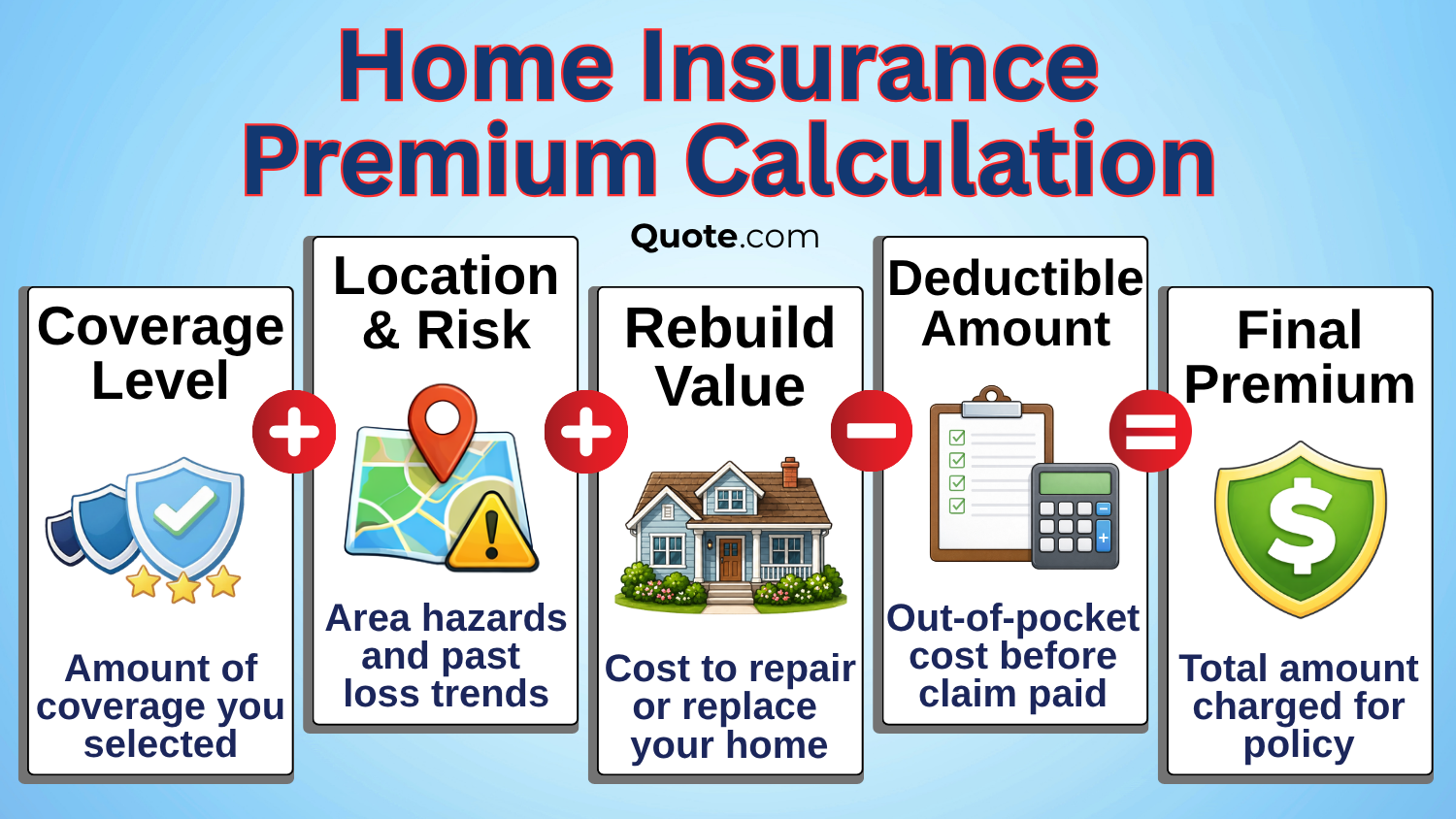
Homes in areas with storms, wildfires, or high repair costs often have higher rates because insurers expect more expensive claims and rebuilding expenses.
How much homeowners insurance do you need? Reviewing rebuild costs and deductible options can help balance price and protection.
How Deductibles Impact Home Insurance Costs
Your deductible is the amount you pay before your home insurance starts covering a claim. Higher deductibles can help lower monthly rates.
Lower deductibles increase monthly costs, but homeowners pay less out of pocket when they file a claim. You can compare home insurance rates by provider to see how deductibles affect monthly rates.
Home Insurance Monthly Premiums by Deductible| Company | $500 | $1K | $2K | $5K |
|---|---|---|---|---|
| $195 | $160 | $140 | $120 |
| $170 | $142 | $125 | $108 |
| $165 | $135 | $118 | $102 |
| $200 | $168 | $148 | $130 |
| $205 | $175 | $155 | $135 |
| $160 | $132 | $115 | $98 |
| $180 | $150 | $132 | $112 |
| $185 | $155 | $136 | $118 |
| $175 | $145 | $127 | $108 |
| $182 | $152 | $134 | $115 |
Mercury offers some of the cheapest home insurance premiums, with rates dropping from $160 per month with a $500 deductible to $98 per month with a $5,000 deductible.
Still, the lowest premium is not always the best choice if the deductible is too expensive to pay after damage or loss.
Choose a home insurance deductible you could realistically afford to pay tomorrow after a major claim.
Daniel Walker Licensed Insurance Agent
It’s important to choose a deductible that fits your budget. A lower monthly premium can save money now, but a high deductible may become difficult to afford when you need to file a claim.
Use our free quote tool to start comparing home insurance premiums and deductibles in your area.
How Localized Risks Affect Homeowners Insurance Prices
Your home’s location plays a major role in how much you pay for insurance. Higher-risk areas often need stronger homeowners insurance coverage limits, even if monthly premiums cost more.
Areas with higher crime, flooding, wildfires, or severe storms usually have higher premiums because insurers expect more claims and higher repair costs.
Home Insurance Monthly Premiums by Risk Factor| Company | Crime Rate | Fire Risk | Flood Zone | Wind Risk |
|---|---|---|---|---|
| $157 | $178 | $218 | $235 |
| $146 | $167 | $218 | $235 |
| $139 | $158 | $196 | $210 |
| $170 | $187 | $235 | $252 |
| $171 | $193 | $245 | $262 |
| $134 | $156 | $196 | $202 |
| $154 | $176 | $214 | $230 |
| $159 | $181 | $222 | $238 |
| $149 | $169 | $208 | $224 |
| $153 | $174 | $212 | $228 |
Mercury has the cheapest home insurance premiums in most risk categories, starting at $134 per month in higher-crime areas and $202 per month in wind-risk areas.
Checking local risk factors before buying coverage is important because the cheapest policy may not offer enough protection for homes in flood or storm-prone regions. Enter your ZIP code to check premiums now.
Home Insurance Costs Increase With Property Age
Older homes usually cost more to insure because aging roofs, plumbing, wiring, and building materials increase the chance of damage and expensive repairs.
Newer homes often qualify for lower premiums since they are built with updated materials and safety features that reduce claim risks. Get More Details: Best Home Insurance for New Construction
Home Insurance Monthly Premiums by Home Age| Company | <10 Yrs | 10 Yrs | 20 Yrs | 30 Yrs | 40+ Yrs |
|---|---|---|---|---|---|
| $92 | $108 | $128 | $152 | $181 |
| $84 | $99 | $118 | $141 | $167 |
| $81 | $96 | $114 | $136 | $162 |
| $96 | $113 | $135 | $161 | $192 |
| $101 | $118 | $141 | $168 | $201 |
| $78 | $92 | $109 | $130 | $154 |
| $87 | $103 | $123 | $147 | $175 |
| $90 | $106 | $126 | $150 | $179 |
| $85 | $100 | $119 | $142 | $169 |
| $88 | $104 | $124 | $148 | $176 |
Mercury has the cheapest home insurance premiums across every home age group, starting at $78 per month for homes under 10 years old and $154 for homes over 40 years old.
Home age matters when comparing the best homeowners insurance companies because lower premiums may not always include enough protection for older homes with higher rebuild costs.
Updating roofs, plumbing, electrical systems, and security features can help reduce premiums and improve coverage options.
How Credit Score Affects Home Insurance Rates
Insurance companies often use credit scores when setting homeowners insurance rates because they believe homeowners with stronger credit are less likely to file costly claims.
Credit can also affect mortgage rates, so lower scores may increase both monthly housing and insurance costs at the same time. Mercury has the cheapest home insurance premiums in every credit category.
Home Insurance Monthly Premiums by Credit Score
| Company | Excellent (800+) | Good (670–799) | Fair (580–669) | Poor (<580) |
|---|---|---|---|---|
| $160 | $192 | $268 | $325 |
| $142 | $171 | $238 | $290 |
| $135 | $162 | $225 | $280 |
| $168 | $202 | $281 | $335 |
| $175 | $210 | $293 | $345 |
| $132 | $158 | $219 | $270 |
| $150 | $180 | $251 | $300 |
| $155 | $186 | $259 | $310 |
| $145 | $174 | $242 | $290 |
| $152 | $182 | $254 | $300 |
The gap between good and poor credit can add more than $100 per month to a policy with some companies. Compare quotes now with our free online comparison tool.
Checking rates by credit tier can help homeowners avoid overpaying and find companies that are less strict about credit history.
See More: Is home insurance required?
Comparing Homeowners Policy Prices Across the U.S.
The average home insurance cost by ZIP code depends on location, weather risks, rebuild costs, crime rates, and local insurance rules.
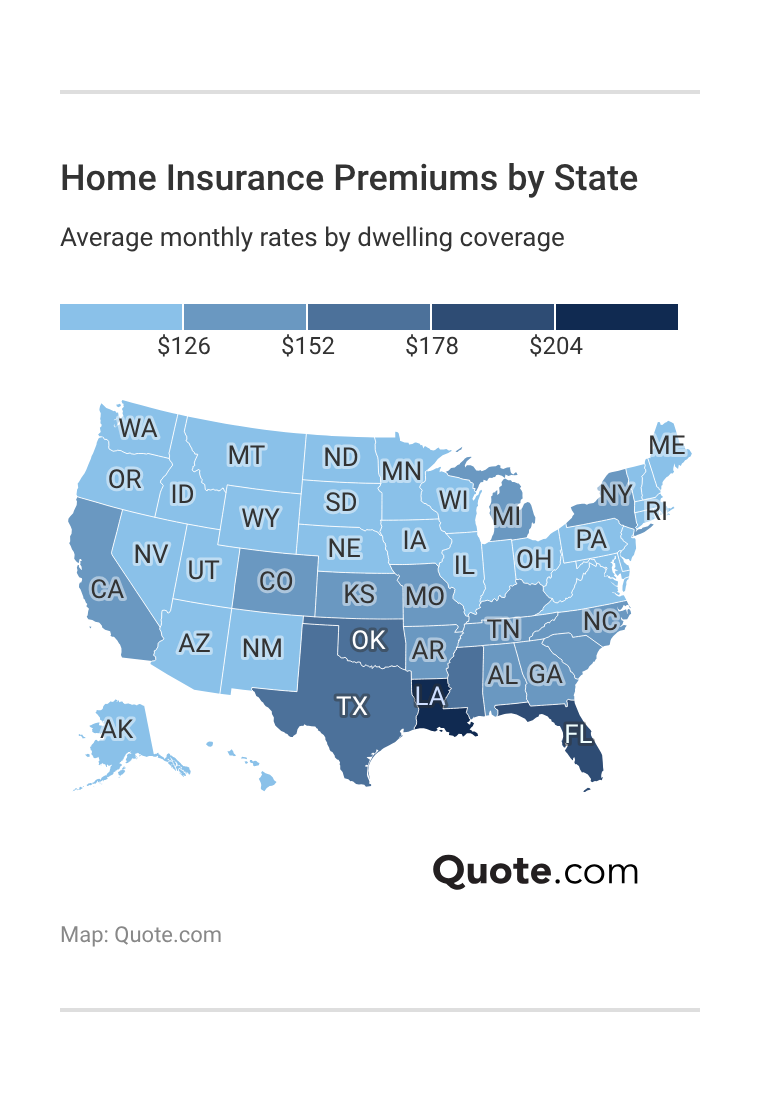
States like Louisiana and Florida usually have the highest rates because hurricanes, flooding, and storm claims are more common, while Texas, Oklahoma, and Colorado also see higher premiums from hail and wind damage.
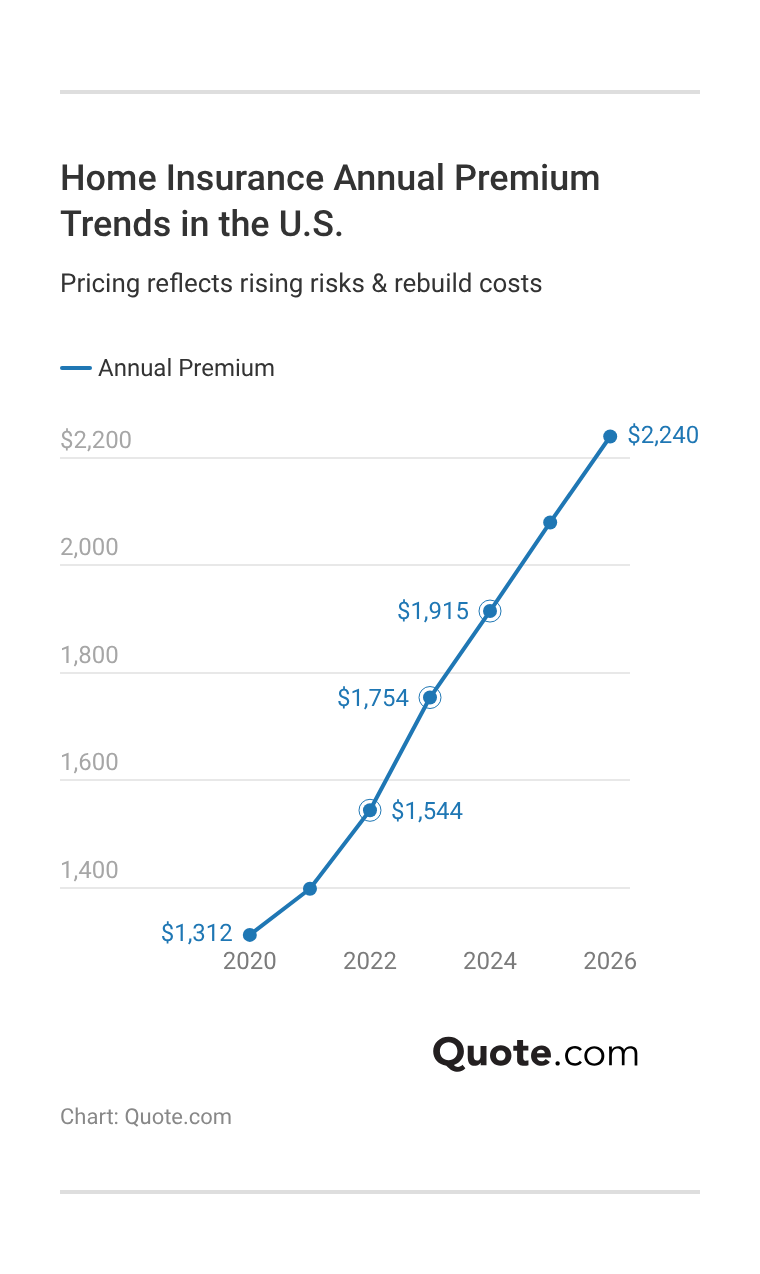
Pricing reflects rising risks and rebuild costs tied to hurricanes, wildfires, hailstorms, labor shortages, and more expensive construction materials.
Many insurers have also raised rates in high-risk states where storms and flooding happen more often. Policyholders in these states will see a bigger home insurance premium increase after a claim.
These rate increases make it more important for homeowners to compare rates, review deductible options, and update coverage regularly.
Even small changes like improving your roof, adding security systems, or increasing your deductible may help offset rising premium costs.
Read More: Home Insurance Rates by State
Common Types of Home Insurance Claims That Raise Rates
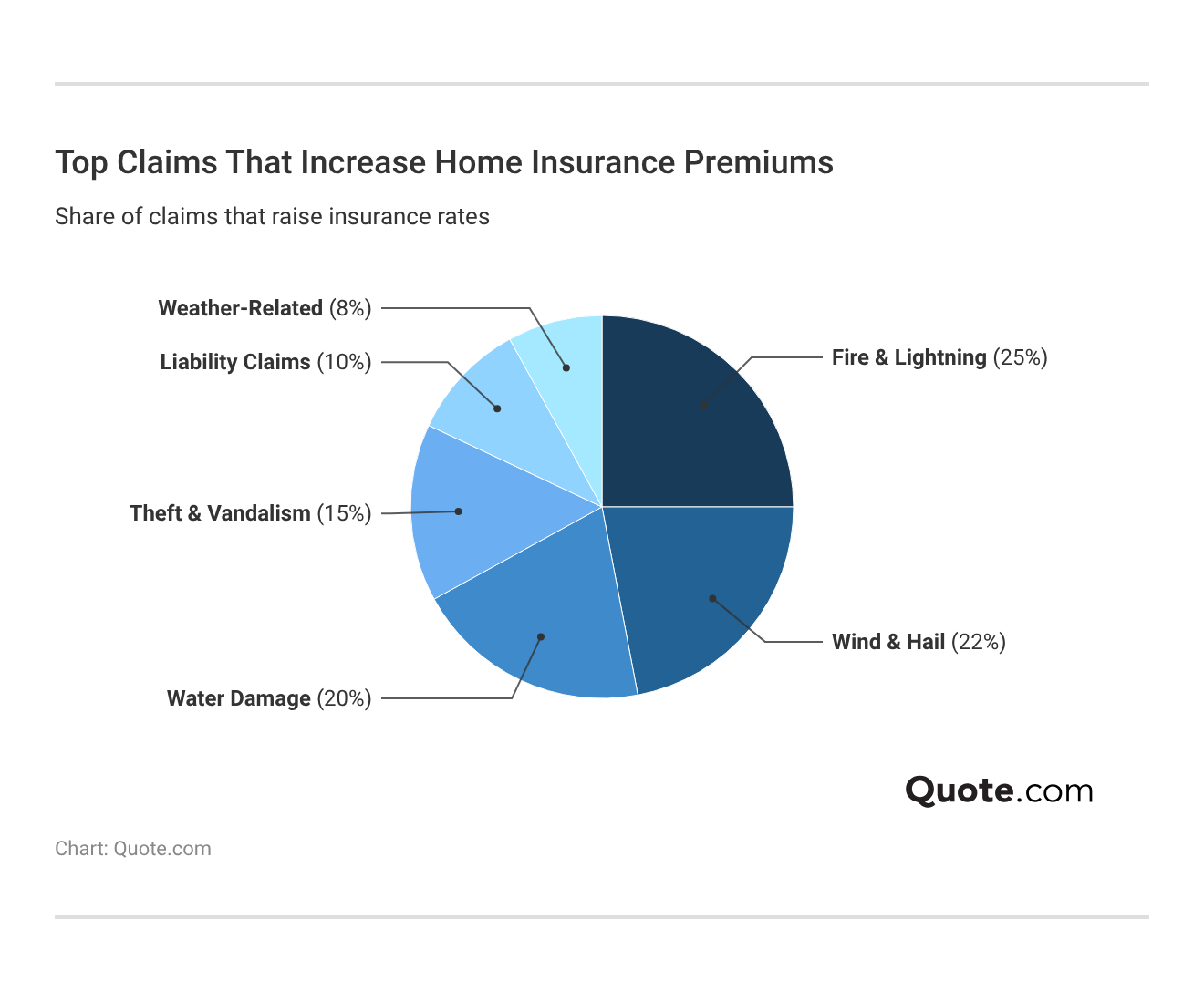
Fire and lightning claims account for some of the biggest losses for insurance companies, which is why they often lead to higher premiums.
Wind, hail, and water damage claims are also common, especially in areas with severe storms or older homes. See which company offers the best insurance for high-risk homes.
A home insurance premium increase after a claim is more likely when the damage is expensive or when multiple claims are filed within a short period.
Water damage, theft, and liability claims can also raise rates because insurers may view the property as a higher future risk.
Compare rates every year because home insurance premiums can change even if your home stays the same.
Kristine Lee Licensed Insurance Agent
Small maintenance issues like roof leaks, old plumbing, or broken gutters can eventually turn into larger claims if ignored.
Many homeowners try to avoid filing smaller claims to help keep premiums from increasing over time.
Find Out More: How to Buy Home Insurance
Get Cheaper Homeowners Insurance Premiums
Lowering home insurance premiums often starts with reducing the chance of expensive claims.
Insurance companies usually reward homeowners who maintain their property, avoid repeated claims, and make upgrades that reduce storm, fire, or theft risks.

Bundling home and auto insurance is one of the most common ways to save because many companies offer multi-policy discounts. Learn More: Best Auto and Home Insurance Bundles
Raising your deductible can also reduce monthly premiums, but homeowners should choose an amount they can comfortably afford after damage or loss.
Home Insurance Discounts: Ways to Lower Your Premium| Policy | Owner | Property |
|---|---|---|
| Auto Bundle | Claims-Free | Alarm System |
| Early Quote | College Graduate | Deadbolt Locks |
| E-Billing | Good Credit | Fire Sprinklers |
| Multi-Policy | Long-Term Owner | Gated Community |
| New Policy | Low Risk Profile | Impact Windows |
| Paperless Billing | Married | New Roof |
| Pay in Full | No Lapses | Primary Residence |
| Preferred Payment | Non-Smoker | Recent Renovation |
| Prior Insurance | Retired Owner | Roof Upgrade |
| Quote in Advance | Senior Owner | Smoke Detectors |
| Renewal Discount | Stable Employment | Storm Shutters |
| Transfer Discount | Veteran Status | Updated Systems |
Credit can also affect pricing since insurers often use credit-based insurance scores when setting rates.
Homeowners with stronger credit histories may qualify for lower premiums, while improving home security and replacing older systems can help reduce long-term insurance costs.
Finding the Right Home Insurance Premiums
Home insurance premiums vary based on coverage limits, deductibles, credit history, home age, and local risk factors. Some of the cheapest rates start around $78 per month from companies like Mercury. Compare Now: CSAA vs. Mercury Insurance Review
Higher deductibles can lower monthly costs, but homeowners should choose a deductible they can comfortably afford after a loss.
The right policy should balance affordable premiums with enough coverage to handle rebuild costs, storm damage, theft, or liability claims.
Make sure your home is protected by entering your ZIP code into our home insurance comparison tool today.
Frequently Asked Questions
How much are home insurance premiums going up?
Home insurance rate increases in many states are tied to higher rebuild costs, severe weather claims, and inflation. Homeowners in hurricane and wildfire areas are seeing some of the largest increases.
See More: Homeowners vs. Hazard Insurance
How much is homeowners insurance for a $500,000 house?
Home insurance costs around $315-$415 per month for $500K, depending on the insurer, deductible, and location risks.
How do I stop my home insurance from going up?
Comparing quotes, raising your deductible, improving home security, and avoiding small claims may help lower future rate increases.
Why has my home insurance gone up 40%?
Rates may rise after expensive claims, severe storms, inflation, or increased rebuilding costs in your area. Filing multiple claims can also lead to higher premiums.
Discover More: Does home insurance cover wildfires?
What is the average homeowners insurance premium per month?
The average home insurance premium is often between $125-$200 a month, but rates vary based on coverage limits and local risks. Protect your home by using our free quote comparison tool to find affordable home insurance today.
What is the 80% rule for home insurance?
The 80% rule means homeowners should insure their property for at least 80% of its rebuild value to receive full claim payouts.
Is it cheaper to get home and contents insurance together?
Bundling home and contents insurance is usually cheaper because insurers often offer multi-policy discounts and lower combined rates.
What salary do you need for a $400,000 mortgage?
The income needed for a $400,000 mortgage depends on debt, taxes, and insurance costs, but many lenders recommend a household income of $100,000 or more.
Does filing a home insurance claim raise premiums?
Yes, a claim can increase rates because home insurance premiums are affected most directly by claims history, property risks, and future payout expectations.
Read More: Best Auto Insurance Companies for Claims Handling
Are home insurance premiums tax-deductible?
Premiums for primary homes are typically not deductible, but rental or business-use properties may qualify for tax deductions. Don’t settle for expensive home insurance premiums. Enter your ZIP code to find robust coverage for your dwelling at an affordable price.
What affects the cost of home insurance?
Related Articles
-
Aug 2026

Best Home Insurance in Vermont for 2026
-
Jun 2026
How to Switch Homeowners Insurance: 6 Steps to Change Providers & Save (2026)
-
Jun 2026

Best Home Insurance for First-Time Buyers: Top-Rated Coverage (2026)
-
Sep 2026
Best Home Insurance in Connecticut for 2026
-
Aug 2026
Best Home Insurance in Oregon for 2026
-
Aug 2026
Best Home Insurance in Rhode Island for 2026






Get a FREE Quote in Minutes
Insurance rates change constantly — we help you stay ahead by making it easy to compare top options and save.