Auto Insurance Premiums in 2026: Average Cost & Pricing Factors
You can find auto insurance premiums starting at just $24 per month for minimum coverage. Car insurance premiums are what you pay for your policy, and are typically paid in monthly increments. However, you may be able to lower your premiums with discounts by paying for your full six-month period at once.
Read more





Table of Contents
Table of Contents

Insurance Copywriter
Malory Will has an M.A. in English from Arizona State University. She has over four years of experience in writing for the insurance industry. With a background in health, auto, life, and homeowners insurance, Malory is passionate about making complex insurance topics clear and approachable. Her goal is to help readers make informed decisions with confidence.
Malory Will

Head of Content
Meggan McCain, Head of Content, has been a professional writer and editor for over a decade. She leads the in-house content team at Quote.com. With three years dedicated to the insurance industry, Meggan combines her editorial expertise and passion for writing to help readers better understand complex insurance topics. As a content team manager, Meggan sets the tone for excellence by guiding c...
Meggan McCain

Commercial Lines Coverage Specialist
Michael Vereecke is the president of Customers First Insurance Group. He has been a licensed insurance agent for over 13 years. He also carries a Commercial Lines Coverage Specialist (CLCS) Designation, providing him the expertise to spot holes in businesses’ coverage. Since 2009, he has worked with many insurance providers, giving him unique insight into the insurance market, differences in ...
Michael Vereecke
Updated May 2026
Your auto insurance premium is the amount you pay every month or every period to keep your coverage active.
- Auto insurance premiums tend to go up over time
- Minimum insurance rates are lower than full coverage quotes
- The best way to keep premiums low is to shop different companies’ rates
The average cost of auto insurance is affected by things like where you live, what type of vehicle you drive, and even your credit score. While auto quotes tend to get more expensive over time, there are plenty of ways you can lower your premiums.
Explore how much your insurance premiums might be below, then learn how to save on your coverage. When you’re ready to look at personalized auto insurance premiums, enter your ZIP code into our free insurance rates calculator.
What is an Auto Insurance Premium?
A car insurance premium is the amount you pay in exchange for coverage. Essentially, your auto premium is the cost of keeping your policy active. If you don’t pay your premium, you’ll lose your insurance coverage.
Auto insurance premiums can typically be paid monthly, biannually, or annually. As long as you pay your premiums on time, your provider will cover whatever losses are covered in your policy when you file a claim.
The cost of your premium isn’t randomly decided. Instead, it’s calculated using a variety of risk factors, such as your age, where you live, and the type of vehicle you drive. The higher your risk of having to file a claim or causing an accident, the more you’ll pay for your insurance.
It’s also important to understand that your premium is only one part of what you pay for your insurance. You’ll also have an insurance deductible for most claims you need to file. Your deductible is the amount you need to pay before your coverage kicks in.
Most insurance companies offer deductible options ranging from $500 to $2.5K. A higher deductible will make your premiums lower, but you’ll have to pay more out of pocket if you need to file a claim.
Free Auto Insurance Comparison
Compare Quotes From Top Companies and Save
Average Cost of Car Insurance Premiums
Auto insurance premiums vary widely, but most drivers in the U.S. pay an average of $150 per month for full coverage. The average auto insurance cost for minimum coverage is significantly cheaper at just $67 per month.
There are many factors that affect your insurance rates, which is why it’s so important to compare your options before signing up for a policy. Insurance companies consider the same factors, but some are more forgiving in certain situations than others.
For example, some insurance companies don’t place an emphasis on a lower credit score, while others will charge higher rates. Some insurance companies offer more affordable rates for high-risk drivers, while others might not offer them coverage at all.
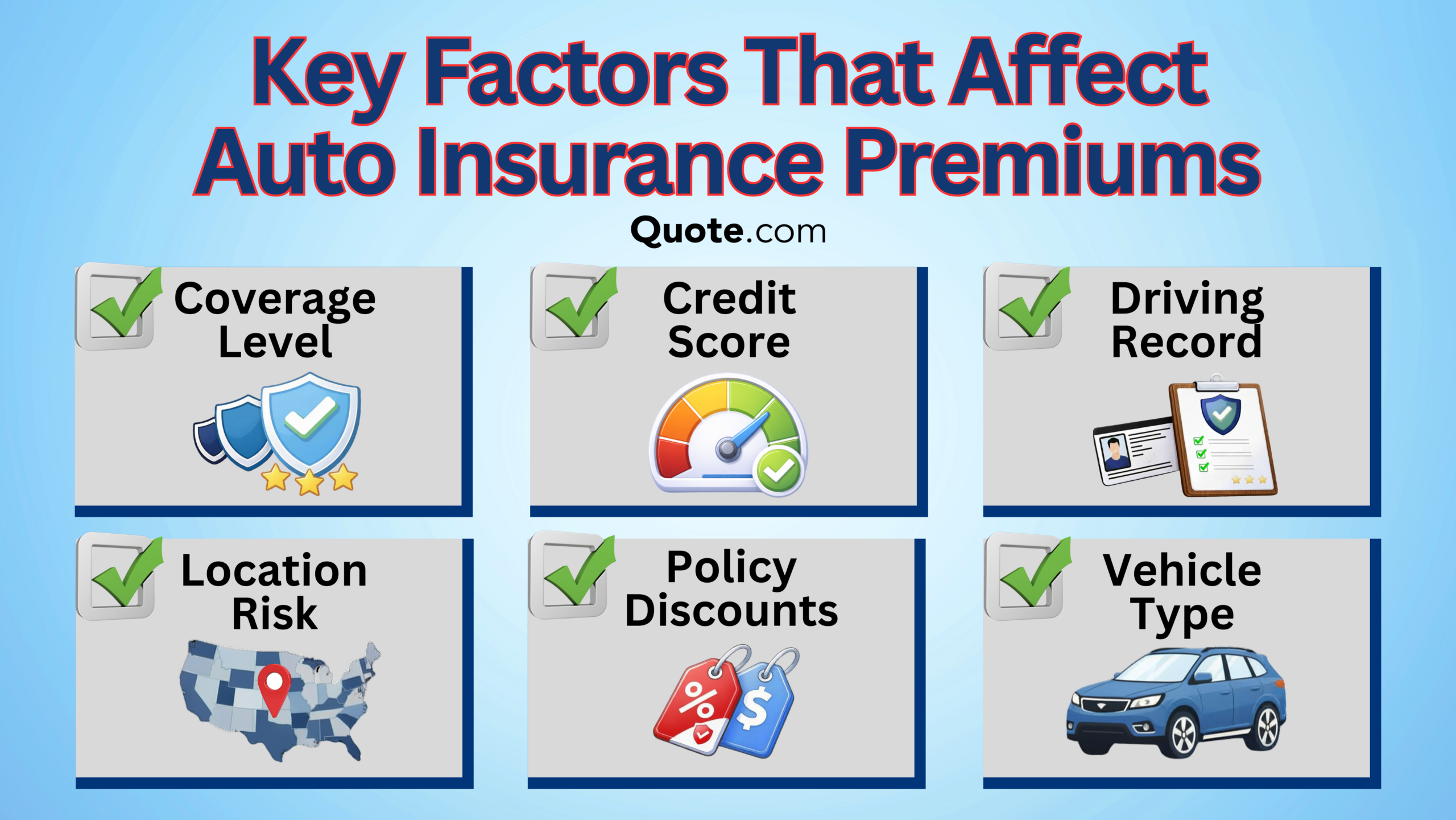
Insurance companies also consider things like your age, gender, and even marital status when deciding how much to charge you.
They also look for gaps in your insurance coverage. Missing even a short period in your insurance history can lead to higher rates. You can learn more about what insurance companies look for in our auto insurance guide.
Since insurance rates tend to go up over time, it’s important to find ways to save. Check below to see how average car insurance costs increase over time.
As you can see, ever-increasing quotes for auto insurance can put a hamper on your wallet. Making efforts to reduce your premiums can help you find cheap car insurance.
This is why comparing averages is crucial. If you go with the first insurance company you look at for coverage, you’ll most likely pay more than you need to for your policy.
How Age Affects Auto Insurance Rates
Age is one of the most important factors in your insurance premiums. Statistically, younger drivers are more likely to drive recklessly and be involved in accidents.
Teens can pay twice as much as older adults. That makes finding cheap auto insurance for teens much harder than it is for older people. However, the good news is that if you maintain a clean driving record, your insurance rates drop significantly by age 25.
Auto Insurance Monthly Premiums by Age| Company | Age: 20 | Age: 30 | Age: 40 | Age: 50 |
|---|---|---|---|---|
 | $185 | $89 | $75 | $71 |
 | $165 | $79 | $67 | $63 |
 | $180 | $84 | $71 | $67 |
 | $135 | $63 | $54 | $51 |
 | $210 | $94 | $78 | $74 |
 | $160 | $73 | $61 | $58 |
 | $178 | $81 | $68 | $64 |
 | $148 | $67 | $56 | $53 |
 | $173 | $78 | $65 | $61 |
 | $124 | $56 | $47 | $45 |
Gender can also play a role in some states, though many have restricted its use in pricing. The data typically shows that female drivers engage in fewer aggressive driving behaviors and file fewer claims.
The gender difference is more pronounced among teens and other young drivers. Once you’ve reached about 30 years old, the difference in premiums is negligible.
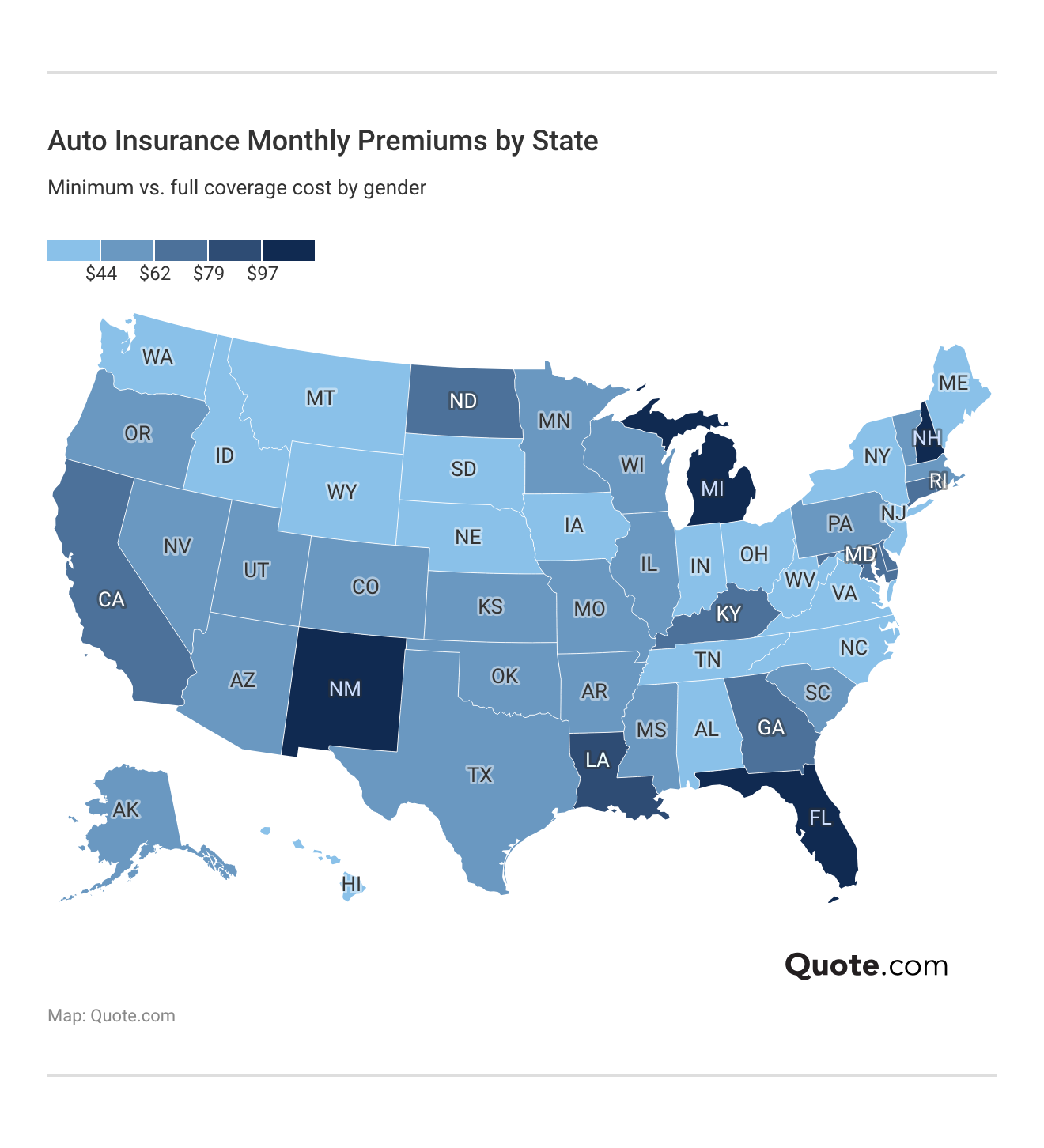
Average Car Insurance Costs in Different States
One of the most significant factors that impacts your insurance premiums is where you live. You can see higher or lower rates just by moving one ZIP code over.
The main reasons that you’ll see such different rates based on which state you live in include local traffic, vehicle crime rates, the number of accidents in the area, and state insurance laws. However, you can still find the lowest car insurance rates by state by comparing prices with multiple companies.
Location plays a major role, since drivers in densely populated or high-accident areas tend to pay more than those in rural regions. Since rural drivers have a lower risk of getting into an accident, their premiums tend to be lower.
States with fewer people and lower insurance requirements, such as Vermont and South Dakota, have some of the lowest insurance premiums in the country.
State auto insurance requirements also affect pricing, including minimum coverage requirements and whether insurers can use factors like credit scores when setting rates.
Minimum insurance has cheaper premiums, but it doesn’t protect your vehicle, and you might have to pay higher out-of-pocket costs after an accident.
Jeff Root Licensed Insurance Agent
If your insurance rates went up when you didn’t file a claim and nothing changed about your situation, the culprit is likely to be where you live. If the area you live in had a sustained increase in accidents, traffic, or vehicle thefts, you’ll likely see higher rates.
You can always ask a representative to check your policy if you feel your insurance rates have gone up unfairly. They’ll be able to explain the increase or fix the problem.
Auto Insurance Prices Vary Based on What You Drive
Your vehicle affects your insurance premiums as well. Expensive-to-repair cars, cars more likely to be stolen, or cars equipped with powerful engines often cost more to insure.
On the other hand, auto insurance rates for vehicles with strong safety ratings and advanced driver-assistance features are often lower.
Auto Insurance Monthly Premiums by Vehicle Type| Vehicle Type | Min. Coverage | Full Coverage |
|---|---|---|
| Convertible | $82 | $168 |
| Coupe | $74 | $152 |
| Crossover | $70 | $145 |
| Electric | $76 | $165 |
| Full-Size Sedan | $72 | $148 |
| Full-Size SUV | $78 | $158 |
| Hatchback | $68 | $138 |
| Hybrid | $71 | $150 |
| Luxury Sedan | $85 | $182 |
| Luxury SUV | $92 | $195 |
| Minivan | $69 | $140 |
| Midsize Sedan | $67 | $135 |
| Midsize SUV | $72 | $148 |
| Muscle Car | $88 | $185 |
| Pickup Truck | $73 | $150 |
| Plug-In Hybrid | $75 | $160 |
| Sedan | $68 | $138 |
| Small Sedan | $65 | $130 |
| Small SUV | $69 | $142 |
| Sports Car | $95 | $210 |
| Station Wagon | $70 | $145 |
| Subcompact Car | $64 | $125 |
| Subcompact SUV | $68 | $140 |
It’s also worth noting that premiums have been trending upward in recent years due to rising repair costs, more expensive parts, and increased claim severity.
As a result, some vehicles can see much higher premium increases. For example, luxury cars typically have higher insurance rates because replacement parts are more expensive.
Your insurance rates will be affected by any change to the market price of those replacement parts.
Comparing Car Insurance Rates for Different Policies
The level of coverage you choose has a direct impact on your auto insurance quotes. Policies with higher limits and more protection cost more each month, but they also reduce how much you’d have to pay out of pocket after an accident.
Policies with the bare minimum amount of coverage cost less, but you’ll likely have high out-of-pocket costs after you need to file a claim. That’s why it’s important to compare liability vs. full coverage auto insurance policies to make sure you pick the best options for your needs.
Auto Insurance Monthly Premiums by Coverage Level| Insurance Company | Minimum Coverage | Full Coverage |
|---|---|---|
| $78 | $175 |
| $69 | $157 |
| $74 | $172 |
| $55 | $126 |
| $82 | $186 |
| $64 | $151 |
| $71 | $166 |
| $59 | $133 |
| $70 | $160 |
| $49 | $112 |
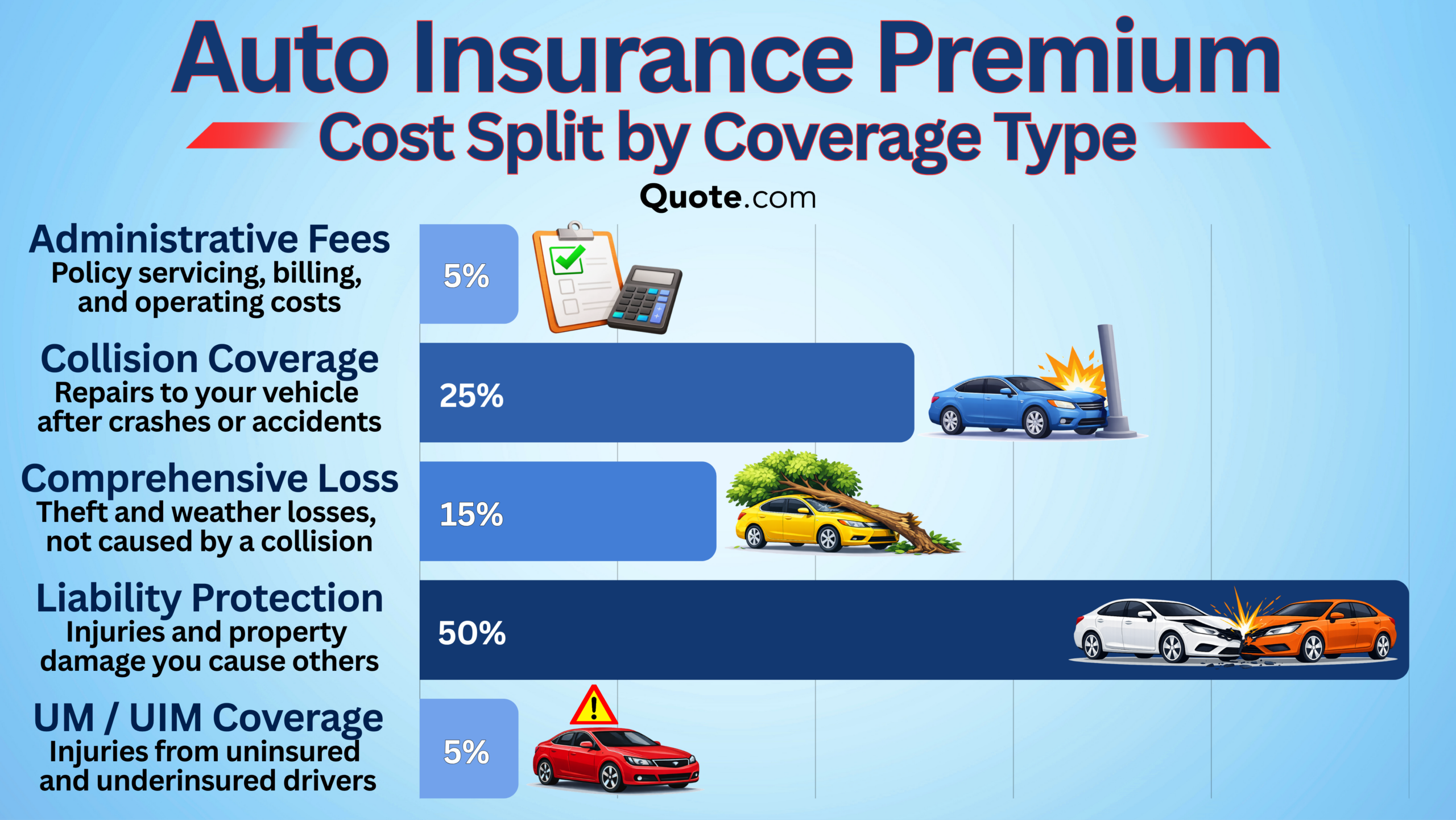
Minimum coverage is the least expensive option because it only meets your state’s legal requirements, typically including liability insurance for bodily injury and property damage.
Full coverage policies cost more but include more types of auto insurance, including collision coverage, which pays for damage to your car after an accident, and comprehensive coverage, which covers non-collision events like theft, vandalism, fire, or weather damage.
Full coverage policies are ideal for drivers with a loan or lease on their vehicle, or people with newer, more expensive cars.
Melanie Musson Published Insurance Expert
The amount you’ll pay for each type of insurance varies significantly. For example, comprehensive insurance is typically more affordable than collision coverage.
You’ll also pay more for higher limits. Drivers who choose their state’s minimum amount of liability insurance will pay lower premiums than those who choose higher limits.
Because so many variables go into pricing, the “average” premium is best used as a general benchmark rather than a precise estimate.
The most accurate way to determine what you’ll pay is to compare personalized quotes based on your specific profile. If you want to compare personalized quotes, enter your ZIP code into our free online tool today.
Choosing Deductibles for Cheaper Car Insurance Premiums
Deductibles are another key factor tied to coverage level. A higher insurance deductible lowers your monthly premium because you agree to pay more out of pocket before your insurance kicks in.
Before you choose a higher deductible, you should make sure you can afford it. For example, many insurance companies have a maximum deductible of $2.5K. That means you’ll need to come up with $2.5K before your insurance kicks in.
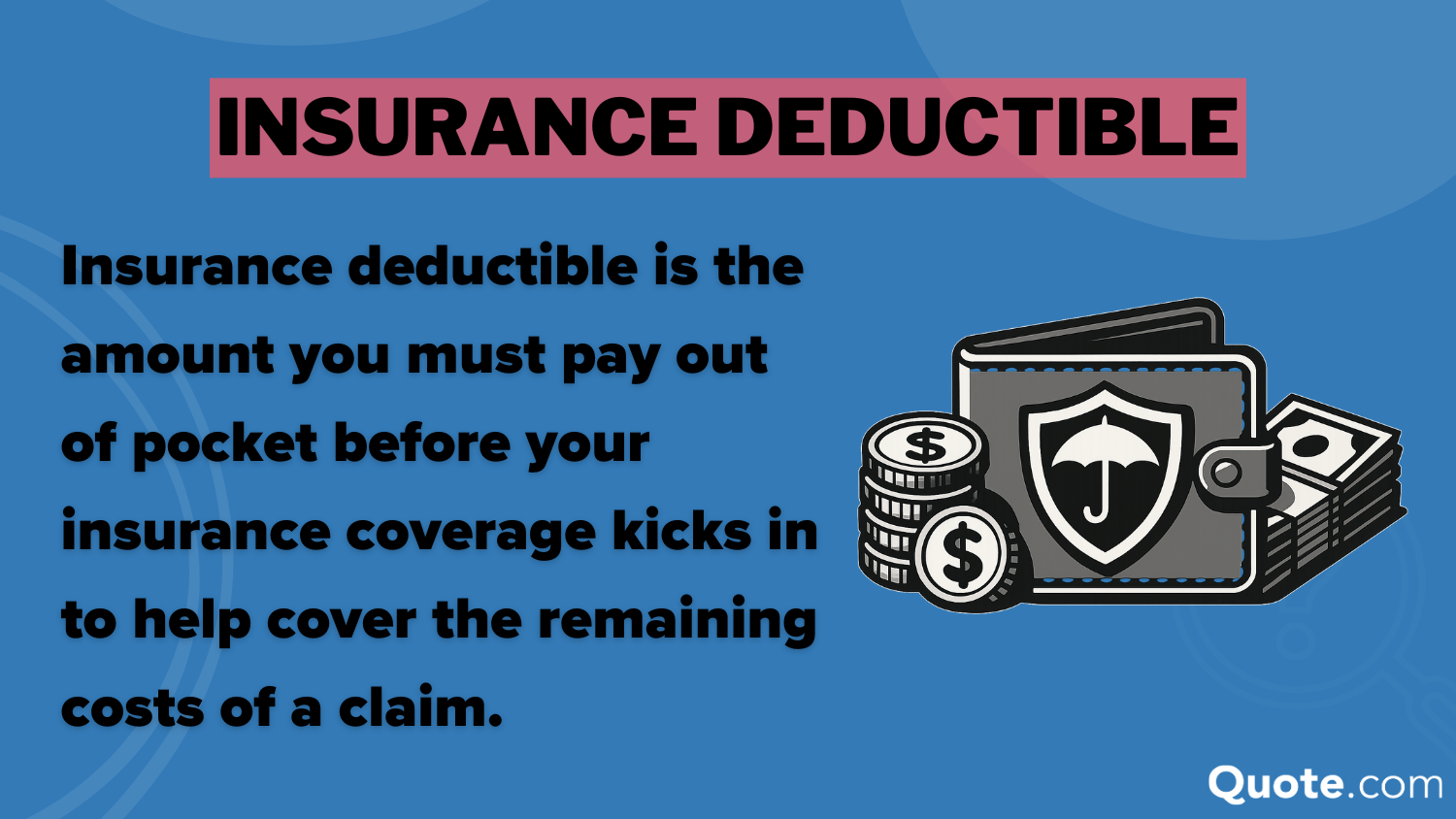
A lower deductible raises your premium but reduces your upfront costs after a claim. Finding the right balance depends on your budget and how much you can comfortably afford in an emergency.
If you’re worried about your deductible being too high, some insurance companies offer a vanishing deductible. This lowers your deductible over time for each year you spend claims-free.
Auto Insurance Monthly Premiums by Deductible Amount| Deductible | Min. Coverage | Full Coverage |
|---|---|---|
| $100 | $78 | $165 |
| $200 | $74 | $155 |
| $250 | $72 | $150 |
| $300 | $70 | $145 |
| $500 | $66 | $135 |
| $750 | $63 | $125 |
| $1K | $60 | $118 |
| $1.5K | $57 | $110 |
| $2K | $55 | $104 |
| $2.5K | $53 | $98 |
In the end, choosing a coverage level is about balancing cost and protection. A lower premium may be appealing in the short term, but higher coverage limits and additional protections can save you significantly more in the event of a serious accident.
However, it is a good option if you need to lower your monthly auto insurance premiums. You can always lower your insurance deductible when it becomes affordable.
How Auto Insurance Rates Change With Driving History
Your driving record is one of the biggest factors in determining your auto insurance premium. Out of all auto insurance price factors, your driving history is one of the most influential, with traffic violations and accidents affecting your rates for years.
Drivers with clean records tend to pay the lowest rates, while those with accidents or violations pay more.
Auto Insurance Monthly Premiums by Driving Record| Company | Clean Record | One Accident | One DUI | One Ticket |
|---|---|---|---|---|
| $78 | $105 | $133 | $94 |
| $69 | $93 | $118 | $84 |
| $74 | $100 | $127 | $90 |
| $55 | $74 | $94 | $66 |
| $82 | $112 | $141 | $100 |
| $64 | $87 | $110 | $78 |
| $71 | $96 | $122 | $86 |
| $59 | $80 | $100 | $71 |
| $70 | $94 | $119 | $83 |
| $49 | $66 | $84 | $59 |
You can see how one speeding ticket affects auto insurance rates, resulting in a moderate bump. Meanwhile, an at-fault accident can lead to a more noticeable increase.
Multiple incidents or serious violations, such as a DUI, can push you into a high-risk category with significantly higher costs.
How Credit Score Can Increase Insurance Premiums
In most states, insurers use credit-based insurance scores to help determine premiums. Lower credit scores can lead to higher premiums.
On the other hand, drivers with higher credit scores often pay less because they’re statistically less likely to file claims.
Auto Insurance Monthly Rates by Credit Score| Company | Excellent (800+) | Good (670-799) | Fair (580-669) | Poor (<580) |
|---|---|---|---|---|
| $72 | $96 | $138 | $205 |
| $66 | $88 | $126 | $188 |
| $78 | $104 | $150 | $225 |
| $58 | $76 | $108 | $158 |
| $82 | $110 | $162 | $238 |
| $70 | $94 | $134 | $198 |
| $68 | $92 | $130 | $192 |
| $64 | $84 | $118 | $170 |
| $74 | $100 | $142 | $210 |
| $52 | $70 | $96 | $140 |
Some states restrict or ban the use of credit in insurance pricing, but where it’s allowed, it can make a meaningful difference in what you pay.
Your credit score plays a significant role in your premiums, so improving your rating is a popular hack to save on your auto insurance.
How Providers Set Your Auto Insurance Rates
The best auto insurance companies calculate premiums simply by looking at two main things: how likely you are to file a claim and how expensive that claim could be.
To do that, they analyze a wide range of personal, vehicle, and environmental factors, then apply their own pricing models to arrive at your rate.
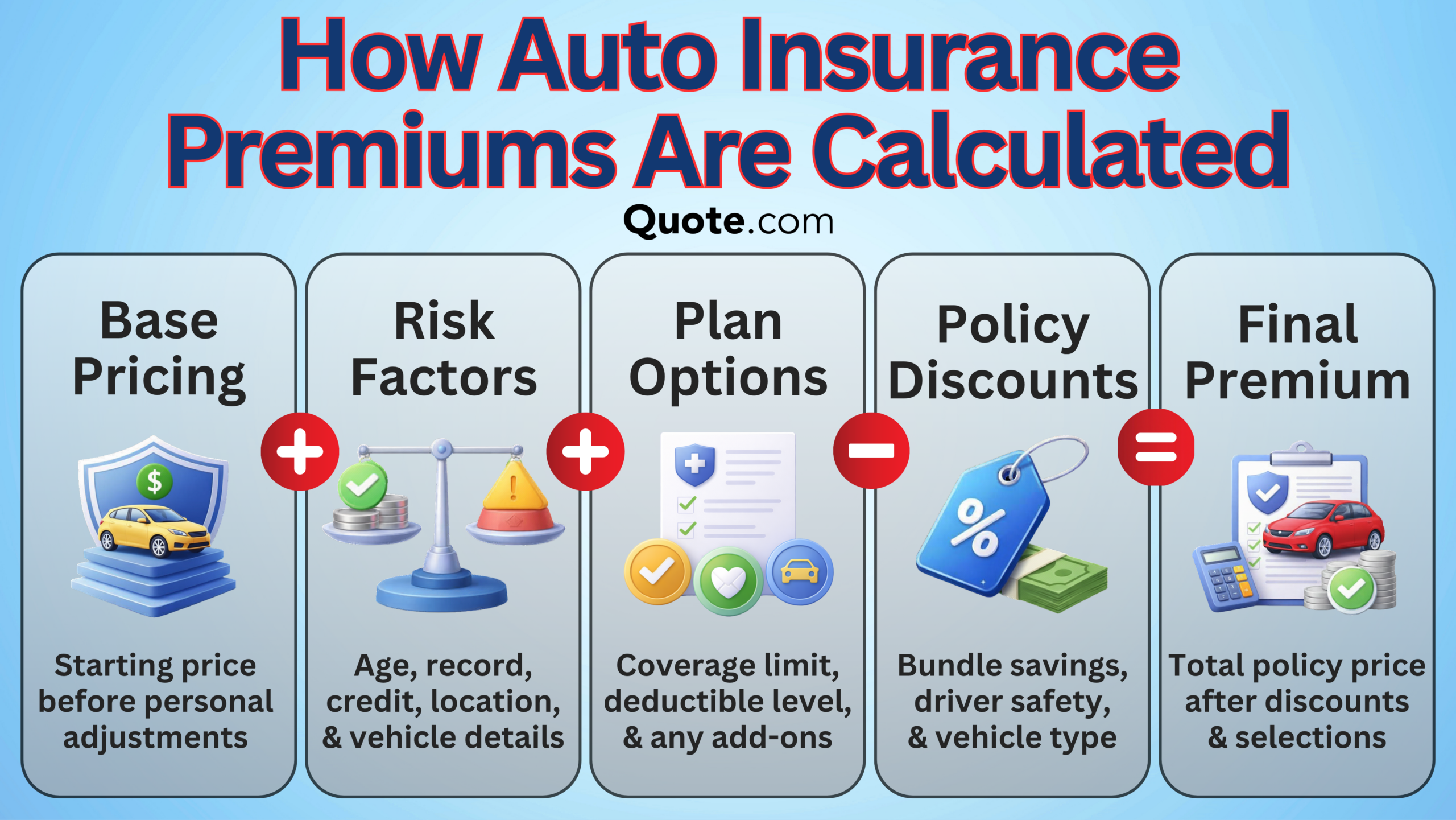
Your driving history is one of the most influential pieces. Insurers look at past accidents, tickets, and claims to gauge future risk.
A clean record typically leads to lower premiums, while recent violations or at-fault accidents can push your rate higher because they suggest a greater chance of future claims.
However, many factors affect car insurance quotes. The following have the biggest impact when you shop auto insurance rates.
Top 12 Factors Affecting Auto Insurance Premiums| Factor | Risk Detail | Cost Impact |
|---|---|---|
| Age Group | Driver experience level | Younger drivers pay more |
| Claims History | Past claims & frequency | Frequent claims cost more |
| Coverage Level | Chosen coverage limit | Higher limits increase rates |
| Credit Rating | Driver financial stability | Lower scores raise pricing |
| Deductible Amt | Out-of-pocket amount | High deductible, low rate |
| Discount Access | Available savings criteria | Discounts lower premiums |
| Driving Record | Accidents & violations | Violations raise policy price |
| Garaging Location | Where vehicle is stored | High-risk areas cost more |
| Marital Status | Married or single driver | Married drivers pay less |
| Mileage Driven | Avg. annual miles driven | More miles raise premiums |
| Policy Duration | Selected plan term length | Longer terms have lower rates |
| Vehicle Type | Vehicle value & repair cost | Expensive vehicles cost more |
Many insurers also use telematics or usage-based data in their pricing. These programs track behaviors like mileage, braking, speed, and the time of day you drive. Safer driving habits can lead to lower premiums over time, while riskier patterns may increase costs.
Finally, each insurance company uses its own formula and weighting system. That’s why quotes for the same driver can vary significantly between insurers, even when the coverage is identical.
Make sure to compare quotes from as many insurance companies as possible to find the provider that offers the most favorable rates for your unique situation.
Brad Larson Licensed Insurance Agent
Comparing multiple quotes is often the best way to find a rate that reflects your risk profile at a competitive price.
If you skip the crucial step of comparing car insurance rates with as many companies as possible, you’ll probably end up overpaying for your car insurance. Since premiums are on the rise, most drivers can’t afford not to compare insurance prices.
Common Reasons Your Car Insurance Rates Go Up
Several factors can cause your premium to increase over time. Some are tied to your driving behavior, while others are outside your control.
Others may change over time, and your insurance premiums will adjust. For example, younger drivers will see their rates gradually lower as they get older.
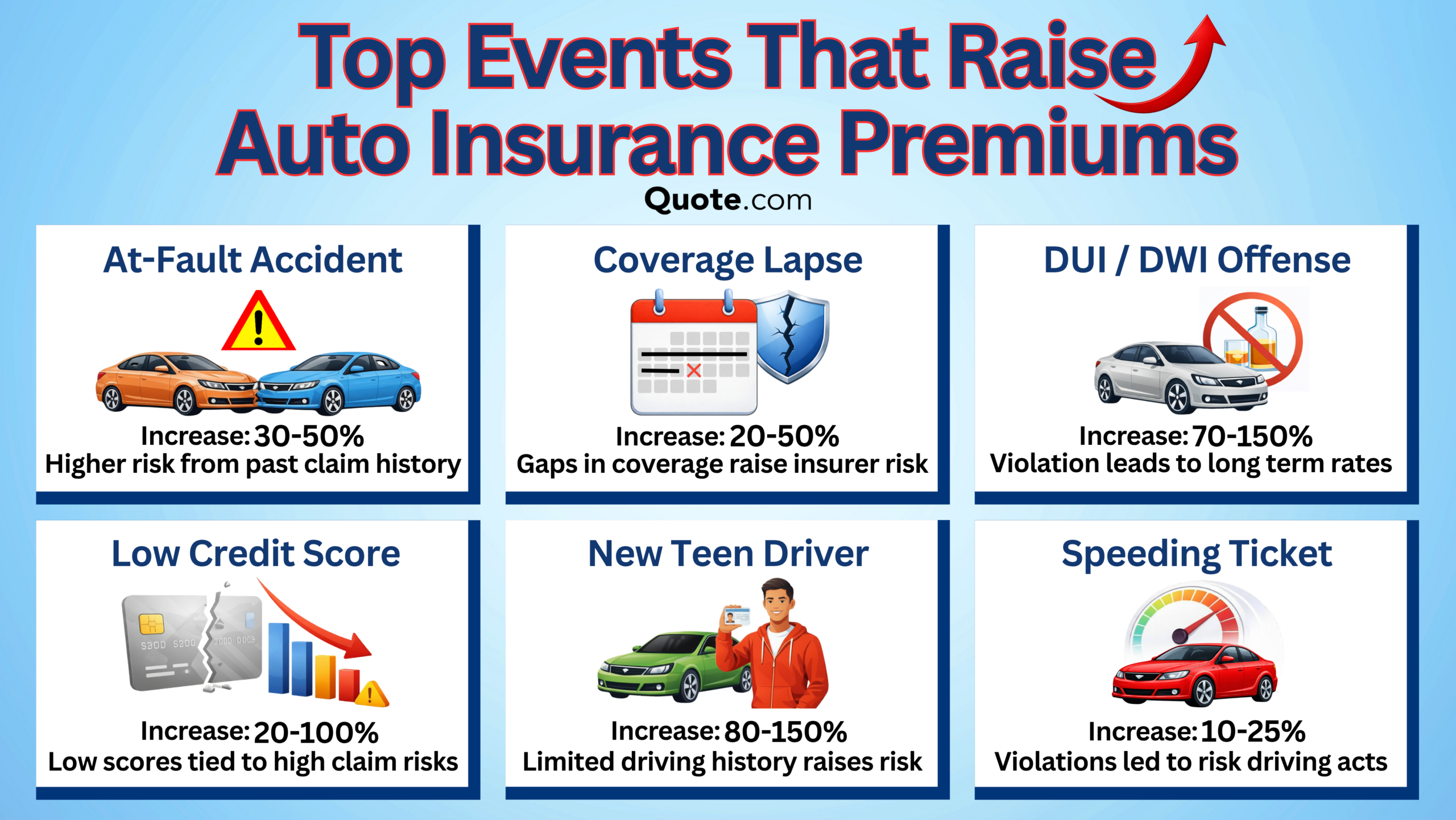
Common reasons for higher premiums include at-fault accidents, traffic violations, lapses in coverage, and adding a high-risk driver to your policy. Get More Details: High-Risk Auto Insurance Guide
External factors, like rising repair costs, increased accident rates in your area, or inflation, can also push rates upward even if your record stays clean.
How to Lower Your Car Insurance Premiums
Auto insurance doesn’t have to be a fixed expense. While some factors like your age or location are out of your control, there are still plenty of ways to lower your premium by adjusting your policy, improving your risk profile, and taking advantage of discounts.
One of the easiest ways to find the cheapest auto insurance is to pick the right payment option for you. Many drivers think that there’s only one way to pay for their insurance, but there are many options.
Auto Insurance Premium Payment Options| Policy Term | Payment Choice | Best for |
|---|---|---|
| 6-Month Policy | Pay in full or monthly | Short-term flexibility |
| 12-Month Policy | Pay in full or monthly | Long-term stability |
| Month-to-Month | Monthly bills only | Between policies |
| Pay-Per-Mile | Monthly by mileage | Low-mileage driving |
| Short-Term Policy | Pay in full or monthly | Temporary vehicle use |
Shopping around is another key step. Insurance companies use different formulas to calculate risk, so the same driver can receive very different quotes.
Comparing multiple options increases your chances of finding a lower rate for the same level of coverage. Here are some more practical ways to reduce your auto insurance premiums:
- Bundle Policies: Combining auto insurance with homeowners or renters insurance often leads to discounts.
- Maintain a Clean Driving Record: Avoiding accidents and violations is one of the most reliable ways to keep your auto insurance premiums low.
- Raise Your Deductible: A higher deductible lowers your premium, but it increases how much you have to pay when you file a claim.
- Review Optional Coverages: Dropping unnecessary add-ons or adjusting limits can help reduce your monthly premium.
- Take Advantage of Discounts: Most discounts apply automatically when you sign up for a policy, but you can always ask a representative to take another look.
It’s also worth checking with your insurer directly to see what discounts you may already qualify for but aren’t using. Many savings opportunities aren’t applied automatically and require you to ask or opt in. Others, including the best good driver auto insurance discounts, are typically rewarded once you meet the requirements.
By combining a few of the strategies listed above, you can often bring your premium down without sacrificing important protection.
Getting Cheaper Premiums With Usage-Based Insurance
Usage-based insurance (UBI) programs track your driving habits, such as mileage, speed, braking, and time of day, to personalize your premium.
Safe drivers often earn lower rates through these programs, but they require you to share your driving information with your insurance company. If you’re not comfortable with that, a UBI program is probably not the right choice.
Participation usually involves a mobile app or a device installed in your car. Many UBI programs that use a mobile app to track you also monitor phone usage while you’re driving.
Of course, if you frequently engage in risky driving behaviors, you should probably skip participating in a UBI program.
Free Auto Insurance Comparison
Compare Quotes From Top Companies and Save
Find Affordable Auto Insurance Premiums Today
Auto insurance premiums aren’t fixed, and there are plenty of ways to bring your costs down. Your rate depends on a mix of personal choices and insurer-specific pricing.
That means you’ll have better options if you take the time to learn how to buy auto insurance online and compare quotes.
Review your coverage, explore discounts, and get quotes from multiple companies to find a policy that fits your needs and budget. Even small adjustments can lead to meaningful savings over time.
When you’re ready to compare car insurance rates side by side, enter your ZIP code into our free tool today.
Frequently Asked Questions
What is an auto insurance premium?
An auto insurance premium is the amount you pay for your policy, usually billed monthly, semi-annually, or annually. It’s the cost of maintaining your coverage based on your risk level and selected protections.
How much is car insurance per month?
On average, drivers pay between about $125 and $210 per month for full coverage auto insurance. Minimum coverage policies are cheaper, often ranging from $40 to $100 per month.
How much is full coverage car insurance?
Full coverage typically costs between $1.5K and $2.5K per year on average. Your exact rate depends on factors like your driving record, location, and vehicle. Use our free quote tool to see how much full coverage costs near you.
Is your auto insurance premium different than your deductible?
Yes, your premium is what you pay for the policy, while your deductible is what you pay out of pocket before your insurance covers a claim. A higher deductible usually lowers your premium, and a lower deductible raises it.
How is car insurance calculated?
Car insurance is calculated based on factors such as your driving history, age, location, vehicle, and coverage choices. Insurers use this information to estimate how likely you are to file a claim and how costly that claim might be.
Read More: Auto Insurance Costs by State
Is car insurance going up?
Yes, car insurance rates have been increasing in recent years. Rising repair costs, more expensive vehicles, and higher claim payouts are some of the main reasons.
How can I lower my auto insurance premium?
You can lower your premium by shopping around, raising your deductible, and taking advantage of discounts. Maintaining a clean driving record and reducing your mileage can also help.
You can also try telematic-driven insurance. Usage-based insurance can lower your rates if you regularly practice safe driving. If you’re a low-mileage driver, the best pay-as-you-go auto insurance companies might offer more affordable coverage to you compared with standard coverage.
Why did my auto insurance premium go up when I didn’t get in an accident?
Your premium can increase due to factors like inflation, higher repair costs, or increased claims in your area. Changes to your credit score or insurer pricing models can also affect your rate.
How does my deductible affect my premium?
A higher deductible lowers your premium because you take on more financial responsibility in a claim. A lower deductible increases your premium but reduces your out-of-pocket costs after an accident. To compare auto insurance rates based on your deductible and other factors, enter your ZIP code into our free online auto insurance comparison tool.
Is it cheaper to pay my premium monthly or annually?
Paying annually is often cheaper because many insurers charge installment or processing fees for monthly payments. If you can afford it, paying in full can lead to small savings.
Additionally, many companies offer paid-in-full savings as one of their auto insurance discounts to help drivers save. Check with your provider if you’re unsure if your policy has a paid-in-full discount.
Can I negotiate my car insurance premium?
Related Articles
-
Jun 2026

10 Best Auto Insurance Companies in Hawaii 2026
-
Mar 2026

Comprehensive Auto Insurance in 2026
-
Jun 2026
Best Auto Insurance for Teslas in 2026
-
Apr 2026
Accident Forgiveness in 2026
-
Nov 2025

10 Best Auto Insurance Companies in California (2026)
-
Feb 2026
Best Auto Insurance for Hybrid and Electric Cars in 2026




Get a FREE Quote in Minutes
Insurance rates change constantly — we help you stay ahead by making it easy to compare top options and save.