Replacement Cost vs. Actual Cash Value: Key Differences in 2026
Replacement cost pays the full amount to rebuild at current prices, while actual cash value subtracts depreciation. Replacement cost vs. actual cash value results in higher payouts versus reduced amounts, such as when a 10-year-old roof that costs $10K to replace may only receive about $5K under ACV.
Read more





Table of Contents
Table of Contents

Insurance Copywriter
Malory Will has an M.A. in English from Arizona State University. She has over four years of experience in writing for the insurance industry. With a background in health, auto, life, and homeowners insurance, Malory is passionate about making complex insurance topics clear and approachable. Her goal is to help readers make informed decisions with confidence.
Malory Will

Managing Editor
Laura Kuhl holds a Master’s Degree in Professional Writing from the University of North Carolina at Wilmington. Her career began in healthcare and wellness, creating lifestyle content for doctors, dentists, and other healthcare and holistic professionals. She curated news articles and insider interviews with investors and small business owners, leading to conversations with key players in the le...
Laura Kuhl

Licensed Insurance Agent
Travis Thompson has been a licensed insurance agent for nearly five years. After obtaining his life and health insurance licenses, he began working for Symmetry Financial Group as a State Licensed Field Underwriter. In this position, he learned the coverage options and limits surrounding mortgage protection. He advised clients on the coverage needed to protect them in the event of a death, critica...
Travis Thompson
Updated April 2026
Replacement cost pays the full amount to rebuild the property at current prices, while actual cash value subtracts depreciation based on age and condition.
- Replacement cost vs. actual cash value affects your claim payout
- Replacement cost helps avoid large out-of-pocket repair costs
- Actual cash value can leave larger coverage gaps for older items
This means replacement cost provides full payouts, while actual cash value results in lower payments, such as a $10K roof claim dropping to $5K.
RCV uses current material and labor costs to determine the amount needed for rebuilding. The best home insurance companies apply replacement cost vs. actual cash value differently, so compare your options before you buy.
This article explains both types of policies and helps you compare payouts. Enter your ZIP code to compare insurance policies from providers in your city.
What is Replacement Cost vs. Actual Cash Value?
Replacement cost pays the full amount to rebuild or replace property at today’s prices, while actual cash value pays a reduced amount after subtracting depreciation based on age and wear.
Replacement cost is often used in home insurance coverage for major repairs because it aligns with current construction costs, while actual cash value reflects what the item is worth at the time of loss.
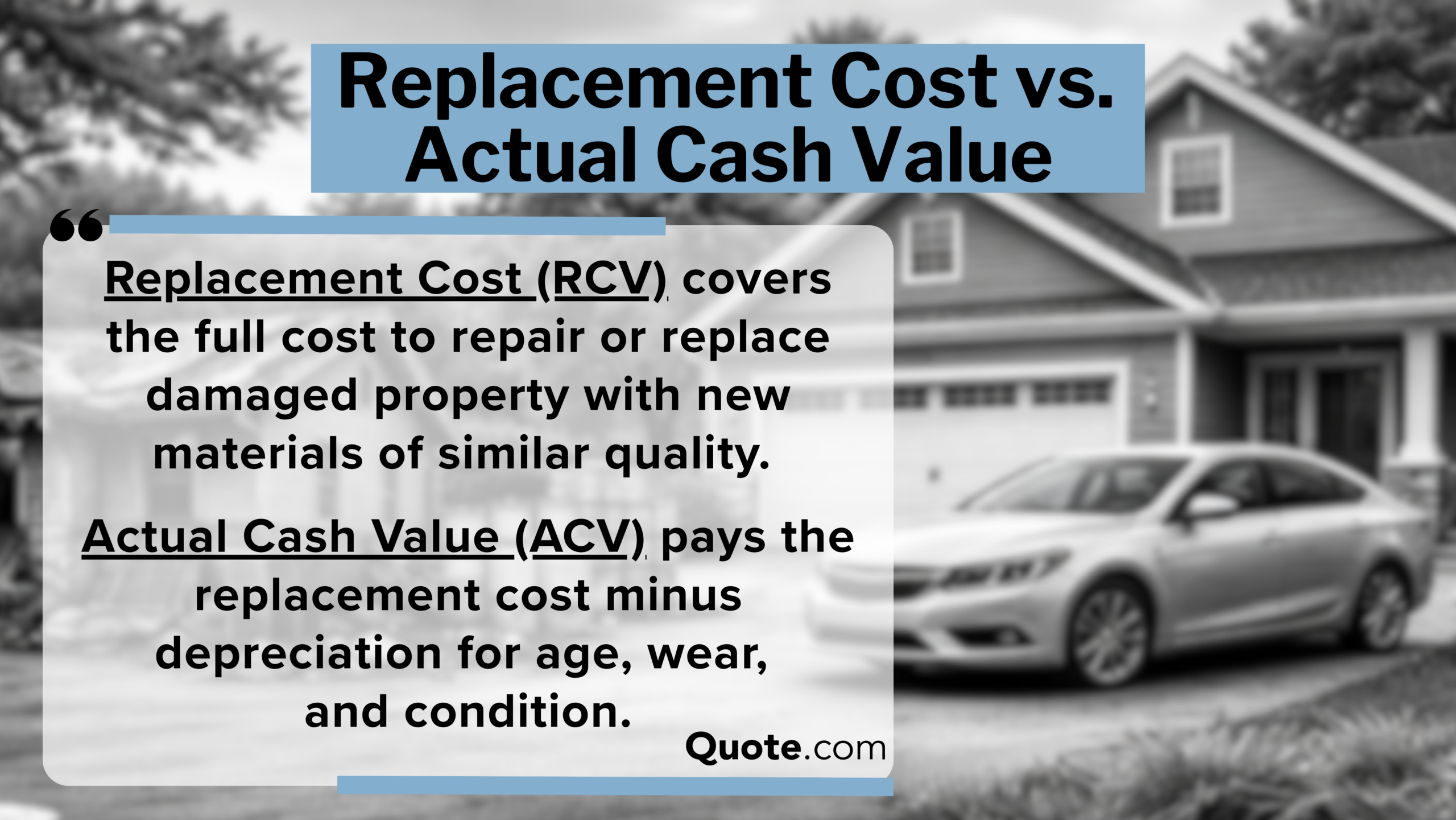
Depreciation is what shrinks those payouts, especially for older parts of your home like roofs or appliances.
Lower premiums can help your budget in the short term, but they usually mean you take on more of the cost when something needs replacing. Use insurance comparison sites to compare RCV vs. ACV policies side by side to ensure you get the right coverage.
Comparing Replacement Cost and Actual Cash Value
If your roof or other major systems are aging, depreciation can reduce your payout if you ever need to file a claim.
Understanding the difference between replacement cost and actual cash value for roof coverage helps you see whether you might need to pay $5K to $8K out of pocket after a claim. This is where comparing ACV vs. replacement cost becomes useful, especially across different types of coverage.
Where Replacement Cost vs. Actual Cash Value Applies| Coverage | RCV Payout | ACV Payout | ACV Loss |
|---|---|---|---|
| Auto Insurance | New car payout | Used car value | Car value drop |
| Home Structure | Full rebuild cost | Not included | Rebuild cost gap |
| Personal Property | Full item cost | Used item value | Item value drop |
| Rental Property | Full repair option | Reduced payout | Lower payout |
| Roof Coverage | Full roof cost | Aged roof value | Roof value drop |
This gap gets worse if repair costs go up, but your property’s value goes down much faster over time.
Replacement cost covers the full amount needed to rebuild or replace items at current prices, which matters in other policies as well.
RCV is ideal for roofs and structures where repair costs don’t drop over time, while ACV fits minor items. For instance, roof shingles rarely get cheaper as they age.
Jeff Root Licensed Insurance Agent
When deciding between replacement cost and actual cash value, it helps to compare how each works across auto, renters, and specialty policies, not just homeowners insurance.
For example, with auto insurance for classic cars, RCV works better for classic or collector models to maintain vehicle value, especially when a restored model could cost $25K or more to replace.
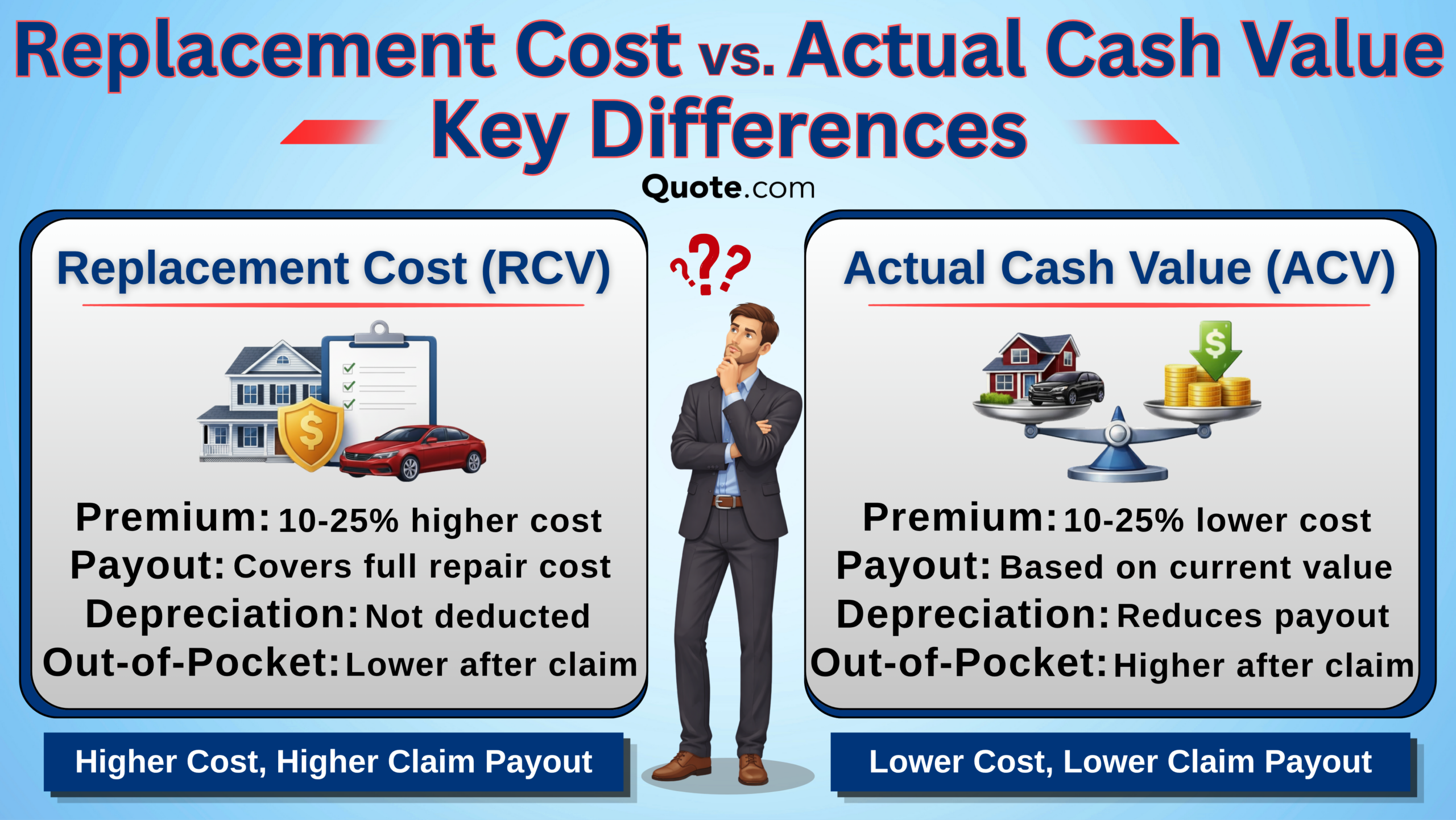
Most people choose replacement cost to avoid extra out-of-pocket costs, but actual cash value might be better for older items that are worn out or not worth replacing at full price. For some policies, ACV is the only option.
This is clear in renters coverage more than RCV vs. ACV on homeowners insurance. Many of the best renters insurance companies default to ACV, and not all rental policies offer replacement cost coverage, leaving you to pay $1K to $3K out of pocket.
Read More: Best Auto and Renters Insurance Bundles
Free Home Insurance Comparison
Compare Quotes From Top Companies and Save
How Much More RCV vs. ACV Costs
Choosing replacement cost instead of actual cash value typically increases your premium by about $25 to $35 per month because it pays the full rebuild cost at current prices rather than a depreciated amount.
Many homeowners offset that difference by bundling auto and home insurance. That extra amount can make a real difference when a repair like a roof replacement leaves you short by $5K or more.
Replacement Cost vs. Actual Cash Value: Annual Premiums| Coverage | RCV | ACV | Extra Cost |
|---|---|---|---|
| Auto | $1.9K | $1.5K | $400 |
| Condo | $900 | $750 | $150 |
| Home | $1.6K | $1.3K | $300 |
| Landlord | $2.1K | $1.7K | $400 |
| Mobile Home | $1.2K | $1K | $200 |
| Renters | $220 | $180 | $40 |
Replacement cost tends to make more sense for properties where repairs cannot wait, and costs add up quickly. On higher-value homes, even a $300 annual premium gap can help cover repairs exceeding $10K.
Using an actual cash value calculator to review estimates can show you the difference in payouts before you pick your coverage.
Looking at home prices and insurance premiums in your area can also help you figure out how much it would cost to replace your property.
Lower premiums might look better at first, but they usually mean you will handle more of the bill once depreciation is applied in replacement cost vs. actual cash value insurance.
Full Repair Cost vs. Actual Cash Value for Home Insurance
When you choose between replacement cost vs. ACV, you are also weighing how coverage choices affect home insurance rates and whether you want to pay a $5K difference on a 10-year-old roof claim.
Compare replacement cost insurance vs. actual cash value for personal property if repair costs exceed what you can afford. When systems like HVAC units are 10 to 12 years old, depreciation can reduce your insurance payout by almost half.
Replacement Cost vs. Actual Cash Value: Depreciation Impact| Item | Age | RCV Payout | ACV Payout | ACV Loss |
|---|---|---|---|---|
| Flooring | 8 years | $8K | $4K | $4K |
| Fridge | 5 years | $2K | $1.2K | $800 |
| HVAC | 12 years | $10K | $5K | $5K |
| Laptop | 3 years | $1.5K | $900 | $600 |
| Roof | 10 years | $20K | $12K | $8K |
| Sofa | 6 years | $3K | $1.8K | $1.2K |
| TV | 4 years | $1.2K | $720 | $480 |
| Washer | 7 years | $1.4K | $840 | $560 |
Replacement cost covers the full cost of rebuilding or replacing, based on current labor and material pricing, which is why replacement cost for homeowners insurance is often chosen for higher-value properties.
Most homeowners choose replacement cost for expensive items, while actual cash value is often used for less costly things like electronics or furniture.
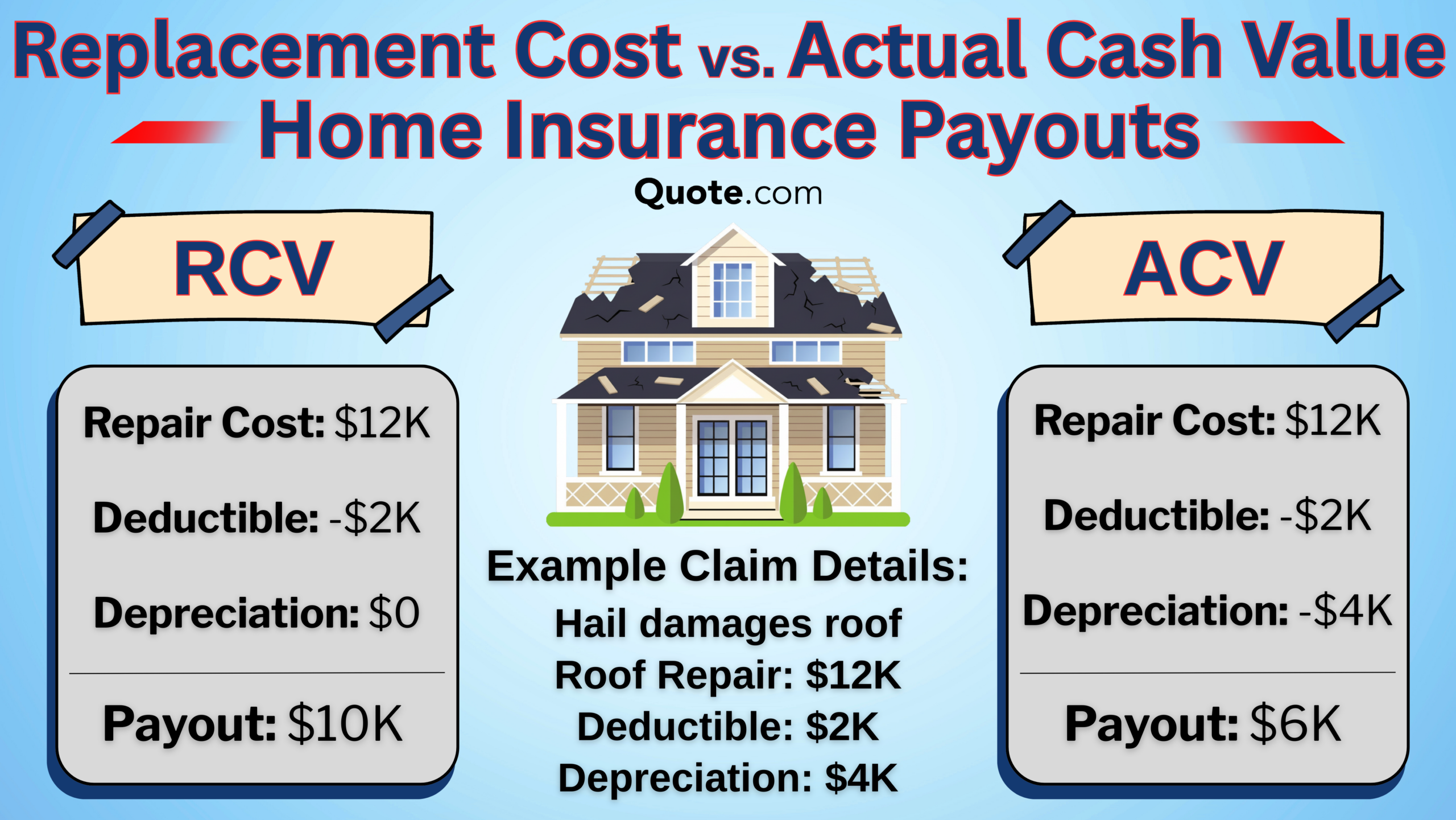
The difference becomes clear when you have to pay about $4K out of pocket because depreciation lowered your payout. This is especially true for roof repairs, since fixing the damage costs the same no matter how old your roof is.
Replacement cost is usually better in these situations because it covers the full repair cost. With ACV home insurance, you have to pay the difference yourself.
Actual Cash Value vs. Market Value for Vehicles
When you compare replacement cost vs. ACV car insurance, the gap becomes obvious when a 5-year-old car claim leaves you short by over $15K.
As vehicles age past 3 to 7 years, depreciation cuts payouts faster than repair or replacement costs actually drop, which directly affects the average cost of auto insurance over time.
Replacement Cost vs. Actual Cash Value: Vehicle Depreciation by Age| Vehicle Age | RCV Payout | ACV Payout | ACV Loss |
|---|---|---|---|
| New | $30K | $30K | $0 |
| 1 year | $30K | $24K | $6K |
| 2 years | $30K | $21K | $9K |
| 3 years | $30K | $18K | $12K |
| 4 years | $30K | $15.5K | $14.5K |
| 5 years | $30K | $13.5K | $16.5K |
| 7 years | $30K | $10.5K | $19.5K |
| 9 years | $30K | $8K | $22K |
| 12 years | $30K | $5K | $25K |
This difference is important if you need to replace your car with a similar one, but your insurer only pays based on the lower market value.
Replacement cost is usually better for newer cars because it keeps payouts closer to what you actually need to replace the vehicle.
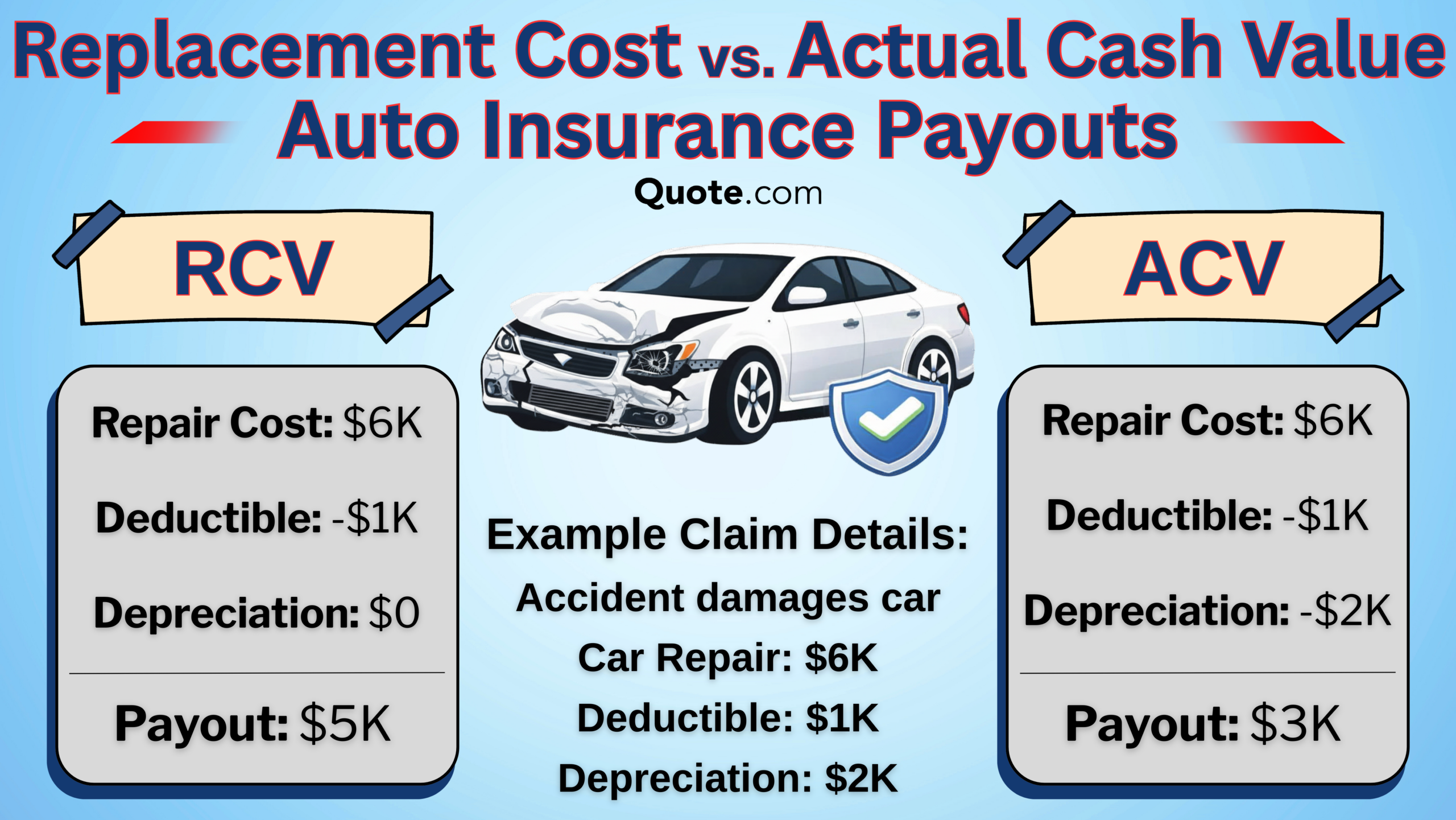
Actual cash value fits older cars, where a lower value makes the payout gap smaller and easier to handle without high out-of-pocket costs.
That difference becomes even more noticeable when repair bills come in higher than what your policy is willing to cover after depreciation.
Cars in the 3 to 5 year range often fall into this gap, where value drops but repair costs stay relatively high.
Replacement cost helps reduce that risk by keeping payouts closer to what you need to get back on the road.
Important Details: The Best Time to Buy a New Car
Choosing Replacement Cost or Actual Cash Value for Damage
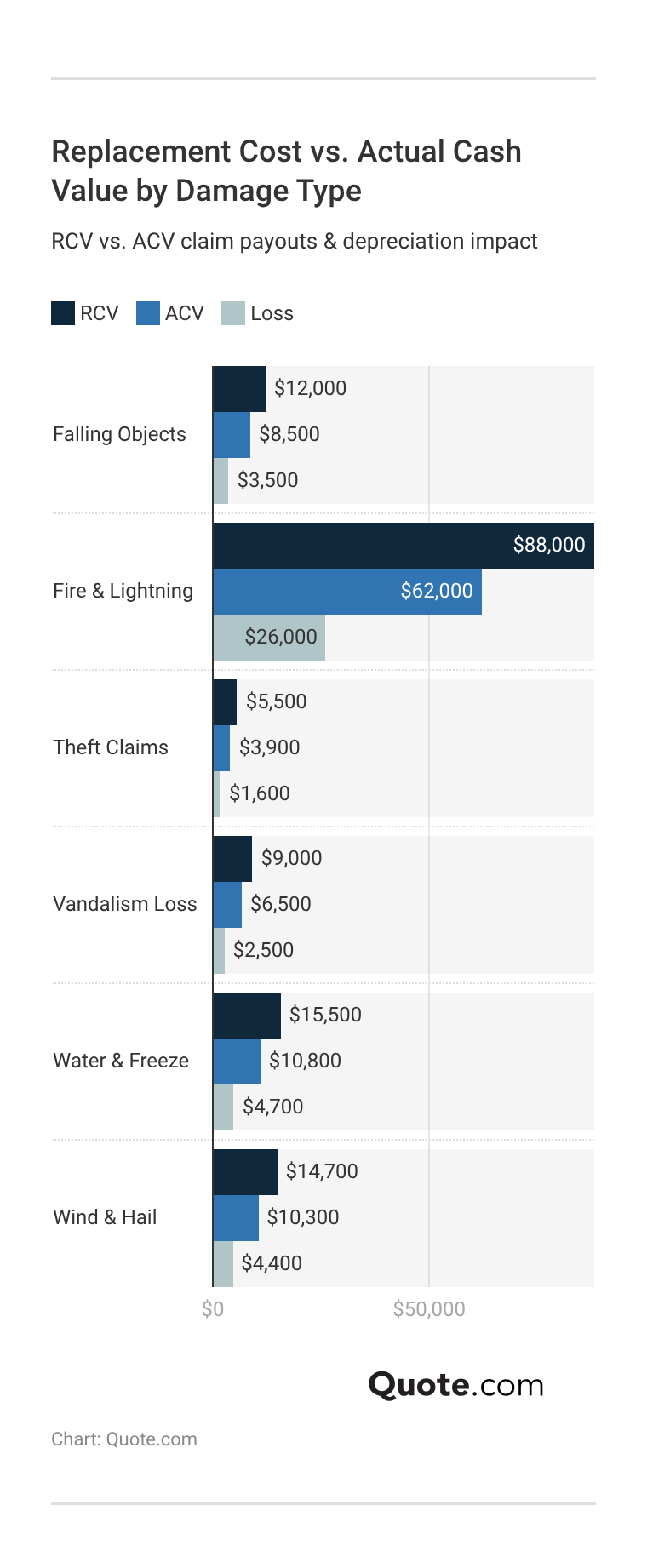
You often notice the difference between replacement cost and ACV insurance after filing a claim, especially if the payout does not cover all your repair costs. In areas with frequent storms, floods, or wildfires, this gap can grow quickly.
One disaster can push repair costs over $20K. This is when hazard insurance with RCV insurance really helps. It covers the actual cost to rebuild, even when prices for labor and materials go up after a disaster.
When damage is widespread, waiting to fix things is not realistic, and paying the difference out of pocket can put pressure on your finances.
Replacement cost coverage is often better in high-risk areas because it pays more of what repairs actually cost, not just what your property is worth right now.
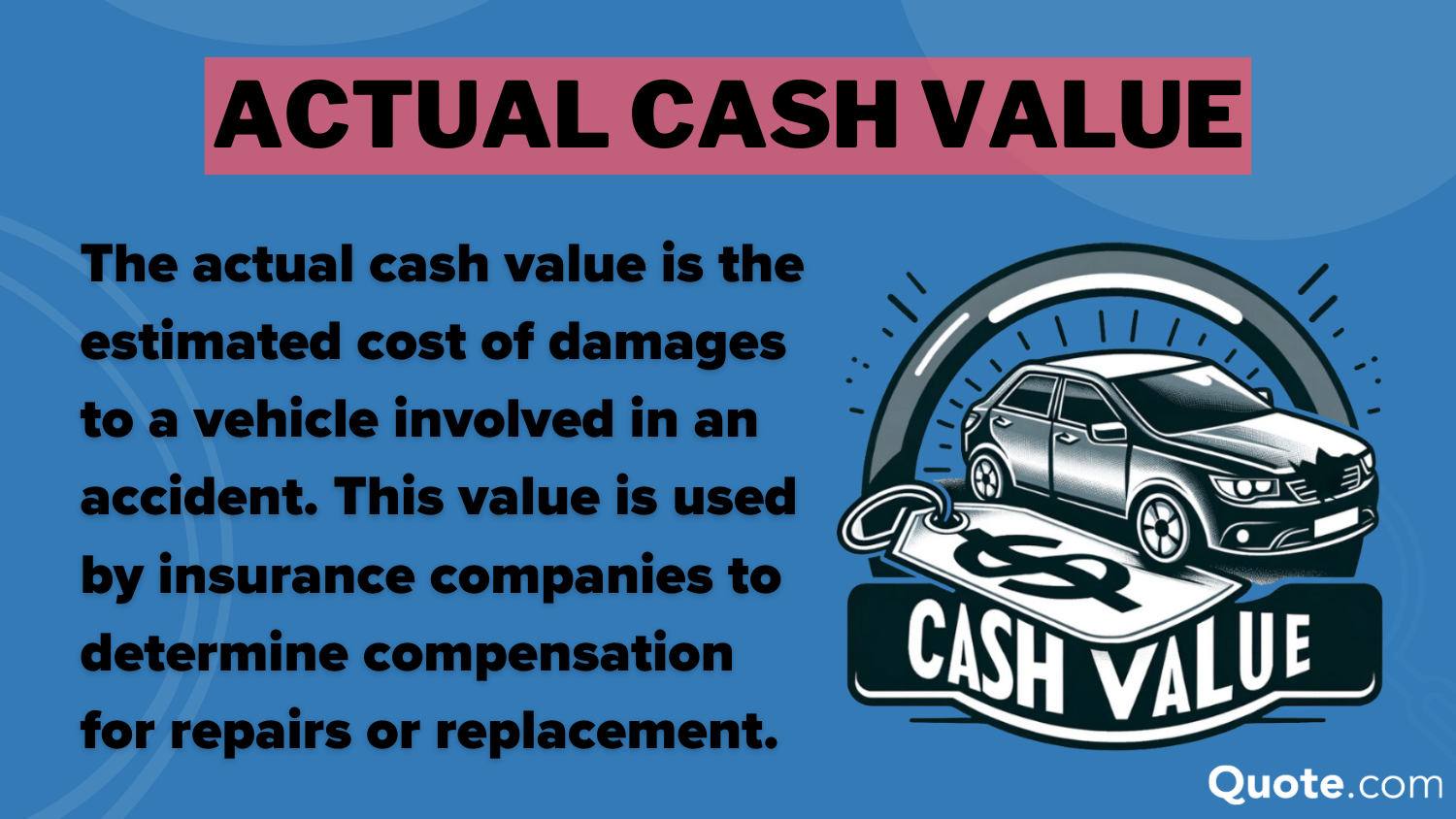
Actual cash value coverage can work for small claims, but it is less reliable if you have major losses from bad weather.
The same problem happens with auto insurance for vehicle theft, since payouts based on the car’s lower value may not cover a new one.
Different Types of Replacement Cost Insurance
Replacement cost coverage isn’t a single option. Insurers offer a few variations that change how much they’ll actually pay if rebuilding costs go beyond your policy limit. These are typically added to a standard policy and can affect how much you pay out of pocket after a claim.
The type you choose can impact thousands of dollars in coverage if rebuilding costs increase after a major loss, which becomes more noticeable when looking at the actual cash value vs. replacement cost of a roof after damage.
- Extended Replacement Cost Coverage: Gives you a cushion above your limit, usually 10% to 50%, in case rebuilding costs end up higher than expected.
- Functional Replacement Cost Coverage: Used for older homes, where repairs are made with modern materials rather than matching original features, helping keep costs down.
- Guaranteed Replacement Cost Coverage: This covers the full rebuild even if it goes past your limit, but you’ll typically pay more each month for that added protection.
- Standard Replacement Cost Coverage: Pays to rebuild your home at current costs up to your policy limit. If repairs exceed coverage, you pay the difference.
Each option changes the amount of risk you take on. Higher coverage levels reduce the risk of high out-of-pocket costs, while lower coverage options may suffice if rebuilding costs are easier to manage.
Choosing the right level of coverage can help prevent unexpected expenses that may exceed $10K or more after a major claim, and it can serve as a quick insurance cheat sheet when comparing your options.
When to Choose Replacement Cost or Actual Cash Value
Choosing between replacement cost vs. actual cash value often comes down to the age and value of what you are insuring, whether it is a home, vehicle, or even replacement cost vs. actual cash value for commercial insurance coverage.
If your home or car is new, paying about $30 more per month can be worth it when repairs are costly. Many people check coverage options early and compare multiple car insurance quotes to see how choices affect the price.
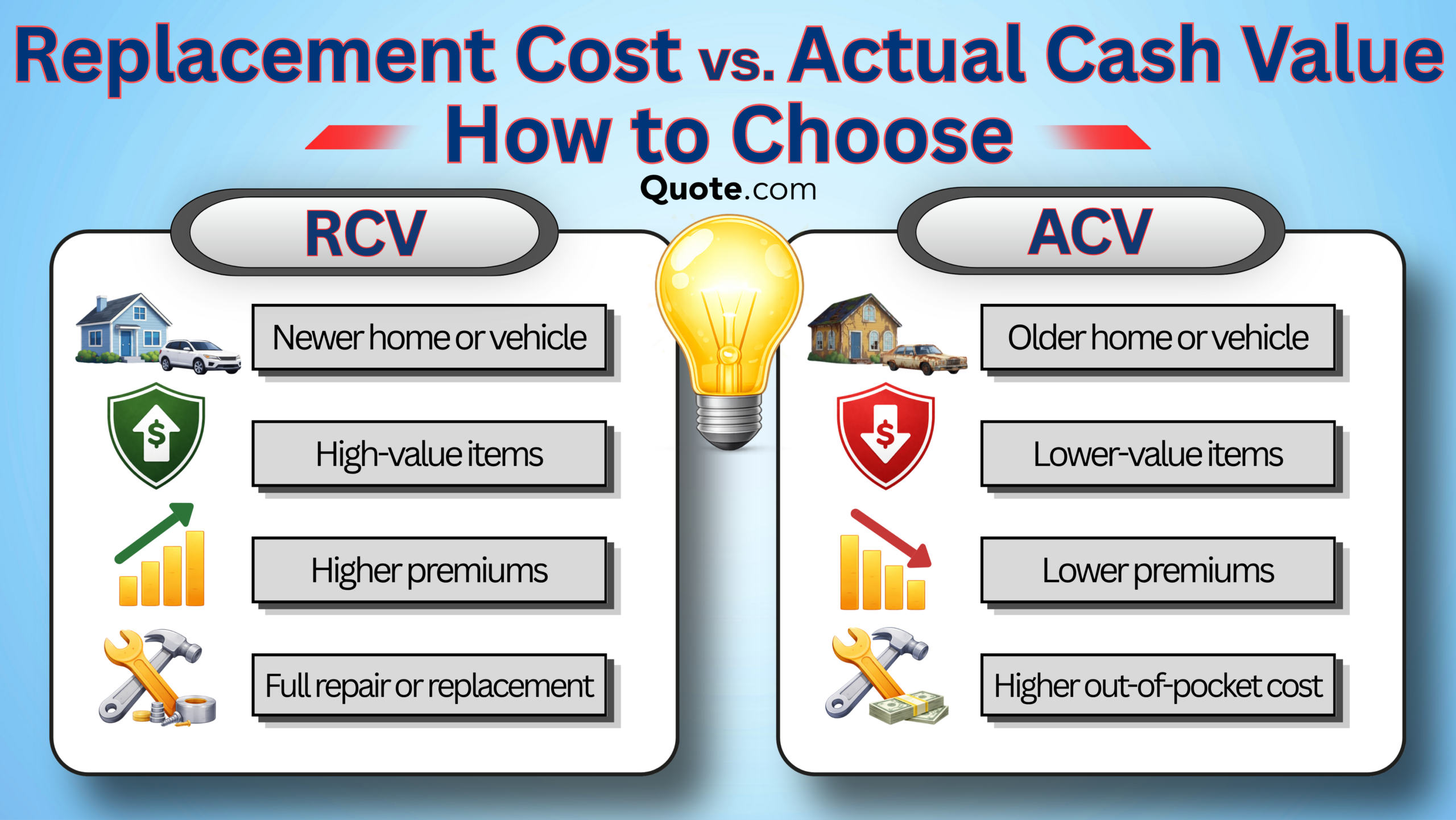
When it comes to cars, the choice is a bit different. Replacement cost or agreed value coverage is better for newer or high-value vehicles because the payout is closer to the cost to replace the car. Actual cash value is more common for standard policies, especially for cars older than 5 years, since depreciation reduces payouts significantly.
Since older homes and cars lose value more quickly, choosing a lower premium may better suit your budget. However, homeowners insurance replacement value vs. actual cash value becomes more relevant for new properties, especially when larger repairs are involved.
The difference becomes clear when something breaks, and you find out the payout does not cover the real cost to fix it. For cars, check how your insurer calculates value, compare similar vehicle listings, and consider your car’s age and replacement cost to decide which coverage fits your budget.
This is especially true for roofs or major systems, which can still cost thousands to fix. Replacement cost is better for full repairs, while actual cash value works if you are able to pay some of the costs yourself. You can enter your ZIP code to compare your options.
Frequently Asked Questions
What is replacement cost value (RCV)?
Replacement cost value (RCV) is the amount needed to rebuild or replace damaged property at current prices, such as paying $20K to install a new roof today without depreciation deductions.
What is actual cash value (ACV)?
Actual cash value (ACV) is the replacement cost minus depreciation, so a 10-year-old roof originally costing $20K may only be valued at around $10K at the time of loss.
What is the difference between replacement cost and actual cash value?
Replacement cost pays the full rebuild amount based on current pricing, while ACV reduces payouts by depreciation, often cutting claim amounts by 40% to 60% on older items, which varies depending on the type of home insurance you have.
How do you tell if insurance is ACV or RCV?
Check your policy details or coverage section. It will say whether you have actual cash value vs. replacement cost, and mention if depreciation is deducted or if you get a full replacement payment.
Can a car’s ACV be negotiated?
Yes, drivers can challenge the ACV by providing similar car listings, proof of recent upgrades, or maintenance records to support a higher value before the claim is settled.
You can compare affordable replacement cost and actual cash value insurance quotes by entering your ZIP code in our free comparison tool.
Is actual cash or replacement cost valuation preferred for property coverage?
Replacement cost is preferred for high-value items like roofs or HVAC systems, where repairs can exceed $10K, while ACV suits items easier to replace, which can help homeowners save money with solar and other energy upgrades.
What are the disadvantages of replacement cost coverage?
Replacement cost coverage usually raises your monthly premium by $25 to $40. This extra cost may not be worth it for older items that don’t have much value left.
What are the methods to determine ACV?
Insurers figure out how to calculate actual cash value by looking at depreciation schedules, the item’s age and condition, and checking resale listings or repair estimates against local market values.
Try our free tool to compare replacement cost and actual cash value insurance rates. Just enter your ZIP code to get started.
What are the disadvantages of cash value insurance?
Cash value insurance reduces payouts after depreciation, which can leave gaps of $5K to $15K when replacing major items like roofs or vehicles. Get The Details: Types of Auto Insurance
Is ACV or RCV a better option?
RCV helps you avoid high out-of-pocket costs when you file a claim. ACV can be a good choice for older items if replacement costs are lower and easier to handle.
What if the replacement value is too high for homeowners insurance?
How do insurance companies calculate actual cash value?
Can I dispute the value of my belongings with my insurance company?
Related Articles


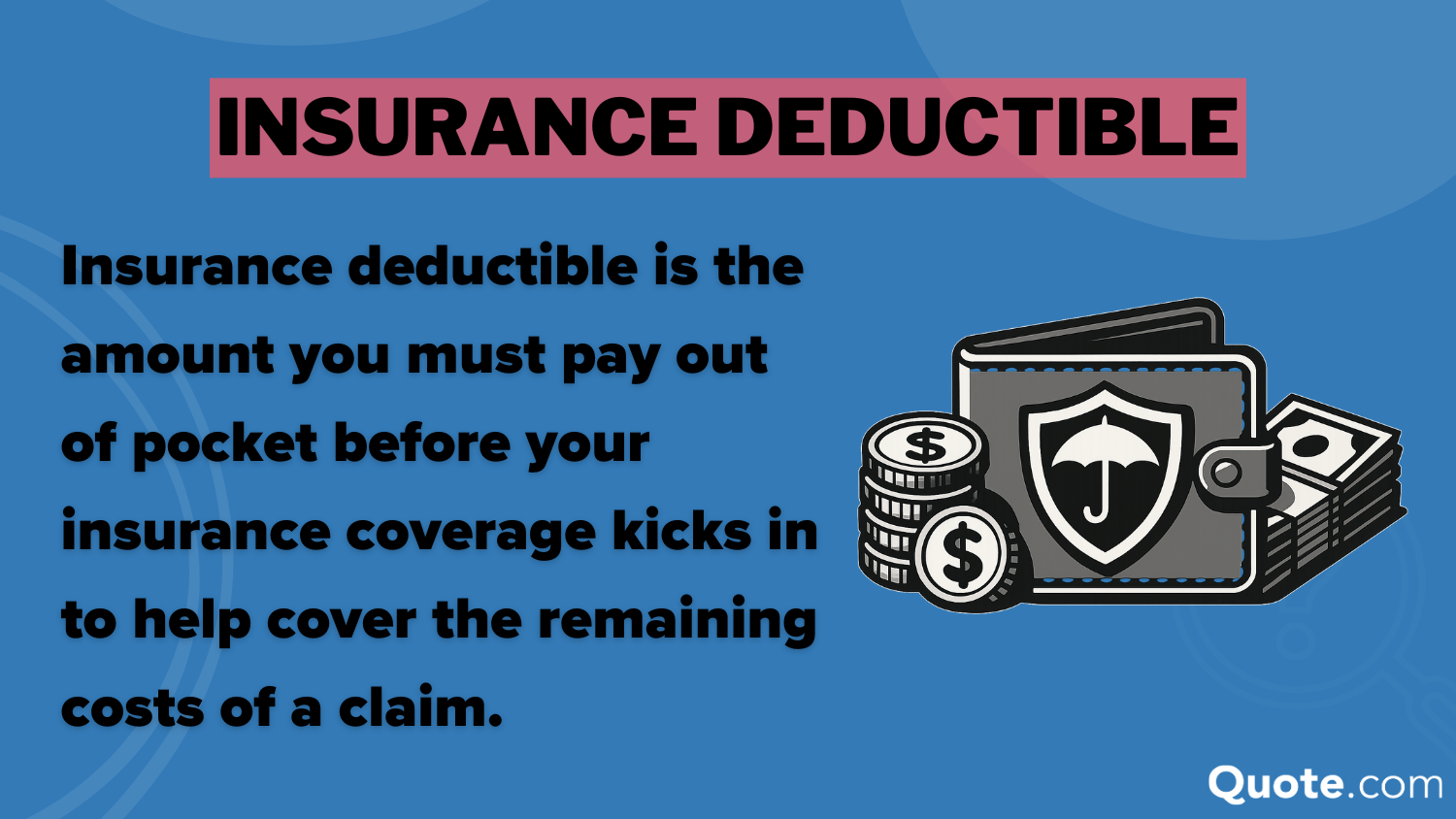


Get a FREE Quote in Minutes
Insurance rates change constantly — we help you stay ahead by making it easy to compare top options and save.