Best Insurance for Vacation Homes: Top Companies & Value (2026)
Amica, The Hartford, and Chubb offer the best insurance for vacation homes, with rates starting at $59 per month. Second homes, seasonal properties, vacant homes, and short-term rentals may also need other policies, limits, and endorsements based on occupancy, rental use, location, property value, and local risks.
Read more





Table of Contents
Table of Contents

Insurance and Finance Writer
Alexandra Arcand is an outreach administrator and insurance expert located in North Central Ohio. She has a passion for writing, investing, and education. As an insurance content writer for over three years, Alexandra has first-hand experience in business finance, economics, and real estate. She leads an outreach writing team that specializes in travel, real estate, healthcare, law, finance, an...
Alexandra Arcand

Managing Editor
Laura Kuhl holds a Master’s Degree in Professional Writing from the University of North Carolina at Wilmington. Her career began in healthcare and wellness, creating lifestyle content for doctors, dentists, and other healthcare and holistic professionals. She curated news articles and insider interviews with investors and small business owners, leading to conversations with key players in the le...
Laura Kuhl

Licensed Insurance Agent
Ty Stewart is the founder and CEO of SimpleLifeInsure.com. He started researching and studying about life insurance when he got his first policy for his own family. He has been featured as a life insurance expert speaker at agent conventions and in top publications. As an independent licensed life insurance agent, he has helped clients nationwide to secure affordable coverage while making the...
Ty Stewart
Updated August 2026
Amica, The Hartford, and Chubb are the best insurance for vacation homes, with rates starting at $59 per month for $200K in dwelling coverage.
- State Farm offers up to 24% off for homeowners with no claims
- Compare claims service, coverage options, and second-home discounts
- Match your policy to how often you use or rent your vacation home
Buying insurance for a vacation property isn’t the same as insuring the house you live in every day.
A beach house rented during the summer, a cabin that’s empty through the winter, and a second home used on weekends can all be treated differently by insurers.
Top 10 Companies: Best Insurance for Vacation Homes| Company | Rank | Claim Satisfaction | A.M. Best | Best for |
|---|---|---|---|---|
 | #1 | 773 / 1,000 | A+ | Customer Care |
 | #2 | 756 / 1,000 | A+ | Occasional Use |
 | #3 | 744 / 1,000 | A++ | Luxury Homes |
 | #4 | 722 / 1,000 | A | Flexible Pricing |
 | #5 | 720 / 1,000 | A+ | Home Protection |
 | #6 | 719 / 1,000 | A+ | Seasonal Stays |
 | #7 | 700 / 1,000 | A | Rental Income |
 | #8 | 691 / 1,000 | A | Rural Properties |
 | #9 | 690 / 1,000 | A+ | Local Agents |
 | #10 | 672 / 1,000 | A+ | Digital Tools |
Some homeowners insurance coverage limits protection if a home stays vacant for too long. Other policies require added coverage for short-term rentals or weather-related damage.
Finding affordable premiums for home insurance is easy with our free quote comparison tool. Just enter your ZIP code to find cheap coverage for your home.
Average Insurance Premiums for Vacation Homes
Monthly rates increase as you choose higher dwelling coverage, but the gap between companies stays fairly consistent. Comparing the best insurance for holiday homes requires looking at both the premium and the protection included with each policy.
State Farm offers the lowest monthly rates at every coverage level shown, starting at $139 per month for $200K in dwelling coverage, while Erie follows closely at $141 per month.
Vacation Home Insurance Monthly Rates by Dwelling Coverage| Company | $200K | $300K | $400K | $500K |
|---|---|---|---|---|
| $156 | $201 | $240 | $286 |
| $169 | $217 | $259 | $308 |
| $147 | $189 | $225 | $268 |
| $203 | $261 | $311 | $370 |
| $141 | $181 | $216 | $257 |
| $149 | $191 | $228 | $271 |
| $153 | $196 | $234 | $278 |
| $166 | $213 | $254 | $302 |
| $139 | $178 | $212 | $252 |
| $152 | $195 | $232 | $276 |
Chubb charges the highest premiums across every coverage level because its policies are designed for homeowners who need broader protection, higher coverage limits, or high-value home insurance.
Compare coverage with the monthly premium to find the best value. If you rent to guests, check whether best short-term rental insurance offers better protection than a standard second-home policy.
How Credit Scores Affect Holiday Home Coverage Costs
Your credit score can have a noticeable effect on your vacation home insurance cost. Insurers in many states review credit-based insurance scores when setting monthly premiums.
State Farm and Erie offer the lowest monthly rates across every credit tier shown, with premiums starting at $139 per month and $141 per month for homeowners with excellent credit.
Vacation Home Insurance Monthly Rates by Credit Score| Company | Excellent (800+) | Good (670–799) | Fair (580–669) | Poor (<580) |
|---|---|---|---|---|
| $156 | $169 | $191 | $219 |
| $169 | $183 | $206 | $248 |
| $147 | $160 | $182 | $208 |
| $203 | $218 | $246 | $296 |
| $141 | $153 | $174 | $199 |
| $149 | $163 | $185 | $212 |
| $153 | $167 | $189 | $216 |
| $166 | $180 | $205 | $235 |
| $139 | $152 | $173 | $198 |
| $152 | $166 | $188 | $218 |
As credit scores decline, premiums increase for every insurer, although those increases vary by company. Since pricing formulas differ, comparing vacation home insurance quotes can help you identify better rates if your credit score has recently improved.
Comparing quotes from more than one insurer is especially worthwhile if your credit has changed recently, since another provider may offer better monthly pricing for the same level of coverage.
Read More: How to Compare Home Insurance Quotes
Property Risks That Raise Vacation & Short-Term Rental Insurance
Location and property condition are factors that affect vacation home insurance costs. Each column reflects a higher-risk scenario while keeping the other assumptions the same: $200K in dwelling coverage, excellent credit, and a $1,000 deductible.
A single risk factor can raise vacation home insurance rates. Flood-zone properties have the highest premiums, while homes with poor construction usually cost less to insure than those exposed to flood or fire risks.
Vacation Home Insurance Monthly Rates by Risk Factor| Company | Fire Risk | Flood Zone | High Crime | Poor Quality |
|---|---|---|---|---|
| $203 | $234 | $187 | $172 |
| $220 | $254 | $203 | $186 |
| $191 | $221 | $176 | $162 |
| $264 | $305 | $244 | $223 |
| $184 | $212 | $169 | $155 |
| $194 | $224 | $179 | $164 |
| $198 | $228 | $182 | $167 |
| $215 | $248 | $198 | $181 |
| $181 | $209 | $167 | $153 |
| $197 | $227 | $182 | $167 |
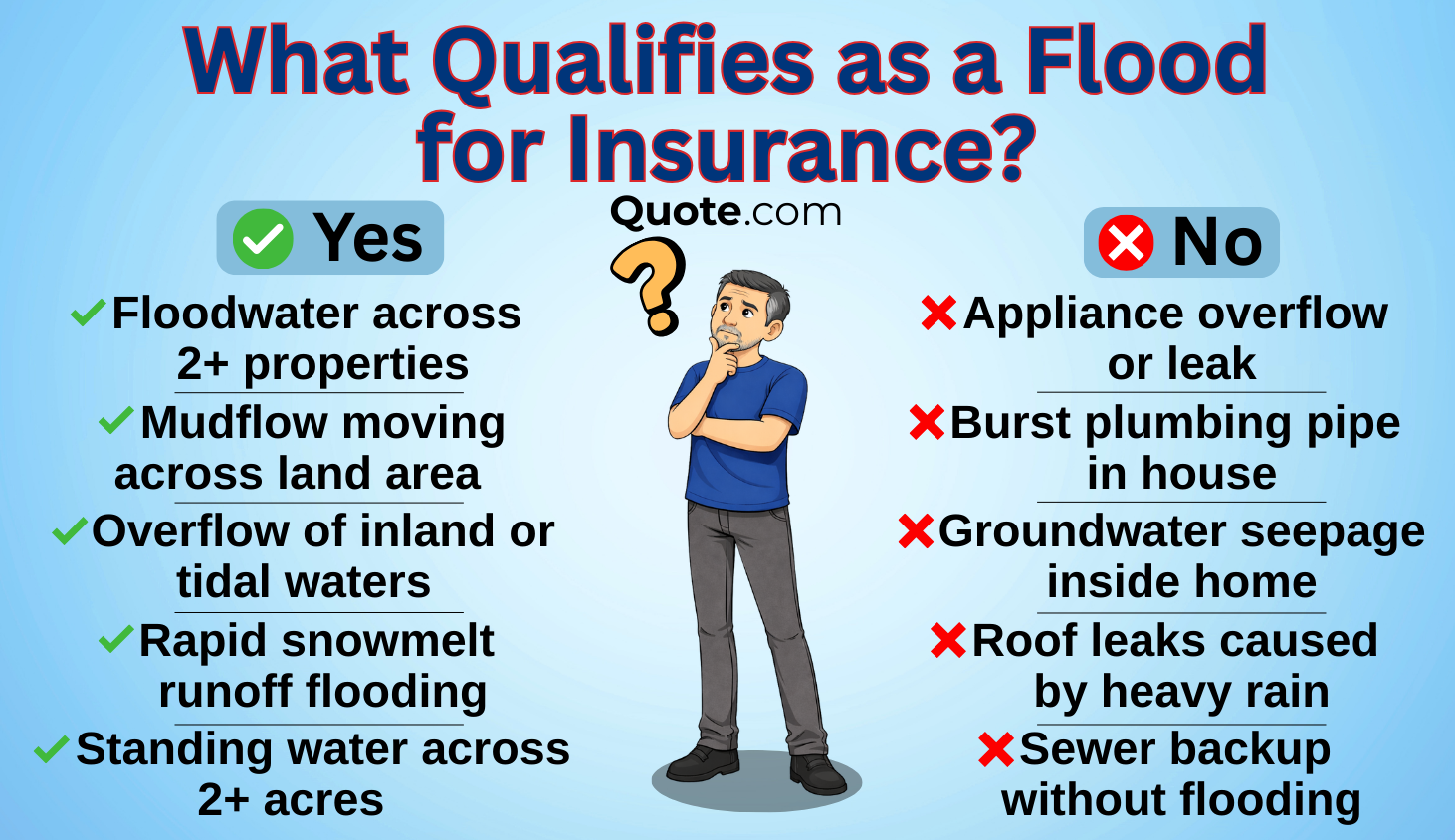
If your property is in a high-risk flood area, learn whether you need separate flood insurance coverage in addition to your standard homeowners policy.
State Farm and Erie have some of the lowest rates in higher-risk areas. If you rent the home year-round, best landlord home insurance may be a better fit than a standard vacation home policy.
Differences in pricing can add up over time, even if the coverage is similar, it’s worth comparing quotes from different insurers.
Ask about discounts and optional coverage for risks in your area, as they may help lower your overall costs. Compare both price and coverage to find a policy that best fits your property’s needs.
What to Know Before Raising Your Homeowners Deductible
Your deductible plays a big role in what you’ll pay in monthly vacation home insurance premiums. Choosing a higher deductible lowers your monthly rate because you’ll cover more of the repair costs if you file a claim.
State Farm offers the lowest monthly rates across every deductible level shown, starting at $154 per month with a $500 deductible and dropping to $113 per month with a $5,000 deductible.
Vacation Home Insurance Monthly Rates by Deductible| Company | $500 | $1K | $2K | $5K |
|---|---|---|---|---|
| $179 | $156 | $142 | $127 |
| $186 | $169 | $156 | $144 |
| $164 | $147 | $133 | $120 |
| $230 | $203 | $185 | $164 |
| $155 | $141 | $128 | $115 |
| $173 | $149 | $133 | $119 |
| $177 | $153 | $138 | $123 |
| $188 | $166 | $151 | $135 |
| $154 | $139 | $126 | $113 |
| $174 | $152 | $137 | $120 |
Erie also remains one of the more affordable options, while Chubb has the highest monthly premiums regardless of deductible.
Before raising your deductible to lower your monthly payment, make sure you could comfortably afford that amount after a covered loss. Learn how insurance deductibles work before deciding whether a higher deductible makes sense for your budget.
Choose coverage based on how you use your vacation home because properties that sit vacant or are rented to guests often need protection beyond a standard homeowners policy.
Dani Best Licensed Insurance Producer
The best insurance for vacation home owners should offer a deductible that fits both their monthly budget and emergency savings.
Finding the right balance between your monthly premium and your out-of-pocket costs can help you avoid financial surprises when you need to file a claim.
Finding Affordable Vacation Property Insurance in the U.S.
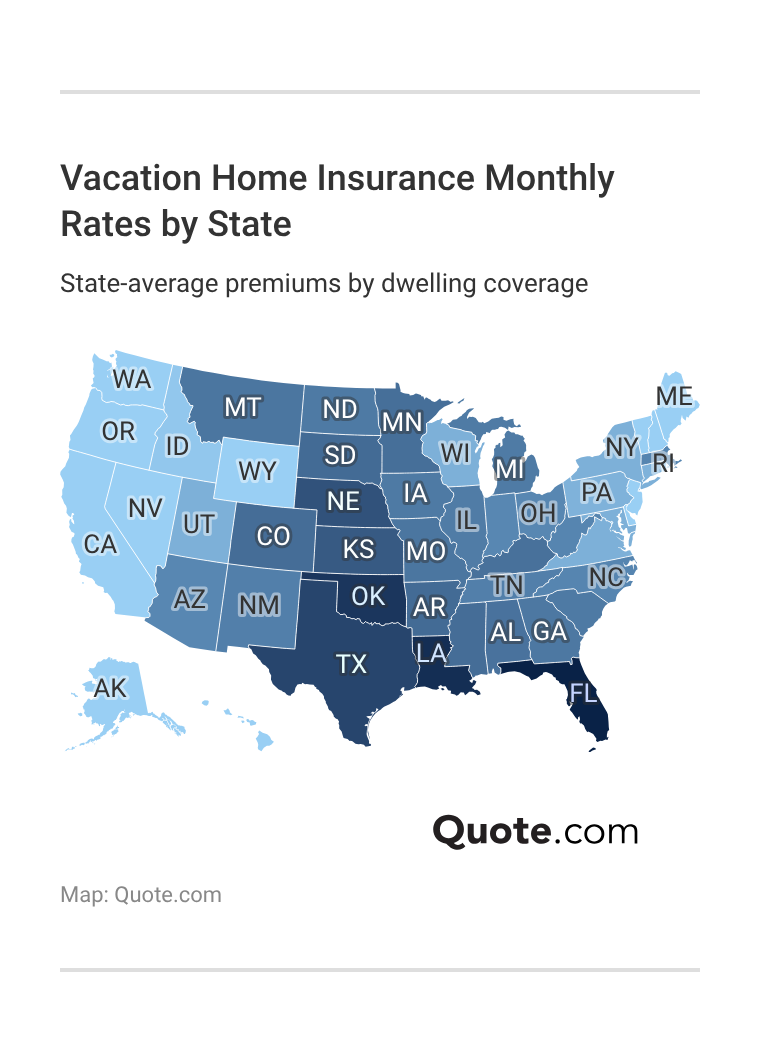
Where your vacation home is located has an impact on your insurance rates. Homes in states with higher exposure to hurricanes, wildfires, severe storms, or weather events have higher premiums than homes in areas with fewer claims.
State regulations, claims frequency and rebuilding expenses also impact premiums, so looking to compare vacation home insurance rates by state can help outline why the same coverage is a more costly option in one place than another.
Some insurers may offer limited coverage or only write policies with higher deductibles in areas where hurricanes, wildfires or flooding are more likely.
Owners of vacation homes in these areas should compare quotes from several insurers, as coverage and pricing can vary widely for the same property.
A company with competitive rates in one state may not offer the best value in another, so shopping around gives you a better chance of finding the right coverage at a price that fits your budget.
If your vacation home is in a coastal or high-risk area, ask insurers whether additional coverage or separate policies are required, as those can also affect your monthly insurance costs.
Free Home Insurance Comparison
Compare Quotes From Top Companies and Save
Ways to Save on Vacation Property Insurance
Many insurers offer discounts that can lower your monthly vacation home insurance rates, especially if you qualify for more than one.
State Farm stands out with a 20% bundling discount, a 24% claims-free discount, and a 12% new home discount, while American Family offers one of the highest security discounts at 29%.
Top Discounts for Vacation Home Insurance| Company | Bundling | Claims‑Free | New Home | Security |
|---|---|---|---|---|
| 15% | 20% | 8% | 10% |
| 10% | 20% | 7% | 29% |
| 20% | 20% | 10% | 10% |
| 10% | 12% | 6% | 8% |
| 12% | 10% | 6% | 20% |
| 12% | 12% | 8% | 10% |
| 14% | 20% | 6% | 10% |
| 11% | 18% | 9% | 10% |
| 20% | 24% | 12% | 17% |
| 15% | 14% | 6% | 22% |
You get a bundling discount of 20% if you’re comparing rates for your primary and vacation properties with Amica. Most insurers require a different policy for each property, but bundling with the same company should reduce your insurance costs.
Compare the best home insurance discounts before choosing a policy. Discounts can help, but a few smart choices can also reduce your vacation home insurance costs over time.
- Add Smart Home Devices: Leak detectors, monitored alarms, and security systems can help prevent losses and may qualify for additional savings.
- Compare Quotes at Renewal: Insurance rates and coverage options change, so shopping around for free quotes online before your policy renews can help you find better plans.
- Keep Up With Home Maintenance: Regular inspections and timely repairs reduce the chance of claims caused by neglected damage.
- Limit Long Vacancies: Ask someone to check on your property or use remote monitoring if the home sits empty for extended periods.
- Raise Your Deductible: Choosing a higher deductible can lower your monthly premium if you’re comfortable paying more after a covered claim.
Using these strategies alongside available discounts can help you lower your insurance costs without sacrificing the protection your vacation home needs.
Review your policy each year, especially if how you use the property has changed. If you rent it more often than you stay there, short-term vacation rental insurance may be a better fit.
Choose the Right Policy for Your Vacation Home
Vacation home insurance covers a home that isn’t your main house, but coverage will differ. A second home, seasonal cabin, an unoccupied house, or a short-term rental can have different policy options and coverage needs, as well as premiums.
When searching for coverage, let the insurer know how the property will be used. Indicate if it is a seasonal home, vacant for periods longer than five years, or a rental. That information can influence the policy, insurance coverages and limits.
Coverage Options for Vacation Home Insurance| Protection | Covers | Best for | Type |
|---|---|---|---|
| Contents Replacement | Personal items | Furnished homes | Endorsement |
| Earthquake Coverage | Earth movement | Seismic regions | Endorsement |
| Equipment Breakdown | Home equipment | Aging systems | Add-on |
| Extended Replacement | Rebuild costs | High-value homes | Limit increase |
| Flood Insurance | Flood damage | Flood zones | Separate policy |
| Home Sharing | Rental risks | Short-term rentals | Endorsement |
| Identity Theft | Fraud recovery | Personal security | Add-on |
| Loss Assessment | HOA assessments | Condo owners | Endorsement |
| Ordinance or Law | Code upgrades | Older homes | Endorsement |
| Scheduled Property | Valuable items | High-value items | Endorsement |
| Service Line | Utility lines | Older homes | Add-on |
| Vacant Home | Vacancy risks | Seasonal homes | Endorsement |
| Water Backup | Water backups | Finished basements | Add-on |
Vacation home insurance differs from a standard homeowners policy because occupancy plays a larger role in how coverage is written. Know more about the types of homeowners insurance to find the policy that best fits how your property is used.
Vacation homes that sit empty or are rented to guests often need more than a standard homeowners policy. If you rent through Airbnb or Vrbo, ask whether short-term rental insurance for guests is available.
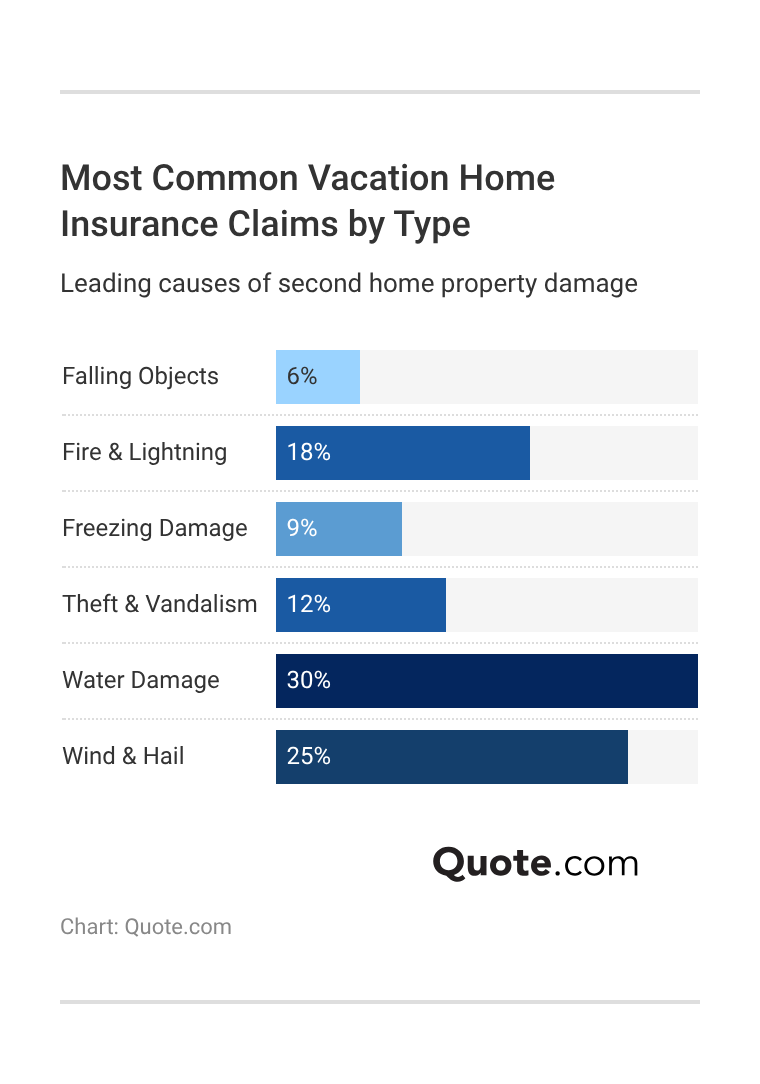
Insuring a vacation home starts with knowing how often it’s occupied, who uses it, and what risks affect the property. Depending on the home, you may need flood insurance, water backup coverage, vacant home coverage, or a home-sharing endorsement.
Most policies cover the home, detached structures, personal belongings, personal liability, and additional living expenses after a covered loss.
Comparing quotes from several insurers and taking advantage of bundling or claims-free discounts can lower your premium without sacrificing the coverage your vacation home needs.
Jeff Root Licensed Insurance Agent
Coverage isn’t the same across every insurer, and each policy comes with its own endorsements and exclusions. Take time to read the details before buying so you know exactly what’s covered and what isn’t.
Floods, earthquakes, wear and tear, neglect, and certain rental-related losses often require separate coverage or may be excluded.
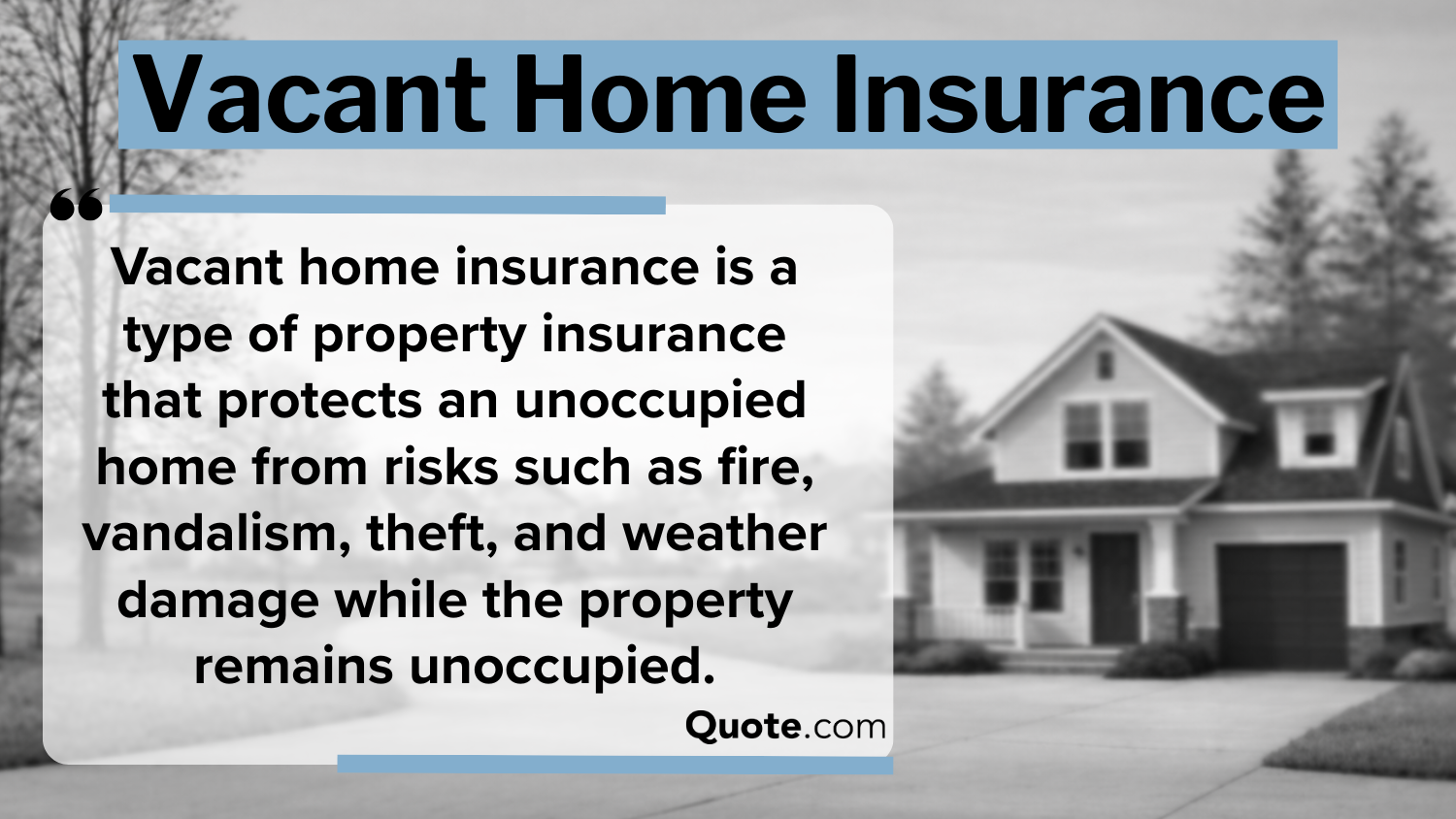
Get More Details: Vacant Home Insurance
Protect Your Vacation Home From Common Claims
Filing a claim for a vacation home starts with documenting the damage and contacting your insurer as soon as it’s safe to do so.
Tell the company if the property is a second home, seasonal residence, vacant for part of the year, or rented to guests because that can affect how the claim is handled.
Before calling the insurer, have your policy number, photos of the damage and receipts for any repairs.
Updating the claim in a timely manner and with detailed data will help keep the claims process rolling.
- Make Sure the Property is Safe: Stay out of the home if there’s structural damage, flooding, fire, or another immediate hazard.
- Document the Damage: Take photos of the damage before you clean anything up or begin repairs. Hold on to receipts for any temporary fixes.
- Report the Claim: Get in touch with your insurer as soon as you can and share the details, along with any photos or documents that support your claim.
- Work With the Adjuster: The insurer may inspect the property or request repair estimates. For major damage, a public adjuster can help with the claim.
- Keep all Records: Save estimates, invoices, receipts, and claim correspondence until the claim is settled.
Vacation homes in flood zones, hurricane-prone areas, wildfire regions, or other high-risk locations may need separate coverage because a standard policy doesn’t cover every type of loss.
Some insurers also limit coverage or stop writing new policies in these areas, so check the policy before you need to file a claim.
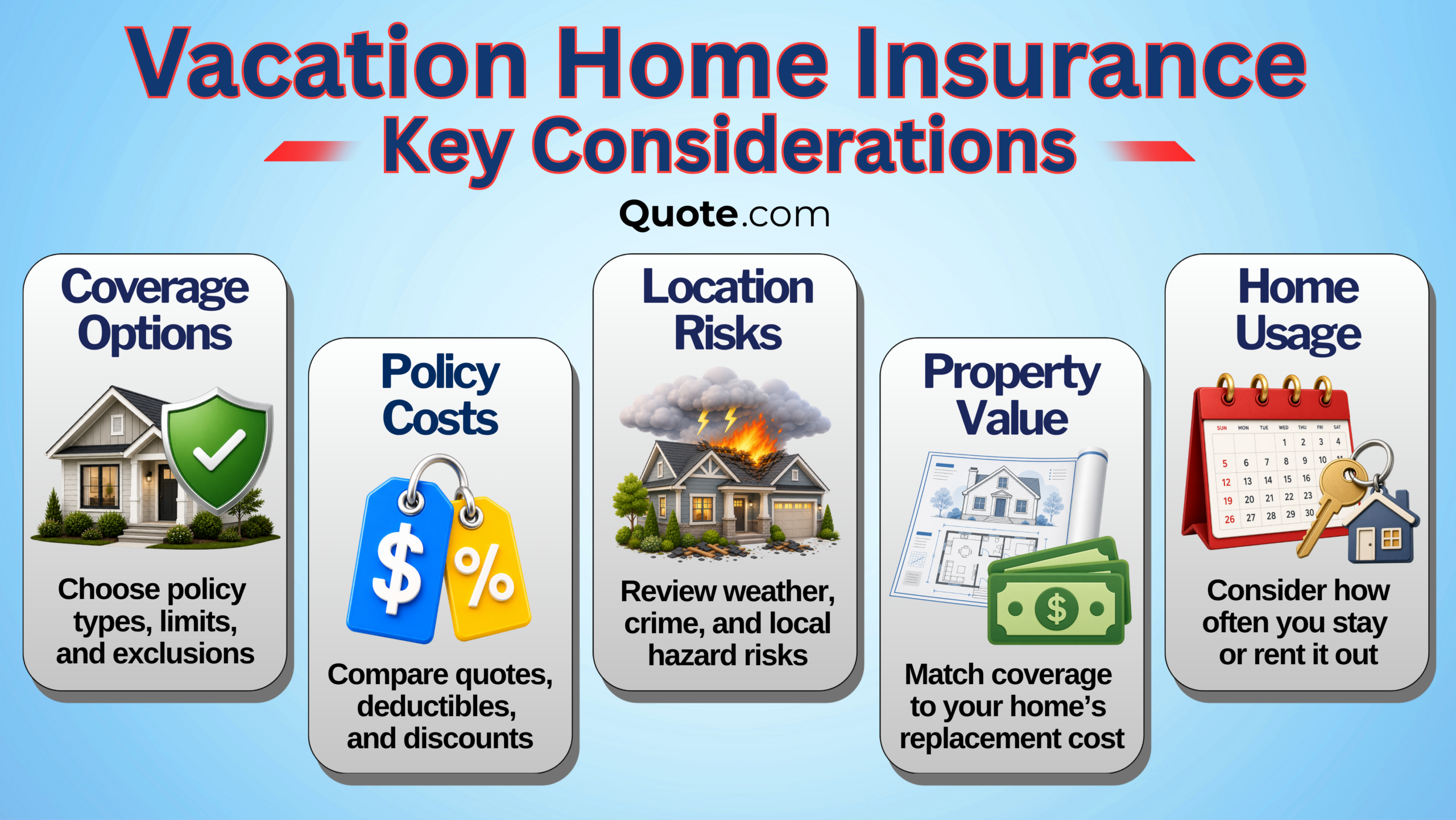
If you rent the property to guests, confirm that your policy covers short-term rentals. Guest-related damage, liability claims, and lost rental income may require additional protection.
Best travel insurance for vacation rentals protects the traveler, not the property. Guests should consider travel insurance for vacation rentals for trip cancellations, medical expenses, or lost baggage.
Free Home Insurance Comparison
Compare Quotes From Top Companies and Save
Best Insurance Companies for Vacation Homes
The best insurance companies for vacation homes don’t all serve the same type of property owner.
Some offer stronger protection for seasonal homes or second residences, while others provide better options for luxury properties, short-term rentals, or homes that sit vacant for part of the year.
Compare each company’s coverage, endorsements, claims service, occupancy rules, and follow these steps on how to buy home insurance before choosing a policy that fits how you use your vacation home.
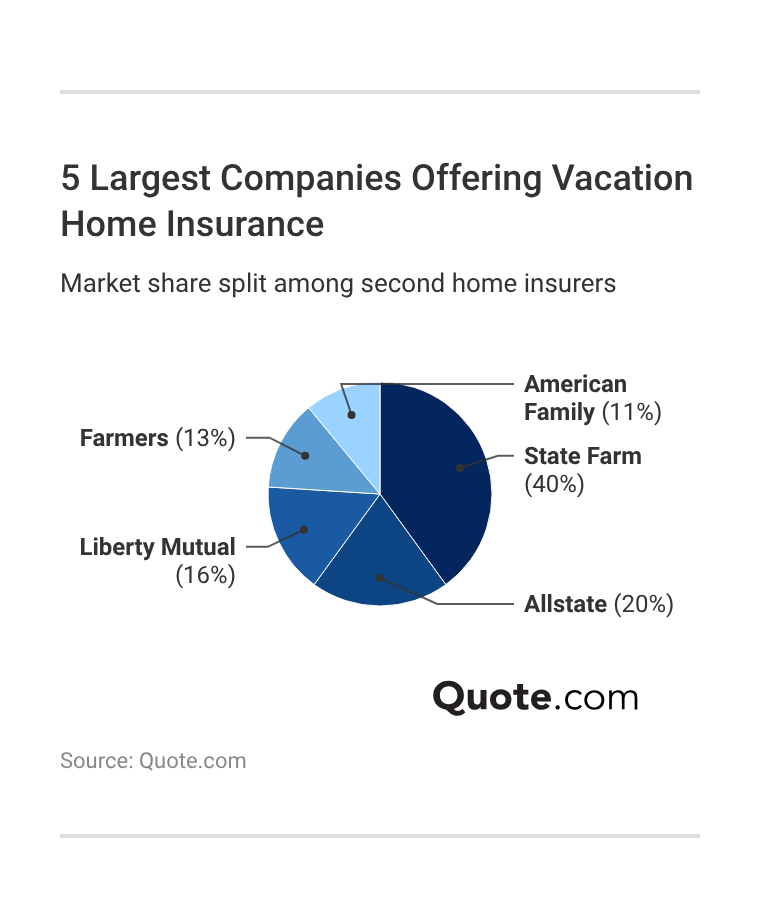
Market share doesn’t always reflect the best choice. If you stay in vacation rentals, compare best vacation rental insurance for renters before your trip. Property use and location still matter when choosing coverage.
#1 – Amica: Top Overall Pick
Pros
- Extended Dwelling Protection: Amica’s extended replacement cost coverage helps cover rebuilding costs if labor and material prices exceed your dwelling limit after a covered loss.
- Dividend Policy Option: Eligible policyholders may receive part of their premium back, helping lower the cost of insuring a second home.
- Water Backup Coverage: Optional water backup coverage helps protect vacation homes from damage caused by backed-up drains or sump pump failures.
Cons
- Higher Monthly Costs: Amica’s broader coverage choices may come with higher premiums. See More: Amica Insurance Review
- Fewer Local Offices: Homeowners who prefer sitting down with an agent may have fewer nearby locations to choose from than they would with a larger agency network.
#2 – The Hartford: Best for Occasional Use
Pros
- Coverage for Seasonal Use: The Hartford suits owners who visit their vacation home only part of the year. Learn more in our guide: The Hartford insurance review
- Protection for Furnishings: Its personal property coverage can protect furniture, appliances, clothing, and other belongings stored at the home between visits.
- Identity Recovery Support: Optional identity theft coverage may help pay certain recovery expenses if the homeowner’s personal information is stolen.
Cons
- Limited State Availability: The Hartford does not offer vacation home coverage everywhere, so availability may depend on the property’s location.
- Smaller Endorsement Selection: Homeowners looking for a long list of specialized add-ons may find fewer choices than they would with some competitors.
#3 – Chubb: Best for Luxury Homes
Pros
- Cash Settlement Option: After a covered total loss, eligible homeowners may choose a cash settlement rather than rebuild the vacation home.
- Higher Rebuilding Protection: Chubb’s extended replacement cost coverage can pay beyond the dwelling limit when rebuilding costs rise after a covered claim.
- Property Risk Reviews: Chubb offers home assessments that help identify risks affecting your dwelling coverage, including fire, water, security, and maintenance concerns before they become costly claims.
Cons
- Expensive Monthly Premiums: Chubb’s higher limits and luxury-focused coverage usually cost more per month than standard vacation home policies.
- Poor Fit for Modest Homes: Owners of smaller or lower-value properties may end up paying for features and limits they do not need.
#4 – Liberty Mutual: Best for Flexible Pricing
Pros
- Inflation Protection: Liberty Mutual can adjust the dwelling limit as rebuilding expenses increase, which helps keep the policy from falling behind current construction costs.
- Claims-Free Savings: Homeowners who have avoided recent claims may qualify for a discount, which can help reduce the cost of covering a second property.
- Several Deductible Choices: A wider range of deductibles gives owners more control over the tradeoff between their monthly premium and what they would pay after a claim.
Cons
- State-Specific Coverage: Certain endorsements and discounts are not offered in every state, so the available policy may look different depending on the home’s location.
- Lower Claims Ratings: Liberty Mutual’s claims satisfaction trails several higher-ranked insurers. Our Liberty Mutual insurance review explains why.
#5 – Nationwide: Best for Home Protection
Pros
- Brand New Belongings: This option replaces covered personal property with new items instead of paying depreciated value.
- Ordinance or Law Coverage: If local building codes change, this coverage may help pay for required upgrades during repairs after a covered loss.
- Extra Rebuilding Funds: Replacement Cost Plus can add protection when the cost to rebuild the vacation home ends up higher than the dwelling limit.
Cons
- Higher Monthly Premiums: Adding broader protection for the home and its contents may increase the monthly cost of the policy.
- Coverage Varies by Location: Some of Nationwide’s optional protections aren’t available in every state. Get more details in our guide: Nationwide Insurance Review
#6 – Erie: Best for Seasonal Stays
Pros
- Guaranteed Replacement Cost: Eligible policies can cover the full cost to rebuild after a covered loss, even when that amount exceeds the listed dwelling limit.
- Lock Replacement Coverage: Erie may pay to replace the locks if the owner loses the keys or they are stolen, which is useful for a property that is not occupied full time.
- Bundling Discount: Owners who place their vacation home and auto policies with Erie may qualify for a lower overall premium.
Cons
- Small Service Area: Erie only writes policies in 12 states.
- Basic Online Tools: Homeowners who prefer handling every policy change online may find fewer self-service features than they would with larger national insurers.
#7 – American Family: Best for Rental Income
Pros
- Home-Sharing Coverage: American Family offers temporary rental coverage for eligible owners who rent seasonally. Shop Now: American Family Insurance Review
- Hidden Water Damage Protection: This option may cover qualifying leaks behind walls, floors, or ceilings that develop slowly and are difficult to spot.
- Smart Home Savings: Approved leak detectors, alarms, and monitoring devices may qualify the homeowner for a discount while also helping catch problems sooner.
Cons
- Regional Availability: When comparing the best insurance for vacation rentals, confirm that American Family serves your state and allows your planned rental use.
- Limited Agent Access Outside Its Footprint: Owners in areas where the company has a smaller presence may have fewer local offices or agents nearby.
#8 – Farmers: Best for Rural Properties
Pros
- Declining Deductible: Farmers can reduce the deductible over time for eligible claim-free customers.
- Eco-Rebuild Coverage: Farmers insurance reviews show that homeowners may receive coverage for environmentally friendly materials when rebuilding after a covered claim.
- Scheduled Property Coverage: Compare the best insurance for rental homes to see if it covers guest damage, liability, and lost rental income.
Cons
- Higher Monthly Costs With Add-Ons: Farmers offers several useful endorsements, but adding them may raise the monthly premium.
- Uneven Coverage by State: Some policy features are only available in certain locations, so owners should confirm what is offered before comparing quotes.
#9 – State Farm: Best for Local Agents
Pros
- Home and Auto Bundling: Vacation home owners who also insure their vehicles with State Farm may qualify for a sizable multi-policy discount.
- Inflation Guard: The dwelling limit can increase over time to better reflect rising labor and material costs.
- Separate Coverage for Valuables: State Farm’s personal articles policy provides added protection for jewelry, artwork, cameras, and other high-value items kept at the property.
Cons
- Fewer Specialty Add-Ons: Owners with unusual risks may find fewer niche endorsements. Compare Coverage Here: State Farm Insurance Review
- Limited Protection for Frequent Rentals: Homeowners who rent the property often may need a different policy or added coverage beyond a standard home policy.
#10 – Allstate: Best for Digital Tools
Pros
- HostAdvantage Coverage: Owners who occasionally rent their vacation home can add protection for certain belongings and rental-related losses.
- Claim RateGuard: In eligible states, one qualifying claim may not automatically lead to a higher premium at renewal.
- Online Claim Tracking: Allstate’s app lets homeowners send photos and documents, check claim updates, and follow repairs without being at the vacation property.
Cons
- Higher Monthly Pricing: Allstate may cost more per month than some lower-priced vacation home insurers.
- State-Based Restrictions: HostAdvantage, Claim RateGuard, and certain discounts are not available in every state.
Choosing the Right Vacation Home Insurance
The best insurance for vacation homes depends on more than the monthly premium. As a second home, holiday home, or short-term rental, the insurance you need should reflect how you use the property.
Travelers who book vacation homes several times a year may also benefit from best vacation rental travel insurance, which covers trip-related expenses rather than the home itself.
A policy should match how you use the property, whether it’s a weekend getaway, a seasonal residence, or a short-term rental.
As you compare quotes, check coverage limits, deductibles, additional living expenses coverage, available endorsements, and the company’s claims reputation.
Installing leak detectors and arranging regular property checks can help catch water damage early and reduce the risk of an expensive claim while your vacation home is empty.
Melanie Musson Published Insurance Expert
Comparing policies now can save you from costly surprises later. Check coverage, exclusions, discounts, and pricing from several insurers before choosing vacation home insurance.
If you’re looking to protect your most valuable asset with home insurance, compare rates now with our free quote tool.
Frequently Asked Questions
Who has the best insurance for vacation homes?
Amica, The Hartford, and Chubb offer the best insurance for vacation properties. Amica has the lowest rates, but The Hartford and Chubb specialize in policies for seniors and those with luxury vacation homes that require additional coverages. Read More: Amica vs. Auto-Owners Insurance Review
How do you insure a vacation home?
Estimate the minimum amount needed to replace the home, and then pick liability, personal property and extra coverage that reflect how you use the house. Before buying a policy, ask about endorsements that cover situations like if the home is vacant for part of the year or rented to guests.
How much does vacation home insurance cost?
Vacation home insurance costs depend on location, home value, coverage limits, and occupancy. In our comparison, rates start at $139 per month for $200K in dwelling coverage, while this guide’s top picks start at $147. Comparing quotes online from several insurers helps you find the best price.
How do you insure a second home?
A second home is usually insured with its own homeowners policy rather than being added to your primary residence policy. You’ll need enough dwelling coverage to rebuild the property, along with protection for personal belongings, liability, and risks that are unique to seasonal or occasional occupancy.
Is vacation home insurance more expensive than homeowners insurance?
Yes. Vacation home insurance usually costs more than homeowners insurance because second homes often sit empty longer and face a higher risk of theft, storm damage, vandalism, and unnoticed repairs. Rates also vary by location, coverage, and rental use.
Don’t settle for expensive home insurance premiums. Enter your ZIP code to find robust coverage for your dwelling at an affordable price.
Does vacation home insurance cover a second home rental?
It can, but only if your policy allows short-term or seasonal rentals. Many standard vacation home policies exclude business-related activity, so homeowners who rent their property should ask about home-sharing endorsements or rental property coverage before accepting guests.
What kind of insurance do I need for an Airbnb or Vrbo rental?
If you rent your vacation home through Airbnb or Vrbo, a standard homeowners policy may not be enough. You may need a home-sharing endorsement, short-term rental insurance, or a landlord policy. Check that your coverage includes guest damage, liability, and lost rental income.
Is vacation rental insurance worth it?
Yes. If you’re renting out your vacation home, you may need additional coverage for damage from guests, liability claims or loss of rental income. The owner’s policy insures the property, but other types of travel insurance may be necessary for trip cancellations, medical expenses and lost baggage when traveling.
What insurance do I need for an unoccupied house?
Most homeowners need vacant home insurance if the property will stay empty for an extended period. It helps cover risks a standard homeowners policy may not cover after a home has been vacant beyond the insurer’s limit. The homeowners insurance you need also depends on how the property is used and the risks it faces.
Does vacation home insurance cover theft?
Most vacation home insurance covers the theft of personal belongings, but only following a covered burglary. Coverage limits and exclusions differ greatly, so if you leave expensive electronics, jewelry or other valuables on the property all year long, review your policy.
Protecting your home doesn’t have to be expensive. Enter your ZIP code into our free tool to find affordable homeowners insurance today.
Can you get homeowners insurance on an unoccupied house?
Is unoccupied home insurance cheaper?
How much personal property coverage applies at a vacation home?
What isn’t covered by vacation home insurance?
Related Articles
-
May 2026

Home Insurance Premiums: How They Work & Cost Factors (2026)
-
Aug 2026
Best Home Insurance in Kansas for 2026
-
Aug 2026
Best Home Insurance in Oregon for 2026
-
Feb 2026
How much homeowners insurance do you need in 2026?
-
Jul 2026
Best Home Insurance for Landlords in 2026
-
Jul 2026

Rental Property Insurance: Costs, Coverage & Savings Tips (2026)




Get a FREE Quote in Minutes
Insurance rates change constantly — we help you stay ahead by making it easy to compare top options and save.