Best Home Insurance for New Construction in 2026
Amica, Chubb, and Liberty Mutual have the best home insurance for new construction. Average rates start at $73 a month. New home insurance policies should include rebuild cost protection, and Progressive offers the biggest new home discount to keep costs low. Travelers offers flexible plans for high-end materials.
Read more Secured with SHA-256 Encryption






Save Money by Comparing Insurance Quotes
Compare Free Home Insurance Quotes Instantly




Table of Contents
Table of Contents

Insurance Copywriter
Malory Will has an M.A. in English from Arizona State University. She has over four years of experience in writing for the insurance industry. With a background in health, auto, life, and homeowners insurance, Malory is passionate about making complex insurance topics clear and approachable. Her goal is to help readers make informed decisions with confidence.
Malory Will

Senior Director of Content
Sara Routhier, Senior Director of Content, has professional experience as an educator, SEO specialist, and content marketer. She has over 10 years of experience in the insurance industry. As a researcher, data nerd, writer, and editor, she strives to curate educational, enlightening articles that provide you with the must-know facts and best-kept secrets within the overwhelming world of insurance....
Sara Routhier

Mortgage Loan Originator
Steve Crowell is a New Hampshire based mortgage loan originator with Luminate Home Loans, Inc. After graduating from the University of New Hampshire in 2003 with a BS in Business and Economics and a BA in History, he went on to get his broker license in 2005. In 2021, he was recognized as a Luminate Home Loans “Circle of Excellence” top agent. Steve works as a trusted resource for clients w...
Steve Crowell
Updated April 2026
Amica, Chubb, and Liberty Mutual stand out as the best home insurance for new construction.
- State Farm offers extended replacement cost for rebuild protection
- Monthly rates start at $119 for $300,000 in coverage
- New home discounts and safety features help lower insurance costs
Amica works well if you’re looking for the cheapest construction insurance for homeowners without giving up dependable claims support. Monthly rates start around $73 monthly for $150,000 policies.
Chubb is a better fit for high-value home insurance, and Liberty Mutual gives you more room to adjust coverage as your home comes together.
Top 10 Companies: Best Home Insurance for New Construction| Company | Rank | Claims Satisfaction | A.M. Best | Best for |
|---|---|---|---|---|
 | #1 | 773 / 1,000 | A+ | Customer Service |
 | #2 | 744 / 1,000 | A++ | High-Value Homes |
 | #3 | 722 / 1,000 | A | Flexible Options |
 | #4 | 720 / 1,000 | A+ | Smart Homes |
 | #5 | 704 / 1,000 | A+ | Online Quotes |
 | #6 | 700 / 1,000 | A++ | Coverage Options |
 | #7 | 700 / 1,000 | A | Discount Options |
 | #8 | 691 / 1,000 | A | Policy Customizatiion |
 | #9 | 690 / 1,000 | A+ | Local Agents |
 | #10 | 672 / 1,000 | A+ | Bundling Savings |
As your build progresses, your risks and costs can shift, so it helps to compare a few options and choose a policy that matches how your home is being built.
If you’re looking for the best home insurance for new construction to protect your investment, compare monthly rates now using our free quote tool.
New Home Construction Insurance Cost Breakdown
New construction homes usually cost less to insure, but what you pay each month still comes down to where you live, the materials you’re using, your credit level, and the coverage you pick. Compare Now: Home Insurance Rates by State
A completed home is less risky than one still under construction, so prices can shift while the build is ongoing. Some companies handle this better than others.
Amica keeps monthly costs lower for standard builds, while Chubb fits higher-value homes that need stronger rebuild coverage. Liberty Mutual gives you more flexibility with add-ons as your home moves toward move-in.
The cheapest option isn’t always the best fit, especially with new construction. New home insurance policies that include extended replacement cost or added protection for materials and labor tend to cost more upfront but can save you from bigger expenses later.
Compare these details and premiums side by side to get a clearer picture of what you’re paying for and how different factors impact your monthly rate.
Coverage Costs for New Construction Homes
Home insurance rates can change a lot depending on how much coverage you choose for a new build. Lower coverage keeps monthly costs down.
Amica remains one of the most affordable options, starting at $73 per month for $150,000 in coverage. Liberty Mutual also keeps pricing steady, which helps if you plan to adjust coverage as your home is completed.
New Construction Home Insurance Monthly Rates by Coverage Amount| Company | $150K | $300K | $500K | $750K |
|---|---|---|---|---|
| $114 | $187 | $279 | $368 |
| $140 | $228 | $340 | $449 |
| $73 | $119 | $178 | $235 |
| $161 | $263 | $392 | $517 |
| $136 | $221 | $330 | $436 |
| $88 | $145 | $216 | $285 |
| $149 | $244 | $364 | $480 |
| $226 | $369 | $550 | $726 |
| $123 | $202 | $301 | $397 |
| $118 | $194 | $289 | $381 |
As coverage increases, home insurance rates rise quickly. Progressive reaches $726 per month at $750,000 in coverage, making it one of the more expensive choices at higher levels.
Most providers fall in the middle. Allstate, State Farm, and Travelers keep pricing more consistent as coverage grows, which can make it easier to plan your monthly budget.
Pick coverage that matches your rebuild cost, not your home’s market value, so you’re fully covered for materials and labor if you need to file a claim during or after construction.
Jeff Root Licensed Insurance Agent
It’s important to note that rebuild costs don’t always match your home’s market value. If your coverage is too low, you may have to cover part of the rebuild yourself if costs go up.
Always review your policy once construction is finished. The coverage you needed during the build may change after move-in, so adjusting it helps keep your protection aligned with your home’s actual value.
How Property Age Affects Coverage and Costs
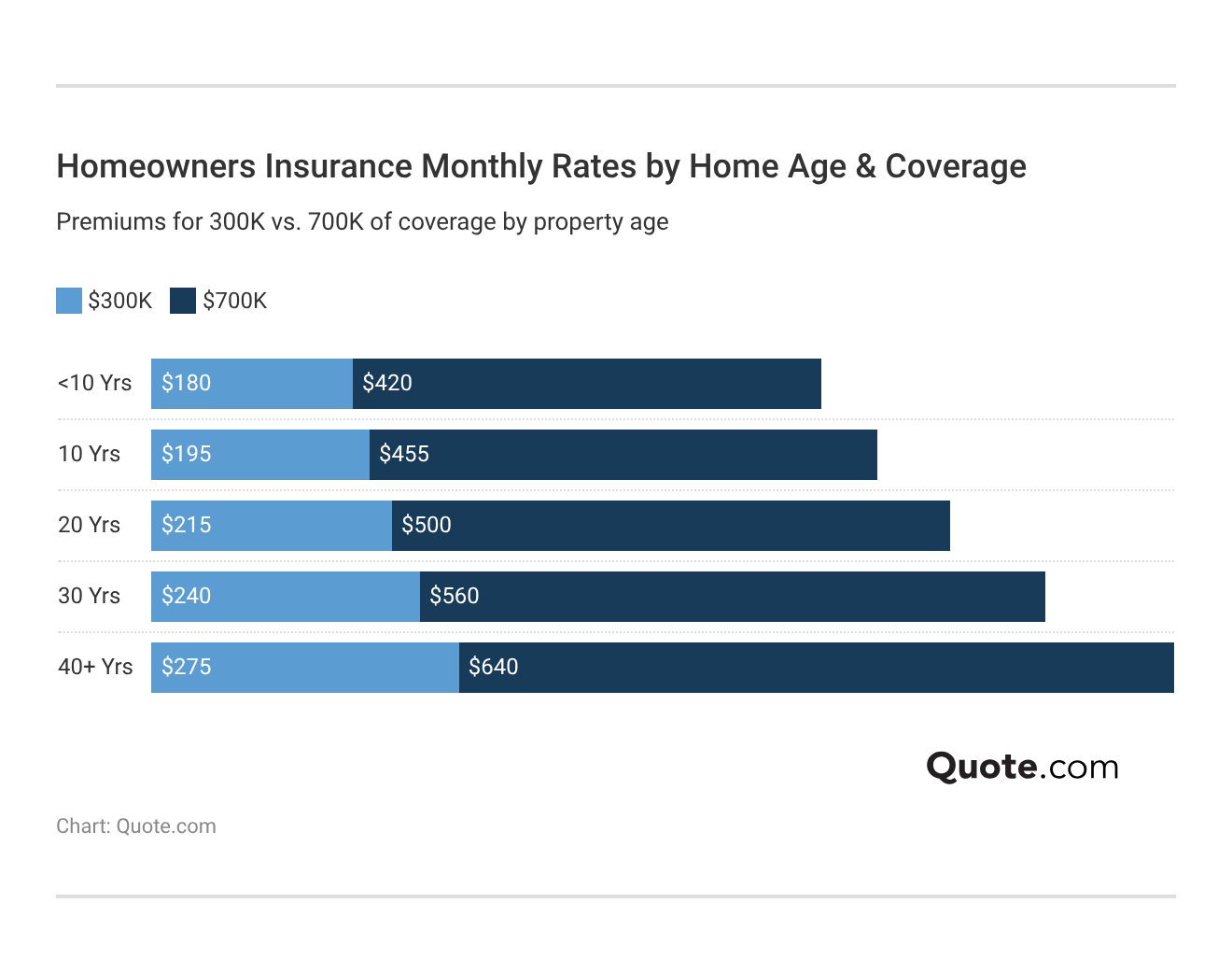
Home age plays a direct role in what you’ll pay each month, even when homeowners insurance coverage stays the same. Newer homes usually cost less to insure because they use updated materials and have fewer repair risks.
Homes under 10 years old have monthly costs of around $180 for $300,000 in coverage and $420 for $700,000 with a $1,000 deductible. As homes age, those numbers steadily increase as maintenance and replacement risks grow.
By the time a home is 40 years old or older, premium costs rise by about $100-$200 a month for the same coverage levels. Older systems and materials tend to drive those increases over time.
If you’re building a new home, you start at the lower end of pricing, but it still helps to choose a provider that keeps costs stable as your home gets older.
Credit Score Impact on New Construction Coverage
Your credit score directly affects what you’ll pay each month for new construction coverage. Even with the same home and coverage, your price can change based on how insurers assess risk.
If your credit is strong, you’ll usually see lower monthly costs across most providers. Amica and Liberty Mutual are among the more affordable options.
New Construction Home Insurance Monthly Rates by Credit Score| Company | Excellent (800+) | Good (670–799) | Fair (580–669) | Poor (<580) |
|---|---|---|---|---|
| $114 | $139 | $194 | $342 |
| $140 | $171 | $238 | $420 |
| $73 | $89 | $124 | $219 |
| $161 | $196 | $274 | $483 |
| $136 | $166 | $231 | $408 |
| $88 | $107 | $150 | $264 |
| $149 | $182 | $253 | $447 |
| $226 | $276 | $384 | $678 |
| $123 | $150 | $209 | $369 |
| $118 | $144 | $201 | $354 |
As credit drops, monthly costs increase across every company. Progressive and Chubb tend to see some of the biggest jumps.
Because of that, it helps to compare a few providers side by side. The gap between companies can be wide if your score isn’t in the top range.

Keeping your credit in a good range won’t guarantee the lowest price, but it does put you in a better position when comparing providers. Start Now: State Farm vs Farmers, Geico, Progressive, and Allstate Review
Some states, including California and Michigan, do not allow credit-based insurance pricing. However, other financial risks, like filing multiple claims, will impact your rates, so it always pays to shop around and compare multiple companies to find affordable coverage.
Local Risk Factors and New Build Insurance Premiums
Where your home is built can change what you pay each month more than most people expect, especially when you’re dealing with fire exposure, crime rates, or flooding. Read More: Does home insurance cover wildfires?
Amica and Liberty Mutual remain affordable for more homeowners, with monthly costs starting around $79 to $97 for $150,000 in lower-risk areas.
New Construction Home Insurance Monthly Rates by Risk Factor| Company | Build Quality | Crime Rate | Fire Risk | Flood Zone |
|---|---|---|---|---|
| $125 | $123 | $142 | $180 |
| $154 | $151 | $175 | $206 |
| $80 | $79 | $91 | $139 |
| $177 | $174 | $201 | $227 |
| $150 | $147 | $170 | $202 |
| $97 | $95 | $110 | $154 |
| $164 | $161 | $186 | $215 |
| $249 | $244 | $282 | $292 |
| $135 | $133 | $154 | $189 |
| $130 | $127 | $148 | $184 |
If your build is in a higher-risk area, comparing providers to find the best insurance for high-risk homes becomes more important. Progressive and Chubb usually cost more as risk rises, while State Farm and Travelers stay more moderate.
Homes in flood zones or wildfire areas tend to see the biggest jumps, but Amica keeps costs under $150 a month.
Comparing New Home Construction Insurance Costs in the U.S.
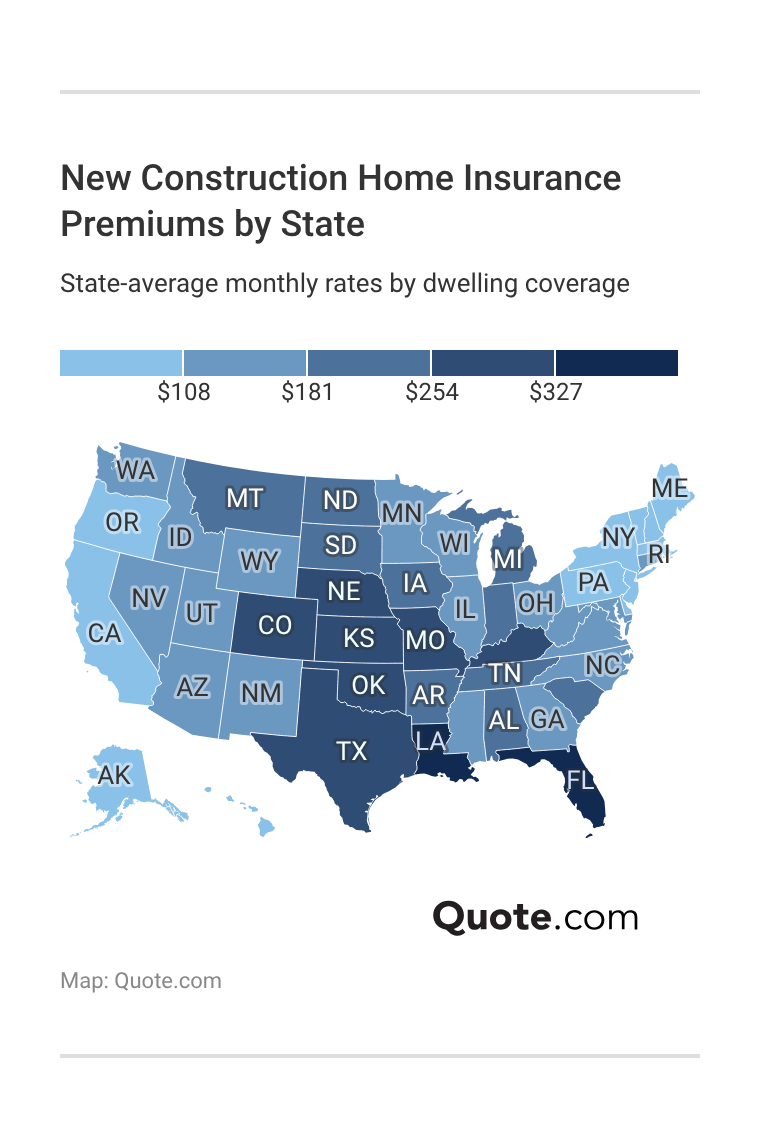
States like Florida, Louisiana, and Texas come in higher due to weather risks like hurricanes and flooding.
In contrast, parts of the Northeast and West tend to see lower monthly costs, while the Midwest usually falls somewhere in between.
If you’re planning a new build, it’s worth checking how your location affects pricing early on. The same home can cost much more to insure depending on the state, which is why comparing options can help you find the cheapest homeowners insurance for your area.
Local risks still matter within each state, so it helps to compare a few quotes before choosing a policy. That way, you can find solid coverage without paying more than you need.
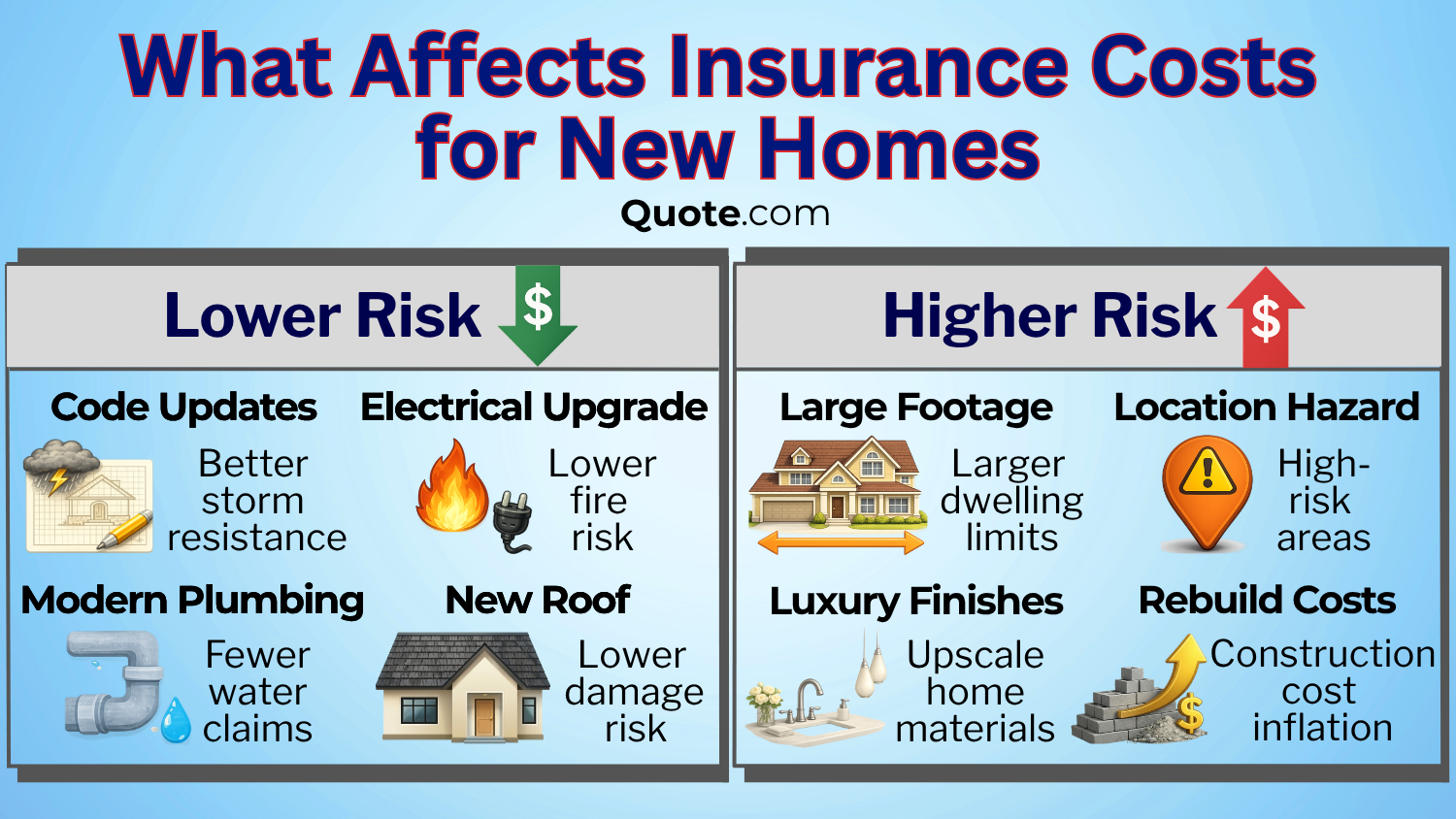
Things like weather patterns, building materials, and local construction costs all affect what you’ll pay. Homes in areas with more storms, flooding, or fire risk usually come with higher monthly costs.
That’s why it helps to compare companies based on where you live. Even in higher-cost states, some insurers keep pricing more competitively, which can make a noticeable difference over time.
Choosing the Right Insurance Deductible for New Builds
If you’re comfortable taking on more out-of-pocket risk, increasing your insurance deductible can lower your monthly cost. Just make sure the amount still fits your budget if you ever need to file a claim.
Amica stays on the lower end across all deductible levels, dropping from $77 per month at $500 to $62 per month at $5,000.
New Construction Home Insurance Monthly Rates by Deductible| Company | $500 | $1K | $2K | $5K |
|---|---|---|---|---|
| $120 | $114 | $108 | $97 |
| $147 | $140 | $133 | $119 |
| $77 | $73 | $69 | $62 |
| $169 | $161 | $153 | $137 |
| $143 | $136 | $129 | $116 |
| $92 | $88 | $84 | $75 |
| $156 | $149 | $142 | $127 |
| $237 | $226 | $215 | $192 |
| $129 | $123 | $117 | $105 |
| $124 | $118 | $112 | $100 |
Liberty Mutual and Allstate also stay relatively affordable as deductibles increase. That kind of range gives you more control, depending on how much you’re comfortable paying out of pocket.
On the higher end, Progressive and Chubb continue to cost more, even when you choose a larger insurance deductible.
Free Home Insurance Comparison
Compare Quotes From Top Companies and Save
Secured with SHA-256 Encryption
Ways to Save on New Construction Insurance
Beyond just increasing your deductible, there are still a few simple ways to lower your monthly cost without giving up the coverage your home actually needs.
Small changes like these can add up over time and make your monthly insurance costs easier to manage without cutting back on protection.
- Bundle Multiple Policies: Choosing home and auto insurance bundles with the same company usually lowers your overall cost.
- Increase Your Deductible: Choosing a higher deductible lowers your monthly rate, as long as you’re comfortable paying more out of pocket if you file a claim.
- Install Smart Safety Systems: Alarms, leak sensors, and fire monitors can reduce risk and help bring your monthly rate down.
- Maintain a Strong Credit Profile: A higher credit score often leads to lower monthly premiums with most insurers.
- Shop Around Before Renewal: Rates change often, so comparing quotes regularly helps you avoid overpaying for the same coverage.
Discounts can make another noticeable difference in what you pay for new construction home insurance, especially if your home includes newer materials and safety features.
Amica and State Farm lead with bundling discounts of up to 20%. See More: Best Auto and Renters Insurance Bundles
Top Discounts for New Construction Home Insurance| Company | Bundling | Green Home | New Home | Safety Devices |
|---|---|---|---|---|
| 15% | 5% | 5% | 10% |
| 10% | 5% | 6% | 29% |
| 20% | 6% | 6% | 10% |
| 10% | 7% | 8% | 8% |
| 12% | 5% | 8% | 10% |
| 14% | 5% | 5% | 10% |
| 11% | 7% | 7% | 10% |
| 16% | 6% | 9% | 10% |
| 20% | 5% | 6% | 17% |
| 13% | 4% | 4% | 10% |
American Family stands out with 29% savings on safety devices, which can be a big advantage if your home includes alarms or smart systems.
If you’re building a home, it’s worth asking each insurance provider exactly which discounts apply and how many you qualify for.
The key is to look at both discounts and everyday savings strategies together, so you get the best value for the coverage your new home actually needs.
Melanie Musson Published Insurance Expert
Combining even two or three can lower your monthly rate more than you might expect and help you decide how much homeowners insurance you need based on your budget.
Each home insurance provider is different, and you may qualify for more discounts with one over another, so shop around based on coverage, price, and discount availability to find the best home insurance when building a house.
Home Insurance Coverage Options for New Builds
What insurance is needed when building a house? You’ll need builder’s risk insurance during construction and then transition to a homeowners policy once the home is complete and ready to occupy.
Builder’s risk coverage protects the property while it’s being constructed, and liability coverage kicks in if someone is injured on the property. Some policies cover ordinance or law, which may help pay for updates needed to comply with current building codes.
When you’re insuring a newly built home, compare different home insurance coverage options, because the coverage you choose matters just as much as the price you pay each month.
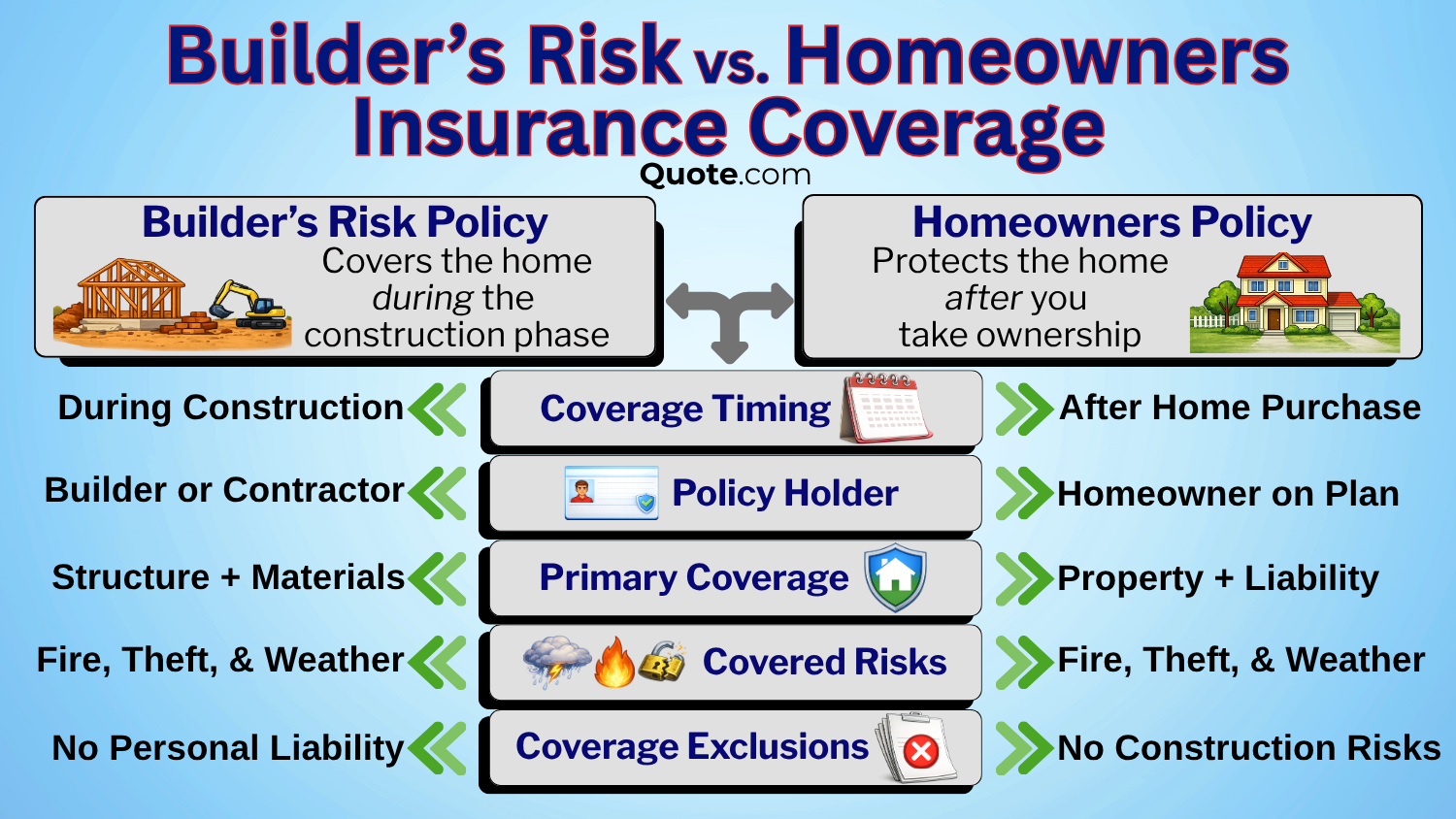
Most policies start with dwelling coverage to protect the home itself, but with new construction, it’s worth adding extended replacement cost so you’re covered if building costs go up.
Taking the time to match your coverage to how your home is built and where it’s located can help you avoid gaps that only show up when you need to file a claim.
When to Buy Home Insurance for New Construction
Timing matters more than most people expect when it comes to ensuring a new construction home. Learn More: How to Buy Home Insurance
You don’t want to wait until the house is finished, because risks start as soon as materials arrive on-site. Many homeowners begin with a builder’s risk policy during construction, then switch to a standard homeowners policy before closing or moving in.
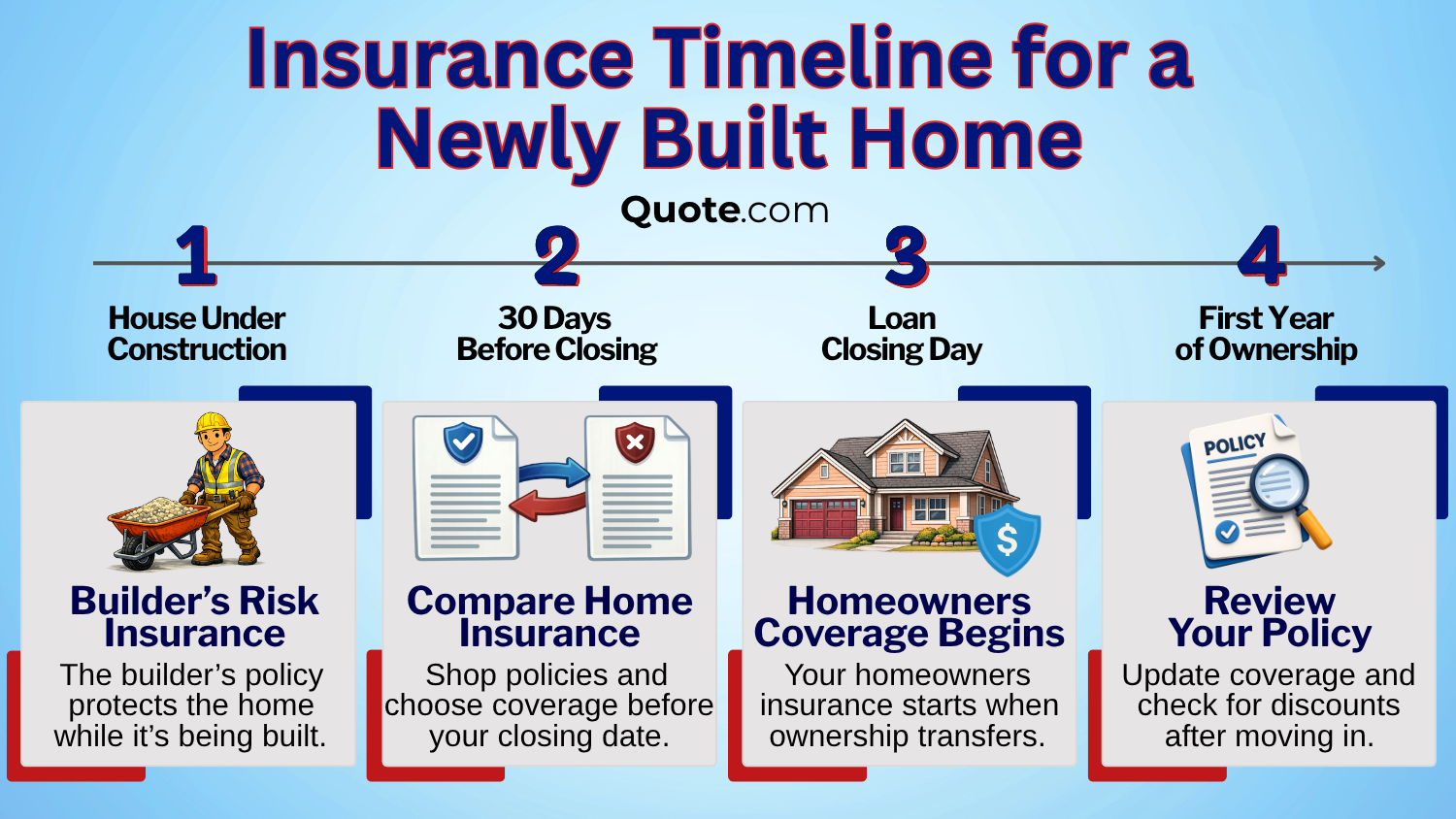
This ensures you’re covered if something happens while the home is still being built. It’s also a good time to lock in your monthly rate based on current conditions, especially if costs in your area are trending up.
Planning ahead keeps you from scrambling for coverage at the last minute and helps avoid gaps that could leave your investment exposed.
Free Home Insurance Comparison
Compare Quotes From Top Companies and Save
Secured with SHA-256 Encryption
Top Home Insurance Companies for New Builds
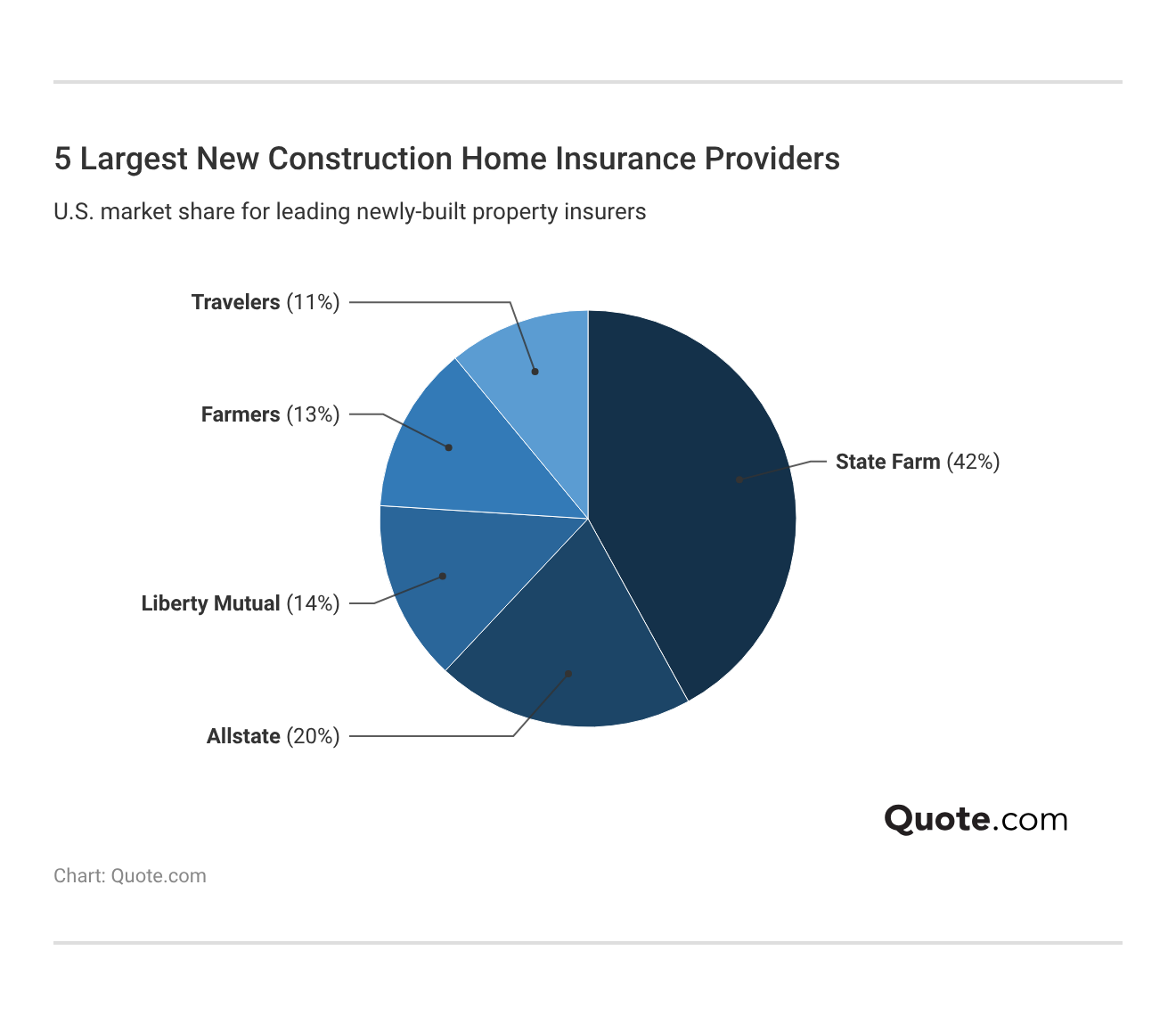
When you look at the biggest providers for new construction home insurance, State Farm holds a large share of the market at 42%, which shows how many homeowners rely on it for coverage and claims support.
Allstate follows at 20%, with companies like Liberty Mutual, Farmers, and Travelers making up smaller but still solid portions.
Larger market share often means more established systems and resources. Smaller providers like Amica often offer more hands-on service with local agents who understand the risks new homeowners face in their area.
It’s still worth comparing options since a smaller market doesn’t always mean higher monthly rates or weaker coverage.
Learn More: Understanding the 8 Types of Homeowners Insurance Policies
#1 – Amica: Top Pick Overall Pick
Pros
- Reliable Claims Experience: Amica handles claims smoothly for new construction, which can make a big difference if something goes wrong during the build.
- Lower Monthly Rates: Many new homeowners start at about $73 per month, which helps keep costs easier to handle early on.
- Simple Policy Setup: Coverage is straightforward, so it’s easier to manage as your home moves from construction to move-in.
Cons
- Fewer Options for Custom Builds: It may not offer as many add-ons if your home has unique features or higher-end finishes.
- Limited Availability: You might not be able to get coverage in every state. According to our Amica Insurance Review, availability can vary depending on location.
#2 – Chubb: Best for High-Value New Homes
Pros
- Designed for Higher-End Homes: If your new construction includes custom features or higher rebuild costs, Chubb is a good fit.
- Stronger Rebuild Protection: It covers premium materials and labor, which is important if prices go up after a loss.
- Flexible Claim Payouts: You have greater flexibility in how repairs or rebuilding proceeds.
Cons
- Higher Monthly Costs: It’s usually more expensive than standard policies for new construction.
- Strict Requirements: Not every home qualifies, especially if it doesn’t meet value thresholds that insurers require for home insurance.
#3 – Liberty Mutual: Best for Flexible Options
Pros
- Adjustable Coverage: You can update your policy as your build moves forward or after you move in, so your coverage keeps up with the home.
- Reasonable Monthly Pricing: Rates stay fairly competitive for new builds compared to higher-priced providers at similar coverage levels.
- Useful Add-Ons: Options like water backup coverage, personal property replacement, and extended replacement cost help cover common risks tied to new construction.
Cons
- Inconsistent Discounts: Savings can vary depending on your location. Discount differences often come down to where you live, as shown in our Liberty Mutual Review.
- Service can Differ by Area: Claims and support may not feel the same everywhere.
#4 – Nationwide: Best for Smart Homes
Pros
- Smart Features Discounts: If your new home has security or monitoring systems, you could end up paying less each month.
- Coverage During & After Construction: It protects materials and labor, in addition to the house once built.
- Flexible Options: You can adjust coverage as your needs change. This flexibility is one of the strongest points highlighted in our Nationwide Insurance Review.
Cons
- Rates Increase in Higher-Risk Areas: Location plays a big role in what you’ll pay each month.
- Limited Agent Access in Some Places: In-person support isn’t always available.
#5 – Progressive: Best for Online Quotes
Pros
- Quick Online Comparisons: You can get quotes fast, which helps when you’re planning a new build.
- Bundling Helps Reduce Costs: Pairing home and auto can lower your monthly rate.
- Available in Most States: Easy to access, no matter where you’re building. Availability across regions is a key takeaway from our Progressive Insurance Review.
Cons
- Higher Monthly Rates: It’s often more expensive for new construction coverage.
- Fewer Construction-Specific Options: Coverage during the build phase is more limited.
#6 – Travelers: Best for Coverage Options
Pros
- Wide Range of Coverage Options: Works well for different types of new construction homes.
- Solid Rebuild Protection: Helps cover rising costs for materials and labor.
- Steady Monthly Pricing: Rates don’t jump as much across coverage levels.
Cons
- Fewer Discounts for New Builds: You may not save as much compared to other companies.
- Policies Can Feel Detailed: It takes time to choose the right coverage. Some policy details require a closer look, which we break down in our Travelers Insurance Review.
#7 – American Family: Best for Discount Options
Pros
- Discounts with Safety Features: Homes that have alarm systems or security features qualify for larger discounts.
- New Home Discounts: You have newer materials and systems, which can reduce your monthly rate.
- Bundling Benefits: Lowering costs through bundled payment.
Cons
- Not Available Everywhere: Certain states may not have coverage. Availability depends on location, which we cover in our American Family Insurance Review.
- Rates Vary by Location: Pricing depends heavily on where you’re building.
#8 – Farmers: Best for Policy Customization
Pros
- Flexible Coverage Setup: You can shape the policy to match how your home is being built.
- Helpful During Construction: It’s useful if you need coverage before you move in.
- Adjustable Deductibles: You can raise or lower your deductible to manage your monthly cost. Deductible options are explained further in our Farmers Insurance Review.
Cons
- Higher Monthly Pricing: Not the cheapest option for standard new homes.
- Fewer Discount Options: Savings are more limited compared to others.
#9 – State Farm: Best for Local Agents
Pros
- Strong Local Agent Network: You can talk to someone directly, which helps when you’re dealing with a build.
- Reliable Rebuild Coverage: It covers the cost to rebuild your home if something happens.
- Stable Monthly Rates: Pricing usually stays fairly steady over time.
Cons
- Less Focus on Digital Tools: Some changes still need to go through an agent instead of being done online.
- Discounts Vary by State: Savings aren’t the same everywhere. State-level differences are outlined in our State Farm Insurance Review.
#10 – Allstate: Best for Bundling Savings
Pros
- Strong Bundling Discounts: Combining policies can lower what you pay each month.
- New Home Savings: Newer features and updated systems can help bring your rate down.
- Extended Rebuild Options: It helps cover the full cost to rebuild if your home is damaged.
Cons
- Higher Starting Rates: Cost more if discounts don’t apply. Pricing details are covered in our Allstate Insurance Review.
- Not all homes qualify for savings: Discounts depend on eligibility.
Best New Construction Home Insurance Options
Amica, Chubb, and Liberty Mutual stand out as the best home insurance for new construction, with monthly rates starting around $73, depending on coverage.
Each company handles new builds a bit differently, which can affect both your cost and how your policy works as the home is completed. Amica works well if you want lower monthly costs and steady claims handling.
Chubb is a better fit for higher-value homes that need stronger rebuild protection, while Liberty Mutual gives you more flexibility to adjust coverage as your home moves from construction to move-in.
Choosing a higher deductible and bundling policies can lower monthly costs for new construction home insurance, especially when combined with discounts for safety features
Ted Patestos Licensed Insurance Adjuster
Amica keeps costs lower for standard builds, which helps if you’re trying to stay within budget early on. Chubb usually costs more, but it makes sense if your home has custom features or higher rebuild costs.
Liberty Mutual is in the middle, offering optional extras you can customize and pricing that doesn’t shift too much when coverage for your house shifts from construction to move-in.
The right pick depends on your build, location, and how much risk you’re willing to take with your deductible. A lower monthly price helps, but your coverage should still match what it would cost to rebuild your home.
Taking the time to understand how to compare home insurance quotes can help you avoid gaps in coverage and find a policy that fits your home and your budget without overpaying.
Make sure you get the best home insurance for new construction by entering your ZIP code into our home insurance comparison tool today.
Frequently Asked Questions
Who has the best insurance for a house under construction?
Amica, Chubb, and Liberty Mutual are strong choices for homes under construction. Amica keeps monthly costs lower, Chubb works well for higher-value builds, and Liberty Mutual offers flexible coverage as the home transitions from construction to move-in ready.
What is the most important thing about home insurance on a new build?
You need to match your dwelling coverage to the full rebuild cost, not the purchase price. For example, a $300,000 policy may cost around $119 per month with some providers, but it must reflect actual construction costs in your area.
Do you need home insurance when building a house?
Yes, but not a standard homeowners policy at first. You’ll need builder’s risk insurance before construction starts, usually set up by the builder or homeowner. It covers the structure, materials, theft, and weather damage, similar to how hazard insurance protects against specific risks. Once the home is finished, you move to a standard homeowners policy.
What insurance do I need for a new home?
You’ll need a homeowners policy with dwelling coverage, liability protection, and often extended replacement cost coverage to handle rising material and labor prices after a loss.
Don’t settle for expensive home insurance premiums. Enter your ZIP code to find robust coverage for your dwelling at an affordable price.
Is home insurance cheaper on new builds?
In most cases, yes. New construction homes often start around $73 per month for lower coverage levels because they meet modern building codes and have lower repair risk compared to older homes, and many policies also include personal liability insurance as part of the coverage.
At what stage do you get home insurance?
You should have builder’s risk coverage in place before construction begins, then set up your homeowners policy before closing so coverage starts the day you take ownership.
How do I make my homeowners insurance cheaper?
You can lower your monthly rate by increasing your deductible (for example, moving from $500 to $5,000 can drop costs significantly), bundling policies, and adding safety features like alarms.
Is it cheaper to insure a new construction home?
Yes, because new homes use updated materials and systems, which lowers the chance of claims. That’s why companies like Amica and Liberty Mutual are often listed among the best home insurance companies for newer builds with lower monthly rates.
When should I start a new home insurance policy?
Start builder’s risk coverage before any materials arrive, and activate your homeowners policy before closing to avoid any gaps in protection.
What is the most important coverage in home insurance?
Dwelling coverage is the key part because it pays to rebuild your home. For new construction, it should reflect current material and labor costs, not just what you paid for the home.
How much is insurance on a new house?
Do homeowners need construction insurance?
Is a home under construction eligible for a homeowners policy?
Related Articles
-
Oct 2025

Best Condo Insurance in 2026
-
Apr 2026
9 Best Home Insurance Companies in 2026
-
Apr 2026
Personal Liability Insurance (2026 Guide)
-
Apr 2026
10 Cheapest Home Insurance Companies in 2026
-
Apr 2026
Homeowners Insurance Coverage in 2026
-
Jan 2026
Walk-In Tubs & Home Insurance in 2026





Get a FREE Quote in Minutes
Insurance rates change constantly — we help you stay ahead by making it easy to compare top options and save.
Secured with SHA-256 Encryption