Homeowners vs. Hazard Insurance: Coverage & Cost Differences (2026)
Learn the differences between homeowners vs. hazard insurance. Homeowners insurance usually costs 30% to 50% more than hazard policies because it covers liability and personal property with higher payouts. Hazard insurance only pays to rebuild your home and covers claims for specific risks listed in the policy.
Read more





Table of Contents
Table of Contents

Insurance Content Creator
Lia Vergin develops both video and written content across all lines of insurance, with a primary focus on auto, home, and life coverage. She is dedicated to helping consumers better understand and navigate their insurance options. Driven by a passion for saving money and finding great deals, she is committed to creating clear, engaging, and practical content that empowers readers to make confident...
Lia Vergin

Managing Editor
Laura Kuhl holds a Master’s Degree in Professional Writing from the University of North Carolina at Wilmington. Her career began in healthcare and wellness, creating lifestyle content for doctors, dentists, and other healthcare and holistic professionals. She curated news articles and insider interviews with investors and small business owners, leading to conversations with key players in the le...
Laura Kuhl

Mortgage Loan Originator
Steve Crowell is a New Hampshire based mortgage loan originator with Luminate Home Loans, Inc. After graduating from the University of New Hampshire in 2003 with a BS in Business and Economics and a BA in History, he went on to get his broker license in 2005. In 2021, he was recognized as a Luminate Home Loans “Circle of Excellence” top agent. Steve works as a trusted resource for clients w...
Steve Crowell
Updated May 2026
Understanding homeowners vs. hazard insurance shows how insurers split property protection between structure-only risk and broader liability and personal property coverage.
- Hazard insurance costs start at $115 monthly with Nationwide
- Deductibles of $1K or higher can cut premiums up to 25%
- Liability limits of $100K to $300K raise payouts by 50%
Hazard coverage only applies to specific risks, such as fire, wind, and hail. It limits payouts to the cost of rebuilding. Lenders require this coverage to protect their investment in financed homes.
Homeowners insurance also covers theft, medical payments, and loss of use, in addition to basic hazard protection. These extra benefits may increase your premiums by 30% to 50%.
Compare homeowners vs. hazard insurance quotes now by entering your ZIP code into our free comparison tool.
Hazard Insurance vs. Home Insurance Comparison
The difference between homeowners insurance and hazard insurance is easier to see when a claim involves more than just damage to your home’s structure.
Hazard insurance mainly offers dwelling coverage for specific risks and usually protects only the structure of your home.
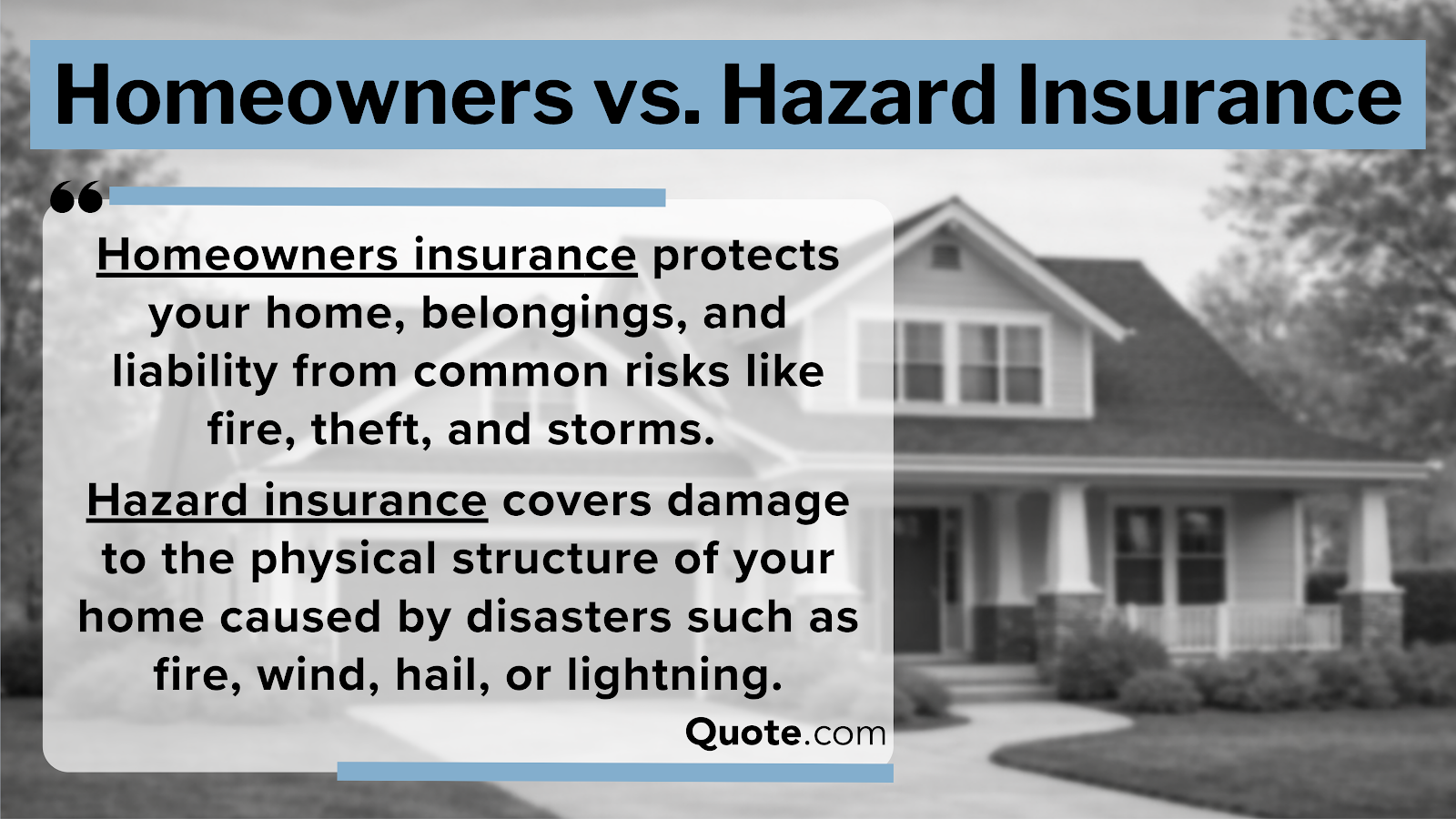
Homeowners insurance also covers things like liability, your personal belongings, living expenses, and medical payments—things that hazard insurance does not include.
A major event can cause several problems at once. Damage to your home might also mean legal issues, having to move out for a while, or losing your belongings.
Homeowners vs. Hazard Insurance: What Each Covers| Category | Homeowners | Hazard |
|---|---|---|
| Dwelling Structure | ✅ | ✅ |
| Liability Coverage | ✅ | ❌ |
| Living Expenses | ✅ | ❌ |
| Medical Payments | ✅ | ❌ |
| Mortgage Required | ✅ | ✅ |
| Named Perils Only | ❌ | ✅ |
| Other Structures | ✅ | ❌ |
| Personal Property | ✅ | ❌ |
| Theft or Vandalism | ✅ | ❌ |
It’s important to know about these gaps because hazard insurance does not cover things like theft, temporary housing, or injuries.
To protect yourself from what hazard insurance leaves out, you need the wider coverage that homeowners insurance provides.
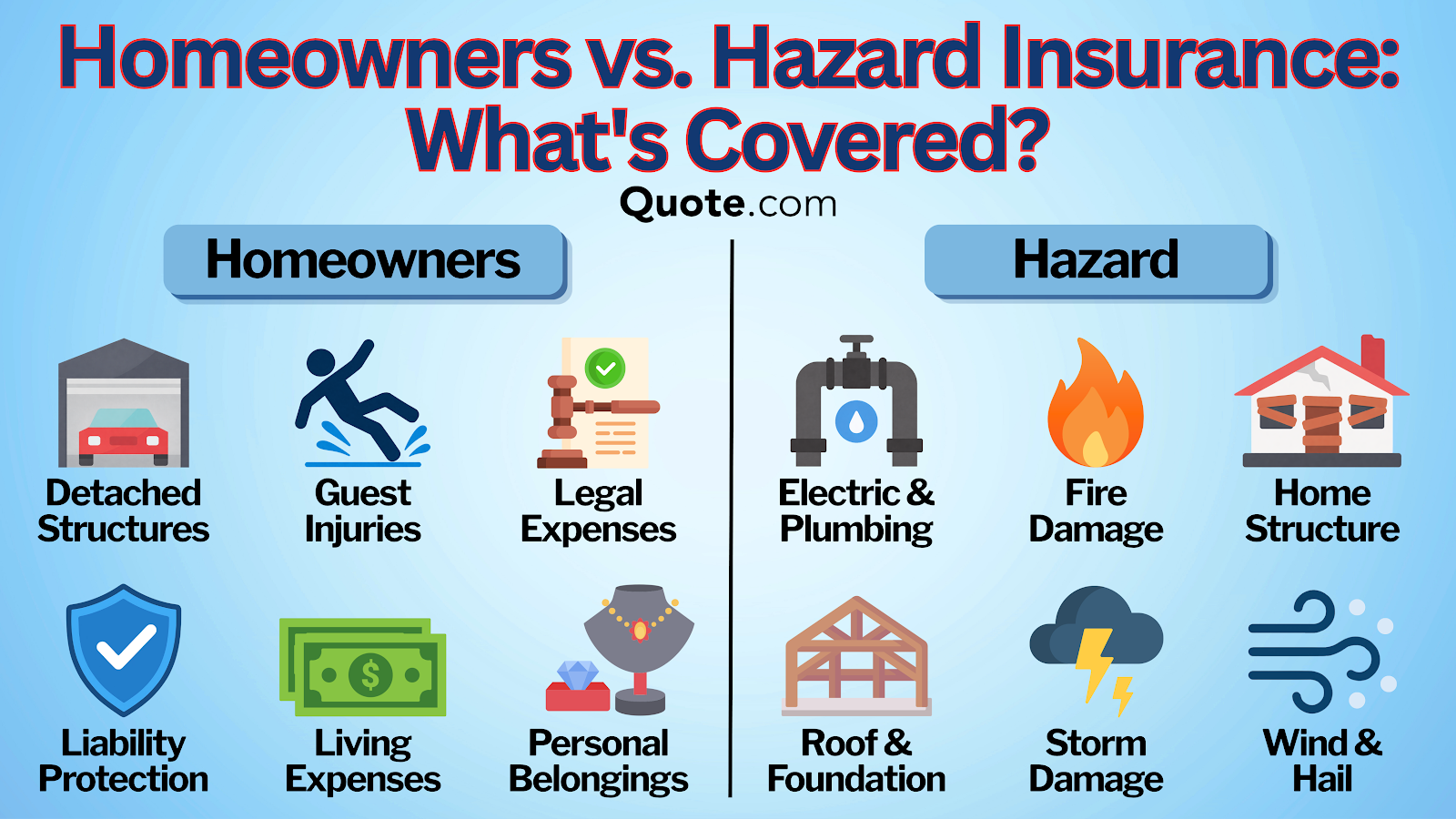
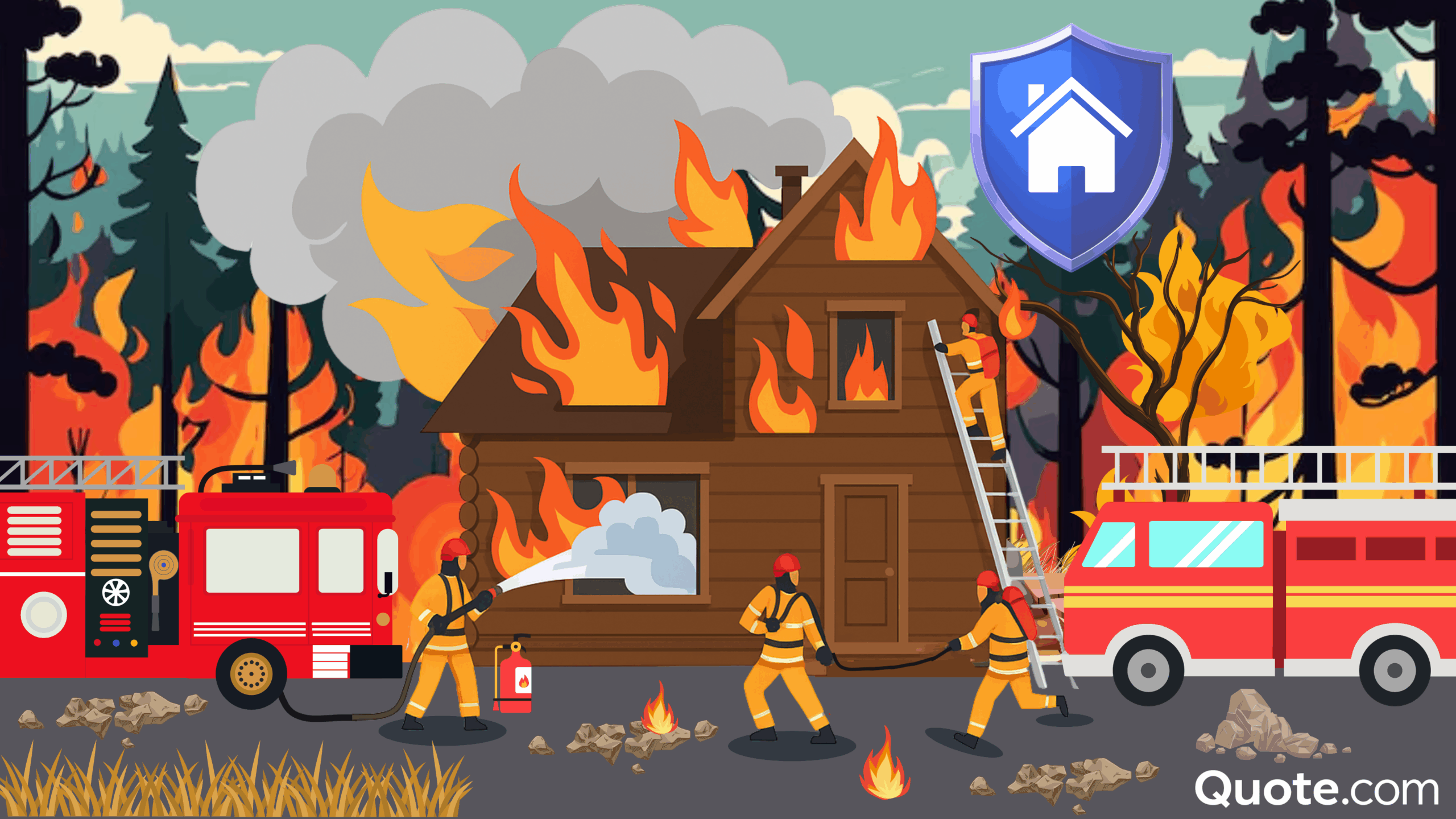
Hazard coverage covers events that affect the home itself, such as storms or fire damage. See more here: How to File a Wildfire Home Insurance Claim
Homeowners insurance gives you more complete protection and can help with ongoing costs even after repairs start.
Different Policy Features of Hazard & Homeowners Insurance
One property claim can cause several financial problems at the same time, especially if you have to pay for repairs, legal fees, or temporary housing all at once.
Choosing a hazard policy with less coverage might lower your monthly payments at first, but you may notice the lack of financial support if several uncovered expenses add up.
Homeowners vs. Hazard Insurance: Policy Roles| Policy Feature | Homeowners | Hazard |
|---|---|---|
| Claims Handling | Handles claims for risks | Handles structure claims |
| Coverage Scope | Covers home property | Covers structure risks |
| Liability Coverage | Includes liability costs | No liability coverage |
| Loan Requirement | Required for lenders | Required by lenders |
| Policy Placement | Primary full policy plan | Part of home insurance |
| Policy Structure | Bundled in one policy | Included in one policy |
| Purchase Method | Purchased as one policy | Not sold separately |
| Standalone Status | Sold as standalone plan | Not a standalone plan |
| Structure Protection | Protects home structures | Protects structure only |
For instance, if your coverage only protects against structural damage, you might have to deal with stolen items or guest injuries on your own.
Bundling your hazard and home coverage under one policy can help reduce confusion if you need to file claims for multiple damages from storms, fires, or severe weather.
Mortgage lenders also require more comprehensive coverage because financed homes are valuable assets, and you may need higher limits until the loan is paid off.
Understanding what each policy covers helps homeowners avoid surprises when structural repairs are not enough to solve every financial issue.
Learn More: Best Home Insurance Companies
Homeowners vs. Hazard Insurance Risk Protection
Major property losses can happen all at once. Storms, theft, and sudden water problems may combine and cause serious financial stress for homeowners.
Standard hazard insurance does not include flood coverage. If you live in a coastal or high-risk area, you will need to buy a separate flood insurance policy.
Common Risks Covered by Homeowners vs. Hazard Insurance| Risk Type | Homeowners | Hazard |
|---|---|---|
| Fire Incidents | ✅ under standard policy | ✅ for structure damage |
| Flood Damage | ❌ flood policy required | ❌ flooding not included |
| Hail Storms | ✅ under standard policy | ✅ for structure damage |
| Lightning Strikes | ✅ under standard policy | ✅ for structure damage |
| Liability Claims | ✅ as liability protection | ❌ liability not included |
| Theft Losses | ✅ for personal property | ❌ no personal property |
| Vandalism Incidents | ✅ as property damage | ✅ for structure damage |
| Water Damage | ✅ for sudden damage | ✅ for plumbing damage |
| Windstorm Events | ✅ under standard policy | ✅ for structure damage |
If your hazard insurance only protects the building, you may have to pay out of pocket for stolen belongings or injury expenses.
For example, vandalism claims can become costly if the damage includes electronics, furniture, or if you need to pay for temporary housing.
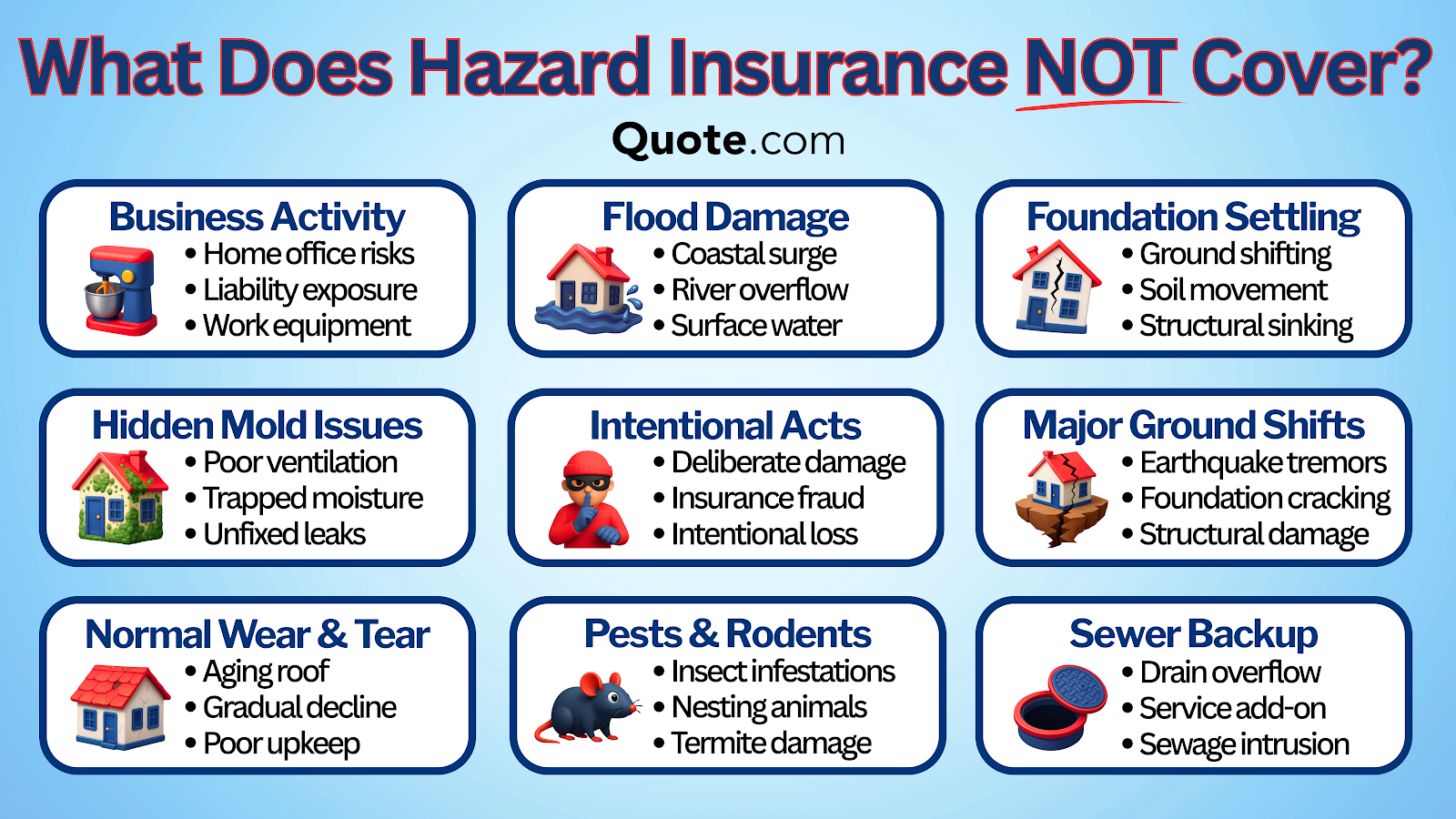
Many homeowners only discover coverage gaps after they have already paid for costly repairs from hail, lightning, or wind damage.
Knowing how these risks overlap can help you avoid unexpected costs, especially when claims involve more than just repairing the building.
Homeowners insurance also covers a wider range of risks. For example, injury claims can go over $200,000 after a serious accident.
Rachel Bodine Insurance Copywriter
Liability costs can increase quickly after a serious accident, especially if lawsuits, medical bills, or legal fees exceed $200,000.
Comprehensive homeowners insurance can also help cover temporary housing and personal property losses, which may cost more than $2,500 per monthly during repairs.
Difference Between Hazard vs. Homeowners Claim Coverage
Claim payouts are divided in different ways when losses extend beyond structural damage and begin to affect people, personal items, or temporary housing needs.
Homeowners insurance is especially important when claims involve liability issues, stolen items, or damage that goes beyond the building itself.
Hazard coverage most often kicks in to pay for structural repairs after major weather events, such as wildfires and hurricanes.
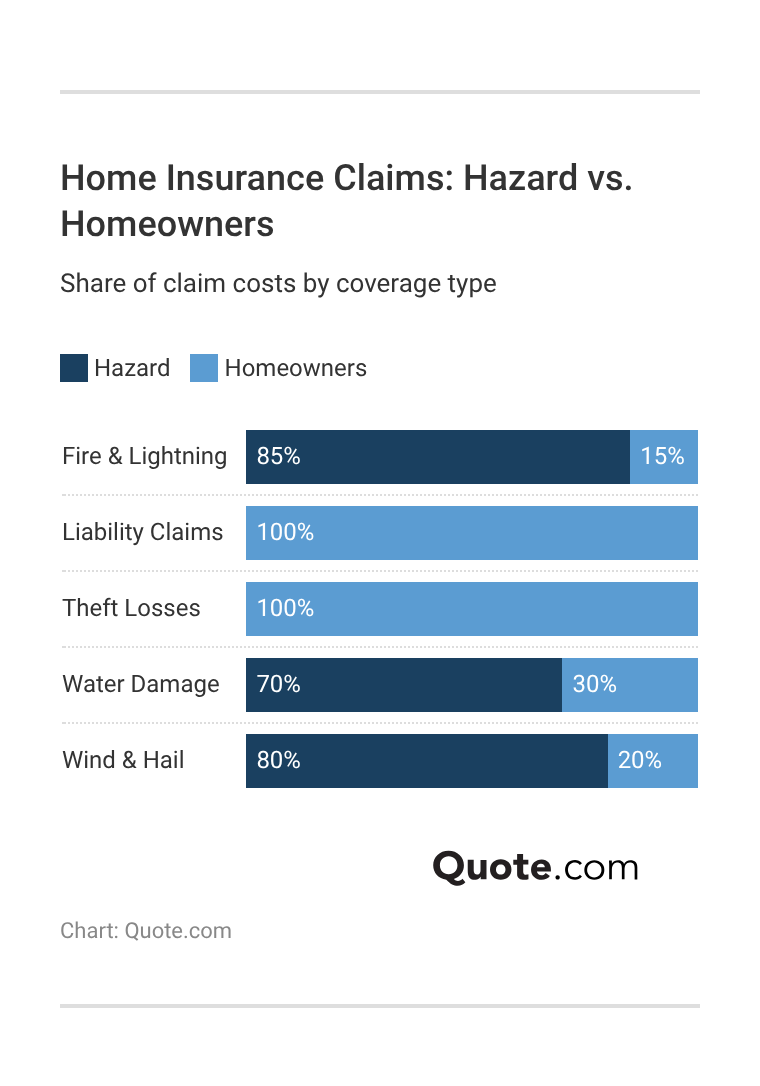
Hazard insurance usually covers 70% to 85% of these major claim costs caused by fire, lightning, wind and hail, or water damage.
If you live in a coastal area, standard homeowners insurance may not include hurricane coverage. You may need to buy a separate hazard policy to cover those damages.
Flood insurance is also a necessary add-on for homeowners in high-risk areas, since homeowners and hazard insurance do not include flood damage.
Don’t Miss It: Diminished Value Claims
Free Home Insurance Comparison
Compare Quotes From Top Companies and Save
Homeowners vs. Hazard Insurance Cost Breakdown
Insurance costs rise when coverage extends beyond repairs to the structure to include protection against theft, liability claims, and expenses for temporary housing.
Hazard protection usually covers rebuilding only after certain events, so the coverage is more limited, and your overall financial risk is lower.
Homeowners vs. Hazard Insurance: Cost & Coverage| Cost Factor | Homeowners | Hazard |
|---|---|---|
| Claims Scope | Covers many home risks | Covers listed risks only |
| Cost Drivers | Rebuild + liability costs | Rebuild costs for home |
| Coverage Limits | Full policy limits apply | Structure coverage only |
| Coverage Scope | Home + liability costs | Structure only, no liability |
| Deductible Type | Property + liability costs | Property costs, no liability |
| Dwelling Value | Full home rebuild value | Structure rebuild value |
| Policy Structure | Bundled home policy | Part of home insurance |
| Premium Level | Higher premium costs | Part of overall premium |
| Risk Category | Higher risk level overall | Lower total risk overall |
| Theft Exposure | Theft + damage included | Theft & damage excluded |
Broader homeowners policies cover a wider range of claims, including damage to belongings, injuries to guests, and personal liability.
If you only have coverage for the structure, you could face costly gaps if losses go beyond the building and impact your daily finances.
Factors Affecting Hazard & Homeowners Insurance Rates| Cost Factor | Hazard Impact | Homeowners Impact |
|---|---|---|
| Building Type | High rebuild impact | Higher risk raises premiums |
| Claims History | Moderate claims impact | Moderate impact on claims |
| Coverage Limit | Direct rebuild impact | Higher limits raise rates |
| Credit Score | Minimal impact on pricing | High impact on premiums |
| Deductible | More upfront, lower cost | More upfront, lower rates |
| Home Age | Older homes increase risk | Older homes increase rates |
| Home Value | Rebuild cost increases | Higher value raises price |
| Location Risk | High risk raises premiums | High risk raises premiums |
| Location Type | Location affects rebuild risk | Location affects liability risk |
| Roof Condition | Roof condition drives risk | Roof condition affects claims |
Insurance costs go up for older homes, houses that are expensive to rebuild, or properties in risky areas. This is because repairs, materials, and the chance of future claims all cost more.
Hazard insurance is usually cheaper because it mainly covers damage to the structure. Without liability or theft protection, costs after a loss can rise fast.
Average Home and Hazard Insurance Rates
Monthly home insurance rates often rise when you add more coverage for your belongings or temporary housing expenses.
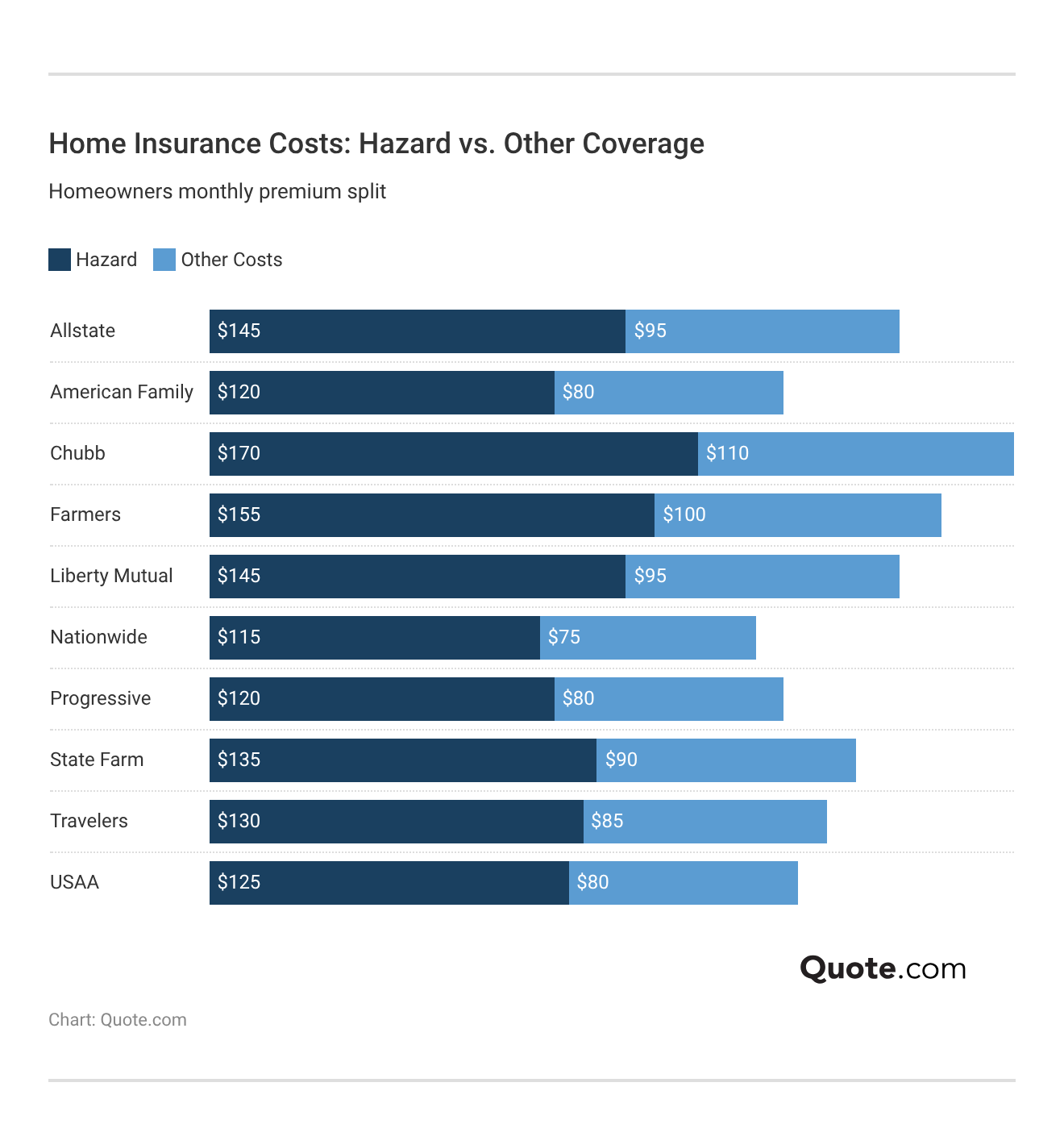
Chubb tends to have some of the highest monthly costs, with monthly premiums of $170 and $110. This is because larger homes come with higher rebuilding costs.
Lower-priced companies like Nationwide and Progressive keep monthly rates around $115 to $120 by offering less extensive coverage.
Midrange companies such as State Farm and Travelers offer a balance of structural protection and broader coverage, usually keeping monthly premiums under $135.
See More: Allstate vs. Farmers, Geico, Progressive, & State Farm Insurance Review
Home Insurance Cost Trends in the U.S.
Home insurance prices are rising because rebuilding costs, weather-related claims, and material shortages are putting more financial pressure on markets across the country.
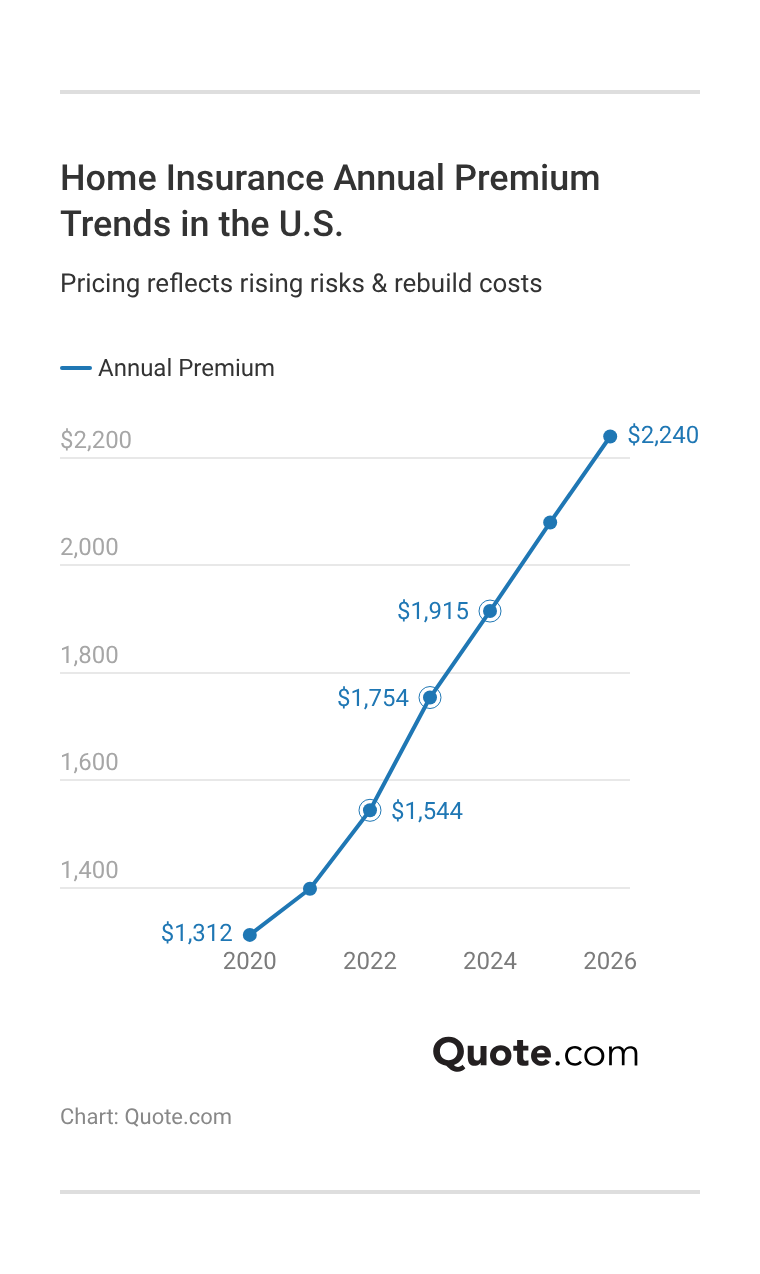
The average yearly premium increased from $1,312 to $2,240. Now, many homeowners pay between $115 and $187 each month.
Premiums rose sharply after 2023 due to higher labor costs and inflation. This was especially true in areas with more severe storms and a higher risk of property damage.
By keeping an eye on long-term premium trends, homeowners can adjust their deductibles, coverage, and budgets before future rate increases become harder to manage.
Compare Costs in Our Guide: Home Insurance Rates by State
When You Need Homeowners or Hazard Insurance
Insurance rules get stricter when lenders are involved, when you refinance, or when the property is high risk, since these situations increase the risk of costly structural damage.
Vacant homes and rental properties often require specialized coverage because insurers view empty buildings as more likely to harbor unnoticed damage.
Homeowners vs. Hazard Insurance: When It's Required| Situation | Homeowners | Hazard |
|---|---|---|
| Condo Ownership | ✅ by most lenders | ✅ by most lenders |
| High-Risk Area | ✅ in high-risk zones | ✅ in high-risk zones |
| Loan Refinance | ✅ when refinancing | ✅ when refinancing |
| Mortgage Loan | ✅ for financed homes | ✅ for financed homes |
| New Construction | ✅ during home build | ✅ during home build |
| Paid-Off Home | ⚠️ optional if owned | ❌ if fully owned |
| Rental Property | ❌ for landlords | ✅ for home structure |
| Second Home | ✅ for second homes | ✅ for second homes |
| Vacant Property | ⚠️ limited if vacant | ✅ for vacant properties |
Mortgage lenders often require both types of insurance during financing, since rebuilding after a big storm or fire can be extremely expensive.
Homeowners who have paid off their mortgage have more options, but dropping full coverage can leave you with costly gaps if there is a liability issue or theft.
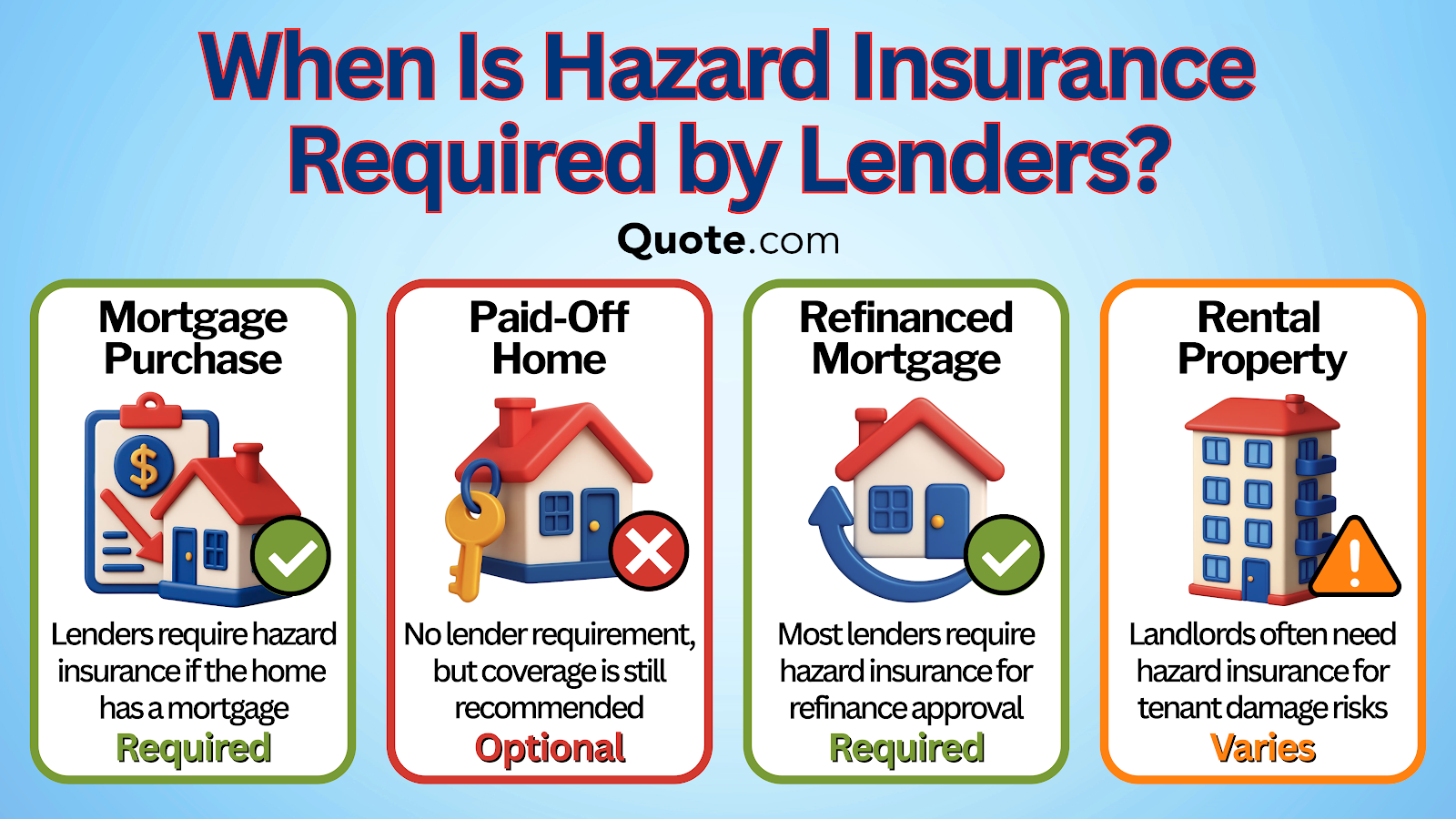
Most homeowners need hazard insurance when buying, refinancing, or renting out a property because lenders want protection against risks of structural damage.
If you do not have enough coverage, you might have to pay thousands of dollars for repairs from storms, fires, or tenant damage that insurance does not fully cover.
Read More: Best Insurance for High-Risk Homes
Understanding Homeowners vs. Hazard Insurance
Homeowners insurance does more than just cover repairs to your house. It can also help pay for liability costs, replace personal belongings, and cover temporary living expenses.
Hazard insurance mainly covers damage to your home’s structure from specific risks, so it offers less protection for other financial problems.
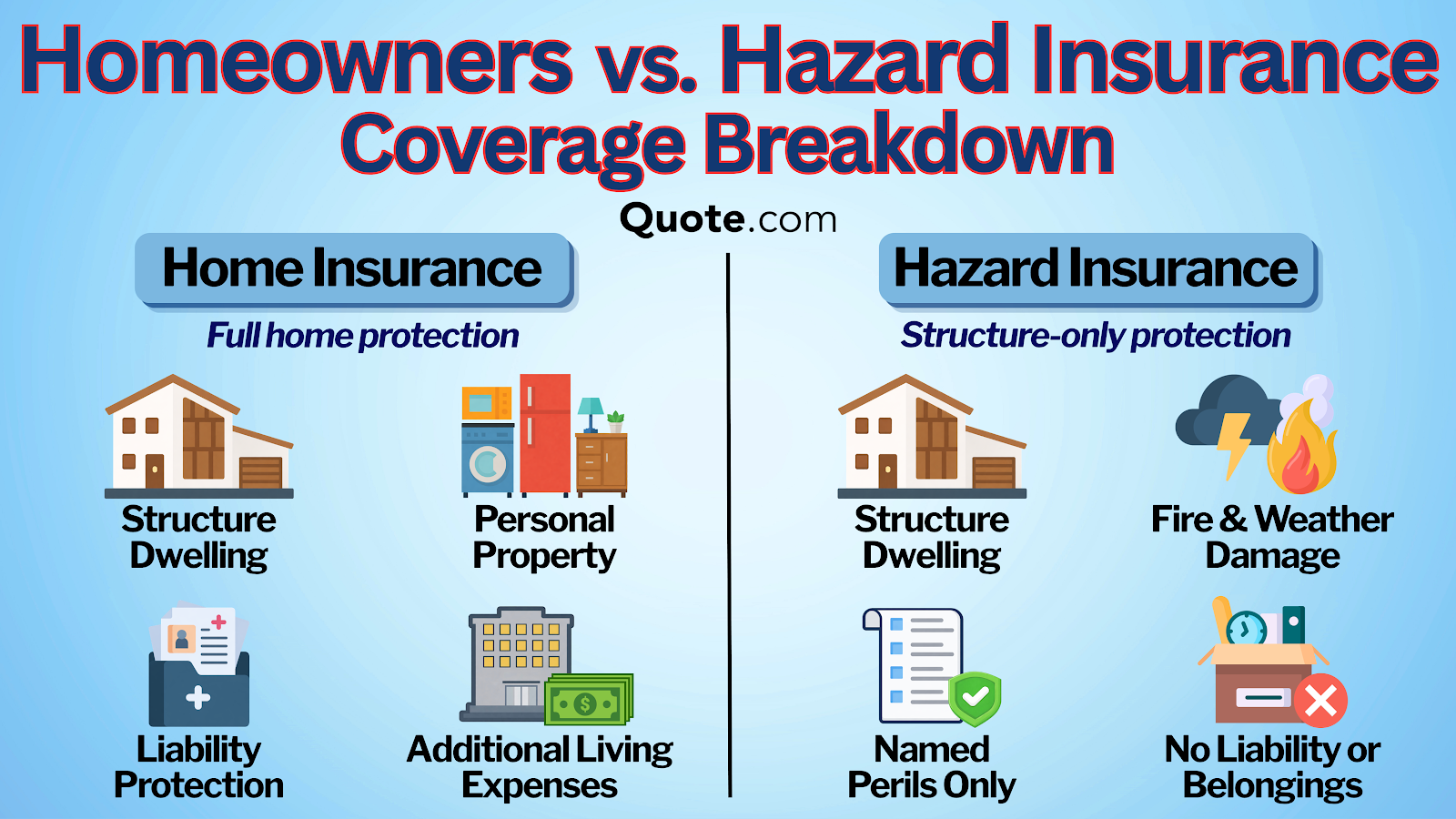
Choosing the right insurance is important because property damage often leads to extra costs that go beyond just fixing your house.
Important Details: What We Learned Analyzing 815 Insurance Companies
A more complete homeowners policy can ease financial stress if you need to file claims for stolen items, legal fees, or temporary housing after a disaster.
Hazard coverage helps control rebuilding costs. For example, hail-damaged roofs can cost over $25,000 to replace.
Scott W. Johnson Licensed Insurance Agent
Hazard insurance remains important because it protects both lenders and homeowners from costly structural damage caused by fire, storms, and similar risks.
To compare homeowners and hazard insurance prices, just enter your ZIP code in our free quote comparison tool.
Frequently Asked Questions
Do I need both hazard insurance and homeowners insurance?
Most homeowners insurance policies already include hazard coverage, so separate policies are usually unnecessary unless required by a lender.
What are the most common hazard claims?
The most common hazard insurance claims involve fire damage, windstorms, hail, lightning strikes, and sudden water damage requiring structural repairs.
Do I already have hazard coverage with home insurance?
Most standard homeowners insurance policies already include hazard coverage for structural damage caused by covered perils such as fire and wind. Check Out the Details: Cheapest Home Insurance Companies
Is hazard insurance the same as homeowners insurance?
Hazard insurance is a section of homeowners insurance that covers structural damage from covered risks such as fire, hail, and windstorms.
Is hazard insurance more expensive?
Hazard coverage alone is typically less expensive because it only protects the home structure against covered physical damage losses. Compare hazard insurance vs. homeowners insurance by entering your ZIP code into our free quote comparison tool.
How much is hazard insurance?
Hazard insurance usually costs between $70 and $150 per monthly, depending on the rebuild value, ZIP code, insurance deductible, and property condition.
Is hazard insurance the same as flood insurance?
Hazard insurance does not cover flooding because flood protection typically requires a separate policy purchased from a private insurer or a FEMA program.
How do I know if I have hazard insurance?
Hazard coverage is typically listed under dwelling protection or structure coverage on the homeowners insurance declarations page from the insurer.
What are the four types of hazards in insurance?
The four common hazard-covered claims are fire and lightning, water damage, wind and hail damage, and structural losses tied to covered weather events. Learn More: Does home insurance cover wildfires?
Is hazard insurance the same as PMI?
Hazard insurance protects the home itself, while PMI protects the lender if mortgage payments stop after borrower default. Check homeowners vs. hazard insurance costs by entering your ZIP code into our free quote comparison tool.
When can I stop paying hazard insurance?
What do you not want to say to a homeowners insurance adjuster?
Why would a homeowner need hazard insurance?
How do I lower my hazard insurance costs?
How much should homeowners insurance cost on a $300,000 house?
What is not covered by hazard insurance?
Why is my mortgage charging me hazard insurance?
What are DP1, DP2, and DP3 in home insurance?
Which home insurance company denies the most claims?
Related Articles

Get a FREE Quote in Minutes
Insurance rates change constantly — we help you stay ahead by making it easy to compare top options and save.