Full Tort vs. Limited Tort Auto Insurance (2026)
Full tort vs. limited tort auto insurance determines whether you can sue for pain and suffering. Full tort gives you unrestricted legal rights in injury claims, and 60% of drivers choose it. Limited tort insurance has lower rates but restricts lawsuits to serious injuries. State laws determine which type you need.
Read more





Table of Contents
Table of Contents

Insurance Copywriter
Rachel Bodine graduated from college with a BA in English. She has since worked as a Feature Writer in the insurance industry and gained a deep knowledge of state and countrywide insurance laws and rates. Her research and writing focus on helping readers understand their insurance coverage and how to find savings. Her expert advice on insurance has been featured on sites like PhotoEnforced, AllWom...
Rachel Bodine

Managing Editor
Aleksandra J. Churlinov holds a Bachelor of Arts in English Language and Literature and a Master of Science in Marketing Management. Over the past six years, Aleks has focused on the insurance sector, working on a range of content, including business, auto, and life insurance. In April 2025, she stepped into the role of Managing Editor, where she now leads a team of talented insurance writers. ...
Aleksandra J. Churlinov

Commercial Lines Coverage Specialist
Michael Vereecke is the president of Customers First Insurance Group. He has been a licensed insurance agent for over 13 years. He also carries a Commercial Lines Coverage Specialist (CLCS) Designation, providing him the expertise to spot holes in businesses’ coverage. Since 2009, he has worked with many insurance providers, giving him unique insight into the insurance market, differences in ...
Michael Vereecke
Updated April 2026
Full tort vs. limited tort auto insurance determines how much legal protection you have after a crash and how much you’ll pay in monthly premiums.
- Full tort allows lawsuits for pain and suffering without limits
- Limited tort lowers premiums but restricts minor injury claims
- The full tort vs. limited tort cost difference is about $20 per month
The key difference is that full tort allows you to sue for pain and suffering after any injury, while limited tort restricts lawsuits unless the injury is legally considered serious. Read our Auto Insurance Coverage Guide for more details.
Limited tort car insurance typically costs less, around $128 per month for minimum coverage, compared to $148 monthly for full tort insurance. Start comparing total coverage auto insurance rates by entering your ZIP code here.
Differences Between Full Tort & Limited Tort
Full tort and limited tort auto insurance are policy options that affect your ability to seek compensation after an accident.
With full tort coverage, injured parties have the right to pursue pain and suffering damages from at-fault drivers, even for minor injuries.
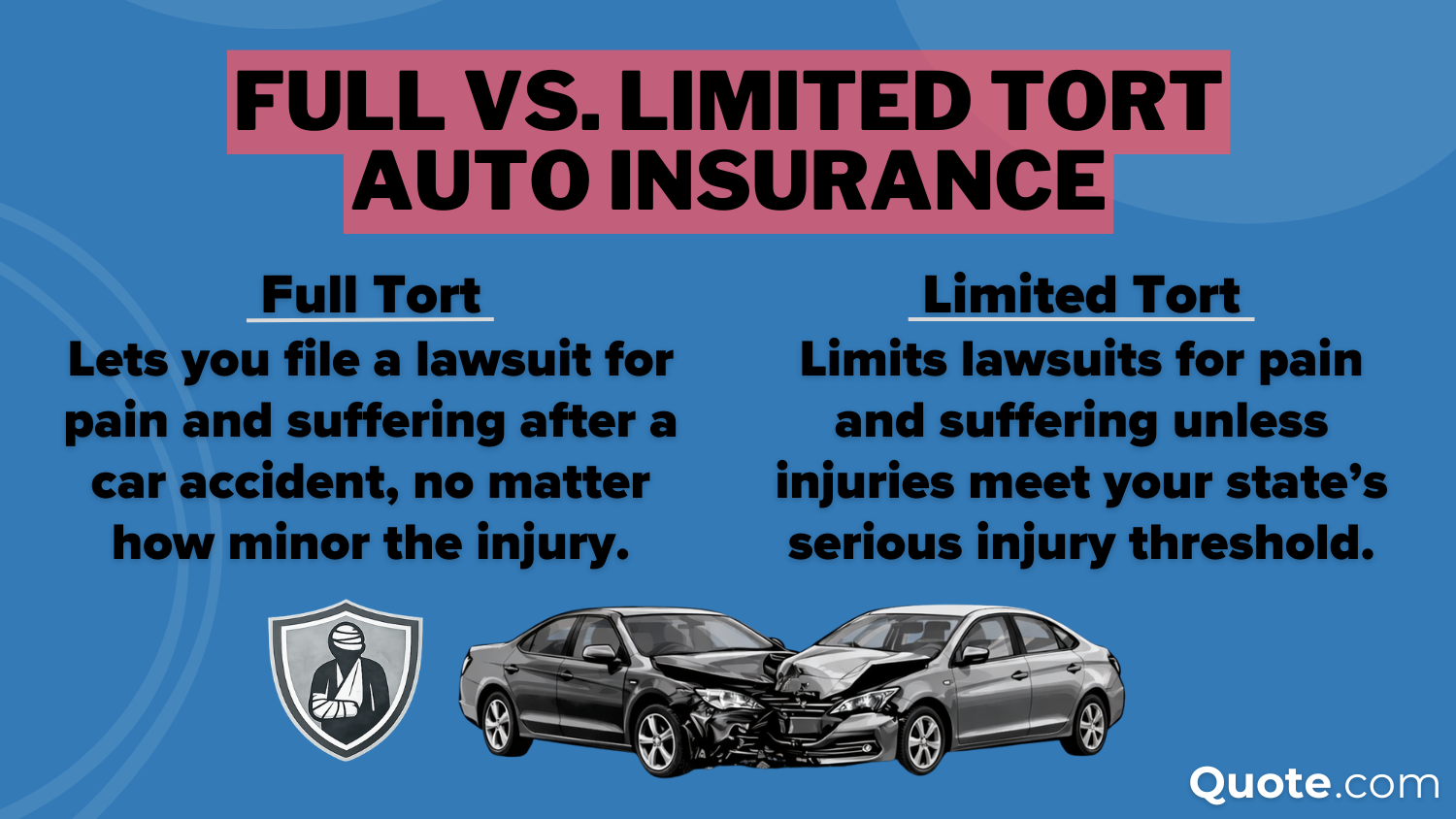
Limited tort insurance has cheaper premiums, but limits your policy to only cover claims that qualify as serious under state law. Important Details: Best Auto Insurance Companies for Claims Handling
The main difference is that drivers with full tort insurance pay more to have broader legal rights in the event of a claim, while limited tort car insurance costs less but limits how much you can claim from the at-fault party after a collision.
Choose full tort if you want full legal rights after a crash, but choose limited tort if lowering your monthly premium is your top priority.
Scott W. Johnson Licensed Insurance Agent
Drivers who prioritize full protection and more legal flexibility often choose full tort, while those looking for lower rates tend to select limited tort.
Both options still cover medical bills regardless of fault through required benefits like PIP, but full tort car insurance does not require you to meet an injury threshold to pursue non-economic damages.
Full vs. Limited Tort Auto Insurance Cost & Coverage| Category | Full Tort | Limited Tort |
|---|---|---|
| Common Drivers | Drivers wanting full protection | Drivers seeking lower costs |
| Legal Flexibility | More legal options | Limited legal options |
| Medical Bills | Paid regardless of fault | Lawsuit limits don’t apply |
| Pain Claims | No injury threshold | Serious injury threshold |
| Pricing Level | Higher premiums | Lower premiums |
| Right to Sue | Full right to sue | Limited right to sue |
Limited tort, however, restricts your right to sue unless your injuries meet your state’s serious injury standard.
Most states only offer drivers full tort auto insurance, but 12 states give drivers the option to choose between full tort vs. limited tort car insurance.
Full Tort vs. Limited Tort Insurance Coverage Explained
Full tort allows minor injury claims and provides full access to sue for pain and suffering without meeting a legal threshold.
On the other hand, limited tort does not allow pain and suffering claims for minor injuries and requires a serious injury threshold before you can file a lawsuit.
What Full vs. Limited Tort Auto Insurance Covers| Coverage | Full Tort | Limited Tort |
|---|---|---|
| Minor Injury Claims | ✅ Allowed | ❌ Not Allowed |
| Pain & Suffering | ✅ Covered | ⚠️ Serious Injuries Only |
| Right to Sue | ✅ Full Access | ⚠️ Threshold Required |
| Serious Injury Claims | ✅ Allowed | ✅ Allowed |
However, both full and limited tort still allow claims for serious injuries, ensuring major accident-related damages remain covered regardless of the option you choose.
In a minor car accident, such as a rear-end crash that causes whiplash, the type of tort coverage you choose can directly affect your compensation.
With full tort, you can seek damages beyond medical bills, including compensation for ongoing pain and how the injury affects your daily life.
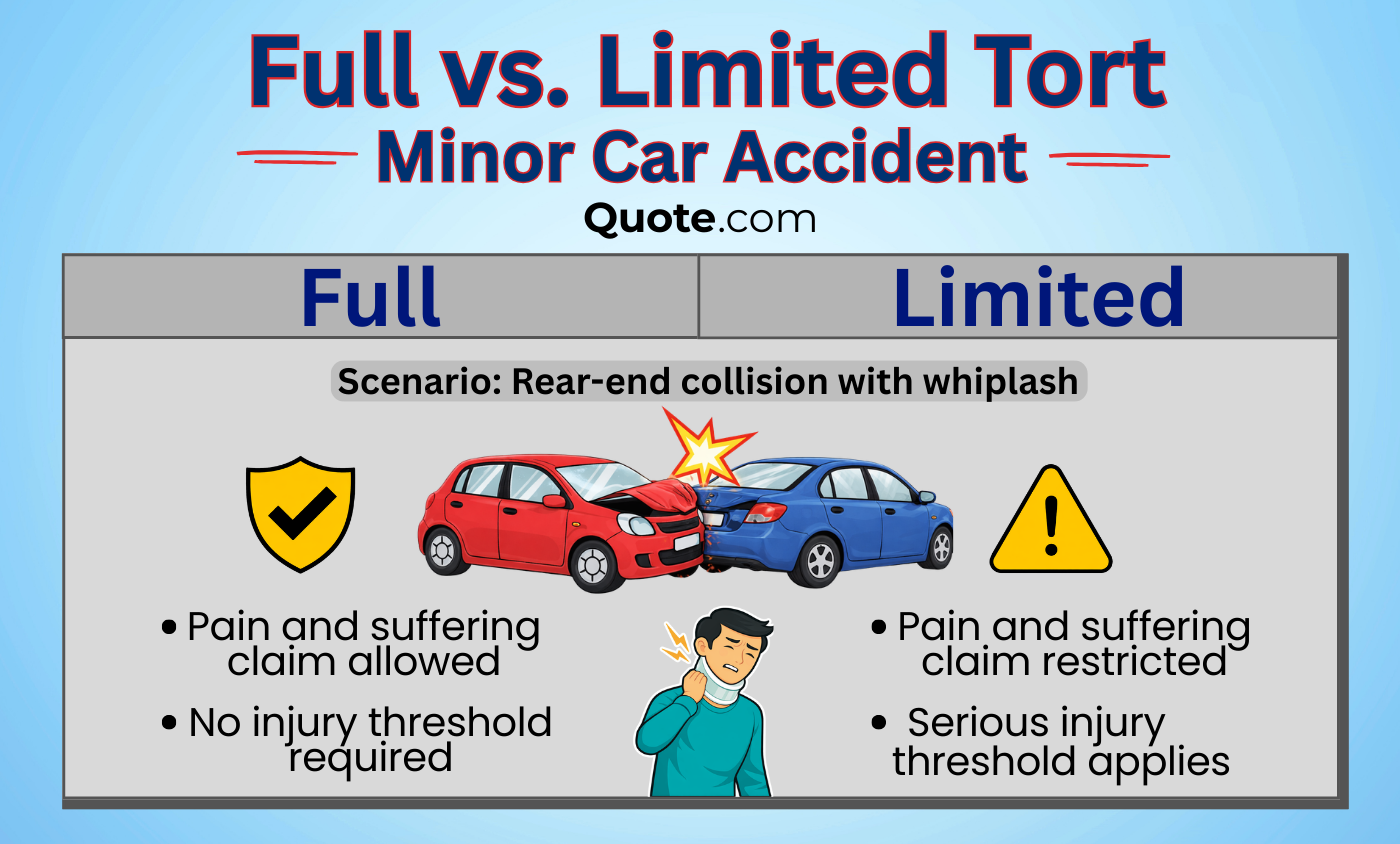
Under limited tort, recovery is typically restricted to medical expenses unless the injury meets your state’s legal standard for seriousness. See Our Article: Medical Payments Coverage (MedPay)
As a result, drivers with limited tort may receive significantly less compensation for the same minor injury.
How Limited Tort Insurance Defines a Serious Injury
Under limited tort, you can only sue for pain and suffering if your injury meets your state’s legal definition of “serious.”
This typically includes permanent impairment, such as dismemberment or long-term physical limitations that do not fully heal.
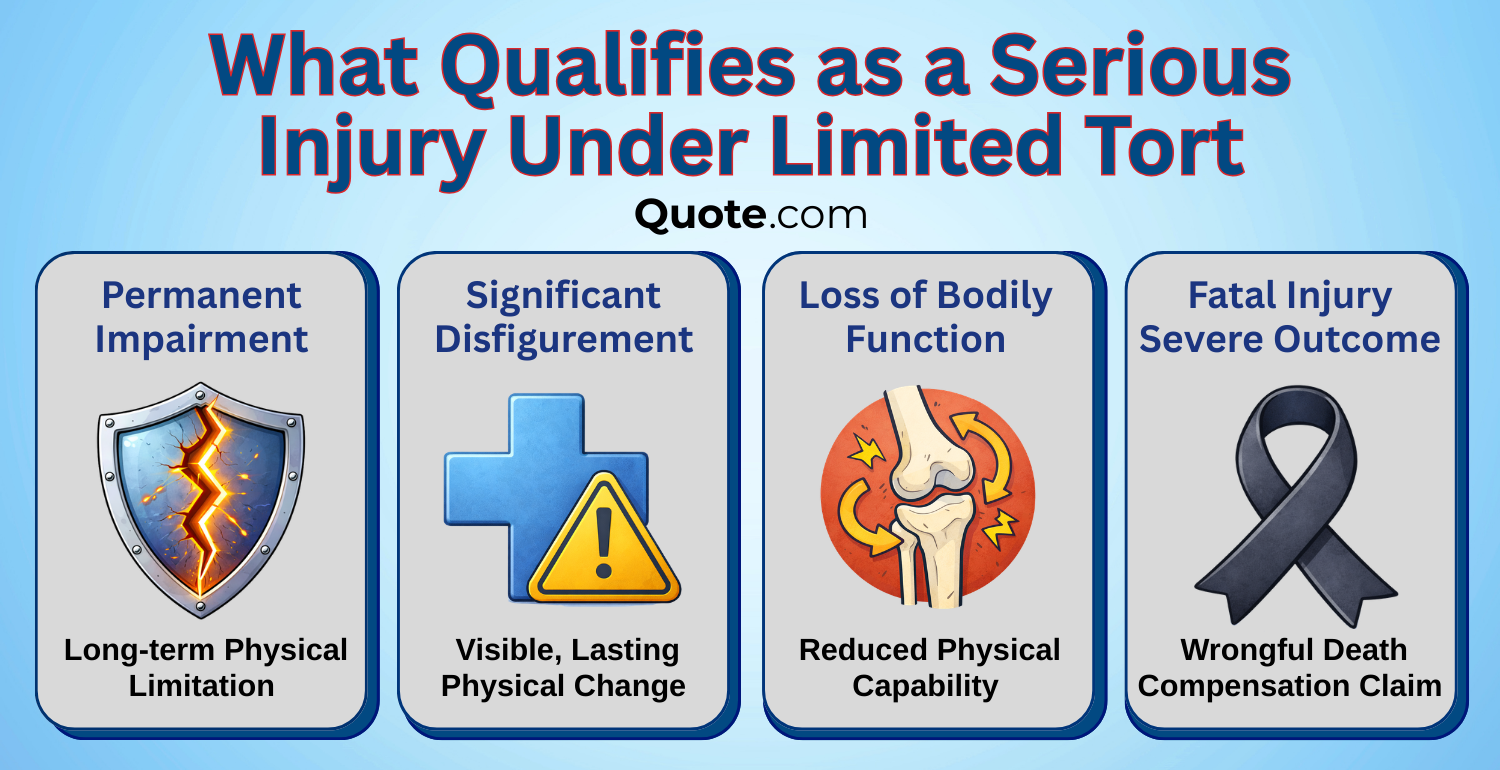
It can also apply to significant disfigurement or loss of bodily function that reduces your ability to move or perform daily tasks.
In the most severe cases, fatal injuries may qualify for wrongful death compensation, allowing families to pursue additional damages.
Don’t Miss It: Personal Injury Protection (PIP) Insurance
Free Auto Insurance Comparison
Compare Quotes From Top Companies and Save
Comparing Full and Limited Tort Insurance Rates
Full and limited tort coverage affects both your legal rights and your monthly premiums.
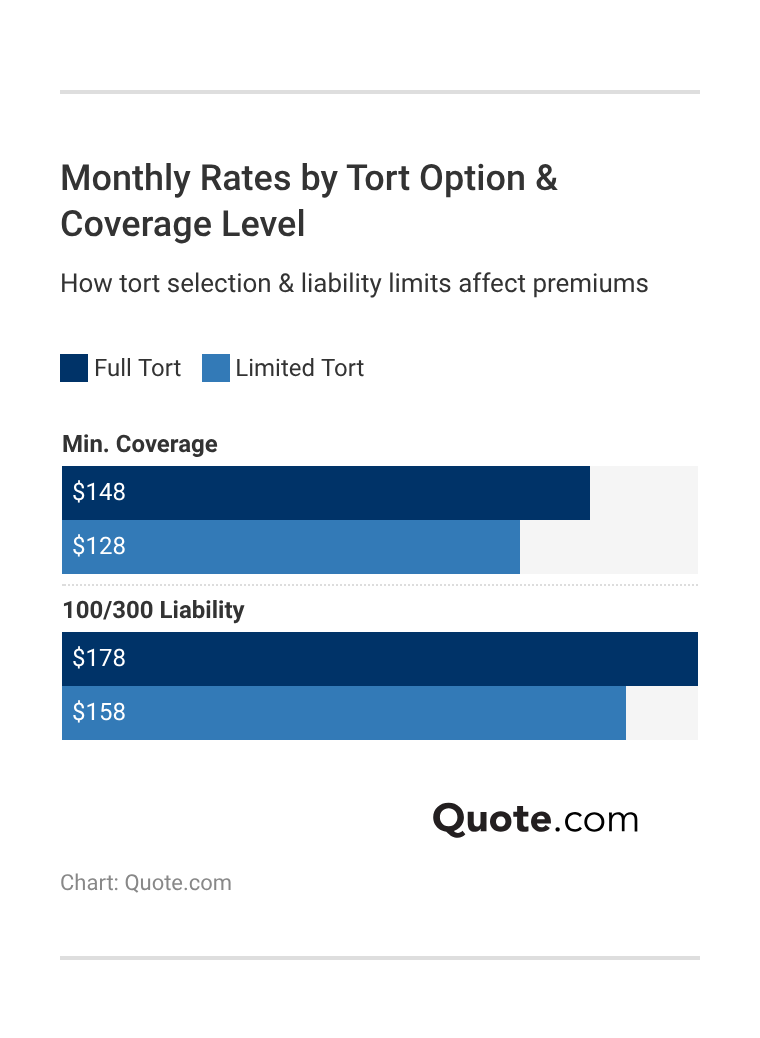
For minimum coverage, full tort averages about $148 per month, while limited tort averages $128 per month, a savings of roughly $20 each month.
When increasing liability limits to 100/300, full tort rises to $178 per month, compared to $158 per month for limited tort.
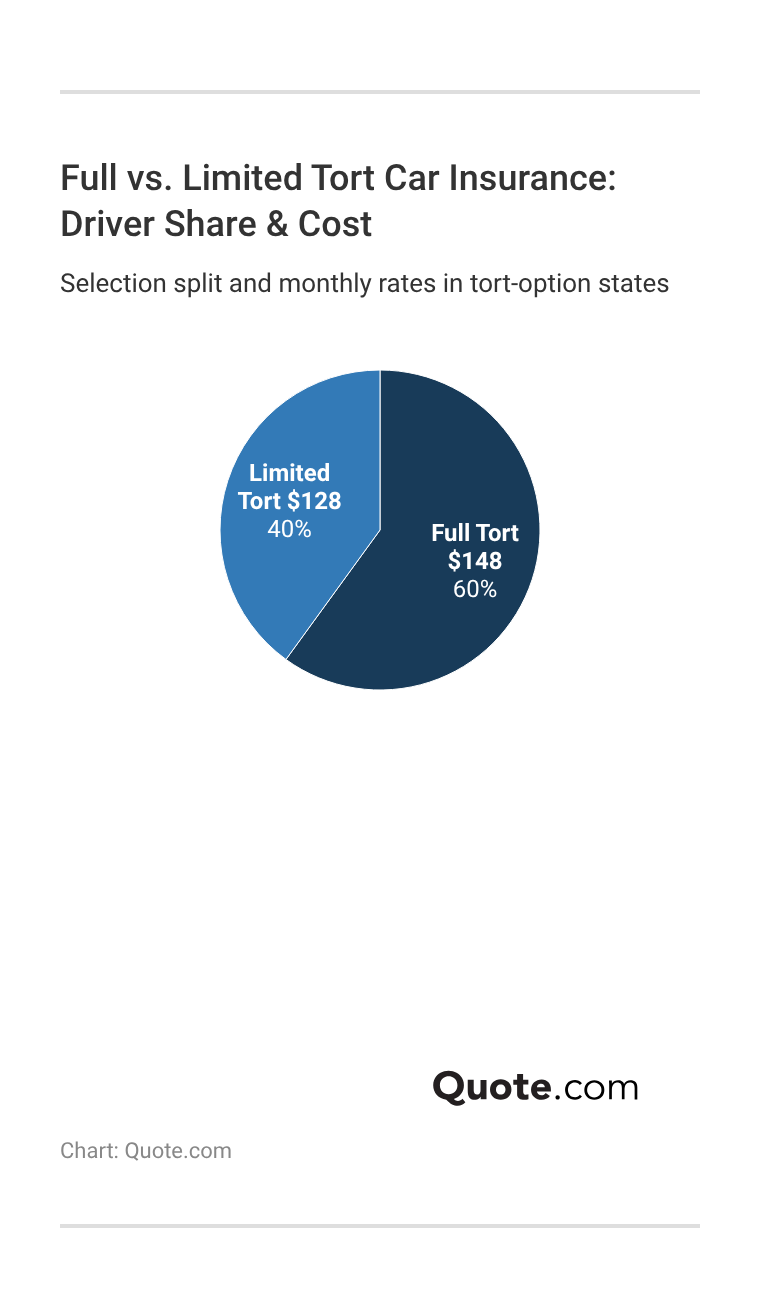
In states where they have the option, many drivers choose full tort despite the higher cost. About 60% of drivers select full tort, while 40% choose limited tort.
Most states require full tort insurance, but many drivers still prefer to keep their lawsuit rights despite the added monthly expense.
Limited tort offers steady monthly savings, lowering the average cost of auto insurance, but could limit your access to additional damages in the event of a serious accident.
If limited tort saves you about $20 per month, make sure that discount is worth giving up the full right to sue for pain and suffering.
Brad Larson Licensed Insurance Agent
Choosing between the two depends on your state laws and whether you prioritize lower premiums or stronger legal rights after an accident.
Check with your state auto insurance requirements and compare quotes from multiple companies to pick the most affordable option between full tort vs. limited tort car insurance.
What to Know Before Choosing Tort Coverage
Before choosing a type of auto coverage, think about how much protection you want after a crash. Full tort is often better for drivers who want to protect their money and keep the full right to sue.
It does not require you to meet a serious injury rule before asking for pain and suffering damages. This can be helpful if you drive long distances or spend a lot of time on the road.
Choosing Full vs. Limited Tort Car Insurance| Driver Profile | Full Tort | Limited Tort |
|---|---|---|
| Asset Protection | ✅ Asset protection | ⚠️ Coverage-dependent |
| Legal Flexibility | ✅ Greater flexibility | ❌ Restricted flexibility |
| Legal Limits | ❌ Avoids limits | ✅ Accepts limits |
| Long Commutes | ⚠️ Exposure-based | ❌ Higher exposure |
| Low Mileage | ⚠️ Mileage-based | ✅ Lower exposure |
| Minor Accidents | ✅ Minor claims | ❌ Claims restricted |
| Pain Coverage | ✅ Full access | ⚠️ Serious only |
| Premium Priority | ❌ Higher premiums | ✅ Lower premiums |
| Protection Focus | ✅ Protection priority | ✅ Savings priority |
| Risk Tolerance | ✅ Risk-minimizing | ⚠️ Risk-dependent |
While it usually costs more each month, full tort gives you stronger overall protection. Limited tort is meant for drivers who want lower monthly payments and are okay with some legal limits.
It may work well for people who drive less or want to save money on premiums. However, you can only claim pain and suffering if your injury meets the state’s serious injury standard.
Full Tort and Limited Tort Availability by State
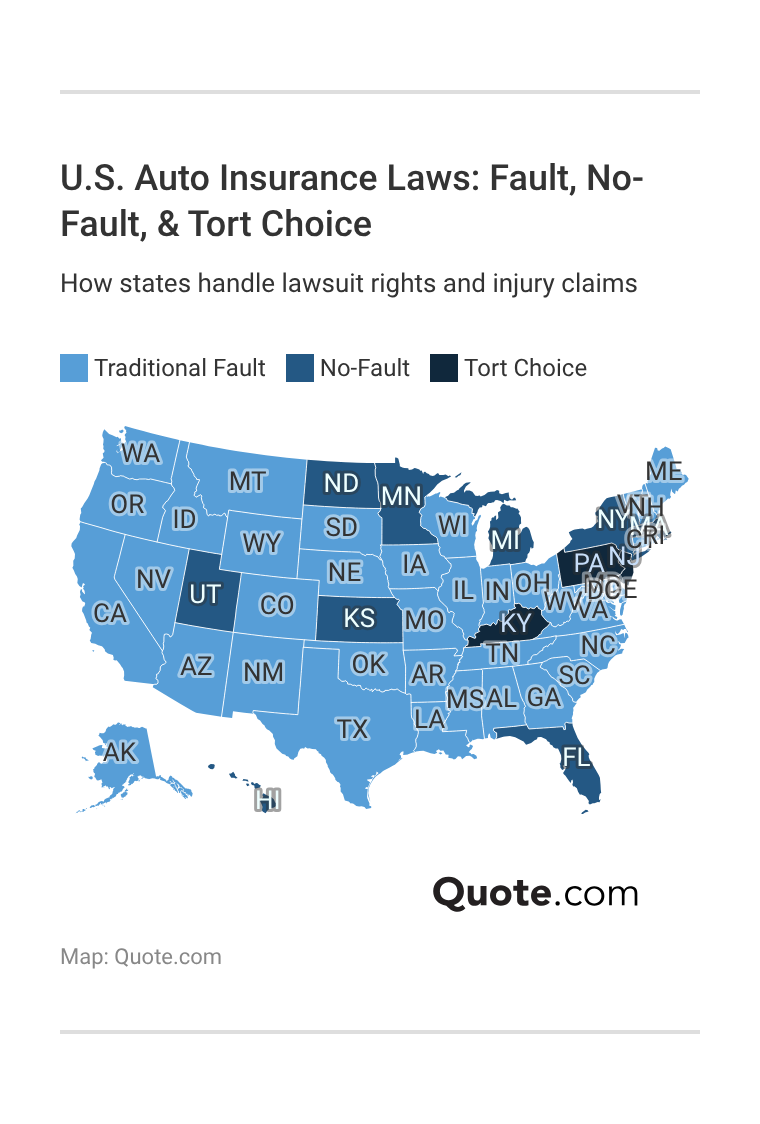
Tort coverage availability depends on your state’s auto insurance system, as U.S. laws follow fault, no-fault, or tort-choice models.
In traditional fault states, the at-fault driver pays for damages, and lawsuits are generally allowed without choosing a tort option.
In no-fault states, drivers use their own coverage for medical bills, and lawsuits are limited unless injuries meet a legal threshold.
Only tort-choice states give drivers the option to select full or limited tort, which directly affects their right to file a lawsuit for pain and suffering after an accident.
Check Out This Page: Auto Insurance Rates by State
Choosing the Right Tort Insurance Policy
Choosing between full and limited tort insurance coverage comes down to how much legal protection you want and how much you’re willing to pay each month.
Full tort gives you the unrestricted right to sue for pain and suffering, even after minor injuries, but it typically comes with higher premiums.
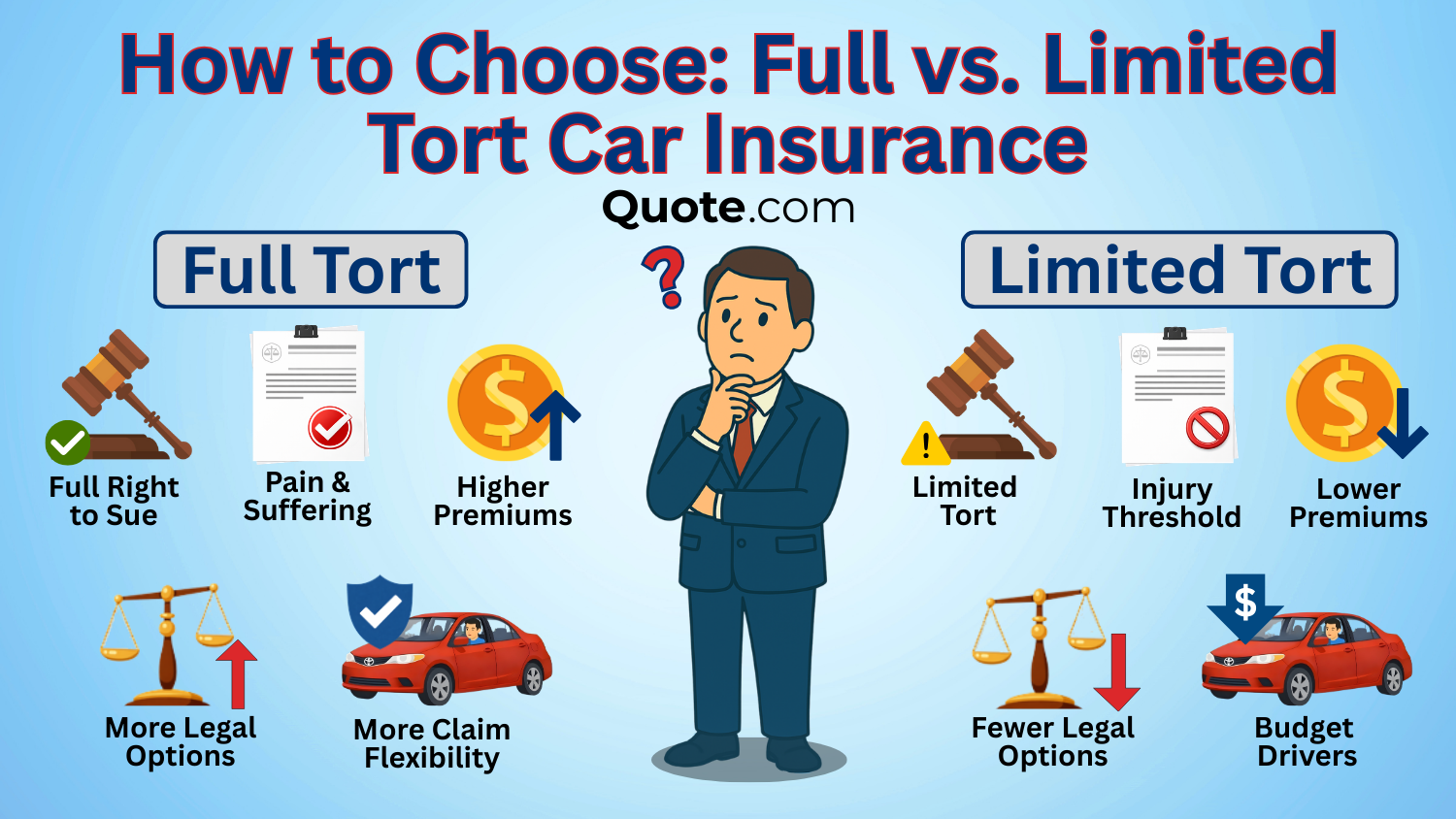
Limited tort lowers your monthly cost, yet it limits your ability to file certain lawsuits unless your injury meets a serious threshold.
Before making a final decision, consider your driving habits, commute length, financial situation, and comfort with legal restrictions.
If protecting your rights and assets is your top priority, full tort may offer better peace of mind. Learn how to compare multiple auto insurance quotes to ensure you choose the coverage that aligns with your needs and risk level.
If saving money each month matters more and you’re comfortable with limits, limited tort could be the better fit. Get fast and cheap auto insurance coverage today with our quote comparison tool.
Frequently Asked Questions
What is the difference between limited and full tort insurance?
The main difference between full tort and limited tort auto insurance is your right to sue for pain and suffering after an accident. Full tort allows you to file a claim for non-economic damages regardless of injury severity, while limited tort restricts those claims unless your injury meets a serious threshold.
Which is better for auto insurance, full or limited tort?
Neither option is universally better; it depends on your priorities. Full tort offers broader legal protection, while limited tort lowers monthly premiums. Comparing full vs limited tort auto insurance helps determine whether protection or savings matters more to you.
See More: Car Insurance Discounts You Can’t Miss
Should I get full tort or limited tort insurance in PA?
In Pennsylvania, drivers can choose between both options. If you want full legal rights after an accident, full tort may be better, while limited tort may suit drivers focused on lower costs. Many drivers compare limited vs full tort car insurance based on commute length and risk tolerance.
What are the two different types of torts?
The two types available in tort-choice states are full tort and limited tort. These options determine your ability to pursue compensation for pain and suffering. Together, they are known as full tort and limited tort automobile insurance options. Find your cheapest auto insurance quotes by entering your ZIP code into our free comparison tool.
Which tort car insurance is cheaper?
Limited tort is typically cheaper because it restricts certain lawsuit rights. When comparing full tort vs. limited tort costs, limited tort usually offers lower monthly premiums.
Read More: Best Auto and Home Insurance Bundles
What does full coverage actually mean in insurance?
Full coverage auto insurance generally refers to a policy that includes liability, collision, and comprehensive insurance. It does not automatically mean full tort; tort selection is separate from coverage levels in limited tort vs. full tort decisions.
What is the most common tort claim?
The most common tort claims in auto accidents involve negligence, where one driver is responsible for causing harm. In full vs limited tort auto insurance, negligence claims may include compensation for pain and suffering, depending on your selected option.
What is the difference between tort and no-fault insurance?
In tort (fault) states, the at-fault driver pays for damages, and lawsuits are generally allowed. In no-fault states, drivers use their own insurance for medical bills, and lawsuits are limited. This differs from the difference between full tort and limited tort auto insurance, which applies only in tort-choice states.
Learn More: At-Fault Accidents & Insurance Rates
What is the most serious tort?
In auto insurance, the most serious tort claims involve permanent impairment, significant disfigurement, loss of bodily function, or wrongful death. These severe injuries may qualify for lawsuits even under limited tort.
What are the limitations of a tort?
Limited tort restricts your ability to sue for pain and suffering unless your injury meets a legal threshold. This limitation is the key factor when evaluating full tort vs. limited tort insurance options. Get the best auto insurance rates possible by entering your ZIP code into our free comparison tool today.
Is liability or full coverage car insurance better?
What is the most common tort claim?
Related Articles
-
Jun 2026

Best Auto Insurance for Toyotas in 2026
-
Sep 2025
What does the Insurance Institute for Highway Safety do?
-
Feb 2026
How Speeding Tickets Affect Auto Insurance in 2026
-
May 2026

10 Best Auto Insurance Companies in Delaware for 2026
-
Jun 2026
Cheap Auto Insurance for Teens in 2026
-
Jul 2026
Cheap Auto Insurance for High-Risk Drivers: Best Companies by Cost (2026)




Get a FREE Quote in Minutes
Insurance rates change constantly — we help you stay ahead by making it easy to compare top options and save.