Personal Injury Protection (PIP) Insurance Coverage Explained for 2026
Personal injury protection (PIP) is essential auto insurance that covers medical bills, lost wages, and other related costs, regardless of fault. Available from USAA for as low as $10 a month, personal injury protection coverage goes beyond a health policy. Find out if PIP insurance is required in your state.
Read more





Table of Contents
Table of Contents

Insurance Claims Support & Senior Adjuster
Kalyn grew up in an insurance family with a grandfather, aunt, and uncle leading successful careers as insurance agents. She soon found she had similar interests and followed in their footsteps. After spending about ten years working in the insurance industry as both an appraiser dispatcher and a senior property claims adjuster, she decided to combine her years of insurance experience with another...
Kalyn Johnson

Senior Director of Content
Sara Routhier, Senior Director of Content, has professional experience as an educator, SEO specialist, and content marketer. She has over 10 years of experience in the insurance industry. As a researcher, data nerd, writer, and editor, she strives to curate educational, enlightening articles that provide you with the must-know facts and best-kept secrets within the overwhelming world of insurance....
Sara Routhier

Licensed Insurance Agent
Brad Larson has been in the insurance industry for over 16 years. He specializes in helping clients navigate the claims process, with a particular emphasis on coverage analysis. He received his bachelor’s degree from the University of Utah in Political Science. He also holds an Associate in Claims (AIC) and Associate in General Insurance (AINS) designations, as well as a Utah Property and Casual...
Brad Larson
Updated June 2026
Personal injury protection (PIP) is insurance that covers medical expenses, lost wages, and essential services after an accident, regardless of fault.
- PIP pays for medical expenses, lost wages, and essential services
- Monthly personal injury protection insurance rates range from $10 to $21
- PIP policy limits complement existing health insurance coverage
When you compare auto insurance companies, you’ll find that USAA PIP coverage starts at just $10 per month. Keep reading to learn the differences between bodily injury liability vs. PIP insurance and which states require PIP coverage.
This guide explains personal injury protection minimums and demonstrates how this coverage complements your health insurance for comprehensive protection.
If you’re looking to lower your auto insurance premiums, enter your ZIP code into our free comparison tool to compare cheap PIP insurance rates against top insurers.
What is Personal Injury Protection (PIP)?
Readers often ask, “What is PIP insurance?” A simple personal injury protection definition is optional car insurance that covers medical expenses, lost wages, and essential services after an accident.
Some policies also include funeral expenses, rehabilitation costs, and childcare services, which can make a big difference during recovery.
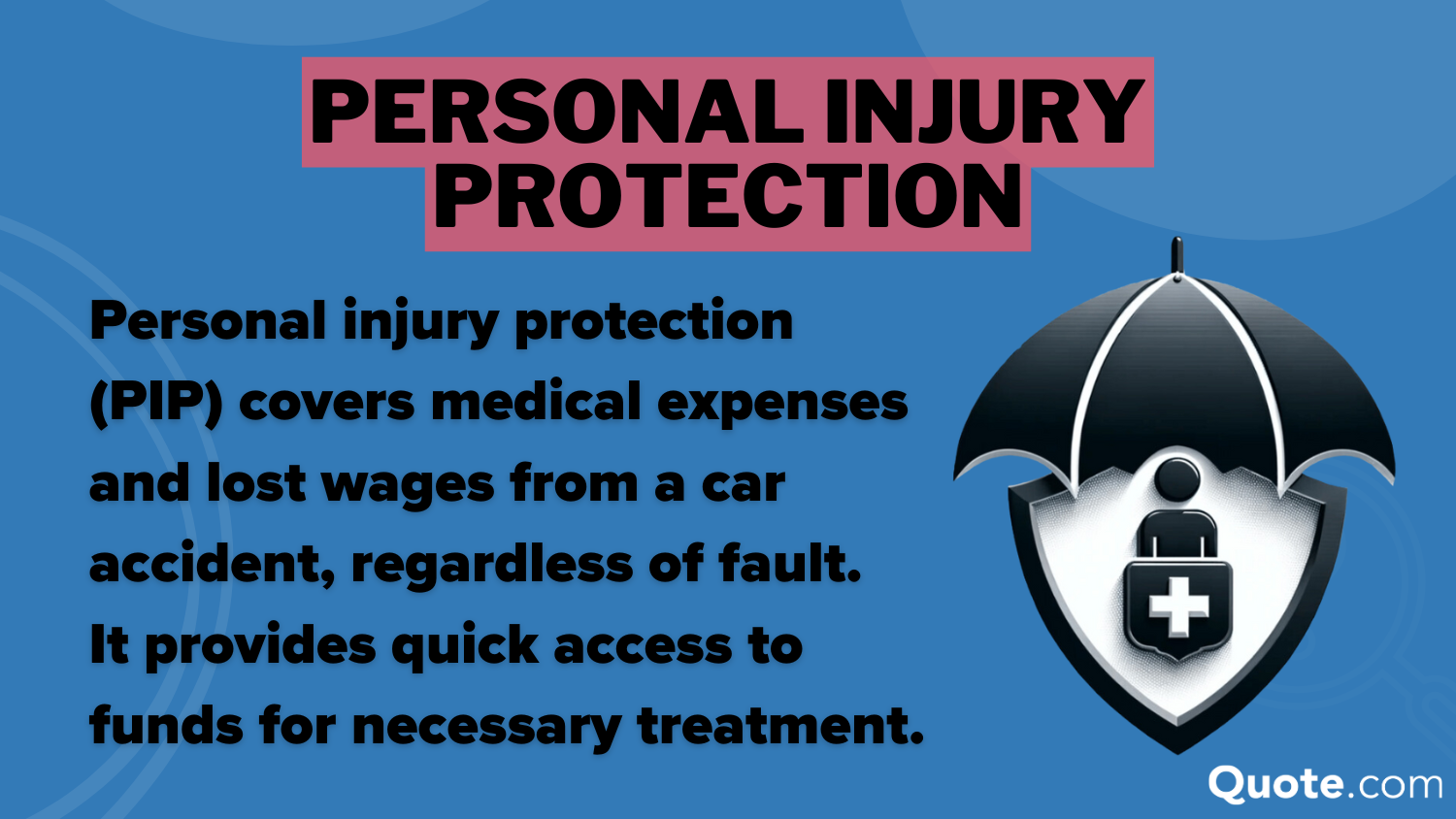
Often called no-fault auto insurance, it pays out quickly without waiting to determine who caused the crash.
In some states, PIP is required as part of a no-fault insurance system, while in others it’s optional or replaced by medical payments coverage (MedPay).
What PIP Covers and What it Doesn't| Coverage | Details |
|---|---|
| Essential Services | Pays for child care and household help |
| Funeral Expenses | Helps cover burial-related expenses |
| Lost Wages | Replaces income if you can’t work |
| Medical Bills | Covers doctor visits, hospital stays |
| Rehab Services | Pays for therapy and recovery services |
| Survivor Benefits | Provides payments to family after death |
No-fault PIP coverage doesn’t replace your health care coverage. It works alongside it and may cover expenses your health plan doesn’t.
Unlike liability insurance, a personal injury protection plan covers you and your passengers. To see how it fits into your policy, check out our visual guide to auto insurance, which explains each type of coverage in simple terms.
Free Auto Insurance Comparison
Compare Quotes From Top Companies and Save
Cost of Personal Injury Protection Coverage
Personal injury auto insurance costs less than $20 a month, with USAA, Geico, and State Farm each offering PIP insurance rates under $15 per month.
USAA is consistently praised as one of the best personal injury protection (PIP) insurance companies for its efficient claims process and broad PIP coverage options, starting at $10 a month. Geico personal injury protection costs the least for non-military members at just $11 a month.
Meanwhile, State Farm PIP coverage cost starts at just $14 per month, while Progressive PIP insurance costs as low as $16.
Personal Injury Protection (PIP) Monthly Rates From Top Providers| Insurance Company | Monthly Rate |
|---|---|
 | $18 |
 | $15 |
 | $19 |
 | $11 |
 | $21 |
 | $17 |
 | $16 |
 | $14 |
 | $16 |
 | $10 |
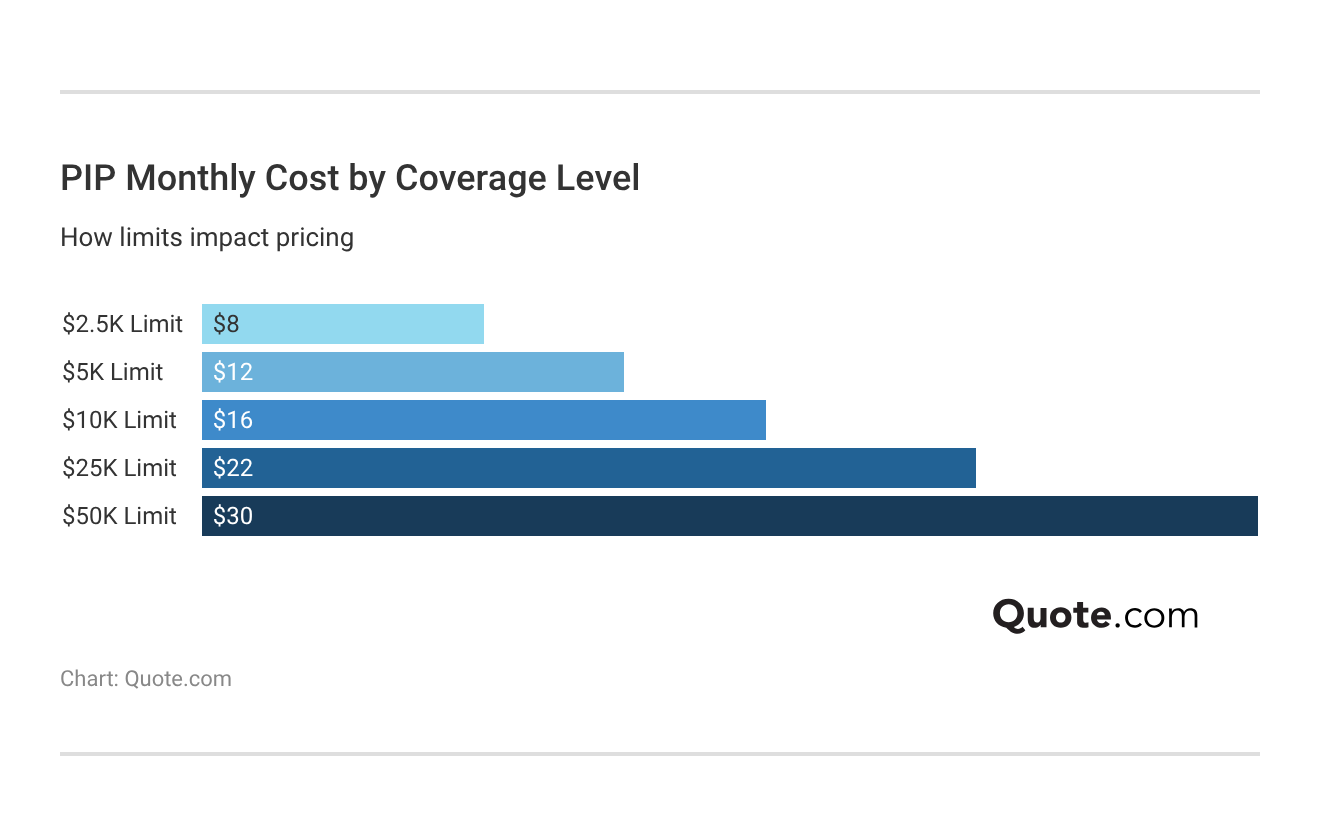
PIP costs depend on your state requirements, coverage limits, deductible, and driving history.
Where you live and how much coverage you choose can significantly impact your monthly premium.
Price is only one part of the decision.
Cheap PIP car insurance may meet your state’s minimum requirements but still leave gaps if you face high medical bills or extended time off work.
When comparing options, look at coverage limits, deductibles, and what expenses are included. Ask yourself, how much PIP coverage should you get to handle medical costs, lost wages, and other expenses after an accident?
Start your PIP quote comparison by entering your ZIP code into our free tool.
How to Choose the Right Amount of PIP Coverage
Choosing the right personal injury protection limit comes down to how much financial risk you can handle after an accident. PIP helps cover medical bills, lost wages, and essential services, so your coverage should line up with your health insurance and overall finances.
Choosing Coverage Limits That Fit Your Situation| Situation | Lower Limit | Higher Limit | Why |
|---|---|---|---|
| Frequent Passengers | Often OK | May help | Lower medical costs |
| Income Backup | Not enough | Recommended | Coverage gaps |
| Limited Health Plan | Often OK | May help | Less income risk |
| No Income Backup | Not enough | Recommended | Lost wages matter |
| Strong Health Plan | Not enough | Recommended | Higher injury risk |
After a crash, costs can add up quickly. Medical care and lost income can create financial strain, so your coverage limit should be high enough to keep those costs manageable.
Most insurers offer PIP coverage in set amounts, like $2,500, $5,000, or $10,000, so compare different levels to find the right balance of cost and coverage.
Start With Your Health Insurance
Start with your health insurance. If you’re comparing health insurance plans, pay close attention to deductibles and coverage limits.
In some states, personal injury protection car insurance may act as primary coverage before your health insurance, which can reduce your medical deductible and out-of-pocket expenses after an accident.
If your plan has low deductibles and strong coverage, you may not need a high PIP limit.
Schimri Yoyo Licensed Agent & Financial Advisor
If you face higher out-of-pocket costs or gaps in coverage, a higher limit can help fill in those holes.
Some policies include a PIP deductible, which lowers your premium but increases what you pay before personal injury protection benefits apply.
Consider Your Income & Savings
Your income and savings also matter. PIP on insurance can replace lost wages if you’re unable to work.
If you depend on your paycheck or don’t have much saved, higher limits provide more protection. If you have solid savings or disability coverage, a lower limit may be enough.
PIP works alongside coverages like uninsured motorist and bodily injury liability, so reviewing your full policy helps avoid gaps. Read More: Driving Without Auto Insurance
Think About Your Passengers
Think about who rides with you. If you often have passengers, higher PIP limits can help cover injuries for more than one person. If you usually drive alone, your exposure is lower.
Some policies apply limits per person rather than per accident, which can affect how much coverage is available for multiple injuries.
Factor in How Much You Drive
How often you drive plays a role too. More time on the road means a higher chance of an accident.
Frequent drivers, including rideshare drivers, often benefit from higher limits than those who drive occasionally. More Details: Cheap Rideshare Insurance
Use State Minimums as a Starting Point
State minimums are a starting point, but they’re often not enough to cover all expenses. Many drivers assume personal injury protection minimum coverage is enough, but serious injuries can quickly exceed those limits.
Use them as a baseline, then adjust your coverage based on your needs.
PIP Insurance Requirements by State
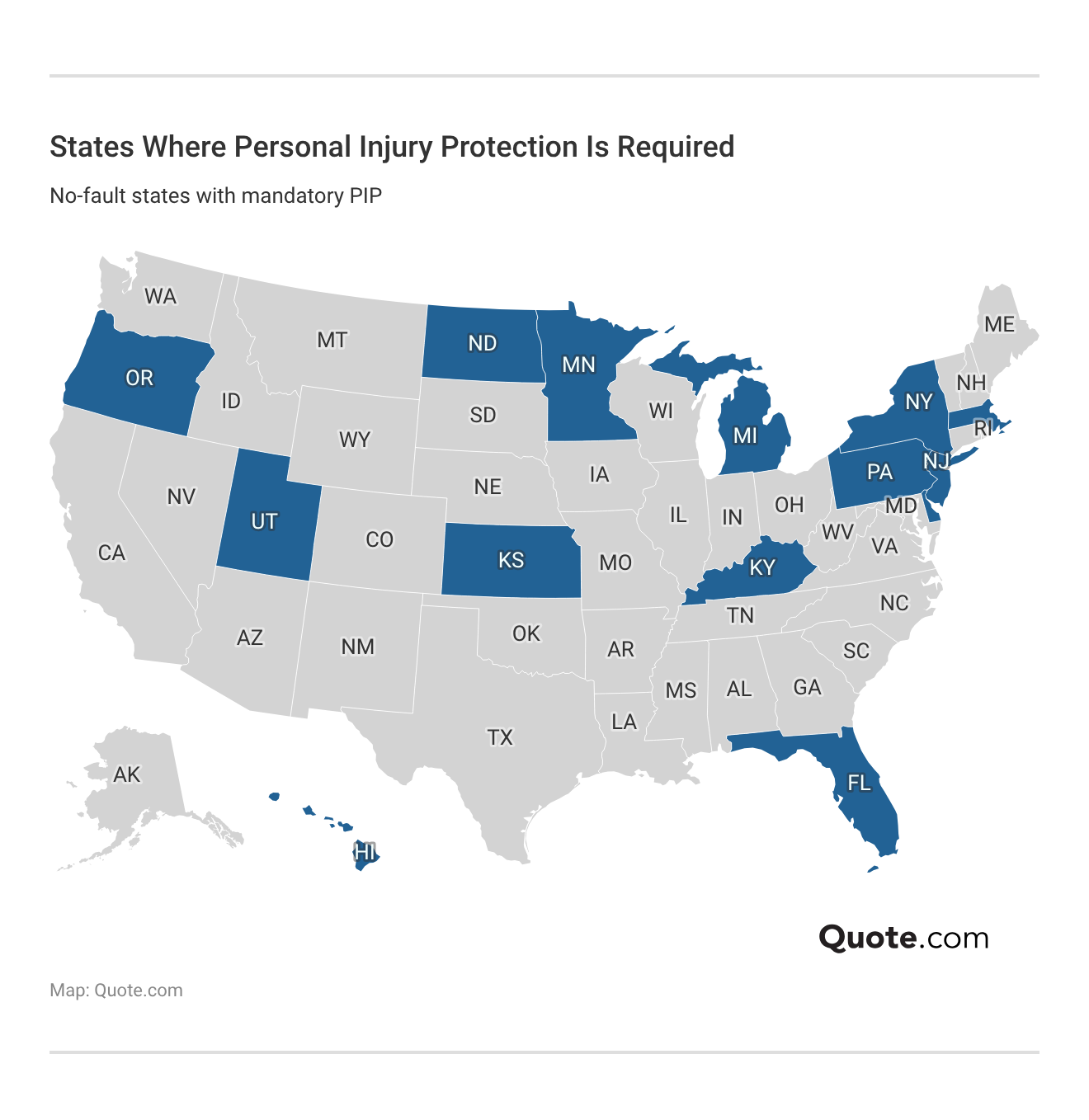
Personal injury protection (PIP) requirements vary by state, with some states requiring coverage as part of a no-fault insurance system while others make it optional or don’t offer it at all.
States generally fall into three categories: no-fault states where PIP is required, add-on states where it’s optional, and states where PIP isn’t offered at all.
In no-fault PIP states, personal injury protection allows you to file a claim with your own insurer regardless of who caused the accident.
PIP requirements vary not only by mandate status but also by minimum coverage limits, which can range from $2,500 to over $50,000 depending on the state. Find Out More: Auto Insurance Requirements by State
Personal Injury Protection (PIP) State Requirements
| State | PIP Requirement |
|---|---|
| Delaware | $15K / $30K (per person / accident) |
| Florida | $10K |
| Hawaii | $10K |
| Kansas | $4.5K |
| Kentucky | $10K (choice no-fault) |
| Massachusetts | $8K |
| Michigan | Varies (unlimited default; selectable) |
| Minnesota | $40K ($20K medical / $20K wage) |
| New Jersey | $15K (choice no-fault) |
| New York | $50K |
| North Dakota | $30K |
| Oregon | $15K |
| Pennsylvania | $5K (choice no-fault) |
| Utah | $3K |
Michigan PIP insurance is a requirement, with unique options that can include unlimited lifetime medical coverage.
Certain states impose specific benefit structures, such as mandatory coverage for lost wages or funeral expenses, which can significantly affect how comprehensive PIP protection is.
In other states, PIP is optional, so you can choose whether to add it based on your coverage needs and budget. Some states offer medical payments coverage (MedPay) instead, which provides similar benefits but usually with fewer protections.
For example, personal injury protection in Texas isn’t mandatory, but it’s offered to drivers to help cover medical costs after an accident.
Get More Details: Best Auto Insurance Companies in Texas
Free Auto Insurance Comparison
Compare Quotes From Top Companies and Save
PIP Compared to Other Insurance Options
Unlike comprehensive coverage or property damage liability, personal injury protection (PIP) is designed to cover people, not vehicles or property.
When comparing personal injury protection vs. medical payments, the differences go beyond medical bills.
Personal Injury Protection (PIP) vs. Other Coverage Types| Coverage Type | Medical Bills | Lost Wages | At-Fault | Property Damage |
|---|---|---|---|---|
| Bodily Injury Liability | ✅ | ❌ | ✅ | ❌ |
| Collision | ❌ | ❌ | ✅ | ✅ |
| Comprehensive | ❌ | ❌ | ❌ | ✅ |
| Health Insurance | ✅ | ✅ | ❌ | ❌ |
| Medical Payments (MedPay) | ✅ | ❌ | ❌ | ❌ |
| Personal Injury Protection (PIP) | ✅ | ✅ | ❌ | ❌ |
MedPay helps pay for treatment quickly, but it doesn’t cover lost income or essential services during recovery. PIP can help replace lost wages and pay for services you may need while you’re injured, which makes it more comprehensive.
Liability insurance, specifically bodily injury liability, protects you if you’re at fault in an accident and covers other people’s injuries. It doesn’t cover your own medical expenses or lost income. PIP fills that gap by helping with your own recovery costs, regardless of who caused the accident.
Personal injury protection bridges gaps that other policies don’t, making it a valuable layer of protection in your auto insurance strategy.
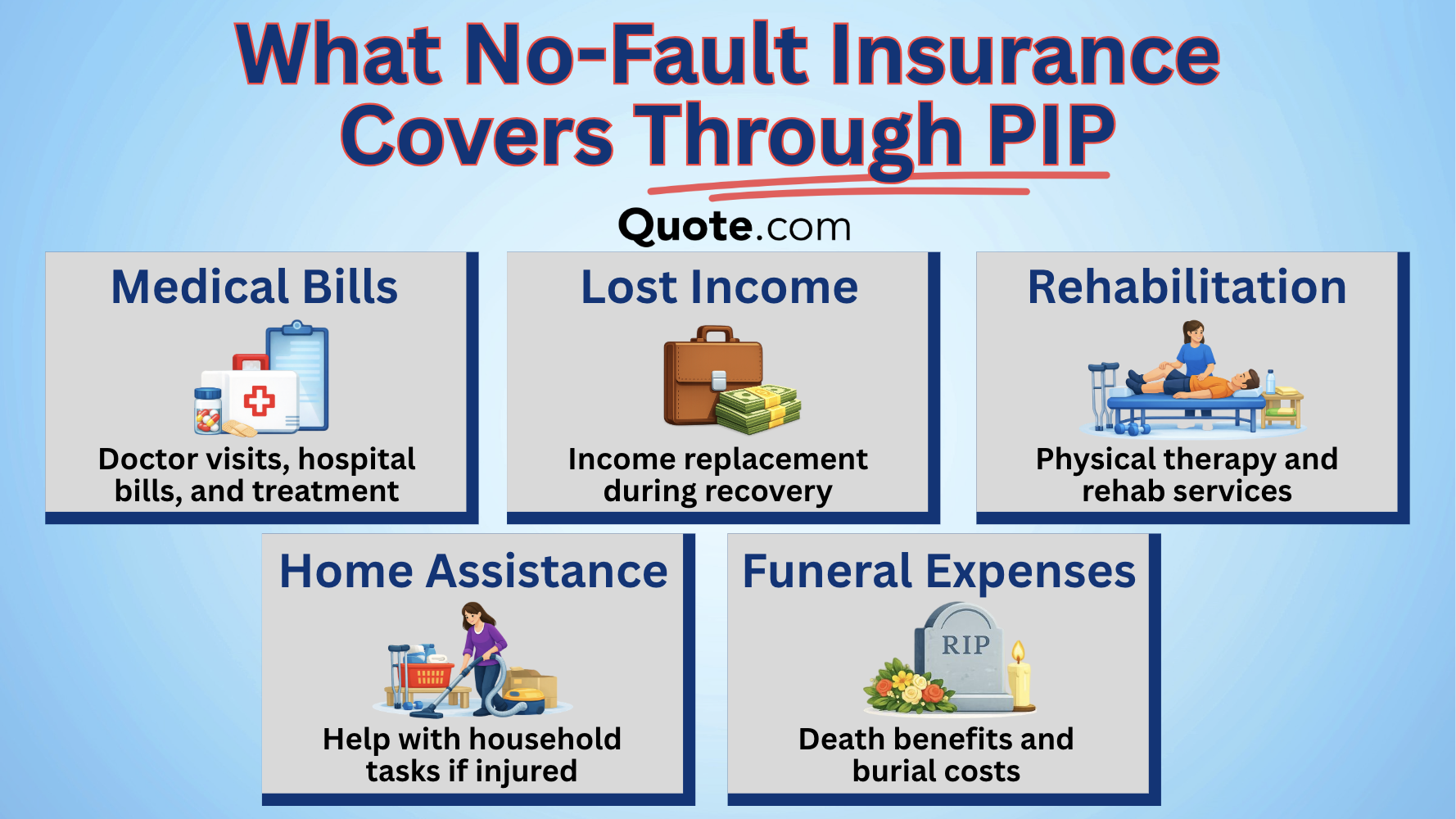
In discussions about personal injury protection on Reddit, users often mention how it helps with more than just medical bills. It can also cover rehab costs and even pay for help with daily tasks if you’re unable to manage them on your own after an injury.
Do you need PIP if you already have health care coverage? Health care plans don’t replace lost income or cover essential services during recovery.
A PIP insurance payout helps finance what your health insurance won’t cover, such as income loss or essential services during recovery.
Is PIP Insurance Right for You?
Personal injury protection provides essential coverage for medical expenses, lost wages, and services regardless of fault.
With USAA offering the cheapest car insurance rates for PIP at just $10 monthly, this coverage remains accessible for most drivers.
PIP can help you recover faster by covering costs your regular health plan might not touch.
Scott Young Managing Editor
While required in some states with varying minimums of $2,500 to $50,000, PIP complements your existing protection by covering costs after a collision that health insurance typically won’t.
Whether mandatory in your state or optional, PIP delivers invaluable peace of mind by protecting both you and your passengers after an accident. Start your free PIP insurance quote comparison by entering your ZIP code into our quote tool today.
Frequently Asked Questions
How does personal injury protection (PIP) insurance work?
Personal injury protection (PIP) insurance pays for medical expenses, lost wages, and essential services after an accident, regardless of who is at fault. You file a PIP claim with your own insurer, and covered costs are paid up to your policy limit.
PIP is required in some states and optional in others, and it can help supplement your health insurance after a crash.
What is an example of personal injury coverage?
PIP pays for accident-related medical costs. For example, if you break your leg in a crash, it can cover hospital stays, surgery, rehabilitation, and transportation to medical appointments. Comparing PIP plans can help you find the best personal injury protection coverage.
What illness is covered by PIP?
PIP covers injuries caused by a car accident, not unrelated illnesses. Conditions that develop as a direct result of the accident, such as infections or trauma-related issues, may also be covered. Related Info: What to Do When You’re Denied Insurance Coverage
How much does PIP insurance cost?
PIP coverage can start around $10–$20 per month, but costs vary based on your location, coverage limits, and insurer. Compare cheap PIP auto insurance rates near you today by entering your ZIP code.
Who offers affordable car insurance with PIP for medical bills and lost wages?
Geico, State Farm, and Progressive are the cheapest PIP insurance companies, but rates vary by driver and location, so comparing quotes is the best way to find affordable options.
Can you get free car insurance with PIP coverage?
No, car insurance with PIP isn’t free, but you can compare PIP insurance quotes at no cost to find the most affordable coverage.
Is PIP insurance worth it?
PIP can be worth it if you want fast access to medical and wage benefits after an accident, especially in the worst states for filing an auto insurance claim, where delays and fault disputes are more common.
How much does PIP pay you?
PIP limits vary by state and policy. Minimum coverage can range from $3,000 in Utah to $50,000 or more in states like Michigan and New York, often covering medical expenses, a portion of lost wages, and essential services.
How is PIP paid out?
PIP payments are usually sent directly to medical providers, while lost wage benefits are paid to you in installments. Some policies may offer lump-sum payments for certain expenses. Stop overpaying for auto insurance. Enter your ZIP code to find out if you can get a better deal on PIP insurance near you.
How do PIP claims work?
You file a claim with your insurer after an accident, and PIP pays for eligible expenses regardless of fault. The insurer reviews your medical records and bills, then pays covered costs up to your PIP coverage limits.
How much PIP coverage should I get?
What does personal injury protection cover in Florida?
Do I need PIP insurance if I have health insurance?
What happens if I don’t have PIP?
Should I reject PIP coverage?
Will your insurance go up if you use PIP?
Does PIP have to be paid back?
What is the difference between personal accident insurance and personal injury insurance?
What’s the difference between PIP vs. MedPay?
Is PIP a benefit for life?
Related Articles
-
Jun 2026

High-Risk Auto Insurance (2026 Guide)
-
Sep 2026
American Access Casualty Company Review for 2026
-
Jun 2026
Best Auto Insurance for Teslas in 2026
-
Jun 2026
Best Auto Insurance for MINIs in 2026
-
Apr 2026
Cheapest Vehicles to Insure in 2026
-
Apr 2026
Cheap Auto Insurance for Disabled Veterans in 2026




Get a FREE Quote in Minutes
Insurance rates change constantly — we help you stay ahead by making it easy to compare top options and save.