Rental Car Insurance: When You Need It (Rates & Best of 2026)
Rental car insurance from Thrifty is just $10 per day, and at Hertz for $16 daily, both offering some of the cheapest basic daily rates available. Renters can use primary and secondary coverage to lower their out-of-pocket rental car insurance cost. Primary pays first, while secondary covers the remaining costs.
Read more





Table of Contents
Table of Contents

Insurance and Finance Expert
Maria Hanson grew up with a unique passion and understanding of both the automotive and insurance industries. With one grandfather in auto mechanics and another working in insurance, you could say automotive insurance is in her blood. Her love of research and finance serves her well in studying insurance trends and liability. Maria has expanded her scope of expertise to home, health, and life i...
Maria Hanson

Managing Editor
Laura Kuhl holds a Master’s Degree in Professional Writing from the University of North Carolina at Wilmington. Her career began in healthcare and wellness, creating lifestyle content for doctors, dentists, and other healthcare and holistic professionals. She curated news articles and insider interviews with investors and small business owners, leading to conversations with key players in the le...
Laura Kuhl

Commercial Lines Coverage Specialist
Michael Vereecke is the president of Customers First Insurance Group. He has been a licensed insurance agent for over 13 years. He also carries a Commercial Lines Coverage Specialist (CLCS) Designation, providing him the expertise to spot holes in businesses’ coverage. Since 2009, he has worked with many insurance providers, giving him unique insight into the insurance market, differences in ...
Michael Vereecke
Updated April 2026
Rental car insurance helps cover you against damage, theft, and liability when you’re on the road. Dollar prices basic coverage at $9 a day.
- Rental car insurance costs $4–$61 per day by coverage type
- Coverage options protect against damage, theft, and liability gaps
- Credit cards may offer primary or secondary rental car insurance
This guide explains how full coverage auto insurance applies to rental cars, plus key details on deductibles, credit card benefits, state costs, and international rules to help you avoid overpaying or duplicating coverage.
Use it to compare your options and choose the right car rental insurance for your trip. Enter your ZIP code to find out if you can get a better deal.
Rental Car Insurance Coverage Explained
Rental car insurance covers repair or theft (CDW/LDW), and liability for injury or damage to property, not to mention add-ons like personal accident, personal effects coverage, and roadside assistance coverage.
These options are meant to help lower your out-of-pocket expenses, but not all renters require full coverage.

Your personal auto insurance may already extend to rental cars if it includes collision and liability coverage.
While this protection often carries over, it’s limited to your policy terms and usually applies only to personal use.
Rental Car Insurance Coverage Options| Protection | What it Covers |
|---|---|
| Collision Waiver (CDW) | Crash damage to the rental |
| Liability Coverage | Injuries or damage to others |
| Loss Waiver (LDW) | Rental car damage or theft |
| Personal Accident (PAI) | Medical costs for passengers |
| Personal Effects (PEC) | Theft of personal belongings |
| Roadside Assistance | Towing, flats, and lockouts |
| Supplemental Liability (SLP) | High liability protection limits |
It may not cover rental-specific costs like car rental loss, including loss of use, administrative fees, higher liability limits, or rentals outside your home country.
You’ll also still be responsible for your deductible if you file a claim through your own insurer, which can make even minor damage costly.
Rental car insurance costs more with additional damage and liability coverage. Check your existing auto policy and the benefits of any credit card you might use to pay for the car.
Dani Best Licensed Insurance Agent
Because of these gaps, many renters add coverage a la carte at the counter, choosing options like a damage waiver or extra liability without paying for duplicate protection.
It’s a practical way to address specific gaps in your personal policy or credit card benefits while helping keep costs manageable.
Popular Types of Rental Car Insurance Policies
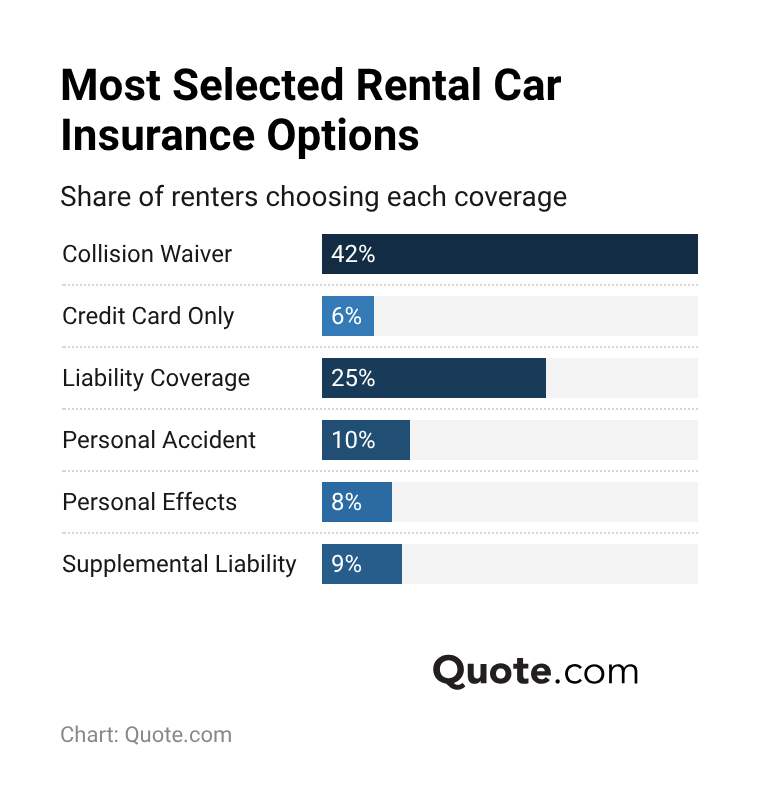
Most renters opt for a collision damage waiver (CDW) or liability because those will cover the priciest risks, damage to the rental car, and claims from other drivers.
If you don’t have collision or liability auto insurance on your personal policy, or you want to avoid using it for a claim, adding this coverage can reduce out-of-pocket costs and paperwork.
In some cases, you may already have enough protection. A personal auto policy with collision and liability usually extends to rental cars, and many credit cards cover damage or theft when you pay with the card.
But credit card coverage is usually only for liability and can only come into play after your own insurance has been exhausted, so think of it more as a backup than comprehensive coverage.
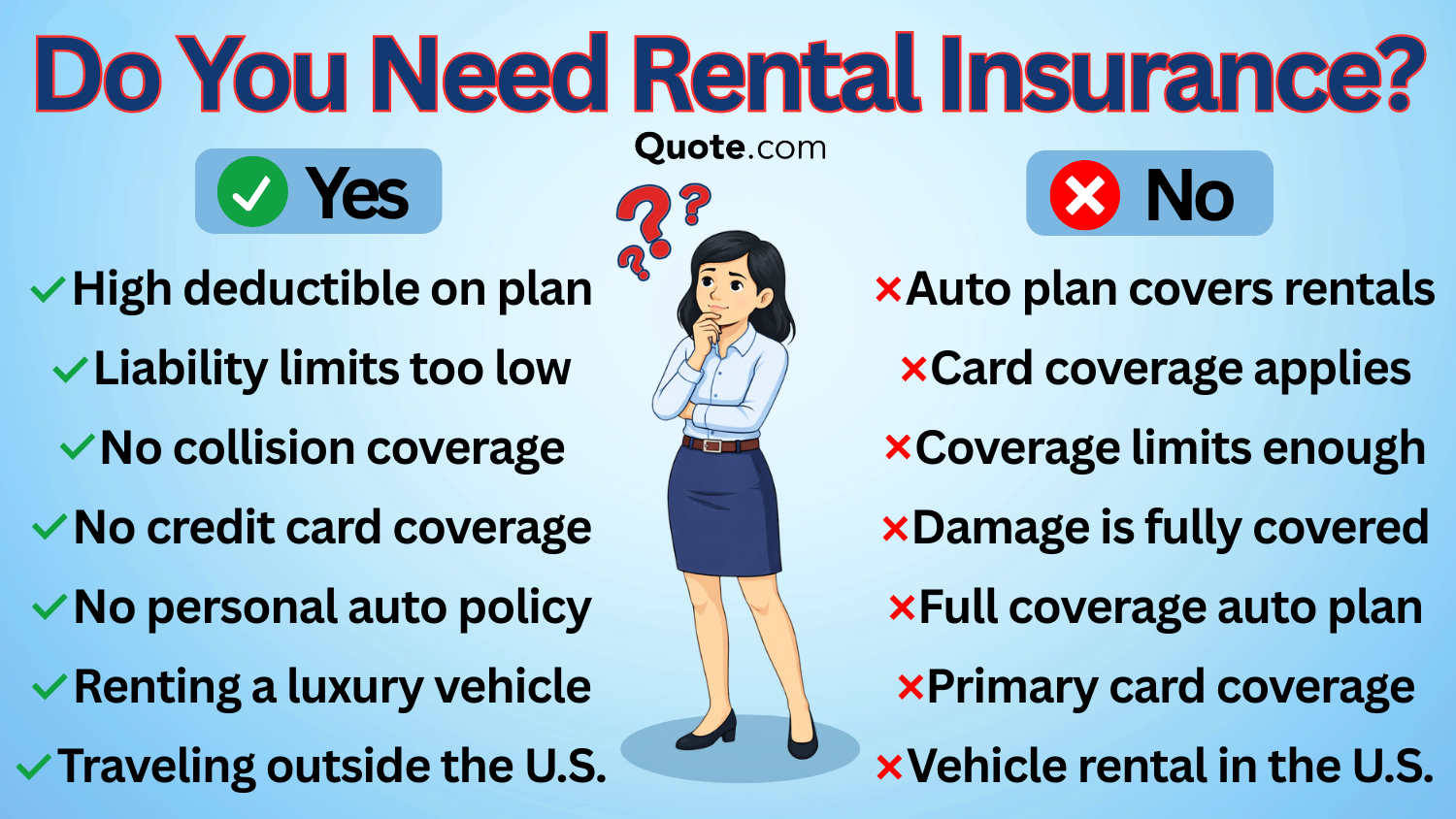
Get rental insurance coverage if your limits are low, your deductible is high, or you’re traveling abroad. Supplemental liability boosts protection, while a CDW helps avoid repair costs and claims.
Optional add-ons like personal accident or personal effects coverage are often unnecessary if you already have health or renters insurance. Review your existing coverage and fill only the gaps.
Free Auto Insurance Comparison
Compare Quotes From Top Companies and Save
Comparing Rental Car Insurance Costs
Rental car insurance prices vary by type, but they’ll usually be $20–$30 per day for the more expensive options, like CDW or LDW.
These plans cover repair or replacement if the car is damaged or stolen, helping you avoid bills that can reach thousands of dollars.
Rental Car Insurance Cost by Coverage Type| Protection | Daily Rate |
|---|---|
| Collision Waiver (CDW) | $20–$30 |
| Liability Coverage | $10–$15 |
| Loss Waiver (LDW) | $20–$30 |
| Personal Accident (PAI) | $4–$8 |
| Personal Effects (PEC) | $3–$6 |
| Roadside Assistance | $5–$10 |
| Supplemental Liability (SLP) | $10–$15 |
Mid-range options, such as liability or supplemental liability ($10–$15 a day), offer you protection from expensive claims if you injure someone or damage their property.
Cheap rental car insurance add-ons like personal accident, personal effects, or road assistance coverage, which can cost as little as $10 a day, cover small risks such as injuries, property damage, and breakdowns.
While these daily fees can add up, they often provide valuable protection against much higher out-of-pocket costs.
Before adding coverage, check your existing auto policy, health insurance, and credit card benefits to avoid paying for protection you may already have.
Premiums From Different Rental Car Insurance Companies
Rental car insurance costs vary by provider and the types of auto insurance included, but the right choice often depends on your situation rather than just the daily rate.
Low-cost options from companies like Dollar and Thrifty can work well for short trips when your personal auto policy or credit card already provides solid coverage.
Rental Car Insurance Daily Rates by Package| Company | Basic | Standard | Enhanced | Premium |
|---|---|---|---|---|
 | $14 | $24 | $31 | $55 |
 | $11 | $29 | $45 | $59 |
 | $19 | $21 | $33 | $46 |
 | $9 | $19 | $29 | $44 |
 | $20 | $30 | $44 | $61 |
 | $13 | $23 | $34 | $47 |
 | $16 | $31 | $46 | $60 |
 | $15 | $26 | $35 | $50 |
 | $21 | $25 | $30 | $58 |
 | $10 | $20 | $32 | $45 |
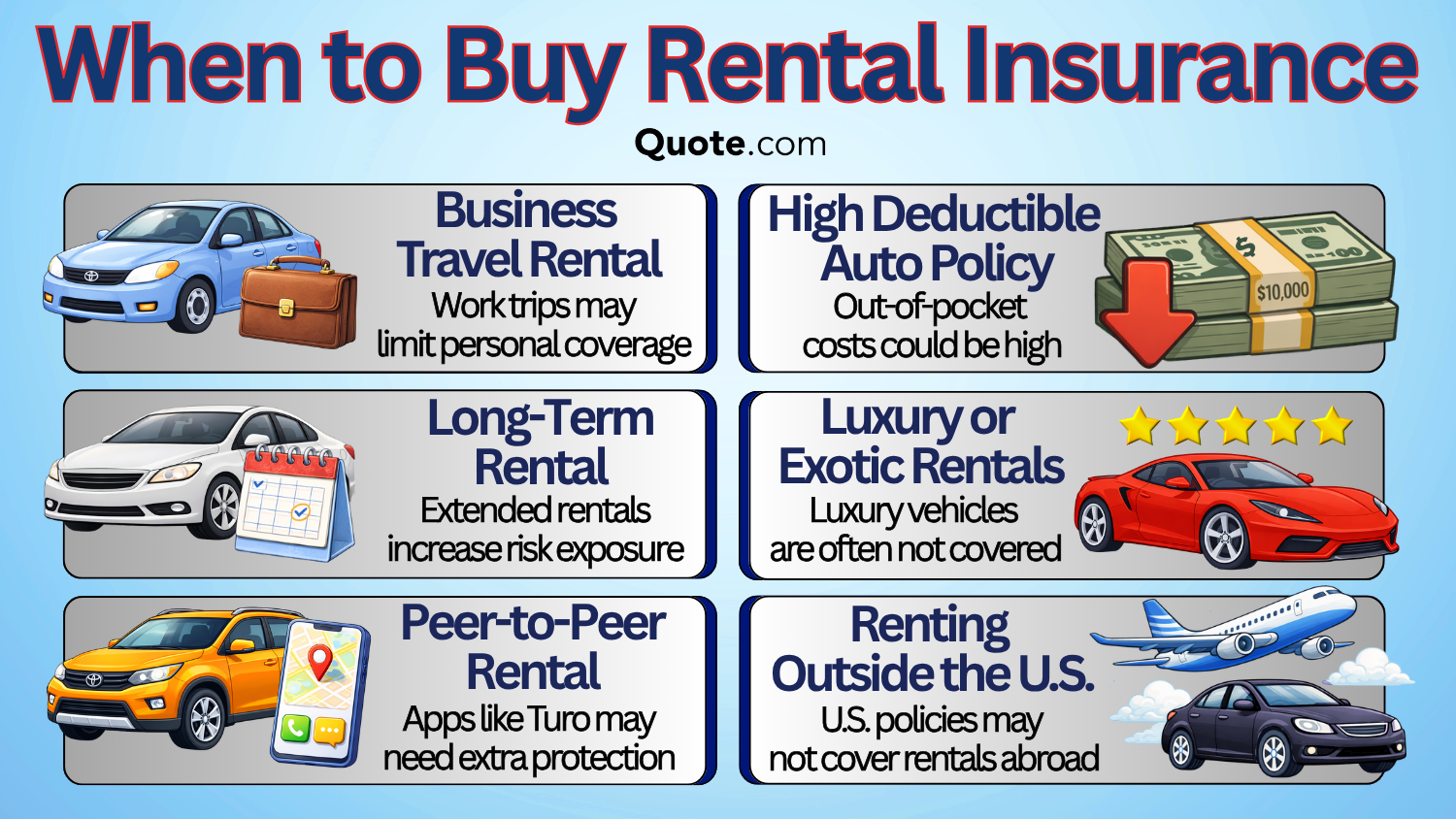
There are situations where basic coverage may not be enough. If you’re traveling for business, renting long-term, driving a high-value vehicle, or going abroad, your existing protection may be limited or not apply at all.
In these situations, premium upgrade coverage can reduce financial risk by lowering deductibles, increasing liability limits, and filling gaps your policy does not cover.
Mid-range companies like Alamo, National, and Budget are reliable and affordable, while upscale options like Enterprise, especially with rental car insurance with Enterprise, Hertz, Avis, and Sixt, offer better support and faster claims for higher-risk rentals.
Paying more for coverage or opting for a premium provider can mean fewer delays, a clearer claims process, and better support when you need it most.
How Much Rental Car Insurance Costs Vary by State
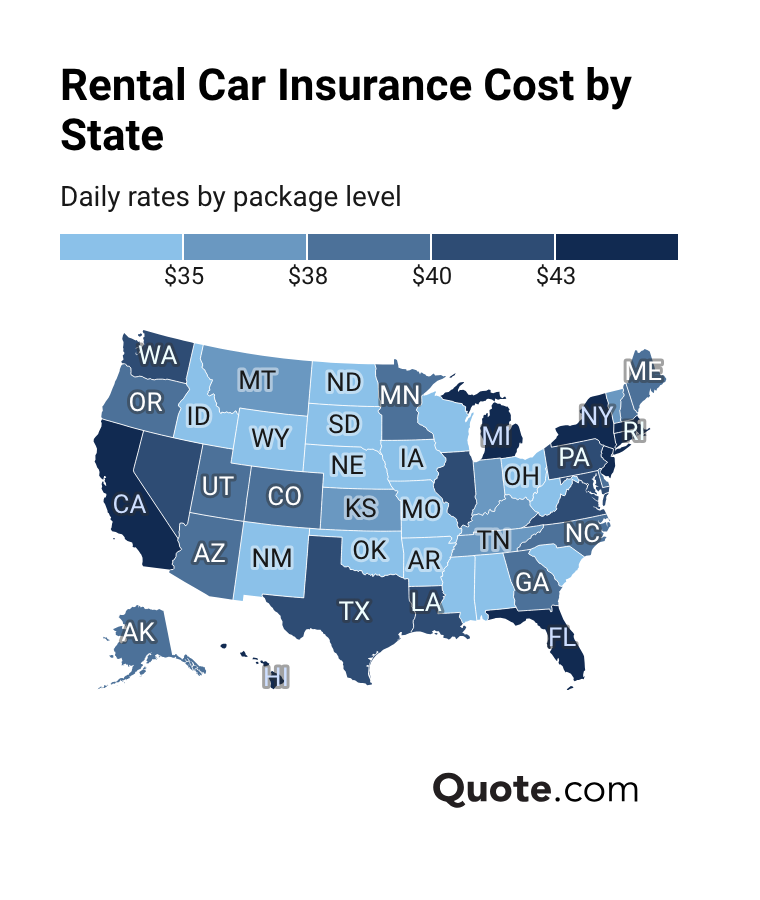
Where you live can affect how much rental car insurance costs, as different states have various regulations and risk factors. All of these costs reflect more liability exposure and figures determined by market conditions.
In Kansas, where pricing is moderate, basic coverage may run about $15 a month, while premium coverage costs approximately $51 a month.
Costs in Washington are typically higher. Basic coverage averages $19 a month, up to $29 a month for standard, and up to $58 a month for premium.
In Minnesota, per package coverage ranges from $17 to $55 a month. As you shop for coverage, review the best auto insurance companies in Minnesota to clarify local pricing trends and find coverage that is within budget.
How Deductibles Impact Rental Car Insurance Expenses
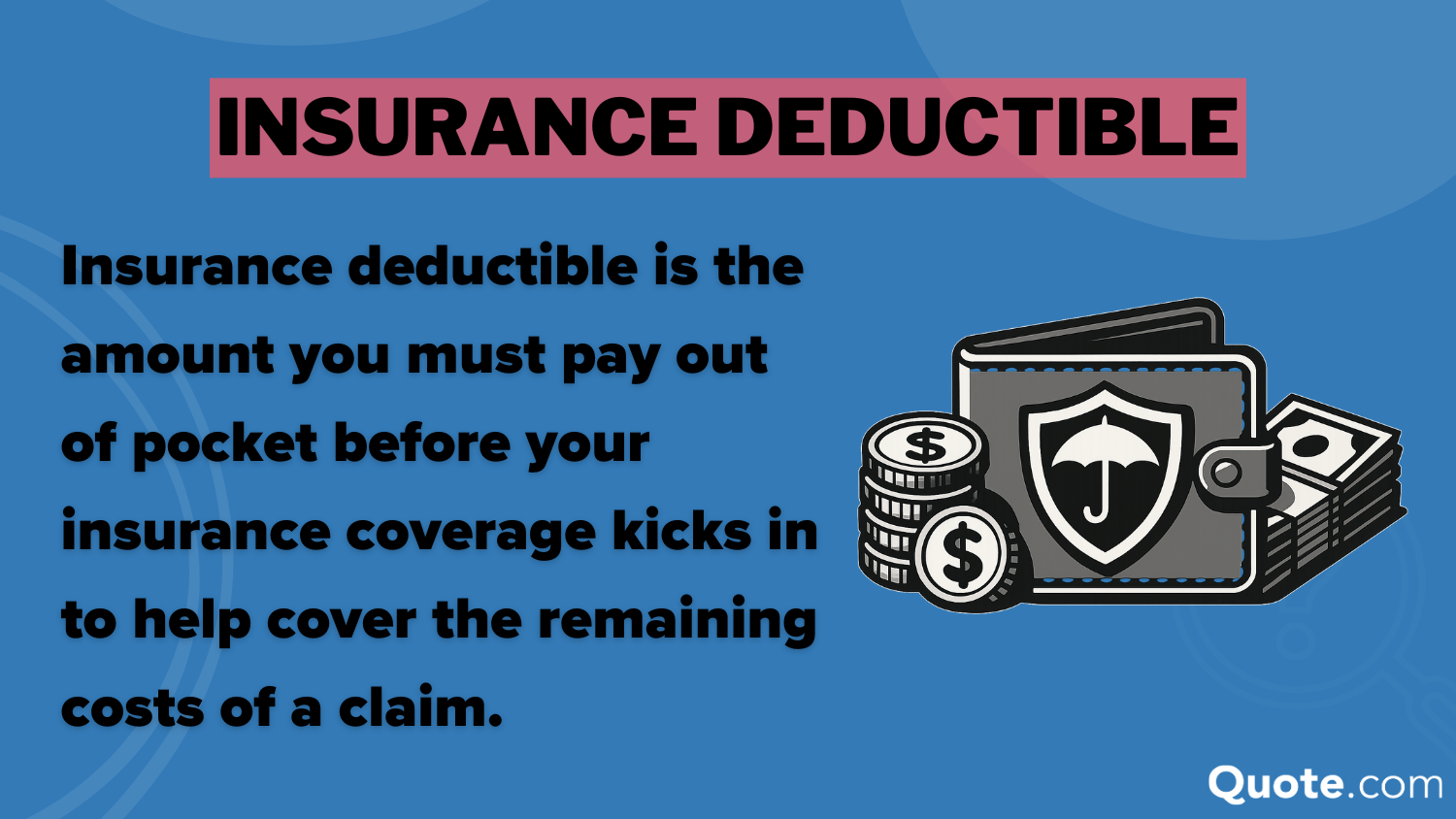
Rental car insurance deductibles are the amount you pay before your coverage kicks in, and that number has a direct impact on how much money you stand to lose.
You would owe nothing for covered damage with a $0 deductible, providing the maximum protection.
Rental Car Insurance Deductibles vs. Out-of-Pocket Costs| Deductible | Out-of-Pocket | Severity |
|---|---|---|
| $0 | $0 if covered | No added cost |
| $500 | $500 per claim | Medium risk |
| $1K | $1K per claim | Higher risk |
| $2K | $2K per claim | Full loss risk |
A $500 deductible means you are responsible for that amount per claim, creating moderate risk if an accident occurs.
At $1,000, your share of the cost becomes more significant, especially for minor damage, when compared to the average cost of auto insurance and typical claim expenses.
A $2,000 deductible leaves you covering a substantial portion of the loss before insurance pays, increasing your out-of-pocket burden.
Reviewing the deductible carefully helps you decide whether paying more upfront for lower risk makes sense for your rental.
How Rental Auto Insurance Saves on Repair Costs
Auto rental insurance can provide significant financial protection against the potentially high out-of-pocket costs associated with vehicle damage.
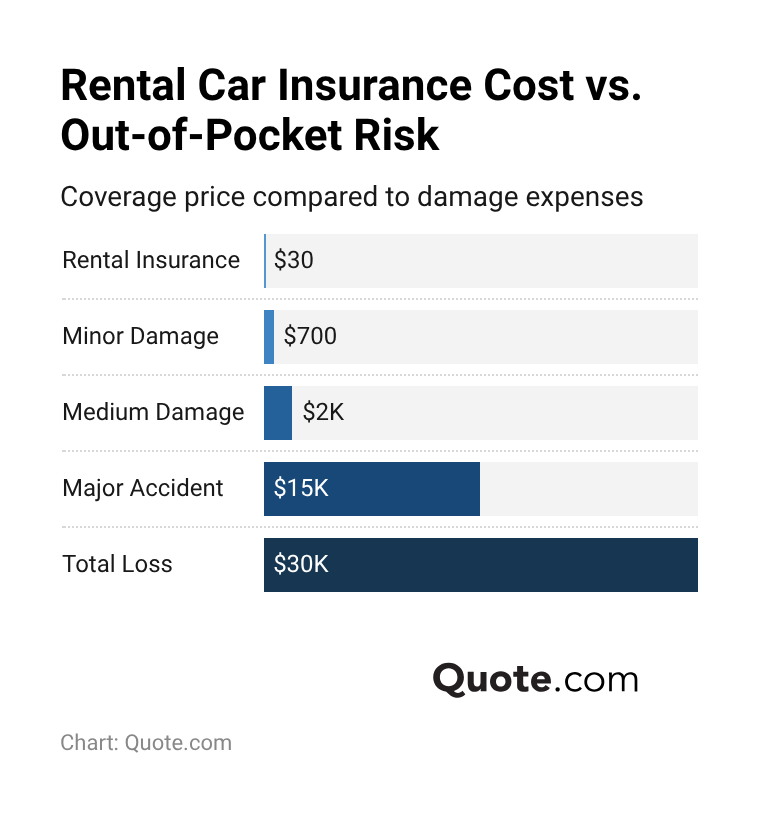
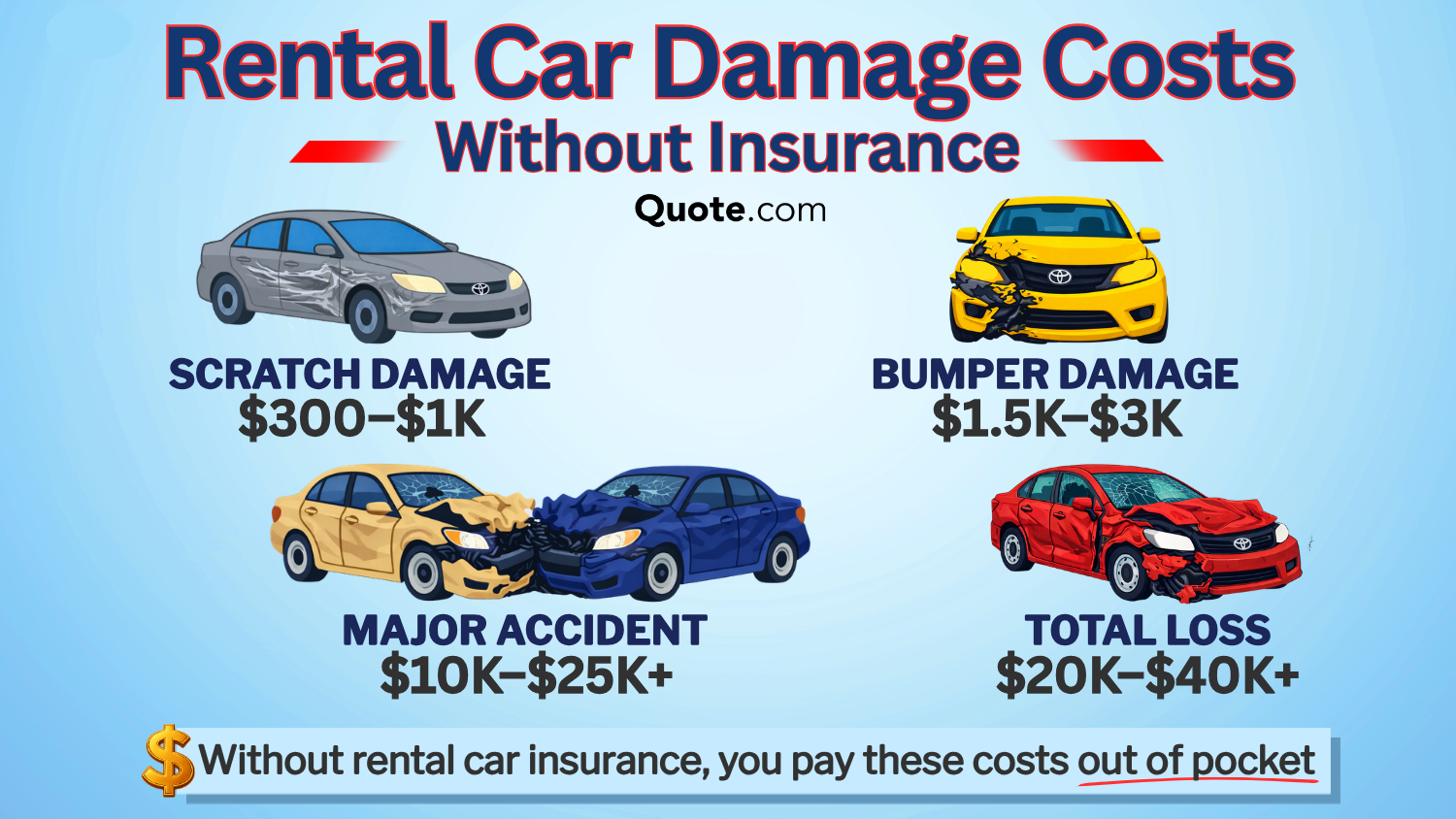
While a typical rental insurance plan may cost around $30, the expenses from even minor incidents can quickly exceed that amount. Small issues like scratches, dents, or minor bumper damage can cost about $700 to repair.
More substantial damage from moderate collisions can reach approximately $2,000, and major accidents may result in repair bills of around $15,000.
In severe cases, like a total loss from a crash or theft, costs can reach $30,000. Collision insurance helps protect renters from these major expenses for a relatively small upfront cost.
Primary and Secondary Rental Car Coverage
When your rental car is damaged or stolen, primary and secondary coverage determine how a claim is handled.
In the case of primary coverage, the rental policy pays first, allowing you to file directly with your rental provider and bypassing your own auto insurance. This allows you to avoid deductibles and rate increases.
Credit Card Rental Insurance: Primary vs. Secondary| Category | Primary | Secondary |
|---|---|---|
| Best Use | Avoid personal claims | Have existing auto policy |
| Claim Order | File with card issuer first | File with auto insurer first |
| Coverage Scope | Covers damage and theft | Covers remaining costs |
| Damage Type | Rental car damage only | Rental car damage only |
| Eligibility Rules | Use card and decline CDW | Use card & have auto plan |
| Exclusions | No liability or medical | No liability or medical |
| Geographic Limits | Limited by rental location | Often limited by location |
| Payout Timing | Pays before other insurance | Pays after auto insurance |
| Premium Impact | No impact on premiums | May increase premiums |
Secondary coverage works differently. It applies only after your personal auto policy has been used, meaning that you’ll need to submit a claim to your insurer before anything else. It can then cover other costs, such as deductibles or unpaid repair bills.
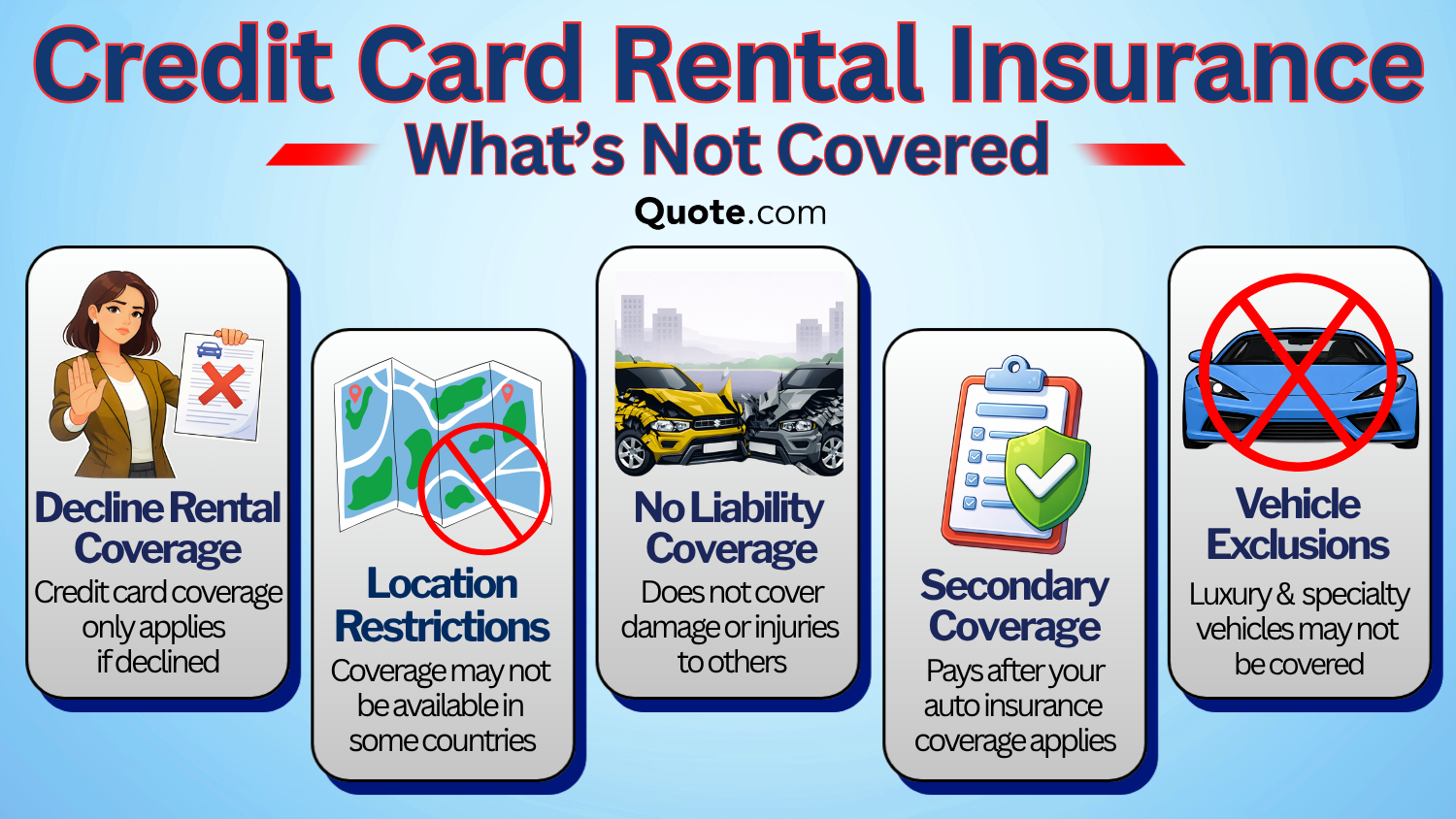
Coverage from both types typically applies to rental car damage or theft, but doesn’t cover liability or medical expenses. They will also require you to pay with that card and decline the rental company’s CDW.
Primary coverage provides more immediate protection with fewer hassles, but secondary coverage serves as backup to lower out-of-pocket costs after your main policy has paid.
It can be a practical option if you already have solid insurance in place and just want extra support for insurance deductibles or smaller remaining expenses.
Top Credit Cards That Offer Rental Car Coverage
Choosing the right credit card for rental car insurance, along with comparing options from the best car insurance companies, can help you avoid paying extra at the rental counter while still staying protected.
Certain cards provide primary coverage, which pays first and spares you from having to tap your personal auto insurance. Others offer secondary coverage, so that you’ll have to file with your insurer before the card benefits kick in.
8 Best Credit Cards for Rental Car Insurance| Card | Type | Highlights |
|---|---|---|
| American Express Platinum | Secondary | Paid, premium plan upgrade |
| Bilt Mastercard | Primary | No annual fee, travel rewards |
| Capital One Venture X | Primary | Premium card, high limits |
| Chase Sapphire Preferred | Primary | Popular mid-tier travel card |
| Chase Sapphire Reserve | Primary | Higher limits, premium perks |
| Citi Premier Card | Secondary | Limited protection benefits |
| United Explorer Card | Primary | Standard rental cars only |
| Wells Fargo Autograph Card | Secondary | No annual fee, basic rewards |
Understanding this difference is key, especially if you want to avoid deductibles or potential rate increases.
Cards like the Capital One Venture X, Chase Sapphire Preferred, Chase Sapphire Reserve, Bilt Mastercard, and United Explorer Card stand out for offering primary coverage along with travel rewards.
American Express Platinum, Citi Premier, and Wells Fargo Autograph offer secondary coverage, which can be handy for paying for deductibles or other expenses after a claim is made.
By matching your card to your travel habits and coverage needs, you can get solid rental protection without overpaying, while still knowing where the gaps are and when extra coverage may be worth it.
How Rental Auto Insurance Differs by Coverage Source
Insurance coverage for rental cars varies based on whether it’s provided by the rental company, your own auto policy, or your credit card.
Rental company coverage tends to be the most comprehensive, as it typically covers both damage to and theft of the vehicle through a CDW, liability for injuries to others or property damage, optional lost-use coverage, and wider coverage abroad.
Rental Car Insurance: Company vs. Personal vs. Credit Card| Coverage Area | Rental Company | Personal Auto | Credit Card |
|---|---|---|---|
| International Use | With CDW | Rarely covered | Country limits |
| Liability to Others | Often included | If included in plan | Not included |
| Loss of Use Fees | Add-on option | Often excluded | Often excluded |
| Rental Car Damage | With CDW | With collision | If benefit applies |
| Theft Protection | With CDW | If included in plan | Eligible theft only |
Personal auto insurance can cover rental car damage and liability if your policy includes collision and liability protection, but it often excludes loss of use fees and may not apply outside your home country.
Credit card coverage usually applies only to rental car damage or theft. It excludes liability, loss of use fees, and may not apply in some countries. Read More: Cheapest Liability-Only Auto Insurance
Understanding Rental Car Policy Exclusions
Rental car insurance restrictions list specific situations in which coverage does not apply, so understanding the exclusions can help renters avoid being hit with costs.
Most of those policies won’t cover vehicles used for commercial purposes, like deliveries, ridesharing, or transporting goods for profit. Coverage is also excluded if an accident takes place while the driver is impaired by drugs or alcohol.
Rental Car Insurance Restrictions Explained| Exclusions | What it Means |
|---|---|
| Commercial Use | Use for business or delivery is not covered |
| DUI/DWI Incidents | No coverage if driving under the influence |
| Improper Rental Use | Damage from misuse or neglect is excluded |
| Intentional Damage | Damage caused on purpose is not covered |
| Off-Road Driving | Driving off marked roads voids coverage |
| Racing Activities | Damage from racing activities is not covered |
| Unauthorized Users | Only listed drivers on rental are covered |
Damage caused by misuse, neglect, or intentional acts is not covered. Off-road driving, racing, or speed contests also void protection and can lead to denied claims.
Coverage applies only to authorized drivers, and damage caused by an unapproved driver may become your responsibility. Understanding this and knowing how to file an auto insurance claim and win can help prevent denied claims and unexpected costs.
Rental Auto Insurance Tips for International Travel
Rental car insurance differs from the kinds of coverage you might have for domestic travel. Some countries ask for proof of coverage at the border, and your personal auto policy may not cover you outside your home territory.
Credit card rental benefits often exclude certain countries, and local laws may require you to purchase insurance from the rental provider regardless of other coverage.
International Rental Car Insurance: What to Know| Situation | What to Expect |
|---|---|
| Border Rules | Proof of policy may be required |
| Credit Card Limits | Some countries are excluded |
| Driving Conditions | Road conditions may raise risk |
| Local Insurance Rules | Local coverage may be required |
| Policy Territory Limits | Policies may not apply abroad |
| Rental Company Rules | Rules vary by rental provider |
| Required Documents | Special permit may be required |
| Road Restrictions | Off-road use can void coverage |
Road conditions can increase risk, especially when animals or natural disasters damage your vehicle, and rental companies may limit cross-border travel.
Other documents you might require include an International Driving Permit. Driving off-road is typically excluded, and could nullify coverage altogether.
Reviewing all policy terms and local requirements before your trip helps prevent gaps in coverage and unexpected costs.
Don’t Miss It: Best Travel Insurance Companies
Free Auto Insurance Comparison
Compare Quotes From Top Companies and Save
Get the Best Rental Car Insurance for Your Trip
Rental car insurance provides important protection against expensive repairs and liability claims, especially considering that base rates can be as cheap as $10 per day from Thrifty or $16 per day from Hertz.
Its greatest strength is financial protection, such as comprehensive auto insurance, covering damage, theft, and third-party liability, which can easily run into the thousands.
However, they do have drawbacks, such as overlapping coverage with personal auto policies or credit cards, additional daily charges, even when using car rental discounts, and exclusions that can limit protection.
Search for providers, examine deductibles, and review your benefits to get rental car insurance that fits your budget and your trip. Get a car insurance for a rental quote today with our quote comparison tool.
Frequently Asked Questions
What’s the best way to insure a rental car?
Check your auto insurance and credit card benefits before you buy rental car insurance online or at the counter. If you do not have collision or liability coverage, consider the rental company’s plan to avoid high out-of-pocket costs. Choose coverage that fills holes, not duplicate protection.
How do I know if my auto insurance policy covers a rental car?
Check your auto policy or call your insurer to make sure it applies to rental cars as well. If you have collision and liability coverage, it generally extends to rentals. Always check specifics before rejecting coverage from the rental company.
Find the best rental car insurance rates for your trip by entering your ZIP code in our free comparison tool.
How does insurance work on rental cars?
Rental car insurance covers damage, theft, and liability, with costs that vary similarly to auto insurance rates by vehicle. Coverage may come from the rental company, your policy, or a credit card, depending on whether it’s primary or secondary.
When do you need rental car insurance?
You may need rental car insurance if your auto policy or credit card doesn’t fully cover damage or liability when renting a vehicle. It also matters if you travel abroad or don’t carry collision coverage. Having the appropriate coverage can keep high out-of-pocket costs at bay following an accident.
Does rental car insurance cover roadside assistance?
Rental car insurance may include roadside assistance, if you choose that option or if it’s already part of your package. It generally includes towing, flat-tire changes, lockouts, or dead batteries. Roadside assistance is not typically covered by credit cards.
Get More Details: AAA Roadside Assistance Review
Who offers the best rental insurance?
Our auto insurance guide shows Dollar at $9 per day, Thrifty at $10, and Avis at $11 as the lowest basic rental insurance rates. Alamo at $14 and Hertz at $16 per day offer a strong balance of price and service, depending on your coverage needs.
Can I drive a rental car with my own insurance?
If you have collision and liability coverage on your personal auto insurance policy, you typically can drive a rental car with that same coverage. Often, your coverage extends to rental cars for personal use. You may want to read the fine print for limits, exclusions, and coverage outside your home country.
Use our free online comparison tool to find affordable rental car insurance that supplements your existing policy.
How much is rental car insurance?
Rental car insurance usually costs $4–$30 per day, with basic coverage cheaper and CDW/LDW options costing more. Prices vary by company and location.
What does rental insurance cover you for?
Rental insurance protects against damage and theft of the rental vehicle, just like the protections featured in the best anti-theft auto insurance discounts. It also may include liability coverage for injuries or property damage, although the details differ by plan and add-ons.
What happens if you lightly damage a rental car?
When you get a rental car with mild damage, the company will inspect it and charge you for repairs. You may end up paying little or nothing if you have a CDW or qualifying insurance. Without coverage, you’ll probably pay the repair bill and any associated fees out of pocket.
Which credit card covers rental car insurance?
What does “no deductible” mean on a car rental?
Should you get liability insurance on a rental car?
What is rental car excess insurance?
Will my insurance pay for a rental?
Related Articles
-
Apr 2026

How to Buy Insurance for a New Vehicle in 2026
-
May 2026

10 Best Auto Insurance Companies in Virginia (2026)
-
Apr 2026
Does auto insurance cover vehicle theft?
-
Jun 2026
American Family vs. Travelers in 2026
-
Apr 2026
Cheapest Car Insurance in 2026
-
Nov 2025

10 Best Auto Insurance Companies in South Carolina (2026)

Get a FREE Quote in Minutes
Insurance rates change constantly — we help you stay ahead by making it easy to compare top options and save.