Cheap Rideshare Insurance in 2026
Mercury, Geico, and State Farm offer the cheapest rideshare insurance, with rates starting at just $42 a month. You can also lower your premiums with Farmers' safe driver discounts of up to 20%. The best rideshare insurance combines personal coverage with a hybrid policy to cover the gaps while you work.
Read more





Table of Contents
Table of Contents

Insurance Content Creator
Lia Vergin develops both video and written content across all lines of insurance, with a primary focus on auto, home, and life coverage. She is dedicated to helping consumers better understand and navigate their insurance options. Driven by a passion for saving money and finding great deals, she is committed to creating clear, engaging, and practical content that empowers readers to make confident...
Lia Vergin

Managing Editor
Laura Kuhl holds a Master’s Degree in Professional Writing from the University of North Carolina at Wilmington. Her career began in healthcare and wellness, creating lifestyle content for doctors, dentists, and other healthcare and holistic professionals. She curated news articles and insider interviews with investors and small business owners, leading to conversations with key players in the le...
Laura Kuhl

Licensed Insurance Broker
Zach Fagiano has been in the insurance industry for over 10 years, specializing in property and casualty and risk management consulting. He started out specializing in small businesses and moved up to large commercial real estate risks. During that time, he acquired property & casualty, life & health, and surplus lines brokers licenses. He’s now the Senior Vice President overseeing globa...
Zach Fagiano
Updated March 2026
The top picks for cheap rideshare insurance are Mercury, Geico, and State Farm. Mercury rates start at $42 per month, even for drivers with past violations, keeping costs low.
- Rideshare endorsements or hybrid policies are needed for coverage gaps
- State Farm connects personal, app-on time with commercial coverage
- Mercury’s $42 per month rideshare rates stay low, even with poor credit
Geico is unique in offering a standalone rideshare policy that covers full-time drivers without requiring a personal auto policy, and full coverage starts at $114 per month.
State Farm stands out for its strong post-claim rate stability, high availability, and near-nationwide rideshare endorsement, making it a top bet for full-time or part-time drivers.
10 Best Companies: Cheapest Rideshare Insurance| Company | Rank | Monthly Rates | Claims Satisfaction | Best for |
|---|---|---|---|---|
 | #1 | $42 | 701 / 1,000 | Young Drivers |
 | #2 | $43 | 697 / 1,000 | Budget Drivers |
 | #3 | $47 | 716 / 1,000 | Driver Support |
 | #4 | $53 | 691 / 1,000 | Trip Coverage |
 | #5 | $62 | 702 / 1,000 | Policy Perks |
 | #6 | $63 | 729 / 1,000 | Claim Stability |
 | #7 | $65 | 718 / 1,000 | Service Quality |
 | #8 | $76 | 690 / 1,000 | Coverage Options |
 | #9 | $87 | 693 / 1.000 | Ride Protection |
 | #10 | $96 | 730 / 1,000 | Accident Benefits |
These companies offer a nice balance between rates, coverage, and driver-specific coverages, making them a top choice for rideshare professionals who don’t want to pay for traditional commercial auto insurance.
Finding cheap rideshare insurance quotes is easy. Simply enter your ZIP code into our free comparison tool to instantly compare rideshare insurance rates near you.
Compare Rideshare Insurance Rates
Mercury, Geico, and State Farm offer the lowest rates on rideshare insurance at $42 a month for minimum coverage, but they have more than low prices in common.
Mercury stands out as the cheapest rideshare insurance company, offering consistently low rates, strong accident benefits, and competitive options, even for drivers with past violations like DUIs.
Rideshare Auto Insurance Monthly Rates by Coverage Level| Insurance Company | Minimum Coverage | Full Coverage |
|---|---|---|
| $87 | $228 |
| $62 | $166 |
| $65 | $215 |
| $76 | $198 |
| $43 | $114 |
| $96 | $248 |
| $42 | $110 |
| $63 | $164 |
| $47 | $123 |
| $53 | $141 |
State Farm offers both affordability and top-notch customer service, plus rideshare endorsements that continue coverage between your personal and app-on time for full-time drivers.
Geico offers cheap full coverage auto insurance at $114 per month, plus a hybrid policy that eliminates gaps between personal and commercial use, streamlining coverage for gig workers.
American Family stands out for flexible, customizable coverage and local agents who tailor policies to fit both part-time and full-time rideshare drivers.
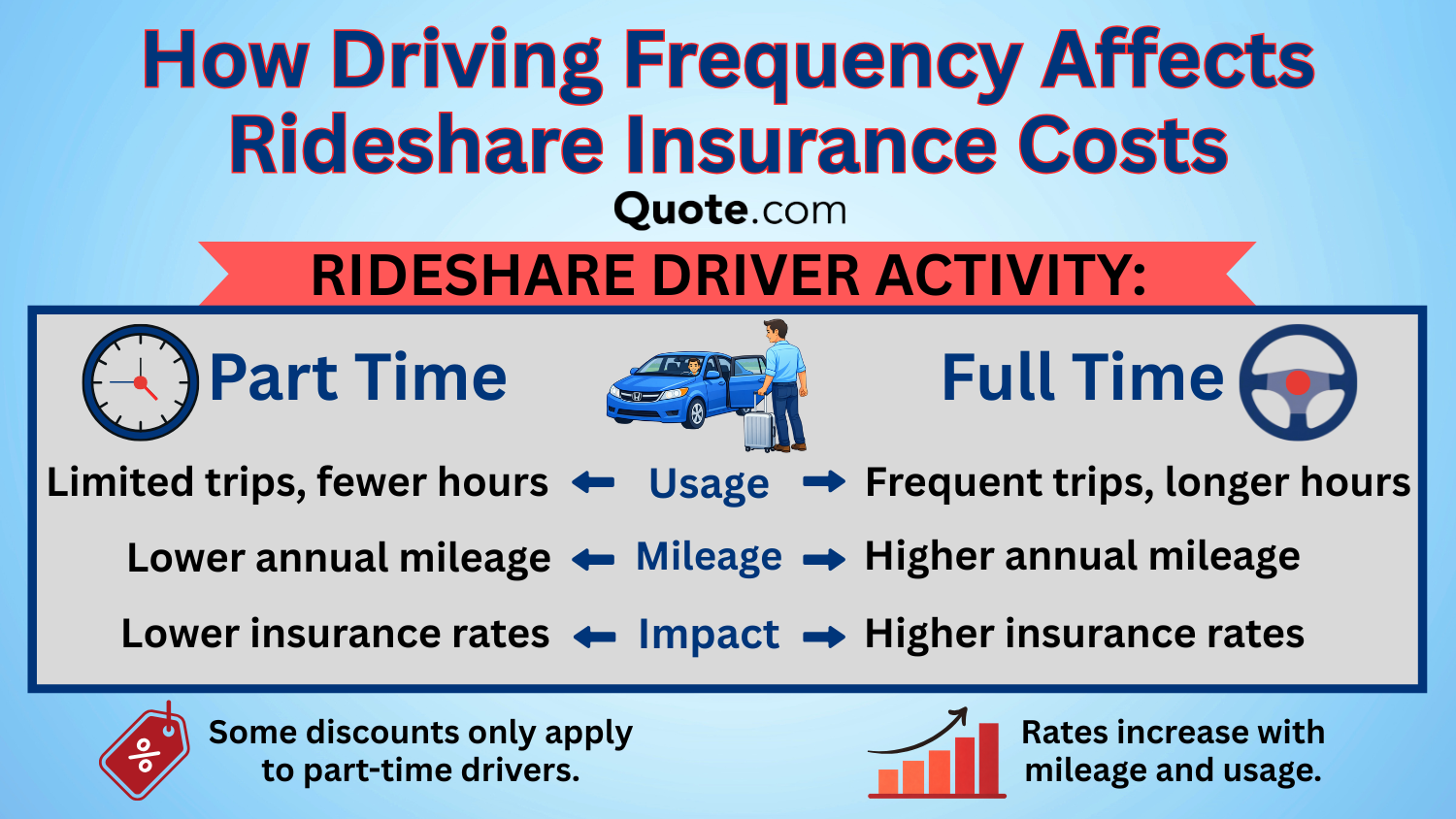
Your rideshare insurance rates will fluctuate depending on how often you work and when. Not every insurer is as flexible with their rideshare coverage, so shop around for a provider that fits your driving habits.
Insurance for rideshare drivers should offer long-term dependability and support beyond just price. Use our free comparison tool to find the right company for you.
How Age Affects Rideshare Insurance Costs
Before reviewing rideshare insurance rates by age, it’s important to understand how age affects eligibility and the average cost of auto insurance.
Most rideshare companies, including Uber, require drivers to be at least 21, but many set the minimum age at 25, making it harder for younger drivers to qualify for cheap Uber insurance.
While 21 is the technical minimum, many drivers may not meet all qualifications until 25, for both regulatory and affordability reasons. Many states raise the age to 25 to meet commercial insurance rules, local regulations, and underwriting standards.
Age has a big impact on how much you’ll pay for rideshare insurance, especially if you’re under 25. Request that your policy be rerated next time you renew.
Melanie Musson Published Insurance Expert
Assuming you meet the age criteria, a valid U.S. license (usually for one year), a clean driving record and background check, an eligible vehicle, and an insurance policy are required to be a rideshare driver.
How do rideshare insurance costs vary by age? Motorists under 25 often pay higher rates, while experienced drivers often receive lower rates. Geico and Mercury are among the cheapest rideshare insurance providers for drivers of all ages.
Rideshare Auto Insurance Monthly Rates by Age| Company | Age: 21 | Age: 25 | Age: 35 | Age: 45 |
|---|---|---|---|---|
| $121 | $102 | $93 | $87 |
| $92 | $78 | $69 | $62 |
| $96 | $81 | $72 | $65 |
| $116 | $98 | $87 | $76 |
| $59 | $50 | $46 | $43 |
| $141 | $119 | $107 | $96 |
| $61 | $52 | $46 | $42 |
| $96 | $81 | $71 | $63 |
| $71 | $60 | $53 | $47 |
| $74 | $62 | $56 | $53 |
However, while these two companies top the charts in price, State Farm and American Family offer more than just cost savings. State Farm offers strong value with seamless rideshare coverage and support.
American Family offers flexible coverage and local support, which could make it a great option for cheap auto insurance for teens. While Mercury and Geico lead on price, these top picks balance value and reliability.
Compare Rideshare Insurance Costs Based on Location
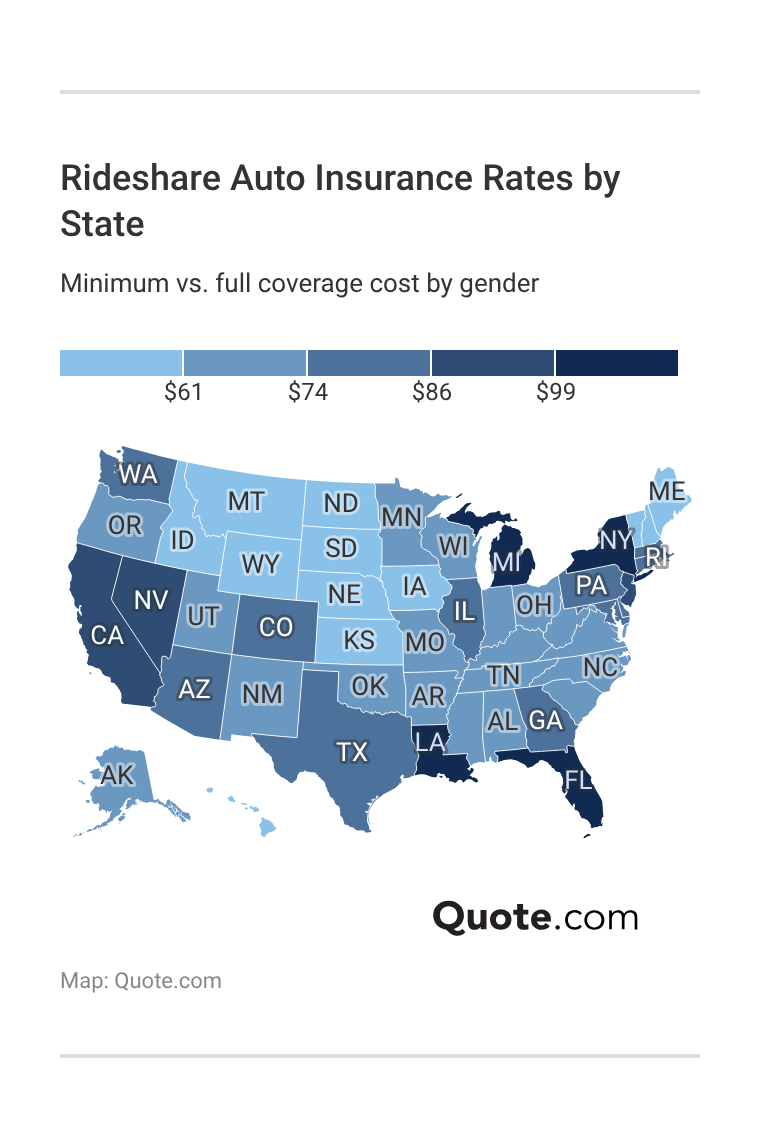
The best rideshare insurance companies often have very affordable policies for different types of drivers and can vary significantly by state and gender, as local laws, claims data, and the insurer’s underwriting practices all factor into pricing.
In all states, minimum and full coverage are more expensive for male drivers because men tend to take more risks and are more likely than women to file claims. Learn More: Auto Insurance Rates by State
In Wyoming, both male and female drivers enjoy some of the lowest rideshare insurance rates nationwide, with full coverage auto insurance under $115 a month.
California has the highest rideshare rates, with premiums up to $199 per month. Illinois offers mid-range pricing, with full coverage averaging $160–$170 per month.
How Driving Record Affects the Cost of Rideshare Insurance
Mercury, Geico, and State Farm offer the cheapest rideshare insurance policies for all types of driving records, so they’re good options whether you have a clean record or have had past incidents.
Mercury leads with the lowest rates overall, offering cheap auto insurance after a DUI at just $70 per month, well below most competitors.
Rideshare Auto Insurance Monthly Rates by Driving Record| Company | Clean Record | One Accident | One DUI | One Ticket |
|---|---|---|---|---|
| $87 | $124 | $152 | $103 |
| $62 | $94 | $104 | $73 |
| $65 | $99 | $123 | $81 |
| $76 | $109 | $105 | $95 |
| $43 | $71 | $117 | $56 |
| $96 | $129 | $178 | $116 |
| $42 | $62 | $70 | $52 |
| $63 | $88 | $129 | $75 |
| $47 | $57 | $65 | $53 |
| $53 | $76 | $112 | $72 |
Geico is another budget-friendly option, especially for those with clean records or a single ticket, with rates starting at $43 per month and remaining relatively low for minor violations.
State Farm really shines with exceptionally consistent pricing across each infraction. DUI rates are the lowest at $65 a month.
Consistency in pricing like that is uncommon, and it’s especially valuable for drivers looking for reliable coverage without a dramatic rate increase.
Some rideshare companies may require high-risk drivers to carry higher limits, so shop around with multiple companies to find the best price on your policy.
Credit Score Impact on Rideshare Insurance Rates
Mercury, Geico, and State Farm offer some of the cheapest insurance for delivery drivers and rideshare workers alike, with competitive rates for everyone, from those with poor credit to those with excellent scores.
Mercury comes in the lowest across the board, with a minimum of $42 per month for excellent credit and staying below $90 a month even with poor credit.
Rideshare Auto Insurance Monthly Rates by Credit Score| Company | Excellent (800+) | Good (670–799) | Fair (580–669) | Poor (<580) |
|---|---|---|---|---|
| $87 | $102 | $128 | $171 |
| $62 | $74 | $93 | $126 |
| $65 | $78 | $99 | $136 |
| $76 | $90 | $117 | $158 |
| $43 | $51 | $66 | $92 |
| $96 | $113 | $144 | $198 |
| $42 | $49 | $62 | $88 |
| $63 | $75 | $95 | $131 |
| $47 | $55 | $70 | $99 |
| $53 | $63 | $80 | $113 |
State Farm could be more expensive, but it provides long-term stability in your costs, strong customer satisfaction ratings, and highly available rideshare endorsements consistently across credit levels.
Though Mercury and Geico lead on pricing, State Farm remains a top choice for those seeking more than just the cheapest car insurance by offering strong support and stable coverage.
Free Auto Insurance Comparison
Compare Quotes From Top Companies and Save
Recommended Rideshare Insurance Coverage
Rideshare drivers operate in a unique space between personal and commercial vehicle use. Whether you’re driving full-time for platforms like Uber or Lyft or picking up a few rides a week, it’s critical to have the right type of insurance.
Most personal auto insurance policies don’t cover you when you’re actively driving for a rideshare company, creating costly gaps, especially when the app is on, and you’re roaming, but you haven’t accepted a ride.
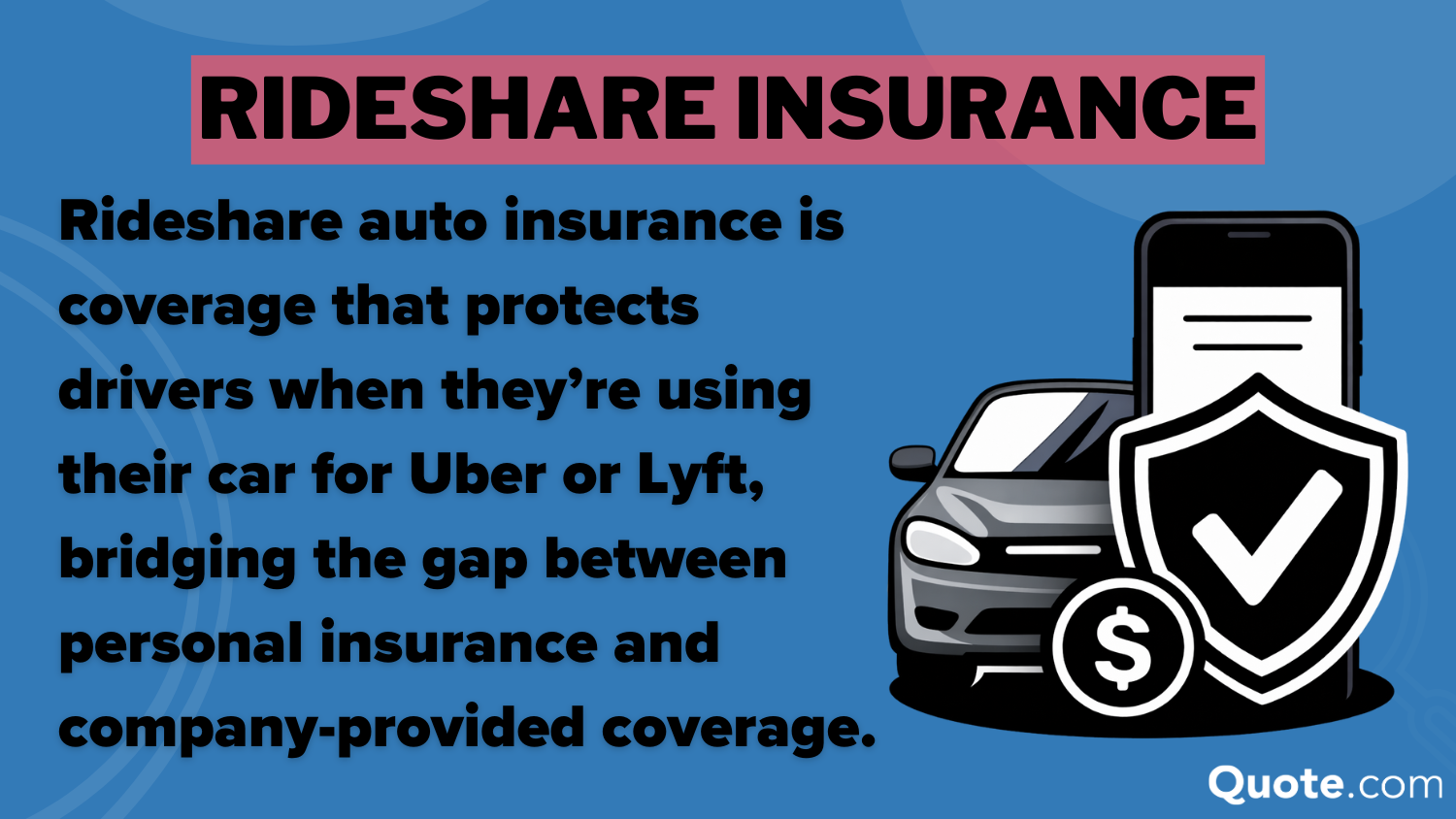
To address this, several types of policies and coverage layers are available. These range from full commercial auto insurance designed for high-frequency drivers to rideshare endorsements that supplement your personal policy.
Additionally, rideshare companies themselves provide limited platform coverage during specific periods of the ride, but this often includes high deductibles and excludes certain protections.
Types of Rideshare Insurance Policies| Policy Type | Driver Use | Cost Impact |
|---|---|---|
| Commercial Auto | Full-time rideshare | Highest premiums |
| Rideshare Add-On | Part-time rideshare | Moderate increase |
| Personal Auto | Personal driving only | Lowest premiums |
| Platform Coverage | Active app-based trips | Included during trips |
For those who drive part-time or occasionally, a rideshare add-on, also known as a rideshare endorsement, can be added to a standard personal auto policy, offering necessary protection with only a moderate increase in cost.
Car insurance for Uber drivers often falls short during app-on time, especially in Period 1, when personal policies exclude coverage and platform insurance is limited.
In these moments, your rideshare endorsement or hybrid policy kicks in to extend your personal coverage to business use.
If you have liability, it will cover damages or injuries you cause to someone else, but add comprehensive and collision to protect your car.
- Collision Coverage: This pays to fix or replace your car after a crash, no matter who is at fault. Read More: Collision vs. Comprehensive Auto Insurance
- Comprehensive Coverage: Protects you against non-crash incidents such as theft, vandalism, or weather damage. Optional, but it will provide better overall security.
- Liability Coverage: Protects other people against injury or property damage to others due to the aircraft that you own or operate.
- Rideshare/Commercial Endorsement Coverage: It provides coverage when the app is on, but before a ride has been accepted.
- Uninsured/Underinsured Motorist Coverage (UM/UIM): Helps pay for your expenses if you’re struck by a driver with insufficient or no insurance.
Meanwhile, most rideshare platforms, such as Uber and Lyft, offer platform-provided coverage, with Uber car insurance automatically activating during active trips and while en route to pickups.
However, this coverage often includes high insurance deductibles and limited protection between rides. Drivers will want to consider adding more coverage options to have a plan that is as strong and dependable.
Rideshare Insurance Coverage Periods
Rideshare insurance is divided into different periods that dictate when and how much coverage you get when driving for companies such as Uber or Lyft. Period 0 is when the app is off, and your personal auto insurance applies.
Period 1 begins when the app is on, but no ride is accepted yet, creating a common coverage gap with limited liability protection. Period 2 starts after accepting a ride, triggering more comprehensive coverage from the rideshare platform.
Period 3 is when you are driving with the passenger in your car; you have full coverage, including liability and collision auto insurance. You would also have comprehensive coverage if it is included in your policy.
To avoid being underinsured, drivers should be aware of rideshare insurance options that fill these gaps, particularly during Period 1, when they are most commonly exposed.
Ways to Save on Rideshare Auto Insurance
Qualifying for multiple discounts can really add up to significant long-term savings by reducing your premiums and helping you get more favorable pricing tiers over time.
Whether you’re new to rideshare or trying to cut costs, these tips can help you earn discounts while staying protected. Here are some of the most effective ways to save on rideshare auto insurance:
- Bundle Policies: Combine rideshare insurance with home, renters, or life coverage to earn a multi-policy discount
- Increase Your Deductible: Going for a higher deductible will reduce your monthly premium. Just be sure you have the out-of-pocket cost in case of a claim.
- Limit Driving During High-Risk Hours: Driving less at night and in heavy traffic can reduce risk and your rate.
- Maintain a Clean Claims History: There can be a claim-free discount and favorable renewal pricing for fewer claims.
- Take a Defensive Driving Course: Participating in an accredited defensive driving course can help you earn safe driver discounts and reduce points on your driving record.
Combining your auto, home, renters, and life insurance policies with a single provider can deliver significant savings and make managing your policies easier.
Another smart move is adjusting your deductible. Choosing a higher deductible typically lowers your monthly premium, but you should only do so if you have the savings to cover a potential out-of-pocket cost.
Top Rideshare Auto Insurance Discounts| Company | Loyalty | Multi-Vehicle | Safe Driver | Usage-Based |
|---|---|---|---|---|
| 15% | 10% | 18% | 30% |
| 18% | 23% | 18% | 25% |
| 13% | 25% | 15% | 25% |
| 12% | 12% | 20% | 20% |
| 10% | 25% | 15% | 30% |
| 10% | 25% | 20% | 30% |
| 10% | 20% | 8% | 20% |
| 8% | 15% | 12% | 40% |
| 6% | 20% | 20% | 30% |
| 9% | 8% | 15% | 20% |
Telematics or usage-based insurance programs can further lower rates by tracking safe driving habits, such as avoiding late-night or rush-hour driving, which are considered higher risk.
Ultimately, maintaining a clean driving record and avoiding claims over time is one of the most effective ways to qualify for the best insurance for rideshare drivers at the lowest possible rates.
Rideshare insurance costs increase as coverage rises. Match your limits to how often you drive.
Dani Best Licensed Insurance Agent
Insurers offer better rates to low-risk drivers because they assume you’re less likely to be involved in an accident or file claims.
Whether you’re driving part-time or full-time, consistent safe driving can lead to long-term savings and access to premium discounts.
Free Auto Insurance Comparison
Compare Quotes From Top Companies and Save
The Cheapest Rideshare Insurance Companies
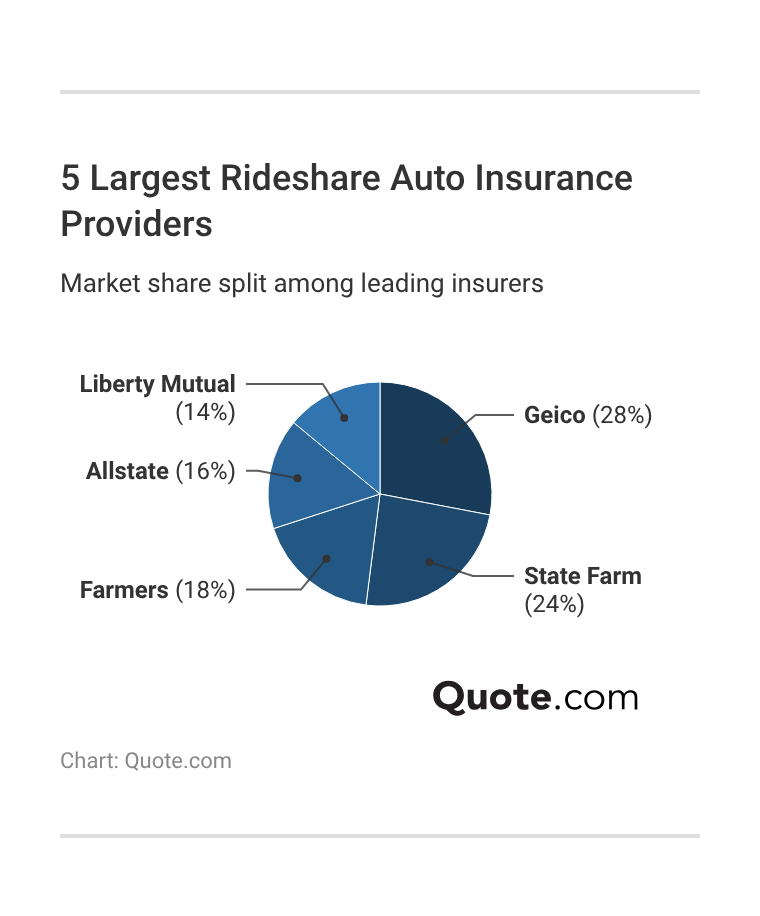
Geico, State Farm, and Allstate stand out for their wide range of affordability, coverage options, and customer service.
Although it doesn’t have the lowest starting price, Geico is already the most affordable for people who just want a minimal policy and need to get covered quickly without an agent.
State Farm is also the best rideshare insurance option because of its unmatched agent network, strong customer service, and competitive pricing.
Allstate, Farmers, and Liberty Mutual have higher premiums but offer more comprehensive auto insurance options for rideshare drivers with new cars or unique coverage needs.
#1 – Mercury: Top Pick Overall
Pros
- Lowest Base Rate: Through our evaluation of Mercury, we found it delivers quality rideshare insurance at a highly competitive $42 monthly rate.
- Consistent Age Rates: Mercury offers affordable rideshare coverage for drivers of all ages, ranging from $42 a month for 45-year-old drivers to $61 a month for 21-year-olds.
- DUI-Friendly Pricing: With or without a DUI, Mercury offers low-cost rideshare insurance at just $70 per month, making it a smart option for high-risk drivers.
Cons
- Low Discount Range: Mercury rideshare insurance discounts are limited 8% safe drivers and 20% usage-based.
- Agent Reliant: Mercury’s rideshare insurance often requires working with an agent for quotes and policy changes, which can be slower compared to fully online providers.
#2 – Geico: Best for Budget Drivers
Pros
- Low Entry Rates: Geico offers affordable rideshare insurance from $43 per month for excellent credit. Find Out More: Geico Insurance Review
- Hybrid Policy Option: Geico’s rideshare insurance blends personal and commercial coverage, reducing the risk of app-on coverage gaps.
- Efficient Online Tools: Geico rideshare insurance can be easily purchased online, with quick digital claims and rapid policy updates for drivers on a budget.
Cons
- Sharp DUI Increases: A single DUI puts the average rideshare insurance bill at $117 a month, a sharp spike from prices for clean drivers.
- Higher Post-Accident Rates: After an accident, your premium can increase to as much as $71 per month with Geico rideshare coverage, reducing the discount for some drivers.
#3 – State Farm: Best for Driver Support
Pros
- Reliable Customer Support: Known for strong agent support, which can be beneficial in explaining rideshare insurance options available to drivers in most U.S. states.
- Smooth Claims Handling: In our review of State Farm, we found its claims process to be smooth and efficient, just what full-time rideshare drivers need.
- Widely Available Endorsements: State Farm rideshare endorsement is available in most states and helps close the gap between personal and app-on driving time.
Cons
- Higher Poor Credit Rates: State Farm rideshare insurance can reach $99 per month for poor credit, often higher than Mercury or Geico.
- Limited Usage Discounts: State Farm rideshare insurance may not match 30%–40% telematics savings offered by some competitors.
#4 – Travelers: Best for Trip Coverage
Pros
- App-On Protection: Rideshare insurance covers Period 1, reducing gaps before you’re matched with a rider. What To Know: Travelers Auto Insurance Review
- Trip-to-Trip Continuity: Coverage begins when the trip starts and continues through drop-off, reducing gaps in coverage when a ride is not accepted.
- Accident Flexibility: Travelers’ rideshare insurance covers claims during the time you are driving, which can help avoid a denial based on app usage during an accident.
Cons
- State Restrictions Apply: Trip coverage rideshare insurance may not be available in all states, restricting some drivers from access based on location.
- Limited Customization: Some rideshare insurance policies offer more flexible trip coverage options than what’s currently available through this provider.
#5 – American Family: Best for Policy Perks
Pros
- Customizable Coverage Options: Provides rideshare insurance benefits and optional coverage options that drivers are able to customize.
- Multi‑Vehicle Savings: Rideshare drivers can reduce costs by up to 23% by bundling multiple vehicles, according to our review of American Family.
- Bundle Incentives: Offers of discounts to drivers who bundle their rideshare insurance with other policies (home, renters insurance, etc.) for additional premium benefits.
Cons
- Mid‑Tier Rewards: American Family’s rideshare insurance benefits might be more limited than the best available with competitors, especially for high-mileage rideshare drivers.
- Limited Telematics Benefits: Its rideshare insurance options may offer fewer usage‑tracking rewards for safe or low‑mileage rideshare insurance drivers.
#6 – Nationwide: Best for Claim Stability
Pros
- Post-Claim Reliability: After one accident, the cost of Nationwide’s rideshare insurance jumps to $88 a month. Learn more in our guide: Nationwide Auto Insurance Review
- Moderate DUI Impact: Even after a DUI, rideshare insurance remains manageable at $129 per month, while higher rates reflect a predictable claims-based adjustment.
- Stable Renewal Rates: Nationwide’s rideshare coverage has a lower above-the-line claim-related rate fluctuation at renewal, offering more predictable costs in the long run.
Cons
- Limited Reward Drop: Nationwide drop in rideshare coverage costs isn’t as dramatic as after a few years of clean driving, which still averages around $63 to $75 per monthly.
- Minimal First-Time Forgiveness: Nationwide’s rideshare coverage might not offer as strong first-accident forgiveness as some competitors.
#7 – Amica: Best for Service Quality
Pros
- Highly Rated Support: Our detailed review of Amica reveals strong, reliable support tailored to rideshare drivers’ needs.
- Responsive Claim Team: Rideshare drivers enjoy an efficient, friendly claims process that enables them to get back on the road in a matter of days.
- Low Complaint Volume: Amica’s complaint ratio is 0.39 per 1,000 policies (NAIC), which suggests good service quality for rideshare insurance clients.
Cons
- Outdated Digital Tools: Amica’s online experience for rideshare insurance users doesn’t flow as smoothly as those of top competitors.
- Delayed Policy Updates: Changes to rideshare insurance coverage or details can take longer to update, which isn’t ideal for drivers who need changes made quickly.
#8 – Farmers: Best for Coverage Options
Pros
- Comprehensive Protection: Drive with confidence, knowing you’re covered on every trip with rideshare insurance from our team of experienced back-end drivers.
- Custom Add‑Ons: Rideshare insurance is customizable, with extras such as accident forgiveness or roadside assistance. More Details Here: Farmers Insurance Review
- Passenger Coverage Clarity: Farmers’ rideshare covers the injuries and damage to riders involved in an accident, so you need not think twice.
Cons
- Higher Base Pricing: Coverage has its price; rideshare insurance premiums (e.g., higher for low-cost carriers versus ultra‑low-cost carriers) are higher for better benefits.
- Rigid Bundling Requirements: Some Farmers add-ons may require bundling, limiting standalone rideshare insurance options.
#9 – Allstate: Best for Ride Protection
Pros
- Trusted National Brand: Allstate coverage offers a brand drivers can rely on, backed by guaranteed reliability from one of the largest national insurers.
- Local Agent Access: Our analysis of Allstate highlights the value of local agent access, offering drivers personalized rideshare insurance guidance tailored to their needs.
- Flexible Coverage Options: Allstate Ride Protection enables part-time and full-time rideshare drivers to customize their coverage with a variety of options.
Cons
- Poor‑Credit Impacted: If you have a low credit score, the rideshare policy quote can increase significantly and become more expensive.
- Smaller Market Presence: Ride Protection’s smaller size in rideshare insurance could translate into fewer rideshare-specific tools.
#10 – Liberty Mutual: Best for Accident Benefits
Pros
- Post‑Accident Support: The accident benefits in Liberty Mutual’s rideshare insurance can help cover crash costs, but rates increase after one accident.
- Broad Incident Aid: Offers additional payments after an incident for a rideshare insurance rider, effective when there are coverage gaps in the standard policy.
- Injury Expense Help: After reviewing Liberty Mutual, we found its rideshare accident benefits can help cover medical expenses after an injury.
Cons
- Costly Poor Credit Pricing: With accident benefits factored in, rideshare insurance rates for drivers with poor credit are significantly higher.
- Rate Increase Risk: After filing for accident benefits under rideshare insurance, premiums tend to rise more sharply than with some competitors.
Find Cheap Rideshare Insurance Today
Mercury, Geico, and State Farm offer affordable rideshare insurance starting at just $42 a month. Mercury is known for offering budget-friendly rates and flexible options for high-risk auto insurance, though it’s not available in all states.
Geico offers strong value with a hybrid policy and up to 30% in usage-based discounts, but not everyone can take advantage of its rideshare coverage.
State Farm is a top pick for rideshare drivers due to its seamless coverage during app-on time, broad availability of rideshare endorsements, and consistently competitive rates, even for drivers with previous violations.
For drivers looking for cheap rideshare insurance, the balance between cost, protection, and long-term value, these three companies are still the best overall picks for drivers. Enter your ZIP code here to find cheap car insurance quotes.

Frequently Asked Questions
Who has the cheapest rideshare insurance?
Mercury offers the cheapest rideshare insurance, which is perfect for budget-conscious drivers. It also offers alternatives for high-risk drivers, including those with previous offenses, but these may not be available to all in every state.
How much does rideshare insurance cost?
Rideshare insurance rates will depend on a driver’s profile and coverage level, but in some cases, drivers pay an average of $42 per month for state minimum coverage. Full coverage typically runs higher, around $114 per month with providers like Geico, while rates can increase with age, credit, or driving record.
What does rideshare insurance cover?
While you’re driving during app-on times, rideshare insurance covers coverage gaps, including liability auto insurance, collision, and uninsured motorist protection that many standard personal policies won’t handle.
Can I do Uber without rideshare insurance?
You shouldn’t drive for Uber without rideshare insurance; without it, you risk being uninsured during key periods. Compare insurance quotes for Uber drivers to stay protected.
Take the first step toward cheaper rideshare insurance rates. Enter your ZIP code to compare savings near you.
What happens if I get into an accident while ridesharing?
If you get into an accident while ridesharing, platform coverage may apply during active rides, but gaps can exist between trips, and rideshare insurance helps fill those gaps.
How do I get rideshare insurance?
To get rideshare insurance, ask your current insurer about a rideshare endorsement or shop for hybrid or best commercial auto insurance from Mercury, Geico, or State Farm.
Learn More: How to Buy Auto Insurance
Do I need to tell my car insurance company that I’m a rideshare driver?
Yes, you should tell your car insurance company if you’re a rideshare driver, as most personal auto policies don’t cover accidents during rideshare activity. Failing to disclose this can lead to denied claims or even policy cancellation.
Does personal car insurance cover my rideshare trips?
Personal car insurance usually doesn’t cover rideshare driving, so you’ll need auto insurance for ridesharing drivers, either a rideshare endorsement or a standalone policy, for full protection.
What should I do if rideshare insurance isn’t available in my state?
If rideshare insurance isn’t available in your state, you will have to buy coverage through your rideshare company. Uber and Lyft provide policies, and other companies work with local insurers to get their drivers properly covered.
Does rideshare insurance apply to delivery services like Grubhub and DoorDash?
Yes, rideshare insurance for DoorDash is available, but only if the policy or endorsement specifically includes coverage for delivery use, especially from the best auto insurance for DoorDash drivers that offer hybrid or add-on coverage specifically for gig work.
What types of insurance do you need for rideshare businesses?
Can I use ridesharing insurance to avoid Uber or Lyft’s $2,500 deductible?
Is insurance cheaper if you do rideshare?
How can I lower my rideshare insurance premiums?
How much is Progressive rideshare insurance per month?
Related Articles
-
Sep 2025

Best Good Driver Auto Insurance Discounts in 2026
-
Jul 2026
Country Financial Insurance Review: Cost, Coverage, & Customer Satisfaction (2026)
-
Nov 2025
10 Best Auto Insurance Companies in Michigan for 2026
-
Nov 2025

10 Best Auto Insurance Companies in Georgia (2026)
-
Apr 2026
How to File an Auto Insurance Claim & Win in 2026
-
Jun 2026
Best Auto Insurance for Acuras in 2026





Get a FREE Quote in Minutes
Insurance rates change constantly — we help you stay ahead by making it easy to compare top options and save.