Collision Insurance: What it Covers & Costs (2026 Guide)
Collision insurance pays for damage to your car after an accident, regardless of fault. USAA has the lowest cost for collision at $120 a month, while full coverage starts at $165. Choosing a higher deductible can lower your rates, but it may make more sense to drop collision coverage on an older car.
Read more Secured with SHA-256 Encryption





Table of Contents
Table of Contents

Published Insurance Expert
Melanie Musson, a published insurance expert, is the fourth generation in her family to work in the insurance industry. Over the past two decades, she has gained in-depth knowledge of state-specific insurance laws and how insurance fits into every person’s life, from budgets to coverage levels. She specializes in autonomous technology, real estate, home security, consumer analyses, investing, di...
Melanie Musson

Senior Director of Content
Sara Routhier, Senior Director of Content, has professional experience as an educator, SEO specialist, and content marketer. She has over 10 years of experience in the insurance industry. As a researcher, data nerd, writer, and editor, she strives to curate educational, enlightening articles that provide you with the must-know facts and best-kept secrets within the overwhelming world of insurance....
Sara Routhier

Licensed Insurance Agent
Brandon Frady has been a licensed insurance agent and insurance office manager since 2018. He has experience in ventures from retail to finance, working positions from cashier to management, but it wasn’t until Brandon started working in the insurance industry that he truly felt at home in his career. In his day-to-day interactions, he aims to live out his business philosophy in how he treats hi...
Brandon Frady
Updated March 2026
Collision auto insurance helps pay to repair or replace your car if it’s damaged in an accident, no matter who caused it. Rates for collision coverage start at just $1,440 per year.
- Collision insurance covers your vehicle damage, regardless of fault
- USAA offers the lowest rates at $120 per month, well below competitors
- Save 40% on collision coverage with usage-based insurance discounts
Looking for collision insurance explained in simple terms? We’ll give you the collision insurance coverage definition so you can see which vehicles benefit most from it and when it might make sense to drop.
We’ll also show you how to compare deductibles, review coverage limits, and consider the pros and cons of collision insurance. Don’t overpay for auto insurance. Enter your ZIP code to compare auto collision quotes and see how much you could save.
What is Collision Insurance and What Does it Cover?
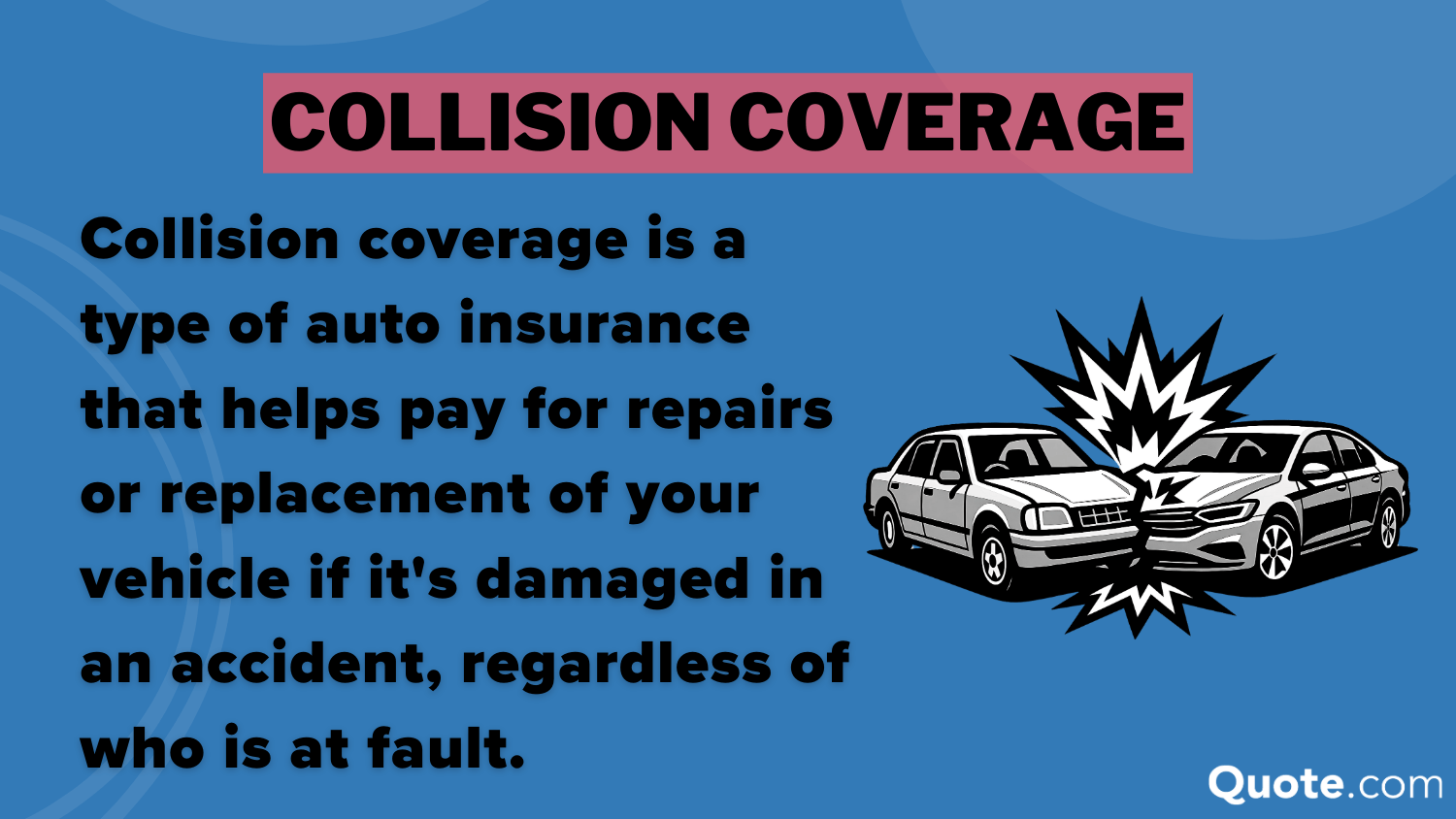
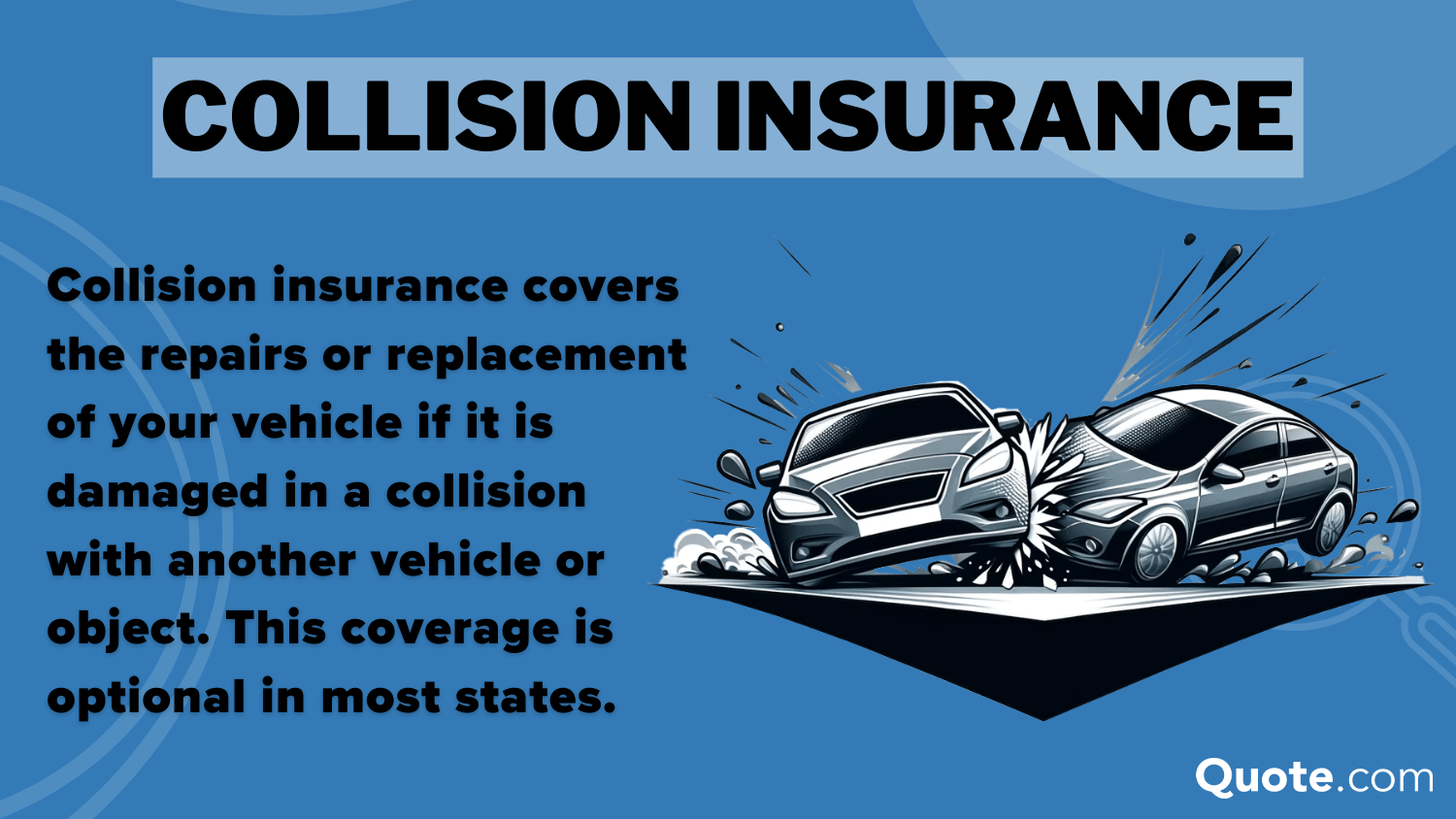
The definition of collision coverage is car insurance that pays to repair or replace your vehicle if you hit another vehicle or object, regardless of who is at fault.
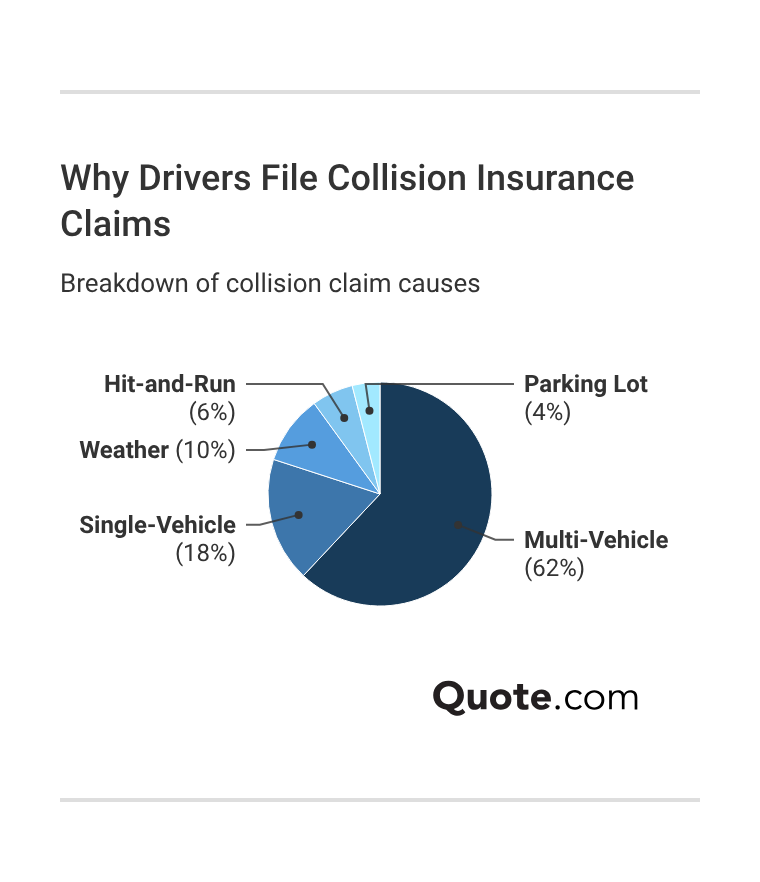
Collision coverage applies to single-vehicle accidents, like hitting a guardrail or pothole, as well as multi-car crashes.
Federal crash data shows that about 6.1 million police-reported vehicle crashes occur each year in the United States, many involving vehicle damage that can lead to collision insurance claims.
Collision insurance doesn’t pay for damage to another driver’s car or their medical bills. Those costs are usually covered by your liability insurance. Understanding the collision coverage definition can help drivers know when their policy will pay for damage after an accident.
Collision Insurance: What's Covered vs. Not Covered| Incident | Collision | Details |
|---|---|---|
| Animal Damage | ❌ | Includes hitting animals |
| At-Fault Accident | ✅ | Regardless of fault |
| Car Accident | ✅ | Vehicle crash damage |
| Fire Damage | ❌ | Fire-related damage |
| Object Impact | ✅ | Poles, fences, guardrails |
| Single-Car Crash | ✅ | No other car involved |
| Stolen Vehicle | ❌ | Stolen vehicle |
| Vandalism Damage | ❌ | Intentional damage |
| Weather Damage | ❌ | Hail, flood, storms |
If you totaled your car with no auto collision insurance, you’d have to cover the costs yourself. Lenders and leasing companies often require collision insurance until your auto loan or lease is fully paid off.
Collision car coverage is optional under state law, but it may be required if you’re financing or leasing your vehicle.
With collision insurance, you’ll pay a deductible before coverage applies. Once you file a claim, your insurer calculates your vehicle’s actual cash value based on its market value at the time of the crash, factoring in age, mileage, and wear.
Auto collision insurance only pays up to your vehicle’s actual cash value at the time of the accident, not the amount you originally paid for the car.
After an accident, you’ll need to file a collision insurance claim with your provider, submit photos or repair estimates, and work with an adjuster to determine the payout amount.
What Collision Insurance Doesn’t Cover
Collision insurance only pays for damage to your vehicle caused by a crash. It won’t cover other types of losses or damage unrelated to a collision.
Collision coverage does not include:
- Damage to another driver’s car
- Medical bills or injuries
- Theft
- Vandalism
- Weather damage
- Fire damage
- Animal-related damage
In addition, damage that occurs while your vehicle is parked is generally not covered by auto collision coverage unless it results directly from a crash.
Collision coverage does not cover personal belongings inside your car if they’re damaged or stolen during an accident.
Daniel Walker Licensed Insurance Agent
If you cause an accident, property damage liability coverage pays for repairs to the other driver’s vehicle or damaged property, not collision coverage.
For protection against these risks, drivers typically need comprehensive coverage and the right amount of liability coverage.
Free Auto Insurance Comparison
Compare Quotes From Top Companies and Save
Secured with SHA-256 Encryption
Collision vs. Comprehensive Coverage
Collision and comprehensive coverage both protect your vehicle, but they cover different types of damage. Understanding the difference, including your comprehensive vs. collision deductible, can help you choose the right car insurance coverage.
Collision insurance pays for repairs if your car is damaged in an accident involving another vehicle or object. This includes crashes with another car, hitting a tree or guardrail, or rolling your vehicle. It covers damage no matter who caused the accident.
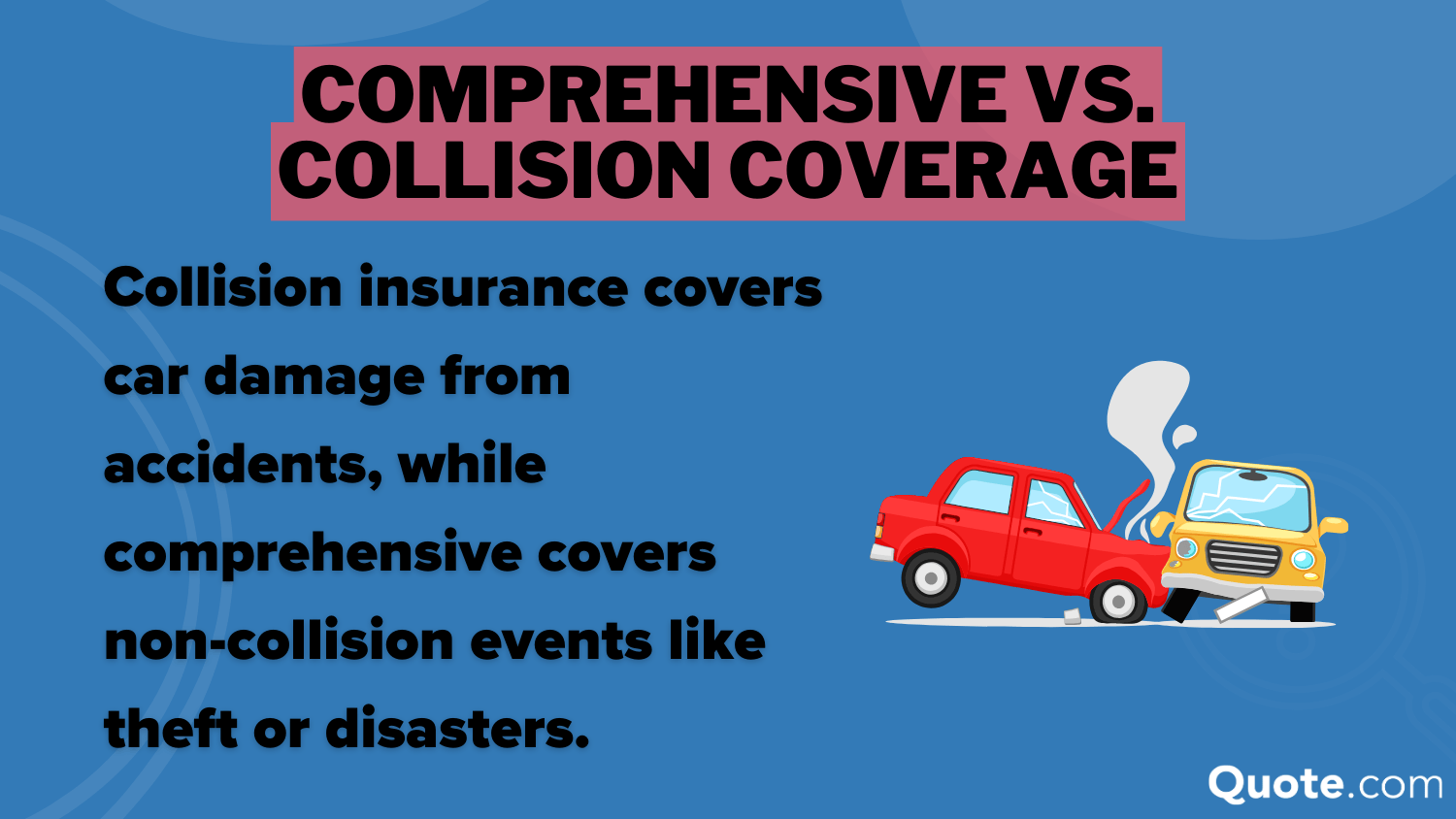
Comprehensive insurance, often called “other than collision” coverage, helps cover non-collision damages, including theft, vandalism, fire, falling objects, weather, and animal-related damage.
Comprehensive and collision insurance are usually bundled with minimum liability to form full coverage car insurance. This type of coverage makes sense for newer vehicles, but you may not need collision insurance on an older car.
Collision Auto Insurance Rates
Collision insurance cost varies significantly when comparing auto insurance companies.
While USAA offers the best collision coverage cost at $120 monthly, it’s only available to military families. Besides affordable USAA collision coverage, the company also earns consistently high ratings for customer service and claims satisfaction.
Auto Insurance Monthly Rates by Coverage Type| Company | Collision | Comprehensive | Full Coverage |
|---|---|---|---|
 | $160 | $60 | $220 |
 | $155 | $55 | $210 |
 | $150 | $52 | $202 |
 | $165 | $62 | $227 |
 | $148 | $57 | $205 |
 | $140 | $50 | $190 |
 | $160 | $59 | $219 |
 | $130 | $48 | $178 |
 | $135 | $50 | $185 |
 | $120 | $45 | $165 |
State Farm and Travelers are the next affordable options for collision and full coverage.
Your collision insurance rate depends on several key factors, including your driving record, the type of car you drive, where you live, your age, your credit profile in most states, and the deductible you choose.
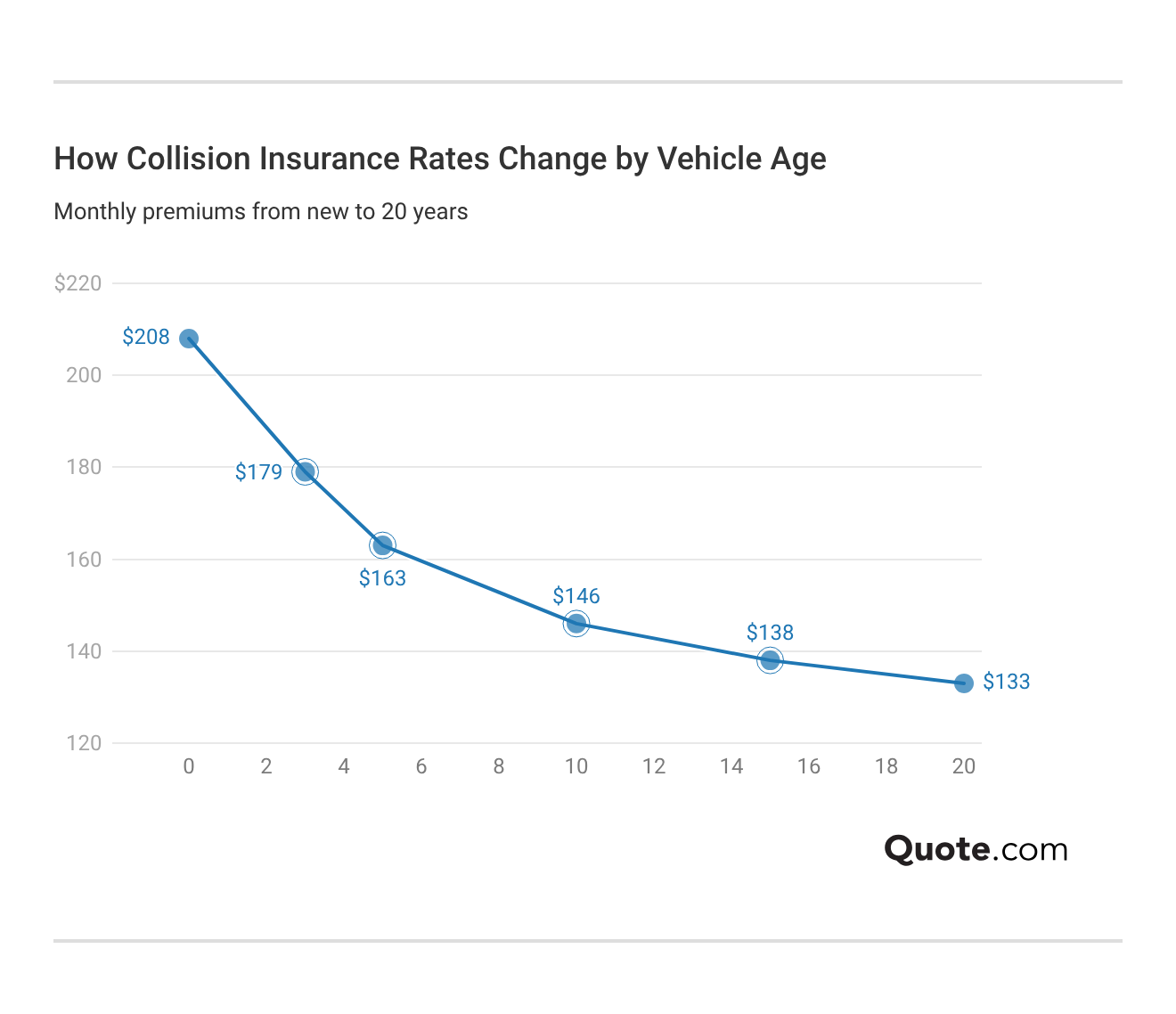
Newer vehicles typically cost more to insure with collision coverage because their repair and replacement costs are higher, especially for cars with advanced technology and safety features.
As your vehicle ages and its actual cash value declines, collision premiums generally decrease since the insurer’s potential payout becomes smaller. If your car is older and fully paid off, compare your yearly collision premium to your car’s current market value to see if keeping the coverage still makes financial sense.
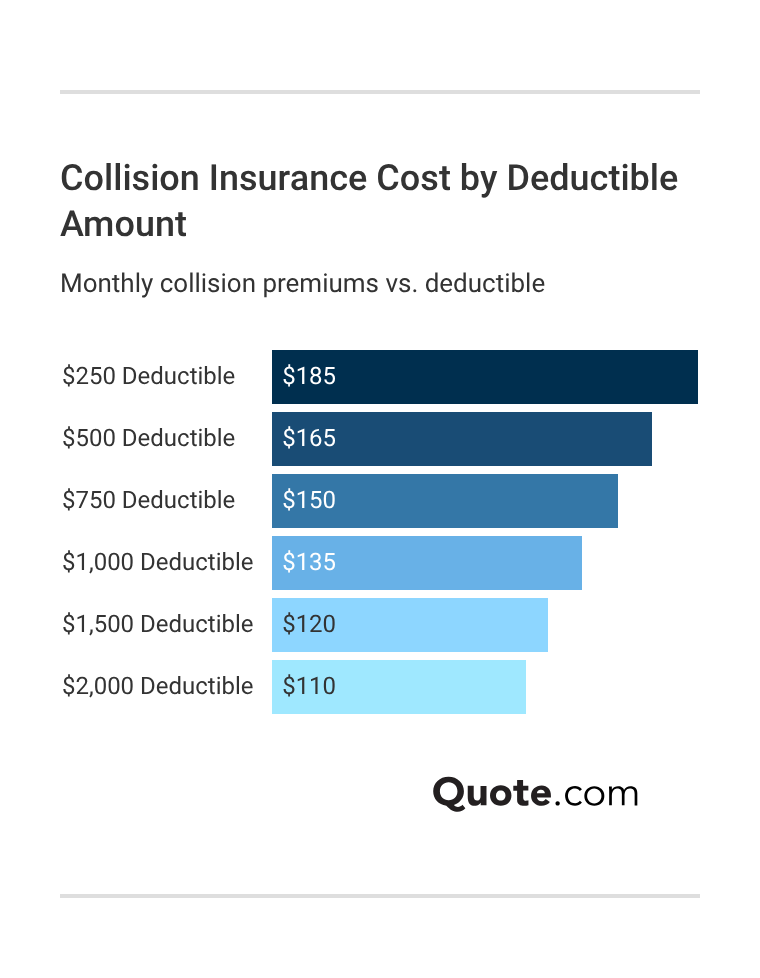
Choosing a higher collision coverage deductible can lower your monthly premium, but it also means you’ll pay more out of pocket if you file a claim.
Before deciding based only on collision auto insurance coverage and cost, consider comprehensive coverage as well. It may raise your premium, but it protects against non-collision events like theft, vandalism, fire, and severe weather that collision insurance does not cover.
When to Keep Collision Insurance Coverage
You may be wondering, “Do I need collision insurance?” Collision coverage isn’t always necessary long term, but it can protect you from paying thousands of dollars out of pocket after an accident.
Keep in mind that collision insurance pays up to your car’s actual cash value, not the price you originally paid, so you should factor in depreciation when making your decision.
The decision to keep collision insurance should come down to risk tolerance and cash reserves. If a major repair would disrupt your finances, the coverage is usually worth it.
Michelle Robbins Licensed Insurance Agent
You should consider keeping collision coverage if:
- Your car is new or still has significant value
- You’re leasing or financing the vehicle
- You can’t afford to repair or replace your vehicle out of pocket
- You rely on your car every day for work or commuting
- You regularly drive in heavy traffic or higher-risk areas
If you have a newer vehicle, dropping collision insurance too soon could leave you paying off a loan for a car you no longer have. Most lenders require collision coverage during a loan or lease, so canceling it without approval could violate your contract.
The more your car is worth, and the harder it would be to replace, the stronger the case for keeping collision auto insurance coverage.
Free Auto Insurance Comparison
Compare Quotes From Top Companies and Save
Secured with SHA-256 Encryption
Signs it May Be Time to Drop Collision Insurance
As cars age and lose value, collision damage coverage becomes less beneficial. Over time, the cost of collision insurance may outweigh what you’d receive after filing a claim, so it’s important to find out when to drop collision insurance.
You may want to consider dropping collision coverage if:
- Your car’s current market value is low
- Your deductible is close to what the car is worth
- Your annual premium equals a large % of the vehicle’s value
- Your loan or lease has been paid off
- You could afford to replace the car with your savings
It’s a good idea to check your car’s current market value against your premiums whenever your policy renews, usually every six months.
When to Consider Dropping Collision Coverage| Car Value | Annual Premium | % of Value | Recommendation |
|---|---|---|---|
| $25,000 | $2,500 | 10% | Keep coverage |
| $15,000 | $2,000 | 13% | Usually keep |
| $8,000 | $1,800 | 23% | Consider dropping |
| $5,000 | $1,700 | 34% | Often not worth it |
| $3,000 | $1,600 | 53% | Likely drop |
Before you drop collision insurance, run the numbers. Take your car’s value, subtract the deductible, and compare it to your annual premium. If you’re paying more than you’d likely get back, the coverage may not make sense.
Ways to Lower Collision Auto Insurance Rates
Always request personalized quotes that factor in your specific eligibility for discounts. A full coverage policy with collision damage protection can become more affordable if you are a safe driver or insure multiple vehicles.
Top Discounts for Collision Auto Insurance| Company | Multi-Vehicle | Safe Driver | Good Student | Usage-Based |
|---|---|---|---|---|
| 25% | 18% | 20% | 30% |
| 25% | 8% | 30% | 30% |
| 20% | 20% | 15% | 30% |
| 25% | 15% | 15% | 25% |
| 25% | 20% | 15% | 30% |
| 20% | 12% | 15% | 40% |
| 12% | 10% | 10% | $231/yr |
| 20% | 20% | 25% | 30% |
| 8% | 17% | 8% | 30% |
| 10% | 30% | 10% | 30% |
For example, while Progressive collision coverage limits may seem expensive at $160 monthly, the potential 40% usage-based (UBI) discount could reduce costs dramatically compared to companies with lower base rates but smaller discounts.
Opt for a higher collision auto insurance deductible if you have substantial savings. This can lower your monthly premium without sacrificing essential coverage.
Scott Young MANAGING EDITOR
If you don’t qualify for many discounts, raising your collision insurance deductible is one of the best tips to pay less for car insurance. Just be sure you can afford any out-of-pocket costs in case you have to file a collision claim after an accident.
Enter your ZIP code to start comparing cheap collision auto insurance quotes from local companies for free.
Frequently Asked Questions
What does collision insurance cover?
Collision insurance covers damage to your vehicle resulting from an accident, regardless of fault, including:
- Crashing into another vehicle
- Single-car accidents, such as rollovers
- Running into objects like poles, trees, guardrails, or fences
- Damage caused by potholes or debris in the road
You’ll typically pay your deductible first, and then your policy covers the remaining repair costs up to your vehicle’s actual cash value.
Is it better to have collision or comprehensive insurance?
Both serve different purposes. Collision insurance covers accident damage, while auto comprehensive insurance cover non-accident events like theft, vandalism, and natural disasters. Most financial experts recommend having both for newer vehicles.
What is not covered by collision insurance?
Collision insurance does not cover damage from theft, vandalism, fire, floods, hail, falling objects, animal impacts, or natural disasters. Comprehensive insurance covers these events instead.
How much does collision insurance cost?
A top question readers ask is, “How much is collision coverage?” Collision insurance costs anywhere from $120 to $165, though rates vary by vehicle type, driving record, location, and your deductible.
Compare multiple insurers in minutes to find your lowest rate using our free quote comparison tool.
At what point is collision insurance not worth it?
Collision insurance is typically not worth it when your vehicle’s value drops below 10 times your annual premium. For older vehicles worth less than $3,000, you might consider dropping collision coverage to save on premiums. Check out our guide: 26 Hacks to Save Money on Auto Insurance
Is it better to have a $500 deductible or a $1,000?
This depends on your financial situation. A $1,000 insurance deductible lowers your premium but requires more out-of-pocket expenses during claims. A $500 deductible means higher premiums but less financial strain when filing a claim.
Is collision insurance worth it?
One question that gets asked a lot is, “Should I get collision insurance?” Collision insurance is usually worth it if your car is newer or still worth a significant amount, you couldn’t afford to repair or replace it out of pocket, you have a loan or lease that requires it, or you drive in areas where accidents are more common.
If your vehicle is older and not worth much, the cost of coverage may outweigh the potential payout.
Is collision insurance full coverage?
No, collision insurance is not the same as full coverage. When comparing collision insurance vs. full coverage, collision pays for damage to your car after an accident, no matter who caused it, while full coverage usually includes liability, collision, and comprehensive coverage for broader protection.
Ready to see your options side by side? Compare quotes for car insurance now and find the coverage that fits your vehicle.
What’s the difference between collision insurance vs. liability insurance?
Collision insurance pays to repair or replace your car after an accident, no matter who caused it. Liability insurance, on the other hand, covers damage or injuries you cause to other people and their property.
While liability coverage is required in most states, car collision insurance is optional unless your lender requires it.
Is hitting a person collision or comprehensive insurance?
Neither directly. Injuries to pedestrians are covered through liability insurance after filing a claim. Damage to your vehicle from avoiding a pedestrian would be covered by collision insurance.
Does collision insurance cover the other car?
Should you have collision insurance on a 10-year-old car?
Do you need collision insurance if your car is paid off?
Should you have full coverage on a 15-year-old car?
How is a collision insurance claim paid out?
Related Articles
-
Mar 2026

17 Car Insurance Discounts You Can’t Miss in 2026
-
Nov 2025

10 Best Auto Insurance Companies in Georgia (2026)
-
Sep 2025
Nationwide Auto Insurance Review for 2026
-
Jan 2026
Cheap Auto Insurance for Low-Income Drivers in 2026
-
Dec 2025
Cheapest Liability-Only Auto Insurance in 2026
-
Nov 2025
10 Best Auto Insurance Companies in Arkansas for 2026




Get a FREE Quote in Minutes
Insurance rates change constantly — we help you stay ahead by making it easy to compare top options and save.
Secured with SHA-256 Encryption