How Car Accidents Affect Insurance Rates in 2026
Car accidents affect insurance rates by increasing them, but you can find coverage from as low as $85 per month. An at-fault accident increases auto insurance rates by 20%-50% on average. On the other hand, you may not see any rate increase at all if you have accident forgiveness or didn't cause the accident.
Read more Secured with SHA-256 Encryption





Table of Contents
Table of Contents

Managing Editor
Daniel S. Young began his professional career as chief editor of The Chanticleer, a Jacksonville State University newspaper. He also contributed to The Anniston Star, a local newspaper in Alabama. Daniel holds a BA in Communication and is pursuing an MA in Journalism & Media Studies at the University of Alabama. With a strong desire to help others protect their investments, Daniel has writt...
Daniel S. Young

Senior Director of Content
Sara Routhier, Senior Director of Content, has professional experience as an educator, SEO specialist, and content marketer. She has over 10 years of experience in the insurance industry. As a researcher, data nerd, writer, and editor, she strives to curate educational, enlightening articles that provide you with the must-know facts and best-kept secrets within the overwhelming world of insurance....
Sara Routhier

Commercial Lines Coverage Specialist
Michael Vereecke is the president of Customers First Insurance Group. He has been a licensed insurance agent for over 13 years. He also carries a Commercial Lines Coverage Specialist (CLCS) Designation, providing him the expertise to spot holes in businesses’ coverage. Since 2009, he has worked with many insurance providers, giving him unique insight into the insurance market, differences in ...
Michael Vereecke
Updated March 2026
Auto accidents affect insurance rates by increasing them for several years, sometimes by as much as 50%.
- The more accidents you have, the higher your insurance rates will be
- Not-at-fault accidents don’t usually impact your premiums
- You can find rates as low as $85 per month after an accident
Although an at-fault accident typically affects your premiums for three to five years, there are plenty of things you can do to reduce your rates. Additionally, many providers offer accident forgiveness to protect your rates from increasing after your first collision.
Read on to learn how car accidents affect insurance rates and how much your monthly premiums might increase. If you’ve recently been in an accident, check for lower rates by entering your ZIP code into our free comparison tool.
How Auto Accidents Impact Insurance Rates
A car accident can increase car insurance premiums by up to 50%. Insurance companies look at driving records when they calculate how much to charge you for coverage, so having even one accident means you’ll pay higher rates.
When you file a claim, your insurer updates your risk profile based on what happened. Whether you were at fault, how severe the damage was, and how much the claim cost all impact your insurance premium increase.
How a Car Accident Affects Auto Insurance Cost| Incident Type | Rate Impact | Claim Details |
|---|---|---|
| At-Fault Crash | + 20%–70% | You caused the collision |
| Not at Fault | + 40%–100% | More than one incident |
| Repeat Offense | + 0%–20% | Another driver responsible |
| Severe Crash | + 50%–120% | Injuries or major damage |
Drivers with recent accidents typically pay more because insurers know that, statistically, someone who has been in one accident may be in another. That increase isn’t the same for all accidents, though.
Read More: How Speeding Tickets Affect Auto Insurance
For example, insurance rates after a minor accident like a fender bender may lead to nothing more than a modest bump. However, insurance rates after a major accident or at-fault crash with injuries can raise premiums much higher.
Changes in the way providers calculate premiums, especially with the wider use of usage-based insurance and telematics data, mean insurers are weighing behavior more heavily.
A single accident matters, but it’s now considered alongside things like braking habits, mileage, and overall driving patterns.
After an accident, your premium will likely go up at your next renewal. If you weren’t at fault, you may still see a small increase, depending on your insurer and state rules.
Some companies keep rates steady for not-at-fault accidents, but that isn’t guaranteed. The size of the increase depends on a few key details:
- Claim Cost: Higher payouts tend to trigger bigger rate changes.
- Coverage Type: Collision claims tend to affect rates more than comprehensive claims.
- Driving History: A clean record before the accident can soften the impact of an accident.
- Fault: At-fault accidents lead to the largest increases.
Collision insurance pays for your car repairs after an accident, even if you were at fault. When you compare collision vs. comprehensive auto insurance, your rates will go up higher with a collision claim, especially if you’re the driver responsible for the accident.
Comprehensive claims, on the other hand, are usually filed after something unexpected damages your car.
Why a Car Accident Increases Your Insurance Premiums
Insurance pricing comes down to risk. When a driver files a claim after an accident, it signals a higher likelihood of future claims based on past data.
Having multiple accidents on your record might make insurance companies look at you as a high-risk driver.
Factors Affecting Auto Insurance Rates After a Crash| Rate Variables | Pricing Impact |
|---|---|
| Accident Forgiveness | May prevent first surcharge |
| Claim Payout Amount | Larger payout, bigger increase |
| Driver History Record | Prior claims raise premiums |
| Fault Determination | At-fault triggers higher rates |
| Insurance Company | Increases vary by insurer |
| State Regulations | State laws may limit hikes |
Insurers rely on large datasets that track patterns across millions of drivers. Those patterns show that drivers with recent accidents are statistically more likely to file another claim.
Finding cheap auto insurance for high-risk drivers is often difficult, so it’s best to avoid accidents and filing claims if possible.
The statistical likelihood of getting into an accident is behind most factors affecting premiums, including your age, gender, and even your marital status.
Scott W. Johnson Licensed Insurance Agent
To offset the risk of paying multiple claims for a driver who might file additional claims in the future, insurance providers raise premiums.
There’s also a financial side. If your insurer pays out a claim, they need to recover some of that cost over time. Higher premiums help balance those losses across their customer base.
Free Auto Insurance Comparison
Compare Quotes From Top Companies and Save
Secured with SHA-256 Encryption
Comparing Insurance Rates After an Accident
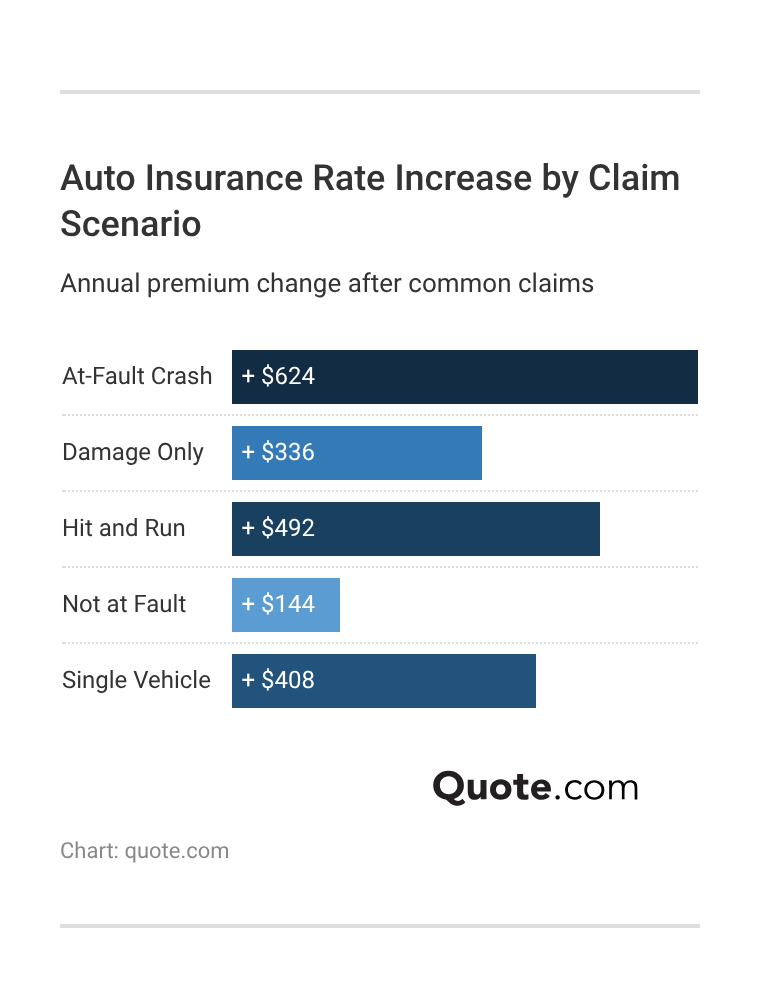
On average, a single at-fault accident can raise your premium anywhere from 20% to 50%, though the exact increase depends on your provider and your driving record.
Erie and Auto-Owners are the most forgiving after one accident. Erie keeps its rate increases under $20 a month. Compare more quotes in our Erie Insurance review.
Auto Insurance Monthly Rates Before vs. After a Car Accident| Company | Before | After | Increase |
|---|---|---|---|
 | $105 | $147 | + $42 |
 | $93 | $125 | + $32 |
 | $71 | $92 | + $21 |
 | $76 | $95 | + $19 |
 | $100 | $145 | + $45 |
 | $74 | $100 | + $26 |
 | $87 | $118 | + $31 |
 | $80 | $104 | + $24 |
 | $86 | $112 | + $26 |
 | $94 | $127 | + $33 |
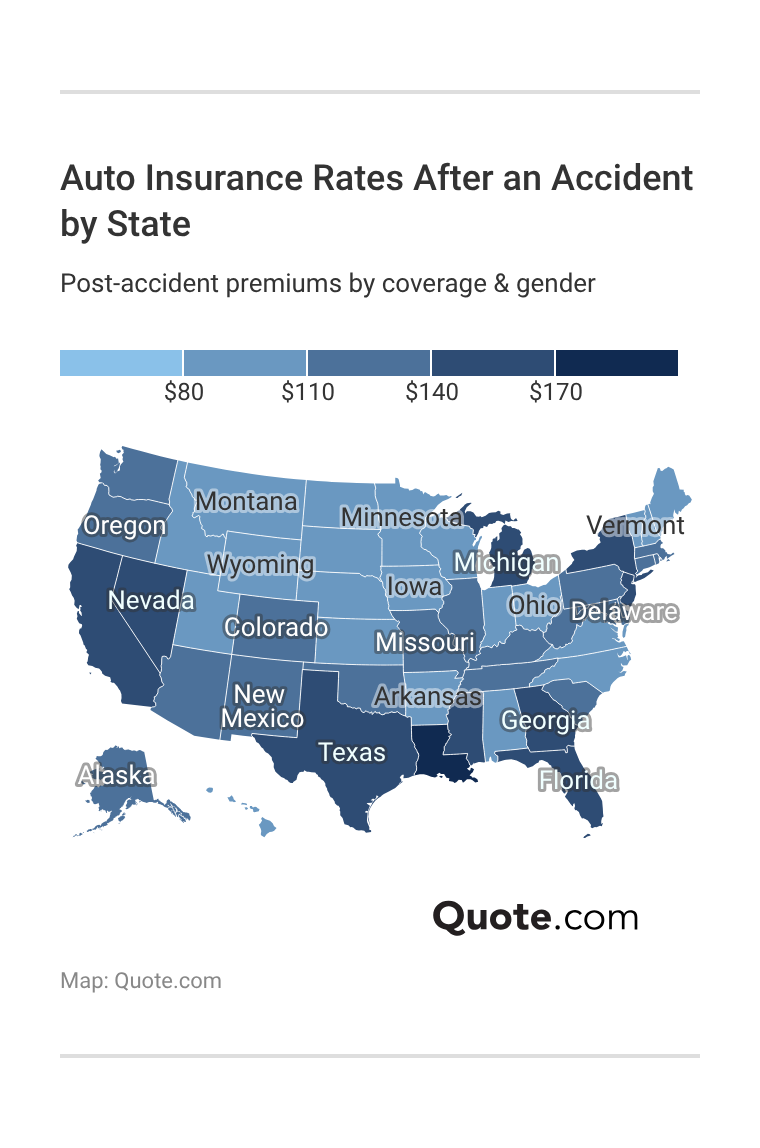
The amount you’ll pay for insurance after an accident also depends on where you live. Compare the average price of insurance after an accident in your state.
Drivers in densely populated states like California, New York, and Texas see the highest insurance rates after an accident due to the high number of collisions in those areas. Get More Details: Best Auto Insurance Companies in New York
Causing an accident can significantly increase your rates. Of course, collisions are treated differently. For example, a minor fender-bender will see a much smaller increase than if you total someone’s car.
In some cases, your insurance company may drop you after an accident. This is likely to happen if you’ve had multiple collisions within a short period of time.
Other factors that will change how much your rates increase are how many accidents you’ve caused in the past, or if the collision was caused by a DUI.
Michelle Robbins Licensed Insurance Agent
Figuring out what to do when you’re denied insurance coverage can be stressful, but you can avoid it by being as safe a driver as possible and maintaining a clean record after the claim.
Some insurers offer accident forgiveness programs, which can prevent your first accident from affecting your rate. These programs usually need to be in place before the accident happens.
How to Avoid Insurance Increases After an Accident
With a potentially dramatic price increase on the horizon, most drivers want to know how to reduce their premiums after an accident. Luckily, there are plenty of ways to lower your premiums.
You can start by looking at the top 26 hacks to save money on auto insurance, which contains good advice for all insurance shoppers. Additionally, the following money-saving tips are especially helpful to drivers after an at-fault accident.
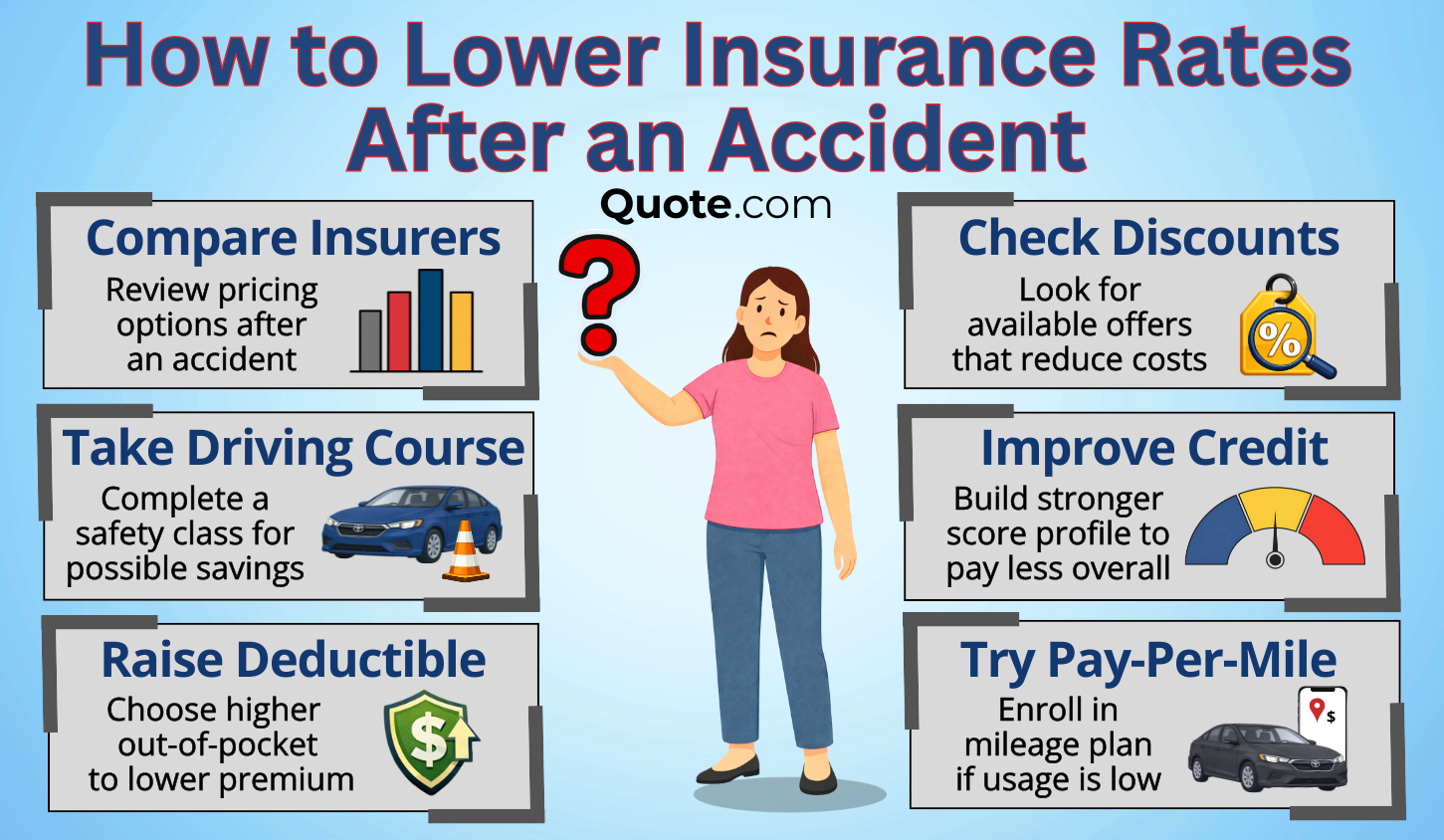
Of course, one of the easiest ways to keep your rates down is to maintain a clean driving record. After an accident, make sure you don’t add additional at-fault collisions, speeding tickets, or other traffic violations to your record.
Eventually, your current accident will fall off your insurance record, and your rates will go back to normal. But that’s only possible if you don’t add additional violations to your record.
There is some good news, though. You may qualify for good or safe driver discounts again if you avoid additional accidents for a specified time period.
How Accident Forgiveness Car Insurance Works
Accident forgiveness is an optional feature that prevents your insurance rate from increasing after your first at-fault accident. It’s designed for drivers with clean records who want some protection against a first accident insurance rate increase.
Not every driver qualifies automatically. Some insurers offer accident forgiveness as a reward after several years of safe driving. Others offer it as an add-on you can purchase. In most cases, it only applies once per policy or within a set time period.
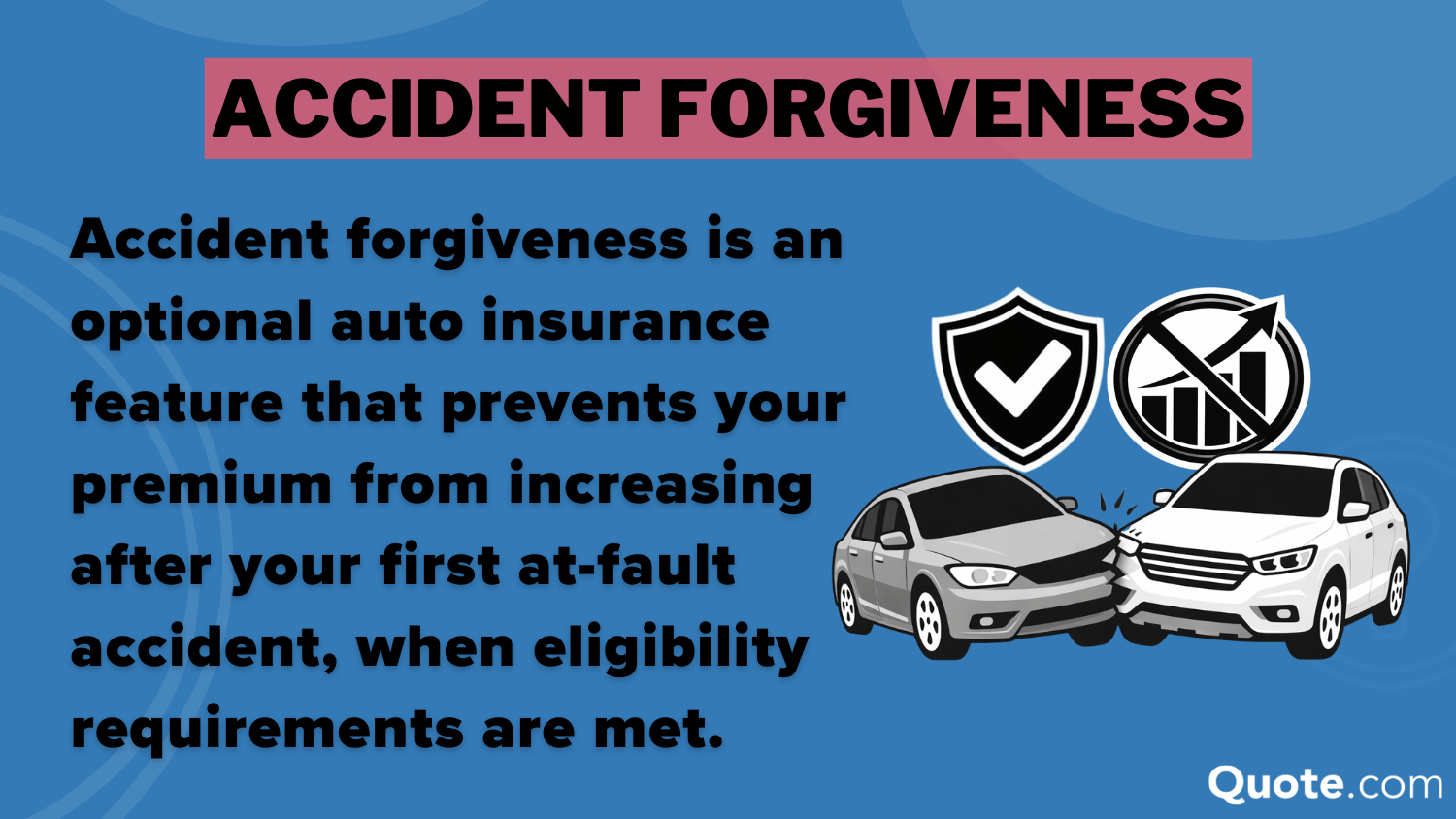
There are a few limits to keep in mind. Accident forgiveness usually won’t apply to serious incidents or drivers with recent violations. It also doesn’t transfer between insurance companies. So, if you switch providers, you’ll typically need to qualify again.
Even with those restrictions, accident forgiveness can be valuable if you’ve maintained a good driving history. It gives you a buffer against one mistake without immediately increasing your insurance costs.
When to Switch Insurance Companies After an Accident
Switching insurers can make sense after an accident, especially if your current company raises your rates significantly.
Even the best car insurance companies usually increase rates after an accident, so it’s almost always a good idea to at least shop around for new quotes.
When to Switch Auto Insurance Providers After an Accident| Scenario | Why Switch? |
|---|---|
| Better Driving Record | Qualify for discounts |
| Forgiveness Ended | Avoid future hikes |
| Multiple Rate Hikes | Find lower rates |
| Policy Nonrenewal | Secure new coverage |
| Poor Claims Service | Get better service |
| Premium Increase | Reduce overall costs |
It’s a good idea to compare quotes right after your policy renews, especially if your provider increases your premium or removes discounts you previously qualified for.
While it’s sometimes possible to find an insurance company that is more lenient towards accidents, there are some instances when it would be better to keep your current coverage.
When to Stick With Your Auto Insurance Provider After an Accident| Scenario | Why Stay? |
|---|---|
| Bundled Policies | Keep bundle savings |
| Forgiveness Active | Keep current discounts |
| Minor Rate Increase | Increase may be small |
| Policy Renewed | Maintain coverage |
| Rates Stable | Avoid new rate risk |
| Recent Accident | Too soon to compare |
Before switching, check for cancellation fees and make sure your new policy starts before your old one ends to avoid a coverage gap.
Avoiding a gap in your insurance coverage is crucial because providers see that as a red flag, and it can increase your rates in the future.
Read More: How to Switch Auto Insurance Providers
How Long Accidents Stay on Your Record
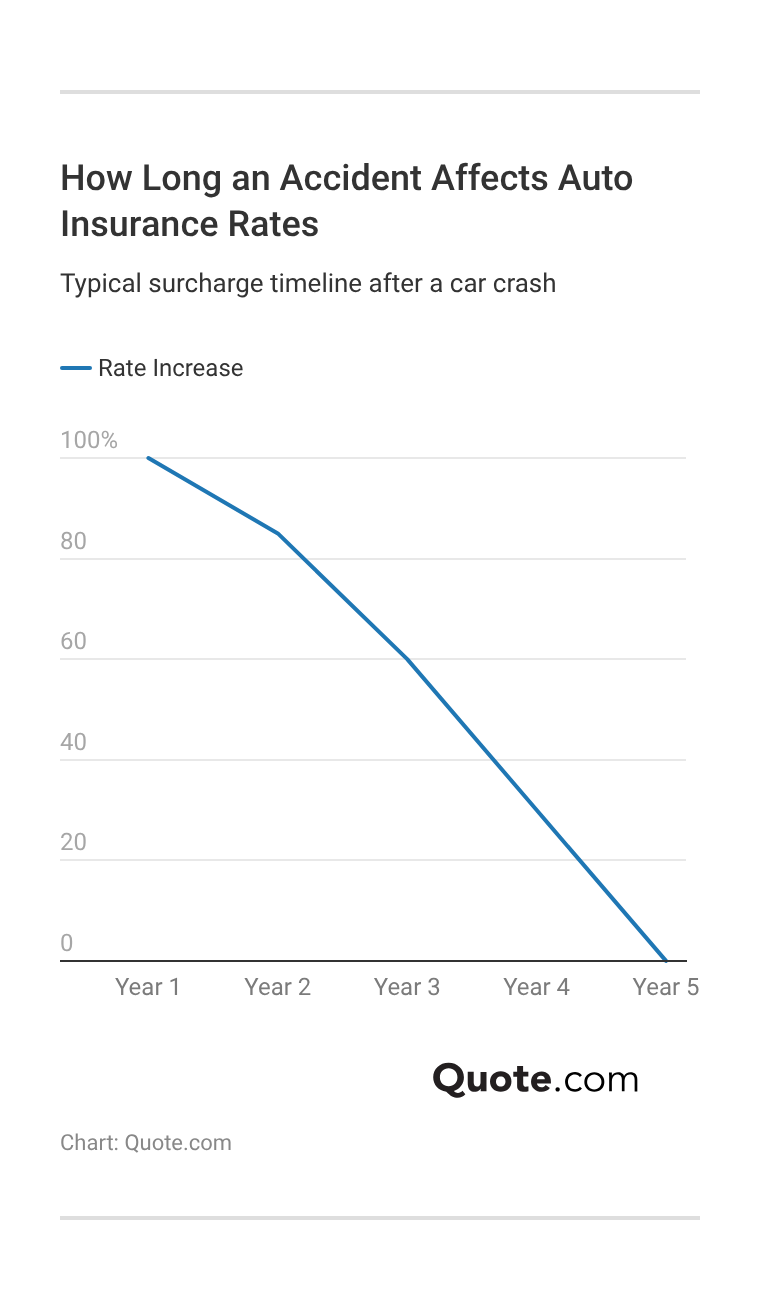
An accident usually stays on your insurance record for three to five years, but it depends on your provider and where you live. Some states allow first accidents to fall off your record in a year or two, while others may keep points on your driver’s license for much longer.
Additionally, most insurance companies look at CLUE (Comprehensive Loss Underwriting Exchange) reports to see up to seven years of your insurance claims history. Insurance companies use CLUE reports to assess risk and help determine your premiums when you apply for coverage or renew a policy.
The good news is that the impact on your insurance rates tends to decrease over time, especially if you maintain a clean driving record after the incident.
By the time the accident drops off your record, your rates may return closer to what you paid before, assuming no additional claims or violations. Until then, finding the cheapest liability-only insurance may help you keep your monthly premiums as low as possible.
After an accident, it’s important to avoid all traffic violations so that your insurance rates can be lowered back to normal quickly.
For one, your rates will increase by significantly higher percentages if you keep causing accidents. You also might lose your insurance coverage altogether if your provider decides you’re too big a liability.
Free Auto Insurance Comparison
Compare Quotes From Top Companies and Save
Secured with SHA-256 Encryption
Buying Auto Insurance After an Accident
A car accident doesn’t lock you into high insurance rates forever. Prices often rise by up to 50% at first, but they can come back down over time, as long as you keep your record clean.
You can also find more affordable coverage by learning how to get multiple auto insurance quotes.
If your premium has gone up, it’s worth getting fresh quotes, reviewing your coverage, and checking for discounts you might have missed.
To see if you can save with a different provider, enter your ZIP code into our free comparison tool today.
Frequently Asked Questions
How do accidents affect insurance rates?
Accidents signal a higher risk of future claims, which can lead insurers to raise your premium. The impact depends on fault, severity, and your overall driving history.
Understanding the ins and outs of your policy can be confusing, but you can check out our visual guide to auto insurance if you want more clarification.
Does a car accident always cause an insurance premium increase?
No, a car accident doesn’t always raise your rates, especially if you weren’t at fault. However, at-fault accidents usually lead to an increase in premiums. While there are many ways car accidents affect car insurance, the main reason your rates go up is that your provider will consider you a higher risk than someone without an accident.
How much does a car accident make your insurance go up?
An at-fault accident can raise your premium by roughly 20% to 50%. Finding cheap auto insurance isn’t impossible after an at-fault accident, as long as you’re willing to do a little shopping around.
How much will my insurance go up after a not-at-fault accident?
The increase is often small or nonexistent, depending on your insurer and state rules. Some companies don’t raise rates at all for not-at-fault accidents. If you’re curious about insurance costs after an accident, use our free comparison tool to compare quotes from local providers.
When does a car accident fall off your insurance record?
Most accidents stay on your record for three to five years. After that, they typically no longer affect your insurance rates. Since your driving record and insurance rates are so closely linked, you should avoid accidents and other traffic violations as best you can.
Is it better to file a claim or pay out-of-pocket?
It can make sense to pay out of pocket if the repair cost is close to your deductible. Filing a claim is usually better for larger or more expensive damages. Find out if your provider made our list of the best auto insurance companies for claims handling.
Will my rates go up if I don’t file a claim after an accident?
If the accident isn’t reported, not filing a claim is one way to avoid an insurance increase after an accident. But if it’s reported by another driver or shows up on your record, it could still affect your premium.
What happens if I cause an accident and I don’t have insurance?
If you cause an accident without insurance, you’re personally responsible for paying all damages, including vehicle repairs, medical bills, and possibly legal costs. You may also face penalties like fines, license suspension, and even lawsuits from the other party.
Driving uninsured may seem tempting sometimes, but the long-term costs are higher and can often impact your life for years to come.
What’s the difference between an at-fault accident and a not-at-fault accident?
An at-fault accident means you’re responsible for causing the crash. A not-at-fault accident means another driver is considered responsible. When you file a claim, knowing the distinction between at-fault vs. not-at-fault accidents is crucial. Use our insurance comparison tool to find out if you live in a no-fault insurance state.
How long does a car accident affect insurance rates?
Accidents typically affect your rates for three to five years, but only certain types of coverage. Your liability and collision auto insurance will go up for about three years, while comprehensive insurance is likely to be unaffected. The impact often decreases over time if you avoid additional incidents.
Will my premium go up if someone else was driving my car during the accident?
What is accident forgiveness?
Can switching insurance companies lower my rate after an accident?
Related Articles

Get a FREE Quote in Minutes
Insurance rates change constantly — we help you stay ahead by making it easy to compare top options and save.
Secured with SHA-256 Encryption