Rebuilt vs. Salvage Title: Key Differences, Costs, & Insurance (2026)
Rebuilt vs. salvage title affects insurance because rebuilt cars may cost up to 40% more to insure. A salvage title means a car is not road legal, while cars with rebuilt titles have been repaired and approved. Salvage cars rarely qualify for collision coverage.
Read more





Table of Contents
Table of Contents

Published Insurance Expert
Melanie Musson, a published insurance expert, is the fourth generation in her family to work in the insurance industry. Over the past two decades, she has gained in-depth knowledge of state-specific insurance laws and how insurance fits into every person’s life, from budgets to coverage levels. She specializes in autonomous technology, real estate, home security, consumer analyses, investing, di...
Melanie Musson

Head of Content
Meggan McCain, Head of Content, has been a professional writer and editor for over a decade. She leads the in-house content team at Quote.com. With three years dedicated to the insurance industry, Meggan combines her editorial expertise and passion for writing to help readers better understand complex insurance topics. As a content team manager, Meggan sets the tone for excellence by guiding c...
Meggan McCain

Licensed Insurance Broker
Zach Fagiano has been in the insurance industry for over 10 years, specializing in property and casualty and risk management consulting. He started out specializing in small businesses and moved up to large commercial real estate risks. During that time, he acquired property & casualty, life & health, and surplus lines brokers licenses. He’s now the Senior Vice President overseeing globa...
Zach Fagiano
Updated July 2026
Rebuilt vs. salvage title insurance compares rebuilt vehicles that have been repaired with salvage vehicles declared total losses after 60% to 100% damage in many states.
- Rebuilt or salvage titles can drop a car’s value by up to 80%
- Insurers usually want a state inspection for full coverage
- Repair records help you get financing after a title change
Cars with rebuilt titles can usually be registered, financed, and insured once they pass inspection. In contrast, cars with salvage titles cannot be legally driven until they are rebuilt, and they rarely qualify for collision or comprehensive insurance.
Rebuilt vehicles usually sell for 20% to 40% less than similar cars with clean titles. Salvage vehicles can lose 50% to 80% of their value because of the damage they have sustained.
Compare rebuilt title vs. salvage title auto insurance options by entering your ZIP code into our free quote comparison tool.
Rebuilt and Salvage Title Definitions Explained
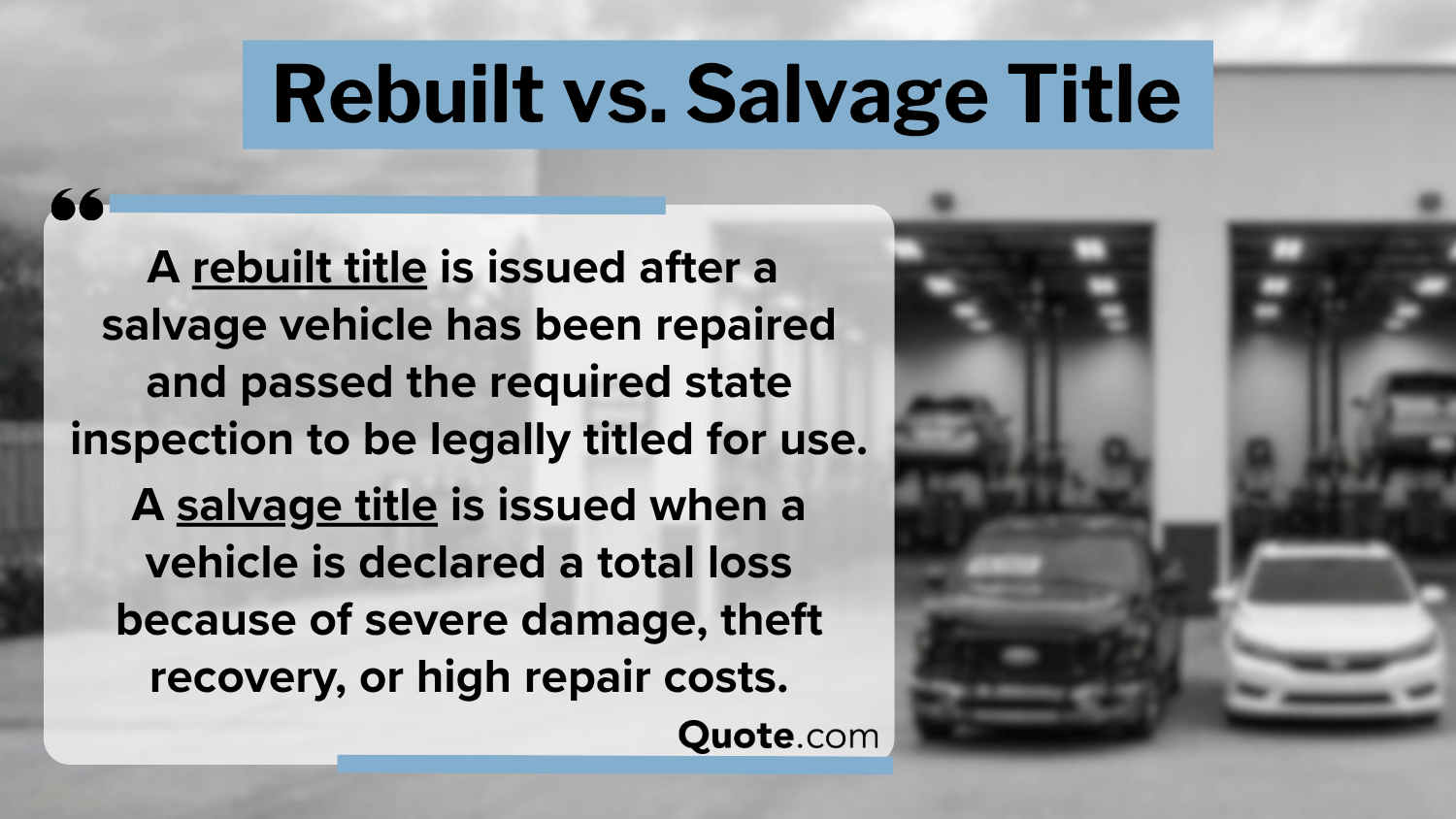
The main difference is that only rebuilt vehicles can be driven on public roads again. However, they must first pass state inspections to show they meet repair and safety standards.
Salvage vehicles are still considered total losses until they are repaired. This makes it much harder to get insurance, financing, or registration for them.
Insurance options can differ quite a bit. Once rebuilt title vehicles pass inspections and meet the insurance company’s rules, they may qualify for more types of coverage.
Rebuilt vehicles are usually eligible for collision and comprehensive coverage only after an inspection. On the other hand, salvage title vehicles often don’t qualify for coverage, or only liability insurance. Related Info: Collision Insurance
Rebuilt vs. Salvage Title: Auto Insurance Differences| Category | Rebuilt Title | Salvage Title |
|---|---|---|
| Collision | Usually available | Rarely available |
| Comprehensive | Usually available | Rarely available |
| Deductibles | Standard if covered | Not applicable |
| Liability | Readily available | Usually available |
| Premium | Up to 40% higher | Liability only |
| Settlement | Using market value | Limited payouts |
| Underwriting | Requires inspection | Often declined |
Insurance for rebuilt vehicles can be up to 40% more expensive than for similar cars with clean titles because insurers factor in previous structural damage.
Look over inspection records, claim details, and coverage limits before you buy. Doing this can help you avoid unexpected repair costs or trouble getting insurance in the future.
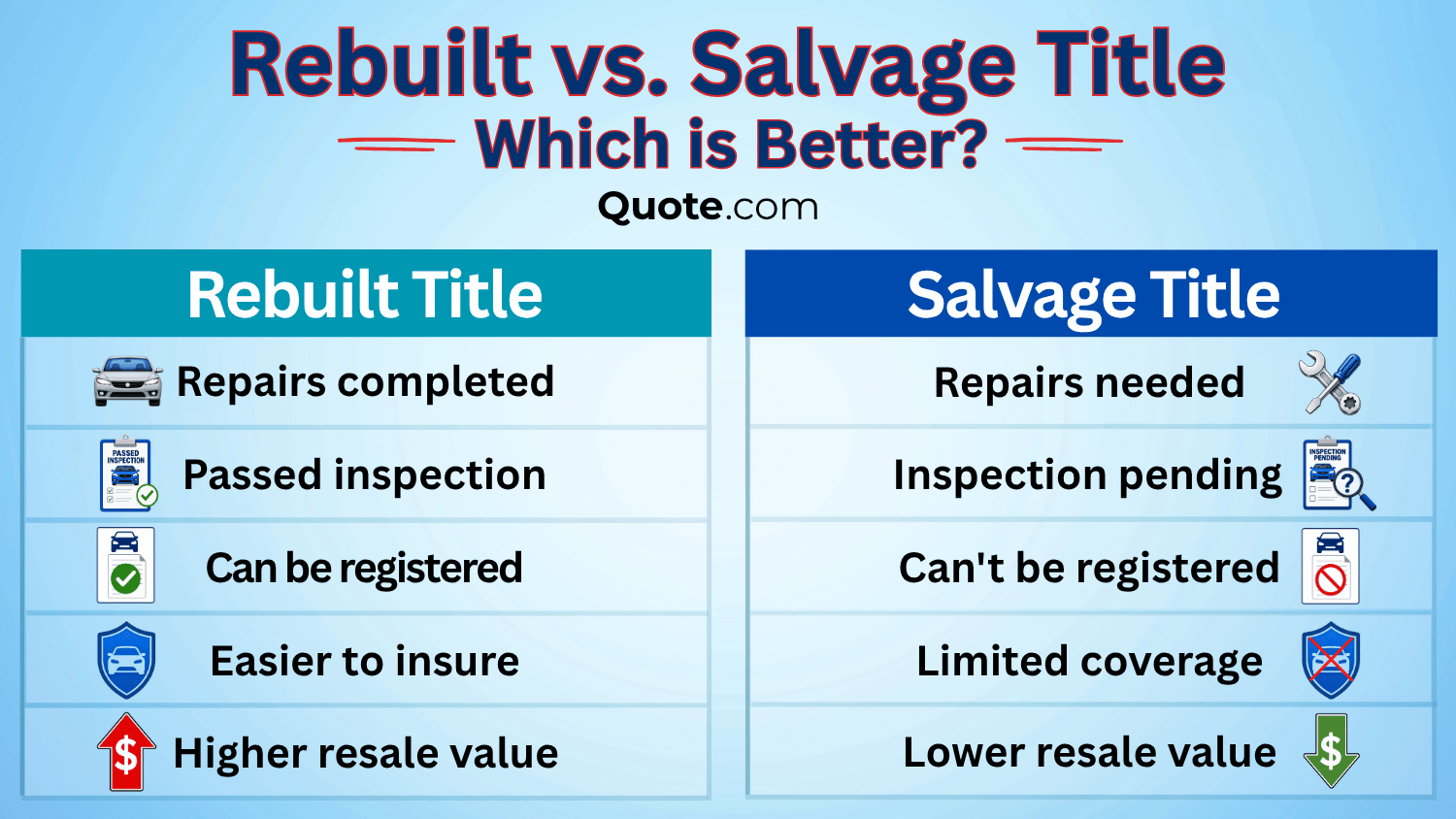
Vehicles with rebuilt titles usually have an easier registration process, more insurance choices, and better resale value once they pass the necessary state inspections.
Salvage vehicles need repairs, inspections, and a new title before they can be driven again. Afterward, they often have limited insurance options, and buyers may be less confident in purchasing them.
Understanding Clean, Rebuilt, and Salvage Title Differences
The title of a vehicle matters more than its appearance because it affects your ability to get insurance, qualify for financing, register the car, and sell it in the future.
Cars with a clean title are easier to insure, can be financed with regular auto loans, and keep their value best because they have no record of major damage.
Vehicle Title Comparison: Clean vs. Rebuilt vs. Salvage| Feature | Clean | Rebuilt | Salvage |
|---|---|---|---|
| Damage | Minor | Repaired | Severe |
| Financing | Available | Limited | Denied |
| Insurance | Standard | Approved | Restricted |
| Legal Use | Legal | Legal | Illegal |
| Registration | Simple | Inspected | Limited |
| Repair Status | Complete | Restored | Damaged |
| Resale Value | Highest | Lower | Lowest |
| Title Status | Clean Title | Rebuilt | Salvage |
| Vehicle Value | Highest | Reduced | Lowest |
Rebuilt vehicles can be driven again after passing state inspections. Many car insurance companies will ask for repair records and may charge higher premiums because of the car’s damage history.
Salvage title vehicles usually need repairs before they can be registered for regular driving. Many lenders will not finance them, and most insurers only offer liability coverage, if at all.
If you buy a rebuilt vehicle, it will usually sell for 20% to 40% less than a similar car with a clean title. Salvage vehicles can lose 50% to 80% of their value because of their damage history.
Before you buy, check the title brand, inspection certificate, vehicle history report, repair receipts, and insurance requirements. This can help you avoid costly problems and feel more confident about your purchase.
Free Auto Insurance Comparison
Compare Quotes From Top Companies and Save
Comparing Rebuilt & Salvage Title Coverage Limits
Once your car has a rebuilt title and passes all the needed repairs and inspections, most insurers and state agencies will accept it. This gives you more options as an owner.
You typically can’t drive a salvage vehicle on public roads until it passes a state inspection. Many insurers only offer liability coverage for these cars, and some may not insure them at all.
Rebuilt vs. Salvage Title: Insurance, Value, & Driving| Category | Rebuilt | Salvage |
|---|---|---|
| Buyer Risk | Lower | Higher |
| Condition | Repaired | Damaged |
| Drivable | ✅ | ❌ |
| Financing | ⚠️Possible | ❌ |
| Full Coverage | Limited | Rare |
| Inspection | ✅ | ✅ |
| Insurance | ✅ | ⚠️Limited |
| Registration | ✅ | ❌ |
| Repair Status | Completed | Incomplete |
| Resale Value | Reduced | Lowest |
Lenders look at repair invoices, inspection certificates, and vehicle history reports before deciding if they will approve financing.
If you file a claim for a rebuilt vehicle, your payment will be based on its rebuilt market value instead of the value of a similar car with a clean title.
Even if a vehicle is well repaired, a rebuilt title will still affect its value during a claim. Insurers look at sales of similar rebuilt vehicles instead of those with clean titles.
Melanie Musson Published Insurance Expert
Before you buy, check your state’s title requirements, insurance rules, and the documents you’ll need. See More: Auto Insurance Requirements by State
Doing this can help you avoid long registration delays and lower the risk of being denied coverage or financing.
How State Rebuilt vs. Salvage Title Car Insurance Laws Differ
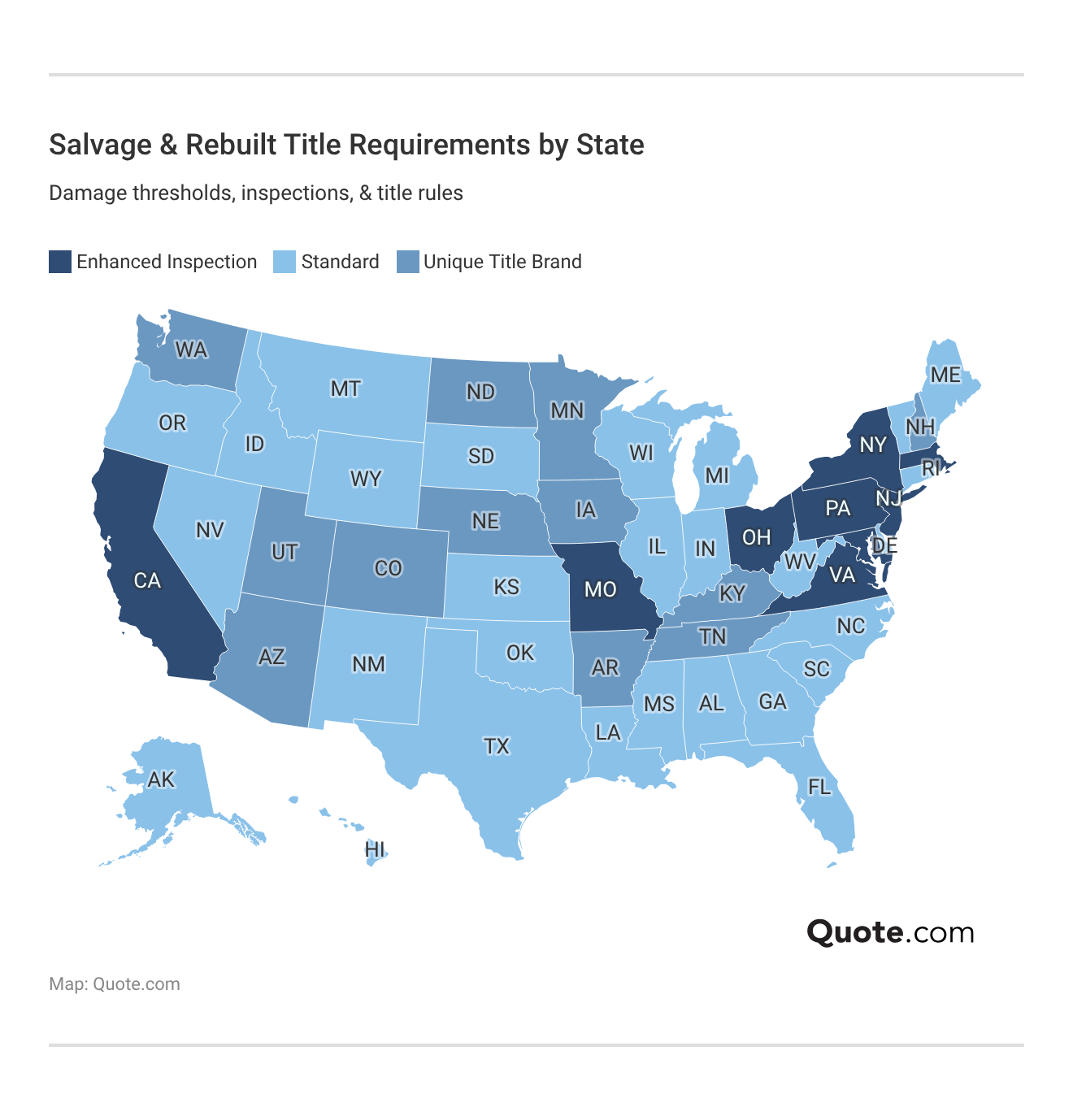
Salvage thresholds let insurers decide if a damaged car is a total loss and should get a salvage title instead of being repaired.
Most states set a damage percentage, usually between 60% and 100% of the car’s cash value. States marked as ‘Varies’ do not use a fixed percentage.
In those states, insurers decide if a car is a total loss by looking at repair costs, the car’s value, labor expenses, and local insurance rules.
Drivers should check their state’s rules before fixing a damaged car, since title branding, inspections, and registration requirements can be different depending on where they live.
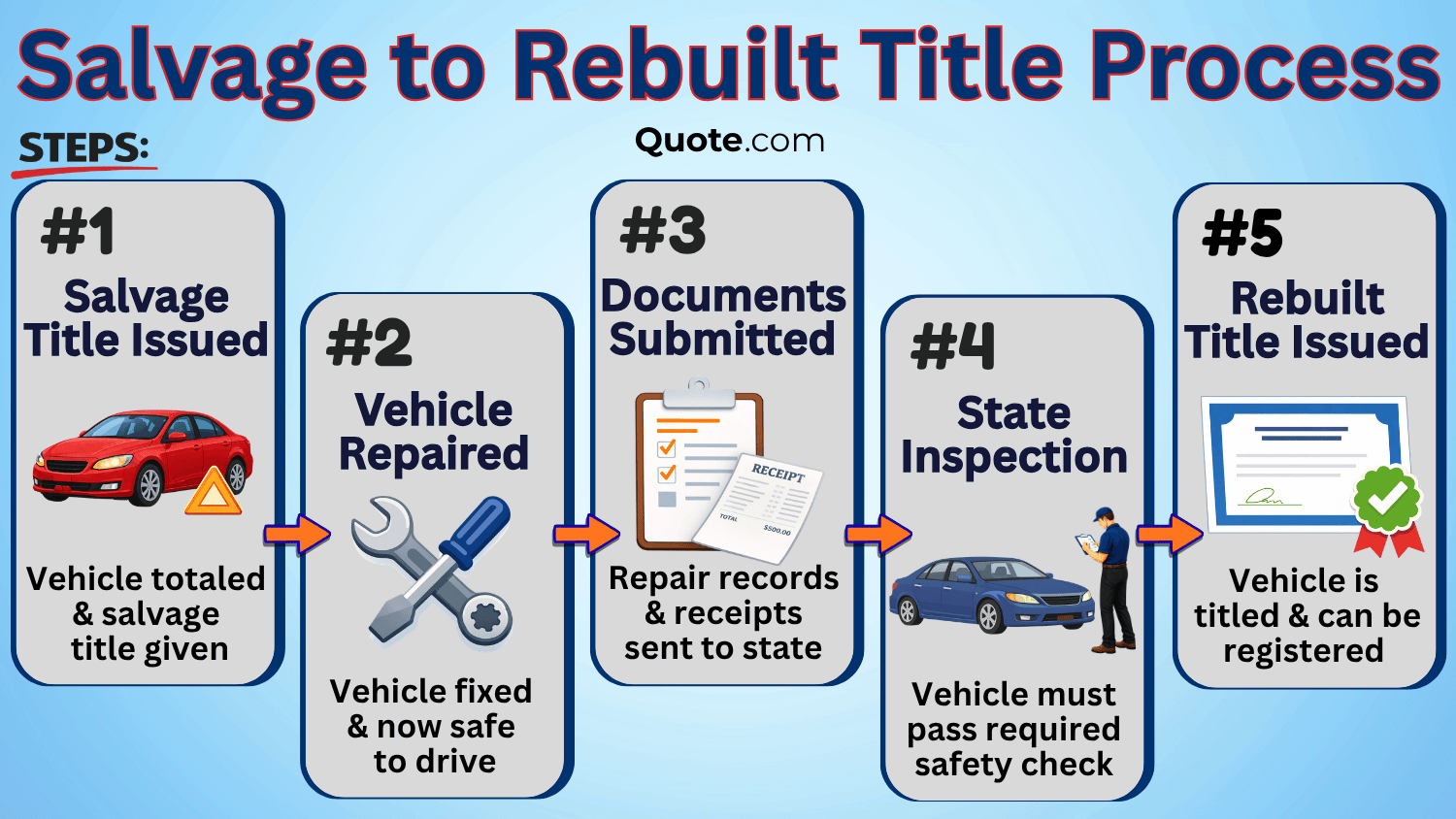 Simply fixing a salvage vehicle is not enough. Most states also require paperwork and safety inspections before they will give you a rebuilt title so you can register the car.
If you keep detailed repair receipts and records of any parts you replaced, you can get approval faster. This helps you register, insure, and drive your vehicle legally sooner.
Related: Auto Insurance Rates by State
Buyer Tips for Rebuilt and Salvage Title Owners
A car with the lowest price is not always the best deal, since the title status can affect how much you spend later and how easy it is to sell the car.
In many states, you need a rebuilt title inspection before you can register the car. Salvage vehicles usually cannot get license plates or be driven on public roads until they are fully restored.
Buying a Rebuilt vs. Salvage Title Vehicle: Pros & Cons| Topic | Rebuilt | Salvage |
|---|---|---|
| Buyer Risk | Moderate | Highest |
| Financing | Limited access | Rarely available |
| Insurance | Often available | Liability only |
| Purchase Price | Reduced cost | Lowest cost |
| Registration | Usually allowed | Not allowed |
| Repair Status | Fully repaired | Repairs needed |
| Resale Value | Higher value | Lowest value |
| Road Use | Legal to drive | Not road legal |
Insurance companies often ask for photos, repair receipts, and inspection certificates before they will provide coverage. Buyers might also need to get an independent inspection before they can get a loan.
Taking time to check for flood damage, airbag deployment, frame repairs, recall fixes, and replaced parts can help you avoid surprise repair costs and feel more confident about owning the car.
A rebuilt title allows a car that was once considered totaled to be driven again after it has been repaired, inspected, and approved by the state.
Drivers should keep repair receipts, inspection records, and title documents, since insurance companies and motor vehicle agencies may ask for them when registering the car.
Find Out More: How to Buy Insurance for a New Vehicle
Reselling Clean vs. Rebuilt vs. Salvage Title Vehicles
If you are deciding between a clean, salvage, or rebuilt title, check the vehicle history, get an independent inspection, look at the quality of repairs, and compare similar cars for sale in your area before you buy.
Taking these steps can help you figure out the car’s future value and give you an advantage when it’s time to negotiate. Compare Now: Auto Insurance Rates by Vehicle
Most buyers prioritize future ownership costs over repairs. Cars with documented service histories, for instance, typically sell 10% to 15% faster.
Brad Larson Licensed Insurance Agent
It’s much harder to sell a car if its title shows major damage. Buyers, dealerships, and lenders usually offer less money from the beginning.
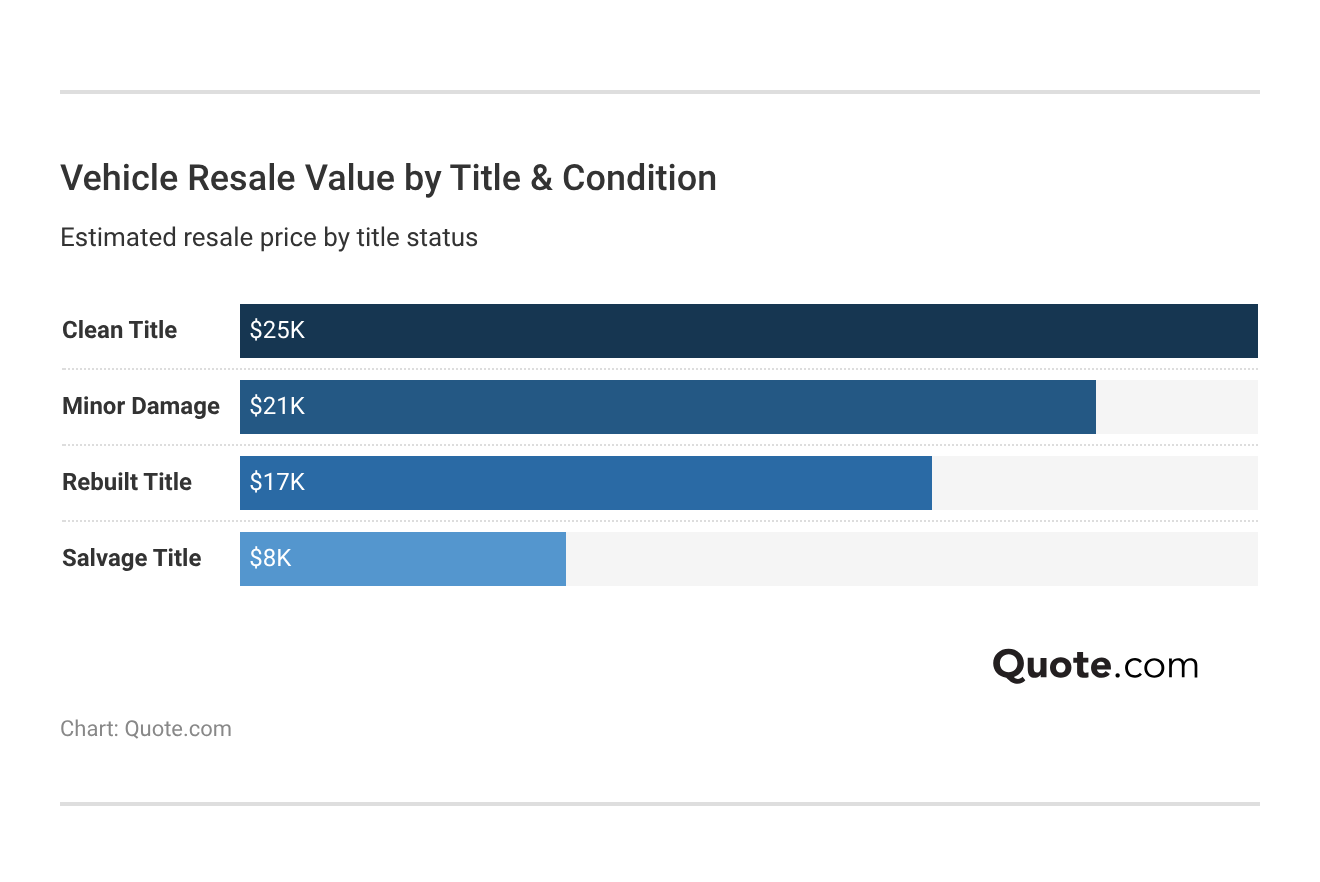
Even after repairs, a car’s resale value can go down after a crash. For example, a car with a clean title might sell for $24K, but after an accident, it could sell for only $20K, even if it’s fully repaired.
Cars with rebuilt titles usually sell for about $16K. The permanent note on the title makes them less appealing to buyers.
Salvage title vehicles tend to sell for around $9K because many can’t qualify for regular financing or insurance.
Choosing Between Salvage and Rebuilt Title Cars
If you are thinking about buying salvage and rebuilt vehicles, make sure to check insurance options, financing, inspections, and long-term costs before you decide.
Rebuilt vehicles may get full coverage insurance once they pass inspections. Salvage vehicles, on the other hand, usually only qualify for liability auto insurance.
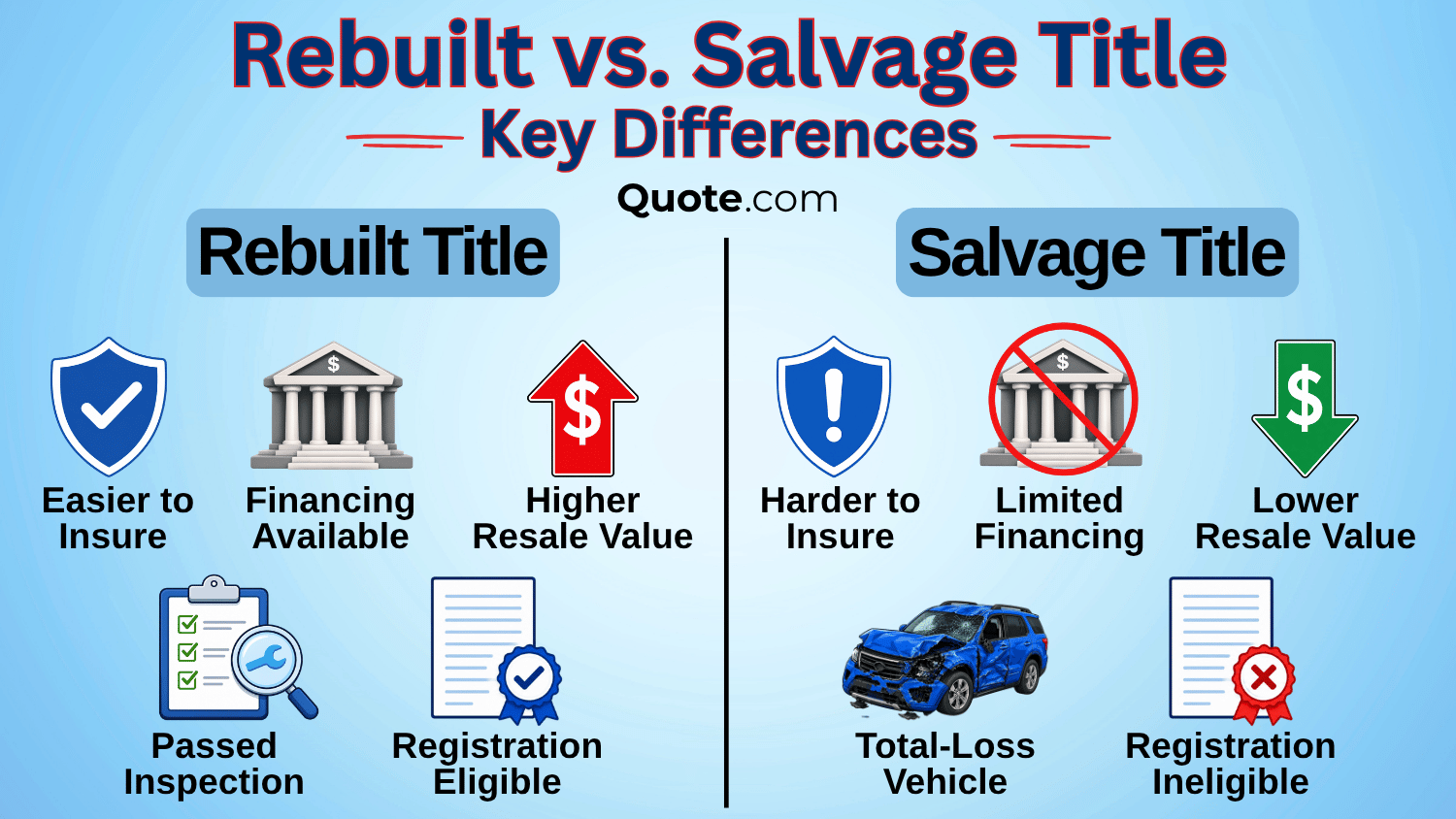
In some states, there are set salvage thresholds between 60% and 100%. In others, insurance companies decide when a vehicle is considered a total loss.
Before you buy, compare repair records, title history, insurance quotes, and resale value. This can help you avoid unexpected costs and protect your investment. Compare quotes and see what affects salvage vs. rebuilt title costs in your state.
Frequently Asked Questions
How much does a rebuilt title raise your insurance?
How much will a rebuilt title raise insurance? A rebuilt title may increase monthly insurance costs, but the exact amount depends on the insurer, vehicle condition, repair quality, location, and available coverage options.
How much is liability insurance for a rebuilt title?
The rebuilt title insurance cost for liability coverage is often higher than for a comparable clean-title vehicle, with monthly premiums depending on the insurer, vehicle value, repair history, and driver profile.
Can I get full coverage on a rebuilt title?
Yes. Some insurers offer full coverage auto insurance on rebuilt title vehicles after they pass required inspections and meet the company’s underwriting requirements.
What is the difference between a salvage vs. rebuilt vs. branded title?
A salvage title identifies a total-loss vehicle; a rebuilt title shows it has been repaired and passed required inspections; while a branded title is a broad term covering permanent title designations such as salvage, rebuilt, flood, or lemon.
Is a rebuilt title better than a salvage title?
A rebuilt title is generally better than a salvage title because the vehicle has been repaired, passed required state inspections, and can usually be registered and driven legally. Explore rebuilt vs. salvage title quote options by entering your ZIP code into our free quote comparison tool.
Does a rebuilt title affect insurance?
Yes. A rebuilt title can affect insurance by increasing monthly premiums, limiting coverage options, or requiring inspections before collision and comprehensive insurance coverage are approved.
Which insurance companies cover rebuilt title cars?
For buying a car with a rebuilt title, Nationwide generally offers liability coverage with minimal restrictions, while Progressive may provide full coverage after the vehicle passes a required inspection.
Does insurance go up if you buy a rebuilt title?
It can. When researching how to insure a rebuilt title car, drivers may find that some insurers charge higher monthly premiums or offer fewer coverage options because of the vehicle’s history.
Is it safe to buy a rebuilt salvage title car?
Yes. A rebuilt salvage title car can be safe if repairs were completed correctly, the vehicle passed state inspections, and an independent mechanic confirms its condition. An auto insurance guide can also help compare coverage options before buying.
Can a salvage or rebuilt title ever become a clean title?
Can a rebuilt title be converted to clean? No. A salvage title cannot usually become a clean title. After repairs and a successful inspection, most states replace the salvage title with a rebuilt title. Enter your ZIP code to compare rebuilt vs. salvage title insurance costs near you for free.
Can a rebuilt title car be reliable?
What are the negatives of a rebuilt title?
Why don’t people buy rebuilt title cars?
Is it difficult to resell a rebuilt title car?
What can’t you do with a rebuilt title?
Will a rebuilt title still say salvage?
Who pays the most for salvage title cars?
How to calculate salvage title value?
How much should a salvage title drop the price?
Why should you never buy a salvage title?
Is a rebuilt title hard to insure?
Does rebuilt title mean the car was totaled?
What is the difference between reconstructed vs. rebuilt title?
What happens if you get pulled over with a salvage title?
Related Articles
-
Jun 2026

Best Auto Insurance for DoorDash Drivers: Compare 2026 Delivery Rates
-
Mar 2026
Best Commercial Auto Insurance in 2026
-
Jun 2026
SR-22 Auto Insurance: Requirements & Costs in 2026
-
May 2026
Collision Insurance: What it Covers & Costs (2026 Guide)
-
Apr 2026
Auto Insurance Rates by Vehicle in 2026



Get a FREE Quote in Minutes
Insurance rates change constantly — we help you stay ahead by making it easy to compare top options and save.