Salvage Title: Insurance, Registration, & Resale Implications in 2026
A salvage title can lower a car’s value by 20% to 40%, which can mean a lower selling price and a smaller insurance payout. It means the car was previously declared a total loss after serious damage, theft, or flooding. Drivers may also have a harder time getting the car insured or registered.
Read more





Table of Contents
Table of Contents

Insurance Copywriter
Rachel Bodine graduated from college with a BA in English. She has since worked as a Feature Writer in the insurance industry and gained a deep knowledge of state and countrywide insurance laws and rates. Her research and writing focus on helping readers understand their insurance coverage and how to find savings. Her expert advice on insurance has been featured on sites like PhotoEnforced, AllWom...
Rachel Bodine

Head of Content
Meggan McCain, Head of Content, has been a professional writer and editor for over a decade. She leads the in-house content team at Quote.com. With three years dedicated to the insurance industry, Meggan combines her editorial expertise and passion for writing to help readers better understand complex insurance topics. As a content team manager, Meggan sets the tone for excellence by guiding c...
Meggan McCain

Licensed Insurance Broker
Zach Fagiano has been in the insurance industry for over 10 years, specializing in property and casualty and risk management consulting. He started out specializing in small businesses and moved up to large commercial real estate risks. During that time, he acquired property & casualty, life & health, and surplus lines brokers licenses. He’s now the Senior Vice President overseeing globa...
Zach Fagiano
Updated June 2026
Vehicles acquire a salvage title after an insurer declares a car a total loss because of a collision, flood, fire, theft, or other serious damage. Read More: Types of Auto Insurance
- Before rebuilding approval, a salvage title car must pass inspection
- With a salvage title, resale values may fall 20% to 40%
- Permanent branding follows a salvage title after all repairs
Afterward, you may face challenges with registration, inspections, and getting insurance. Claim payouts also tend to drop by 20% or more since the car’s value is lower.
This guide examines key insurance and title issues and compares three types of vehicle titles. We list the common reasons for a salvage title, including fire and flood damage, and explain how these factors affect financing, resale, and your ability to legally drive the car.
Find out how a salvage title impacts registration requirements and compare insurance options by entering your ZIP code today.
What is a Salvage Title?
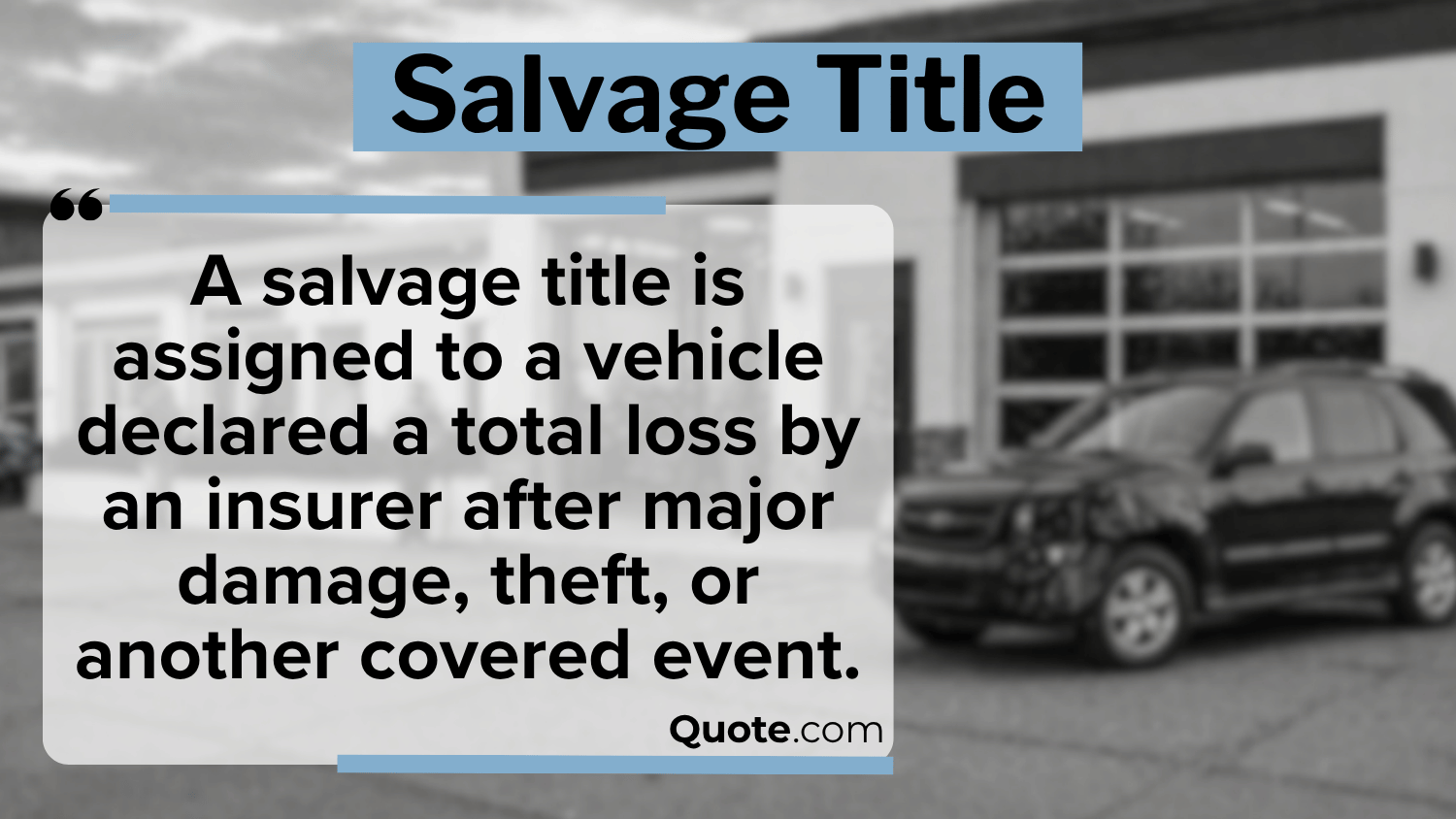
A car gets a salvage title when an insurance company decides that fixing the damage would cost more than the car is worth after a serious accident or total loss.
Insurance options are often limited because full coverage may not be available. Even if a car is approved as rebuilt, the salvage title stays on its record.
Buyers should expect lower resale prices, since a salvage history can make it harder to get a loan and can lower the car’s value over time.
In many states, cars with salvage titles have to pass inspections before they can be registered. Some cars cannot be driven again until repairs meet safety standards.
Salvage Title Basics: Key Facts & Requirements| Category | Details |
|---|---|
| Definition | Total loss after damage, theft, or floods |
| Inspection | State inspection may be required to drive |
| Insurance | Vehicle may not qualify for full coverage |
| Issued By | Salvage titles are usually issued by DMVs |
| Legal Use | Salvage vehicles may not be road legal |
| Prior Status | Most salvage vehicles had clean titles |
| Rebuilding | Vehicles may qualify for rebuilt titles |
| Registration | Registration requirements vary by state |
| Title Type | Salvage branding stays on title history |
| Value Impact | Salvage vehicles often lose resale value |
If your vehicle is stolen, totaled, or badly damaged, the cost to repair it might be more than what the car is worth, even if you have collision insurance.
In that case, the insurance company will label the car as a total loss. After a car is declared a total loss, it gets a salvage title.
What Causes a Salvage Title Declaration
A salvage title usually starts with one event that makes repairs cost more than insurance companies consider reasonable.
Major accidents, floods, fires, at-fault accidents, or structural problems often raise safety concerns that make repairs hard or not worth doing.
Salvage Title Triggers: Common Causes & Outcomes| Cause | Result |
|---|---|
| Collision Impact | Repair costs exceed vehicle value |
| Fire Damage | Extensive heat-related damage |
| Flooding Event | Vehicle deemed unsafe to operate |
| Hail Damage | Insurance declares a total loss |
| Storm Losses | Severe weather-related damage |
| Structural Failure | Vehicle structure is compromised |
| Theft Recovery | Insurer pays a total-loss settlement |
| Vandalism Claim | Damage exceeds the vehicle's value |
Damage from hail or storms can also lead to a total loss decision, even if the car still works somewhat.
Knowing these common causes helps buyers spot risks early and decide if repairs are worth the trouble with insurance, registration, and ownership later on.
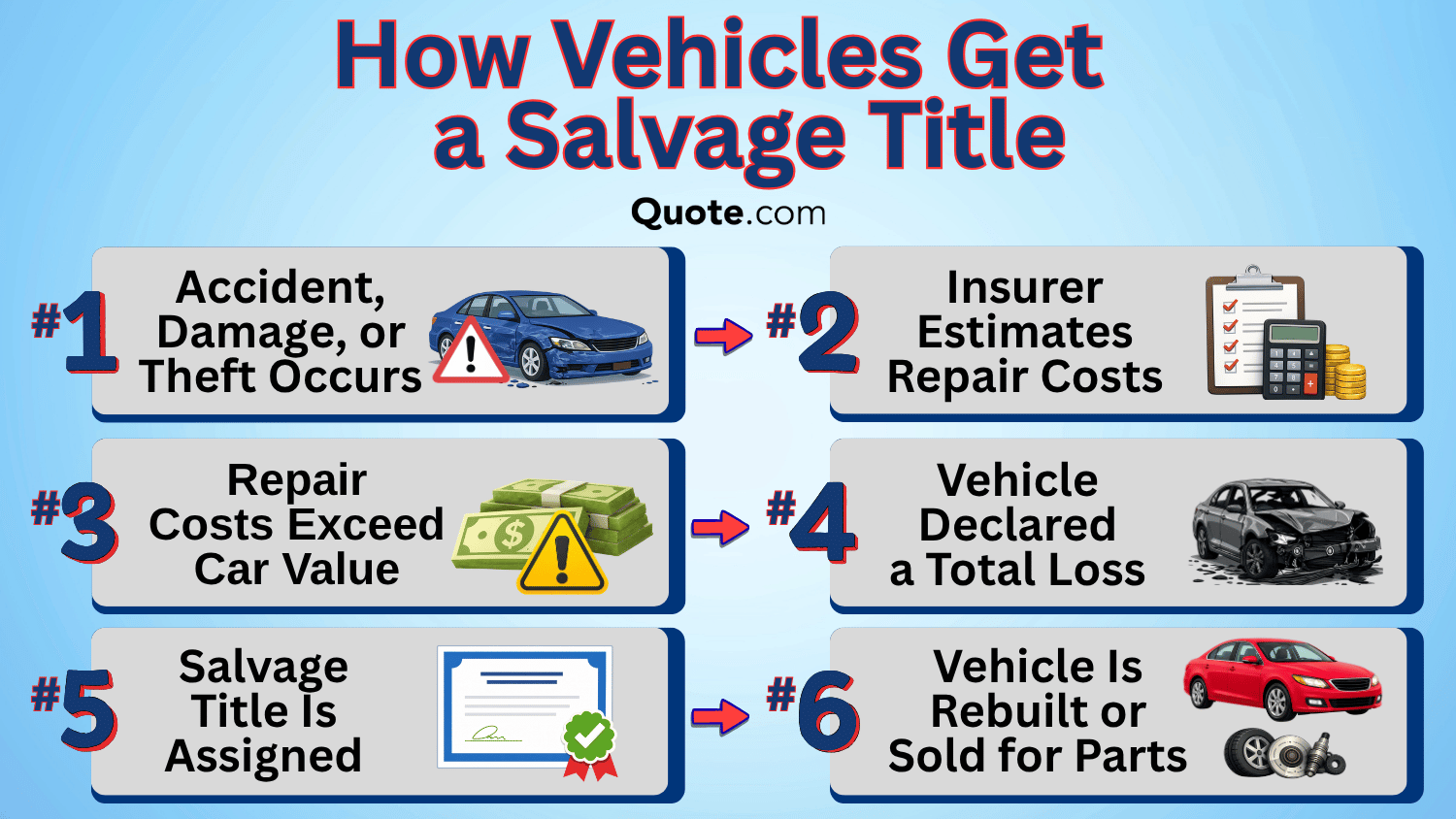
A salvage-titled vehicle might be repaired and used again if it passes inspection, or taken apart for parts. If you’re interested in buying a car with a salvage title, talk with your insurance company about the available coverage options.
If your current provider won’t cover salvage title cars, enter your ZIP code to find a salvage title auto insurance company near you.
Salvage Title vs. Rebuilt Title vs. Clean Title Cars
A vehicle’s title can affect your insurance options and how easy it is to sell the car later. Learn more in our guide: The Best Time to Buy a New Car
Vehicles with clean titles are usually the easiest to finance, register, and insure, and they rarely need extra paperwork.
Vehicle Title Comparison: Clean vs. Rebuilt vs. Salvage| Feature | Clean | Rebuilt | Salvage |
|---|---|---|---|
| Damage | Minor | Repaired | Severe |
| Financing | Available | Limited | Denied |
| Insurance | Standard | Approved | Restricted |
| Legal Use | Legal | Legal | Illegal |
| Registration | Simple | Inspected | Limited |
| Repair Status | Complete | Restored | Damaged |
| Resale Value | Highest | Lower | Lowest |
| Title Status | Clean Title | Rebuilt | Salvage |
| Vehicle Value | Highest | Reduced | Lowest |
Rebuilt titles fall in the middle. The repairs are done, but you might still need inspections or face some lender rules.
Salvage vehicles are the hardest to deal with. Registration can be limited, and many companies offer fewer salvage title auto insurance options.
If you’re thinking about buying a damaged car, be sure to consider repair costs. Even after repairs, the car may not regain its full value.
Thinking about more than just the purchase price can help you avoid surprises with financing, insurance, registration, or selling the car in the future.
Free Auto Insurance Comparison
Compare Quotes From Top Companies and Save
How to Get Car Insurance for Salvage Title Vehicles
To get car insurance for a salvage title vehicle, you will need to check the title status, finish any needed repairs, pass inspections, gather your paperwork, and compare quotes from different insurance companies.
Follow these simple steps to find coverage now:
- Check your vehicle’s title status and find out what your state requirements are
- Finish all needed repairs and keep records of the parts and work done
- Ensure your car passes any required state inspections to prove it is safe to drive
- Collect your repair records, inspection certificates, and photos of your vehicle
- Get quotes from companies that are willing to cover salvage-title vehicles
Insuring a salvage title vehicle might take extra paperwork and research, but you can usually get coverage once you meet the requirements.
Comparing several quotes and keeping complete repair records can help you find the right policy.
Salvage Title Insurance: Coverage Availability & Rules by Provider| Company | Covers Salvage | Full Coverage | Requirements |
|---|---|---|---|
 | Rebuilt Only | ✅ | Inspection Needed |
 | ⚠️Reviewed | ✅ | State Rules Apply |
 | ✅ | ✅ | History Review |
 | ❌ | ⚠️Reviewed | State Limits Apply |
 | Rebuilt Only | ✅ | Vehicle Inspection |
 | ⚠️Limited | ✅ | Repair Verification |
 | ⚠️Reviewed | ⚠️Reviewed | Higher Premiums |
 | ✅ | ⚠️Limited | Underwriting Review |
 | ❌ | ✅ | Strict Eligibility Rules |
 | ⚠️Limited | ❌ | Membership Access |
Salvage title insurance rules differ a lot between companies. Whether you get approved usually depends on whether the car has been rebuilt, inspected, or is still being checked.
Farmers and State Farm are more flexible about salvage eligibility. Allstate and Liberty Mutual mainly cover rebuilt cars that have passed inspections. Explore our review of “Allstate vs. Farmers, Geico, Progressive, & State Farm.”
Geico and Travelers have stricter rules, so drivers might get denied or have to go through extra reviews before getting coverage.
Nationwide and Progressive might check repair records, state laws, or possible higher premiums before they offer full coverage.
Many insurers look at repair costs compared to the car’s actual cash value before deciding if you qualify. If the loss is more than 75%, they will review your case more closely.
Brandon Frady Licensed Insurance Agent
USAA requires membership and has limited options for salvage cars, so getting approved is more specific than with a regular policy.
Looking up each company’s title rules ahead of time can help you avoid wasted applications, denied coverage, or delays after repairs.
How Salvage Title Insurance Coverage Works
It can be more difficult to insure a car with a salvage title because it is worth less, and insurance companies may have concerns about how well it was repaired.
It’s usually easier to get liability-only insurance, but getting full coverage might mean you need to provide inspection reports, repair records, and meet stricter requirements.
Salvage Title Insurance: Coverage, Costs, & Availability| Feature | Details |
|---|---|
| Claims | Claim payouts are often reduced |
| Coverage | Full coverage policies are limited |
| Deductibles | Higher deductibles may be required |
| Eligibility | Some insurers may deny coverage |
| Inspections | Vehicle inspections may be required |
| Liability | Liability-only coverage is common |
| Premiums | Insurance premiums are often higher |
| Repairs | Repairs can affect coverage approval |
| Settlements | Settlement values may be lower |
| Vehicle Value | Lower values may reduce payouts |
You might have to pay higher insurance deductibles and get smaller payouts, since insurance companies base their payments on the car’s lower value after it’s been branded as salvage.
If repairs weren’t done properly or you don’t have the right paperwork, your coverage could be denied, or your claim might be lower.
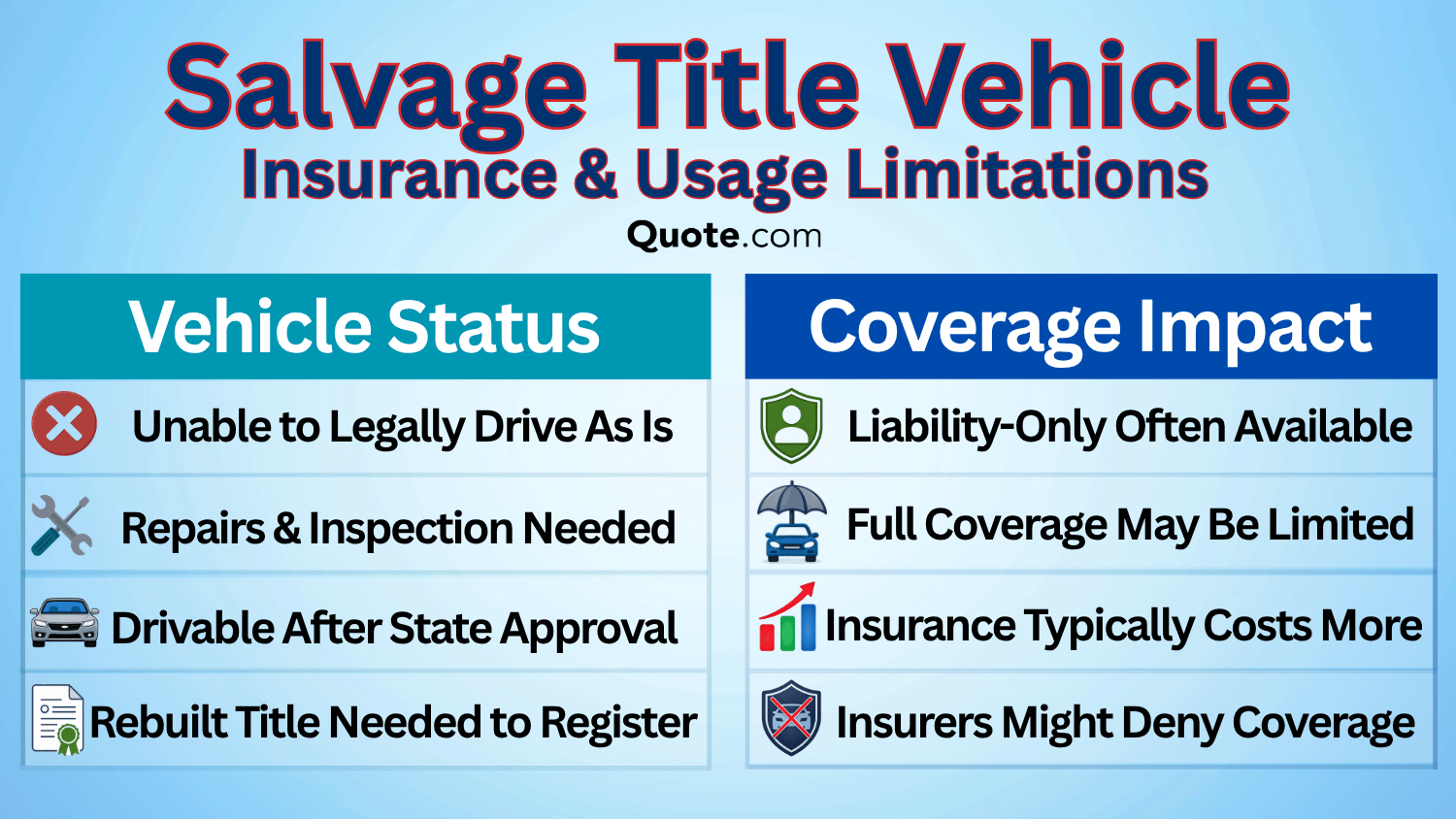
A vehicle with a salvage title can only be driven on public roads again after it has been repaired and passes state safety inspections. Afterward, insurance options are usually limited.
Liability coverage is still available, but full coverage may not be offered. Shop around with our free comparison tool to find the right salvage title car insurance.
How Salvage Titles Affect Insurance Claims
The outcome of a claim for a salvage title vehicle often depends just as much on the quality of your documentation as it does on the original damage.
Insurance companies usually review repair records, the vehicle’s condition, and inspection results before approving requests for collision or comprehensive coverage.
Salvage Title Insurance: Claims, Approvals, & Restrictions| Coverage Area | Policy Factors | Insurance Impact |
|---|---|---|
| Claim Payouts | Actual Cash Value | Lower Claim Value |
| Collision Coverage | Damage Severity | Limited Coverage |
| Comprehensive | Driving History | Coverage Denials |
| Insurance Premiums | Repair Records | Higher Premiums |
| Liability Coverage | Repair Quality | Liability Available |
| Medical Payments | State Regulations | Proof Required |
| Repair Approval | Theft Claim Risk | State Rules Vary |
| State Minimums | Vehicle Condition | Higher Theft Risk |
| Uninsured Motorist | Vehicle Inspection | Inspection Required |
Insurers may pay less on claims because of actual cash value, and they often make stricter decisions if there are theft risks or certain state rules.
If you keep detailed records of repairs, it can help prove you are eligible for coverage and may prevent delays when you file a claim in the future.
Important Details: How to File an Auto Insurance Claim & Win
State Salvage Title Inspection Rules
Depending on the state, what starts as simple paperwork for a salvage title can quickly turn into a longer inspection and registration process for owners.
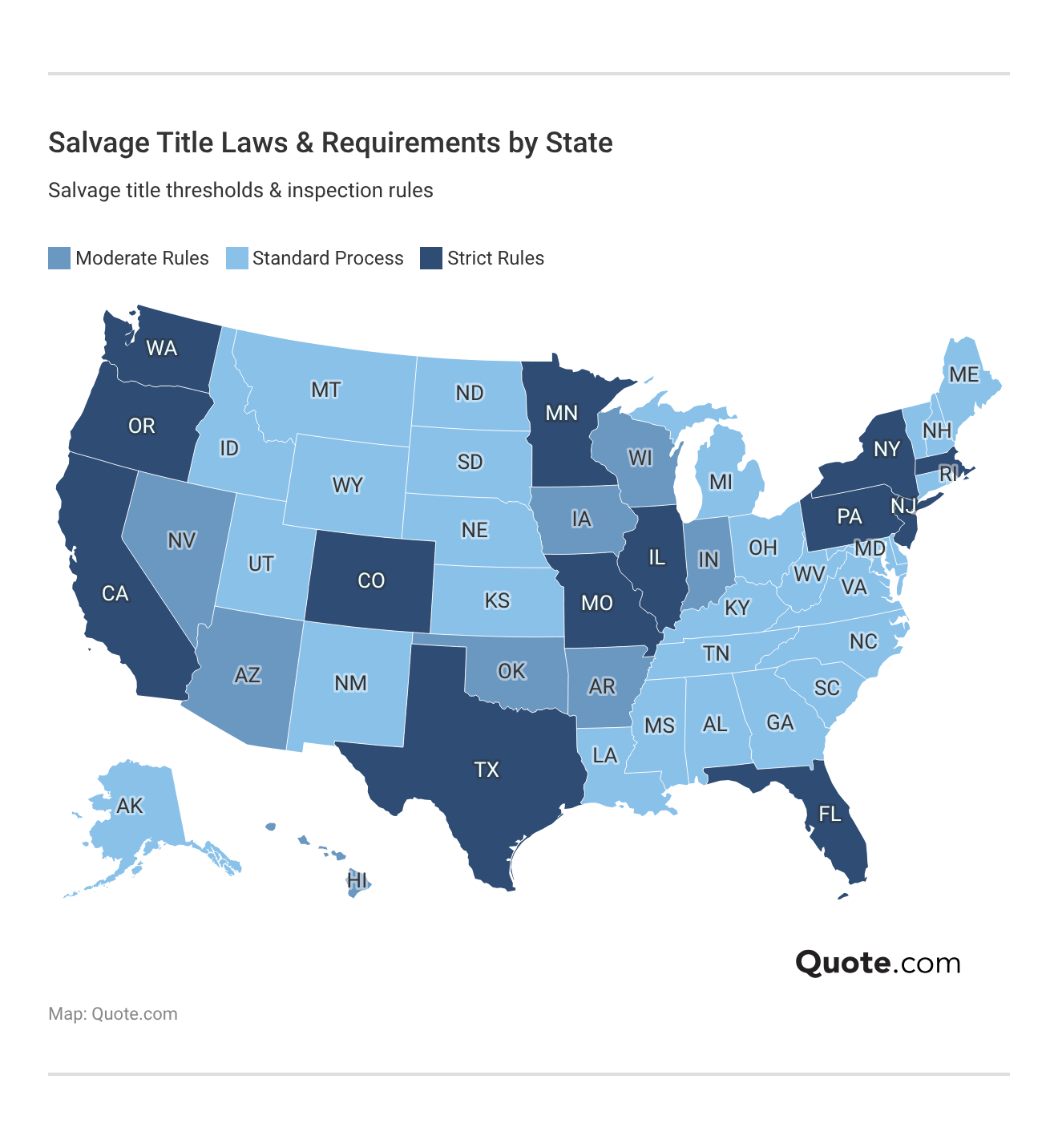
The map shows which states have moderate, standard, or strict rebuilt title rules. Check with your local DMV to find out what documents you need to buy car insurance for a salvage title before starting repairs.
States with strict rules may require more detailed inspections, while standard states still ask for proof of repairs before letting vehicles back on the road.
For instance, some states use a Total Loss Formula rather than setting a fixed percentage threshold.
In California, Illinois, and Pennsylvania, insurers decide if a car is a total loss by comparing repair costs and salvage value to the car’s actual cash value.
If you are moving to another state, check the DMV requirements early. A move can completely change what is needed for salvage approval, sometimes without warning.
Should You Buy a Salvage Title Car?
Buying a salvage title car can save you money at first, but its true value depends on how well it was repaired and what records are available. Knowing how to buy auto insurance for it is also important.
Buyers usually have more room to negotiate since hidden damage, failed inspections, and limited financing options can make these cars less popular.
Buying a Salvage Title Car: Benefits & Risks| Pros | Cons |
|---|---|
| More affordable purchase | Full coverage may be limited |
| Good for DIY repair projects | Higher insurance premiums |
| Lower upfront vehicle cost | Major damage may be hidden |
| More room to negotiate | Repairs may fail inspection |
| Useful for parts projects | Resale value may stay lower |
| Potential long-term savings | Some lenders deny financing |
| May qualify for rebuilt status | State registration rules vary |
| Possible future resale value | Vehicle history stays branded |
Some cars can later be classified as rebuilt, which might make them easier to use, but the salvage label will still show up on their records.
If you check the repair history and know your state’s rules, you can avoid surprises with insurance, registration, or selling the car later on.
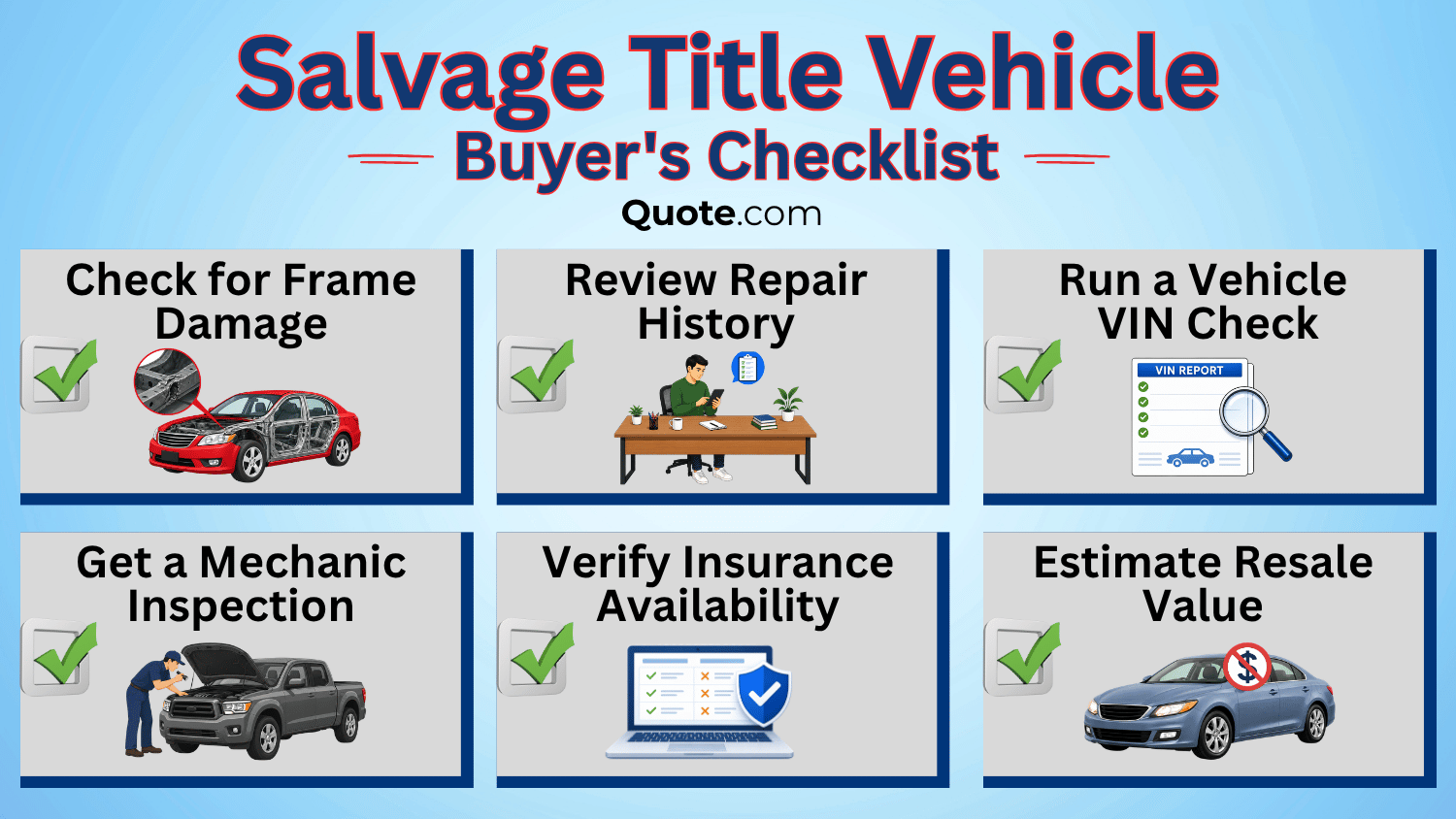
If you are thinking about buying a salvage title vehicle, check the repair records and look closely at the frame to spot any hidden structural issues as soon as possible.
Running a VIN search, checking the insurance history, and getting a professional inspection can help you avoid unexpected problems with coverage, value, or ownership later on.
Salvage Title Impact on Vehicle Value
The title status of a vehicle can have a big impact on its value even before any negotiations begin. What to Know: Average Cost of Auto Insurance
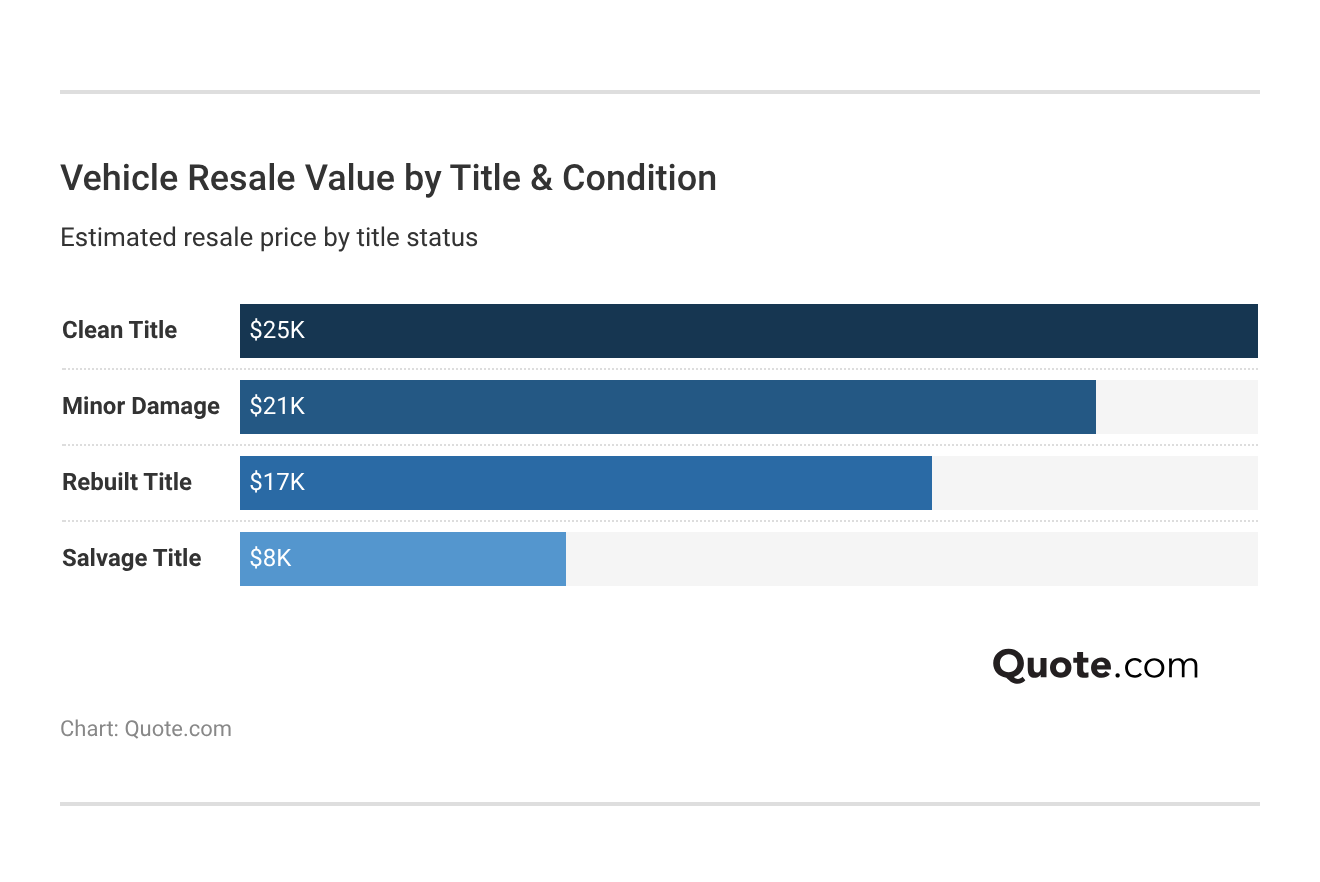
Vehicles with a clean title are worth about $24K on average. If a car has a history of crashes, its value usually drops to around $20K.
Cars with rebuilt titles are typically valued at $16K, since buyers consider both previous damage and possible future repairs.
Salvage title vehicles usually sell for about $9K. This shows how a permanent title brand can make a car less appealing and harder to sell.
Salvage Title vs. Rebuilt Title Value Guide
When deciding between a rebuilt or salvage title, you usually have to weigh the lower price against possible limits on ownership and flexibility.
Rebuilt vehicles have been repaired and can typically be driven on public roads once they pass the necessary inspections.
Rebuilt vs. Salvage Title: Insurance, Value, & Driving| Category | Rebuilt | Salvage |
|---|---|---|
| Buyer Risk | Lower | Higher |
| Condition | Repaired | Damaged |
| Drivable | ✅ | ❌ |
| Financing | ⚠️Possible | ❌ |
| Full Coverage | Limited | Rare |
| Inspection | ✅ | ✅ |
| Insurance | ✅ | ⚠️Limited |
| Registration | ✅ | ❌ |
| Repair Status | Completed | Incomplete |
| Resale Value | Reduced | Lowest |
You can often get financing and insurance for rebuilt cars, but lenders and insurers might have tougher requirements.
Salvage vehicles are harder to register, since you usually can’t get them on the road until they’ve had major repairs and passed inspections.
Full insurance coverage is more common for rebuilt titles. Salvage vehicles, on the other hand, often have limited coverage and more issues with getting insured.
In the long run, rebuilt vehicles usually have better resale value, since buyers prefer cars with finished repairs over those with damage that hasn’t been fixed.
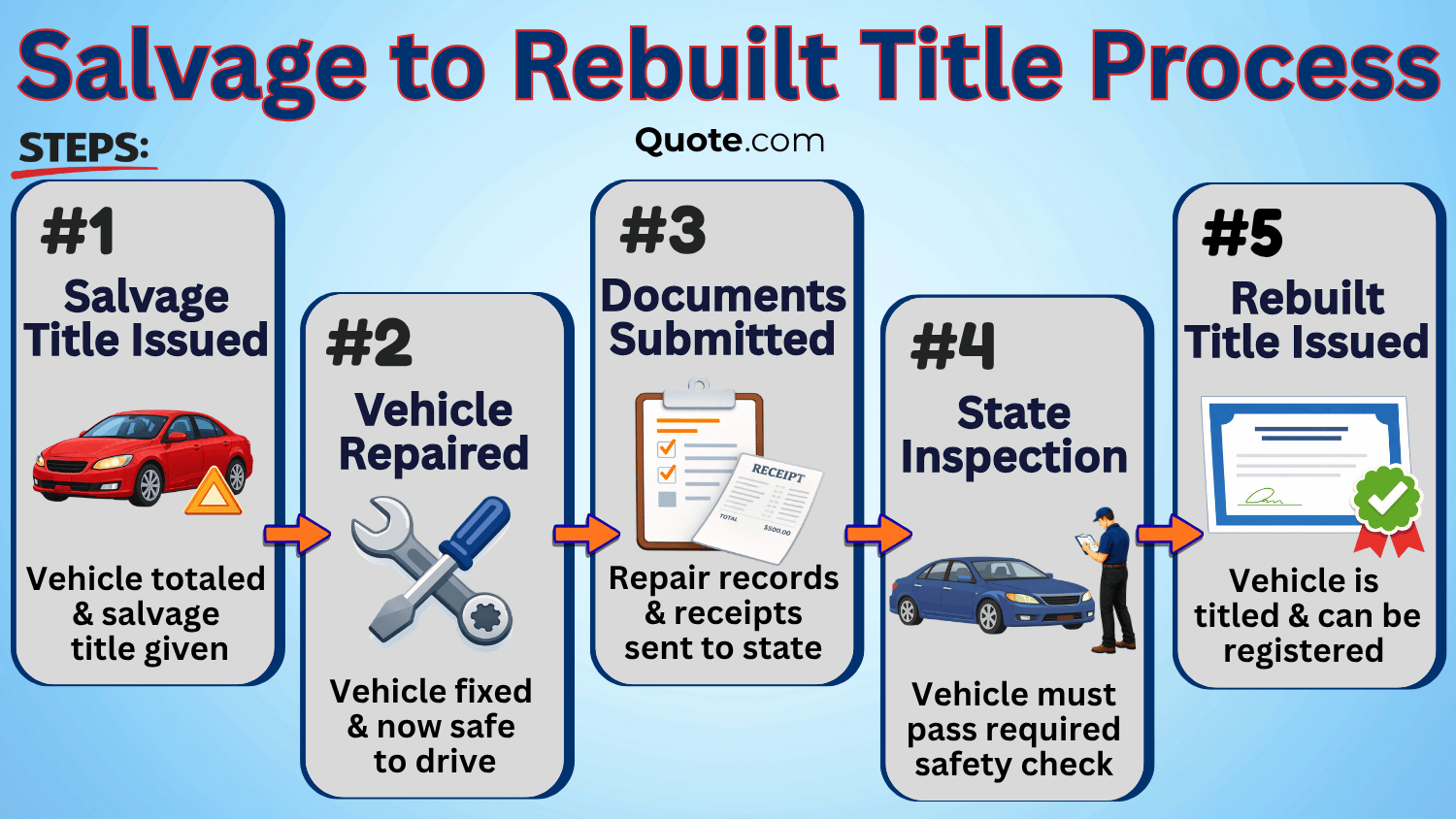
Once repairs are finished, owners need to submit their records and pass a state inspection to qualify for a rebuilt salvage title.
After approval, the vehicle can be legally registered and driven on public roads with its rebuilt status.
Free Auto Insurance Comparison
Compare Quotes From Top Companies and Save
Understanding Salvage Title Insurance
Buying a salvage title vehicle usually costs less, but you may have to deal with tougher insurance checks and more steps to register it.
See Our Article: Auto Insurance Rates by Vehicle
Most vehicles lose 20% to 40% of their resale value. On average, clean title cars sell for about $24,000, while salvage title cars go for around $9,000.
Even if your car passes inspection, not all insurers will offer coverage. Each company has its own underwriting rules.
Malory Will Insurance Copywriter
It can be more difficult to get financing, claim payouts might be smaller, and you may need extra inspections, especially if repairs cost more than 75% of the car’s value.
Review and apply for salvage title coverage choices and compare quotes by entering your ZIP code into our free comparison tool.
Frequently Asked Questions
What does a salvage title mean for car insurance?
A salvage title indicates that an insurer declared the vehicle a total loss after severe damage. Insurance is often available, but coverage options may be limited, and payouts may be lower due to the vehicle’s reduced value.
Can you get insurance with a salvage title?
Yes, insurance can be obtained for a salvage title vehicle, although many insurers only offer liability coverage until the vehicle is repaired, inspected, and issued a rebuilt title.
Is insurance more expensive for a salvage title car?
Not always. Liability auto insurance coverage may cost about the same as for similar vehicles, but some insurers charge higher rates or restrict coverage because salvage-title cars pose greater valuation and repair risks.
Can you get full coverage on a salvage title car?
Full coverage is difficult to obtain for a salvage-titled vehicle. Most insurers require the vehicle to be rebuilt, pass state inspections, and receive a rebuilt title before offering comprehensive and collision coverage.
What happens if someone hits your salvage title car?
The insurer typically evaluates the vehicle’s actual cash value, which is usually lower than that of a comparable clean-title vehicle. Any settlement reflects the reduced market value associated with the salvage title. See how a salvage title impacts registration and insurance by using our free quote comparison tool today.
Can you legally drive a car with a salvage title?
In most states, a vehicle with an active salvage title cannot be legally driven on public roads until it has been repaired, inspected, and reclassified in accordance with state requirements. Check It Out: Auto Insurance Rates by State
What happens if you drive a salvage title car illegally?
Driving a vehicle that is not legally roadworthy can result in fines, registration penalties, license consequences, or insurance claim complications if an accident occurs.
Which is worse: a salvage title or a rebuilt title?
A salvage title is generally considered worse because it indicates the vehicle has not yet completed the repair and inspection process. A rebuilt title shows the vehicle has been repaired and approved for road use.
How much does it cost to get a salvage title rebuilt?
Costs vary widely based on damage severity, parts prices, labor expenses, inspection fees, and state requirements. Rebuilding a salvage vehicle can cost anywhere from a few hundred to several thousand dollars. Find more insights in our guide, “Auto Insurance Requirements by State.”
How do I turn a salvage title into a clean title?
Most states do not allow a salvage title to revert to a clean title. After repairs and inspections, the vehicle usually receives a rebuilt or reconstructed title rather than a clean title. Explore salvage-title coverage options and find insurers that fit your needs with our free ZIP code quote tool.
How do I change a salvage title to a clean title?
What are the downsides of having a salvage title?
How does a salvage title affect resale?
How much does a salvage title reduce a car’s value?
Is buying a salvage title car a good idea?
Related Articles
-
Jan 2026

10 Best Auto Insurance Companies for Claims Handling in 2026
-
Jun 2026
Amica vs. Auto-Owners 2026
-
Apr 2026
NJM Insurance Review for 2026
-
Jun 2026
Medical Payments Coverage (MedPay) Explained for 2026
-
Jun 2026
Infinity Insurance Agency Review for 2026 (Compare Policies by Kemper)
-
Jan 2026
How to Cancel an Auto Insurance Policy in 2026




Get a FREE Quote in Minutes
Insurance rates change constantly — we help you stay ahead by making it easy to compare top options and save.