What is Medicaid? (2026 Coverage Guide)
Medicaid is a government-funded program providing essential health care coverage to low-income individuals of all ages. Medicaid eligibility is based on income, typically at or below 138% of the federal poverty level, with specific requirements varying by state. Certain disabilities will also qualify you for Medicaid.
Read more


Table of Contents
Table of Contents

Head of Content
Meggan McCain, Head of Content, has been a professional writer and editor for over a decade. She leads the in-house content team at Quote.com. With three years dedicated to the insurance industry, Meggan combines her editorial expertise and passion for writing to help readers better understand complex insurance topics. As a content team manager, Meggan sets the tone for excellence by guiding c...
Meggan McCain

Senior Director of Content
Sara Routhier, Senior Director of Content, has professional experience as an educator, SEO specialist, and content marketer. She has over 10 years of experience in the insurance industry. As a researcher, data nerd, writer, and editor, she strives to curate educational, enlightening articles that provide you with the must-know facts and best-kept secrets within the overwhelming world of insurance....
Sara Routhier

Licensed Insurance Broker
Zach Fagiano has been in the insurance industry for over 10 years, specializing in property and casualty and risk management consulting. He started out specializing in small businesses and moved up to large commercial real estate risks. During that time, he acquired property & casualty, life & health, and surplus lines brokers licenses. He’s now the Senior Vice President overseeing globa...
Zach Fagiano
Updated August 2026
You may be wondering, “What does Medicaid do?” Medicaid programs provide essential health insurance coverage to people who otherwise couldn’t afford it.
- Medicaid is a government program that covers most medical services
- Anyone with income ≤138% of the federal poverty level qualifies
- Income limits and eligibility rules can vary by state
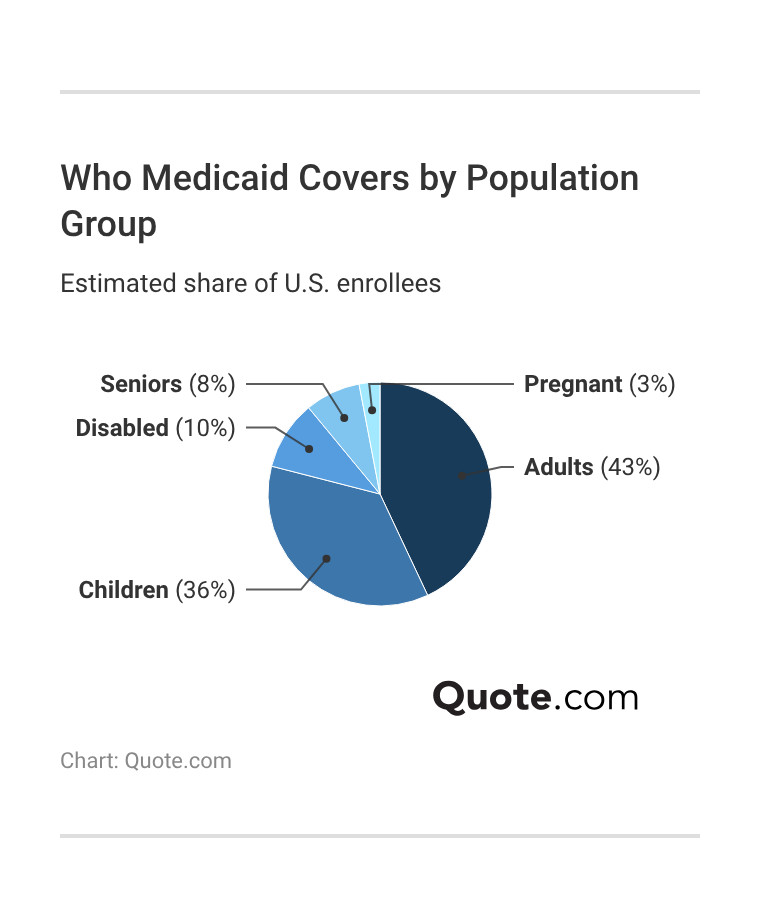
It’s available to Americans of all ages, and nearly half of all Medicaid beneficiaries are children.
Medicaid pays for doctor’s visits, hospital stays, prescriptions, and vaccines. Your income must be at or below 138% of the federal poverty level (FPL), but each state has different parameters. Our guide breaks down Medicaid explained in an easy-to-understand way.
Unsure what Medicaid covers? Call (855) 634-0435 now to connect with a licensed insurance agent who can explain your Medicaid options clearly. Compare cheap health insurance plans today with our free tool above.
What is Medicaid and How Does it Work?
Readers often ask, “What is Medicaid insurance?” To define Medicaid simply, it’s a government-funded program that helps make health care more affordable for people with limited income.
You can visit Medicaid-covered doctors to receive care at little or no cost.
To qualify, your income generally must be at or below 138% of the federal poverty level, though eligibility rules can vary by state.
The program was created in 1965 under the Social Security Amendments to expand access to medical care for people who couldn’t afford private health insurance.
Who can get Medicaid? Medicaid is available to several groups, including children, pregnant women, older adults, and people with disabilities. Understanding key facts about Medicaid can help you make informed health care decisions.
On the other hand, Medicare is a separate program that mainly serves people age 65 and older, as well as some younger individuals with qualifying disabilities.
Get a Free Medicare Plan Review
Speak With a Licensed Insurance Agent Today
What Medicaid Covers
Medicaid health insurance plans serve four main groups: children, adults with disabilities, seniors, and other eligible adults.
Coverage typically includes:
- Doctor visits and specialist care
- Prescription drugs and vaccines
- Hospital stays and nursing home care
- Dental and vision services
Certain services, like dental and vision care for adults, may be limited or not covered, depending on your state’s Medicaid program.
Many Medicaid plans are offered through managed care organizations. With managed care plans, you may need to see a Medicaid doctor in-network to receive full coverage.
What Medicaid Typically Covers vs. What it Doesn’t| Covered Services | Common Exclusions |
|---|---|
| Doctor visits and specialist care | Cosmetic or elective procedures |
| Hospital stays and inpatient care | Drugs not on the state formulary |
| Nursing home and long-term care | Experimental or unapproved treatments |
| Prescription medications | Medical care outside the U.S. |
| Preventive services and vaccines | Private rooms without medical need |
Medicaid usually doesn’t cover a private hospital room unless it’s medically necessary. Prescription coverage can vary, and Medicaid only pays for drugs listed on your state’s approved formulary. Check with your state Medicaid office to make sure your medication is covered.
Medicaid also supports a range of senior care options, including in-home care, assisted living support, and nursing home services for those who qualify.
However, Medicaid doesn’t cover cosmetic or elective surgeries or care received outside the United States.
Who’s Eligible for Medicaid?
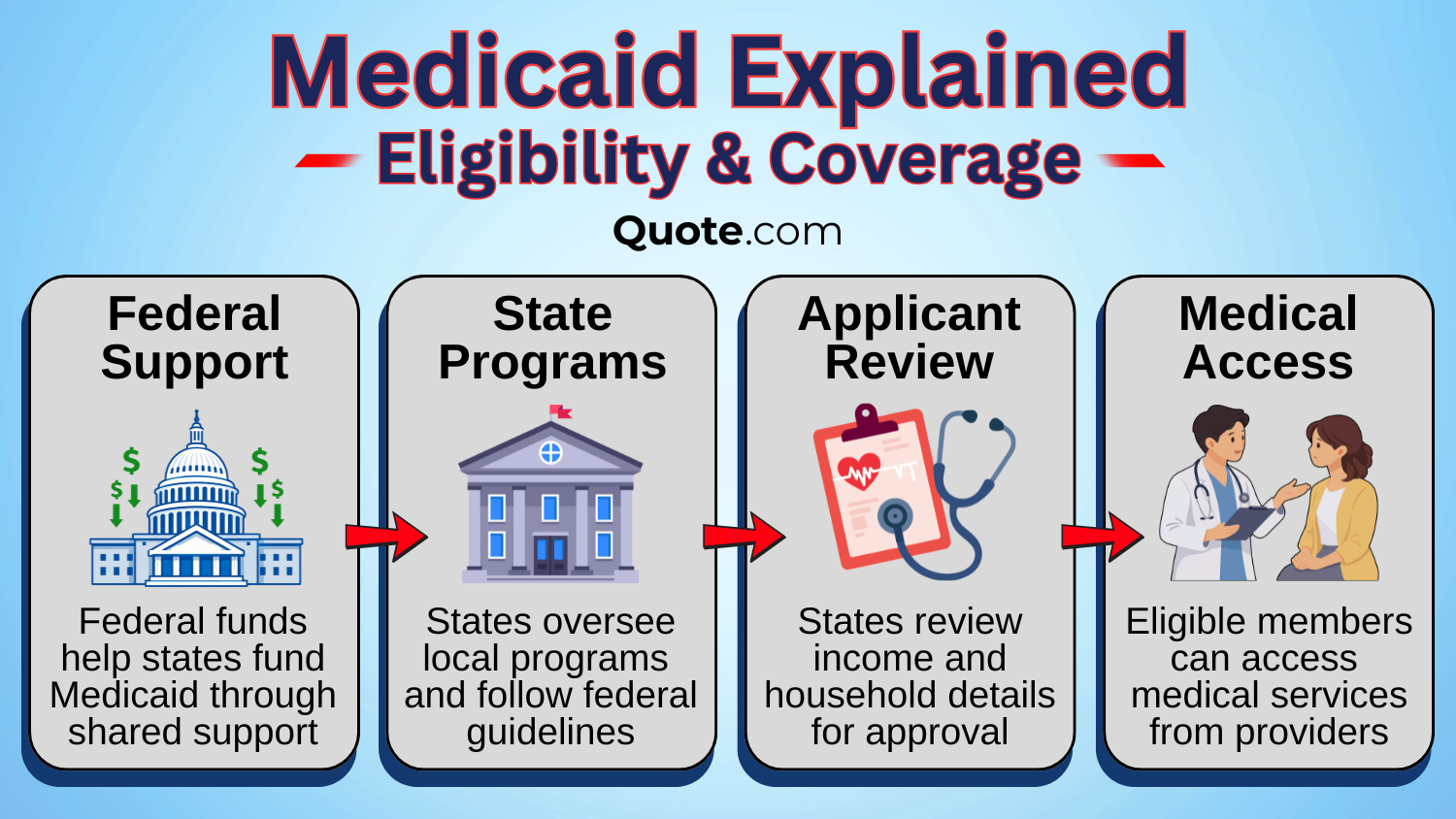
To further understand the Medicaid definition, it’s important to also understand eligibility requirements. Medicaid provides health care coverage for people with limited income and resources, based on federal Medicaid requirements.
Qualifying for Medicaid depends on your income, household size, and state requirements, but the program commonly covers:
- Low-income adults who meet state income limits
- Children in qualifying households
- Pregnant women who need prenatal care
- Adults age 65 and older with limited income
- People with disabilities who need medical support
Each state sets its own income limits. In some states, adults may qualify with income at or below 100% of the Federal Poverty Level (FPL), while others use different thresholds.
Common Groups That Qualify for Medicaid| Group | Typical Situation | Why They Qualify |
|---|---|---|
| 👶Children | Families below income limits | Access to pediatric care |
| 🦽Disabled Individuals | Physical or mental disabilities | Ongoing medical care |
| 💵Low-Income Adults | Low wages or unstable work | Can't afford private insurance |
| 🍼Pregnant Women | Expecting mothers with low income | Covers prenatal and birth care |
| 👵Seniors | Older adults with limited income | Helps cover long-term care |
Medicaid eligibility may also depend on household size, assets, and specific state expansion programs under the Affordable Care Act.
Since Medicaid income rules vary, contact your state Medicaid office or visit Medicaid.gov to check eligibility where you live. Enrollment periods for Medicaid are open year-round, meaning you can apply at any time rather than waiting for a specific enrollment window.
Medicaid applicants must provide proof of income during the application process. Acceptable documents often include pay stubs, tax returns, bank or pension statements, or a Social Security benefits letter.
You may also be wondering about Medicare eligibility. Check out our expert guide: Who is eligible for Medicare?
Medicaid Expansion vs. Non-Expansion States
Medicaid eligibility rules vary by state since each state runs its own Medicaid program.
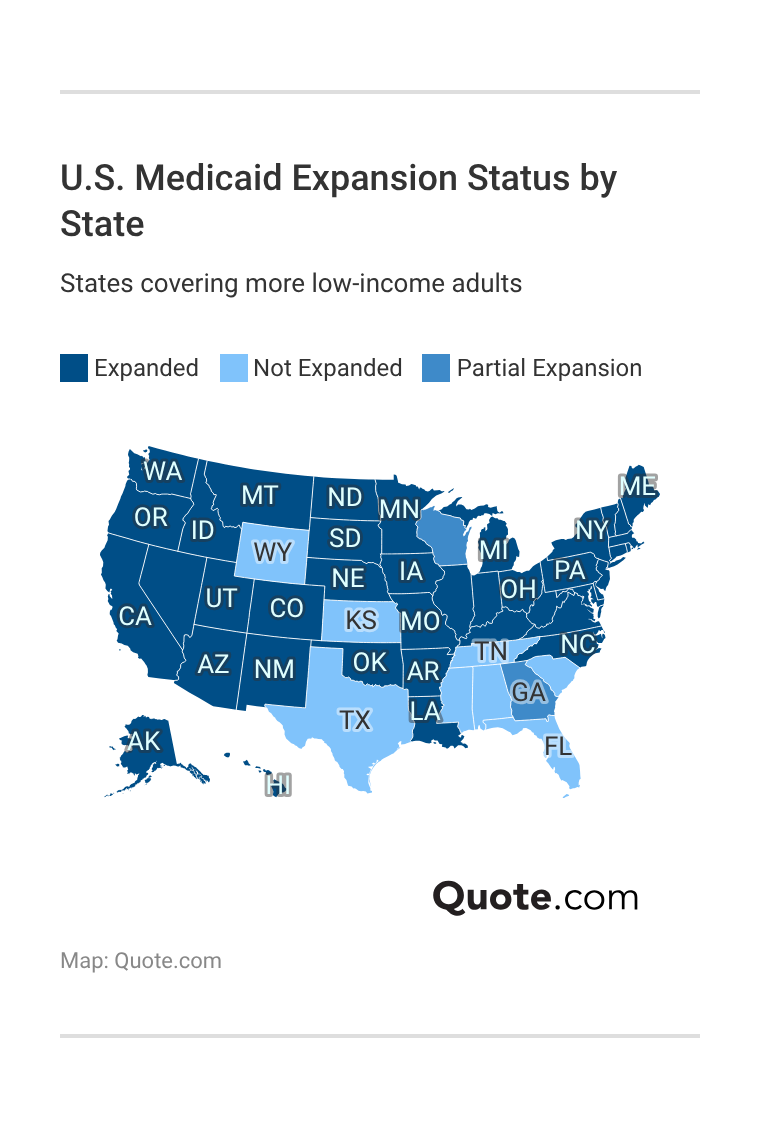
Under the Affordable Care Act (ACA), states can choose whether to expand Medicaid to cover more low-income adults.
Medicaid eligibility isn’t one-size-fits-all. Your state determines income thresholds and covered groups, which can dramatically impact access.
Schimri Yoyo Licensed Agent & Financial Advisor
Each state sets its own Medicaid income cutoff based on federal guidelines. In Medicaid expansion states, adults under age 65 may qualify if their household income is up to 138% of the federal poverty level (FPL).
This expansion allows many low-income Medicaid recipients without children to get coverage even if they don’t meet traditional Medicaid eligibility categories.
In non-expansion states, eligibility is more restricted, though Medicaid for pregnant women remains available, while other groups like children, seniors, and disabled individuals may also qualify.
If you live in a non-expansion state and do not qualify for Medicaid, you may still be able to find subsidized health insurance through the Health Insurance Marketplace.
How to Apply for Medicaid
Completing a Medicaid application is free and available through several methods, including online, by phone, by mail, or in person.
Most applicants go through the following steps:
- Check Eligibility: Review the income and eligibility rules for your state.
- Gather Documents: Collect documents that confirm identity, income, and residency.
- Submit the Application: Apply through Healthcare.gov, your state Medicaid website, or a local office.
- Respond to Requests: The state may request more information before making a decision.
- Receive a Decision: You’ll receive written notice explaining whether you qualify.
Medicaid renewal is required to maintain your health coverage each year.
If you’re approved, you may also need to select a Medicaid health insurance plan or primary care provider.
Get a Free Medicare Plan Review
Speak With a Licensed Insurance Agent Today
How Much Does Medicaid Cost?
Medicaid covers most health care services, including emergency care. Beneficiaries don’t pay for emergency services, preventive care for children, or family planning.
Is Medicaid free? Yes, Medicaid is often free, but some states may charge small copayments or coinsurance for certain services. These costs are limited and based on your income.
Medicaid Copays by Federal Poverty Levels (FPL) & Medical Services| Medical Services | 100% FPL | 150% FPL | >150% FPL |
|---|---|---|---|
| Medical Care | $0-$75 | 10% coinsurance | 20% coinsurance |
| Non-Emergency ER | $0-$8 | $0-$8 | 5% coinsurance |
| Prescription Drugs | $4-$8 | $4-$8 | $8 |
| Specialty Care | $0-$4 | 10% coinsurance | 20% coinsurance |
Many people enrolled in a Medicaid plan pay $0 in monthly premiums, which makes it one of the most affordable health coverage options for low-income individuals and families. Get a Medicaid quote to estimate your coverage and potential costs.
Federal rules cap how much states can charge for Medicaid services. If you do have out-of-pocket costs, they’re usually very low. Deductibles can be as little as $2.65, and copayments are typically $4 or less.
Read More: How much does Medicare cost?
Alternatives to Medicaid
If you don’t qualify for Medicaid, you may still have affordable health coverage options based on your income, age, or job.
- ACA Marketplace Plans: Health insurance plans sold through federal or state exchanges, often with income-based premium subsidies.
- Employer-Sponsored Coverage: Employer health plans where the employer and employee share premium costs. More Info: The Best State for Employer-Provided Health Insurance
- Medicare: Federal health insurance for adults 65 and older, and for some younger people with disabilities.
- Children’s Health Insurance Program (CHIP): Low-cost coverage for children in families with incomes too high to qualify for Medicaid.
Reviewing these options can help you find affordable health care coverage if you’re not eligible for Medicaid.
Ready to compare health insurance plans? Simply call (855) 634-0435 to speak with a licensed insurance agent today.
Medicaid vs. Medicare
Readers commonly ask us, “What’s the difference between Medicare and Medicaid?” Medicare and Medicaid serve different groups and are funded differently.
Medicare is a federal program, while Medicaid is funded jointly by the federal government and individual states, which is why benefits and costs can vary by state.
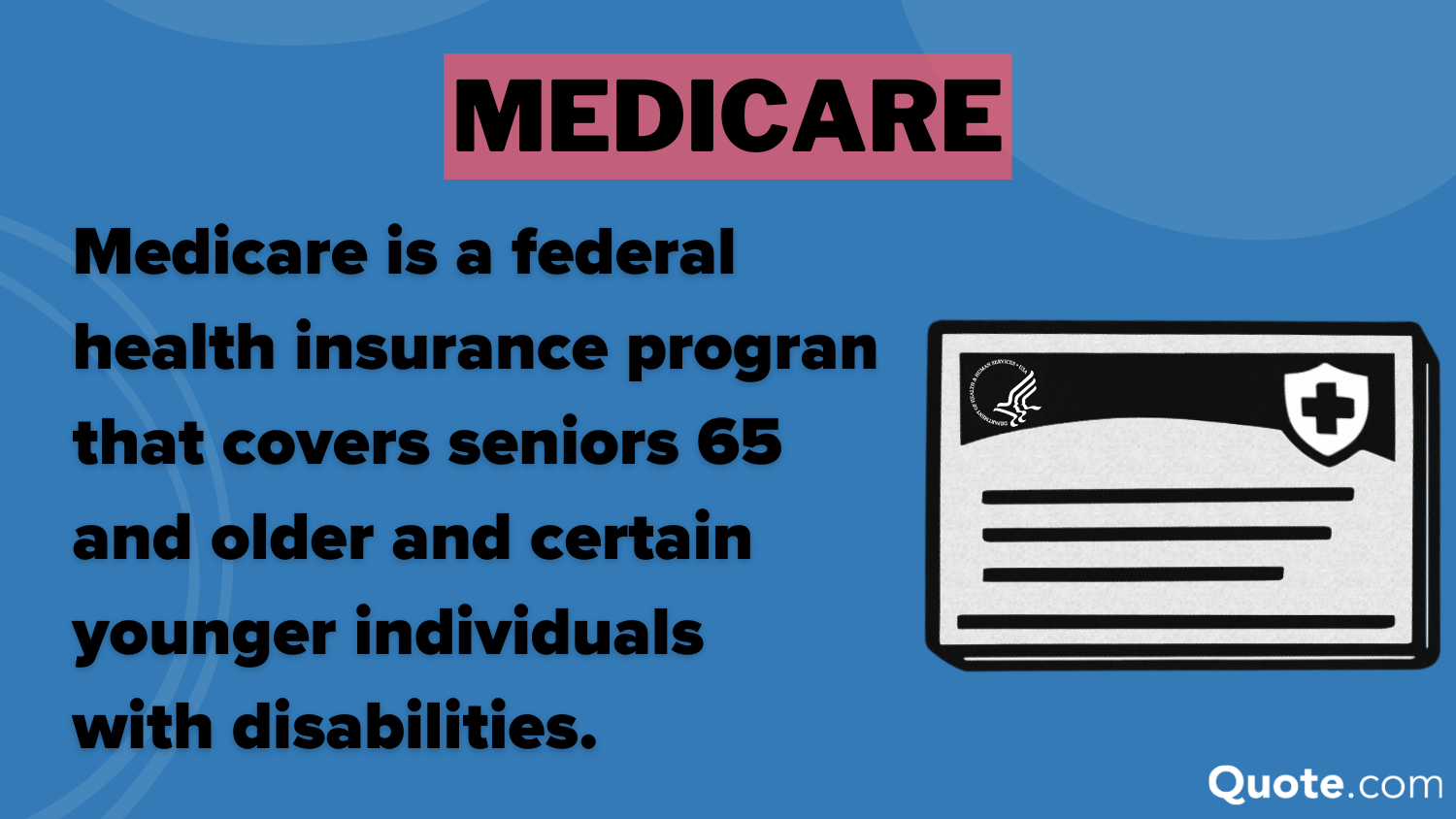
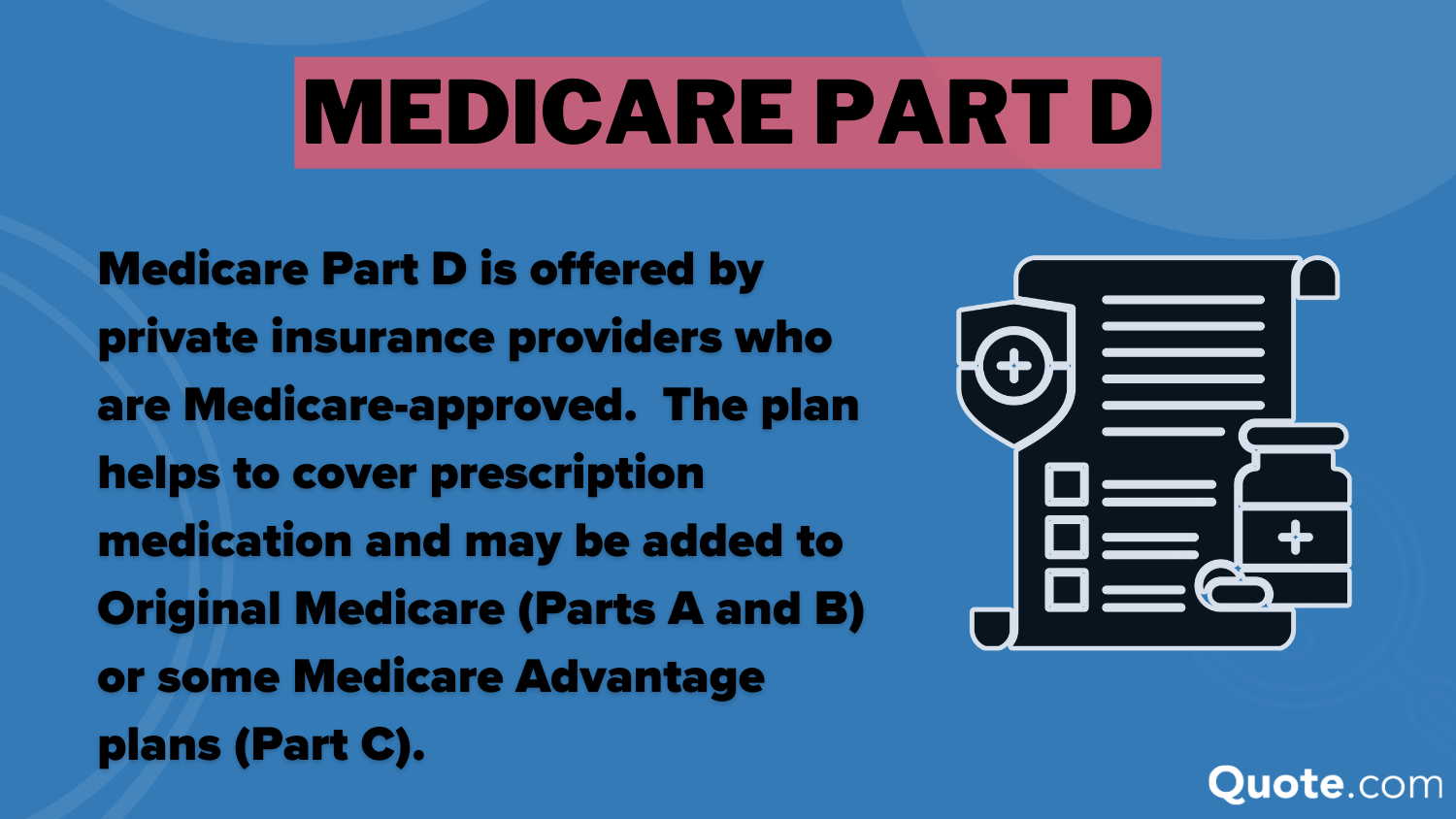
Medicare has four parts: Part A (hospital insurance), Part B (medical insurance), Part C (Medicare Advantage), and Part D (prescription drugs). Each part covers different types of benefits.
Dual eligibility lets some people qualify for both Medicare and Medicaid at the same time, which can lower overall health care costs through coordinated coverage. Medicaid can play a key role in senior benefits by helping cover long-term care costs that Medicare typically doesn’t pay for.
Medicare eligibility is based on age or disability status, while Medicaid eligibility is based on income and financial need.
Adam Lubenow Medicare Broker
Access to Medicare is limited to older Americans over 65. Certain diagnoses can qualify younger people for Medicare, but Medicare doesn’t have income limits like Medicaid. Read More: Medicare Guide: Coverage, Costs & Enrollment
Medicaid, on the other hand, doesn’t have any age or health requirements.
How Medicaid and Medicare Compare| Feature | Medicaid | Medicare |
|---|---|---|
| Coverage Scope | Medical, long-term care | Hospital, medical, Rx |
| Enrollment Rules | Income/asset requirements | Age or disability eligibility |
| Primary Purpose | Income-based coverage | Age-based coverage |
| Program Funding | Federal and state | Federal government |
| Who Qualifies? | Low-income individuals | Adults age 65+ |
Medicare eligibility also comes with perks like Medicare Savings Programs. These plans help cover some of Medicare’s deductibles, coinsurance, and copayments, as well as prescription drugs. If you’re enrolled in Medicaid, you qualify for:
- Qualified Medicare Beneficiary Plus (QMB+) Program: Covers Medicare Part A and Part B out-of-pocket costs, plus full Medicaid benefits.
- Specified Low-Income Medicare Beneficiary Plus (SLMB+) Program: Covers Medicare Part B premiums and provides full Medicaid benefits.
Research these savings programs and compare companies when you sign up for Medicare to lower your health care costs.
Get a Free Medicare Plan Review
Speak With a Licensed Insurance Agent Today
Get the Most From Your Medicaid Coverage
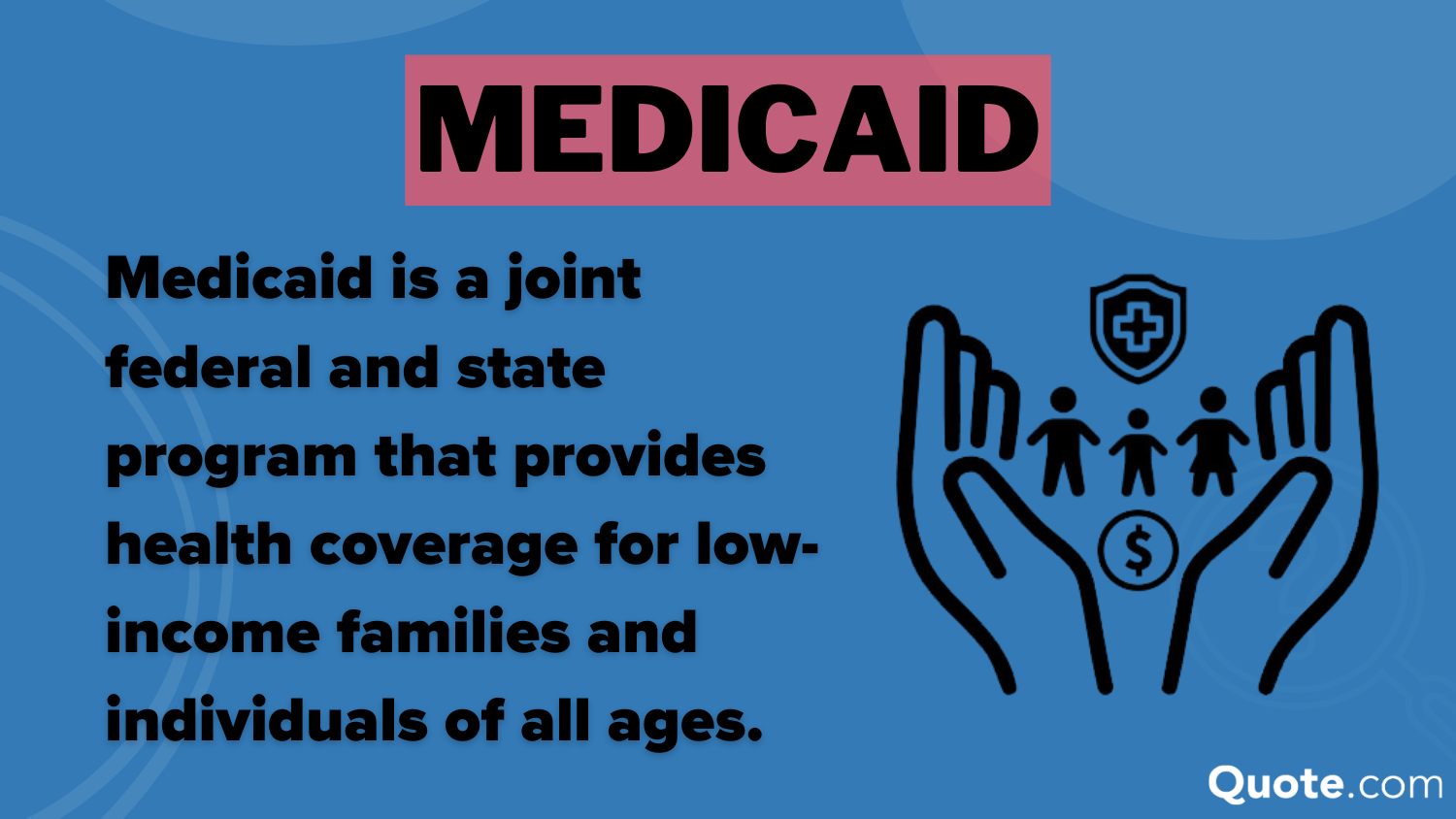
What is Medicaid? Medicaid insurance is a joint federal and state program that provides health care coverage to people with limited income.
To qualify, your income usually needs to fall at or below a set percentage of the federal poverty level, though the exact limit depends on your state.
Even if you qualify, you may still have small out-of-pocket costs for certain services. Learn More: How to Finance What Your Health Insurance Won’t Cover
You’ll also need to choose a Medicaid provider who participates in your plan’s network. Understanding the advantages and disadvantages of Medicaid can help you decide if it fits your needs.
Medicaid covers care like doctor visits, hospital stays, prescriptions, and vaccines, with some limits on services like private rooms and elective procedures. Many plans also include dental and vision coverage.
Medicaid health coverage is often confused with Medicare, but they serve different groups. Medicare is a federal program mainly for people age 65 and older or those with certain disabilities, while Medicaid is available to eligible individuals of any age. However, we can still help you compare coverage options for Medicare Advantage vs. Original Medicare.
Ready to compare health insurance quotes? Simply call (855) 634-0435 to discuss Medicare plan options with a licensed insurance agent, or enter your ZIP code into our free comparison tool to find top-rated plans near you.
Frequently Asked Questions
How does Medicaid work?
Medicaid is a state-run program that provides low-cost or no-cost health care for people who meet income requirements. Benefits vary by state but usually include routine care, hospital services, medications, and some long-term care. Enrollment is handled by your state, and out-of-pocket costs are often $0 or very low.
Who is currently eligible for Medicaid?
Medicaid provides health care for people with low income, including some children, pregnant women, parents, older adults, and people with disabilities. In many states, adults qualify with income up to about 138% of the federal poverty level.
What is covered by Medicaid?
A top question readers ask is, “What does Medicaid pay for?” The purpose of Medicaid is to cover common health care services such as doctor visits, hospital care, preventive screenings, lab tests, and prescription medications. Some states also include benefits like dental, vision, and long-term care services.
Medicaid providers must be in-network for most health insurance plans to cover services at the lowest cost.
Want to understand your coverage options more? Call (855) 634-0435 to speak to a licensed insurance agent now or enter your ZIP code to compare Medicaid quotes side by side.
Does Medicaid cover dental?
Medicaid always covers dental care for children, but adult dental coverage varies by state. Some states cover basic services like exams and cleanings, while others offer limited or no dental benefits for adults.
Does Medicaid cover home care?
Yes, Medicaid can cover home care services, but coverage and eligibility vary by state and typically require a medical need.
What does Medicaid not cover?
Medicaid usually doesn’t cover cosmetic procedures or care that isn’t medically necessary. Some states also place limits on services like dental, vision, and long-term care, so it’s important to compare health insurance plans before choosing coverage.
How does Medicaid verify income?
To confirm eligibility, Medicaid checks income using tax filings, Social Security records, and state wage data. You may be asked to provide proof of income, such as recent pay stubs or a tax return.
What disqualifies a person from Medicaid?
A person may not qualify for Medicaid if their income or assets are above their state’s limits. You can also be denied if you don’t meet residency, citizenship, or eligibility category requirements. Since each state runs its own program, the exact rules can vary.
Call (855) 634-0435 today to speak with a licensed insurance agent about your options. You can also enter your ZIP code to explore plans available in your area.
What is the lowest income to qualify for Medicaid?
There is no single lowest income requirement nationwide. Eligibility depends on the state, but in many states, adults may qualify if their income is up to about 138% of the federal poverty level.
Learn More: How to Sign up for Medicare
How much does Medicaid cost?
Medicaid is often free, and many people pay $0 in monthly premiums. Some states charge small copays or coinsurance based on income, but costs are limited. Out-of-pocket expenses are usually very low, with deductibles sometimes as low as $2.65 and copays often $4 or less.
At what age does Medicaid stop?
What’s the difference between Medicaid and Medicare?
Who is eligible for both Medicare and Medicaid?
Can you have both Medicaid and CHIP?
Is Medicaid federal or state?
Is Medicaid funded by the federal government?
What is Medicaid expansion?
Who is not eligible for Medicare?
How many Americans are on Medicaid?
What qualifies someone to be eligible for Medicare early?
Related Articles
-
Aug 2026

What is Medicare Part D? (Coverage Details for 2026)
-
Dec 2025
Medicare Supplemental Insurance (Medigap) in 2026
-
Dec 2025
Medicare Advantage vs. Original Medicare in 2026
-
Jan 2026
Medicare Advantage Maximum Out-of-Pocket (MOOP) in 2026
-
Jan 2026

Best Gastroenterologists That Accept Medicare in 2026
-
Jan 2026
How to Sign up for Medicare in 2026





Get a FREE Quote in Minutes
Insurance rates change constantly — we help you stay ahead by making it easy to compare top options and save.