Medicare Part B (2026 Guide)
Medicare Part B covers doctor visits, preventive care, outpatient services, and medical equipment for people 65 and older and certain individuals with disabilities. The standard premium is $202.90 a month, and beneficiaries must pay an annual Medicare Part B deductible, though savings programs may help lower costs.
Read more


Table of Contents
Table of Contents

Managing Editor
Daniel S. Young began his professional career as chief editor of The Chanticleer, a Jacksonville State University newspaper. He also contributed to The Anniston Star, a local newspaper in Alabama. Daniel holds a BA in Communication and is pursuing an MA in Journalism & Media Studies at the University of Alabama. With a strong desire to help others protect their investments, Daniel has writt...
Daniel S. Young

Senior Director of Content
Sara Routhier, Senior Director of Content, has professional experience as an educator, SEO specialist, and content marketer. She has over 10 years of experience in the insurance industry. As a researcher, data nerd, writer, and editor, she strives to curate educational, enlightening articles that provide you with the must-know facts and best-kept secrets within the overwhelming world of insurance....
Sara Routhier

Licensed Insurance Agent
Michelle Robbins has been a licensed insurance agent for over 13 years. Her career began in the real estate industry, supporting local realtors with Title Insurance. After several years, Michelle shifted to real estate home warranty insurance, where she managed a territory of over 100 miles of real estate professionals. Later, Agent Robbins obtained more licensing and experience serving families a...
Michelle Robbins
Updated November 2026
Medicare Part B covers medical insurance costs for seniors 65 and older. It generally pays 80% after the deductible; covered home healthcare and many preventive services cost $0.
- Seniors turning 65 generally have 7 months to enroll in Medicare Part B
- The standard Medicare Part B premium is $202.90 per month
- Medicare Advantage and Medigap can help lower Medicare Part B costs
Medicare Part B is part of Original Medicare, but unlike Part A, it is not free. The standard monthly premium is $202.90, and you may also owe an annual deductible, copays, or coinsurance for covered services.
Learn More: Medicare Advantage vs. Original Medicare
Use this guide to compare Medicare costs and learn when you may be able to avoid paying the Part B premium. If you still have questions, call (855) 634-0435 to speak with a licensed insurance agent. You can also enter your ZIP code to explore plan options in your area.
What Medicare Part B Covers
What does Medicare Part B cover? Medicare Part B is the medical insurance part of Original Medicare plans. It partially covers visits to your doctor, outpatient hospital services, and care from other licensed healthcare providers, including mental health and substance abuse specialists.
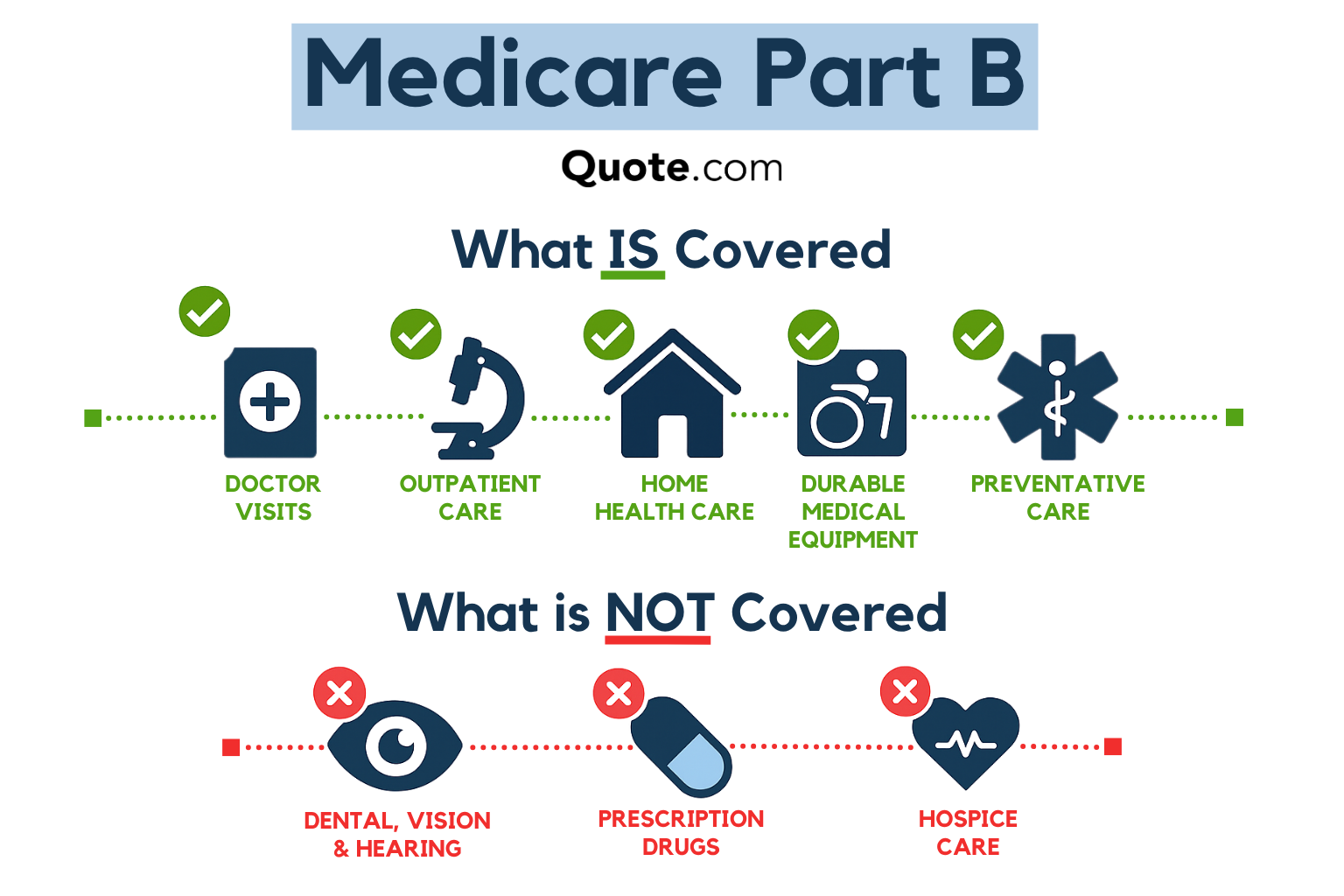
It also pays for durable medical equipment (DME), such as wheelchairs, canes and walkers, hospital beds, oxygen equipment, and blood sugar monitors.
In some cases, Part B will cover certain outpatient prescription drugs associated with DME. Screenings and annual vaccines are also covered by Medicare Part B. Read More: Best Endocrinologists That Accept Medicare
Medicare Part B: Pros and Cons| Feature | Pros | Cons |
|---|---|---|
| Costs | Lowers out-of-pocket costs | Ongoing expenses remain |
| Enrollment | Special enrollment periods | Late penalties possible |
| Outpatient Coverage | Covers doctor & diagnostic care | Doesn’t cover everything |
| Plan Coordination | Works with Medicare plans | May need extra plans |
| Provider Access | Widely accepted by providers | Higher non-approved costs |
Part B is the medical insurance side of traditional Medicare plans. It covers medically necessary outpatient care and equipment, including:
- Ambulance Services: Emergency and medically necessary transportation to hospitals or skilled care facilities.
- Durable Medical Equipment (DME): Wheelchairs, walkers, hospital beds, oxygen supplies, and similar items deemed medically necessary by a doctor.
- Doctors & Specialists: Outpatient care, including checkups, vaccines, and treatment from approved providers.
- Outpatient Prescription Drugs: Certain drugs given in medical settings or used at home, including with DME.
- Mental Health Services: Outpatient psychiatric care as prescribed by a doctor, including counseling and some preventive screenings.
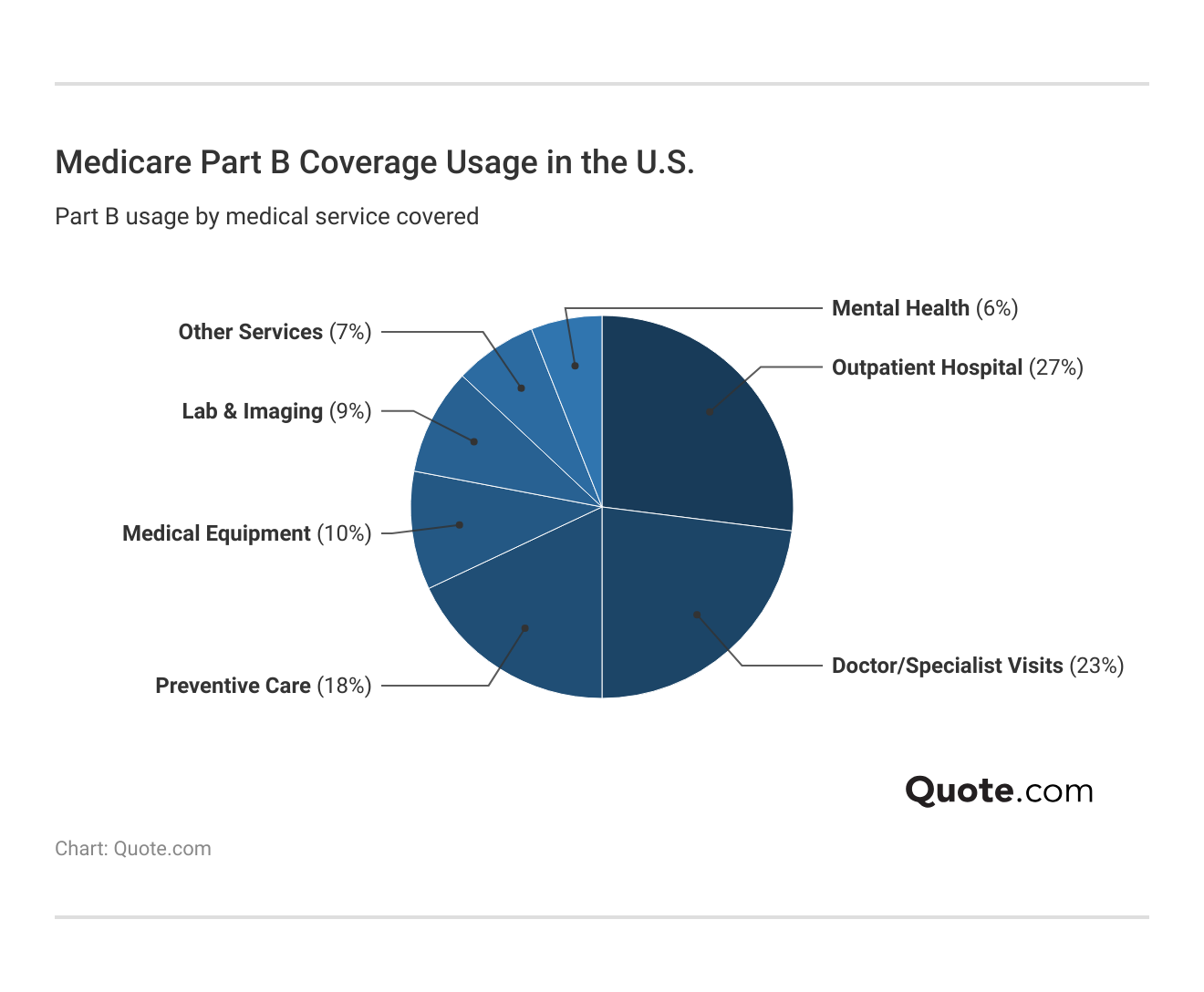
More than half of seniors use Medicare Part B to pay for outpatient care after surgery, routine doctor visits, and preventative care like vaccines and disease management.
However, Medicare Part B isn’t free. You’ll need to pay a monthly premium along with meeting your annual deductible.
You generally meet the deductible, then pay Medicare Part B coinsurance or copays as you receive covered outpatient services, so read our guide if you need help to pay for what your health insurance won’t cover.

While Part B covers outpatient and medically necessary services, Part A applies to inpatient hospital care and services you receive during a hospital stay.
The two parts can apply during the same hospital stay. Part A covers inpatient hospital services, and Part B generally covers the doctors’ services you receive there.
Get a Free Medicare Plan Review
Speak With a Licensed Insurance Agent Today
What Part B Doesn’t Cover
Medicare Part B handles most of your outpatient care needs, like routine appointments and preventative care, but it doesn’t cover all of your health insurance needs. It generally excludes routine dental, vision, and hearing care, most prescriptions, and inpatient hospital charges.
Medicare Part B Exclusions
Exclusions Reason
Inpatient Hospital Care Covered under Medicare Part A
Long-Term Care Not medically necessary by Medicare
Prescription Drugs Mostly Part D; some Part B
Dental, Vision, Hearing Some Advantage or separate plans
Care Outside the U.S. Medicare does not cover care abroad
Some Medicare Advantage plans cover additional services. Medigap mainly helps pay Original Medicare deductibles, copays, and coinsurance; it generally doesn’t cover routine dental or vision care, hearing aids, or long-term care.
Medicare Part B Cost
How much will Medicare Part B premiums be this year? Most beneficiaries pay $202.90 a month for Part B, usually deducted from their Social Security benefits if they receive them.
Medicare Part B: Cost, Coverage & Enrollment Details| Feature | Details | Notes |
|---|---|---|
| Annual Deductible | $283 in 2026 | Before Medicare pays its share |
| Coinsurance | 20% of costs | Applies after deductible met |
| How it's Paid | Taken from benefits or billed | Billed quarterly if no benefits |
| Income Surcharge | $0–$487/mo in 2026 | Based on income brackets |
| Initial Enrollment | 3 mos before & after turning 65 | Delays may trigger penalty |
| Late Penalty | 10% increase per year delayed | Penalty lasts while on Part B |
| Monthly Premium | $202.90 in 2026 | Up to $109K / $218K joint |
| What it Covers | Dr. visits, tests, equipment | For needed / preventive care |
| What Isn't Covered | Dental, vision, hearing, cosmetic | Some covered by Advantage |
Medicare Part B deductibles must be met once a year. After that, beneficiaries generally pay 20% of the Medicare-approved amount as coinsurance. Some services also require copayments.
Medicare Costs: Copay, Coinsurance, & Premiums| Feature | Copay | Coinsurance | Premium |
|---|---|---|---|
| Definition | Set service/Rx fee | % of bill after deductible | Monthly coverage fee |
| Medicare Parts | A, B, C, D | A, B, some D | A (if owed), B, C, D |
| Typical Cost | $25 per doctor visit | 20% of 1K = $200 | Part B: $202.90/mo |
| Varies By | Part C or D plan | Plan and service | Coverage and income |
| When Charged | At service or refill | After deductible | Paid monthly |
The amount you pay for Part B also depends on your income. The standard premium is $202.90 for individuals with incomes up to $109K or $218K for joint filers.
Can you get Medicare Part B for free? Some beneficiaries can get low-cost Part B coverage through Medicare Savings Programs (MSPs).
Medicare Part B Coverage Cost by Income| Individual Income | Joint Income | Annual Deductible | Monthly Premium |
|---|---|---|---|
| $109K or less | $218K or less | $283 | $202.90 |
| Over $109K–$137K | Over $218K–$274K | $283 | $284.10 |
| Over $137K–$171K | Over $274K–$342K | $283 | $405.80 |
| Over $171K–$205K | Over $342K–$410K | $283 | $527.50 |
| Over $205K, under $500K | Over $410K, under $750K | $283 | $649.20 |
| $500K or more | $750K or more | $283 | $689.90 |
Find out how to qualify in our guide on how much Medicare costs.
For example, the Qualified Medicare Beneficiary (QMB) program helps pay for your premium, deductible, coinsurance, and copays, allowing you to have Part B coverage without out-of-pocket expenses.
Medicare Part B Eligibility
Who’s eligible for Medicare? People approaching 65 can generally enroll three months before their birthday month, with benefits starting at age 65.
People under 65 may also qualify if they’ve received Social Security Disability Insurance (SSDI) for 24 months or have End-Stage Renal Disease (ESRD) or ALS.
Do I need Medicare Part B if I have insurance? Not necessarily, especially if you are still employed and insured under a group health plan.
However, Part B is typically more affordable than standard health plans, and you may have to pay a Medicare Part B late enrollment penalty fee if you miss your initial sign-up period.
Get a Free Medicare Plan Review
Speak With a Licensed Insurance Agent Today
How to Enroll in Medicare Part B
Follow the steps to determine your enrollment period and fill out the appropriate Medicare Part B form to get covered. You can also speak with a licensed insurance agent with any questions about your Medicare coverage by calling (855) 634-0435.
Step #1 – Find Out Your Medicare Enrollment Period
Medicare Part B eligibility depends on your birthday month. The first of the month, three months before your 65th birthday, is when the Initial Enrollment Period (IEP) for Medicare starts.
Learn More: How to Sign Up for Medicare
Medicare Part B Enrollment Periods| Enrollment Period | When it Occurs | What You Can Do |
|---|---|---|
| Initial Enrollment (IEP) | 3mo before/after 65th bday | Enroll in Part A or B |
| General Enrollment (GEP) | January 1 – March 31 | Enroll, possibly with penalty |
| Special Enrollment (SEP) | Varies by situation | Enroll without penalty |
Your Medicare Part B start date is based on when you enroll, which can affect when your coverage begins and whether you face gaps in medical insurance.
If you or your spouse have employer-sponsored health insurance from active employment, you may qualify for a Special Enrollment Period (SEP) that allows you to delay Part B without penalties.
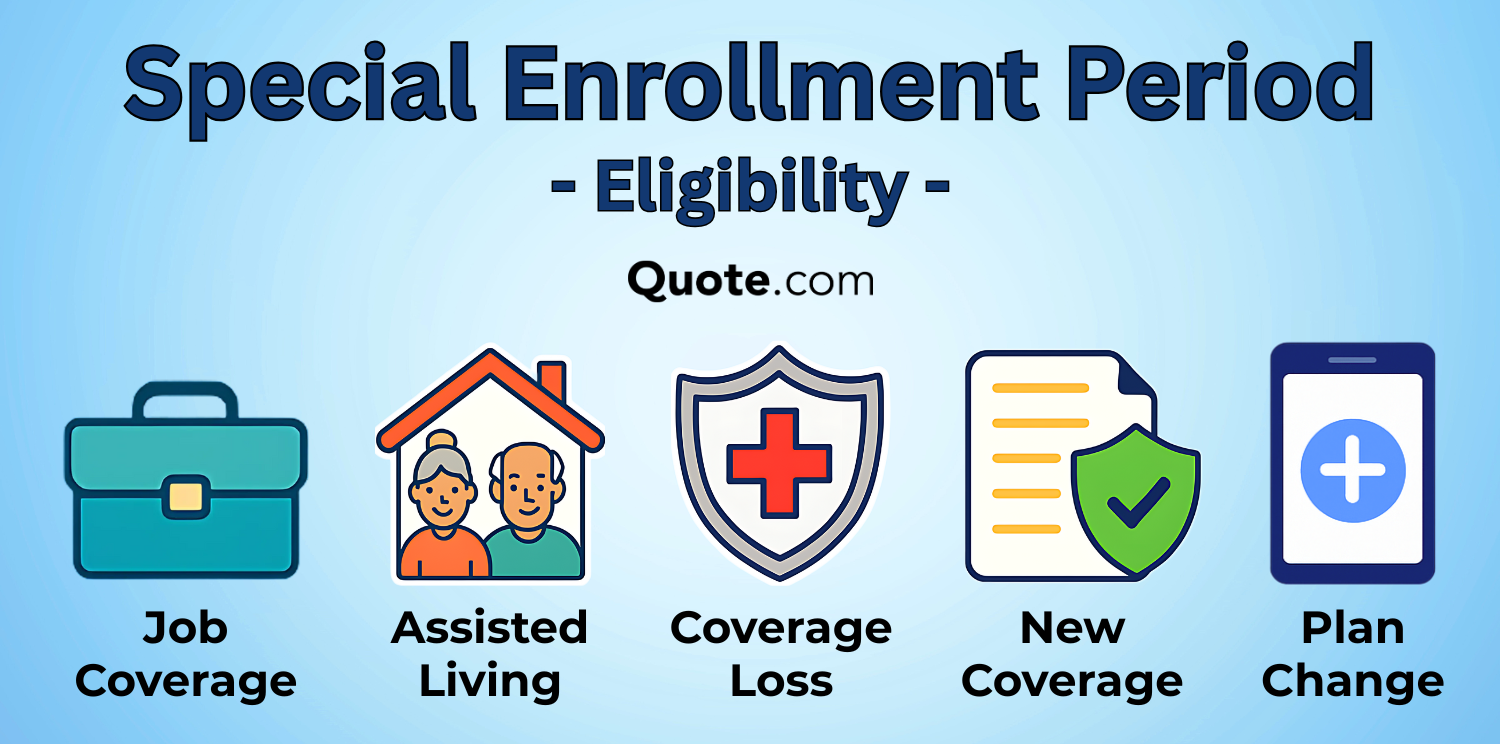
This Medicare Special Enrollment Period lasts eight months after employment or qualifying group coverage ends, whichever happens first, allowing enrollment without late penalties.
If you miss the IEP, you can sign up during the General Enrollment Period (GEP), but you may be charged a penalty. The Medicare Part B late enrollment penalty increases with every year you were eligible but didn’t sign up.
Step #2 – Complete the Enrollment Application
Visit the Social Security Administration (SSA) website to fill out the Medicare Part B application form. Required documents depend on how you apply. Follow SSA’s instructions and provide proof of job-based coverage if using the employment-based enrollment period.
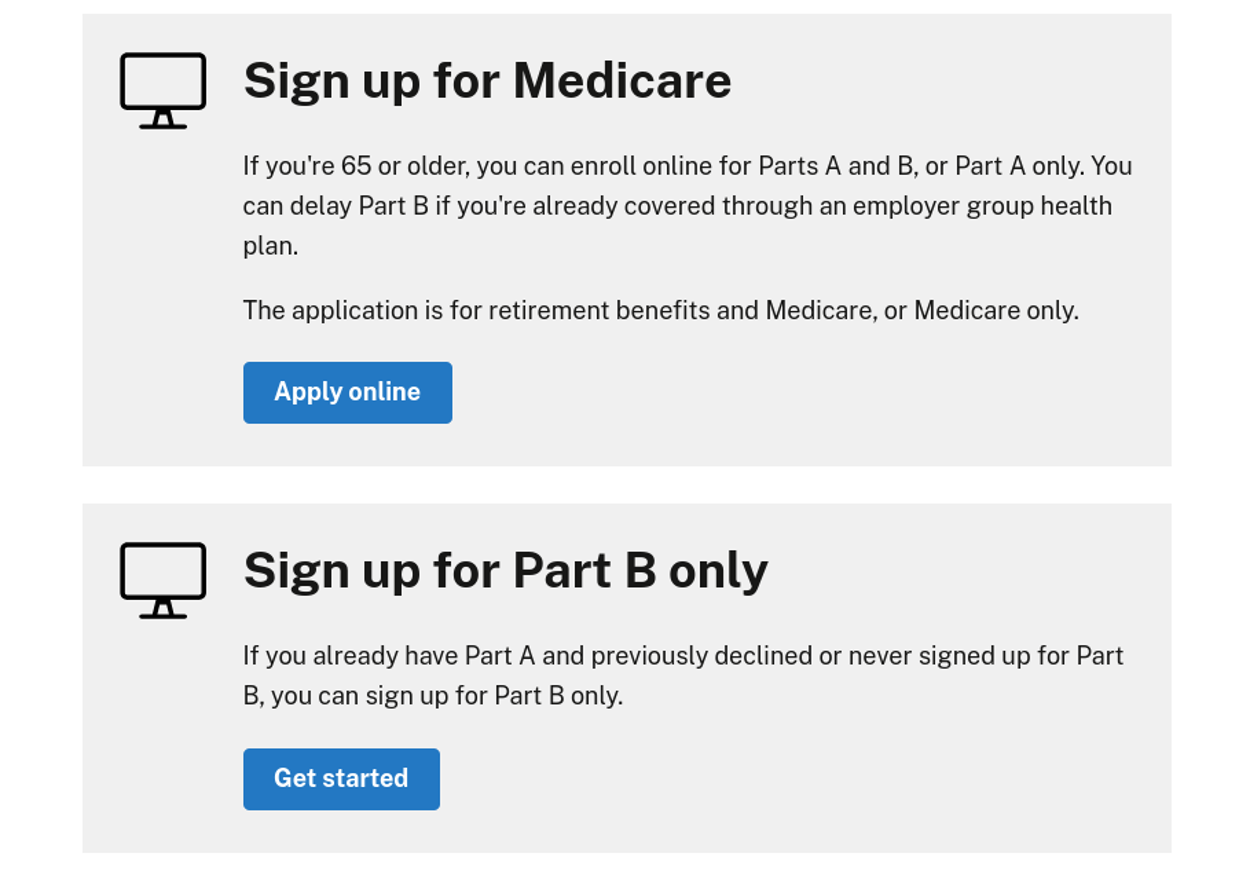
Once online, you’ll have the option to sign up for Original Medicare or Medicare Part B only. If you have Medicaid coverage, you may be automatically or already enrolled in Part A. If you already have Part A, follow SSA’s Part B application instructions; additional forms or coverage documentation may be needed.
Step #3 – Receive Your Medicare Card in the Mail
It typically takes 30 days to process Medicare Part B applications, and you’ll receive your Medicare card in the mail within a month. The card lists the start date of your coverage and should include a Medicare Part B provider phone number.
Read More: Best Gastroenterologists That Accept Medicare
Alternatives to Medicare Part B
What happens if I don’t want Medicare Part B? While there’s no true replacement for Medicare Part B, there are alternatives in how you get that kind of outpatient coverage.
- Medicare Advantage Plans: Part C provides Part A and B benefits, but you must keep both Parts A and B. Call (855) 634-0435 to speak with a licensed insurance agent about your options.
- Employer/Union Health Benefits:Retiree coverage may require Part B. Check with your benefits administrator before delaying enrollment.
- VA Health Benefits: Veterans can use VA health benefits, but VA coverage doesn’t replace Medicare and can limit provider choice.
If you skip Medicare Part B coverage, you’ll need another plan that covers doctor visits, tests, and outpatient treatments, or risk paying out-of-pocket for most outpatient care.
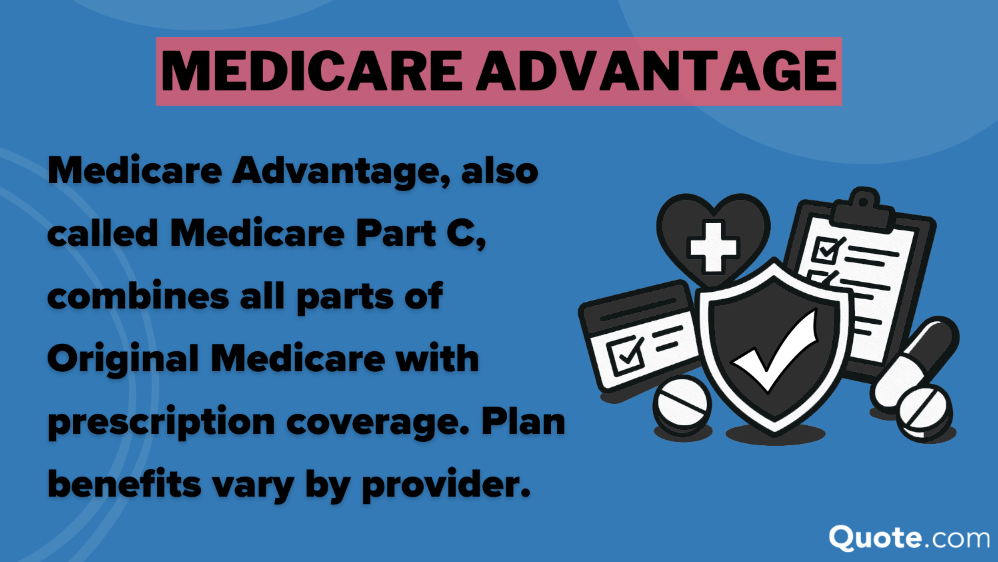
Medicare Advantage is another way to receive Part A and Part B benefits. You must remain enrolled in both, and most plans also include prescription drug coverage. Additional benefits vary by plan.
What You Need to Know About Medicare Part B
Medicare Part B is the second half of Original Medicare that covers doctor visits, outpatient care, preventive services, durable medical equipment, and ambulances.
What Medicare Part B Covers| Service | Coverage | Requirements & Limits |
|---|---|---|
| Ambulance | Medically needed transport | Other transport could be unsafe |
| Doctor Visits | Primary and specialist care | Medically necessary |
| Medical Equipment | Wheelchairs and oxygen | Doctor's order; approved supplier |
| Outpatient Care | Surgery and treatment | Medical necessity |
| Preventive Care | Screenings and vaccines | Age, risk, frequency rules |
| Tests & Imaging | Blood tests and X-rays | Usually doctor-ordered |
A common question people ask is, “Why is Medicare Part B so expensive?”
Medicare Part B premiums are higher since plans cover a wider range of services, including outpatient care, medical equipment, and ambulance rides. By contrast, Medicare plans that only cover hospital stays or prescription drugs generally have lower premiums.
States offer Medicare Savings Programs (MSPs) that can help eligible people with limited income pay their Medicare bills.
However, many policyholders opt for Medicare Advantage plans that often include additional benefits.
Medicare Part B pays for the medical services and supplies you use to diagnose, treat, or prevent health problems outside of a hospital stay.
Adam Lubenow Medicare Broker
If you have questions about your coverage options, call (855) 634-0435 to speak with a licensed insurance agent.

Frequently Asked Questions
What is Medicare Part B for?
Medicare Part B covers the most common medical and preventative care services for seniors, including doctor appointments, medical equipment, and ambulance rides.
Can I keep my doctor on Medicare Part B?
You can keep your doctor if they accept Medicare. Original Medicare does not use a provider network.
Can I get Medicare Part B for free?
Part B generally has a monthly premium, but Medicaid or a Medicare Savings Program may pay it for you. The standard premium is $202.90 in 2026; higher-income beneficiaries may pay more.
How much does Medicare Part B cost?
The average Medicare Part B premium is $202.90 per month.
Is Medicare Part B based on your salary?
Income can affect your Part B premium. Medicare generally uses modified adjusted gross income from your tax return two years earlier.
How do I pay my Medicare Part B premium?
If you receive Social Security benefits, Medicare Part B premiums are deducted from your benefit payments. Pay online or through the mail if you’re paying out-of-pocket.
How do I reduce my Medicare Part B premium?
Signing up for Medicare Savings Programs or Medicare Advantage plans can help lower your Medicare Part B premiums. Read our review of Obamacare to learn how to save on the marketplace.
Who is exempt from paying Medicare Part B?
Some beneficiaries have their Part B premiums paid by Medicaid or a Medicare Savings Program. Eligibility depends on income, resources, and state rules. The QMB program also covers Medicare deductibles, coinsurance, and copays; employment or health status alone does not waive these costs.
Is there an income limit for Medicare Part B?
Medicare Part B eligibility doesn’t depend on income, but higher income can raise your monthly rates. What income level triggers higher Medicare premiums? Higher premiums generally apply to individuals with income above $ 109 K or joint filers with income above $218K.
Why do seniors pay for Medicare Part B?
Part B premiums are typically deducted from Social Security payments. Higher income can increase the amount deducted. Compare health insurance plans to find affordable coverage.
How much money can you have in the bank if you’re on Medicare?
Do I need both Medicare Parts A and B?
Does Medicare Part B cover prescriptions?
Does Medicare Part B cover dental or vision?
Does Medicare Part B pay for surgery?
Are Medicare premiums tax-deductible?
Why is Social Security no longer paying for Medicare Part B?
How much is deducted from Social Security for Medicare Part B?
Get a FREE Quote in Minutes
Insurance rates change constantly — we help you stay ahead by making it easy to compare top options and save.