

Medicare Parts A, B, C, & D Explained
Medicare Parts A, B, C, and D cover hospital care, medical services, and prescription drugs for adults 65 and older. Many pay $0 for Medicare Part A if they qualify. Part C, often called Medicare Advantage, combines coverage into one plan. Costs vary, and late Part D enrollment may add a 1% monthly penalty.
Read more


Table of Contents
Table of Contents

Insurance Content Creator
Lia Vergin develops both video and written content across all lines of insurance, with a primary focus on auto, home, and life coverage. She is dedicated to helping consumers better understand and navigate their insurance options. Driven by a passion for saving money and finding great deals, she is committed to creating clear, engaging, and practical content that empowers readers to make confident...
Lia Vergin

Managing Editor
Daniel S. Young began his professional career as chief editor of The Chanticleer, a Jacksonville State University newspaper. He also contributed to The Anniston Star, a local newspaper in Alabama. Daniel holds a BA in Communication and is pursuing an MA in Journalism & Media Studies at the University of Alabama. With a strong desire to help others protect their investments, Daniel has writt...
Daniel S. Young

Licensed Insurance Agent
Michelle Robbins has been a licensed insurance agent for over 13 years. Her career began in the real estate industry, supporting local realtors with Title Insurance. After several years, Michelle shifted to real estate home warranty insurance, where she managed a territory of over 100 miles of real estate professionals. Later, Agent Robbins obtained more licensing and experience serving families a...
Michelle Robbins
Updated May 2026
You may wonder, “What are the different parts of Medicare?” Medicare Parts A, B, C, and D cover health care for seniors 65 and older, including hospitals, doctors, and prescriptions.
- Original Medicare includes Part A and Part B
- Medicare Part C is also known as Medicare Advantage
- Medicare Part D covers prescription drugs
Parts A and B are the most widely used. Part A covers hospital care, while Part B covers medical services like doctor visits. If you’re unsure which coverage fits your needs, our Medicare guide can help you compare your options.
- Medicare Coverage
- Does Medicare cover prescription drugs in 2026?
- Medicare Coverage & Eligibility in 2026
- Medicare Part B (2026 Guide)
- Medicare Part A (2026 Guide)
- What is Medicare Part D? (Coverage Details for 2026)
- Medicare Supplemental Insurance (Medigap) in 2026
- What is Medicare Advantage?
- Medicare Advantage vs. Original Medicare in 2026
- Best Gastroenterologists That Accept Medicare in 2026
- Best Endocrinologists That Accept Medicare in 2026
Our Medicare breakdown will explain the different parts of Medicare, what each covers, common exclusions, and average Medicare premiums.
To speak with a licensed insurance agent about your Medicare needs, call (855) 634-0435 today. You can also enter your ZIP in our free tool to compare quotes for the four parts of Medicare.
What are Medicare Parts A, B, C, and D?
If you’re wondering, “What are the different Medicare parts?” Medicare Part A and B coverage makes up Original Medicare, providing both hospital and medical coverage.
Medicare Part C, also called Medicare Advantage, includes Part A and Part B and may offer extra benefits.
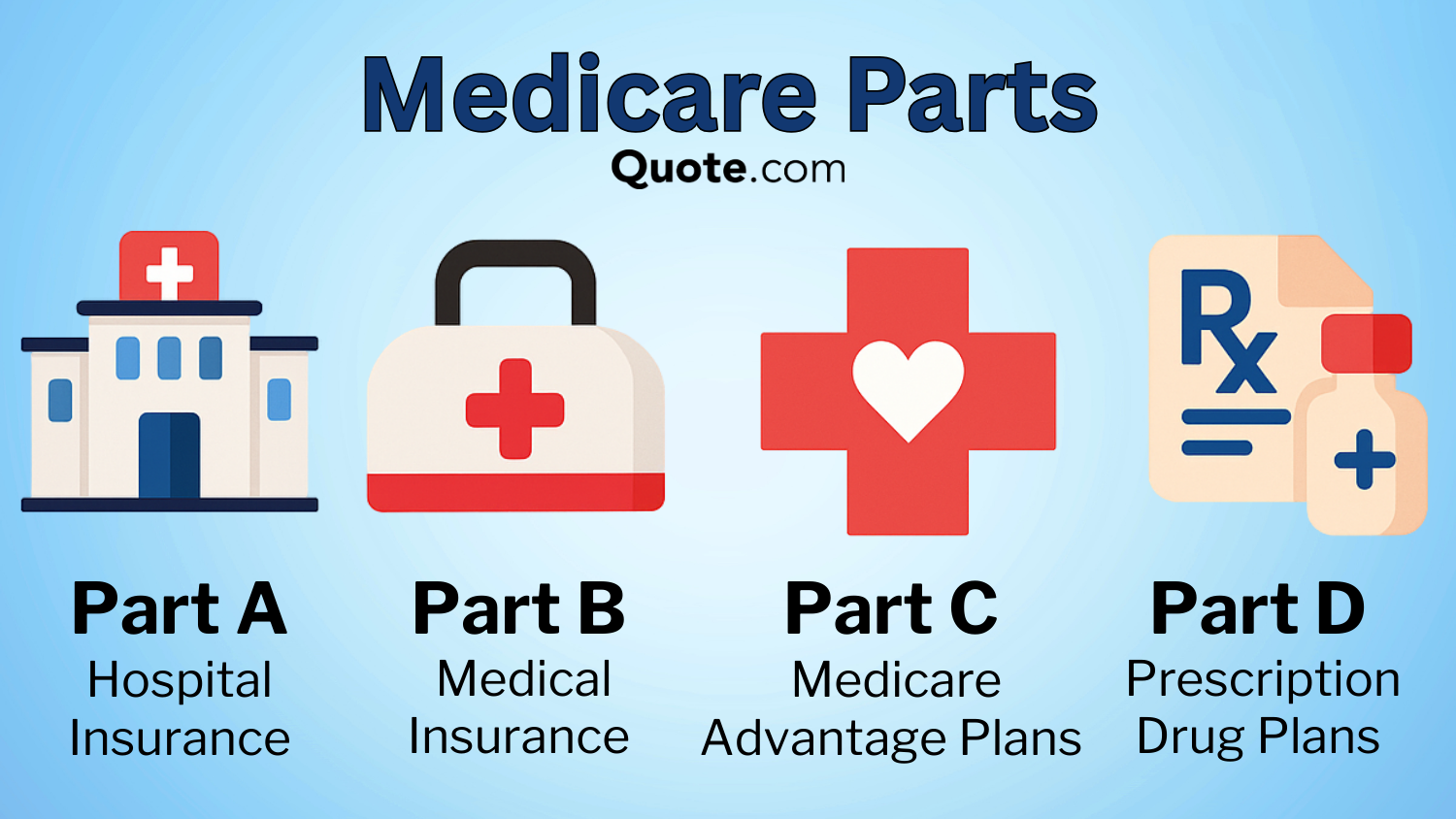
Each part of Medicare covers different services and has its own costs, provider rules, and limits. Knowing how they work together can help you choose coverage that fits your health care needs and budget.
Medigap, also called Medicare Supplement Insurance, helps pay for deductibles, coinsurance, and copayments under Parts A and B. Many people choose these plans to lower their out-of-pocket health care costs.
Check out our Medicare parts chart to see your options and how they differ:
Medicare Parts A, B, C, and D Compared| Feature | Part A | Part B | Part C | Part D |
|---|---|---|---|---|
| Coverage | Hospital | Medical | A + B combo | Prescriptions |
| Exclusions | Long-term care | Dental/vision | Network limits | Off-list drugs |
| Monthly Cost | $0 (most) | Varies | Plan-based | Plan-based |
| Out-of-Pocket | Per stay | 20% coinsurance | Plan-based | Plan-based |
| Provider Access | Any provider | Any provider | In-network | Pharmacy only |
Is Medicare Part C better than Parts A and B? Compare Medicare Advantage vs. Original Medicare to see which Medicare insurance parts better fit your needs.
For example, Medicare Advantage Plans often also include Medicare Part D, which helps cover the cost of prescription drugs.
Keep reading for a full breakdown of each of the parts of Medicare that make up both the Original and Advantage plans.
Medicare Part A
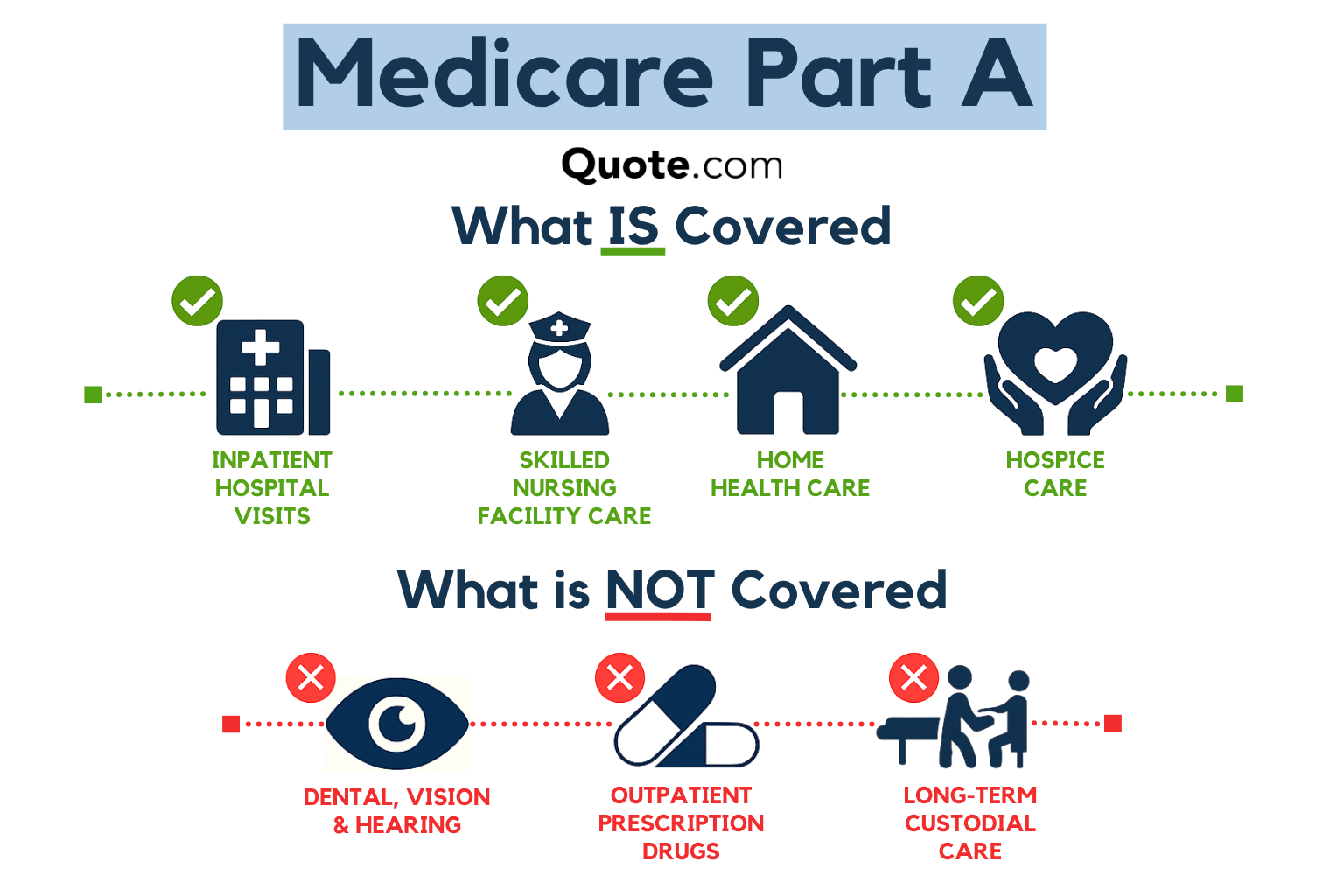
Readers commonly ask, “What does Medicare Part A cover?” Medicare Part A helps cover hospital care and other types of inpatient services.
It also helps pay for care in skilled nursing facilities, hospice care, and some home health services.

Most people don’t pay a monthly premium for Part A because it’s funded in part by payroll taxes.
Part A does have limits. It only covers short-term stays in a skilled nursing facility, and you must first have a qualifying three-day hospital stay. It doesn’t cover long-term custodial care when you only need help with daily activities.
Some services must also be medically necessary for coverage to apply.
Hospice care is covered when a terminal illness is confirmed. Part A uses a benefit period that resets after 60 days. If you need care after that time, you may have to pay the deductible again.
Medicare Part A: Hospital Insurance| Coverage | Details | Eligibility |
|---|---|---|
| Benefit Period | Resets after 60 days | Limits per period apply |
| Blood Transfusion | Covers after 3 pints | Medically necessary |
| Home Health Care | Part-time skilled care | Must be homebound |
| Hospice Care | End-of-life care | Terminal illness confirmed |
| Inpatient Hospital Care | Room, meals, nursing, meds | Age 65+ or disability |
| Skilled Nursing Facility | Short-term rehab only | 3-day prior hospital stay |
Each benefit period comes with a deductible you must pay before coverage begins. After a set number of days in the hospital or a skilled nursing facility, daily coinsurance may apply.
These out-of-pocket costs can add up, so it’s important to understand how your coverage works.
Medicare Part B
You may be wondering, “What does Medicare Part B cover?” Medicare Part B is an important coverage that helps pay for the majority of health care needs and complements Medicare Part A by covering health care outside of the hospital.
Part B typically covers 80% of approved medical costs after meeting your annual deductible, leaving you responsible for the remaining 20%. Doctors and hospitals use Medicare codes to bill for services and determine what Medicare will cover.
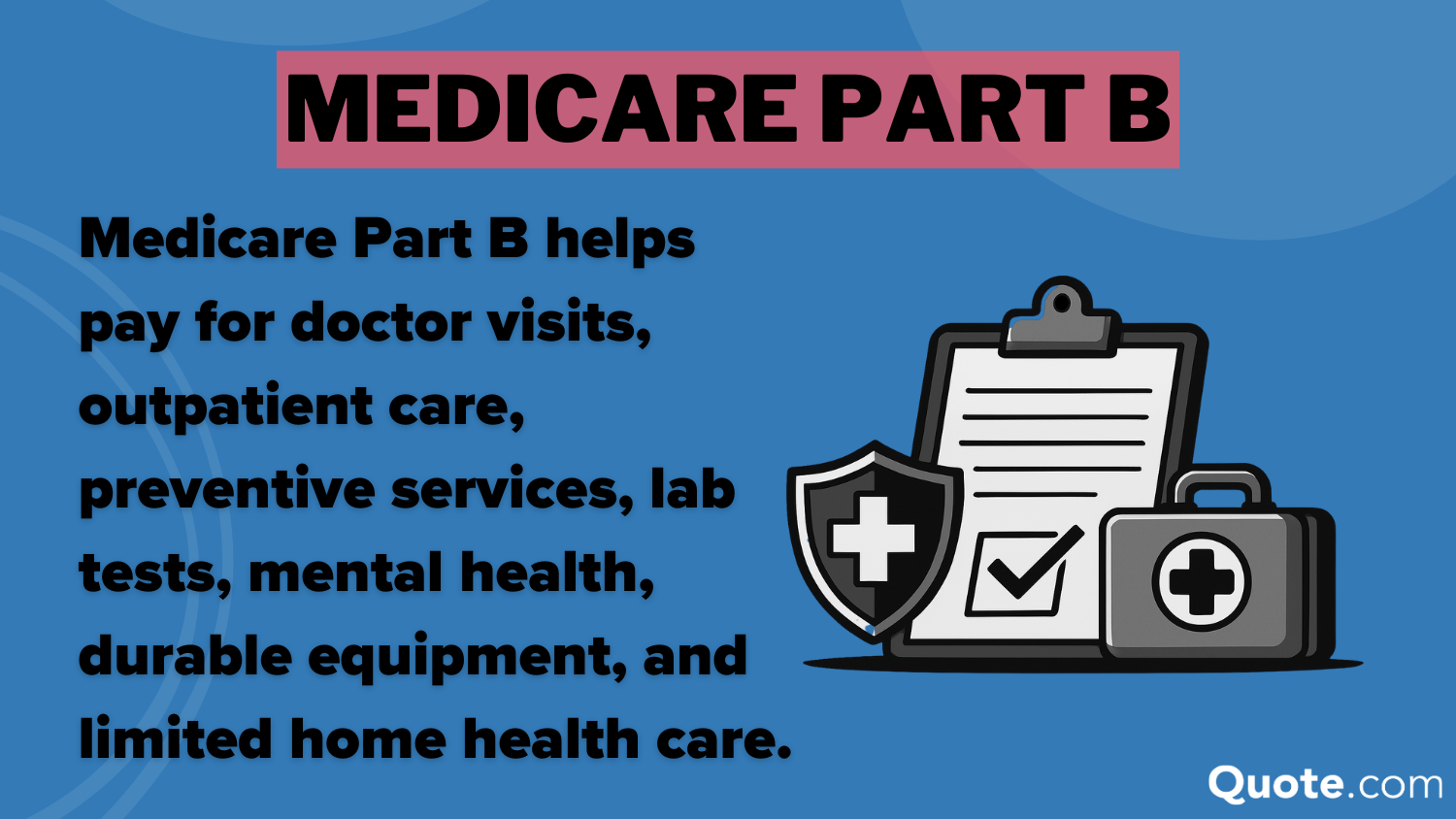
If you’re considering which Medicare types to buy, make sure your plan includes Medicare Part B, as it will help with care such as regular doctor appointments and lab tests.
Part B enrollees pay a standard monthly premium, but higher-income individuals may owe an added surcharge called the Income Related Monthly Adjustment Amount.
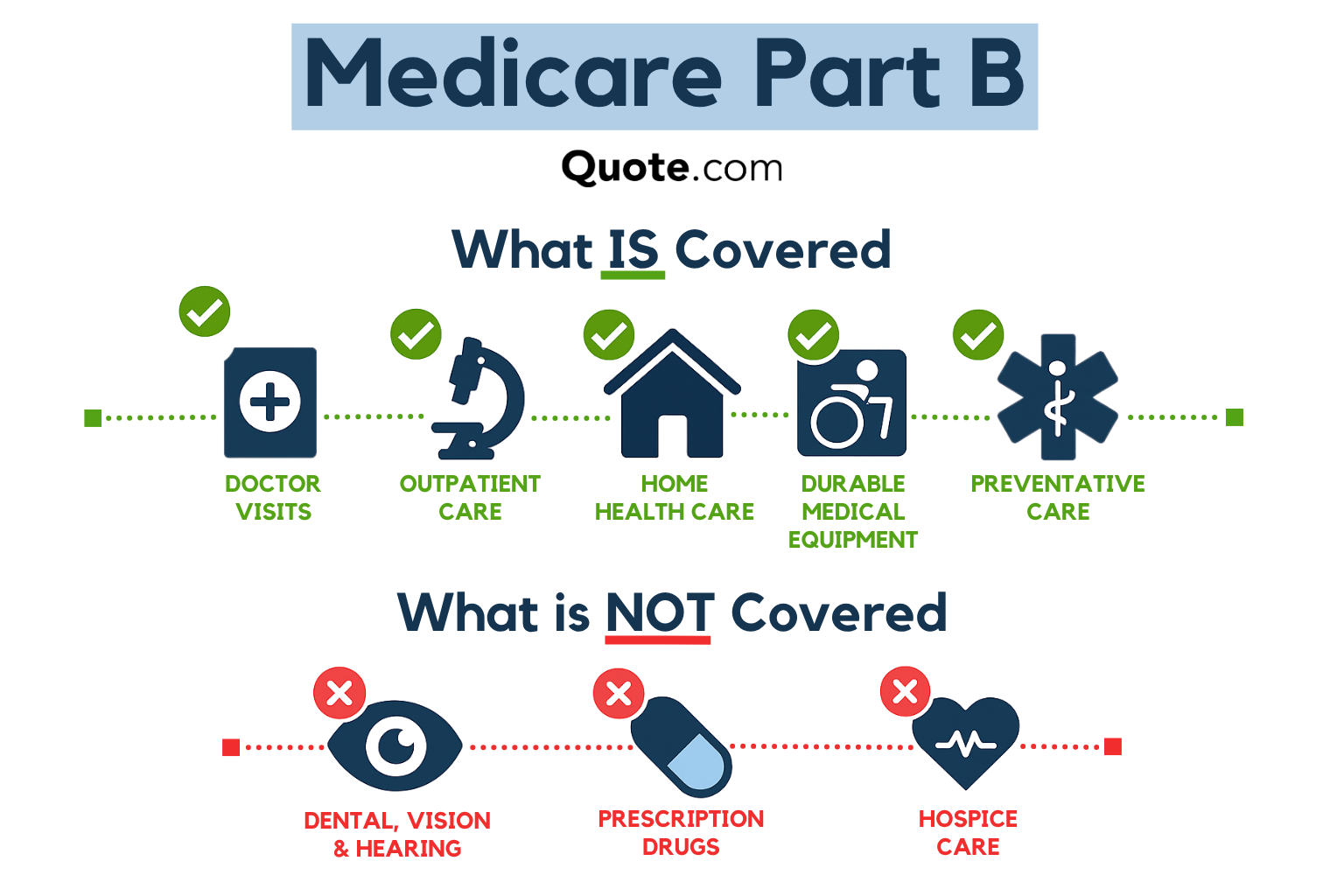
As with Medicare Part A, policyholders must meet certain criteria to have Medicare Part B help cover some health care aspects, which is typical of any health insurance coverage.
For example, you must have a doctor’s prescription to get medical equipment like hospital beds or oxygen covered.
Medicare Part B: Medical Insurance| Coverage | Details | Eligibility |
|---|---|---|
| Ambulance Services | Emergency ground transport | No safe alternative available |
| Doctor Visits | Outpatient primary/specialist care | Must be enrolled in Part B |
| Diagnostic Services | Lab tests, X-rays, imaging | Must be doctor-ordered |
| Medical Equipment | Walkers, oxygen, hospital beds | Doctor’s prescription |
| Mental Health | Therapy and outpatient services | When medically necessary |
| Preventive Care | Checkups, vaccines, screenings | Age or risk-based |
Most customers will make the most use out of coverage from Medicare Part B, as it helps cover preventive care, doctor visits, and testing.
Taking advantage of coverage for screening, vaccinations, and more will also help customers stay on top of their health and catch conditions earlier.
Medicare Part C
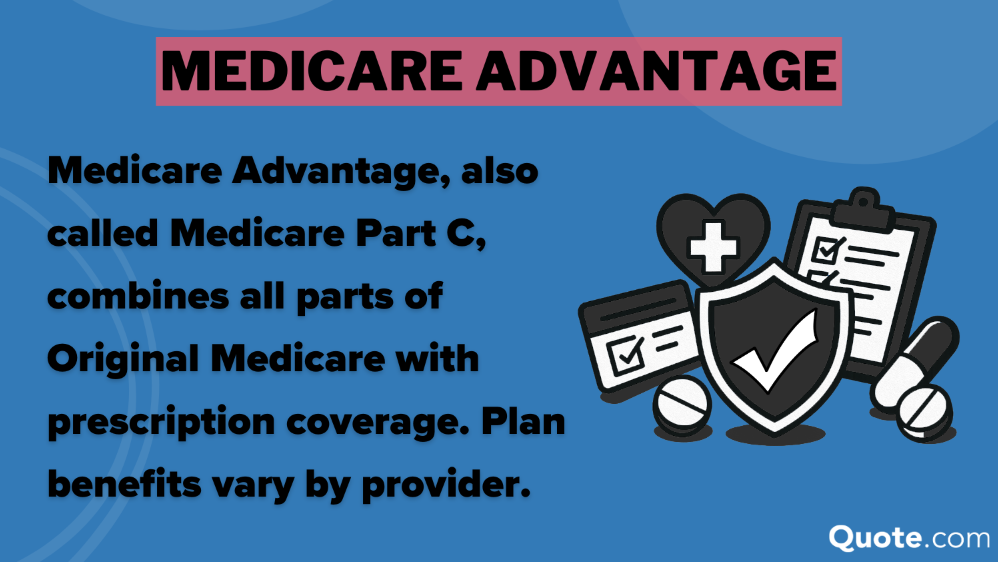
Medicare Part C, also known as a Medicare Advantage plan, is slightly different than the Original Medicare components we talked about earlier.
Like Original Medicare Plans, Medicare Part C also combines Part A and Part B, but it may also include Part D, which helps cover prescription drugs.
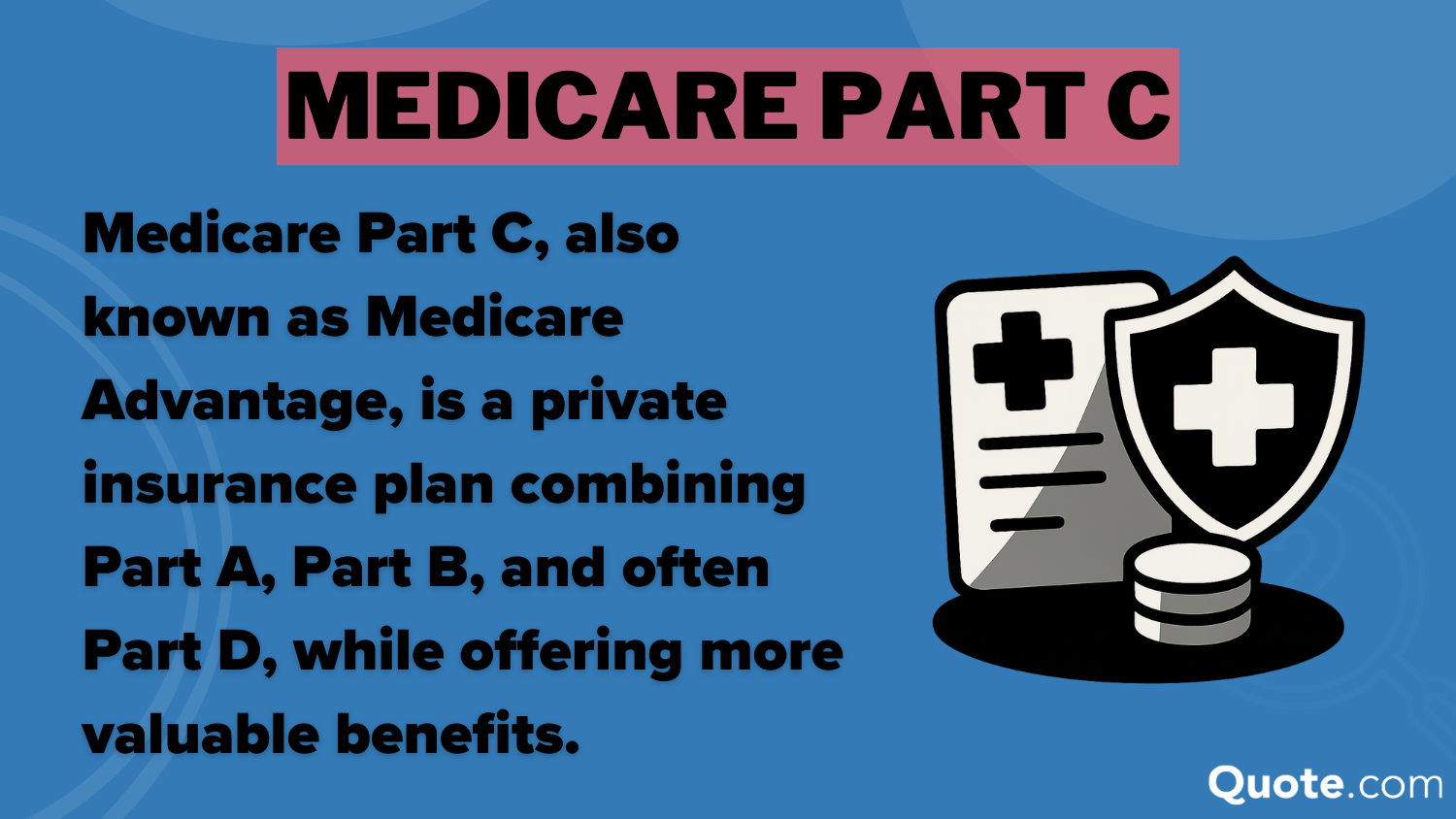
The catch is that customers have to sign up to get Medicare Advantage through a private insurance plan, which can be more time-consuming. Read More: How to Sign up for Medicare
Medicare Advantage may also not be as widely accepted by health care providers as Medicare Original plans, so it’s important to check provider coverage beforehand.
Medicare Part C: Medicare Advantage| Coverage | Details | Eligibility |
|---|---|---|
| Cost Limits | Annual out-of-pocket max | Advantage plans only |
| Drug Coverage | Often includes Rx drugs | Must include drug benefit |
| Part A & B Combined | Private hospital/medical plan | Must have Parts A & B |
| Provider Networks | HMO/PPO coordination | In-network, unless emergency |
| Vision, Dental, Hearing | Routine care & aids | Varies by plan |
| Wellness Programs | Fitness/health perks | Offered by some plans |
However, Part C Medicare Advantage plans may include additional benefits. Some plans may also include Part D prescription drug coverage. The disadvantage of Medicare Advantage is that these plans may not be as widely accepted as Original Medicare (Parts A and B).
Benefits also vary based on your state laws and the provider you choose.
Always compare Medicare plans online before you buy or call (855) 634-0435 to speak with a local agent about your options.
Medicare Part D
What does Medicare Part D cover? Medicare Part D is the specific part of Medicare that covers prescription drugs, a large expense for many older adults and people managing chronic health issues.
It can be added to your Medicare plan but isn’t automatically included in Original Medicare or Medicare Advantage plans.
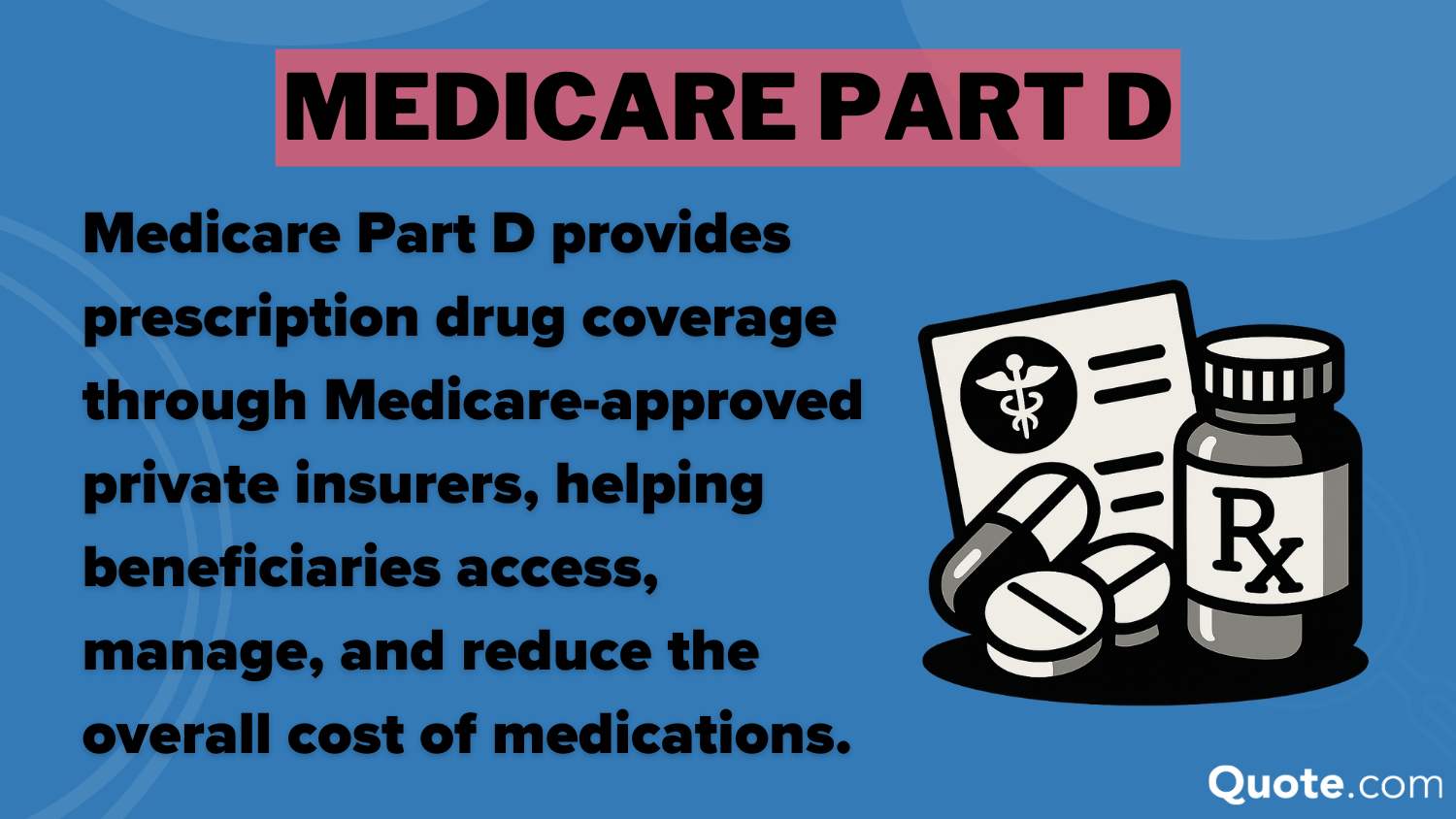
To get Medicare Part D, you must have at least Medicare Part A coverage.
For example, you may still have a deductible or copay you have to meet on your Medicare plan, so prescription drugs may not be 100% covered by Part D.
Drug lists vary by Part D plan, so check that your medications are covered and see which pharmacy tiers offer the lowest costs.
Scott W. Johnson Licensed Insurance Agent
In some cases, Medicare Part B covers your medications instead of Part D.
Part B generally pays for drugs given in a doctor’s office or outpatient clinic, including injections or infusions that require medical supervision.
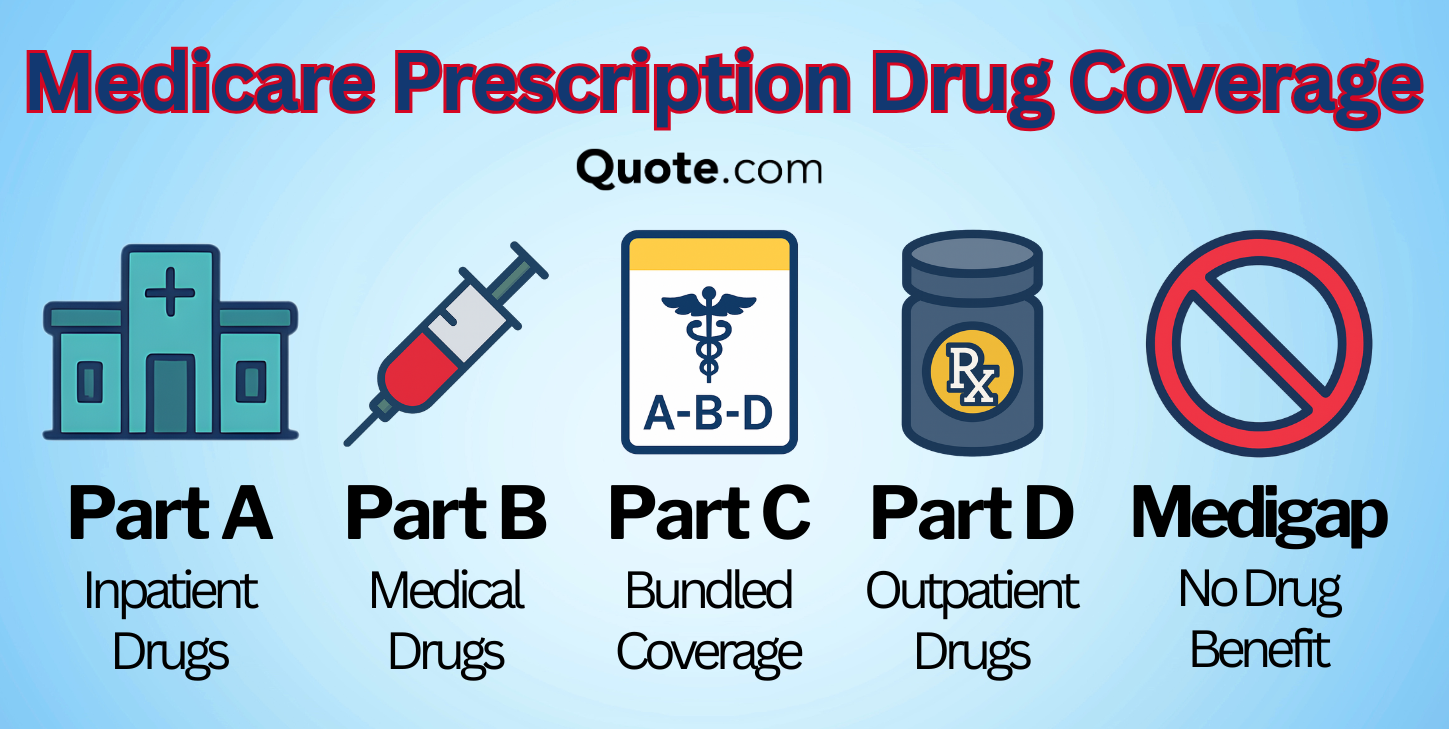
It can also cover medications directly connected to outpatient treatments. This includes drugs used during dialysis, immunosuppressive medications after a Medicare-covered organ transplant, and certain vaccines like the flu, pneumonia, and COVID-19 shots.
Learn More: Does Medicare cover prescription drugs?
If you’re hospitalized, Medicare Part A may cover the medications you receive during your inpatient stay.
These drugs are included in the hospital’s bundled payment, so they’re not billed separately under Part D.
Medicare Part D: Prescription Drug Coverage| Coverage | Details | Eligibility |
|---|---|---|
| Coverage Phases | Includes deductible, gap, & max | Based on drug spending |
| Formulary Tiers | Lower-tier drugs cost less | Drug must be plan-approved |
| Late Penalty | Fee added for late enrollment | No prior creditable drug plan |
| Pharmacy Access | Use retail or mail-order in-network | Must use plan network |
| Plan Costs | Premium, deductible, and copays | Varies by plan and income |
| Prescription Drugs | Generic & brand-name meds | Must have Part A and/or B |
However, Medicare Part D can still be a significant financial help to those on multiple medications, especially those who need very expensive medications.
If you have multiple medications that need to be filled regularly, you should consider looking into Medicare plans that include Medicare Part D.
Get a Free Medicare Plan Review
Speak With a Licensed Insurance Agent Today
How Much Medicare Parts A, B, C, & D Costs
Curious about the cost of Medicare Parts A, B, C, and D? Medicare Part B has a monthly premium (based on your income) and a yearly deductible. After that, you usually pay 20% of the cost for most doctor visits and outpatient care.
Standard copays and deductibles are the same on most plans and generally increase after certain time limits.
Medicare Premium, Copay, & Coinsurance Breakdown| Part | Premium | Copay | Coinsurance |
|---|---|---|---|
| Medigap: Supplement | Extra premium | Covers copays | Covers most costs |
| Part A: Hospital | $0 (most) | $0–$210/day | $0–$838/day |
| Part B: Medical | Varies | None | 20% after deductible |
| Part C: Advantage | Plan-based | Plan-based | Plan-based |
| Part D: Prescriptions | Plan-based | Plan-based | Varies (late penalty) |
For example, Medicare coverage Part A covers skilled nursing care at $0 for days 1 through 20. From days 21 through 100, the cost is $209 per day.
With Medicare Part A, copays and coinsurance start at $0 for a set period. After that, daily copays or coinsurance apply. Learn More: How much does Medicare cost?
Premiums can vary if you choose a Medicare plan through a private insurance company.
Costs for Medicare Advantage (Part C) and Part D plans vary based on your location, provider network, and drug coverage.
It’s a good idea to compare plans each year during Open Enrollment. Many Medicare Advantage plans include a yearly out-of-pocket maximum, which helps limit how much you spend on covered care.
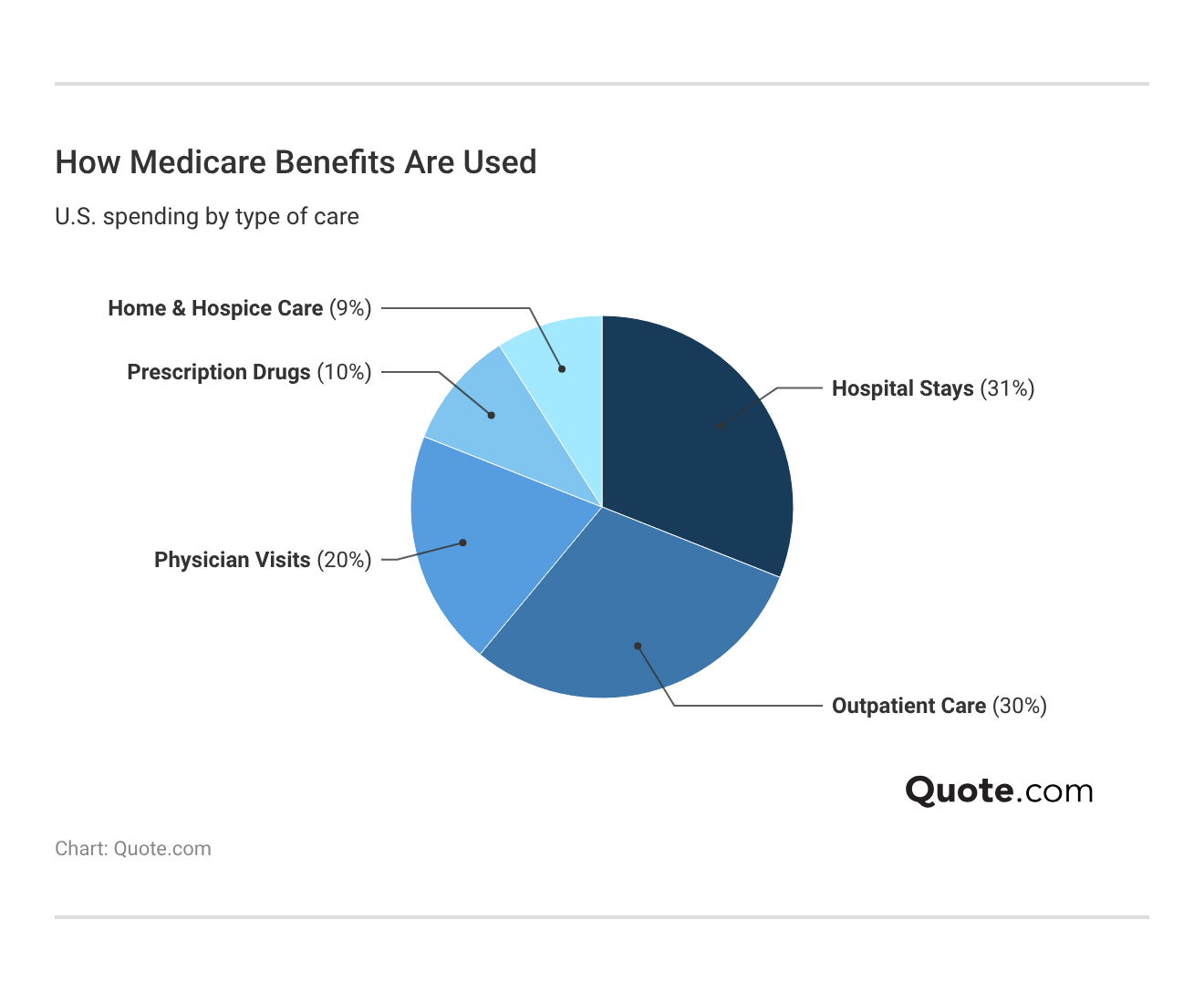
Not sure what Medicare component you should pay for? The majority of Medicare holders use their Medicare coverage for hospital stays, outpatient care, and doctor visits.
Because of this, you should at least consider having Medicare Part A and Part B on your Medicare insurance plan. When comparing plans, look at your total yearly costs, not just the monthly premium. This includes deductibles, copays, and whether your doctors are in network.
Coverage is used less for prescription drugs, so Medicare Part D may not be necessary for all customers to purchase. Even if you don’t take medications now, a low-cost Part D plan can help you avoid penalties and give you coverage later if your needs change.
However, there is a Medicare enrollment late fee for buying Medicare Part D late, so if you think you’ll need it, it is best to buy it when you first enroll in Medicare coverage.
Medicare Parts A, B, C, & D Exclusions
Medicare helps cover a majority of medical costs, but like all health care plans, it doesn’t cover every medical bill that a patient receives.
There are certain exclusions to Medicare insurance coverage that are specific to each Medicare Part’s coverage policies.
It is important to familiarize yourself with exclusions on your Medicare plan so that you don't get taken by surprise by an unexpected bill.
Jeff Root Licensed Insurance Agent
For example, Medicare Part D only covers medications that are considered medically necessary. It doesn’t cover drugs used for cosmetic or fertility purposes.
If you’re hospitalized, Medicare Part A won’t cover private-duty nursing or a private room unless it’s medically necessary.
Medicare Coverage & Exclusions by Part| Medicare Part | What's Covered | Exclusions |
|---|---|---|
| Part A: Hospital | Hospital, nursing, hospice, home care | Private care, comfort items |
| Part B: Medical | Visits, outpatient, preventive care | Dental, vision, hearing aids |
| Part C: Advantage | Parts A & B under private plan | Out-of-network care, extras |
| Part D: Drugs | Prescription drugs, some vaccines | OTC, lifestyle, cosmetics |
If you want help with out-of-pocket costs like copays and deductibles for covered services, you may want to consider a Medigap supplemental insurance (Medigap) plan.
Even with these exclusions, Medicare still provides valuable coverage. Each part offers benefits that help offset its limits.
How to Choose the Right Medicare Plan
Choosing a Medicare plan starts with a simple goal: find coverage that fits your health care needs and your budget without limiting how you get care. These steps can help you narrow your health insurance options and choose with confidence.
You can also use a licensed Medicare agent or our online comparison tool to review plans, compare costs, and see what’s available in your area.
Step 1: Review Your Health Care Needs
Take a close look at the care you use now and what you expect to need going forward. This includes primary care visits, specialists, and prescription drugs.
Since each part of Medicare covers different services, knowing how you use care will make it easier to choose the right coverage.
Step 2: Decide Between Original Medicare vs. Medicare Advantage
Choose whether you want Original Medicare (Parts A and B) with optional add-ons or a Medicare Advantage (Part C) plan that combines coverage into one plan.
Original Medicare gives you broader access to providers, while Medicare Advantage plans often include extra benefits and may be easier to manage.
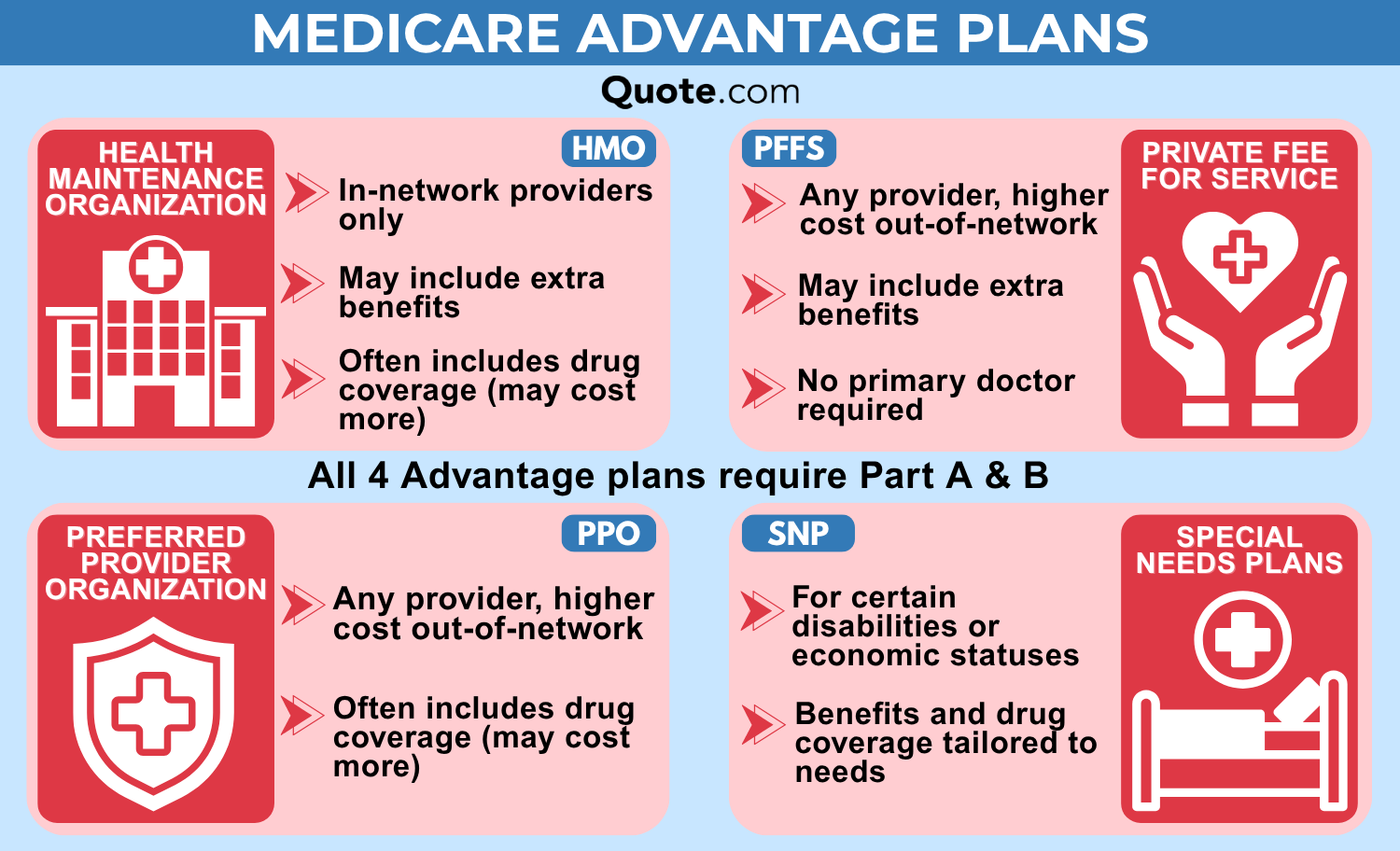
See if you’re eligible for a Medigap plan, which helps pay for out-of-pocket costs like deductibles and coinsurance that Original Medicare doesn’t cover.
Make sure your preferred doctors, prescriptions, and expected healthcare needs are covered, as this choice affects both your out-of-pocket costs and how you access care.
Step 3: Check Prescription Drug Coverage
If you take medications, look closely at how each plan handles drug coverage. Waiting to enroll in Part B or Part D without other qualifying coverage can lead to long-term penalties.
Plans differ in which drugs they cover and how much you’ll pay. Review the formulary and pay attention to pricing tiers, since higher-tier drugs usually cost more.
Step 4: Add Up Your Costs
Look beyond the monthly premium. Consider deductibles, copays, and out-of-pocket limits to understand what you might pay during the year.
For Medicare Advantage plans, review the out-of-pocket maximum, which limits your annual spending on covered services.
Step 5: Check Providers and Benefits
Make sure your doctors and hospitals are included in the network, especially with Medicare Advantage plans.
Review extra benefits like dental or vision and any limits. You can also compare plan ratings on Medicare.gov before signing up.
Get a Free Medicare Plan Review
Speak With a Licensed Insurance Agent Today
Comparing Medicare Parts A, B, C, & D
Medicare Part A, B, C, and D options give seniors and eligible individuals a way to manage health care costs. Each part covers different needs, including hospital care, medical services, prescription drugs, and bundled plan options.
Learn More: How to Finance What Your Health Insurance Won’t Cover
All Medicare parts include out-of-pocket costs like deductibles and copays. Even so, the coverage can help lower your overall medical expenses.
For example, Medicare Part A is often premium-free for many people and helps cover inpatient hospital stays and hospice care. While it doesn’t cover most long-term care, it can still reduce costs.
Medicare Parts A-D Comparison: Pros & Cons| Option | Pros | Cons |
|---|---|---|
| Part A | Hospital, hospice, & home care | Deductibles; no long-term care |
| Part B | Preventive & outpatient care | Premium, copay; no dental/vision |
| Part C | Combines A & B; may add D | Network limits; costs & benefits vary |
| Part D | Prescription drugs; plan options | Extra fees; limits & gaps |
It’s a good idea to review your coverage each year to make sure it still fits your health needs and budget.
Need help finding the right Medicare option? Call (855) 634-0435 to speak to a licensed representative or enter your ZIP code to learn more about different parts of Medicare and what they cover.

Frequently Asked Questions
What are Medicare Parts A, B, C, and D?
Readers commonly ask, “How many Medicare parts are there?” If you’re looking for a Medicare parts definition, there are four parts to Medicare, all covering different areas for seniors 65+.
Medicare Part A is hospital insurance while Part B is medical insurance. Medicare Part C is known as Medicare Advantage, and includes Medicare Parts A and B, but may offer additional benefits. Medicare Part D helps cover prescription drugs.
What do Medicare Parts A and B cover?
What does Medicare Part C cover?
Medicare Part C (Medicare Advantage) bundles Part A and Part B and often includes extra benefits like dental, vision, hearing, and sometimes prescription drugs. It’s offered by private insurance companies as an all-in-one alternative to Original Medicare.
What is not covered by Medicare Part A or B?
Medicare Part A and Part B do not cover vision or dental care or things like long-term hospitalization or cosmetic treatments.
Does Medicare Part A cover 100% of hospital bills?
No, Medicare Part A does not cover 100% of hospital bills, as there are still copays and deductibles.
Which items will Medicare Part D not cover?
Medicare Part D only covers prescription drugs, so it does not cover hospital stays, medical supplies, or dental or vision care. Part D also doesn’t cover prescription drugs given in a hospital setting, which is covered by Part A.
Is Medicare Part D really necessary for seniors?
Medicare Part D can be a very useful coverage to help cover the cost of prescription drugs. While it is not mandatory, it can be a great coverage for seniors to have.
What parts of Medicare are mandatory?
No part of Medicare is strictly mandatory, but most people enroll in Part A and Part B when first eligible to avoid late penalties. Part A is usually premium-free, while Part B has a monthly cost and is optional but strongly recommended.
For help deciding between the different parts of Medicare coverage, call (855) 634-0435 to speak with a licensed insurance agent about your options. You can also enter your ZIP code to instantly compare quotes with our free tool.
Why do I need Medicare Part C?
You do not need Medicare Part C, but it may offer additional benefits compared to a Medicare Original plan.
What parts of Medicare are free?
Is Medicare Part C free?
Is Medicare Part C deducted from Social Security?
Can I drop my Medicare Advantage plan and go back to Original Medicare?
What are the income limits for Medicare?
What’s the best Medicare plan that covers everything for seniors?
Do I really need supplemental insurance with Medicare?
Related Articles
-
Apr 2026

Medicare Guide: Coverage, Costs & Enrollment in 2026
-
Dec 2025
Medicare Costs in 2026
-
Dec 2025
Special Enrollment Period (SEP) for Medicare
-
Jan 2026
Medicare Enrollment Late Fees in 2026
-
Dec 2025
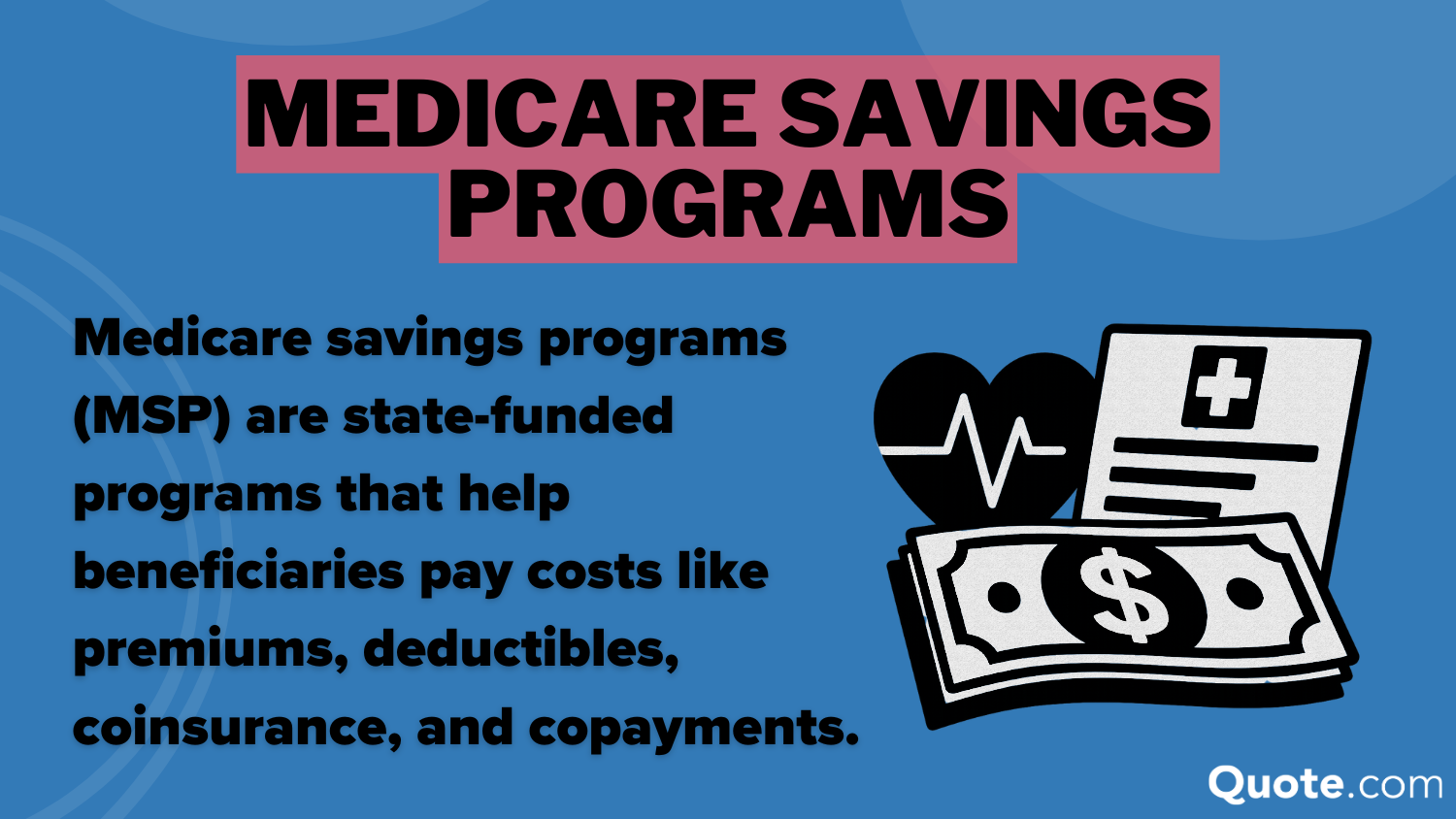
What are Medicare Savings Programs?
-
Jan 2026

What is Medicare Advantage?




Get a FREE Quote in Minutes
Insurance rates change constantly — we help you stay ahead by making it easy to compare top options and save.