Does Medicare cover prescription drugs in 2026?
Medicare covers outpatient prescription drugs if you have Part D, which costs around $34 a month. Some prescriptions may also be covered under Parts A and B. For example, Part A covers drugs administered in the hospital, while Part B covers certain doctor-administered medications, such as flu shots.
Read more


Table of Contents
Table of Contents

Social Media Manager & Professor
Ashley Dannelly has a Master of Arts in English and serves as the Social Media Manager for Quote.com's portfolio of websites. Ashley also teaches English at Columbia International University and other higher education institutions. Ashley’s background in English and media has allowed her the unique opportunity to edit and create content for many publications, including Livestrong and DiveIn....
Ashley Dannelly

Senior Director of Content
Sara Routhier, Senior Director of Content, has professional experience as an educator, SEO specialist, and content marketer. She has over 10 years of experience in the insurance industry. As a researcher, data nerd, writer, and editor, she strives to curate educational, enlightening articles that provide you with the must-know facts and best-kept secrets within the overwhelming world of insurance....
Sara Routhier

Commercial Lines Coverage Specialist
Michael Vereecke is the president of Customers First Insurance Group. He has been a licensed insurance agent for over 13 years. He also carries a Commercial Lines Coverage Specialist (CLCS) Designation, providing him the expertise to spot holes in businesses’ coverage. Since 2009, he has worked with many insurance providers, giving him unique insight into the insurance market, differences in ...
Michael Vereecke
Updated January 2026
Medicare does cover prescription drugs, and Medicare Part D is the primary coverage for prescriptions.
- Medicare Part D categorizes drugs in a formulary with different tiers
- Late enrollment in Medicare Part D will result in late fees
- State drug assistance programs may help with drug costs
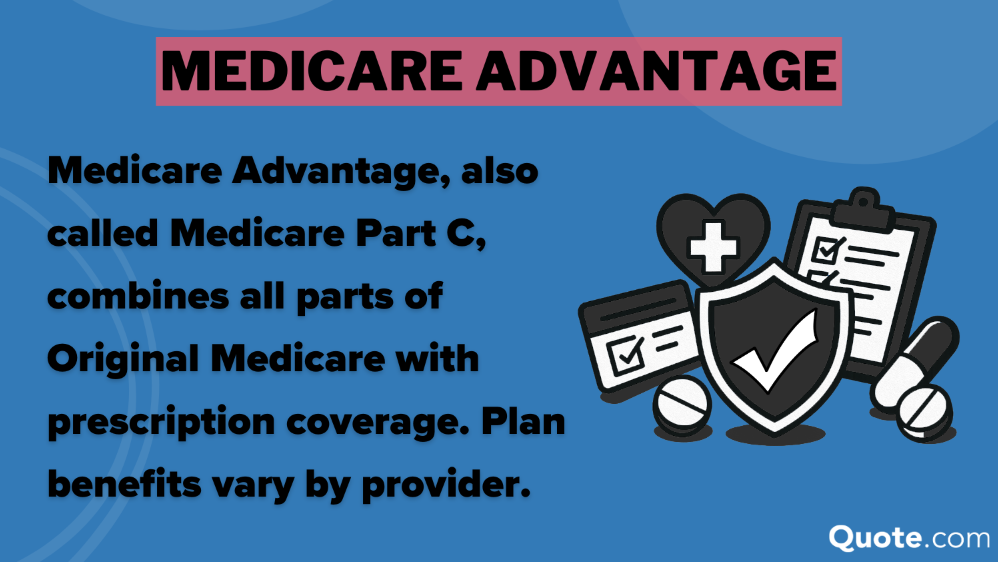
Medicare may also cover drugs with Parts A, B, and C in certain instances, but for complete prescription drug coverage, customers must enroll in Medicare Part D or a Medicare Advantage Prescription Drug (MAPD) Plan. A MAPD plan is Medicare Advantage (Part A and B) plus a prescription drug plan (Part D).
Read on to learn more about Medicare prescription plans. To speak with a licensed insurance agent about your Medicare Part D needs, call (855) 634-0435 today. You may also enter your ZIP in our free tool for free quotes.
Medicare Prescription Drug Coverage by Part
What do drug plans cover? Prescription drug coverage under Parts A, B, C, and D is different, depending on what parts you have on your policy and how the prescription is administered.
You will need to have Part D on your Medicare plan for prescription drugs to be covered in all situations, but you may have some limited drug coverage with Parts A and B.
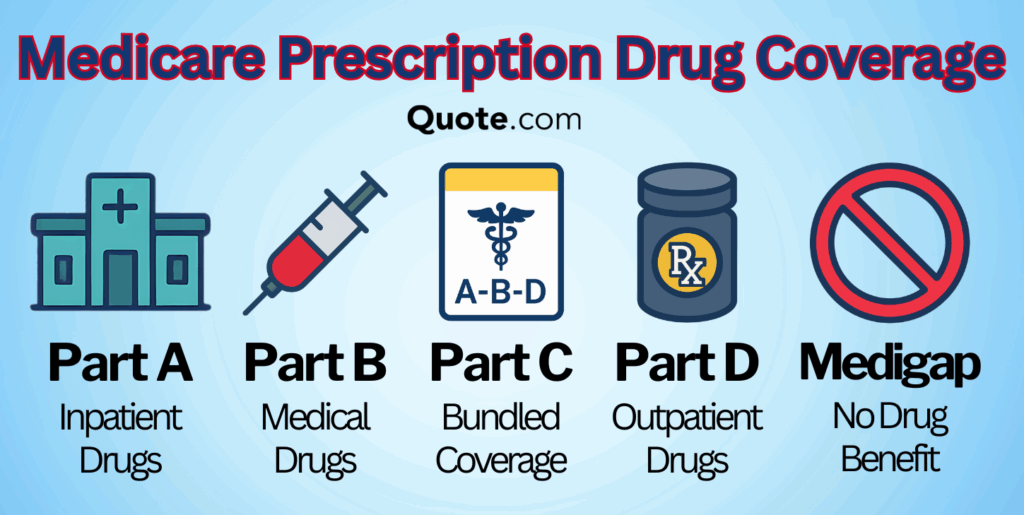
Prescription drug coverage under Medicare parts also depends on whether drugs are inpatient, doctor-administered, or outpatient prescriptions.
For example, Part A only covers inpatient drugs during hospital stays, so any drugs patients need once discharged won’t be covered.
If you need prescription medications filled outside of a hospital stay, make sure your Medicare plan includes Part D coverage.
Michelle Robbins Licensed Insurance Agent
As for Medicare Part B, the list of medications covered by Medicare Part B includes only medical drugs.
These drugs are often doctor-administered in a medical office, such as vaccines. Some common drugs covered under Medicare Part B, in addition to vaccines, include:
- Antigens
- Blood-clotting drugs
- Dialysis drugs
- Durable Medical Equipment (DME) drugs
- Injectable/infused drugs
Medicare Part C will cover prescription drugs if you have Part D as part of your bundle under an advantage. If you don’t have Part D on your Part C plan, then you won’t have outpatient drug coverage.
If you have Part D, whether separately or under a Medicare Advantage Prescription Drug (MAPD) Plan, your outpatient prescription drugs will be covered.
Medicare Prescription Drug Coverage Overview| Plan | Coverage | Details | Examples |
|---|---|---|---|
| Part A | Limited | Inpatient drugs only | Pain meds in hospital |
| Part B | Partial | Doctor-given drugs | Chemotherapy, flu shots |
| Part C | Usually | A, B & often D | Generic & brand drugs |
| Part D | Yes | Outpatient drugs | BP & diabetes meds |
| Medigap | No | No drug coverage | Needs Part D plan |
While there is some drug coverage on all Medicare Parts, one coverage that does not cover prescription drugs is Medicare supplemental insurance (Medigap) coverage.
Medigap insurance helps cover the out-of-pocket costs of Medicare Part A and B, but it does not help cover any prescription drug charges.
Medicare Costs by Plan Type| Plan | Rate/mo | Deductible | MOOP |
|---|---|---|---|
| Medigap | $35-$488 | $0-$2,800 | $7,500 |
| Part A | $0-$505 | $1,676 | NA |
| Part B | $185 | $257 | NA |
| Part C | $0-$200 | $0-$200 | $8,850 |
| Part D | $34 | $0-$545 | $2,000 |
The cost of each Medicare part will also play a role in what prescription drug coverage customers choose. Medicare Part D costs an average of $34 per month to add to a Medicare plan, with an out-of-pocket maximum of $2,000
The cost of Medicare Part C can range from $0 to $200 a month and has an out-of-pocket maximum of $8,850 (Read More: Medicare Advantage Maximum Out-of-Pocket).
Medicare Part D Coverage
Medicare Part D has the most complete prescription drug coverage out of Medicare Parts A, B, C, & D. Part D will help cover drugs that are excluded by other parts. For example, some common medications covered by Medicare Part D include antibiotics, antidepressants, and diabetes medications.
Drugs that aren’t prescription are excluded under Part D, as well as under other Medicare Parts. Some examples of excluded medications include:
- Over-the-counter drugs
- Weight loss/gain drugs
- Fertility drugs
- Cosmetic/hair growth drugs
Additionally, any drugs covered under Part A or Part B will not be covered under Part D, as Part A or B will be charged the drug cost.
Medicare Part D can be added to your plan as long as you have Medicare Part A or Part B. If you are buying a Medicare Advantage Plan, you will need to have Part A and Part B to add on Part D.
Comparing Medicare Part D vs. MAPD Plans
There are key differences between Medicare Part D prescription drug plans and Medicare Advantage Prescription Drug (MAPD) plans.
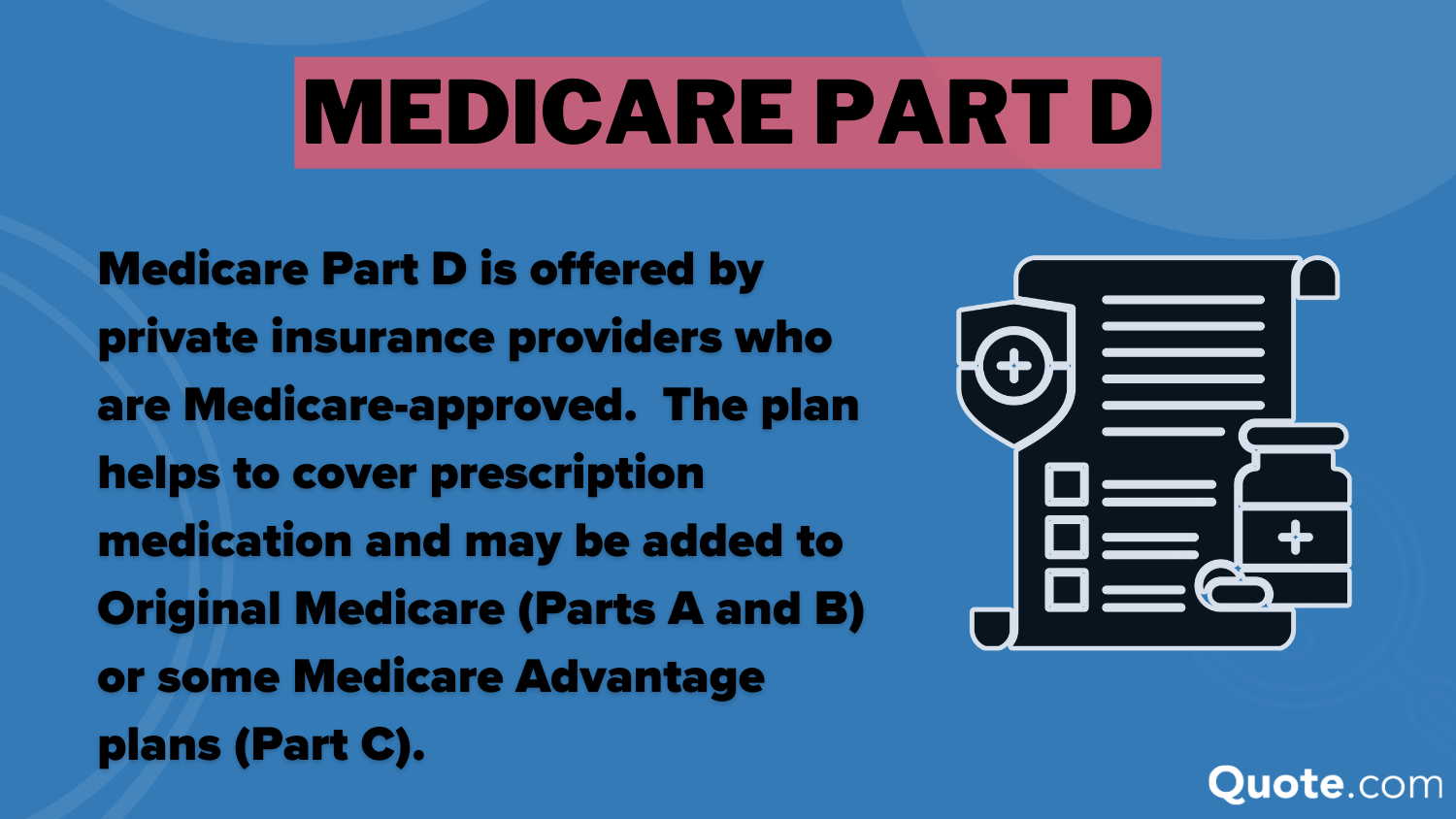
Medicare Part D is a standalone plan that provides prescription drug coverage, which can be added to Original Medicare. It does not include medical or hospital benefits.
Part D vs. Medicare Advantage Prescription Drug (MAPD) Plan| Feature | Part D | MAPD |
|---|---|---|
| Drug Coverage | Prescription drugs only | Includes prescription drugs |
| Includes Medical | No medical coverage | Medical & hospital coverage |
| Average Premium | Typically lower premiums | Higher average premiums |
| Network Rules | Any in-network pharmacy | Varies by plan and network |
| Out-of-Pocket Costs | You pay per prescription | Annual out-of-pocket max |
MAPD plans differ from standalone Part D coverage because they combine multiple types of Medicare benefits. An MAPD plan includes Medicare Part A for hospital coverage, Part B for medical coverage, and Part D for prescription drugs.
Although MAPD plans often have higher premiums than standalone Part D plans, they provide more comprehensive coverage. These bundled plans include both medical and prescription benefits and come with an annual out-of-pocket maximum.
Get a Free Medicare Plan Review
Speak With a Licensed Insurance Agent Today
How Medicare Defines Prescription Drugs
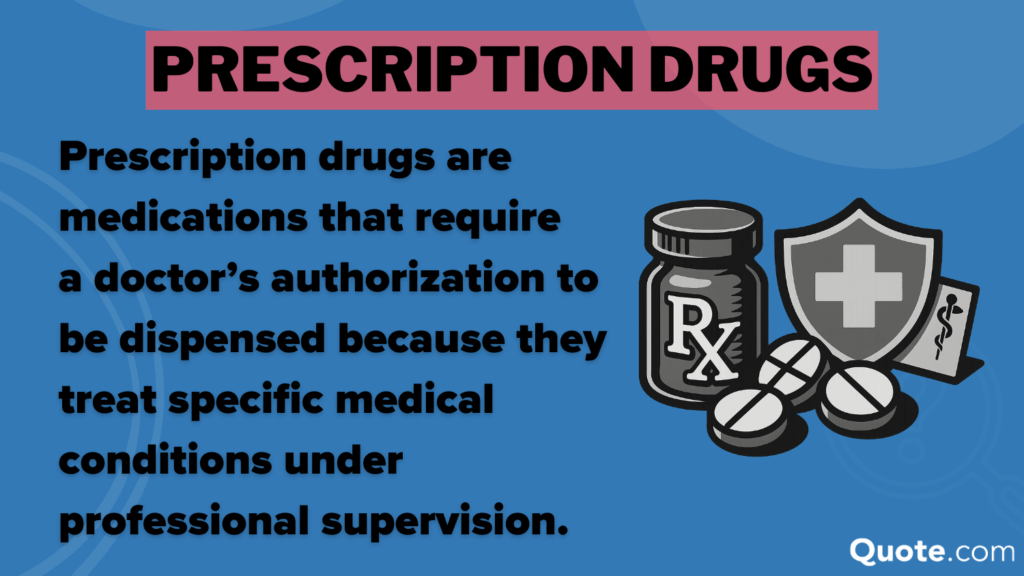
So what is a prescription drug? Prescription drugs are medicines that need a doctor’s authorization, compared to over-the-counter drugs that you can purchase without a doctor’s prescription.
Medicare has several tiers that define what prescription drugs are covered under Medicare plans. You can find a list of these tiers on your plan when you sign up for Medicare.
Generic drugs are tier one and will be the lower-cost medications that have cheaper copays. Tier two drugs are more common brand-name medications that are preferred by Medicare plans and will likely cost slightly more than tier one drugs.
Tier three drugs are still brand-name drugs, but they are less commonly used and therefore cost more. You will get a more specific list of prescription drugs covered by Medicare when you sign up for a plan.
Medicare Prescription Drug Formulary Levels| Level | Drug Group | Description |
|---|---|---|
| Tier 1 | Generic Drugs | Lowest-cost medications |
| Tier 2 | Preferred Brand | Common brand-name drugs |
| Tier 3 | Higher-Tier Brands | Higher-cost brand drugs |
| Tier 4 | Specialty Drugs | High-cost or complex meds |
| Tier 5 | Non-Formulary | Not covered unless approved |
Specialty drugs fall under tier four because they are high-cost or specialty meds, such as those used to treat cancer and other serious health conditions.
The last tier, tier five, is non-formulary drugs. These are expensive medications used to treat rare conditions, and are typically not on the list of drugs covered by Medicare unless approved on the plan.
Most Common Health Issues Covered by Medicare Prescription Plans
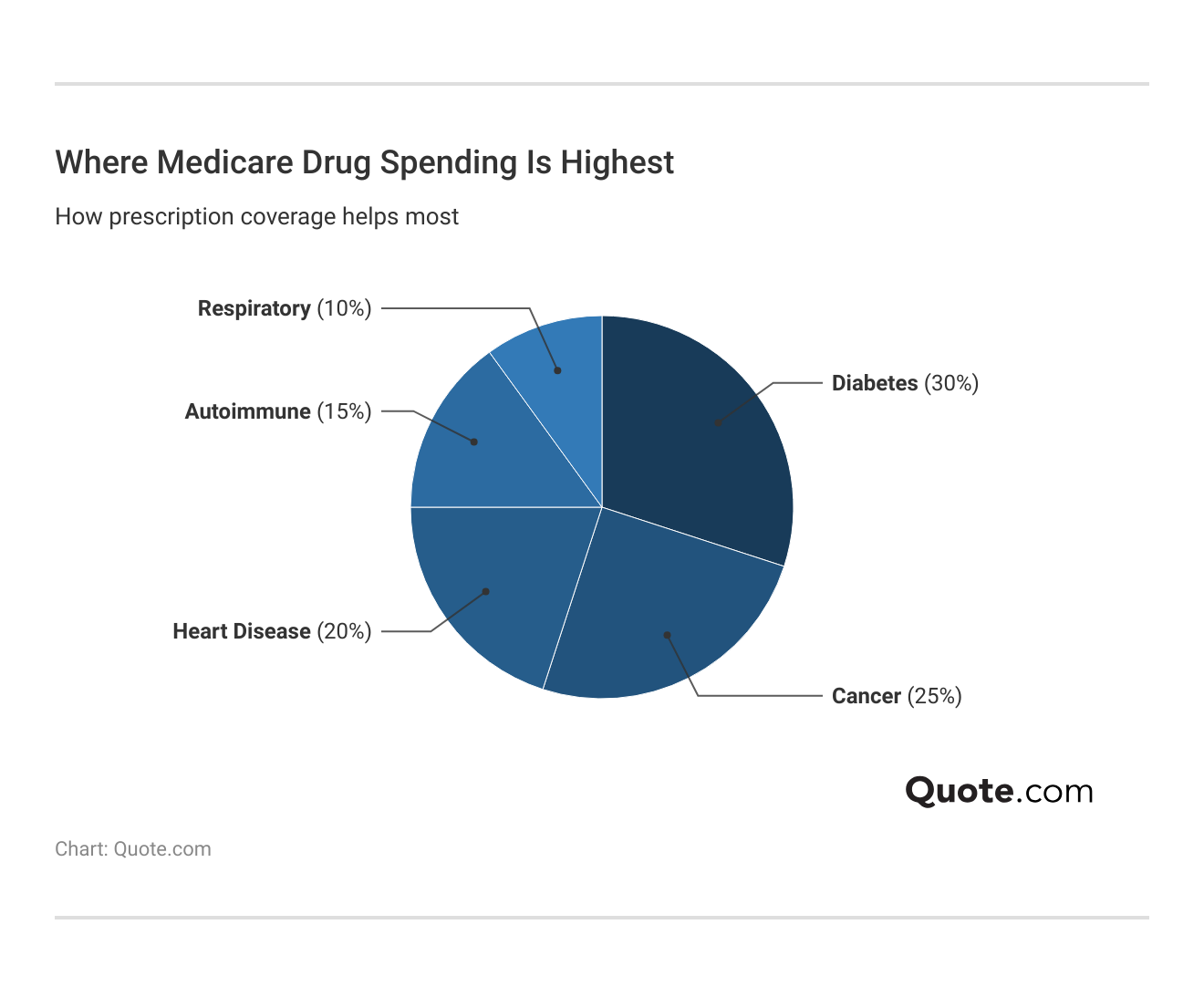
When we break down prescription drug spending under Medicare, Part D drug coverage spends the most on diabetes medications at 30%, with cancer medications coming in a close second at 25%.
If your enrollment period is coming up and you aren’t sure if you want to add prescription drug coverage to your Medicare plan because of the extra Medicare costs, it can be helpful to know what types of drugs Medicare spends the most on.
If you have any of these conditions or are at risk for any of these conditions, then it is likely in your best interest to invest in Medicare prescription drug coverage.
Without it, you will be stuck paying for your medications with little to no assistance from your Medicare insurance.
Eligibility for Medicare Prescriptions
There are a few requirements you must meet to qualify for prescription drug coverage under Medicare, including having a U.S. address.
First, you must qualify for Medicare coverage, Part A or B, to be able to add prescription drug coverage to your plan (Learn More: Who is eligible for Medicare?).
If you are enrolled in Medicare Part A or B, you can add prescription drug coverage by adding Part D to your plan.
You may also opt to purchase a Medicare Advantage plan that includes Part D, or purchase a MAPD plan.
Medicare Prescription Drug Requirements| Category | What's Needed | Details |
|---|---|---|
| Eligibility | Medicare | Must have Part A or Part B |
| Enrollment | Part C or D | Requires Part D or Advantage |
| Residency | U.S. address | Must live in plan's service area |
| Timing | Enrollment | Join in initial or special period |
| Penalty | On-time signup | Extra fee if enrollment is late |
| Employer/VA | Other drug plan | Must meet Medicare standards |
You can enroll in a Medicare prescription drug plan during the initial or special enrollment periods.
Initial enrollment is three months before or after a customer turns 65. Special enrollment periods vary, based on the qualifying event.
Medicare Enrollment Periods: Key Details| Period | Timeframe | Purpose |
|---|---|---|
| Initial Enrollment (IEP) | 3mo before/after age 65 | Signup for Parts A, B & D |
| General Enrollment (GEP) | Jan 1 – Mar 31 each year | If missed IEP, starts July 1st |
| Special Enrollment (SEP) | Varies by qualifying event | Enroll after coverage loss |
| Annual Enrollment (AEP) | Oct 15 – Dec 7 each year | Change Advantage or Part D |
| Advantage Open Enrollment | Jan 1 – Mar 31 each year | Switch or return to Original |
If you enroll in a prescription drug plan after the designated enrollment period, you may be charged a late enrollment penalty.
Because of this, it is best to decide if you want to add prescription drug coverage to your Medicare plan before your enrollment period to avoid late fees.
Get Help Covering Prescription Drug Costs
If you are having trouble affording your prescription drugs or paying for Medicare prescription drug coverage, there are a few things you can do to get assistance with costs.
For example, you may be able to get help from State Pharmaceutical Assistance Programs (SPAPs) for Rx drugs. You can also look for pharmacy discount cards to find the best cost for your medication.
Medicare Prescription Drug Assistance Programs| Program | What it Does | Who Qualifies |
|---|---|---|
| Low-Income Subsidy | Reduces Part D costs | Low-income enrollees |
| Manufacturer Discounts | Helps with brand drugs | Part D beneficiaries |
| State Assistance (SPAPs) | State help with Rx drugs | Eligible residents |
| Pharmacy Discount Cards | Lowers retail drug prices | Open to all consumers |
| Medicare Savings Programs | Helps with Medicare bills | Low-income recipients |
You may also qualify for some Medicare assistance programs, like the Medicare Savings Programs, that can help reduce your costs.
Medicare Savings Programs will not be available to higher-income customers, so you must have a lower income threshold to qualify.
While Medicare does cover prescription drugs, the drugs covered by Medicare depend on your plan and prescription needs, as well as what you can afford to purchase. Part D or MAPD plans are the best way to get outpatient drug coverage.
Interested in learning more about Part D enrollment and costs? Speak with a licensed insurance agent today about your Medicare Part D needs by calling (855) 634-0435. Or enter your ZIP code in our free quote tool.
Frequently Asked Questions
Does Medicare cover prescriptions?
Medicare covers prescription drugs if you buy Medicare Part D when you sign up for a plan. Parts A, B, and C may also offer coverage in certain instances. For example, Part A covers inpatient drugs, Part B covers medical drugs, and Part C may include Part D for all drug coverage.
Is Medicare Part D worth it?
Yes, Medicare Part D is worth it for most customers. It helps cover the cost of medications for common illnesses, like diabetes, heart disease, and cancer.
How much does Medicare Part D cost?
Medicare Part D costs an average of $34 per month. Talking with a licensed insurance agent about Medicare Part D can help you make sense of your coverage costs. Call (855) 634-0435 to get the help you need or enter your ZIP code to compare free quotes.
Do Medicare A and B cover prescriptions?
Medicare Part A and Medicare Part B do not cover most prescription medications. Part A will only cover inpatient drugs during a hospital stay, and Part B will only cover medical drugs administered by a doctor, such as a flu shot.
Is Medicare Part D free for seniors?
No, Medicare Part D prescription drug coverage is not free. However, low-income customers may be able to get assistance with premium payments through a low-income subsidy, state drug assistance program, or Medicare savings programs.
What medicine is not covered by Medicare?
Medicare may not cover all tier five non-formulary drugs, which are high-cost medications for rare conditions. Medicare also won’t cover drugs that are cosmetic, such as hair loss drugs or weight loss drugs.
Do I need Medicare Part D if I have supplemental insurance?
You may not need Medicare Part D if you have supplemental health insurance with a drug plan from an employer or the VA.
Does Part D cover over-the-counter drugs?
No, Medicare Part D does not cover over-the-counter drugs. Part D only covers prescription drugs prescribed by a doctor.
What drugs are covered by Medicare Part D?
Medicare Part D will cover the majority of prescription medications, including those for blood pressure and diabetes, as well as both brand-name and generic medications. Drugs excluded from Part D coverage include cosmetic drugs, such as weight loss or hair loss drugs, and over-the-counter drugs.
When did Medicare Part D become mandatory?
Medicare Part D is not mandatory. However, late enrollment will result in an additional fee. You can sign up for Medicare Part D during a normal enrollment period or a special enrollment period (SEP) if you have a qualifying event.
Is Medicare Part D deducted from Social Security?
What is the best prescription drug plan for seniors on Medicare?
Does Medicaid cover prescription drugs?
Related Articles
-
Jan 2026

Best Endocrinologists That Accept Medicare in 2026
-
Jan 2026

Medicare Enrollment Late Fees in 2026
-
Aug 2026
What is Medicare Part D? (Coverage Details for 2026)
-
Jan 2026

What is Medicare Advantage?
-
Jan 2026
How to Sign up for Medicare in 2026
-
Dec 2025
Special Enrollment Period (SEP) for Medicare


Get a FREE Quote in Minutes
Insurance rates change constantly — we help you stay ahead by making it easy to compare top options and save.