No-Fault Auto Insurance in 2026
No-fault auto insurance covers injury claims through your insurer first, no matter who caused the collision. No-fault insurance rates start at $68 a month. Personal injury protection pays for medical bills and lost wages upfront, and you can only sue the at-fault driver if your injuries meet the state's threshold.
Read more





Table of Contents
Table of Contents

Insurance and Finance Writer
Karen Condor is an insurance and finance writer who has degrees in both journalism and communications. She began her career as a reporter covering local and state affairs. Her extensive experience includes management positions in newspapers, magazines, newsletters, and online marketing content. She has utilized her research, writing, and communications talents in the areas of human resources, f...
Karen Condor

Managing Editor
Laura Kuhl holds a Master’s Degree in Professional Writing from the University of North Carolina at Wilmington. Her career began in healthcare and wellness, creating lifestyle content for doctors, dentists, and other healthcare and holistic professionals. She curated news articles and insider interviews with investors and small business owners, leading to conversations with key players in the le...
Laura Kuhl

Licensed Insurance Broker
Zach Fagiano has been in the insurance industry for over 10 years, specializing in property and casualty and risk management consulting. He started out specializing in small businesses and moved up to large commercial real estate risks. During that time, he acquired property & casualty, life & health, and surplus lines brokers licenses. He’s now the Senior Vice President overseeing globa...
Zach Fagiano
Updated April 2026
No-fault auto insurance requires you to file injury claims with your own insurer first. Monthly rates for no-fault coverage range from $68 to $221, depending on where you live.
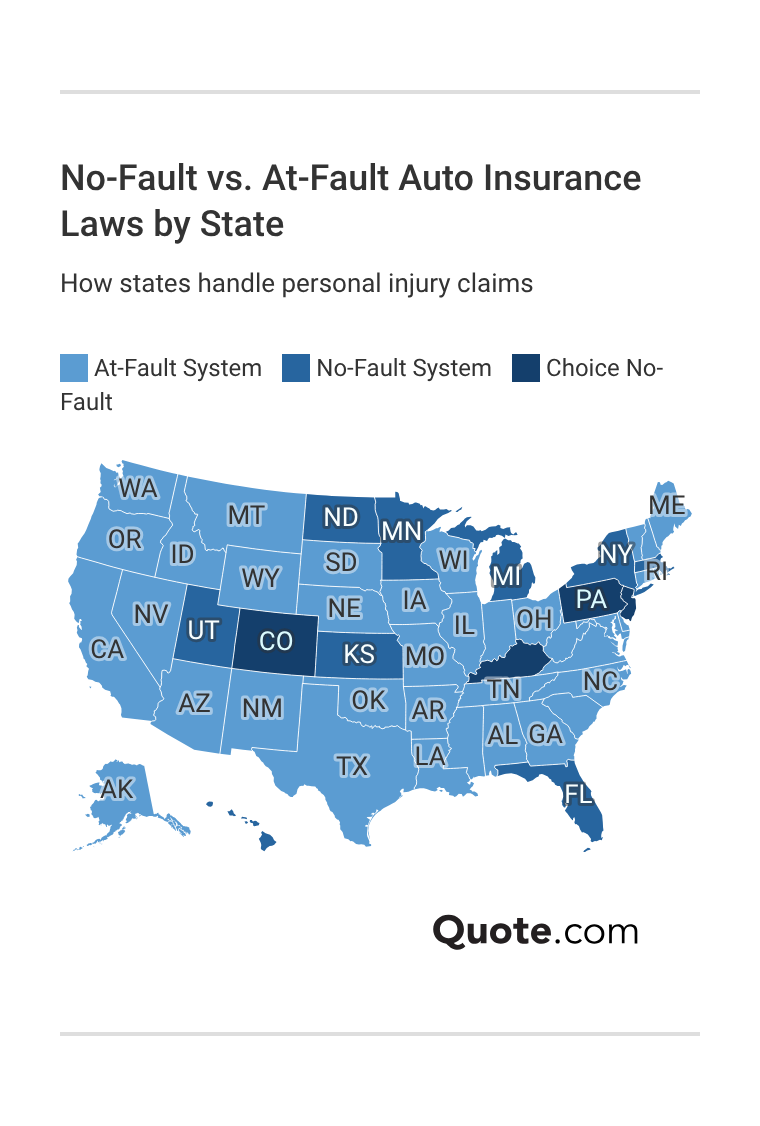
- Only 12 states use no-fault insurance systems and require PIP
- No-fault insurance is optional in KY, PA, and NJ
- Lawsuits are allowed if injuries meet the state’s serious harm threshold
No-fault insurance is also known as personal injury protection (PIP). It pays medical bills and lost wages up front, but limits lawsuits unless injuries surpass a legal threshold.
Costs vary by state, provider, and coverage level, so your PIP choice directly affects your premium. Keep reading to learn how no-fault laws, injury thresholds, and PIP limits all work together.
Protect your vehicle with affordable no-fault car insurance by entering your ZIP code into our free quote comparison tool and reviewing top rates in minutes.
No-Fault Auto Insurance Laws Explained
When comparing types of auto insurance, you need to separate the legal system your state follows from the specific coverage listed on your policy.
The no-fault meaning simply refers to how injury claims are handled after a crash. It doesn’t mean no one was responsible for the accident, but it determines who you file with first and how lawsuits are limited.
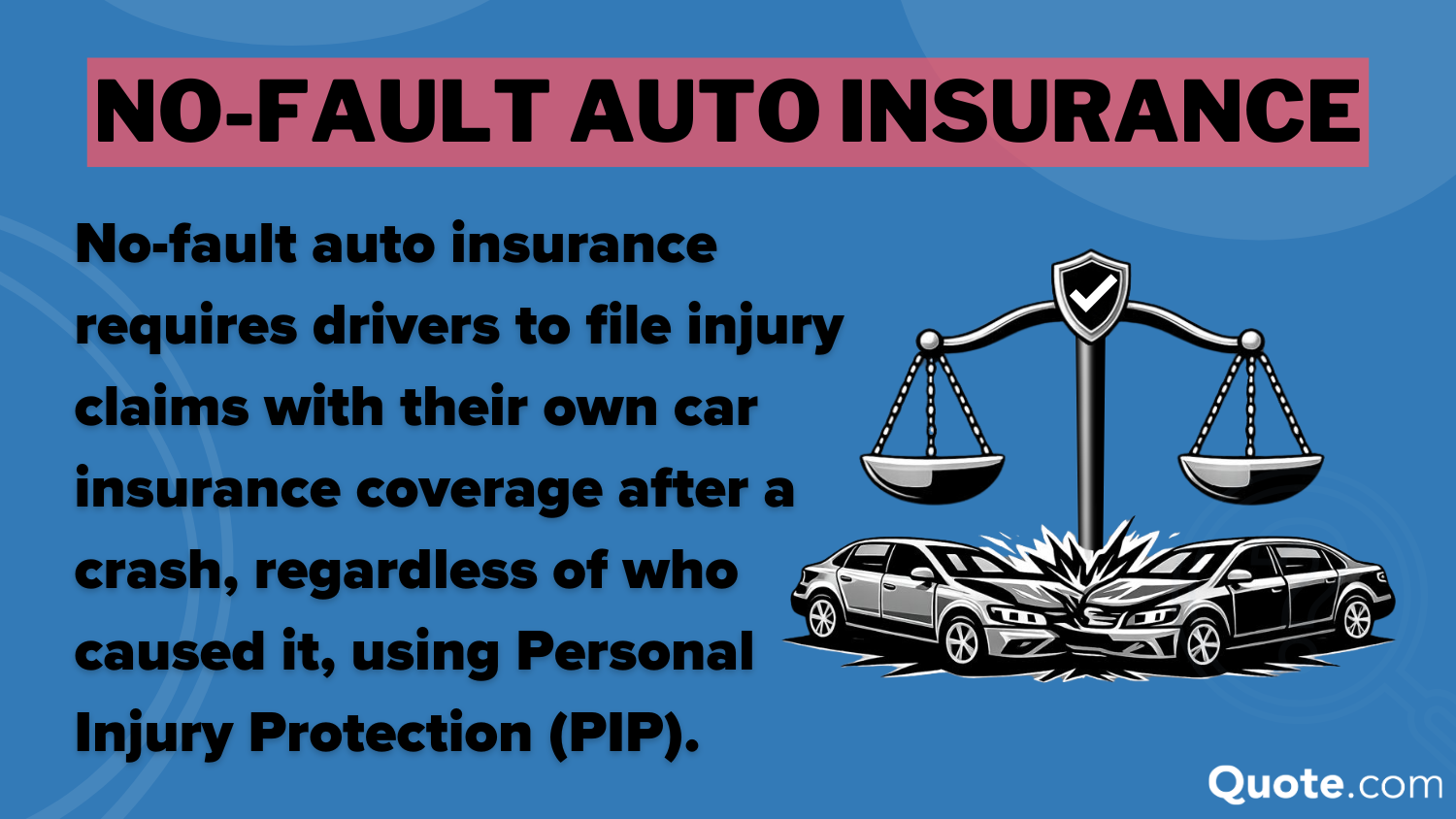 In a no-fault state, you turn to your own insurer for injury claims, regardless of who caused the crash.
Insurance laws in no-fault states require drivers to carry PIP as part of minimum car insurance to cover these claims.
PIP, or personal injury protection, is the coverage listed on your auto policy that pays your medical bills and related expenses.
PIP covers medical treatment, lost wages, and in some states, essential services while you recover.
Differences Between No-Fault & At-Fault Insurance Systems
In a no-fault state, injury claims move faster because you file with your own insurer. You aren’t able to sue other drivers unless injuries meet the state’s legal threshold.
Your PIP coverage pays your medical bills and lost wages without waiting to determine who caused the crash.
No-Fault vs. At-Fault Auto Insurance| Feature | No-Fault | At-Fault |
|---|---|---|
| Claim Processing Speed | Claims processed faster | Longer claim processing |
| Fault Determines Liability | Not required for injury claims | Required for injury claims |
| Lawsuits for Injuries | Limited by injury thresholds | Injured parties may sue |
| Medical Bill Payments | Your insurer pays bills | Other driver’s insurer pays |
| PIP Requirements | 12 states require PIP | Not required in most states |
| Where Required by Law | Mandated in select states | Mandated in most states |
In an at-fault state, fault must be established before the injured party can pursue the at-fault driver’s insurance company for damages.
Seeing the no-fault insurance rules side by side with the state breakdown helps you understand not only how claims work, but also how the law in your state shapes what your policy needs to include.
Learn More: Liability Auto Insurance
Free Auto Insurance Comparison
Compare Quotes From Top Companies and Save
How No-Fault Insurance Affects Your Rates
Only a limited number of states follow this system, while most have traditional at-fault rules. Get More Details: Auto Insurance Requirements by State
Car insurance usually costs more in no-fault states since minimum limits require additional PIP or medical payments coverage. Monthly rates rise steadily as you increase your PIP limit in no-fault states, and the difference is not small.
In Florida, coverage moves from $92 per month with a $10,000 limit to $176 monthly for a $100,000 policy, which is why many drivers compare the best auto insurance companies in Florida to find lower PIP rates.
Michigan runs the highest overall, starting at $118 and reaching $221 at the top limit. On the more affordable end, Utah and Pennsylvania begin at $68 and $70 per month for $10,000 in PIP.
Auto Insurance Monthly Rates in No-Fault States by PIP Limit| State | $10K | $25K | $50K | $100K |
|---|---|---|---|---|
| Florida | $92 | $108 | $134 | $176 |
| Hawaii | $78 | $91 | $115 | $152 |
| Kansas | $73 | $86 | $109 | $144 |
| Kentucky | $75 | $88 | $112 | $148 |
| Massachusetts | $84 | $99 | $125 | $164 |
| Michigan | $118 | $136 | $168 | $221 |
| Minnesota | $89 | $104 | $131 | $173 |
| New Jersey | $96 | $112 | $139 | $183 |
| New York | $102 | $120 | $149 | $196 |
| North Dakota | $81 | $95 | $119 | $157 |
| Pennsylvania | $70 | $82 | $104 | $137 |
| Utah | $68 | $80 | $101 | $133 |
Across every state shown, each jump in coverage adds meaningful cost, often $70 to $100 more per month from the lowest to the highest tier.
When you choose a higher PIP limit, you pay more each month, but you also protect yourself from larger out-of-pocket medical and wage loss expenses after a crash, even if it was an at-fault accident.
Comparing No-Fault Car Insurance Costs
Each no-fault insurance company sets its own pricing for PIP limits, which is why rates can vary significantly even within the same state.
At the $10,000 PIP level, USAA is the lowest at $29 per month, while Liberty Mutual is $91, more than triple the cost.
No-Fault Auto Insurance Monthly Rates by Provider & PIP Limit| Company | $10K | $25K | $50K | $100K |
|---|---|---|---|---|
 | $82 | $95 | $118 | $152 |
 | $58 | $71 | $89 | $120 |
 | $72 | $85 | $108 | $139 |
 | $39 | $52 | $68 | $94 |
 | $91 | $104 | $128 | $167 |
 | $60 | $74 | $92 | $121 |
 | $54 | $66 | $84 | $112 |
 | $44 | $57 | $73 | $99 |
 | $50 | $63 | $81 | $109 |
 | $29 | $42 | $58 | $83 |
As you move up to $100,000 in PIP, the spread remains wide, with USAA at $83 and Liberty Mutual at $167.
Geico and State Farm stay competitive across most tiers, while Allstate and Farmers trend higher as limits increase.
Compare Now: State Farm vs. Farmers, Geico, Progressive, & Allstate Insurance Review
In a no-fault state, file injury claims through your own PIP coverage and pick a limit that fully covers medical bills and lost wages so you avoid out-of-pocket costs.
Jeff Root Licensed Insurance Agent
Across every company, higher PIP limits mean higher premiums. PIP is the coverage that pays your medical bills and lost wages in a no-fault system.
The amount you choose directly affects what you pay each month, making it essential to compare both limit levels and carriers before you decide.
How No-Fault Auto Insurance Works
A no-fault car insurance claim works differently from the traditional liability process. Instead of waiting for investigators to decide who caused the crash, you contact your own insurer and open a claim under your PIP policy.
Your no-fault insurance starts covering medical treatment and wages right away. The goal of no-fault auto insurance states is to get injured drivers’ medical care quickly without long legal disputes over fault.
No-Fault Auto Insurance Benefits & Limitations| Feature | Pros | Cons |
|---|---|---|
| Claim Handling | Faster injury claims | Slower damage claims |
| Fault Determination | No fault needed to file | Right to sue is limited |
| Lawsuit Rights | Quicker injury payments | Pain awards restricted |
| PIP Coverage Limits | Guaranteed injury benefits | Benefits capped by limit |
| Premium Costs | More predictable pricing | Premiums may be higher |
First, report the crash to your insurer. Then your PIP benefits begin paying medical bills and lost income while your insurer processes the claim. Learn More: How to File an Auto Insurance Claim
Vehicle repairs work differently. Damage to your car is still handled through collision coverage or the other driver’s property damage liability insurance.
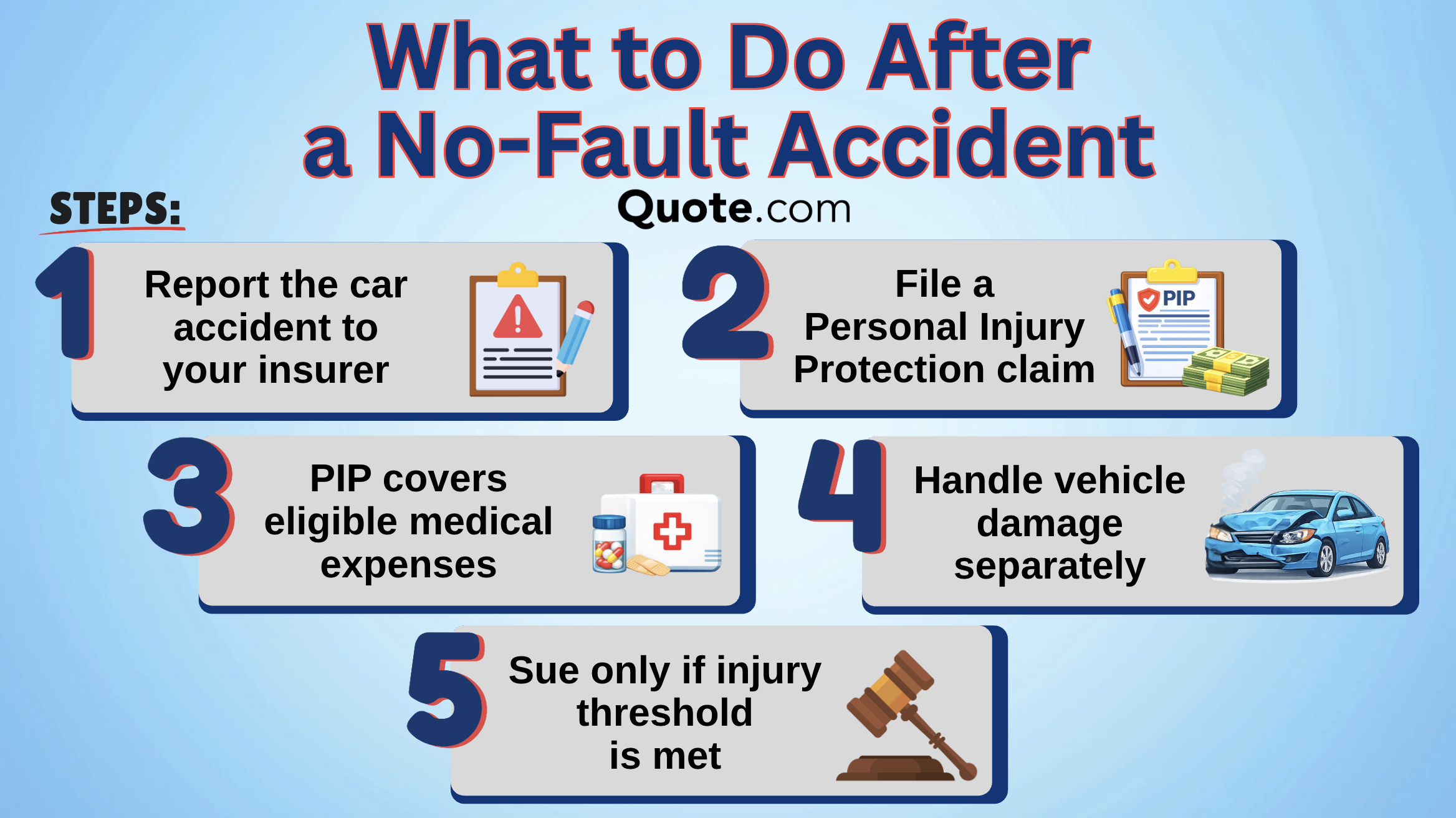
Accidents can involve more than just other drivers, too, so you may have to include multiple people in your PIP claim if passengers were injured in the collision.
The key to no-fault car insurance plans is that drivers cannot sue at-fault parties unless their medical costs exceed the state’s injury threshold.
Understanding Injury Thresholds in No-Fault States
Every no-fault system places limits on when drivers can sue the other party after an accident. States follow verbal, monetary, or choice thresholds, but the real impact shows up during the claims process.
Drivers in choice states like Pennsylvania, Kentucky, and New Jersey must select their lawsuit rights when they buy their policy. Once that decision is made, it applies to any future accident claim and cannot be changed until renewal.
Choice vs. Monetary vs. Verbal Injury Thresholds| Threshold | Rule | Suing | States |
|---|---|---|---|
| Choice | Driver selects tort | Based on option chosen | KY, NJ, & PA |
| Monetary | Costs exceed minimum | When bills exceed limit | KS & ND |
| Verbal | Serious injury required | When injury is serious | FL, HI, MA, MI, MN, NY, UT |
No-fault injury thresholds also affect how quickly claims move. Monetary thresholds can slow things down because insurers must verify medical costs before a lawsuit becomes possible. Verbal thresholds usually move faster, but only severe injuries qualify.
If you live in these no-fault insurance states, compare providers carefully. Your choice determines whether a claim stays within the PIP system or moves into a liability lawsuit.
Read More: Best Auto Insurance Companies in New Jersey
What No-Fault Coverage Pays For
Many drivers ask, ” Is no-fault insurance full coverage? It is not. No-fault laws apply only to injury claims, while collision and comprehensive auto insurance coverage handle vehicle damage.
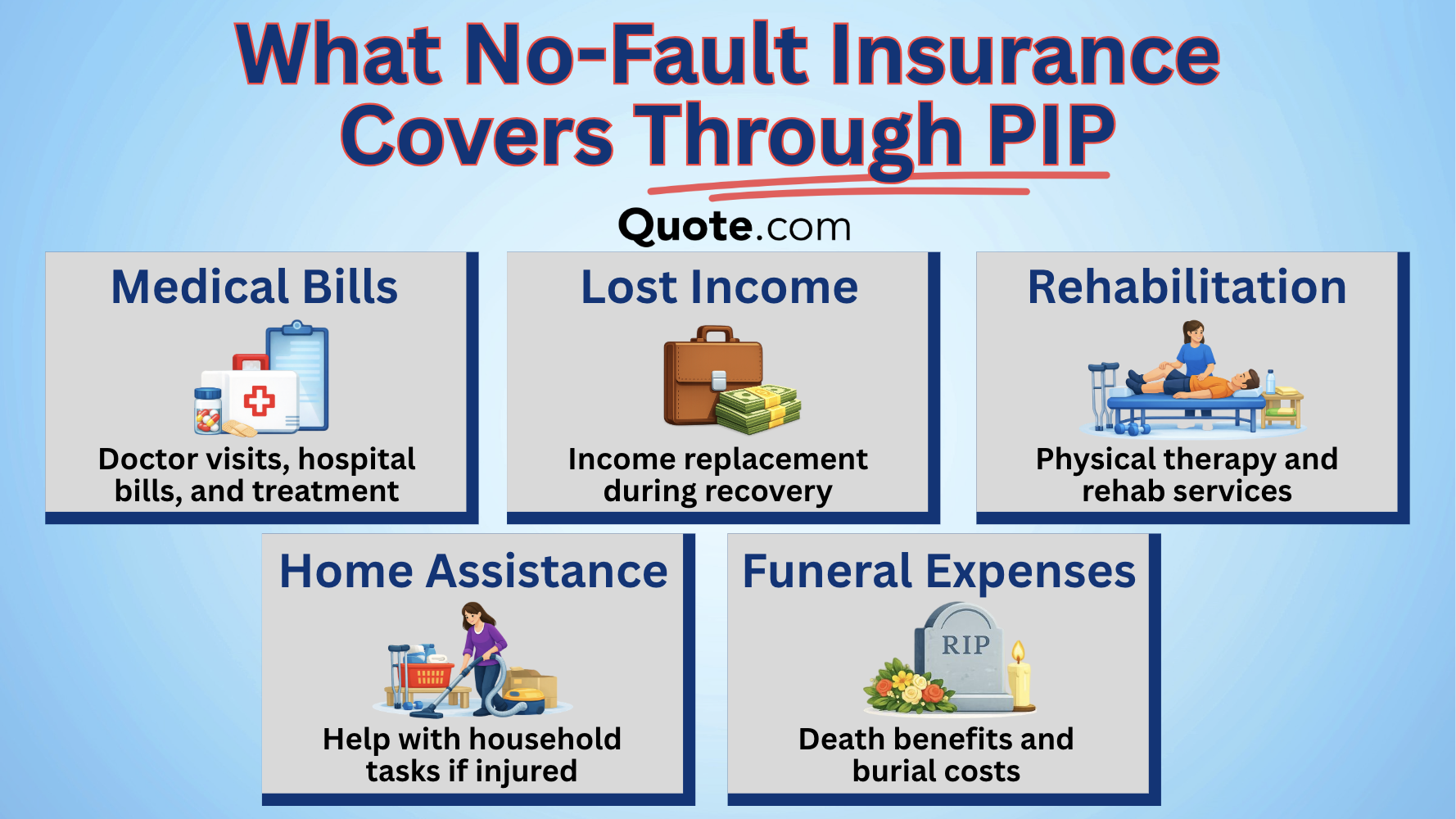
Under this system, your PIP coverage pays for medical expenses and lost income without waiting to determine who caused the accident.
No-Fault Auto Insurance Coverage Overview| Category | Details |
|---|---|
| Claim Speed | Medical claims are paid faster |
| Coverage Scope | Medical bills and lost income |
| Fault Determination | Not required for injury claims |
| Lawsuit Limits | Limited by injury thresholds |
| Pain and Suffering | Restricted by injury thresholds |
| Premium Impact | Premiums higher in some states |
| Primary Coverage | PIP covers injuries, fault ignored |
| State Requirement | Mandated in select states |
| Vehicle Damage | Handled by collision coverage |
Injuries must also be weighed against the state minimum threshold for suing other drivers for pain and suffering.
This reduces the number of instances in which you can go outside the system to sue the other driver, which can slow recovery and medical bill payments.
Premiums may be higher in no-fault states because insurers assume the upfront responsibility for injury costs. However, the benefit is a system that favors the speedy payment of injury claims by imposing limits on access to court.
Some states rely on medical payments coverage (MedPay) instead of PIP. MedPay focuses solely on medical expenses and doesn’t replace lost wages, unlike PIP.
For example, drivers in certain at-fault states may carry MedPay as optional protection even though their state does not follow a no-fault system.
Choosing Personal Injury Protection Policy Limits
Personal injury protection (PIP) is the coverage that makes the no-fault system function. It doesn’t apply to vehicle damage, which is treated differently through your collision policy.
While no-fault laws determine how claims are filed, PIP is the part of your insurance policy that actually pays the bills.
Check Out This Page: What to Do When You’re Denied Insurance Coverage
Personal Injury Protection (PIP) Limits Explained| Rule | Detail | Impact |
|---|---|---|
| Accident Limit | Total payout set per crash | Caps total claim payment |
| Coverage Cap | Maximum benefit amount | Expenses above max unpaid |
| Medical Expenses | Medical bills reduce limit | Coverage can run out |
| Other Benefits | Lost wages use coverage | Reduces remaining balance |
| Per-Person Limit | Separate amount per person | Not shared across people |
| State Variations | Limits differ by state | Required minimums vary |
PIP benefits typically cover medical treatment and rehabilitation services after an accident. It can also pay for household help, including cleaning and childcare services, and a portion of lost wages if your injuries prevent you from working long-term.
Every policy includes a maximum payout limit. Medical expenses reduce that limit first, and other benefits, like wage replacement, draw from the remaining amount.
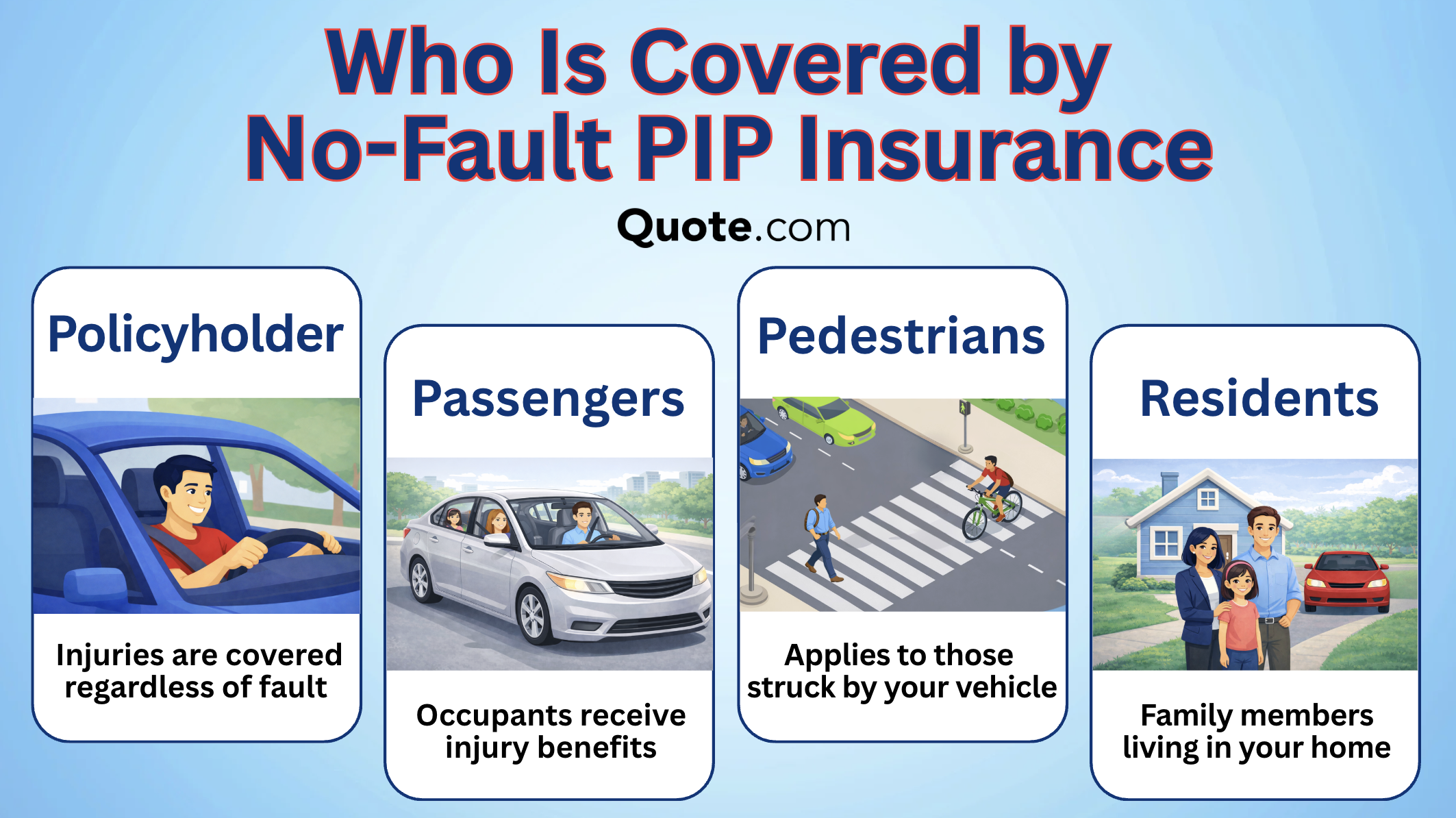
Personal injury coverage also pays for any passengers’ injuries, so choosing the right PIP limit matters.
Research average medical costs in your state, because if everyone’s medical costs exceed the policy limit, the remaining expenses fall on you.
Meeting the PIP Requirements in Your State
PIP rules vary widely across no-fault auto insurance states and impact coverage levels and claim payouts after an accident.
Florida and Hawaii require at least $10,000 in PIP, while states such as Utah require only $3,000. See More: Best Auto Insurance Companies in Utah
Personal Injury Protection Requirements in No-Fault States| State | PIP Min. | Threshold |
|---|---|---|
| Florida | $10K | Verbal |
| Hawaii | $10K | Verbal |
| Kansas | $4.5K | Monetary |
| Kentucky | $10K | Choice |
| Massachusetts | $8K | Verbal |
| Michigan | Tiered | Verbal |
| Minnesota | $40K | Verbal |
| New Jersey | $15K | Choice |
| New York | $50K | Verbal |
| North Dakota | $30K | Monetary |
| Pennsylvania | $5K | Choice |
| Utah | $3K | Verbal |
Pennsylvania sets a $5,000 minimum, while Minnesota requires $40,000 and New York mandates $50,000 in coverage.
You can choose to meet the state’s PIP limit or choose higher policy limits, but it will impact how much you pay monthly. A higher limit raises your premium but gives you stronger coverage in a serious collision.
How to Choose Your Personal Injury Protection (PIP) Limit| Factor | Higher | Lower |
|---|---|---|
| Budget Impact | Increased monthly cost | Reduced monthly cost |
| Household Drivers | More family protection | Less family protection |
| Income Protection | Stronger wage coverage | Limited wage coverage |
| Medical Expenses | More medical protection | Less medical protection |
| Out-of-Pocket Risk | Lower financial risk | Higher financial risk |
| State Requirement | Exceeds state minimum | Meets state minimum |
Consider your budget against your state’s minimum requirements and average medical costs in your area.
The best insurance comparison sites can help you compare no-fault quotes and PIP limits from multiple companies in your state.
Free Auto Insurance Comparison
Compare Quotes From Top Companies and Save
Why No-Fault Coverage and PIP Confuse Drivers
The main difference between no-fault and PIP insurance is that no-fault refers to the system of processing insurance claims, while PIP is the policy that pays the claim.
PIP policies are required in no-fault states. However, in some at-fault states, drivers can choose to add it for extra protection even though the state does not use a no-fault system. Don’t Miss It: Full Tort vs. Limited Tort Auto Insurance
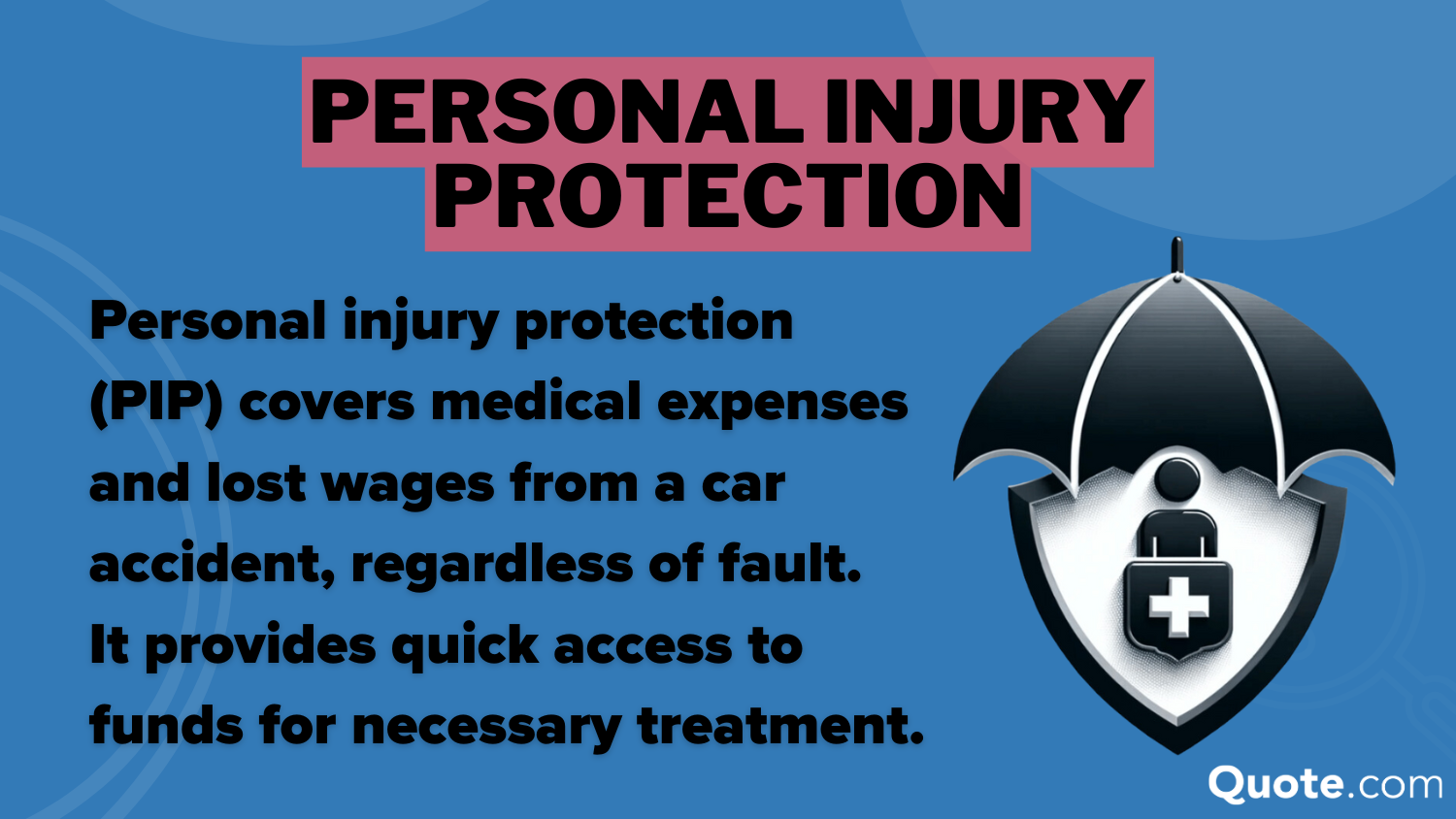
Some states offer MedPay instead, which covers medical bills only and does not include lost wages.
That is why you might see PIP in both no-fault and at-fault states, or no PIP at all in certain places.
Ways to Lower No-Fault Insurance Costs
Drivers in no-fault states still have several ways to lower the cost of no-fault coverage, and many of the most common savings come from everyday habits or simple policy choices.
Discounts for multiple policies and good student programs can also save significant money when households combine coverage or insure young drivers with good grades.
Best Auto Insurance Discounts Available in No-Fault States| Discount | Savings | Eligibility |
|---|---|---|
| Defensive Driver | 15% | Drivers completing approved course |
| Good Student | 25% | Full-time students with good grades |
| Low Mileage | 20% | Drivers with low annual mileage |
| Multi-Policy | 25% | Auto bundled with home or renters |
| Pay-in-Full | 10% | Customers paying premium in full |
| Safe Driver | 30% | Those with clean driving records |
| Telematics | 30% | Drivers enrolled in UBI program |
Beyond traditional discounts, drivers can also lower premiums by adjusting how they buy and manage their policy.
Other ways to reduce no-fault coverage costs include adjusting policy limits and deductibles:
- Carefully Adjust PIP Limits: Personal injury protection (PIP) is mandatory in no-fault states, but you can control costs by choosing coverage levels that suit your needs.
- Choose a Low-Risk Vehicle: Cars with high safety ratings and lower repair costs generally come with lower premiums.
- Keep a Clean Driving Record: Avoiding tickets and accidents keeps your risk profile low, which will help you qualify for better pricing over time.
- Raise Your Deductible: A lower monthly premium comes with a higher deductible, as you’ll pay more out of pocket if you actually make a claim.
- Shop for Quotes: Every insurer has its own method of calculating no-fault risk, so rates can vary widely between companies for the same level of coverage.
Usage-based car insurance programs track driving habits and reward safe drivers with lower premiums.
Taking time to compare coverage options and adjust policy details can make a noticeable difference in the price of no-fault car insurance.
When Drivers Need No-Fault Car Insurance
No-fault car insurance applies only in a limited number of states, but drivers living in those states must follow the system when filing injury claims after an accident.
Rates typically range from $68 to more than $200 per month, depending on where you live and your PIP limit. Higher limits increase monthly premiums, but they also reduce the risk of paying medical bills or lost wages out of pocket after a serious crash.
The key difference is that no-fault is the legal structure, while PIP is the insurance coverage that pays benefits.
Only a small group of no-fault car insurance states requires this system. Some states also use MedPay instead of PIP, which covers medical expenses but does not include wage replacement benefits.
No-fault laws require you to file injury claims with your own insurer first, so report the accident quickly under PIP and choose a limit that covers medical bills and lost wages.
Melanie Musson Published Insurance Expert
The best car insurance companies, including USAA, Geico, and State Farm, often appear among the lowest-cost providers for common PIP limits.
Comparing multiple insurers is still the best way to find affordable coverage in your area. Enter your ZIP code below to compare no-fault auto insurance rates from top companies and find the best policy in your state.
Frequently Asked Questions
What does it mean when auto insurance says “no fault”?
When auto insurance uses the term no fault, it means your own insurer pays injury costs first, no matter who caused the crash. In no-fault states, drivers file medical claims through personal injury protection (PIP) instead of the other driver’s insurance. PIP typically covers medical bills and a portion of lost wages up to your policy limit.
How does car insurance work if it’s not your fault?
Even if the other driver clearly caused the crash, you still file injury claims with your own insurer in a no-fault state. Your PIP pays first. Vehicle damage, however, is handled separately through collision auto insurance coverage or the at-fault driver’s property damage liability.
What is the compensation for no-fault liability?
Compensation typically includes medical expenses, a percentage of lost wages, and sometimes essential services like household help. In states like New York, minimum PIP limits start at $50,000, while Florida requires $10,000, meaning benefits vary significantly by state.
Read More: Best Auto Insurance Companies in New York
Is no-fault insurance more expensive?
It can be. Because insurers pay injury claims up front, premiums in certain no-fault states are higher. No-fault insurance examples with higher PIP limits, such as $40,000-$50,000, typically drive up baseline costs relative to states with lower requirements. Start saving on your no-fault car insurance by entering your ZIP code and comparing quotes from top providers.
What are the disadvantages of no-fault auto insurance?
The biggest drawback is limited lawsuit rights. You generally cannot sue for pain and suffering unless injuries meet a verbal or monetary threshold. Some drivers also pay higher premiums due to required PIP coverage.
Who pays for car damage in a no-fault state?
No-fault laws apply only to injury claims. Car damage is not covered by PIP. If you carry collision coverage, your insurer pays for repairs after you meet your insurance deductible. If you don’t, you must file a claim against the at-fault driver’s property damage liability coverage.
What is the no-fault clause in insurance?
The no-fault clause is the part of your policy that explains how injury claims are handled. It outlines that PIP will pay your medical expenses first and defines when you’re allowed to pursue legal action outside the system.
What happens in a no-fault insurance claim?
After a crash, you report the accident to your insurer and file a PIP claim, which is often the first step in learning how to file an auto insurance claim properly. Your company pays medical bills and lost wages up to your selected limit. If injuries exceed the state’s legal threshold, you may then pursue the other driver for additional damages.
Will a no-fault claim affect my car insurance rates?
It depends. While fault may not determine injury payment, insurers can still consider claim frequency when setting rates. Multiple claims over time may impact your premium, even if you were not responsible for the crash. Use our free quote comparison tool to see how your rates change after a claim.
Do I need to inform my insurance of a non-fault accident?
Yes. Most policies require you to report any accident promptly, even if you were not responsible. Failing to notify your insurer could delay PIP benefits or complicate future claims.
Is no-fault the same as liability?
Do I make an insurance claim if it wasn’t my fault?
What happens if I have a car accident and it’s not my fault?
Do you have to pay excess on car insurance if you are not at fault?
Related Articles
-
Aug 2026

How to Buy Auto Insurance Online in 2026
-
Apr 2026
Best Temporary Auto Insurance Providers in 2026
-
May 2026

10 Best Auto Insurance Companies in Florida (2026)
-
May 2026

10 Best Auto Insurance Companies in Iowa for 2026
-
Nov 2025
10 Best Auto Insurance Companies in Colorado (2026)
-
Jun 2026
Cheap Auto Insurance for Teens in 2026





Get a FREE Quote in Minutes
Insurance rates change constantly — we help you stay ahead by making it easy to compare top options and save.