Vacant Home Insurance: Cost, Coverage, & Risks Explained (2026)
Vacant home insurance can protect a house that’s empty beyond the vacancy limit in a standard home insurance policy, often 30 to 60 days. Learn when coverage may be needed, which claims insurers may still cover, and how costs and coverage options compare.
Read more





Table of Contents
Table of Contents

Head of Content
Meggan McCain, Head of Content, has been a professional writer and editor for over a decade. She leads the in-house content team at Quote.com. With three years dedicated to the insurance industry, Meggan combines her editorial expertise and passion for writing to help readers better understand complex insurance topics. As a content team manager, Meggan sets the tone for excellence by guiding c...
Meggan McCain

Managing Editor
Laura Kuhl holds a Master’s Degree in Professional Writing from the University of North Carolina at Wilmington. Her career began in healthcare and wellness, creating lifestyle content for doctors, dentists, and other healthcare and holistic professionals. She curated news articles and insider interviews with investors and small business owners, leading to conversations with key players in the le...
Laura Kuhl

Licensed Insurance Agent
Travis Thompson has been a licensed insurance agent for nearly five years. After obtaining his life and health insurance licenses, he began working for Symmetry Financial Group as a State Licensed Field Underwriter. In this position, he learned the coverage options and limits surrounding mortgage protection. He advised clients on the coverage needed to protect them in the event of a death, critica...
Travis Thompson
Updated June 2026
Vacant home insurance is often needed because a burst pipe can cause over $10,000 in damage. It may apply when a home is empty during a sale, inheritance, or repairs.
- Vacant home insurance may include dwelling, liability, and contents
- Regular homeowners insurance may not cover empty properties
- Premiums rise on homes with fewer security features
Some of the best home insurance companies offer coverage for vacant homes, but the rules and coverage details can be different. A vacant home insurance policy may include specific inspection requirements or vacancy limits that affect how coverage applies.
Many insurers treat vacant properties differently because routine problems can escalate when no one is present to spot them. For example, a small plumbing leak can ruin floors, walls, and wiring before anyone finds out.
Policy terms vary based on how long the home will remain vacant and whether the property is being renovated, listed for sale, or held by an estate. To compare available coverage options and rates in your area, enter your ZIP code.
Cost of Insurance for an Unoccupied Home
As dwelling coverage increases, the gap between lower-priced and higher-priced insurers becomes much more noticeable.
A homeowner insuring a $500K property could pay about $65 more per month for Chubb than for USAA vacant home insurance coverage.
Vacant Home Insurance Monthly Rates by Dwelling Coverage| Company | $200K | $300K | $400K | $500K |
|---|---|---|---|---|
 | $165 | $205 | $250 | $295 |
 | $155 | $195 | $240 | $285 |
 | $185 | $230 | $285 | $335 |
 | $175 | $220 | $270 | $325 |
 | $180 | $225 | $275 | $335 |
 | $165 | $210 | $255 | $305 |
 | $160 | $205 | $250 | $295 |
 | $150 | $190 | $235 | $280 |
 | $170 | $215 | $260 | $310 |
 | $145 | $185 | $225 | $270 |
State Farm and American Family are the most affordable, which may help homeowners keep costs down as the amount of home insurance required to cover the unoccupied property increases.
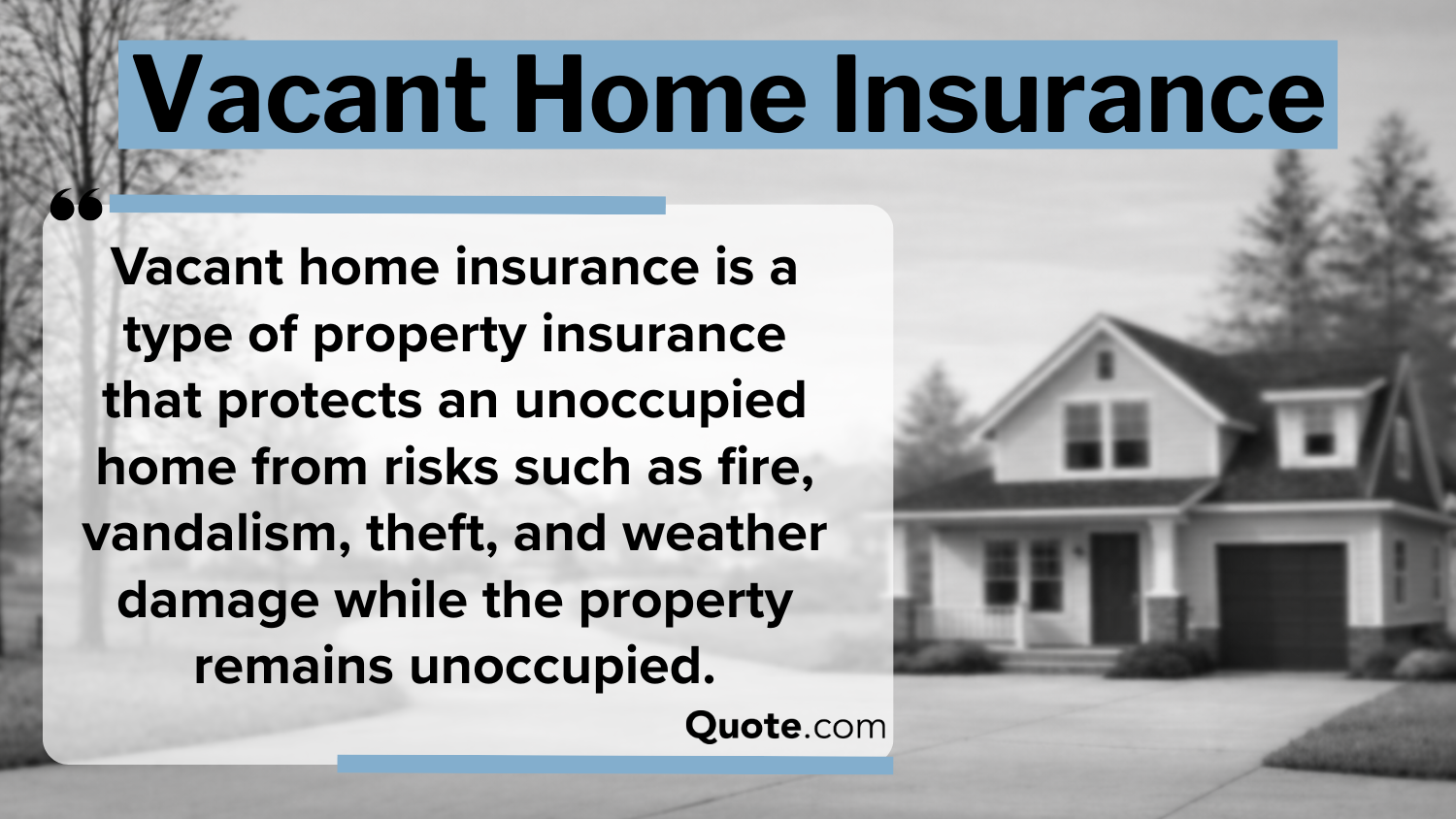
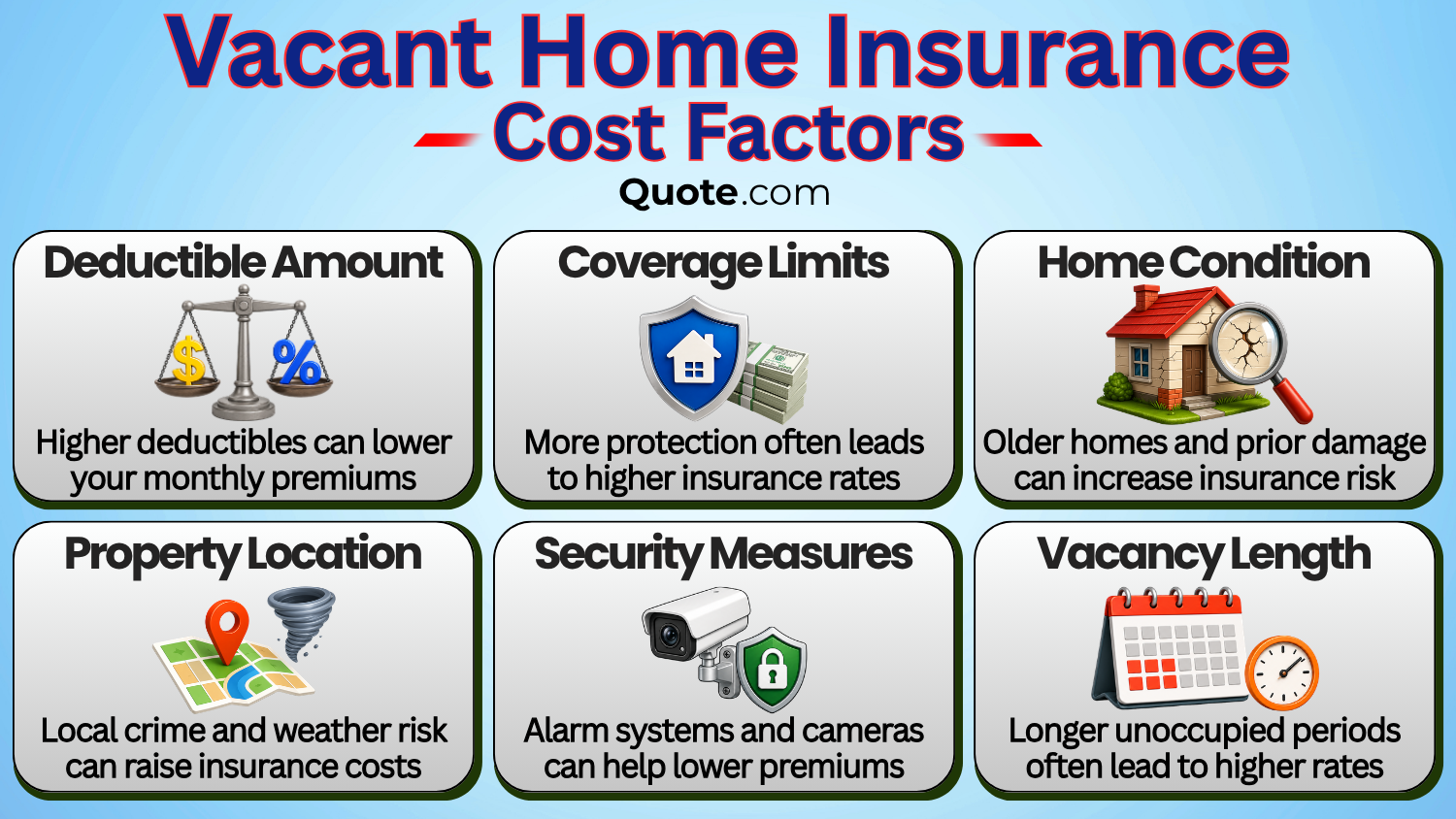
Vacant home insurance usually costs more than regular homeowners insurance. Empty homes are at higher risk for theft, vandalism, and damage that might go unnoticed.
Many insurers want regular property inspections for vacant homes. If damage goes unnoticed for a long time, claims may be checked more closely.
You may get a lower insurance rate if your home has an alarm system, water leak sensors, or deadbolt locks.
Vacant home insurance costs can change if the home stays empty longer than planned. For example, a longer vacancy may lead to higher rates.
Jeff Root Licensed Insurance Agent
Your location also matters. Homes near the coast, in wildfire zones, or in high-crime areas usually cost more to insure.
It’s a good idea to check Progressive vacant home insurance alongside other companies since coverage, rules, and pricing can vary. Comparing policies online at the same dwelling limit and deductible can help you save without cutting coverage.
How Location Affects Insurance Costs on Vacant Properties
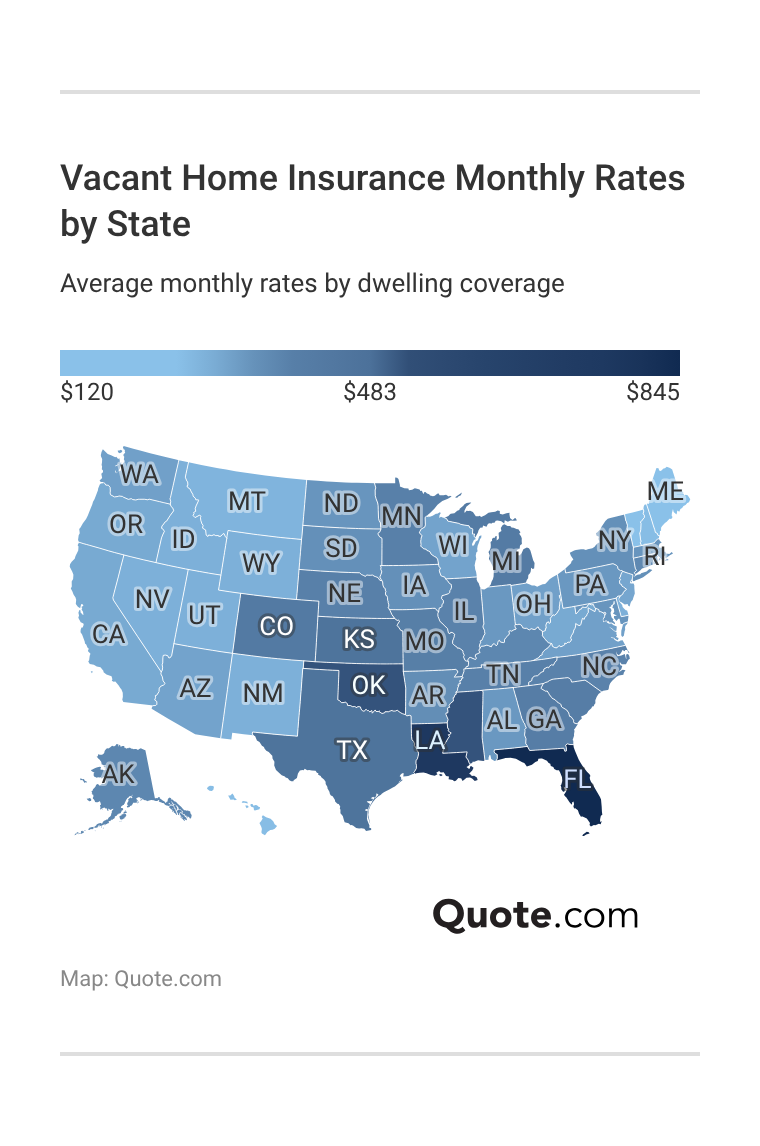
Location can affect the price just as much as the home’s value. A vacant house in Florida may cost more to insure than one in Oregon because hurricanes are more common along the Gulf and Atlantic coasts.
In western states, insurers often consider wildfire risk because fires can spread quickly through unoccupied homes.
These regional differences are one reason home insurance rates by state can vary so widely, even for properties with similar coverage amounts.
The cheapest states are not always the best choice if the policy limits coverage for theft, vandalism, or water damage.
Some insurers require vacant homes to be checked every 7 to 14 days to keep coverage active throughout the policy period. These rules apply to vacant home insurance in Texas, where weather risks and vacancy guidelines can affect your coverage.
Before choosing a policy, look at both the monthly cost and the vacancy rules that might impact your claim in the future. Then, compare home insurance quotes online to find the right price.
How Deductibles Impact Vacant Property Premiums
Once you have the right insurance for a vacant home, choosing the right insurance deductible becomes even more important.
A higher deductible can lower your monthly insurance payments, but it also means you will pay more out of pocket if you need to make a claim.
How Deductibles Affect Monthly Home Insurance Rates| Deductible | Premium | Cost Impact |
|---|---|---|
| $500 | $235 | Highest monthly premium |
| $1K | $195 | Higher out of pocket risk |
| $2K | $172 | Moderate monthly savings |
| $2.5K | $165 | Lower monthly premiums |
| $5K | $145 | Lowest monthly premiums |
A $5K deductible will give you the cheapest vacant home insurance quotes, but most homeowners choose between $1K and $2K.
Enter your ZIP code to find a deductible that aligns with your budget and savings, so you can cover any unexpected costs if you need to file a claim.
Free Home Insurance Comparison
Compare Quotes From Top Companies and Save
What Vacant Homeowners Insurance Covers
Vacant home insurance covers several types of losses because damage to an empty property can spread for days or weeks before anyone notices.
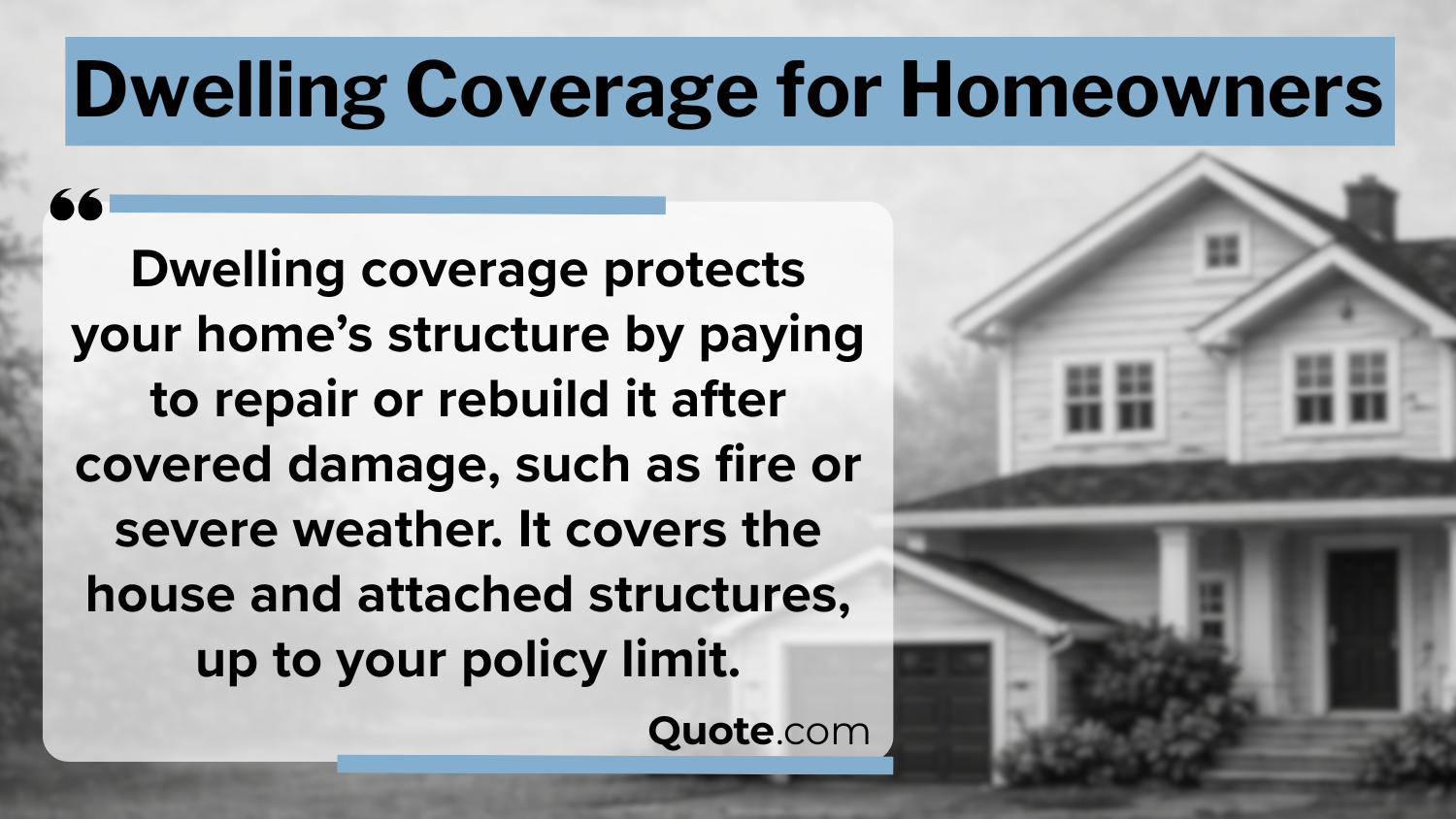
If a fire damages the kitchen, dwelling coverage can help pay to repair the roof structure, walls, wiring, and other permanent parts of the home.
Vacant Home Insurance Coverage Options| Covered Damage | What's Included |
|---|---|
| Additional Structures | Detached garages, sheds, and gates |
| Dwelling Protection | Walls, roofing, and built-in features |
| Fire and Smoke | Fire, smoke, and soot-related claims |
| Liability Claims | Injury claims and related legal fees |
| Personal Property | Furniture, appliances, and valuables |
| Theft and Vandalism | Break ins, theft, and vandalism risks |
| Weather Events | Wind, hail, and lightning-related loss |
Home insurance coverage for detached buildings, like garages and storage sheds, is separate. These structures often need their own repairs after a covered loss.
Liability protection is important if someone, like a contractor, delivery driver, or visitor, gets hurt on your property and files a claim against you.
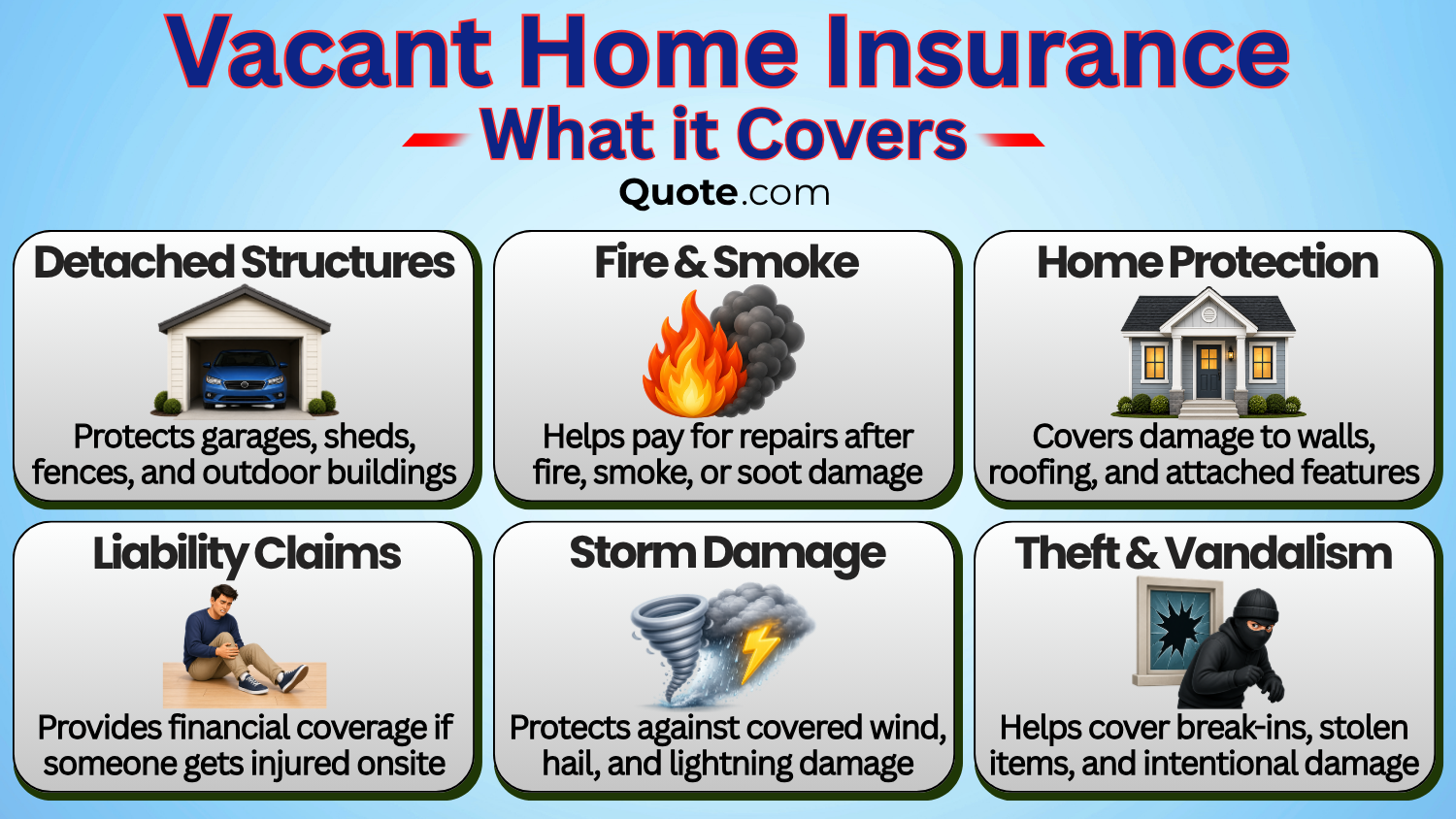
Personal property coverage can help replace furniture, appliances, and other belongings left inside if they are stolen, vandalized, or damaged by fire or smoke.
The best vacant home policies clarify which losses are covered and any inspection or maintenance rules, and comparing vacant home insurance companies can help find the right fit.
The Difference Between Vacant & Unoccupied Properties
Homeowners often assume an empty house is covered the same way regardless of whether furniture remains inside, but insurers do not always see it that way.
An unoccupied property that still has beds, appliances, and active utility service may fall into a different category than a house that has been completely cleared out.
Vacant vs. Unoccupied Homes: Key Insurance Differences| Status | Usage | Policy Impact |
|---|---|---|
| Fully Vacant | Regularly occupied | Full protection available |
| Occupied | Occupied seasonally | Seasonal terms may apply |
| Seasonal | Empty for short period | Short vacancies allowed |
| Temporary | Furnished but empty | Restrictions may apply |
| Unoccupied | Empty; few belongings | Special coverage needed |
That distinction can become important after a loss because insurers may review occupancy status before paying for theft, vandalism, or water damage claims.
Homes listed for sale, waiting for probate, or between tenants can move between categories. Checking occupancy rules can also help you find the cheapest vacant home insurance.
Learn More: How to Compare Home Insurance Quotes
Why Unoccupied Homes Need Coverage
Vacant home insurance is often needed when a property no longer meets the occupancy requirements of a standard homeowners policy.
Many insurers reduce or restrict coverage after a home sits empty for 30 to 60 consecutive days, depending on the policy terms.
When Vacant Home Insurance Is Needed| Situation | Policy Risk | Coverage Needed |
|---|---|---|
| Between Tenants | Vacancy limits apply | Vacancy endorsement |
| Inherited Home | Theft risks increase | Vacant home policy |
| Major Renovations | Liability risks increase | Builder risk insurance |
| Seasonal Vacancy | Higher risk of claims | Seasonal vacancy plan |
| Unsold Property | Increased theft risk | Vacant property policy |
| Vacant Rental | Rental claims limited | Landlord vacancy plan |
A house waiting for a new tenant has different risks than an inherited property because theft, vandalism, or maintenance issues can go unnoticed. Learn More: Best Home Insurance for Landlords
Renovation projects also add more risk. When contractors are working, tools are around, or construction is unfinished, the risk of damage or liability goes up.
Seasonal homes might also need extra coverage since frozen pipes, roof leaks, or storm damage can go unnoticed until you return.
The best vacant home insurance is designed for the property’s actual use because different types of home insurance address different risks, whether the home is vacant, under renovation, listed for sale, or between tenants.
Understanding the Insurance Risks of Vacant Homes
Insurance companies pay close attention to how long a home stays empty, since long vacancies can change your insurance rates and even your coverage options.
A burst pipe in an occupied home may be discovered the same day, whereas the same leak in a vacant property can persist for weeks and cost thousands of dollars in repairs.
How Vacancy Duration Affects Monthly Home Insurance Rates| Occupancy | Premium | Policy Impact |
|---|---|---|
| Occupied full-time | $165 | Standard policy rules apply |
| Vacant 1–30 days | $190 | Some vacancy limits apply |
| Vacant 30–60 days | $225 | Higher theft & damage risks |
| Vacant 60–90 days | $265 | Limited protection may apply |
| Vacant 90–180 days | $320 | Separate vacant home policy |
| Vacant 180+ days | $385 | Specialized coverage required |
Extended vacancies also make homes more attractive targets for copper theft, stolen appliances, and vandalism because fewer people are regularly entering the property.
Vacant homes are also more likely to develop mold when small leaks or humidity problems go unnoticed for long periods.
It's a good idea to limit access to a vacant property. In particular, spare keys hidden outside can create unnecessary security risks.
Melanie Musson Published Insurance Expert
In colder climates, a failed heating system can allow pipes to freeze and burst, causing extensive water damage throughout the property.
Homeowners planning a long vacancy should review policy requirements early since a home’s occupancy status can affect both claim approvals and the type of policy an insurer will offer.
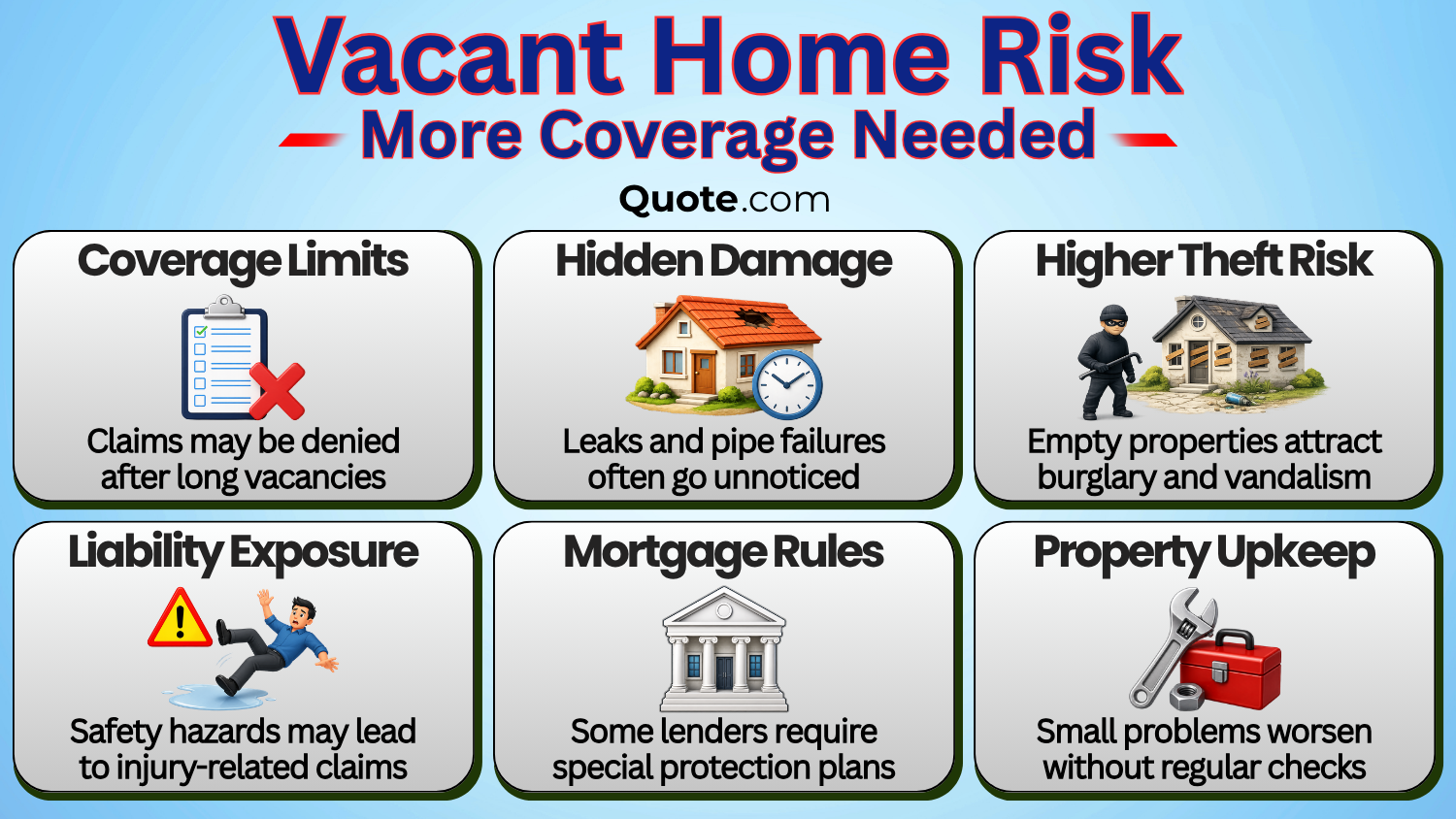
This is important to keep in mind if your vacant home has water damage, roof problems, or vandalism that needs quick repairs.
Hazard insurance may help cover structural damage from covered events, depending on your policy.
Choosing the Right Vacant Home Insurance
When a home is left empty, it usually needs more planning than most homeowners realize. Even small problems can turn costly if no one is around to handle them right away.
Vacant home insurance can help when standard homeowners insurance no longer applies. Some of the cheapest home insurance companies offer vacant property coverage, though terms and eligibility requirements vary by insurer.
Some insurance policies require you to check on your property regularly, while others may not cover damage if it is found too late. Knowing these rules before your home becomes vacant can help you avoid delays, denied claims, and surprise repair bills.
Enter your ZIP code to see what coverage options are available, compare companies that focus on insuring vacant homes, and get a vacant home insurance quote.
Frequently Asked Questions
What is a vacant home insurance policy?
Vacant home insurance is coverage for homes that stay empty for 30 days or more. It helps protect against things like theft, fire, water damage, vandalism, and liability, which are more likely when no one is living there.
What does vacant home insurance cover?
Vacant home coverage applies to the house, detached garages or sheds, liability for injuries, damage from fire or smoke, theft, vandalism, and some weather events. Many policies, however, exclude mold, gradual water damage, or earthquake insurance unless purchased separately.
What is the difference between vacant home insurance and unoccupied home insurance?
Vacant home insurance applies to properties with little or no furniture or personal belongings, while unoccupied property insurance usually applies to fully furnished homes that are temporarily empty and have fewer restrictions and lower premiums.
Use our free quote comparison tool to review vacant home insurance options from top insurers.
How does vacant home insurance work?
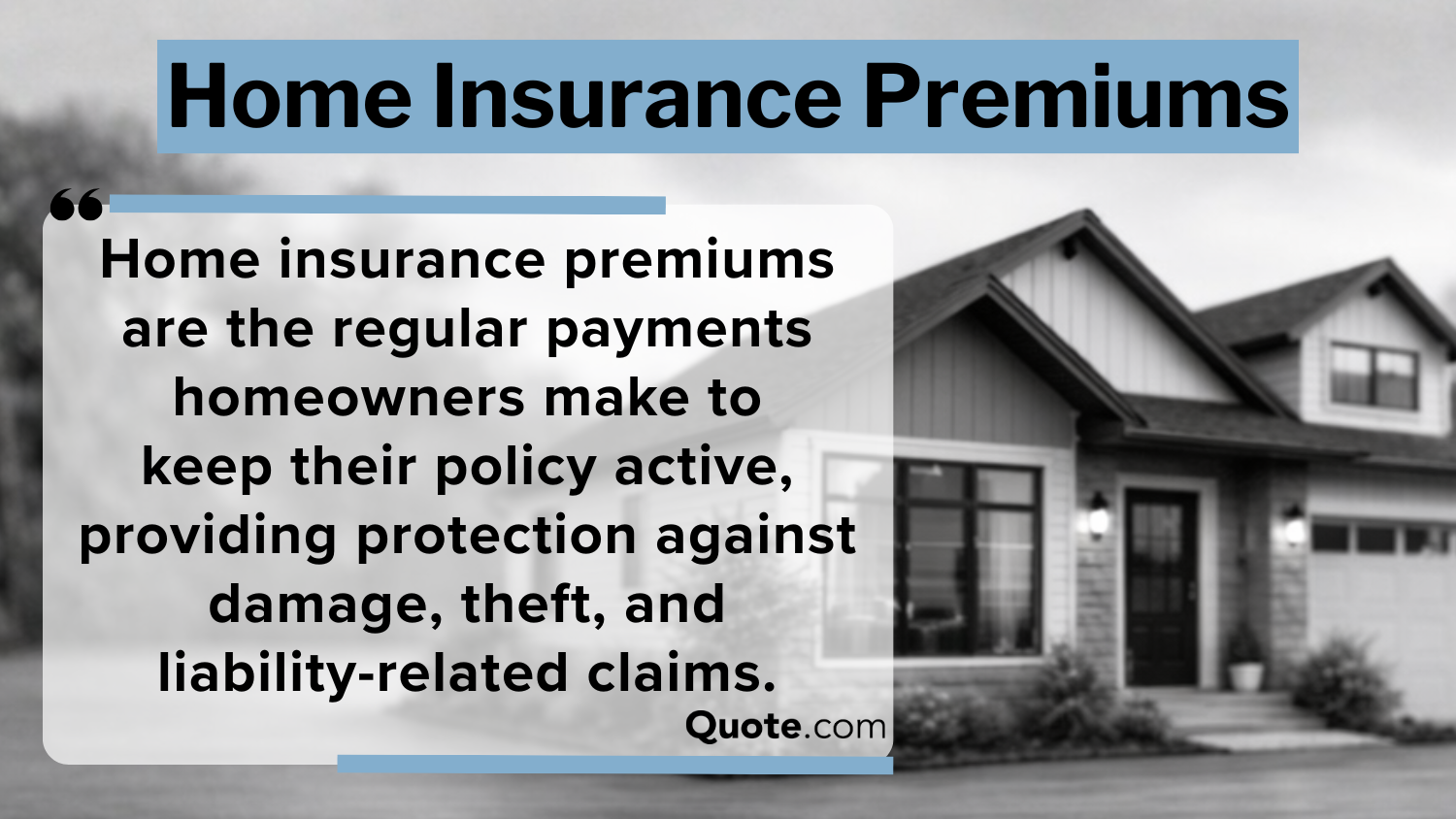
Vacant home insurance helps protect a house that sits empty. Regular checks and security measures may help keep coverage active and prevent higher home insurance premiums.
How long can a house be vacant for insurance?
It depends on the insurer. Many standard homeowners policies stop covering homes after 30 to 60 days, so a property left empty for 90 days may require a specific vacant home insurance policy. Enter your ZIP code to compare vacant home insurance rates from multiple providers.
How do I insure an unoccupied home?
Give the insurer information about how often the home is used, where it is, its value, any security features, and how long it will be empty when you buy vacant home insurance.
Comparing quotes from multiple insurers and checking for available home insurance discounts can help homeowners save on premiums without sacrificing coverage.
Is vacant home insurance more expensive?
Yes. Vacant home insurance usually costs more because empty homes are more likely to experience theft, vandalism, fire, or unnoticed damage. Monthly premiums can be 20% to 50% higher than standard homeowners insurance.
How do I lower the cost of unoccupied home insurance?
You can often lower the cost of unoccupied home insurance by adding a monitored alarm system, picking a higher deductible, and arranging regular property inspections. Comparing quotes from different insurers can also help you find better rates.
Why don’t insurance companies like vacant homes?
Insurers see vacant homes as high-risk because damage from theft, vandalism, water leaks, or fire may go undiscovered for weeks. As a result, insurance for high-risk homes often costs more than standard coverage.
What are the downsides of vacant home insurance?
Premiums are usually higher, and claims may face more scrutiny if damage is reported late. Enter your ZIP code to find vacant home insurance that fits your property’s needs.
Does State Farm offer vacant home insurance?
Which vacant home insurance company denies the most claims?
Related Articles
-
Aug 2026

Best Home Insurance in Alabama for 2026
-
May 2026
Dwelling Coverage for Homeowners: What it Covers & Costs in 2026
-
Feb 2026
How much homeowners insurance do you need in 2026?
-
May 2026
Home Insurance Premiums: How They Work & Cost Factors (2026)
-
Oct 2025
Best Home Insurance for High-Value Properties in 2026
-
Jan 2026
Walk-In Tubs & Home Insurance in 2026



Get a FREE Quote in Minutes
Insurance rates change constantly — we help you stay ahead by making it easy to compare top options and save.