Auto Insurance Lienholder: Coverage, Claims, & Financing (2026)
An auto insurance lienholder on your policy is the person or company funding your car loan. Most lienholders require full coverage insurance, which you can get starting at $84 per month. Your lienholder holds a financial interest in your vehicle until you pay off your loan, which usually takes around five years.
Read more





Table of Contents
Table of Contents

Insurance Copywriter
Malory Will has an M.A. in English from Arizona State University. She has over four years of experience in writing for the insurance industry. With a background in health, auto, life, and homeowners insurance, Malory is passionate about making complex insurance topics clear and approachable. Her goal is to help readers make informed decisions with confidence.
Malory Will

Managing Editor
Laura Kuhl holds a Master’s Degree in Professional Writing from the University of North Carolina at Wilmington. Her career began in healthcare and wellness, creating lifestyle content for doctors, dentists, and other healthcare and holistic professionals. She curated news articles and insider interviews with investors and small business owners, leading to conversations with key players in the le...
Laura Kuhl

Licensed Insurance Agent
Tim Bain is a licensed insurance agent with 23 years of experience helping people protect their families and businesses with the best insurance coverage to meet their needs. His insurance expertise has been featured in several publications, including Investopedia and eFinancial. He also does digital marking and analysis for KPS/3, a communications and marking firm located in Nevada.
Tim Bain
Updated June 2026
An auto insurance lienholder is the person or company funding your car loan or lease, and their lien remains on your insurance policy until you pay off your loan.
- Having a car insurance lienholder doesn’t automatically raise rates
- You can meet lienholder insurance requirements starting at $84 monthly
- Lienholder car insurance requirements end when your loan is paid off
You’ll likely have lienholder auto insurance requirements that include comprehensive and collision auto insurance coverage until you’ve paid off your car. These coverage types are generally affordable, with comprehensive starting at $22 per month and collision at $33.
However, finding the cheapest auto insurance with a lienholder on your policy doesn’t have to be difficult. Simply enter your ZIP code into our free comparison tool to see personalized quotes.
Understanding Auto Insurance Lienholders
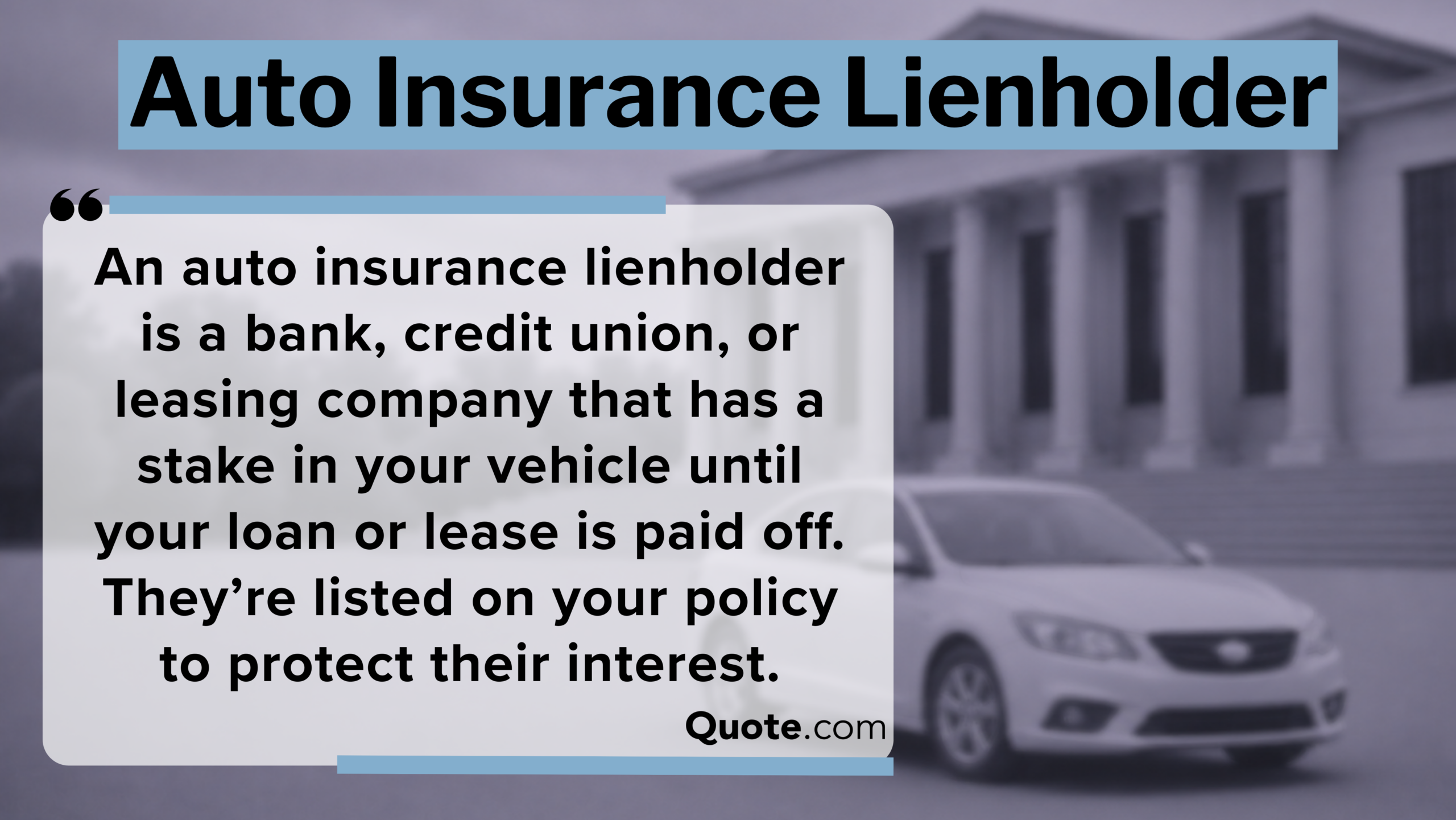
A lienholder is a person, bank, credit union, or financing company that has a financial interest in your vehicle until your loan is paid off.
When you finance a car purchase, the lender typically becomes the lienholder because it technically owns a portion of the vehicle. If you fail to make your payments, the lienholder may have the right to repossess the vehicle.
Auto Insurance Lienholder Options Explained| Lienholder Type | Lender Details |
|---|---|
| Auto Finance Firm | Traditional vehicle financing |
| Bank Loan Provider | Loans issued through banks |
| Captive Finance Firm | Financing tied to automakers |
| Credit Union Lender | Member lending programs |
| Dealer Finance Group | Dealership-based financing |
| Lease Buyout Lender | Financing after lease payoff |
| Lease Loan Provider | Vehicle leasing and financing |
| Online Loan Provider | Fully digital loan approvals |
| Private Auto Lender | Independent vehicle financing |
| Subprime Loan Lender | Higher-risk lending approvals |
The lienholder’s interest in the vehicle is recorded on the title. This helps protect the lender’s investment until you pay off your loan.
Because the vehicle serves as collateral for the loan, lenders want assurance that any damage to the car will be repaired. This is one of the primary reasons lienholders require full coverage auto insurance for a financed car.
Auto Insurance Lienholder Requirements & Outcomes| Policy Topic | Lender Rules | Driver Impact |
|---|---|---|
| Collision Coverage | Needed for financed cars | Covers lender losses |
| Comprehensive | Covers theft & weather | Avoids costly repairs |
| Correct VIN Details | Must match lender info | Prevents late payouts |
| Deductible Limits | Deductible limits apply | Drivers may pay more |
| Final Loan Payoff | Removed after loan paid | Allows full payouts |
| Gap Protection | Required with auto loans | Reduces loan debt |
| Lender Notifications | Lenders receive updates | Keeps lender updated |
| Liability Coverage | Low limits may be denied | Keeps coverage active |
| Missed Payments | Fees for missed payments | Hurts driver's credit |
| Policy Cancellation | Lenders get policy alerts | Lapses may add fees |
| Proof of Insurance | Needed before financing | Confirm active policy |
| Repair Claim Checks | Claim checks list lenders | Repairs need signatures |
| Total Loss Claims | Lender paid before driver | Driver may owe balance |
| Vehicle Ownership | Ownership transfers fully | Ownership returns fully |
While lienholders and lenders are often the same entity, the term “lienholder” specifically refers to the party holding the legal claim against the vehicle.
Once the loan is paid off, the lienholder’s interest is removed from the title, and the vehicle becomes yours fully.
When Lienholders Are Required on Your Policy
A lienholder is generally required on your auto insurance policy whenever you finance or lease a vehicle. Most of the best auto insurance companies automatically add lienholders to new policies, but you might have to check.
Most loan agreements specifically require borrowers to maintain insurance and list the lender as a lienholder or loss payee.
This allows the lender to receive notifications about policy changes, cancellations, or lapses in coverage.
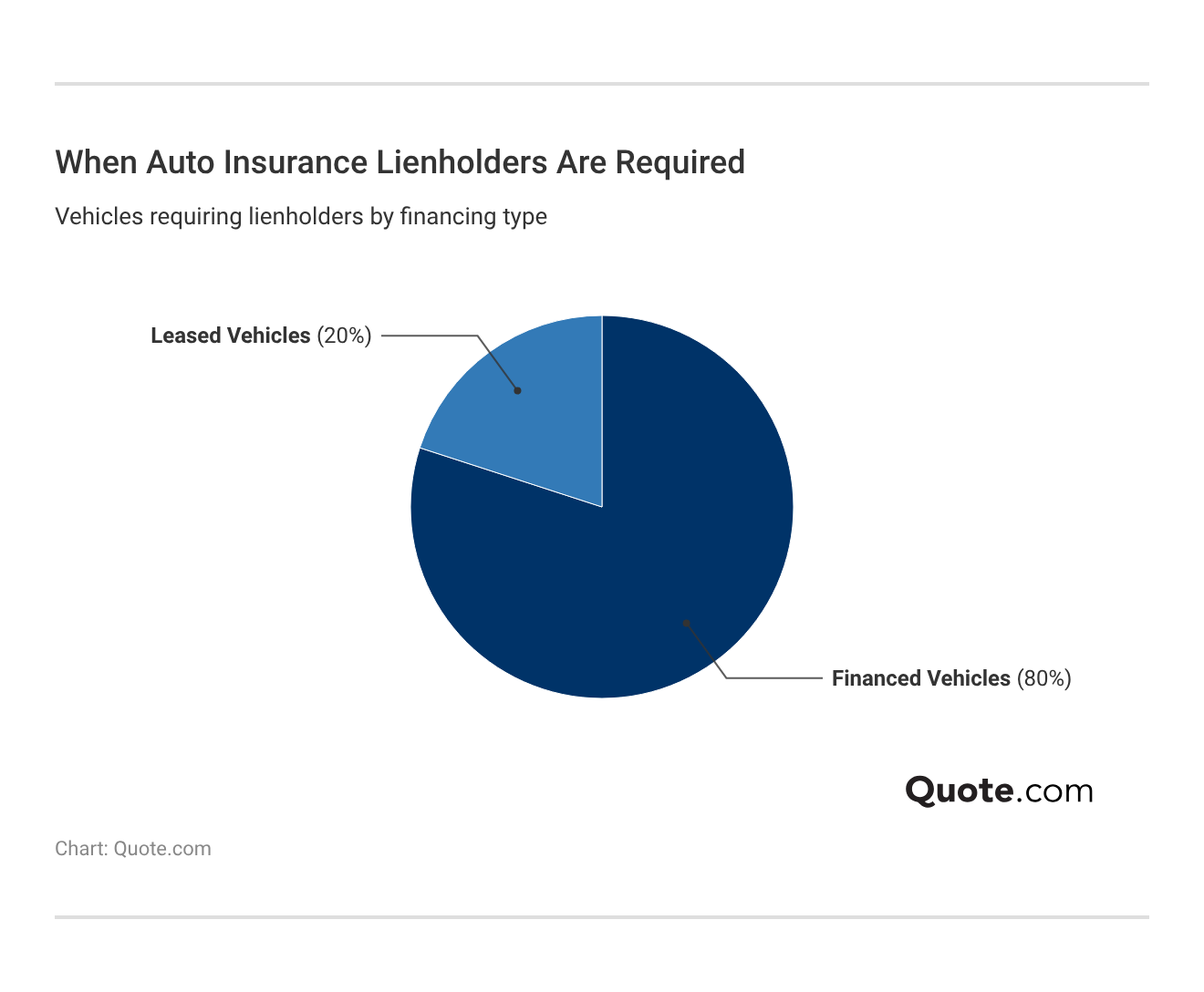
The most common situation involving lienholders is when people purchase a car with a loan, as shown below. Sometimes the lienholder is for leased vehicles, but it’s more common to see lienholders with financed vehicles.
Lenders require this protection on both leased and financed cars because they have a financial stake in the vehicle. If the car is damaged, stolen, or declared a total loss, the lender wants assurance that insurance will be available to cover the remaining loan balance.
This is why your lienholder is usually listed on your insurance policy until you’ve paid off your vehicle. They can perform an auto insurance lienholder verification at any time to ensure you’re maintaining the required coverage.
Lienholders are notified when there are changes to your policy, but they can’t receive those notifications without being listed on your insurance.
Kristine Lee Licensed Insurance Agent
Even after purchasing insurance, borrowers should verify that the lienholder’s information is accurate. Incorrect lender information can cause delays in claims processing or prompt the lender to request updates to policy records.
A simple car insurance lienholder verification on your part will also save you the hassle of your lender thinking you don’t have the proper coverage on your car.
Free Auto Insurance Comparison
Compare Quotes From Top Companies and Save
How Lienholders Affect Your Coverage
Having a lienholder on your vehicle often affects the types of insurance coverage you must carry.
While state laws generally require only minimum liability coverage, lenders typically require borrowers to carry more insurance.
Some lenders may also recommend or require additional protections, such as gap insurance. Gap insurance can help cover the difference between a vehicle’s actual cash value and the remaining loan balance if the car is totaled.
Depending on state laws, you typically need the following policies for a leased or financed vehicle:
- Collision: Collision auto insurance handles your repairs after an accident, regardless of who was at fault.
- Comprehensive: Comprehensive auto insurance covers damage outside of accidents, including theft, vandalism, bad weather, and falling objects.
- Liability: Liability auto insurance makes sure you can pay for any damages and injuries you cause in an at-fault accident.
These types of auto insurance protect your vehicle from most things that could harm it, and you’ll need to keep these insurances during the life of your loan or lease.
Since the lienholder has a financial interest in your vehicle, they’ll receive notifications if you drop your coverage early.
Auto Insurance Lienholder Policy Notifications| Event | Lender Impact |
|---|---|
| Added Vehicle Driver | Additional drivers are reviewed |
| Claim Payment Issued | Claim payouts may be reviewed |
| Lower Coverage Limits | Lower limits may be reviewed |
| Missed Loan Payments | Missed payments trigger alerts |
| Ownership Transferred | Ownership records may update |
| Policy Cancellation Filed | Cancellation notices may be sent |
| Policy Non-Renewal | Renewal updates may be shared |
| Proof of Insurance Lapse | Coverage lapses are reported |
| Total Loss Settlement | Total loss payouts may update |
| Updated Lender Details | Policy records may be updated |
| Vehicle Coverage Ends | Coverage removals are reported |
Many lienholder requirements for insurance also establish maximum deductible limits. For example, a lender may require collision and comprehensive deductibles of $500 or $1,000 or less.
This helps ensure that repairs remain affordable and that policyholders are more likely to fix vehicle damage rather than leaving the car unrepaired.
Forced-Place Auto Insurance Explained
Forced-place car insurance, sometimes called lender-placed insurance, is a type of coverage your lienholder can purchase if you fail to maintain the required coverage.
Lenders are entitled to do auto insurance lienholder verification checks to ensure you have the right amount of coverage. If your insurance policy lapses, is canceled, or no longer meets the lender’s requirements, the lender may obtain coverage on its own.
Force-Placed Auto Insurance & Lienholder Actions| Trigger | Lender Action | Driver Impact |
|---|---|---|
| Cancelled Policy | Force-placed plan added | Monthly costs increase |
| Collision Removed | Full coverage required | No accident coverage |
| Expired Coverage | Coverage proof checked | Policy status reviewed |
| Missed Payments | Payment notices issued | Loan status may change |
| No Comprehensive | Full coverage required | Theft damage excluded |
| Reduced Coverage | Lower limits reviewed | Loan terms reviewed |
| Renewal Failure | Renewal notices issued | Policy changes required |
| Repeated Lapses | Coverage warnings sent | Future claims risk rises |
| Unverified Policy | Updated proof requested | Policy delays increase |
This type of insurance is generally much more expensive than a policy purchased directly by the vehicle owner. Luckily, learning how to buy auto insurance online can help you save money.
In many cases, forced-place insurance provides limited protection that primarily benefits the lender rather than the borrower. It may not include liability coverage, which means it probably won’t meet your state requirements.
Having a lender purchase force-placed insurance adds to how much you owe on your loan, which means you'll be paying on your vehicle for even longer.
Daniel Young Managing Editor
Borrowers who receive notice of lender-placed insurance should act quickly to obtain their own qualifying coverage. Once proof of insurance is provided, the lender may cancel the forced-place policy and stop charging associated premiums.
Maintaining continuous coverage can help drivers avoid these added costs and ensure they remain properly protected. Enter your ZIP code into our free comparison tool to get covered today.
Filing Claims With Lienholder Car Insurance
When a vehicle with a lienholder is involved in an insurance claim, the lender may play a role in how claim payments are handled.
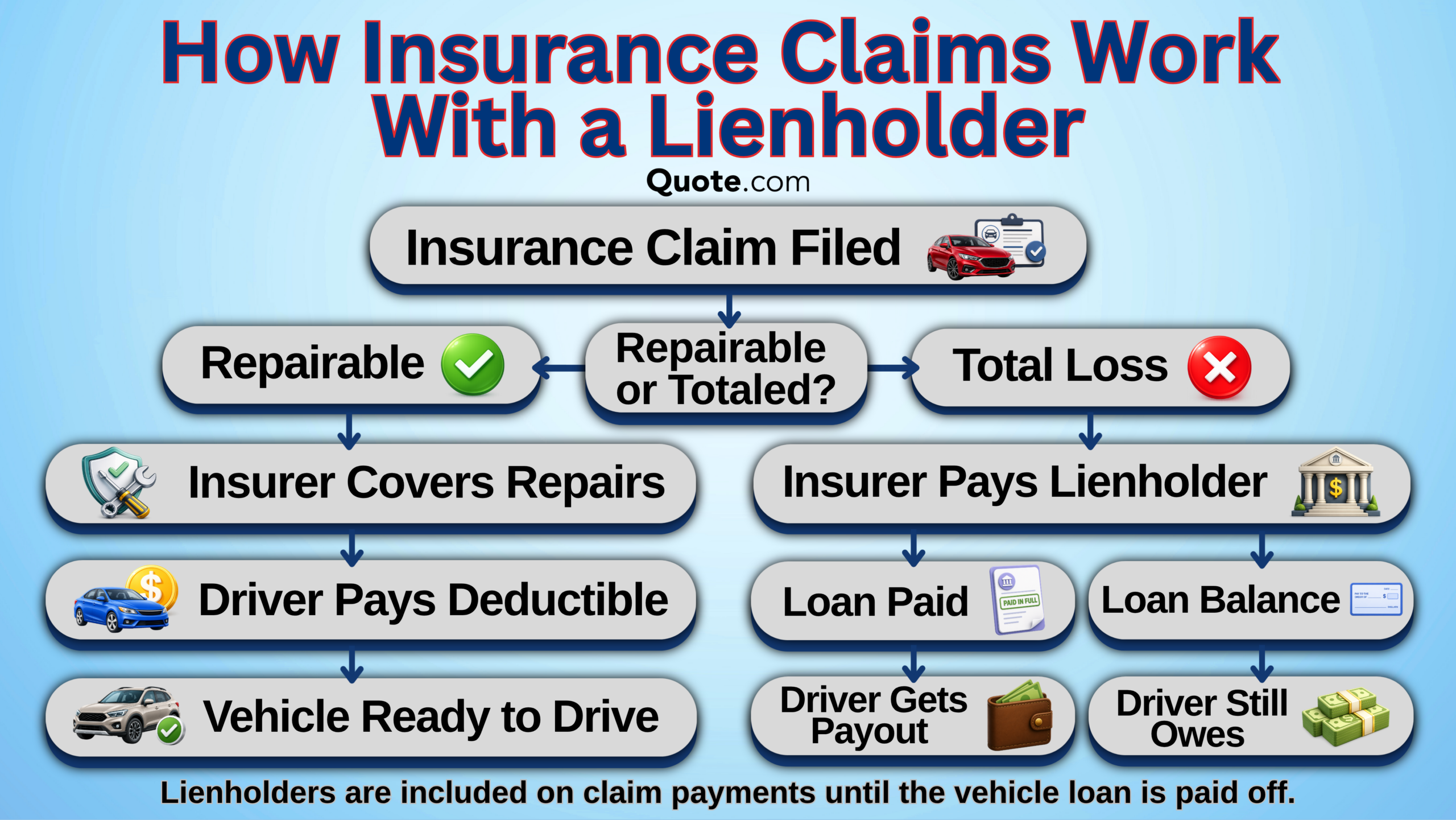
If the vehicle is repairable, insurance companies often issue claim payments jointly to the policyholder and the lienholder. This helps ensure that repairs are completed and that the vehicle’s value is preserved.
For larger repairs, the lender may require proof that the work has been completed before endorsing claim checks.
Some lenders work directly with repair facilities, while others simply monitor the process to protect their financial interest in the vehicle. The exact procedure depends on the lender and the insurance company involved.
Auto Insurance Lienholder Claim Payments Explained| Situation | Recipient | Outcome |
|---|---|---|
| Claim Check Delays | Driver and lender | Payments take longer |
| Deductible Costs | Driver and repair shop | Driver pays repair costs |
| Force-Placed Coverage | Lender-selected insurer | Coverage costs increase |
| Gap Coverage Claims | Gap coverage provider | Loan balance decreases |
| Multiple Lienholders | Multiple listed lenders | Multiple payouts issued |
| No Gap Coverage | Lender receives payout | Driver owes loan balance |
| No Lienholder Listed | Insurance company only | Claims may face delays |
| Repair Shop Payments | Repair shop and lender | Repairs need approval |
| Total Loss Payouts | Lender before driver | Driver may owes balance |
| Unpaid Loan Balance | Lender and the driver | Lender paid before driver |
| Vehicle Theft Claims | Car owner and lender | Theft payouts lower loans |
If the vehicle is declared a total loss, the insurer generally pays the lienholder first. The lender receives enough money to satisfy the outstanding loan balance, and any remaining funds are paid to the vehicle owner.
If the settlement amount is less than the remaining loan balance, the borrower may still owe the difference unless they have gap insurance or another form of loan protection.
The good news is that filing a claim is still a simple process, even with a lienholder. For the most part, the process is the same as if you owned your car outright.
While your lienholder will likely be notified about any claim you file, you don’t have to notify them yourself. Your insurance company will most likely take care of it for you.
Read More: How to File an Auto Insurance Claim and Win
How to Add or Remove a Lienholder From Your Policy
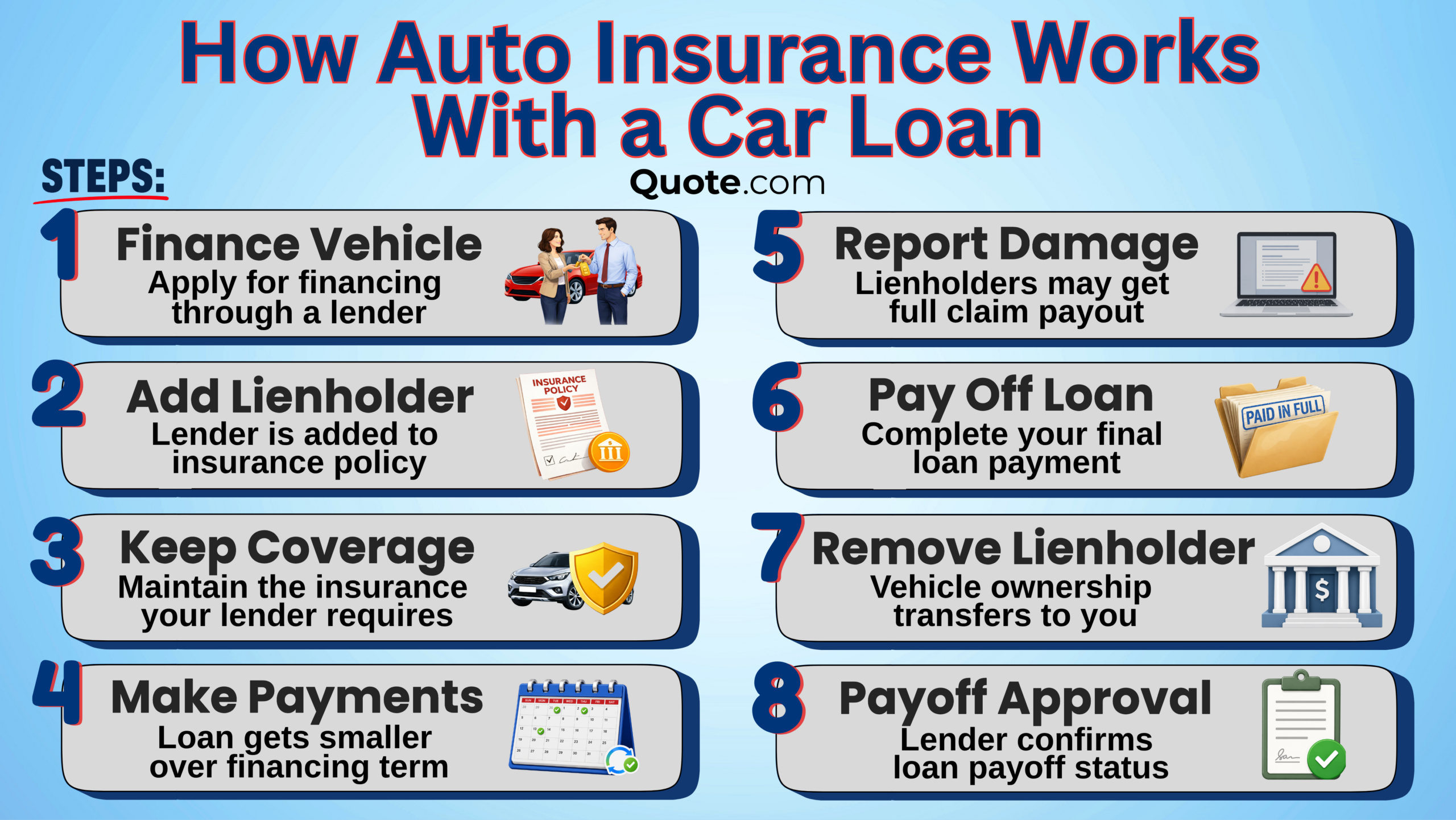
Learning how to add a lienholder to insurance policies is typically straightforward. Oftentimes, you don’t actually have to do anything.
When you buy a new car from a dealership, you might not have to do anything to get your lienholder’s information to your insurance company. When you purchase insurance, your company will likely access that information through your VIN.
If you do need to provide your lienholder’s information to your insurance company, you’ll need the lender’s name, address, and loan information.
The insurer will then list the lienholder on the policy and send any required documentation to the lender.
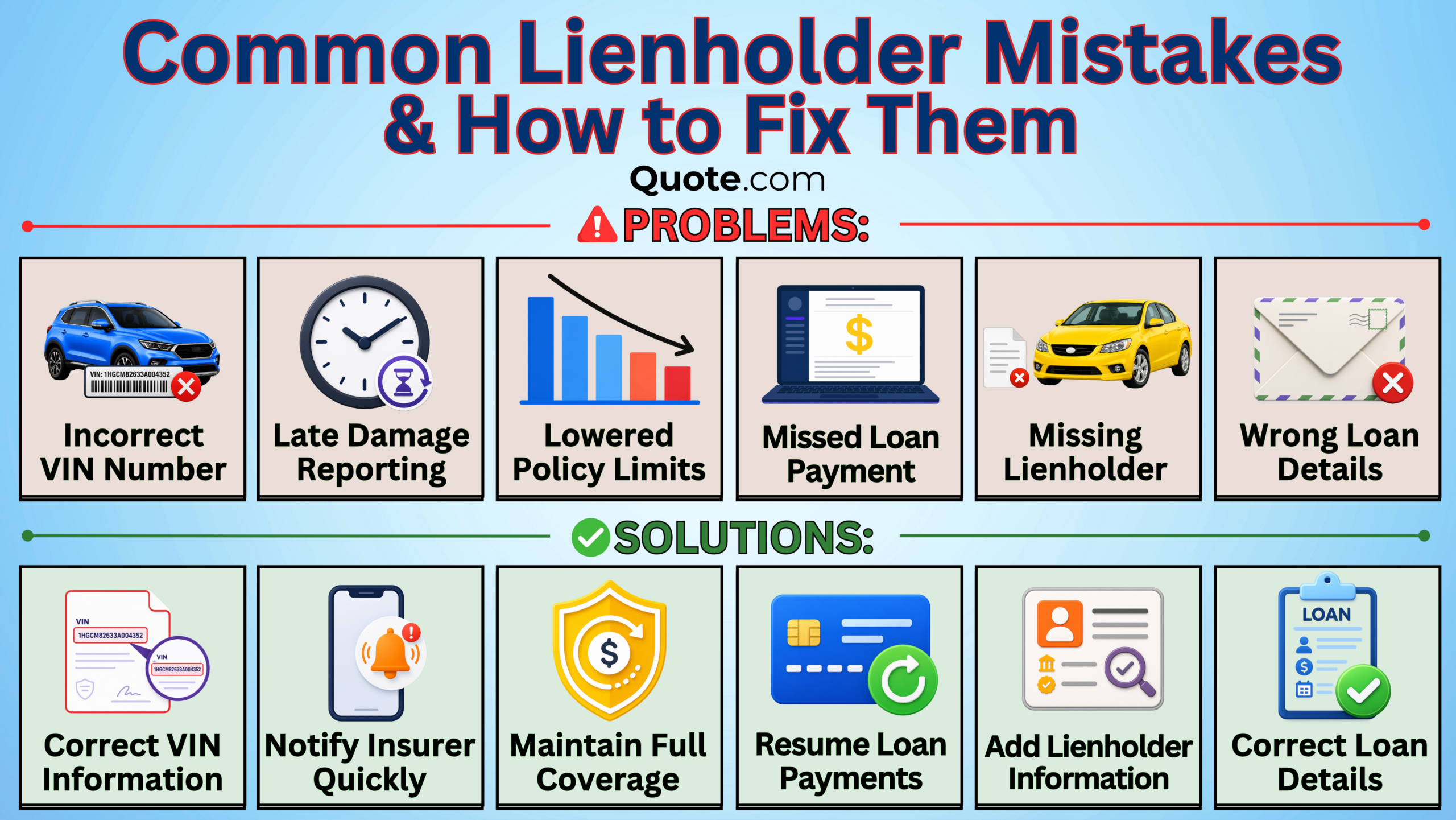
Common Auto Insurance Lienholder Mistakes to Avoid| Error | Result | Risk |
|---|---|---|
| Coverage Dropped | Coverage not approved | Policy could be canceled |
| Lienholder Missing | Claims may be delayed | Delayed claim payments |
| Lienholder Removed | Coverage stays active | Incorrect lender records |
| Missed Payments | Lenders may add fees | Additional lender fees |
| Outdated Records | Payments misdirected | Wrong claim recipients |
| Reduced Coverage | Limits may be rejected | Rejected lender coverage |
| Unreported Damage | Claims process slower | Slower claim approvals |
| Wrong Lender Info | Records may not match | Claim processing errors |
| Wrong VIN Details | Claims may be denied | Delayed claim payouts |
If you refinance your vehicle loan, you may need to update your policy with the new lender’s information. If you want to make changes to or simply buy a new policy, checking out an auto insurance guide can be an incredibly helpful tool.
It is important to make these changes promptly so that the correct lienholder is listed. Failing to update the information could result in notices from the lender or complications during the claims process.
Removing a lienholder generally occurs after the loan has been paid off. Once the lender releases the lien and you receive confirmation that the loan is satisfied, you can contact your insurance company to remove the lienholder from the policy.
After the lienholder is removed, you may have greater flexibility in choosing coverage limits and deductibles, although maintaining adequate protection is still recommended.
Free Auto Insurance Comparison
Compare Quotes From Top Companies and Save
Explore the Best Options for Lienholder Auto Insurance
Having a lienholder on your car comes with more coverage requirements, but it doesn’t affect your insurance too much.
You’ll likely need more insurance than the minimum amount required in your state for the life of your loan, though. It’s important to maintain the necessary coverage so you don’t have to deal with force-placed car insurance.
Whether you need full coverage insurance for a financed car or you want to look at cheaper options because your loan is finally paid off, learn how to get multiple auto insurance quotes to get cheaper rates.
When you’re ready to find affordable coverage, simply enter your ZIP code into our free comparison tool to get started.
Frequently Asked Questions
What is an auto insurance lienholder?
A lienholder for auto insurance is a lender, bank, credit union, or financing company that has a legal financial interest in your vehicle because it helped finance the purchase. The lienholder remains attached to the vehicle title until the loan is paid in full and has certain rights to protect its investment in the car.
Does having a lienholder affect insurance?
Yes, having a lienholder typically affects the types and amounts of insurance coverage you must carry. Most lenders require collision and comprehensive coverage. However, having a lienholder doesn’t increase the average cost of car insurance on its own.
What are the insurance requirements for a financed car?
Insurance requirements for a financed car usually include liability, collision, and comprehensive coverage. The lender may also require specific deductible amounts and, in some cases, recommend or require gap insurance to help cover a loan balance if the vehicle is declared a total loss.
Enter your ZIP code into our free comparison tool to find the most affordable way to meet your insurance requirements.
Can an individual be a lienholder on a car?
Yes, an individual can be a lienholder if they provide financing for a vehicle purchase through a private loan arrangement. In this situation, the individual’s lien is typically recorded on the vehicle title to protect their financial interest until the loan is repaid.
How do you add a lienholder to your insurance?
You can add a lienholder by providing your insurance company with the lender’s name, address, and loan information. This can usually be done when you purchase the policy, through your online account, or by contacting your insurer directly.
If you have a lienholder on your car, that information is typically included in the documents you need to buy auto insurance.
What’s the difference between a lienholder and a loss payee?
A lienholder is the party that has a legal claim to the vehicle because of an outstanding loan, while a loss payee is the party designated to receive insurance claim payments for covered vehicle damage. In many auto loans, the lienholder and the loss payee are the same entity, but the terms refer to different roles.
Can a lienholder take your car if you don’t have insurance?
A lienholder may have the right to repossess your vehicle if you fail to maintain the insurance coverage required by your loan agreement. Before taking that step, the lender will often purchase force-placed insurance and charge you for it, but continued noncompliance could lead to repossession.
It’s always best to have coverage on your vehicle, especially when you have a lienholder. To find the most affordable rates for you, enter your ZIP code into our free comparison tool today.
Can you buy a car with a lien?
Yes, you can buy a car with a lien, but the lien must generally be satisfied before ownership can be fully transferred. In many transactions, the seller uses the proceeds from the sale to pay off the remaining loan so the lien can be released.
Get more details in our guide: The Best Time to Buy a New Car
Can you sell a car with a lien?
Yes, it is possible to sell a car with a lien, although the lender’s involvement is usually required. The outstanding loan balance must be paid off as part of the transaction so the lender can release the lien and allow the title to be transferred to the buyer.
What happens when your car loan is paid off?
When your car loan is paid off, the lender releases its lien on the vehicle and no longer has a legal interest in it. You become the sole owner of the car, and you can contact your insurance company to remove the lienholder from your policy if it is still listed.
You can also learn how to cancel an auto insurance policy if you want to end or reduce your coverage once your loan is paid off.
Related Articles



Get a FREE Quote in Minutes
Insurance rates change constantly — we help you stay ahead by making it easy to compare top options and save.