Does Homeowners Insurance Cover Mold? 2026 Coverage & Exclusions
Homeowners insurance covers mold caused by a covered peril, such as a burst pipe or sudden water damage, and policies start at $61 per month. Mold caused by leaks over the years, flooding, or a lack of maintenance is typically excluded. Use comparables for mold remediation fees to guide you on which rule to apply.
Read more





Save Money by Comparing Insurance Quotes
Compare Free Home Insurance Quotes Instantly




Table of Contents
Table of Contents

Insurance Copywriter
Malory Will has an M.A. in English from Arizona State University. She has over four years of experience in writing for the insurance industry. With a background in health, auto, life, and homeowners insurance, Malory is passionate about making complex insurance topics clear and approachable. Her goal is to help readers make informed decisions with confidence.
Malory Will

Head of Content
Meggan McCain, Head of Content, has been a professional writer and editor for over a decade. She leads the in-house content team at Quote.com. With three years dedicated to the insurance industry, Meggan combines her editorial expertise and passion for writing to help readers better understand complex insurance topics. As a content team manager, Meggan sets the tone for excellence by guiding c...
Meggan McCain

Principal Broker
William Lemmon has been a licensed insurance agent for over 12 years. He is the principal broker and owner of Broadway Insurance Services in Los Angeles, CA. He works one-on-one with clients to create personalized plans that minimize risk and maximize savings. Being one of the foremost authorities on Airbnb and home-sharing property insurance, Lemmon offers his clients first-hand guidance on how t...
William Lemmon
Updated July 2026
Homeowners insurance provides mold coverage for perils, such as water damage from a burst pipe, and prices start at $61 per month.
- Sewer backup mold claims require a separate endorsement
- Add a mold endorsement to increase coverage up to $25K or more
- Mold from long-term leaks, flooding, and neglect is usually excluded
Coverage depends on the cause of the damage, policy limits, and exclusions. This guide explains what’s covered, common exclusions, remediation costs, and how to compare home insurance quotes.
Compare which home insurance companies cover mold damage with our free comparison tool to find the right coverage at the best price.
Home Insurance and Mold Coverage Explained
Mold remediation coverage may apply when damage results from a covered peril, such as a burst pipe or accidental water leak, rather than the mold itself.
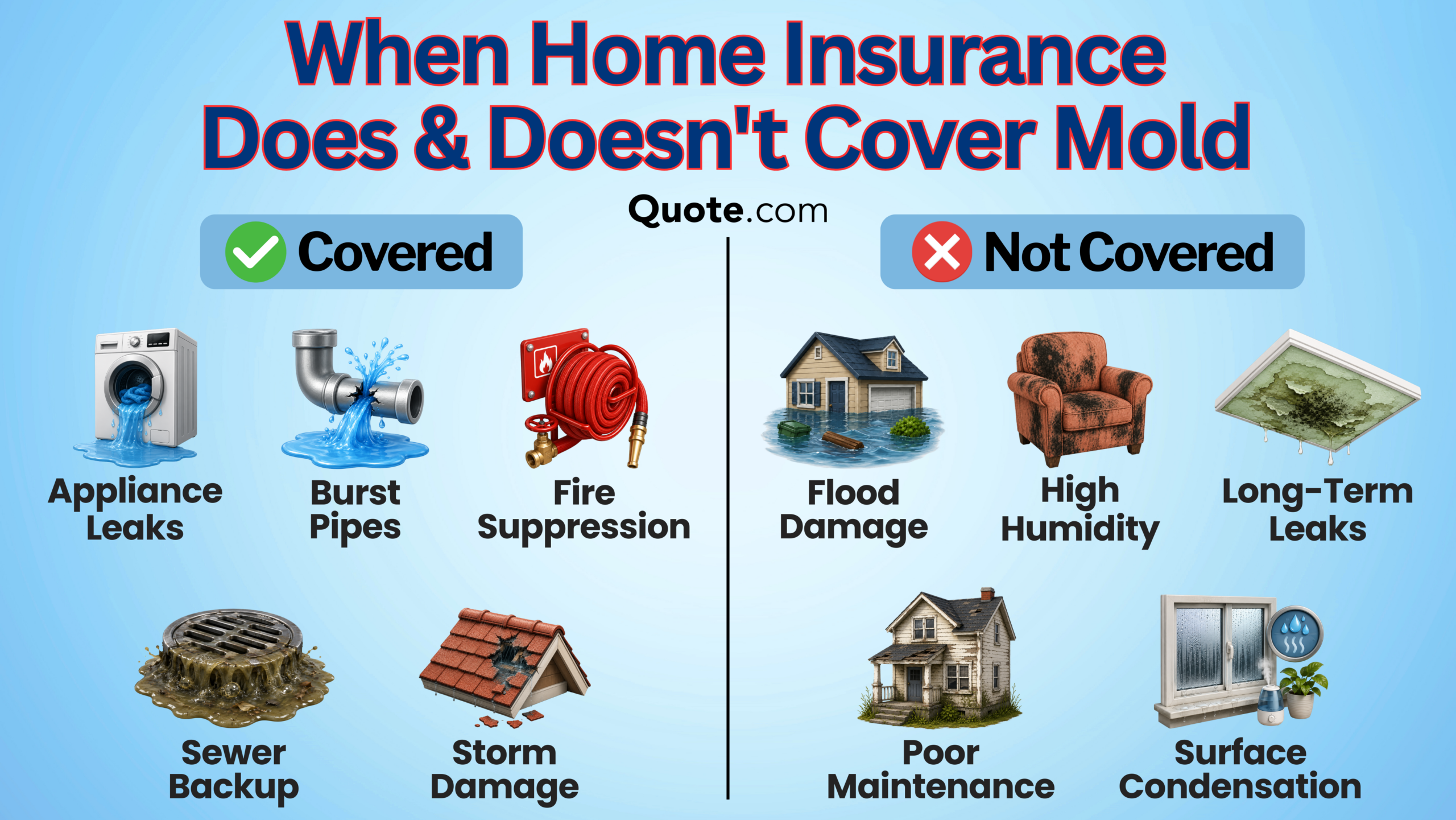
Standard policies generally pay for mold remediation if a sudden and accidental event, such as a burst pipe, a leaking appliance, or a storm-damaged roof, allows water to enter the home.
Homeowners Insurance Mold Coverage & Exclusions by Cause| Cause | Covered? | Details |
|---|---|---|
| Appliance Leak | ✅ | Covered if sudden and accidental |
| Burst Pipe | ✅ | Covered unless caused by neglect |
| Flooding | ❌ | Requires separate flood insurance |
| High Humidity | ❌ | Considered maintenance-related |
| Long-Term Leak | ❌ | Typically denied for poor upkeep |
| Poor Ventilation | ❌ | Preventable damage not covered |
| Roof Leak | ✅ | Covered if a storm caused the leak |
| Sewer Backup | ⚠️ | Requires optional endorsement |
Report mold damage promptly and dry affected areas to help keep your claim eligible. Delays or long-term leaks can result in a mold claim denial.
Homeowners insurance coverage for sewer or sump pump backup damages often requires an endorsement.
Without this optional coverage, most standard policies exclude mold damage caused by a sewer backup, leaving homeowners responsible for mold cleanup costs and repair expenses.
Standard homeowners insurance excludes mold from maintenance issues and floods, so home maintenance for mold matters. Sewer backup mold usually requires an endorsement.
Types of Insurance Policies That Cover Mold Damages
Comparing flood insurance, homeowners insurance, and home warranties helps homeowners understand which policy responds to mold-related damage based on the cause of the loss.
Does homeowners insurance cover mold removal? Yes, if the mold resulted from a covered peril, such as a sudden appliance leak, a burst pipe, or a storm-damaged roof.
Flood Insurance vs. Home Insurance vs. Home Warranties for Mold| Scenario | Flood Insurance | Home Insurance | Home Warranty |
|---|---|---|---|
| Appliance Leak | ❌ Home claim | ✅ Covered | ✅ Covered |
| Burst Pipe | ❌ Home claim | ✅ Covered | ✅ Covered |
| Flood Damage | ✅ Covered | ❌ Flood claim | ❌ Flood claim |
| Roof Damage | ❌ Home claim | ✅ Covered | ✅ Covered |
| Sewer Backup | ⚠️ Add-on | ⚠️ Add-on | ⚠️ Add-on |
Flood insurance and mold coverage are generally limited, though some private policies may cover mold after a covered flood.
Review your policy carefully, as mold coverage varies by insurer and policy, including the types of damage covered, coverage limits, and any exclusions that may apply.
Mold coverage depends on the cause of the damage, not just the policy. Compare exclusions and endorsements before choosing coverage.
Aleksandra J. Churlinov Managing Editor
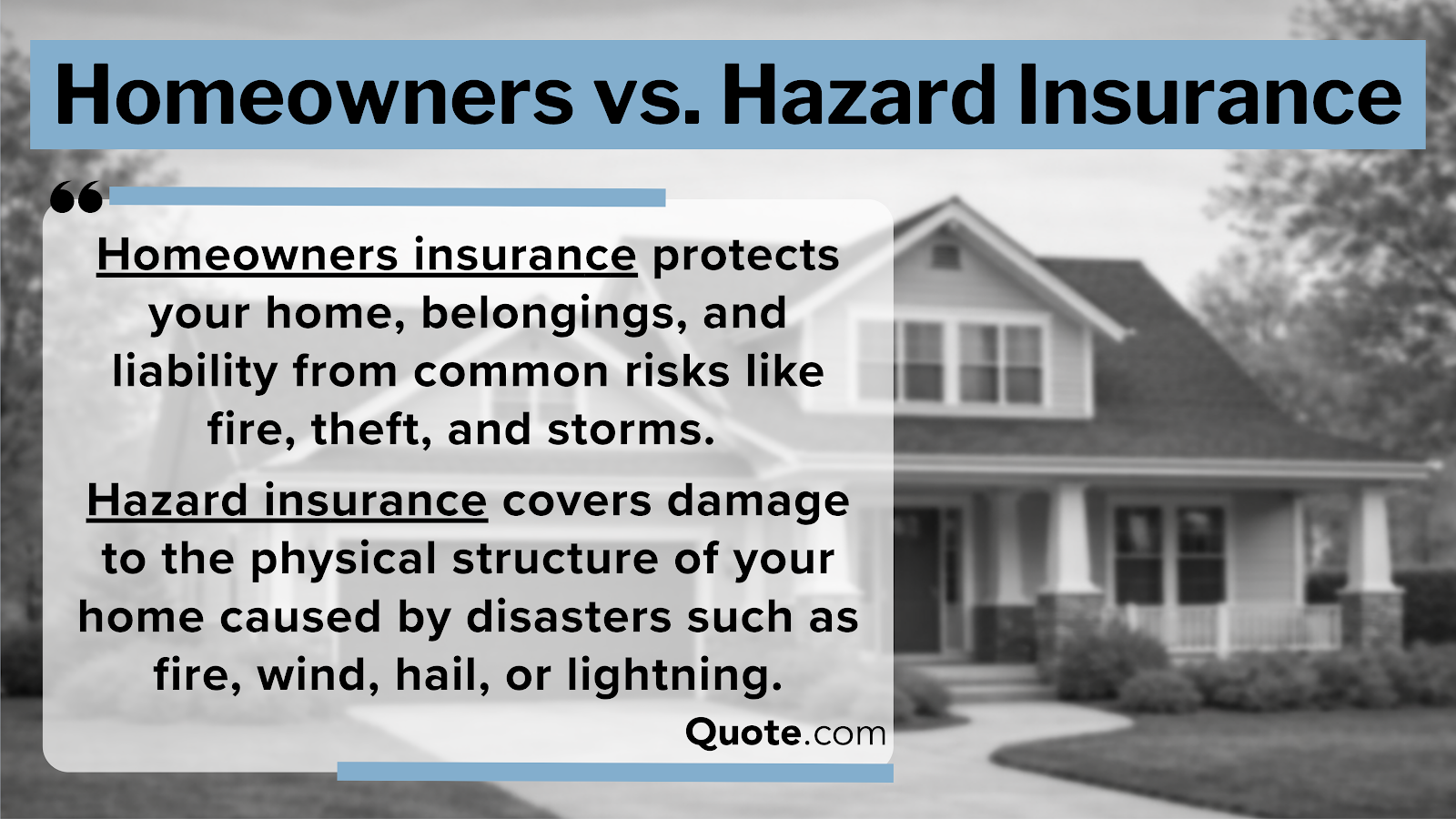
Homeowners insurance usually pays for mold remediation following a covered water loss, while flood coverage only kicks in when the damage is caused by a flood, as home policies do not cover floods.
Understanding these differences can help homeowners choose the right mold damage insurance coverage before costly water damage or mold occurs. Get More Details: Homeowners vs. Hazard Insurance Coverage
Home warranties may cover repairs to appliances or home systems that fail, but they typically do not cover mold remediation services or water damage.
Coverage depends on both the policy and the cause of the loss, and sewer backup protection usually requires an optional endorsement or add-on regardless of the type of coverage.
How Much Mold Coverage Homeowners Policies Provide
If mold develops due to a covered risk like a burst pipe or an unexpected leak, standard home insurance covers it up to $5K at most.
Homeowners can add a mold endorsement and increase it to $25K or more, but most homeowners must also purchase premium policies.
Homeowners Insurance Mold Coverage Options & Limits| Feature | Coverage | Details |
|---|---|---|
| Mold Endorsement | $5K–$25K+ | Raises coverage limits |
| Mold Remediation | $1K–$25K+ | May have mold limits |
| Personal Property | Policy limits apply | After a covered loss |
| Premium Policies | Higher limits apply | Broader mold protection |
| Standard Policy | $1K–$5K | Most common coverage |
| Testing & Inspection | Rarely included | Only for covered claims |
Covered claims may also include damaged personal property, but mold claim homeowners insurance policies usually cover mold testing and inspections only when they support an approved claim.
Coverage limits and eligible causes of mold damage vary by insurer, so two policies may provide very different levels of protection.
Higher mold coverage can increase premiums but reduce out-of-pocket costs after a covered loss. Ask about claim restrictions before adding coverage.
Daniel Walker Licensed Insurance Agent
If your home is at higher risk for water damage, consider how much homeowners insurance you need and whether higher mold coverage can reduce repair costs after a covered loss.
Reviewing your policy’s mold insurance coverage limits can help you understand your protection and avoid costly out-of-pocket expenses after unexpected water damage.
Free Home Insurance Comparison
Compare Quotes From Top Companies and Save
Compare Homeowners Insurance and Mold Premiums
Home insurance rates can change based on the sort of coverage, endorsements, and claims risk. Review the best homeowners insurance for mold coverage to find the right policy.
Home insurance rates start at $61 per month with Geico and $64 with Mercury, though mold coverage may vary by insurer and policy.
Home Insurance Monthly Rates & Mold Coverage by Provider| Company | Premium | Protection |
|---|---|---|
 | $96 | Mold endorsement available |
 | $181 | Covers sudden water event |
 | $285 | Higher mold limits available |
 | $233 | Coverage depends on cause |
 | $61 | Coverage varies by partner |
 | $118 | Optional mold coverage |
 | $64 | Regional mold coverage |
 | $187 | Optional higher mold limits |
 | $181 | Coverage varies by policy |
 | $154 | Covers water-related mold |
AAA starts at $96 per month, Liberty Mutual at $118, and State Farm at $154, offering competitive rates and water damage and mold insurance protection when damage results from a covered peril.
Allstate and Progressive start at $181 per month, Nationwide at $187, Farmers at $233, and American Family at $285, with broader coverage and higher optional mold limits. Shop Now: Progressive vs. State Farm Insurance
Some insurers also offer optional endorsements that can expand mold protection beyond the limits included in a standard homeowners insurance policy, but these can limit your choice of mold remediation company to a set list of providers.
Compare home insurance rates and mold coverage options to find the best value. Check your rates today and avoid overpaying.
How Mold Damage Impacts Repair Costs
Mold remediation costs vary based on the extent of the growth, what it has impacted, and what needs to be repaired. Minor mold damage costs $500 to $2K and usually involves surface cleaning and drying.
Moderate remediation costs $1.5K to $5K, while treating localized mold up to 100 square feet ranges from $2.5K to $8K+, due to the need for professional containment.
Mold Remediation Costs by Damage Type & Severity| Damage | Cost | Extent | Work Required |
|---|---|---|---|
| Extensive | $5K–$15K | Multiple rooms | Material removal & repair |
| HVAC | $1K–$3K | Whole system | Cleaning & treatment |
| Localized | $2.5K–$8K+ | Up to 100 sq. ft. | Targeted remediation |
| Minor | $500–$2K | Small area | Surface cleanup & drying |
| Moderate | $1,500–$5K | Single room | Drywall removal & repair |
| Severe | $15K–$30K+ | Major damage | Structural restoration |
HVAC remediation averages $1K to $3K, while severe mold damage can cost $5K to over $30K and may require professional mold restoration services.
Early remediation can help reduce repair costs and prevent mold from spreading. Compare home insurance quotes to find coverage that helps protect against unexpected mold-related expenses.
Ways to Lower Homeowners Insurance Costs for Mold
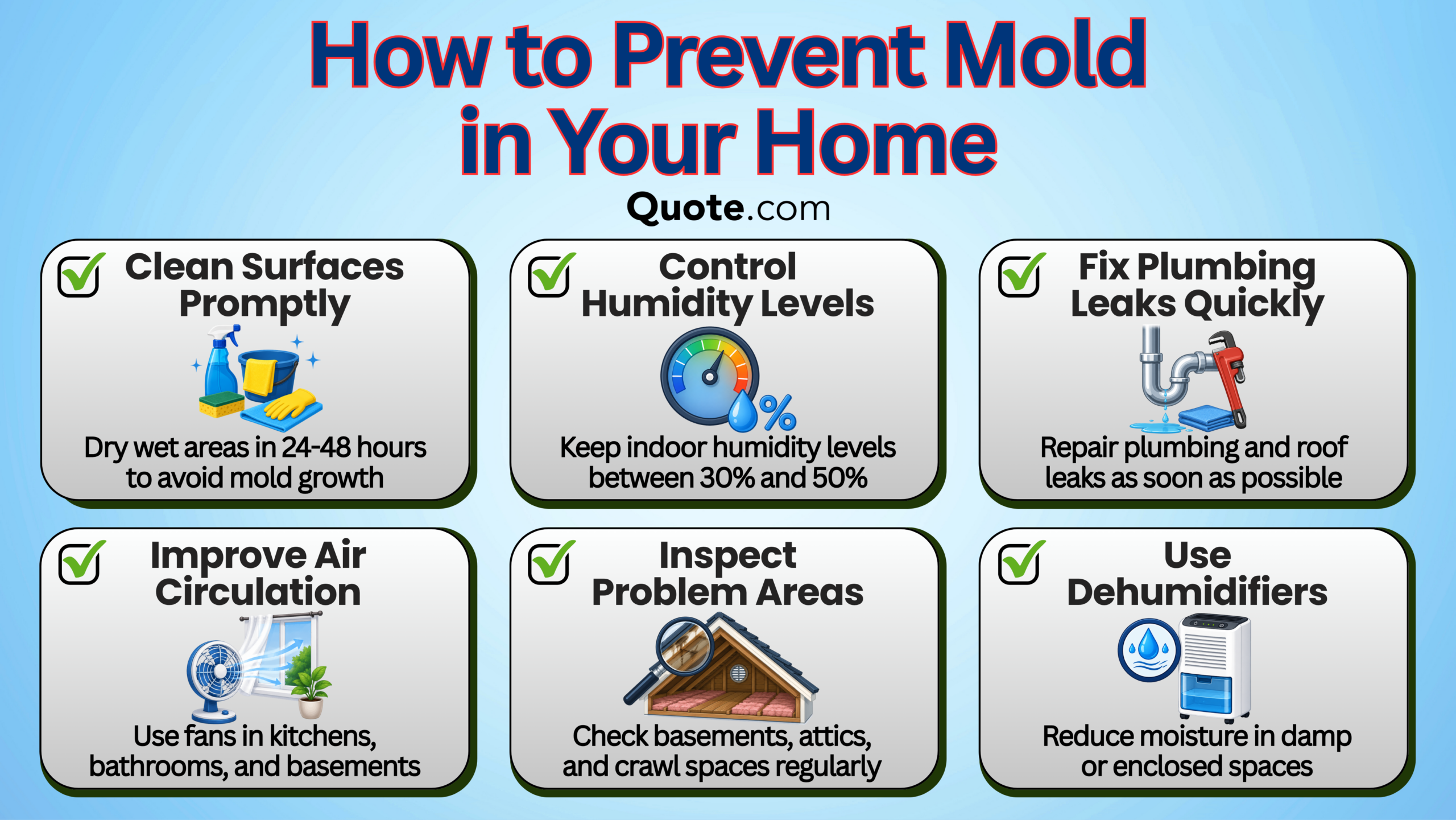
Preventing mold damage not only protects your home but can also help keep homeowners insurance costs down.
Insurers often consider a property’s condition and its risk of water damage when setting premiums, making routine maintenance an important part of controlling long-term insurance costs.
- Add Leak Detectors: Early leak detection can help prevent mold from water damage and may qualify homeowners for insurance discounts.
- Bundle Coverage: Combining home and auto insurance often provides one of the largest discounts while keeping comprehensive homeowners coverage.
- Raise Your Deductible: If you are willing to pay more out of pocket after a covered loss, you can reduce monthly premiums by opting for a higher deductible.
- Review Mold Coverage: If you live in a high-risk area, compare the cost of mold coverage with potential remediation expenses.
- Update Plumbing and Roofing: Updated systems reduce the risk of leaks and may lower premiums.
Homeowners who reduce their risk of water damage may also be in a better position to qualify for certain insurance discounts or lower rates over time.
Just as important, reviewing your homeowners insurance policy and the best home insurance discounts can help you get the right mold protection without paying for unnecessary coverage.
By taking preventive steps and regularly comparing coverage options, you can better manage both insurance premiums and potential repair expenses.
How Mold Can Get Into Your Home
Excess moisture is the primary reason mold develops inside a home, whether it comes from a sudden plumbing failure or a slow, hidden leak.
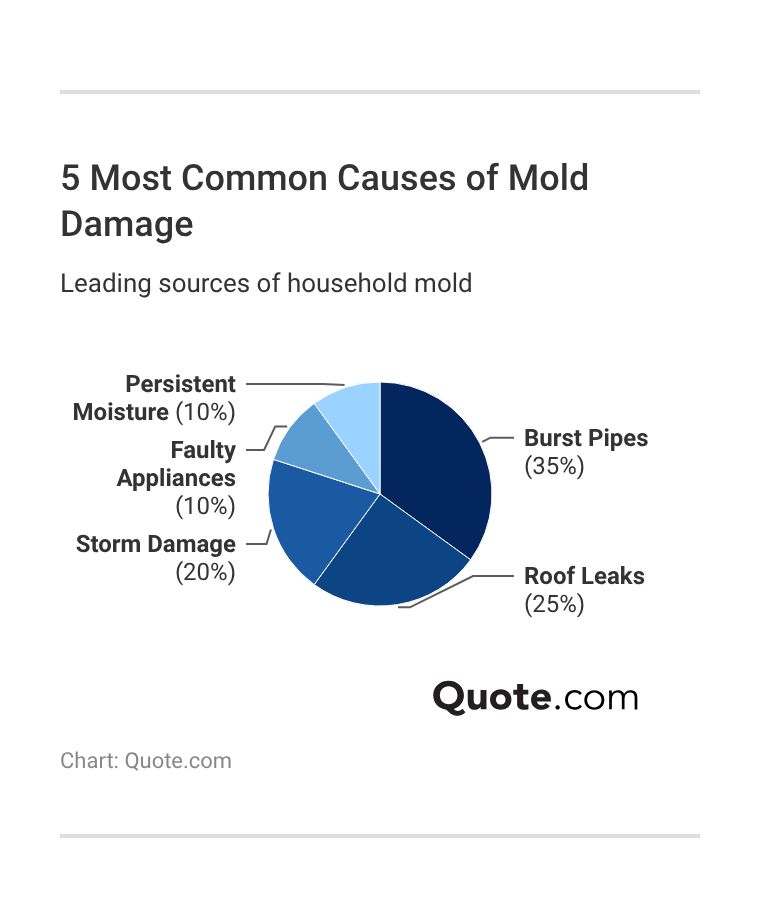
Burst pipes account for 35% of mold claims, making them the leading cause because they can quickly soak drywall, flooring, and insulation.
Roof leaks make up 25%, often after wind or hail damages shingles or flashing, while storm damage contributes 20% by allowing rainwater to enter through the home’s exterior. Find More: How Roof Inspections Affect Home Insurance
Persistent moisture and humidity account for 10% of cases and usually develop in poorly ventilated areas such as basements and bathrooms.
Faulty appliances account for the remaining 10%, as leaks from water heaters, washing machines, and dishwashers can create hidden moisture that leads to mold growth.
Addressing water intrusion quickly can limit mold growth, reduce repair costs, and improve the likelihood that homeowners’ insurance will cover the loss when it results from a covered peril.
Free Home Insurance Comparison
Compare Quotes From Top Companies and Save
Protect Your Home With the Right Mold Coverage
Mold is caused by a covered peril, such as a broken pipe or an errant water leak, but not by long-term leaks or poor maintenance.
Premiums for home insurance start at $61 a month, giving much of the homeowning community access to affordable coverage.
Filing a mold insurance claim is easier when you understand your policy’s coverage limits and exclusions, helping you avoid unexpected repair costs after a covered loss.
Comparing quotes from the best home insurance companies makes it easier to find stronger mold protection, higher coverage limits, and affordable premiums.
Mold damage can become expensive when coverage limits are too low or important exclusions apply. Choose a policy with adequate mold coverage and review endorsements before filing a claim.
Kalyn Johnson Insurance Claims Support & Senior Adjuster
Choosing a policy with adequate mold remediation insurance or a mold coverage endorsement can help reduce costly out-of-pocket remediation expenses.
Protecting your home from costly mold damage doesn’t have to be expensive. Enter your ZIP code into our free comparison tool to find the cheapest home insurance rates with the mold coverage you need.
Frequently Asked Questions
Does homeowners insurance cover mold damage?
Yes, homeowners insurance typically covers mold when it results from a covered peril, such as a burst pipe or accidental water leak. Whether or not home insurance is required, mold caused by long-term leaks, poor maintenance, flooding, or high humidity is generally excluded.
When does home insurance cover mold?
Homeowners insurance covers mold caused by a covered peril, such as a burst pipe or storm damage. Mold after flooding, long-term leaks, poor maintenance, and high humidity is usually excluded.
Do home insurance companies cover any kind of mold or moisture damage?
Home insurance companies generally cover mold damage only when it results from a covered peril, such as a burst pipe or accidental water leak. Mold caused by long-term moisture, poor maintenance, humidity, flooding, or neglect is usually excluded unless you have additional coverage or an endorsement.
What type of insurance covers mold damage?
Homeowners insurance typically covers mold damage when it results from a covered peril, such as a burst pipe or accidental water leak. Flood insurance, home warranties, and sewer backup endorsements may provide limited mold-related protection depending on the cause of the damage and the policy terms.
Which insurance companies cover mold damage?
Mercury, State Farm, Allstate, and Liberty Mutual cover mold damage caused by covered perils, such as burst pipes or accidental water leaks. Mold coverage limits and exclusions vary by insurer, so review each policy before buying.
Learn More: Allstate vs. Farmers, Geico, Progressive, & State Farm Insurance Review
Compare home insurance rates to find affordable mold coverage, avoid overpaying, and shop around for the best policy.
Should I file a home insurance mold claim?
If mold results from a covered event and repair costs exceed your deductible, filing a claim may make sense. Like the best auto insurance companies for claims handling, choosing a home insurer with a strong claims process can make claims easier.
Should I tell my insurance company about mold?
Only tell your insurer if the mold damage was caused by a listed peril in your policy. If the cause of the mold is not named in your policy, your insurer will deny the claim and likely increase your premiums at your next renewal.
How much does it usually cost to remove mold?
Mold remediation costs typically range from $500 to more than $30K, depending on the extent of the damage, the affected materials, and the repairs required. Get affordable home insurance that helps protect against covered mold damage.
Is water damage considered mold?
Water damage and mold are not the same. Homeowners insurance typically covers mold only when it results from a covered water damage event, such as a burst pipe. If your home faces greater risks, explore the best insurance for high-risk homes.
How can I prevent mold insurance claims?
Moisture control is the first step, and water problems need to be remedied quickly to prevent mold insurance claims. Check your plumbing, roof, and appliances for leaks, and review your policy to see if mold inspection coverage is included.
Why pay more for home insurance with mold coverage when you can get the same protection for less? Compare home insurance quotes with our free comparison tool to find the best provider.
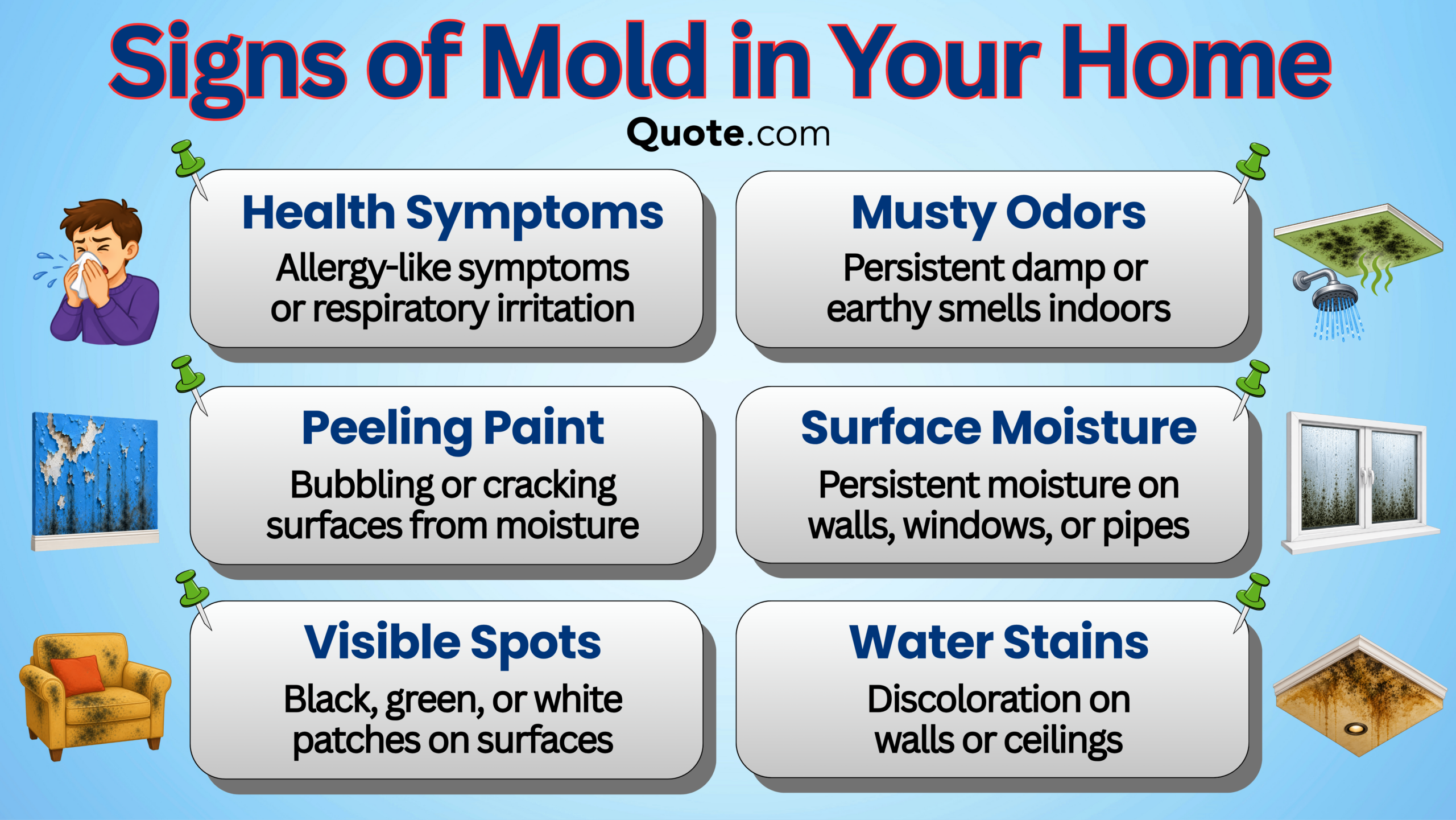
What are the signs of mold in a house?
What do I do if I can’t afford mold removal?
Related Articles
-
Aug 2026

Best Home Insurance in North Dakota for 2026
-
Apr 2026
Personal Liability Insurance (2026 Guide)
-
Feb 2026
How to Compare Home Insurance Quotes in 2026
-
Mar 2026

How to File a Wildfire Home Insurance Claim in 2026
-
Sep 2026
Best Home Insurance in Missouri for 2026
-
Aug 2026
Best Home Insurance in Maine for 2026





Get a FREE Quote in Minutes
Insurance rates change constantly — we help you stay ahead by making it easy to compare top options and save.