Insurance Declaration Page Details & Examples (2026)
The insurance declaration page lays out key details like your deductible and policy limits up to $1 million or more. The declaration page for car insurance lets you check the listed drivers and coverage amounts on your policy. This article explains how to read each section to avoid billing errors and claim denial.
Read more





Table of Contents
Table of Contents

Insurance Copywriter
Malory Will has an M.A. in English from Arizona State University. She has over four years of experience in writing for the insurance industry. With a background in health, auto, life, and homeowners insurance, Malory is passionate about making complex insurance topics clear and approachable. Her goal is to help readers make informed decisions with confidence.
Malory Will

Managing Editor
Daniel S. Young began his professional career as chief editor of The Chanticleer, a Jacksonville State University newspaper. He also contributed to The Anniston Star, a local newspaper in Alabama. Daniel holds a BA in Communication and is pursuing an MA in Journalism & Media Studies at the University of Alabama. With a strong desire to help others protect their investments, Daniel has writt...
Daniel S. Young

Licensed Insurance Broker
Zach Fagiano has been in the insurance industry for over 10 years, specializing in property and casualty and risk management consulting. He started out specializing in small businesses and moved up to large commercial real estate risks. During that time, he acquired property & casualty, life & health, and surplus lines brokers licenses. He’s now the Senior Vice President overseeing globa...
Zach Fagiano
Updated May 2026
The insurance declaration page lists figures, such as the deductible, coverage limits, the policy number, and effective dates, which are used when reviewing a claim.
- Your insurance declaration page lists drivers, limits, and deductibles
- Check your insurance declaration page to catch mistakes before claims
- Filing related requests usually costs around $15 to $35 total
An insurance declarations page names the insured drivers and the issuing company, which must match what the insurer has on file when you file an auto insurance claim.
Even a small mistake, such as a missing driver or an incorrect coverage limit, can delay a payout or result in a denial. This guide breaks down each section so you can review every detail and fix any issues before filing a claim.
Some drivers have secured rates as low as $42 per month through insurer comparisons. Enter your ZIP code to compare rates and find available options near you.
What is an insurance declaration page?
The insurance declaration page is important when you need to prove your coverage or start a claim. This page is often the first thing your insurer looks at to confirm your details.
Adjusters use your policy number to locate your file and verify that the incident occurred while you were covered. 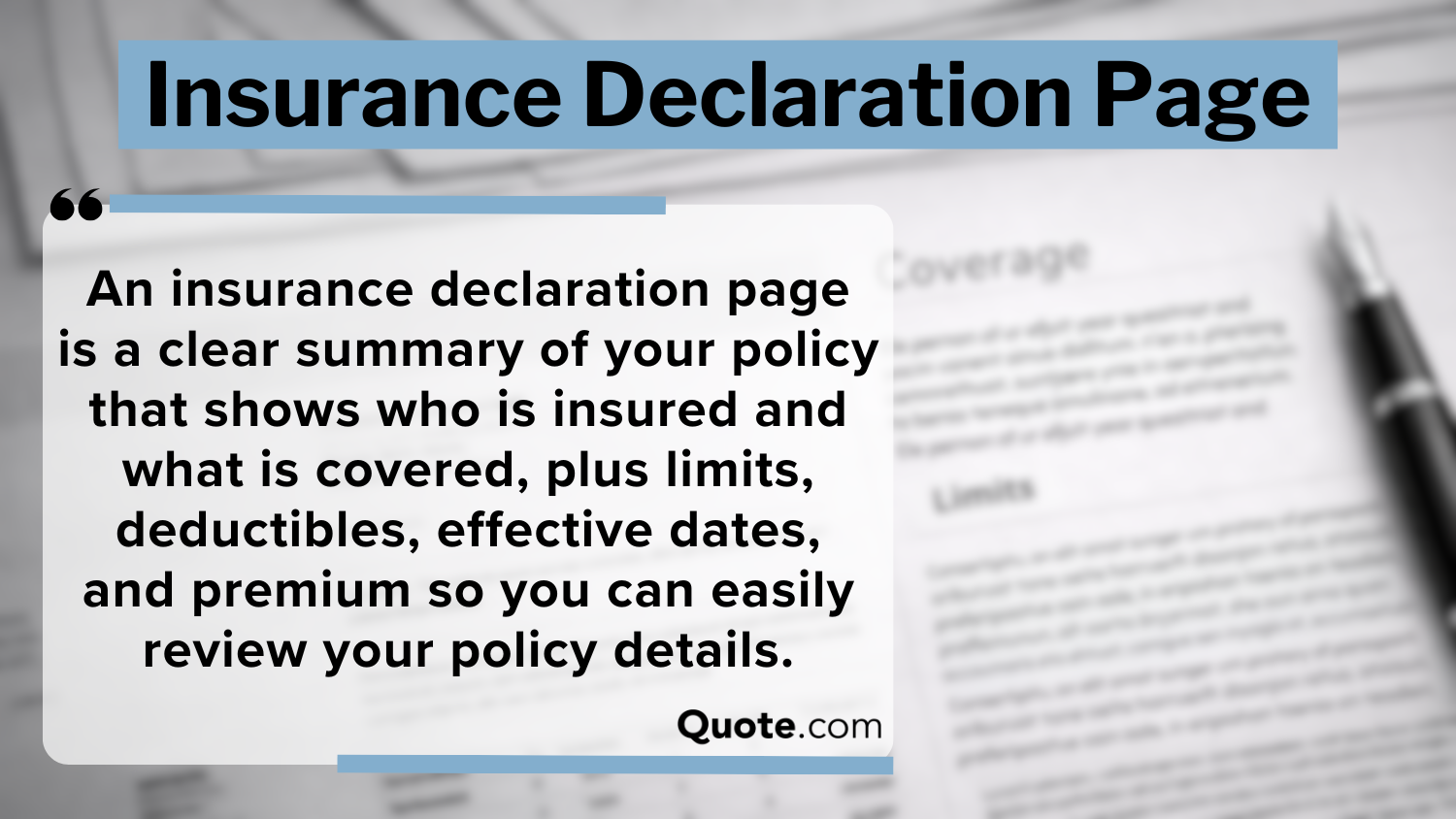
You can look at an insurance declaration page example to see how each section should appear.
For instance, if you have a loan on your car or home, your lender’s information is included on the insurance dec page since they may receive part of any payout before you do.
Insurance Declaration Page Breakdown| Section | Includes | Purpose |
|---|---|---|
| Agent Details | Agent contact info | Help with questions |
| Coverage Limits | Maximum payout | Set coverage caps |
| Coverage Types | Included coverage | Show covered items |
| Deductible Cost | Out-of-pocket cost | Affects claim cost |
| Endorsements | Policy change info | Change policy terms |
| Insured Name | Name and address | Show insured name |
| Insured Property | Property coverage | Show covered home |
| Insured Vehicles | Vehicle coverage | List insured vehicles |
| Insurer Name | Insurance provider | Show insurer name |
| Lienholder Info | Lender name listed | List lender interest |
| Policy Number | Unique policy ID | Policy ID lookup |
| Policy Period | Start and end dates | Show policy dates |
Endorsements can update your policy, such as when you add another driver, change your deductible, or change how you use your vehicle.
Even small errors in names or coverage details on your declarations page can delay approval or require you to submit additional information.
Free Auto Insurance Comparison
Compare Quotes From Top Companies and Save
How Insurance Declaration Pages Impact Your Rates
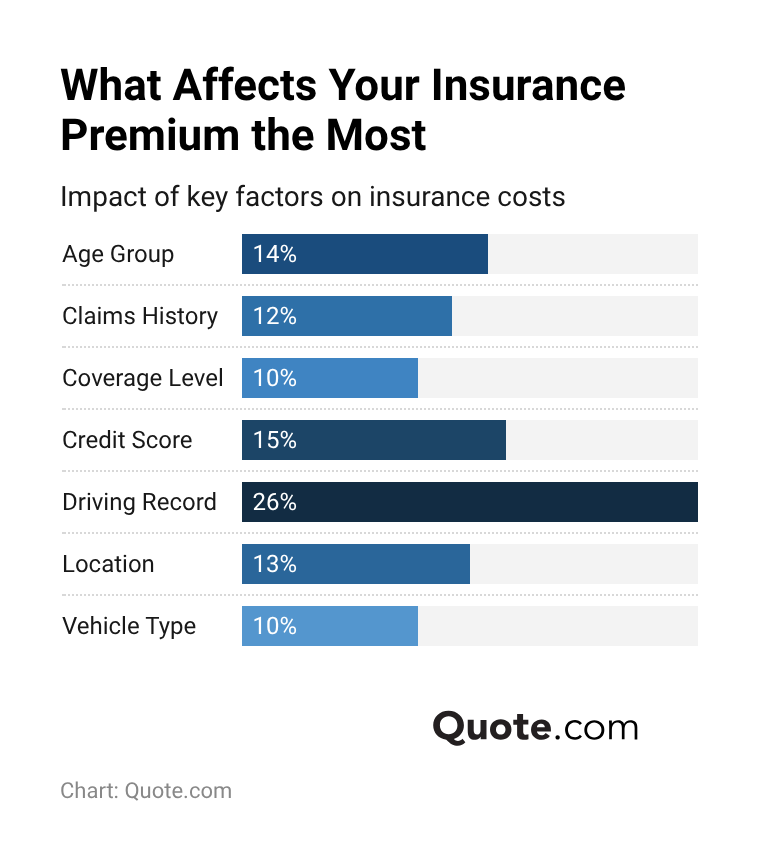
Insurance premiums are based on how insurers judge your risk. Your insurance declaration page shows these decisions, which can affect the cost of your auto insurance.
If your monthly rate is higher than you expected, the declaration page can show why. Common reasons include higher liability limits, a lower deductible, or extra drivers on your policy.
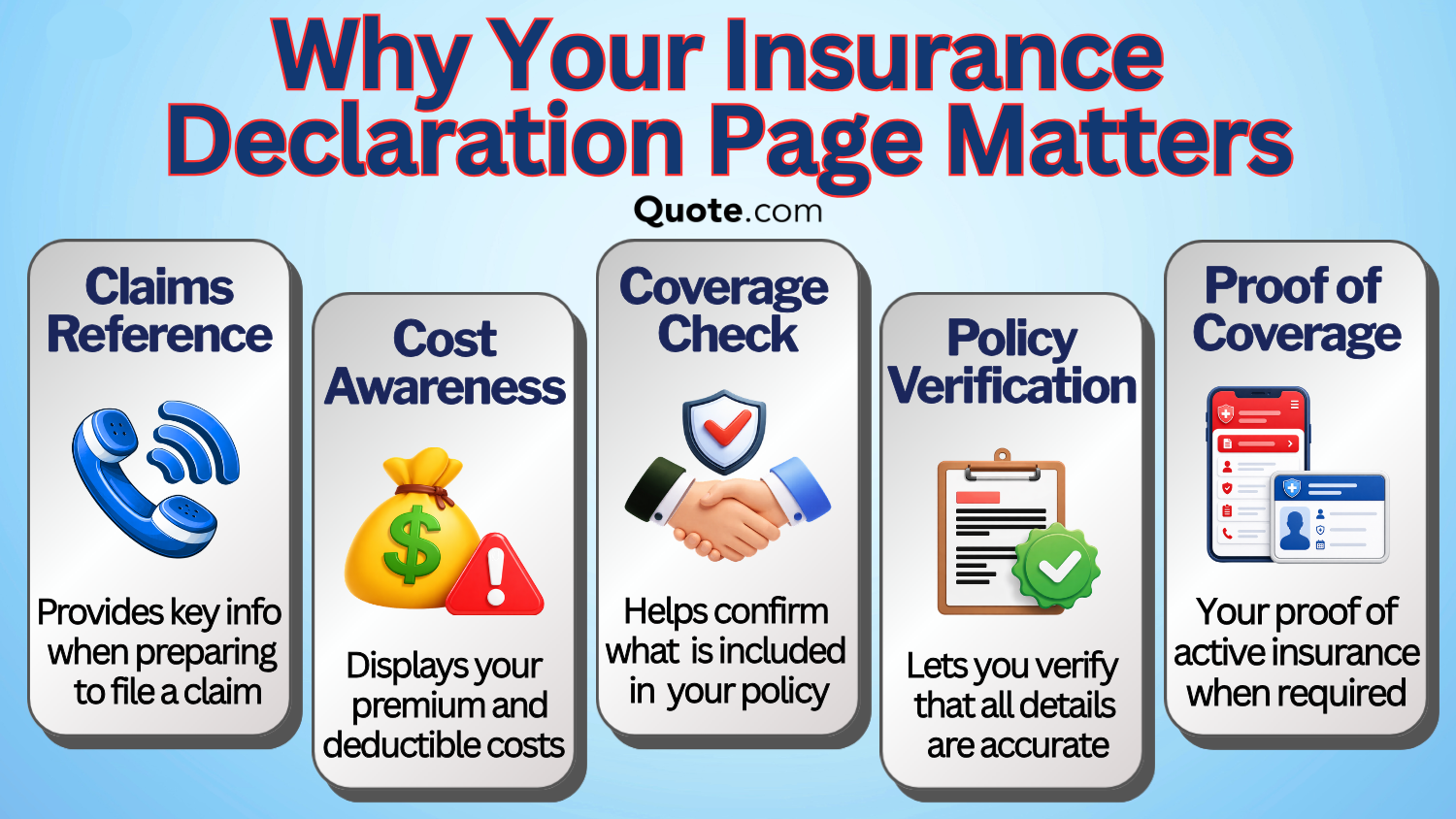
For example, reviewing an insurance declaration page from State Farm helps you connect your auto insurance premium directly to whether coverage choices, past claims, or listed risks are affecting your cost.
The declaration page shows your claim history and any changes you’ve made to your policy. If you’ve filed several claims, you may appear riskier to the insurer and could see higher premiums.
The coverage options you pick also affect your rate. Picking $100,000 in coverage instead of $50,000, or lowering your deductible from $1,000 to $250, increases costs.
The declaration page also shows details like your car type, how you use it, and where it’s kept. These can change your rate.
Get more details in our guide: Auto Insurance Rates by Vehicle
How Deductibles Impact Insurance Costs
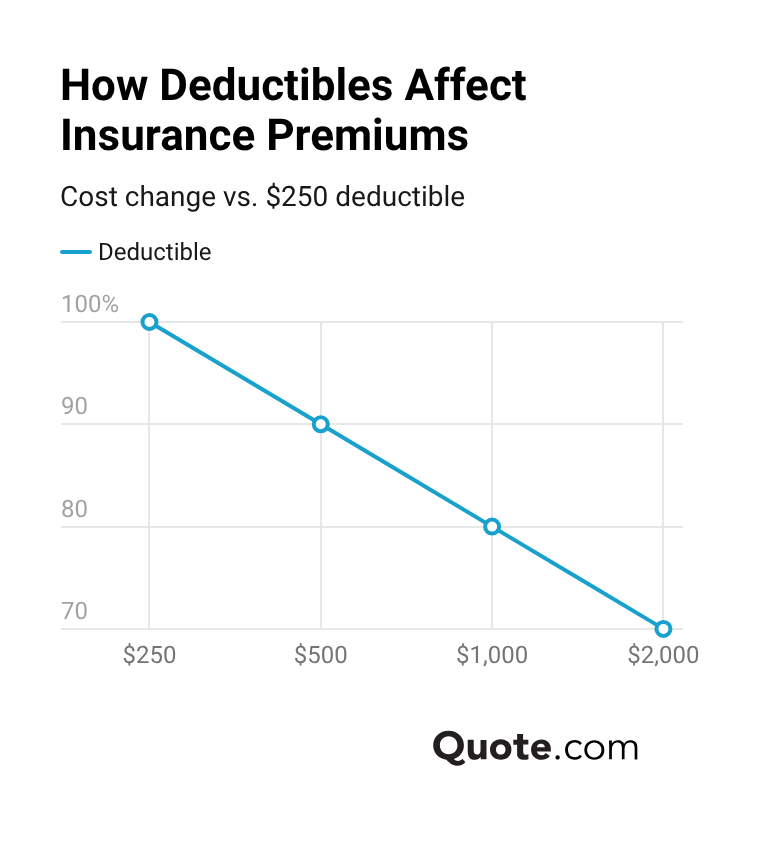
Choosing a $1,000 deductible can lower your premium, but you’ll have to pay more out of pocket if you file a claim. Compare quotes and deductibles on the best insurance comparison sites to find what works best for your budget.
This graph shows how changing your deductible affects both your premium and what you pay if you make a claim. For example, premiums usually drop by about 30% when you raise your deductible to $1,000 or $1,500.
While this can reduce what you pay each month, it also means you will take on more out-of-pocket costs if a claim happens. Use our free quote tool to compare premiums and deductibles that match your budget.
The key is to choose an insurance deductible that fits your budget so you can handle the expense without added financial stress.
This strategy works well if you have enough savings to cover higher upfront costs, since even small repairs can be pricey.
For many drivers, a $500 deductible is a good balance between lower premiums and affordable out-of-pocket costs.
Check if your deductible carries over since unused amounts can affect what you pay on future claims. Notably, some policies apply those credits to new losses.
Jeff Root Licensed Insurance Agent
Getting familiar with insurance declaration page deductible types makes it easier to understand when you will actually have to pay out of pocket.
Some deductibles are charged once a year, but others apply each time you file a claim, which can add up quickly. If your policy has a decreasing deductible, you could pay less over time as long as you don’t file claims.
Insurance Declaration Page: Deductible Types Overview| Type | Definition |
|---|---|
| Aggregate Deductible | Total deductible across all claims |
| Annual Aggregate | Total deductible across policy year |
| Annual Deductible | Deductible applied once per year |
| Buy-Back Deductible | Option to restore deductible after use |
| Buy-Down Deductible | Option to reduce deductible amount |
| Calendar-Year Deductible | Deductible resets each calendar year |
| Combined Deductible | Single deductible for multiple coverages |
| Corridor Deductible | Applies after base deductible is met |
| Cumulative Deductible | Accumulates across multiple claims |
| Deductible Carryover | Unused deductible applied to next term |
| Deductible Credit | Reduces deductible after safe period |
| Embedded Deductible | Separate deductible per individual |
| Fixed Deductible | Fixed dollar deductible amount set |
| Flat Deductible | Flat rate deductible for each claim |
| Franchise Deductible | Applies only after threshold is met |
| Maximum Deductible | Maximum deductible amount allowed |
| Minimum Deductible | Minimum deductible amount required |
| Non-Embedded Deductible | Separate deductible per individual |
| Per Claim Deductible | Deductible applied to each claim |
| Per Event Deductible | Deductible applied to each event |
| Per Incident Deductible | Deductible applied to each incident |
| Per Loss Deductible | Deductible applied to each loss |
| Per Occurrence Deductible | Deductible applied per occurrence |
| Per Policy Deductible | One deductible for entire policy |
| Percentage Deductible | Based on percent of insured value |
| Rolling Deductible | Applies within a rolling time period |
| Special Deductible | Special deductible for certain risks |
| Split Deductible | Separate deductibles by coverage type |
| Time Deductible | Applies based on time period rules |
| Variable Deductible | Deductible amount varies by claim |
| Vanishing Deductible | Decreases over time with no claims |
| Waiting Period Deductible | Applies after waiting time period |
| Waived Deductible | Deductible waived under conditions |
| Zero Deductible | No deductible required for claims |
Percentage-based deductibles can get expensive quickly since they rise with your home’s value instead of staying at a set amount.
A flat deductible usually works best for most people because it keeps your costs predictable and easier to budget after an incident.
Additional Information: Auto Insurance Guide
How Insurance Claims Affect Your Premiums
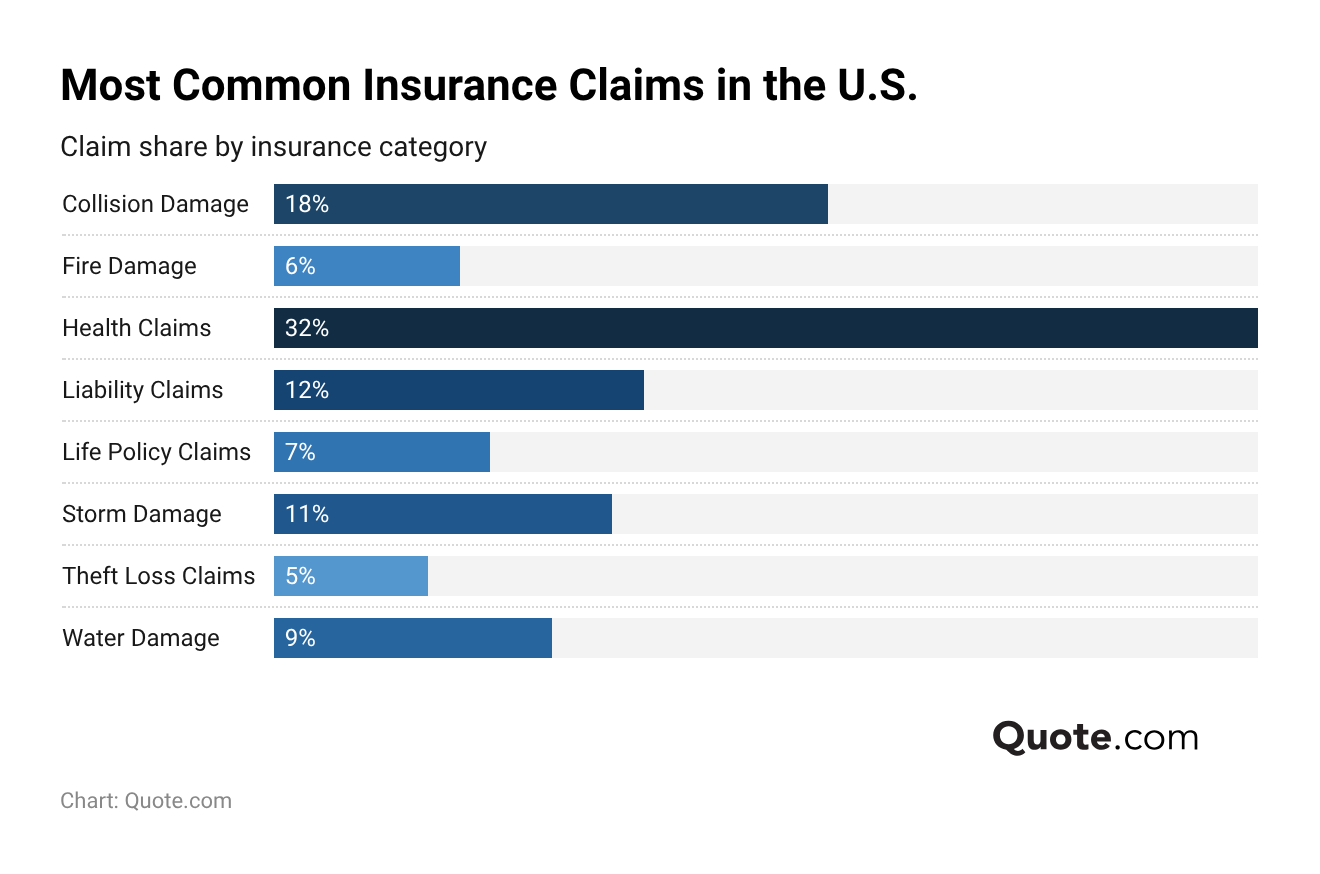
Insurance claims often follow certain patterns, and some types can have a bigger impact on your premiums as time goes on.
If you file multiple claims within three years, your monthly rate can jump by $40 or more, depending on the situation. Paying for small repairs yourself can sometimes help you avoid steady rate increases later on.
Claims tied to injuries or liability tend to cause the biggest increases since costs can easily pass $50K in serious cases.
Weather-related claims can also raise your rates, especially if they happen more than once in your area. Many drivers in high-risk areas compare auto insurance companies for claims handling before choosing a provider.
Always check the car insurance declaration page from your provider before renewal to ensure everything is up to date. For instance, updated premiums and coverage details are listed on an insurance declaration page from USAA.
Insurance companies usually review your full claim history before renewing your policy, which affects your price and whether you keep the same coverage. Enter your ZIP code to see how your claims history impacts your auto quotes.
Understanding Your Insurance Declaration Page
The insurance declaration page brings all your important policy details together in one place, making it easy to find what you need quickly.
However, if your name, vehicle, or property details are even slightly incorrect, it can cause delays or problems during your policy review.
Insurance Declaration Page: Where to Find Key Details| Section | What it Shows | Why it Matters |
|---|---|---|
| Added Insured | Added insured listed | Confirms protections |
| Covered Property | Covered property | Ensures items included |
| Covered Vehicles | Insured vehicles listed | Confirms vehicles listed |
| Coverage Details | Coverages shown | Shows what is protected |
| Deductibles | Out-of-pocket cost | Impacts claim payout |
| Discount Details | Discounts applied | Ensures discounts apply |
| Policy Dates | Policy start and end | Confirms policy term |
| Policy Changes | Recent policy changes | Tracks recent updates |
| Policy Exclusions | What is not covered | Avoids denied claims |
| Lienholder Info | Auto lender listed | Protects auto lender |
| Mortgagee Info | Home lender listed | Protects home lender |
| Named Insured | Primary insured name | Confirms insured name |
| Policy Number | Policy ID number | Used to verify policy |
| Policy Term | Policy length shown | Confirms active term |
| Total Premium | Total policy cost | Shows your total cost |
| Rating Factors | Rate factors used | Explains rate changes |
Your premium depends on factors such as your driving record and where you live. Changes to these can increase your monthly cost by $20 or more.
Be sure to check the exclusions section carefully. It explains when a claim will not be paid, which often surprises people. Reviewing an insurance declaration page from Geico can help you see how these details are organized.
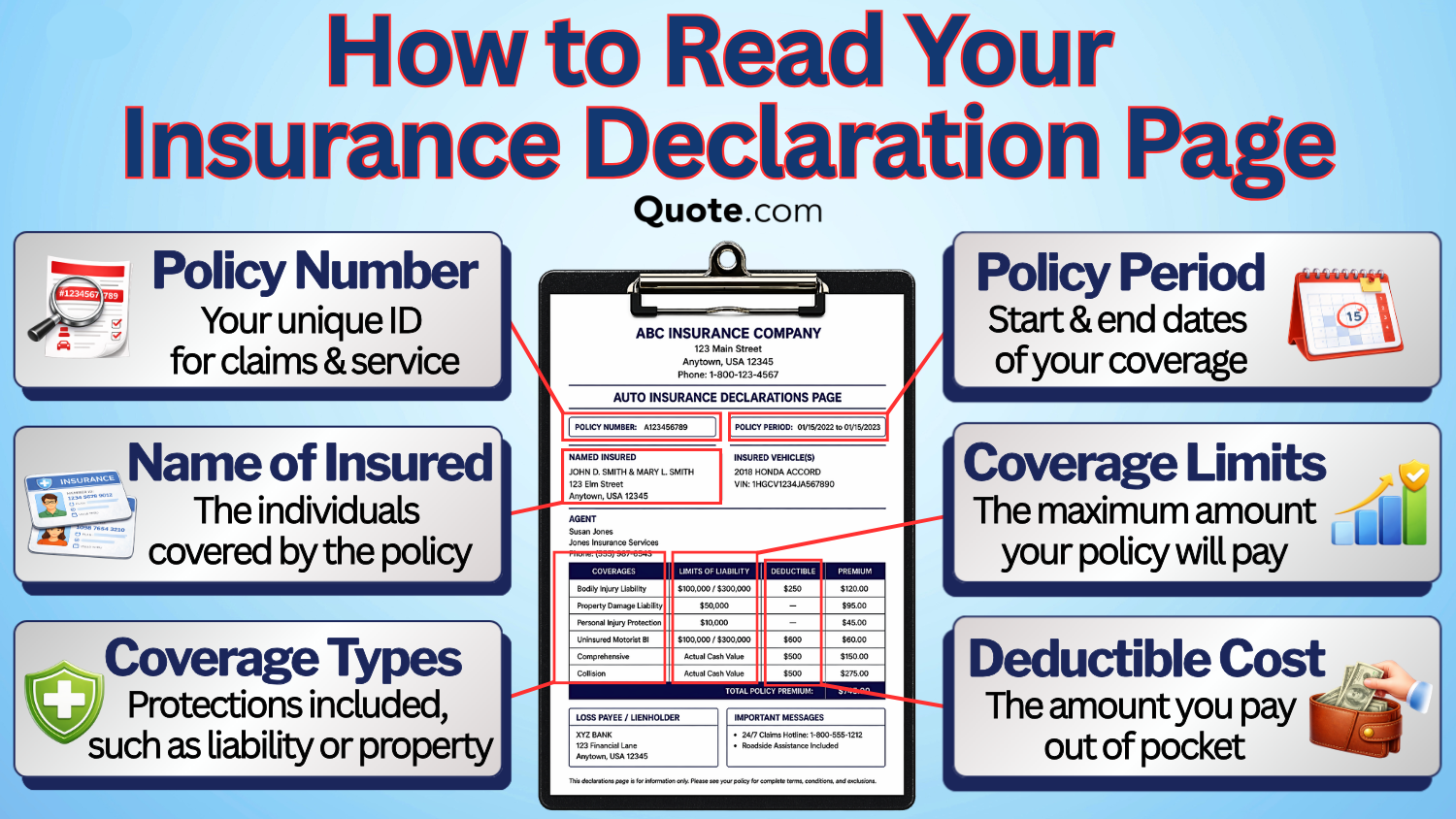
Lender information is important too. If you still owe money on your car or home, payments might be sent to your bank before reaching you.
Taking a few minutes to review your declaration page now can help you avoid delays, confusion, or surprise costs in the future.
Explore Further: How to Compare Auto Insurance Companies
Insurance Declaration Page List of Coverage
The insurance declaration page does impact whether your claim will be approved. Insurers use it to check what coverage and payout limits apply.
Adjusters look at this document to confirm your deductibles, which vehicles and drivers are covered, and the liability amounts related to the loss.
Insurance Declaration Page: Coverage Types Explained| Protection | Details |
|---|---|
| Additional Options | Optional add-ons available for plan |
| Bodily Injury Liability | Pays injury claims for other drivers |
| Collision Damage | Covers damage from vehicle crashes |
| Collision Deductible | Your out-of-pocket crash cost share |
| Comprehensive Loss | Covers damage not from collisions |
| Damage Deductible | Your non-collision deductible share |
| Dwelling Structure | Covers the structure of your home |
| Emergency Roadside | Provides roadside help and towing |
| Guest Medical | Pays medical costs for injured guests |
| Loan Gap Coverage | Covers gap between loan and value |
| Loss of Income | Replaces lost income after a claim |
| Loss of Use Coverage | Pays for temporary living expenses |
| Medical Payments | Pays medical bills for covered injuries |
| Other Structures | Covers other detached structures |
| Personal Liability | Covers liability for injuries to others |
| Personal Property | Covers personal belongings and items |
| Property Damage | Pays for damage to another’s property |
| Rental Cost Coverage | Pays for temporary rental vehicle use |
| Underinsured Motorist | Covers drivers with too little insurance |
| Uninsured Motorist | Covers drivers without any insurance |
You might see insurance company codes on the document. Insurers use these codes to find your policy during claims or account checks. If any details are old or missing, it can slow down the process or leave some damages unpaid.
If you have changed your coverage, added a vehicle, updated drivers, or raised your limits, review your declaration page to ensure these updates are reflected correctly.
Insurance Declaration Page: Coverage Limits Overview| Type | Definition |
|---|---|
| Aggregate Limit | Total payout across all claims |
| Lifetime Limit | Max payout over policy lifetime |
| Maximum Benefit | Highest amount the policy pays |
| Per Accident Limit | Max payout for each accident |
| Per Claim Limit | Max payout for each claim filed |
| Per Day Limit | Max amount paid each day |
| Per Location Limit | Max payout per insured location |
| Per Occurrence Limit | Max payout per incident event |
| Per Person Limit | Max payout per covered person |
| Per Term Limit | Max payout during policy term |
| Per Vehicle Limit | Max payout per covered vehicle |
| Remaining Amount | Remaining coverage after claims |
| Scheduled Amount | Fixed amount for listed items |
| Shared Aggregate | Combined cap across coverages |
| Single Limit Total | Single total limit for all claims |
| Split Limit Setup | Separate limits for each type |
| Sub Limit Amounts | Lower caps within each coverage |
| Total Policy Amount | Overall maximum policy payout |
| Unscheduled Amount | Coverage for items not listed |
The coverage limits on your declaration page show the maximum your insurer will pay after an accident or covered loss.
Some payout limits reset after each accident, while others remain the same for the entire policy period and may decrease after several claims. You are responsible for any costs above those limits, so it is important to review your coverage regularly.
Common Insurance Declaration Page Mistakes to Avoid
Mistakes on your insurance declaration page can come back to bite you when you actually need to file a claim.
If a driver or vehicle is missing, the insurer can refuse that part of the claim, leaving you to pay the full amount.
Insurance Declaration Page: Common Mistakes & Risks| Issue | What Happens | What to Review |
|---|---|---|
| Additional Drivers | Adds driver risk | Driver list accuracy |
| Duplicate Policies | Overlapping coverage | Policy listed twice |
| Expired Policy | Policy may be invalid | Policy start date |
| High Deductible | Higher out-of-pocket | Deductible amount |
| Incorrect Address | Higher risk applied | Home address listed |
| Incorrect Drivers | Missing driver risk | Driver details listed |
| Incorrect Vehicle | Wrong vehicle listed | Vehicle details listed |
| Inactive Discounts | Savings not applied | Discounts applied |
| Low Liability Limits | Too little coverage | Liability limits set |
| Missing Add-Ons | Missing useful extras | Optional add-ons |
| Missing Discounts | Lost policy discounts | Discounts applied |
| Missing Lender | Lender not protected | Lender listed |
| Missing Vehicles | Vehicle not covered | All vehicles listed |
| Outdated Policy | Old policy details | Plan details updated |
| Policy Not Active | No active coverage | Policy is active |
| Renewal Changes | Unreported changes | Recent plan changes |
| Unlisted Drivers | Driver not covered | All drivers listed |
| Unlisted Vehicles | Vehicle not covered | All vehicles listed |
Liability limits are another big one, since a serious accident can go past $50K, and anything over your limit comes out of your pocket.
Something as simple as an incorrect address or outdated information can also affect your rate, sometimes adding $20 or more to your monthly cost.
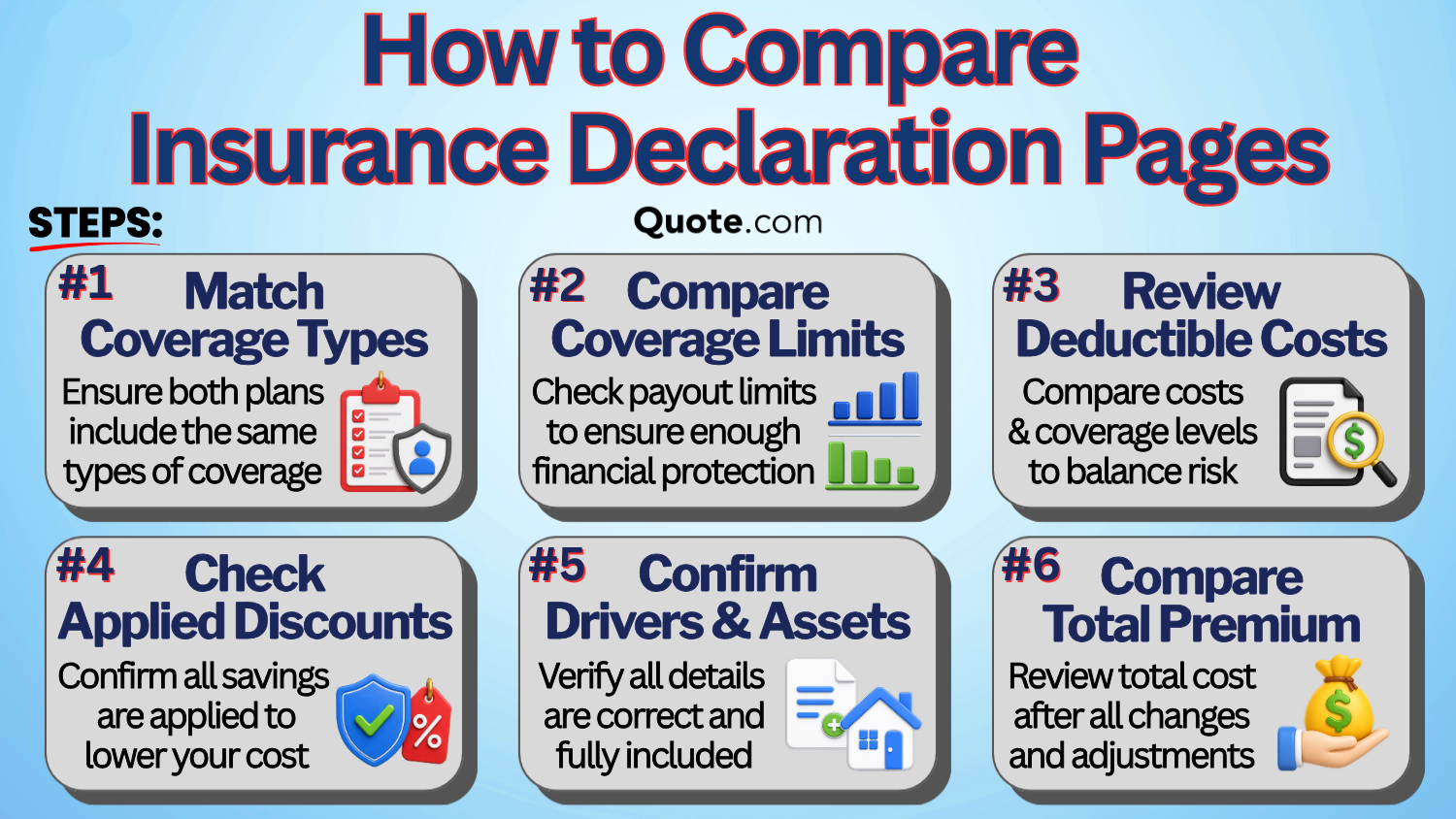
Overlapping or inactive policies can slow things down because the insurer has to determine which policy applies before paying anything.
If you’re comparing the best car insurance companies, reviewing an insurance declaration page from Progressive can give you a clear idea of how policy details should be presented.
Taking a few minutes to check everything on your insurance declaration page now can save you from bigger problems later and costly claim issues.
Melanie Musson Published Insurance Expert
Keeping your declaration page updated helps make sure your coverage fits your current needs and protection.
If your coverage dates do not match the incident date or your policy number is incorrect, the claim process can stop immediately.
Understanding Your Insurance Declaration Page Details
Your insurance declaration page brings together details that affect your policy when you file a claim, including the types of auto insurance under your coverage.
Your policy limits set the maximum amount your insurance will pay. For example, if you have a $60K claim but your coverage is lower, you will need to pay the rest yourself.
Details about your lender or lienholder are important because payments may go to them before you receive any remaining funds.
Reviewing each section carefully helps you avoid missing anything, so your claim can move forward without delays or surprise costs. You can enter your ZIP code to compare rates and see your options.
Frequently Asked Questions
What is an insurance declaration page?
An insurance declaration page is the document that shows your exact coverage, including limits, deductibles, listed drivers, and policy dates used during claims.
What does the insurance declaration page typically include?
It includes your policy number, coverage limits like $50K liability, deductibles such as $500, insured names, vehicles, and active policy dates.
Does every insurance company have an insurance declaration page?
Yes, all major insurers issue a declaration page because it is required by state law to clearly show coverage details and confirm what the policy covers. This is a standard practice we learned when analyzing insurance companies.
What is the policy period on an insurance declaration page?
The policy period lists the start and end dates of coverage, and claims are valid only if the incident occurs within this timeframe.
What if my declaration page is wrong?
Incorrect details, such as a missing driver or wrong vehicle, can lead to denied claims or delays until the information is corrected.
Check your insurance declaration page for details, then compare coverage options by entering your ZIP code in our free quote comparison tool.
Can I change info on my insurance declaration page?
Yes, but changes like adding a driver or updating coverage must go through your insurer and may affect your monthly premium, even after you buy auto insurance.
How often should I review my insurance declaration page?
Review it at every renewal or after changes, such as moving, adding a driver, or buying a vehicle, to ensure all details remain accurate.
What should I do if I find a mistake on my declaration page?
Contact your insurer or agent right away to update the error, since corrections must be processed before a claim is reviewed.
What is the declaration page for Progressive insurance?
It is a policy summary from Progressive that lists coverage limits, deductibles, vehicles, and insured details used during claim processing.
Discover More: Progressive Insurance Review
Where do I get a declaration page for insurance?
You can download it from your insurer’s online account, mobile app, or request a copy from your agent or customer support.
Find and verify your insurance declaration page coverage by entering your ZIP code into our free quote comparison tool.
Is a declaration page and proof of insurance the same thing?
What’s the difference between an ID card and an insurance declaration page?
Can I show my auto insurance declarations page if I’m pulled over?
What’s a homeowners insurance declaration page?
How do I get my declaration page from Allstate?
Get a FREE Quote in Minutes
Insurance rates change constantly — we help you stay ahead by making it easy to compare top options and save.